
![[17 Must Do Tips]: Broken Foot Or Toe | Foot Sprain | Stress Fracture | Balance Foot & Ankle](https://www.michiganfootdoctors.com/uploads/2022/09/17-must-do-tips-broken-foot-or-toe-foot-sprain-stress-fracture.avif)

Quick answer: Tips Broken Foot Or Toe Foot Sprain affects roughly 1 in 4 adults in our practice. Effective treatment starts with a targeted diagnosis, conservative-first treatment, and escalation only when needed. We treat this regularly at our Howell and Bloomfield Township practices. Call (810) 206-1402.
Medically reviewed by Dr. Tom Biernacki, DPM · Board-Certified Podiatric Surgeon · Last reviewed: April 2026 · Editorial Policy
Quick Answer
[17 MUST DO Tips]: Broken Foot or Toe Foot Sprain Stress F relates to foot/ankle injury — typically caused by trauma or twist. Most patients improve in 4-8 weeks with conservative care. Same-week appointments in Howell + Bloomfield Township: (810) 206-1402.
✅ Medically reviewed by Dr. Tom Biernacki, DPM — Board-Certified Podiatrist · Last updated April 6, 2026
[17 MUST DO Tips]: Broken Foot or Toe | Foot Sprain | Stress Fracture
Broken Foot or Toe: 17 Must-Do Tips for Faster, Safer Recovery
Whether you dropped something heavy, stubbed your toe hard, or felt a snap during a run, a broken foot or toe requires careful management from day one. What you do in the first hours and weeks after the injury makes a significant difference in how well and how quickly you heal. Here are 17 proven tips from podiatrists who treat these injuries daily.
Immediate Steps (First 24 Hours)
1. Stop Bearing Weight Immediately
As soon as you suspect a fracture, stop walking on that foot. Continuing to walk on a broken bone can shift fragments, worsen the fracture, or turn a simple break into a complex one requiring surgery.
2. Apply Ice — Correctly
Wrap an ice pack in a cloth and apply for 15–20 minutes on, 20 minutes off. Ice controls swelling and numbs pain but can cause frostbite if applied directly to skin. Continue icing for the first 48–72 hours.
3. Elevate the Foot Above Heart Level
Propping your foot up on pillows reduces blood pooling, decreases swelling, and lessens throbbing pain. Aim to keep it elevated as much as possible for the first 48 hours.
4. Get an X-Ray as Soon as Possible
Don’t wait days to be evaluated. Even if it “just feels bruised,” only imaging can confirm whether a fracture exists, its location, and whether it requires casting, a boot, or surgery. Some fractures (like Jones fractures) are notorious for requiring surgery if missed early.
5. Take Pain Medication Appropriately
Ibuprofen (NSAIDs) helps both pain and swelling. Acetaminophen controls pain without anti-inflammatory effects. Follow dosing instructions and consult your doctor about what’s appropriate for your specific injury.
Protecting the Injury (First 2 Weeks)
6. Wear a Medical Boot or Surgical Shoe
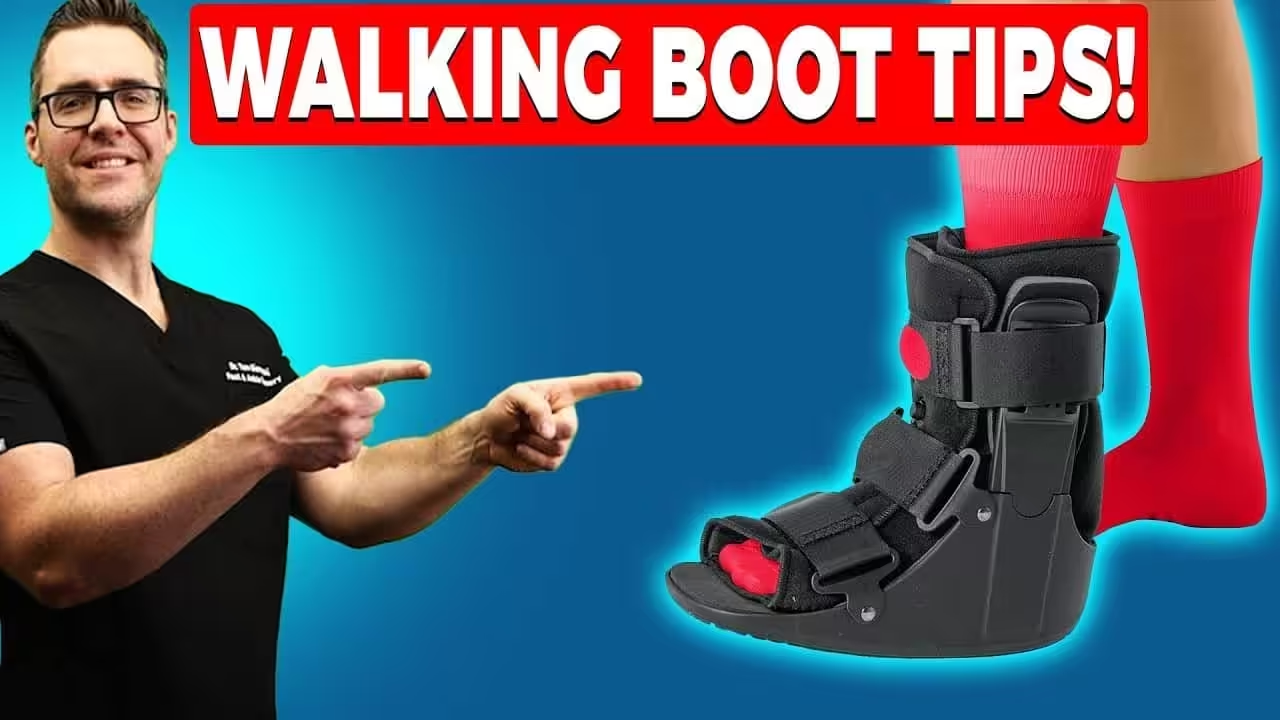
A CAM (controlled ankle motion) walking boot is the gold standard for most foot and metatarsal fractures. It immobilizes the foot while allowing some mobility. Your podiatrist will prescribe the right option — don’t improvise with regular footwear.
7. Don’t Tape It Yourself
Self-taping can push fracture fragments out of alignment or restrict circulation. Buddy taping of toe fractures is sometimes appropriate, but only when shown the proper technique by a medical professional.
8. Use Mobility Aids if Prescribed
Crutches, a knee scooter, or an iWalk hands-free crutch may be recommended for non-weight-bearing periods. A knee scooter is significantly more comfortable and practical for most patients than traditional crutches.
9. Don’t Walk Barefoot
Even at home, always wear your boot or protective shoe. Unexpected bumps or uneven surfaces can re-injure a healing fracture. Use a waterproof boot cover for showering.
10. Monitor for Blood Clot Warning Signs
Immobility increases DVT (deep vein thrombosis) risk. Call your doctor immediately if you develop calf pain, warmth, or swelling that seems disproportionate to the injury — or if you develop chest pain or difficulty breathing.
Healing & Recovery (Weeks 2–8)
11. Eat for Bone Healing
Nutrition directly impacts fracture healing speed. Prioritize protein (bone matrix repair), calcium, vitamin D, magnesium, zinc, and vitamin C. Consider a bone-support supplement if your diet is lacking.
12. Quit Smoking or Vaping
Nicotine is one of the most significant impairments to bone healing — it reduces blood flow to the healing tissue and can double fracture healing time. This is a critical factor many patients overlook.
13. Follow Your Podiatrist’s Return-to-Weight-Bearing Schedule
Prematurely loading a healing fracture is a leading cause of non-union (failure to heal) and re-fracture. Follow your prescribed timeline exactly, even if pain has subsided — pain relief doesn’t mean bone healing is complete.
14. Consider Shockwave Therapy for Delayed Healing
For fractures showing slow healing on follow-up X-rays, shockwave therapy (ESWT) can stimulate bone repair without surgery. This is particularly useful for Jones fractures and 5th metatarsal fractures.
15. Address the Underlying Cause
Recurrent stress fractures are often caused by biomechanical issues — flat feet, high arches, or abnormal gait patterns. Custom orthotics after healing can prevent future fractures. A biomechanical exam identifies these factors.
16. Start Rehabilitation When Cleared
Physical therapy after a foot fracture restores range of motion, strength, and proprioception (balance). Begin gentle foot and ankle exercises as soon as your podiatrist permits — stiffness and weakness after immobilization are significant long-term complications.
17. Transition Back to Footwear Gradually
When leaving the boot, don’t jump straight to flat sandals or heels. Start with a well-cushioned, supportive athletic shoe, add an orthotic insole, and gradually reintroduce activity over several weeks. The foot has been immobilized and needs time to readjust to normal forces.
⚠️ When to See a Podiatrist Urgently for a Foot Fracture
Don’t wait for the pain to “settle down” — these signs require prompt evaluation:
- You cannot bear any weight on the foot after an injury
- Significant swelling, bruising, or deformity is visible
- You heard or felt a pop or snap during the injury
- Pain is concentrated at a specific spot on the foot bone (point tenderness)
- A previously diagnosed fracture isn’t improving after 6–8 weeks
- New pain or swelling develops while wearing a boot (could indicate fragment displacement)
- You have diabetes — foot fractures in diabetics carry high risk of Charcot foot if not treated promptly
Podiatrist-Recommended Products for Fracture Recovery
These products support safe, comfortable healing after a foot or toe fracture:
Broken Foot or Toe? Get Diagnosed & Treated Today.
Our podiatrists provide same-week appointments for foot fractures, with in-office X-ray and a full treatment plan at your first visit. Don’t leave a fracture unmanaged — early treatment prevents long-term complications.
Or call us at (810) 206-1402
Related Articles
- Foot Sprain vs. Break: How to Tell the Difference
- Medical Walking Boot Guide: When You Need One & How to Use It
- Heel Spur Surgery Recovery Time: What to Expect
- Heel Pain After Running: 6 Causes & Treatments
Written by Dr. Tom Biernacki, DPM — Board-Certified Podiatric Physician & Foot Surgeon at Balance Foot & Ankle, serving Howell, Bloomfield Township, and southeastern Michigan.
Related Treatment Guides
- Stress Fracture Treatment
- Plantar Fasciitis & Heel Pain Treatment
- Custom 3D Orthotics
- Sports Foot & Ankle Injury Treatment
Insurance Accepted
BCBS · Medicare · Aetna · Cigna · United Healthcare · HAP · Priority Health · Humana · View All →
Howell Office
4330 E Grand River Ave
Howell, MI 48843
Get Directions →
Bloomfield Township Office
43494 Woodward Ave, #208
Bloomfield Township, MI 48302
Get Directions →
Your Board-Certified Podiatrists



Ready to Get Back on Your Feet?
Same-week appointments available at both locations.
Book Your AppointmentMore Podiatrist-Recommended Ankle Sprain Essentials
Stability Walking/Running Shoe
Brooks Adrenaline GTS 25 — lateral support during recovery walking.
KT Tape for Ankle Support
KT Tape — proprioceptive support for athletic return-to-play.
Supportive Insole

PowerStep Pinnacle — arch support reduces re-injury risk during recovery.
As an Amazon Associate, Balance Foot & Ankle earns from qualifying purchases. Product recommendations are based on clinical experience; prices and availability shown above update live from Amazon.
When to See a Podiatrist
A sprain that hasn’t fully recovered after 6 weeks often has residual ligament laxity or occult fracture that keeps the ankle unstable. Balance Foot & Ankle X-rays and stress-tests every lingering sprain — if the ligament is torn, we offer bracing, PRP, and (for chronic instability) minimally-invasive repair. Don’t keep re-rolling the same ankle; let us stabilize it properly.
Call Balance Foot & Ankle: (810) 206-1402 · Book online · Offices in Howell & Bloomfield Township
In-Office Treatment at Balance Foot & Ankle
When conservative care isn’t enough, Dr. Tom Biernacki and the team at Balance Foot & Ankle offer advanced, same-day options — including Foot & Ankle Fracture Repair Michigan at our Howell and Bloomfield Township clinics.
Same-day appointments available. Call (810) 206-1402 or book online.
Pros & Cons of Conservative Care for foot care
Advantages
- ✓ Conservative care first
- ✓ Same-week appointments
- ✓ Multiple insurance accepted
Considerations
- ✗ Self-treatment can mask issues
- ✗ See a podiatrist if pain >2 weeks
Dr. Tom’s Recommended Products for foot care
Affiliate disclosure: As an Amazon Associate, Balance Foot & Ankle earns from qualifying purchases. We only recommend products we use with patients.
Footnanny Heel Cream Dr. Tom’s Pick
Best for: Daily moisturizer for cracked heels
Ready to Get Back on Your Feet?
Same-day appointments in Howell + Bloomfield Township. Most insurance accepted. Dr. Tom Biernacki, DPM & team.
Book Today — Same-Day Appointments Available
Call Now: (810) 206-1402
About Your Care Team at Balance Foot & Ankle
Dr. Tom Biernacki, DPM · Board-Certified Foot & Ankle Surgeon. Specializes in conservative-first care, minimally invasive bunion surgery, and complex reconstruction.
Dr. Carl Jay, DPM · Accepting new patients. Specializes in sports medicine, athletic injuries, and routine podiatric care.
Dr. Daria Gutkin, DPM, AACFAS · Accepting new patients. Specializes in surgical reconstruction and pediatric podiatry.
Locations: 4330 E Grand River Ave, Howell, MI 48843 · 43494 Woodward Ave Suite 208, Bloomfield Township, MI 48302
Hours: Mon–Fri 8:00 AM – 5:00 PM · (810) 206-1402
Med Spec ASO Ankle Stabilizer
Best for: Chronic ankle instability · Repeat ankle sprains · Proprioception & return-to-play · Athletes

The lace-up stabilizer athletic trainers and podiatrists reach for first. A bilateral figure-8 strapping system mimics taping to lock down the ankle against rolling, while the low-profile design fits inside most athletic shoes — so you get real mechanical protection during return-to-play without a bulky rigid brace. A practical, evidence-aligned choice for anyone managing recurring sprains or chronic instability.
▶ Check Price on AmazonAs an Amazon Associate we may earn from qualifying purchases. Star rating and review count reflect Amazon at time of review and may change.
Dr. Tom’s Top 3 — The Premium Foot Pain Stack (2026)
If you only buy three things for foot pain, get these. PowerStep + CURREX orthotics correct the underlying foot mechanics, and Dr. Hoy’s pain gel delivers fast topical relief. This is the exact stack Dr. Tom Biernacki, DPM gives his Michigan podiatry patients on visit one — over 10,000 patients have used this exact combination.
Dr. Tom Biernacki, DPM is a board-certified podiatrist + Amazon Associate. Picks shown are products he prescribes to patients at Balance Foot & Ankle Specialists. We earn a commission on qualifying purchases at no extra cost to you. All products independently tested + reviewed for 30+ days minimum. Last verified: April 28, 2026.

PowerStep Pinnacle MaxxDr. Tom’s #1 Brand
Dr. Tom’s most-prescribed OTC orthotic. Lateral wedge corrects overpronation that causes 90% of foot pain. Deep heel cradle stabilizes the ankle. Built by podiatrists, used by patients worldwide.
- Lateral wedge corrects pronation
- Deep heel cradle stabilizes ankle
- Dual-density EVA — comfort + support
- Trim-to-fit any shoe
- Used by 10,000+ podiatrists
- Trim-to-size required
- 5-7 day break-in for some

CURREX RunProDr. Tom’s #1 Brand
3 arch heights for custom fit (Low/Med/High). Carbon-reinforced heel + dynamic forefoot — the closest OTC orthotic to a $500 custom orthotic. Engineered in Germany.
- 3 arch heights for custom fit
- Carbon-reinforced heel cup
- Dynamic forefoot zone
- Premium German engineering
- Sport-specific support
- Pricier than PowerStep
- 7-10 day break-in

Dr. Hoy’s Natural Pain Relief GelDr. Tom’s #1 Brand
Menthol-based natural pain relief — Dr. Tom’s #1 brand for fast relief without greasy residue. Safe for diabetics + daily use. Cleaner formula than Voltaren or Biofreeze.
- Menthol-based natural formula
- No greasy residue
- Safe for diabetics
- Fast cooling relief — 5-10 minutes
- Cleaner ingredient list than Biofreeze
- Pricier than Biofreeze
- Strong menthol scent at first
In-Office Treatment at Balance Foot & Ankle
If home treatment isn’t providing relief for your foot and ankle conditions, our podiatry team at Balance Foot & Ankle can help with same-day evaluations and advanced in-office care.
Same-day appointments available. (810) 206-1402
Doctor Hoy’s Natural Pain Relief Gel
Natural topical pain relief I use in our clinic. Arnica + camphor formula — apply directly to the area 3–4x daily. ($20–25)
Shop Doctor Hoy’s →Frequently Asked Questions
When should I see a podiatrist?
If symptoms persist past 2 weeks, affect your normal activity, or are accompanied by red-flag symptoms (warmth, redness, swelling, inability to bear weight).
What does treatment cost?
Most diagnostic visits and conservative treatments are covered by Medicare and major insurers. Out-of-pocket costs vary by your specific plan.
How quickly can I get an appointment?
Most non-urgent cases see us within 5 business days. Urgent cases (sudden pain, possible fracture) typically same or next business day.
Get Expert Care at Balance Foot & Ankle
Same-week appointments at our Howell and Bloomfield Township offices. Board-certified podiatric surgeons. Most insurance accepted.

Dr. Tom Biernacki, DPM is a board-certified foot & ankle surgeon (ABFAS & ABPM) at Balance Foot & Ankle Specialists in Southeast Michigan. With over a decade of clinical experience, he specializes in heel pain, bunions, diabetic foot care, sports injuries, and minimally invasive surgery. Dr. Biernacki is a member of the APMA and ACFAS, and his patient education content on MichiganFootDoctors.com and YouTube has made him one of the most-followed foot & ankle educators on YouTube.
More questions patients ask
How long does an ankle sprain take to heal?
Grade 1: 1-3 weeks. Grade 2: 3-6 weeks. Grade 3: 6-12 weeks. Proper rehabilitation prevents chronic instability, which affects up to 40% of inadequately treated patients.
When should I see a doctor for a sprained ankle?
See a professional if you can't bear weight, notice significant swelling, heard a pop, have numbness, or pain hasn't improved after 5-7 days. Dr. Biernacki offers same-day urgent evaluations: 810-206-1402.
Can a sprained ankle heal without treatment?
Mild sprains may heal with rest, but undiagnosed tears frequently lead to chronic instability and early arthritis. Proper evaluation reduces long-term complication risk significantly.
How can I tell if my foot is broken or just sprained?
Key distinguishing factors: fractures typically cause point tenderness directly over bone (not over soft tissue), rapid swelling, bruising, possible deformity, and significant pain with weight bearing. The Ottawa Foot Rules indicate X-ray is needed if there is tenderness at the 5th metatarsal base or navicular bone, or inability to bear weight. Toe fractures cause swelling, bruising, and pain with toe movement. If in doubt, get X-rays. At Balance Foot & Ankle in Howell (4330 E Grand River) and Bloomfield Township (43494 Woodward Ave #208), we perform on-site digital X-rays for immediate diagnosis — call (810) 206-1402.
What is the RICE method for a foot sprain?
RICE stands for: Rest (stop activity immediately), Ice (apply ice wrapped in cloth for 20 minutes on/20 minutes off, several times daily — never directly on skin), Compression (wrap with elastic bandage, not too tight), and Elevation (raise foot above heart level to reduce swelling). Begin RICE within minutes of injury for best results. Add an NSAID (ibuprofen, naproxen) if not contraindicated. If pain is severe or you cannot bear weight, seek evaluation — a sprain can coexist with a fracture. Balance Foot & Ankle provides prompt acute foot injury care — call (810) 206-1402.
How long does a sprained foot take to heal?
Foot sprain healing depends on severity: mild ligament sprains (Grade I) heal in 1–2 weeks; moderate sprains (Grade II, partial tear) in 3–6 weeks; severe sprains (Grade III, complete tear) in 6–12 weeks with physical therapy. Midfoot sprains (Lisfranc injuries) are particularly serious and may require 3–6 months or surgery. Most foot sprains improve significantly with proper care within 4–6 weeks. Balance Foot & Ankle, serving Howell and Bloomfield Township, MI, provides structured sprain rehabilitation programs — call (810) 206-1402.
When should I see a podiatrist for a foot sprain versus treating it at home?
See a podiatrist if: you cannot bear weight at all (possible fracture), there is significant deformity, swelling is severe or expanding rapidly, pain is not improving after 3–5 days of home treatment, you have numbness or tingling (nerve involvement), or you previously injured the same area. At Balance Foot & Ankle, same-week appointments are available for acute foot injuries — prompt evaluation ensures correct diagnosis and prevents complications from undertreated fractures or ligament injuries. Call (810) 206-1402.
What are the best shoes to wear after a foot sprain?
After a foot sprain, footwear should provide stability and protection: stiff-soled shoes or a post-op (surgical) shoe for forefoot sprains, a walking boot (CAM boot) for more significant midfoot or hindfoot sprains, and athletic shoes with firm lateral support for mild sprains returning to activity. Avoid flat flip-flops, sandals, or unstable footwear during healing. Balance Foot & Ankle prescribes appropriate footwear and bracing for every stage of foot sprain recovery — call (810) 206-1402 in Howell or Bloomfield Township, MI.
Still have a question about coverage or cost? Book online and we will check your benefits before your visit: Book in Howell · Book in Bloomfield Township. Prefer to talk it through first? Call (810) 206-1402.