
| Removal Method | Sessions | Clearance Rate | Scarring Risk | Pain Level | Suitable For |
|---|---|---|---|---|---|
| Swift Microwave Therapy | 3–4 (every 4 wk) | 76% | None — no wound created | Moderate during treatment, no aftercare | All ages, mosaic, recurrent |
| Liquid Nitrogen Cryotherapy | 3–6 (every 2–3 wk) | 68% | Low — blister heals without scar | Moderate — blister for 24–48 hrs | Single warts, first-line most patients |
| Cantharidin (“Beetle Juice”) | 2–4 (every 3–4 wk) | 65–75% | Low if used correctly | Delayed blister, minimal during application | Children, needle-phobic patients |
| Salicylic Acid (40% Rx) | Daily x 8–12 wk | 52% | Minimal | Mild | Adjunct, home care between office visits |
| Bleomycin Injection | 1–3 injections | 70–90% | Possible if overdosed | High — intralesional injection | Resistant warts, adults, single lesions |
| CO₂ Laser Ablation | 1–2 | 70% | Moderate — surgical wound | High — local anesthesia required | Large/recurrent warts, failed all else |
| Electrodesiccation + Curettage | 1 | High initial — 60–70% long-term | Moderate — may scar | High — local anesthesia required | Fast single-session removal needed |
| Immunotherapy (Candida antigen) | 3–5 injections | 65–80% | None | Mild — injection site soreness | Multiple warts, immunostimulation goal |
| Patient Type | Recommended First-Line | Avoid | Special Consideration |
|---|---|---|---|
| Child (<12 years) | Cantharidin or salicylic acid | Bleomycin, electrosurgery | Many warts resolve spontaneously in <2 years in children |
| Diabetic patient | Swift microwave (no wound) | Cryotherapy (tissue at risk), salicylic acid (acid burns risk) | Only under direct podiatric supervision; no self-treatment |
| Immunocompromised (HIV, chemo) | Immunotherapy + Swift combination | Expect multiple sessions — clearance lower | Address underlying immune status with PCP |
| Athlete (needs rapid return) | Swift + topical (no wound, no blister) | Electrosurgery (sidelines patient) | Pad wart during competition while treating |
| Pregnant patient | Swift (no systemic agent) | Bleomycin, salicylic acid in large areas | OB consult — most treatments avoided in first trimester |
| Mosaic wart cluster | Swift microwave (systemic immune effect) | Cryotherapy alone (insufficient for clusters) | Immunotherapy as adjunct |
Quick answer:Plantar wart removal options: in-office treatments (liquid nitrogen, Cantharidin blistering agent, bleomycin injection, pulsed-dye laser) are significantly more effective than OTC salicylic acid. Immunotherapy (intralesional Candida antigen) treats multiple warts simultaneously. Our DPMs offer same-day plantar wart treatment. Call (810) 206-1402. Call (810) 206-1402.
Foot pain isn't resolving?
Same-week appointments at Howell & Bloomfield Township
Medically Reviewed | Dr. Tom Biernacki, DPM | Board-Certified Podiatric Surgeon | Balance Foot & Ankle, Michigan


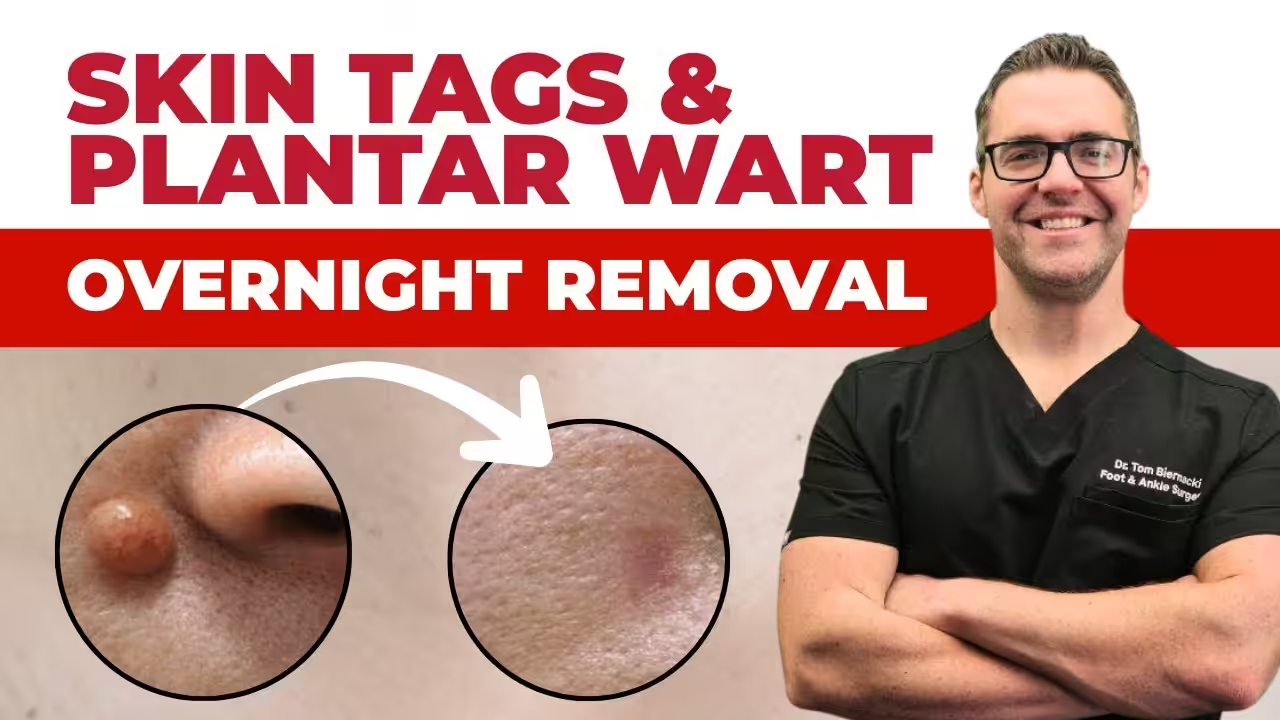
Watch: Plantar Wart Removal: How to Get Rid of a Foot Wart with No PAIN! — MichiganFootDoctors YouTube
What Makes Plantar Warts Different from Other Warts
Plantar warts — technically verruca plantaris — are HPV-induced benign skin tumors on the sole of the foot. Unlike warts on the hands or face that protrude above the skin surface, plantar warts are forced downward by walking pressure, growing into the dermis rather than outward. This inversion makes them painful with weight-bearing (many patients describe the sensation as stepping on a pebble) and dramatically more resistant to treatment than warts on other sites. The overlying callus adds another protective barrier that prevents OTC treatments from reaching the viral cells.
Why OTC Wart Treatments Fail on the Feet
Salicylic acid products (Compound W, PowerStep Pinnacle’s Freeze Away) treat plantar warts with variable success because the thick plantar skin callus layer prevents adequate penetration, patients stop treatment before the wart is fully eradicated, and the wart’s deep dermal component isn’t reached by topical therapy. Mosaic warts — clusters of multiple small warts — are particularly resistant to OTC treatment. Dr. Biernacki debrides the overlying callus with a scalpel before applying any treatment to dramatically improve penetration and effectiveness.
Professional Treatment Options
Cantharidin — derived from blister beetles — is Dr. Biernacki’s most commonly used first-line professional treatment. Applied in-office and covered with a bandage, it causes a blister to form beneath the wart that lifts it from the skin over 24–48 hours. The wart is then debrided at the follow-up appointment. It’s painless at application and highly effective for most plantar warts. Cryotherapy (liquid nitrogen) freezes and destroys wart tissue — effective for superficial warts but less penetrating for deep plantar warts. Laser ablation (CO2 or pulsed dye laser) vaporizes wart tissue with precision and is used for recalcitrant or recurrent cases. Surgical excision under local anesthesia is reserved for large, painful, or laser-resistant warts.
Wart Recurrence and Prevention
HPV infection persists in the skin cells around the wart even after the visible wart is removed — which is why recurrence is common. Dr. Biernacki counsels patients on HPV exposure reduction (avoiding barefoot contact with locker room floors, pool decks, and shared surfaces), boosting immune response, and recognizing early recurrence for prompt re-treatment before re-seeding.
Dr. Tom's Product Recommendations

PowerStep Pinnacle’s Wart Remover Liquid
⭐ Highly Rated
OTC salicylic acid wart remover — most effective when callus is filed before each application and treatment is continued for 4–8 weeks. Use while waiting for Dr. Biernacki’s professional appointment.
Dr. Tom says: “Dr. Biernacki had me use this consistently between my appointments to keep the wart softened. Much more effective when combined with his cantharidin treatments.”
Superficial plantar warts, adjunct to professional treatment between appointments
Deep, large, or mosaic plantar warts (require professional treatment)
Disclosure: We earn a commission at no extra cost to you.

McKesson Foam Donut Pad — Wart Cushion
⭐ Highly Rated
Adhesive foam donut that surrounds and offloads pressure from a painful plantar wart during walking. Dr. Biernacki recommends for pain management while treatment is underway.
Dr. Tom says: “These foam donuts took away the step-on-a-pebble pain while Dr. Biernacki’s treatment was working. Made day-to-day life so much more comfortable.”
Pain management during wart treatment, plantar wart offloading
Not a treatment — does not affect the wart itself
Disclosure: We earn a commission at no extra cost to you.
✅ Pros / Benefits
- Cantharidin — painless at application, highly effective first-line professional treatment
- Callus debridement before every treatment maximizes penetration and effectiveness
- Same-week appointments for painful plantar warts
- Laser and surgical options available for recalcitrant cases
❌ Cons / Risks
- Multiple treatment sessions may be required for large or mosaic warts
- Recurrence is possible — HPV persists in surrounding skin
Dr. Tom Biernacki’s Recommendation
Plantar warts are deceptively difficult. People try OTC treatments for months and wonder why nothing works — the answer is usually that the callus is blocking penetration and treatment is stopped too soon. With professional debridement and cantharidin, most plantar warts resolve in 2–4 treatment sessions.
— Dr. Tom Biernacki, DPM | Board-Certified Podiatric Surgeon | Balance Foot & Ankle
Frequently Asked Questions
Is cantharidin safe for plantar warts?
Yes — cantharidin has been used for decades as a safe, effective wart treatment. The blister it forms is a controlled reaction that lifts the wart from the skin without scarring when used correctly by an experienced provider.
How many treatments does it take to remove a plantar wart?
Most plantar warts require 2–4 professional treatment sessions spaced 3–4 weeks apart. Large or mosaic warts may require more sessions or escalation to laser treatment.
Can children get plantar wart treatment?
Yes — plantar wart treatment is appropriate for children. Cantharidin is well-tolerated in pediatric patients and is generally preferred over cryotherapy for children due to its painless application.
Does wart removal leave a scar?
Cantharidin and cryotherapy performed correctly do not cause scarring. Surgical excision carries a small scar risk. Dr. Biernacki selects the least invasive effective approach to minimize any cosmetic impact.
Michigan Foot Pain? See Dr. Biernacki In Person
4.9★ rated | 1,123 Reviews | 3,000+ Surgeries
Same-week appointments · Howell & Bloomfield Township
📞 (810) 206-1402 Book Online →Frequently Asked Questions
What’s the most effective treatment for plantar warts?
In-office options: cryotherapy (liquid nitrogen, 2-4 sessions, 60-70% success), electrosurgery (single treatment, 70-80% success), laser ablation (premium option, 70-80% success), Cantharone treatment (painless, 60% success). Home OTC: salicylic acid 17% daily for 6-12 weeks (50% success). Resistant warts may need combination treatment.
How long do plantar warts take to clear?
Home treatment with salicylic acid: 6-12 weeks of daily application. In-office cryotherapy: 2-4 sessions over 6-8 weeks. Laser: 1-3 sessions, 4-8 weeks. Even with treatment, recurrence rate is 10-20% — immune-compromised patients have higher recurrence. Untreated warts persist for years and can spread.
Are plantar warts contagious?
YES — caused by HPV virus, spreads through skin-to-skin contact, shared barefoot environments (locker rooms, pool decks), and shared shoes. Use shower shoes in public showers, treat shoes (UV sanitizer or antifungal spray that includes virucidal action), and don’t share socks/towels. Most adults have some immunity, but children and immune-compromised are highly susceptible.
What does duct tape really work on warts?
Some evidence (mixed studies). Duct tape covers the wart, suffocates it, and may stimulate immune response. Apply, leave for 6 days, remove, file with pumice, repeat. 60-85% success in some studies but less effective in adults. Worth trying as low-cost adjunct alongside salicylic acid. Doesn’t replace medical treatment for stubborn warts.
When should I see a podiatrist for plantar warts?
See a podiatrist if: home treatment fails after 8-12 weeks, multiple warts develop, you have diabetes (don’t try aggressive home removal), warts are painful with walking, or wart growth is rapid/irregular (rule out melanoma — rare but important). In-office treatment is more effective + faster than home approach.
Tools we recommend
Pair this with the right inserts and tools: see Dr. Tom's top 10 podiatrist-recommended orthotics, the complete podiatrist-tested product list, and the top 20 shoes for foot pain.
— wp:html –>Frequently Asked Questions
When should I see a podiatrist?
If symptoms persist past 2 weeks, affect your normal activity, or are accompanied by red-flag symptoms (warmth, redness, swelling, inability to bear weight).
What does treatment cost?
Most diagnostic visits and conservative treatments are covered by Medicare and major insurers. Out-of-pocket costs vary by your specific plan.
How quickly can I get an appointment?
Most non-urgent cases see us within 5 business days. Urgent cases (sudden pain, possible fracture) typically same or next business day.
Ready to feel better?
Same-week appointments available in Howell and Bloomfield Township, Michigan.
Book Your VisitDoctor Hoy’s Natural Pain Relief Gel
Natural topical pain relief I use in our clinic. Arnica + camphor formula — apply directly to the area 3–4x daily. ($20–25)
Shop Doctor Hoy’s →PowerStep Pinnacle Insoles
Medical-grade arch support. The OTC insole I recommend most in our clinic. Reduces stress on the foot with every step. ($25–35)
Shop PowerStep →American Podiatric Medical Association: Find a Podiatrist
In-Office Treatment at Balance Foot & Ankle
If home treatment isn’t providing relief for your foot and ankle issues, our podiatry team at Balance Foot & Ankle can help with same-day evaluations and advanced in-office care.
Same-day appointments available. (810) 206-1402
Learn about our podiatry appointment booking → | Book online →
Our podiatrists treat the underlying cause, not just the symptom. Same-week appointments at our Howell and Bloomfield Township, Michigan offices.
Same-Week Appointments in Howell & Bloomfield Township
Three board-certified podiatric surgeons. 1,123+ five-star reviews. Most insurance accepted.

Dr. Tom Biernacki, DPM is a board-certified foot & ankle surgeon (ABFAS & ABPM) at Balance Foot & Ankle Specialists in Southeast Michigan. With over a decade of clinical experience, he specializes in heel pain, bunions, diabetic foot care, sports injuries, and minimally invasive surgery. Dr. Biernacki is a member of the APMA and ACFAS, and his patient education content on MichiganFootDoctors.com and YouTube has made him one of the most-followed foot & ankle educators on YouTube.