
Quick answer: Anesthesia Foot Ankle Surgery Local Regional Block General Options is a common foot/ankle topic that affects many patients. The 2026 evidence-based approach combines proper diagnosis, conservative-first treatment, and escalation only when needed. We treat this regularly at our Howell and Bloomfield Township practices. Call (810) 206-1402.
▶ Watch
The most important clinical decision with Anesthesia Foot Ankle Surgery Local Regional Block General Options isn’t which treatment to start with — it’s which subtype or underlying cause you actually have. That distinction changes everything. Call us: (810) 206-1402
Anesthesia for Foot and Ankle Surgery: Local, Regional, Block, General Options
Which anesthesia is right for your procedure — and what each one means for pain, recovery, and side effects.
Every product in this guide was selected by a board-certified podiatrist based on clinical outcomes in real patients — not based on affiliate commission rates. We've ranked them based on biomechanical design, durability, patient compliance, and cost-to-benefit ratio. All picks are personally recommended in our Michigan clinics every week.
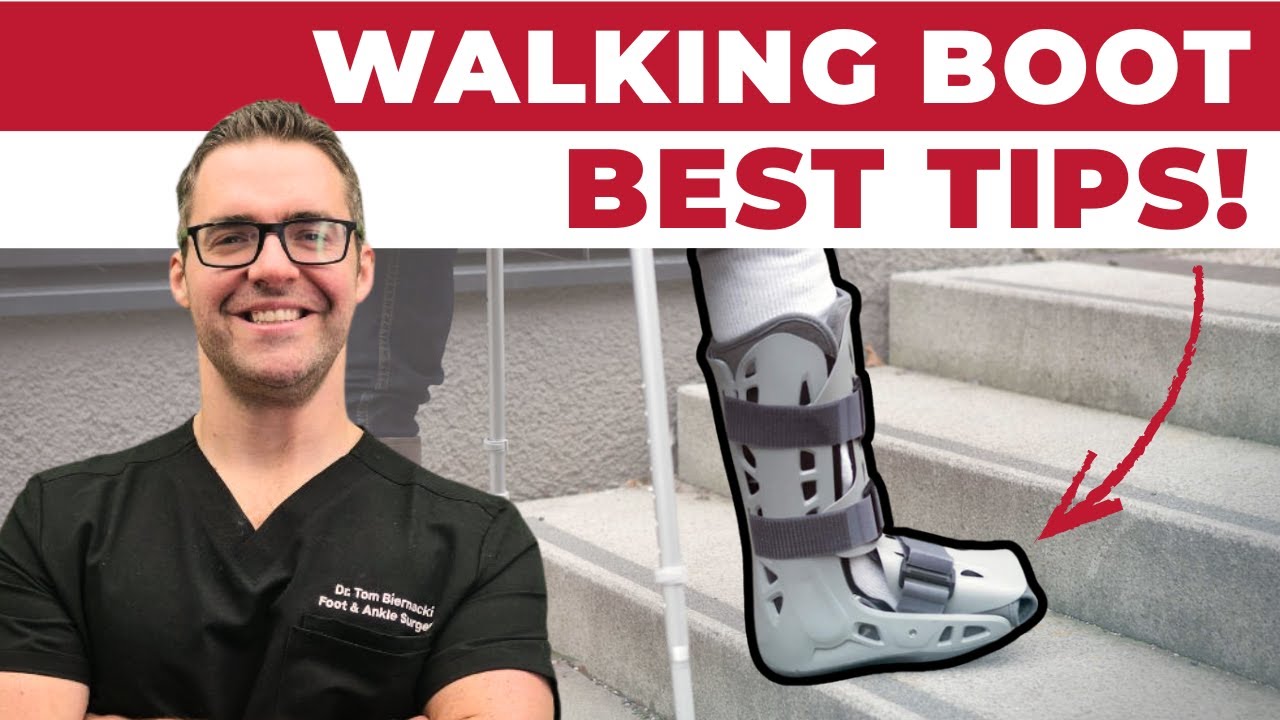
United Ortho Short Air Cam Walker Fracture Boot
Air-inflatable medical walking boot for post-op immobilization
The United Ortho short cam walker is the boot we actually hand out in clinic for post-surgical patients once they’re cleared to transition from a rigid cast. Inflatable air bladders along the medial, lateral, and dorsal aspects adjust pressure as swelling changes through recovery — critical in weeks 2-4 post-op when edema peaks. The rocker-bottom sole preserves forward propulsion so patients don’t develop limp compensations that spread to hip and back. FDA-registered Class I medical device. Size by shoe size (women subtract 1 from men’s chart). Don’t wear to sleep; boot immobilization during sleep is not standard protocol and causes skin breakdown. A proper walking boot should reach just below the knee for the short version; if it’s floppy around the ankle, it’s sized wrong.
- Post-bunion surgery weeks 2-6
- Metatarsal stress fracture
- Achilles tendon repair protection
- Complete non-weight-bearing orders
- Pediatric patients (sizing)
- ✔ Adjustable air bladders manage swelling
- ✔ Rocker-bottom sole preserves normal gait
- ✔ FDA-registered Class I medical device
- ✔ Lower cost than urgent-care rental
- ✖ Not a substitute for cast (talk to surgeon first)
- ✖ Bulky for driving (surgical side) — use a scuff shoe
DARCO APB Post-Op Shoe
Open-toed post-op shoe for bandage accommodation
The DARCO APB is the post-op shoe we hand patients walking out of the office after a nail avulsion, forefoot biopsy, or soft-tissue procedure. The rigid rocker sole prevents flexion through the forefoot, so sutures don’t pull. The adjustable hook-and-loop straps accommodate a bulky surgical dressing in weeks 1-2, then loosen as swelling subsides. Unlike the bulkier boots, it’s low-profile enough to get in and out of a car normally. Size up by one (if you wear an 8, order a 9) to accommodate post-op bandage thickness. The open-toe design lets clinicians inspect wound healing at follow-up without requiring patients to cut shoes. Disposable; replace if visibly contaminated.
- Post-ingrown-toenail removal
- Post-wart excision
- Forefoot suture protection
- Full surgical weight restriction
- Structural bunion or hammertoe rehab (needs boot)
- ✔ Low-profile (drives better than a boot)
- ✔ Accommodates bulky post-op bandages
- ✔ Rocker sole prevents forefoot flexion
- ✔ Under $30 — cheaper than clinic rentals
- ✖ Not for structural bone procedures
- ✖ No arch support — transitional only
ProCare Squared Toe Post-Op Shoe
Closed-toe rocker-sole recovery shoe with cushioned footbed
The ProCare squared toe is what patients transition into after graduating from the cam boot — around weeks 4-8 post-bunion, post-hammertoe, or post-fifth-metatarsal repair. Closed toe protects the incision from dirt and catches, and the cushioned polyurethane footbed is gentler on bone healing than the rigid DARCO APB plate. Rocker sole still prevents dorsiflexion through the MTP joints, which is what you need to keep the hardware (screws, plates) unloaded until consolidation. Machine-washable strap lining. Size true to regular shoe size (not up). Wear a sock with it — no sockless use; sweat pools in post-op shoes and slows incision healing.
- Transition from boot to regular shoe (weeks 4-8 post-op)
- Mild forefoot procedures
- Diabetic foot ulcer offloading
- Acute surgical recovery (needs boot)
- Non-weight-bearing restriction
- ✔ Gentler cushion than rigid DARCO boards
- ✔ Closed-toe protects surgical site
- ✔ Machine-washable strap lining
- ✔ Lower profile — easier to drive in
- ✖ Not suitable for weeks 1-3 post-op (needs boot)
- ✖ Sizing true-to-size (not size-up)
Products Not Enough? See Michigan's Top Foot Doctors.
Same-week appointments in Howell and Bloomfield Township. Most insurance accepted. 3,000+ surgeries performed. Patient-first practice — we listen.
Head-to-Head Comparison
Quick reference across all picks. Click any product name to jump to its full review above.
More Podiatrist-Recommended Surgery Essentials
OOFOS Recovery Slide


Post-op approved — impact-absorbing slide for early recovery.
HOKA Ora 3 Recovery Slide
Max-cushion recovery sandal — comfort for post-surgical swelling.
Hoka Bondi 9
Max-cushion walking shoe — ease into return-to-walking post-surgery.
As an Amazon Associate, Balance Foot & Ankle earns from qualifying purchases. Product recommendations are based on clinical experience; prices and availability shown above update live from Amazon.

When to See a Podiatrist
Foot and ankle surgery in 2026 is dramatically different than a decade ago — most procedures are now minimally-invasive, outpatient, and allow weight-bearing within days. Balance Foot & Ankle surgeons have performed 3,000+ foot/ankle surgeries with modern techniques. If another surgeon has recommended a traditional open procedure, a second opinion may reveal a faster, less-invasive option.
Call Balance Foot & Ankle: (810) 206-1402 · Book online · Offices in Howell & Bloomfield Township
Frequently Asked Questions
What’s the difference between a nerve block and general anesthesia?
A nerve block (popliteal or ankle) numbs a specific region below the injection site and lasts 12-24 hours. You may be sedated or awake depending on your comfort; your heart/lungs don't need intubation. General anesthesia renders you unconscious with a breathing tube and relies on IV medications to keep you asleep. For most bunion/hammertoe/midfoot surgery, a block + light sedation is safer and has better post-op pain control.
Will I feel anything during surgery?
No — regardless of technique. Proper local infiltration, a well-placed nerve block, or general anesthesia all eliminate pain during the procedure. Differences are in what you remember (awake + sedated vs unconscious), post-op pain duration, and side effect profile. Your anesthesiologist walks through specifics at your pre-op visit.
How long does a nerve block last?
Popliteal block: 18-24 hours typically. Ankle block: 12-18 hours. During that time, you have no pain sensation but also no strength — don't try to walk without support. Pain medications should be started before the block wears off (typically 8-10 hours post-op) to bridge the transition. This is the #1 mistake: patients wait until the block wears off and then chase the pain.
Are there risks to anesthesia?
Yes, but serious complications are rare (<0.1% in healthy outpatient foot surgery). More common: nausea (10-20% with general, <5% with blocks), sore throat (general only), temporary nerve soreness near block site (1-3%), urinary retention (spinal), low blood pressure. Tell your anesthesiologist about every medication including supplements — many interact.
Sources & References
Related Guides
Foot Surgery Preparation Checklist
Related podiatrist-written guide from Balance Foot & Ankle.
Bunion Surgery Recovery Timeline
Related podiatrist-written guide from Balance Foot & Ankle.
Getting a Second Opinion Before Foot Surgery
Related podiatrist-written guide from Balance Foot & Ankle.
For most outpatient foot/ankle surgery, a popliteal nerve block + light sedation offers the best post-op pain control with the lowest risk profile. General anesthesia reserved for complex cases or patient preference. Ask your surgeon + anesthesiologist which option matches your case.
Products Not Enough? See Michigan's Top Foot Doctors.
Same-week appointments in Howell and Bloomfield Township. Most insurance accepted. 3,000+ surgeries performed. Patient-first practice — we listen.
Balance Foot & Ankle — Michigan's Most-Trusted Podiatry Group
4.9★ · 1,123+ patient reviews · 3,000+ surgeries · 950K+ YouTube subscribers
Watch: Foot Surgery Anesthesia
Dr. Tom explains anesthesia options for foot and ankle surgery — local, regional block, and general.
Post-Anesthesia Recovery Kit
Post-op recovery after anesthesia needs mobility + swelling control. Dr. Tom’s starter kit:
As an Amazon Associate, Balance Foot & Ankle earns from qualifying purchases. This supports our free patient education content.
Non-weight-bearing mobility post-anesthesia.
First 72 hours swelling control.
Once incisions closed, supports venous return.
Supplements pain medication regimen.
Related: Foot & Ankle Surgery · Bunion Surgery · Book Pre-Op Consult
Visit Balance Foot & Ankle — Same-Day Appointments Available
Our podiatry team serves patients throughout Michigan including Howell, Brighton, and Bloomfield Township. If you’re dealing with heel pain, ingrown toenails, or a foot injury, we have same-day appointment availability.
Same-day appointments available. (810) 206-1402
Get Expert Care at Balance Foot & Ankle
Same-week appointments at our Howell and Bloomfield Township offices. Board-certified podiatric surgeons. Most insurance accepted.

Dr. Tom Biernacki, DPM is a board-certified foot & ankle surgeon (ABFAS & ABPM) at Balance Foot & Ankle Specialists in Southeast Michigan. With over a decade of clinical experience, he specializes in heel pain, bunions, diabetic foot care, sports injuries, and minimally invasive surgery. Dr. Biernacki is a member of the APMA and ACFAS, and his patient education content on MichiganFootDoctors.com and YouTube has made him one of the most-followed foot & ankle educators on YouTube.
More questions patients ask
Will I be awake during foot surgery?
For most foot surgeries, you have the choice. With local anesthesia plus oral sedation, you'll be awake but comfortable. With MAC sedation, you'll be in a twilight state and likely won't remember the procedure. With general anesthesia, you'll be completely unconscious. Over 85% of patients choose local or MAC sedation.
How long will my foot be numb after surgery?
Local anesthesia wears off in 2-8 hours. An ankle block with bupivacaine typically lasts 8-12 hours, sometimes up to 18. A popliteal nerve block can last 12-24 hours. This extended numbness provides a pain-free recovery window while oral medications take effect.
Can I eat before foot surgery?
For local anesthesia only, you can eat normally. For MAC sedation, no food for 8 hours but clear liquids up to 2 hours before. For general anesthesia, no food for 8 hours and no liquids for 4 hours. Your surgical coordinator provides specific instructions based on your procedure.
Is foot surgery anesthesia safe for diabetic patients?
Yes, with appropriate precautions including adjusted fasting protocols, blood glucose monitoring, and modified recovery plans. Regional anesthesia is often preferred for diabetics because it avoids the blood sugar fluctuations that general anesthesia can cause.
Does insurance cover anesthesia for foot surgery?
Yes. When foot surgery is medically indicated, anesthesia services are covered by virtually all insurance plans including Medicare. Balance Foot & Ankle accepts BCBS and most Michigan insurers. Call (810) 206-1402 to verify your specific coverage.
Still have a question about coverage or cost? Book online and we will check your benefits before your visit: Book in Howell · Book in Bloomfield Township. Prefer to talk it through first? Call (810) 206-1402.