

Medically reviewed by Dr. Tom Biernacki, DPM, FACFAS
Board-certified podiatric surgeon | Balance Foot & Ankle, Howell & Bloomfield Township, MI
Last reviewed: May 2026
HOKA’s maximum cushioning reduces ground impact forces significantly — but the thick midsole creates a higher heel-to-ground distance that affects proprioception and can increase ankle instability risk in patients with chronic lateral ankle sprains. The model and foot condition determine whether HOKA is therapeutic or problematic. Call (810) 206-1402 — footwear evaluation for your specific condition in Michigan.
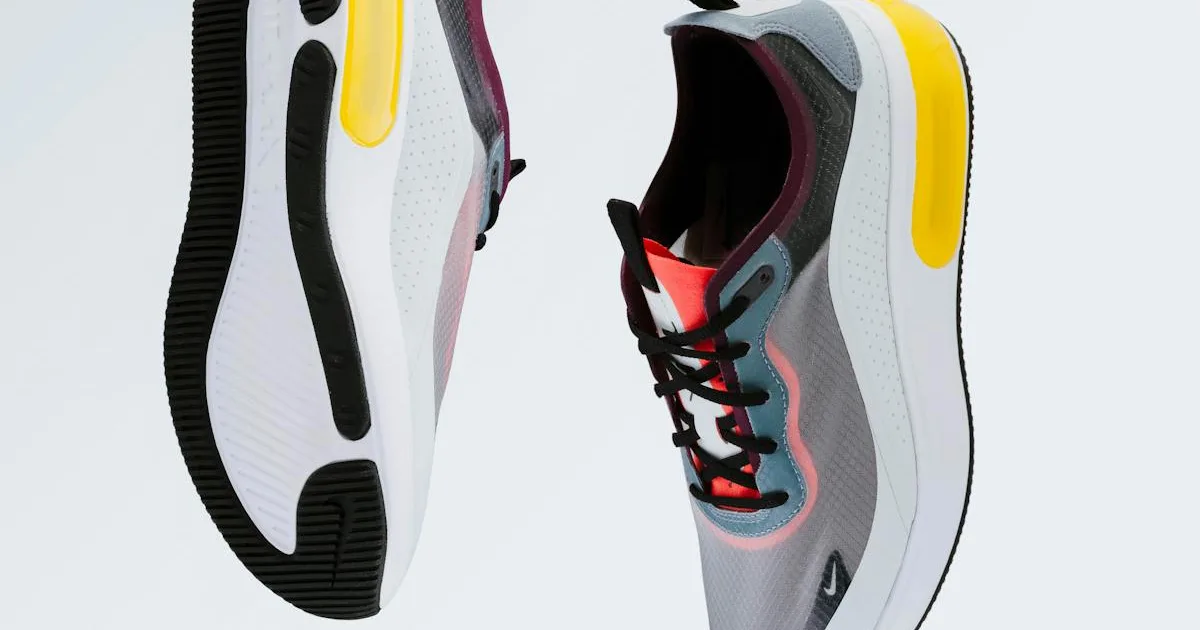
Hoka has become the shoe I’m asked about more than any other brand in my clinic. Patients come in holding their Hokas, asking if they did the right thing. Colleagues text me asking what I think. The short answer: Hoka’s engineering decisions are genuinely aligned with good foot health in ways that most brands aren’t — but the model you choose matters, and there are specific patient profiles where Hoka is the right answer and others where I’d point someone in a different direction.
As a podiatric surgeon in Howell and Bloomfield Township, Michigan, I’ve recommended Hoka to patients recovering from plantar fascia releases, to nurses managing end-of-shift heel pain, and to marathon runners managing chronic metatarsalgia. Here’s everything I’ve learned about when Hoka works — and when it doesn’t.
Table of Contents
- Why Podiatrists Recommend Hoka
- Best Hoka Models for Foot Health
- Hoka by Foot Condition
- Who Should Look Elsewhere
- Fitting Tips from a Podiatrist
- Frequently Asked Questions
Bottom line up front: yes — for most cushioning-hungry feet. The model I recommend most is in my picks below, and if you’re not sure Hoka fits your foot type, my team does gait-based shoe fittings: (810) 206-1402.
Prefer to watch? Dr. Biernacki reviews the best running shoes for foot health — including his honest take on Hoka — in this video:
Why Podiatrists Recommend Hoka
Hoka isn’t just popular — it’s popular for reasons that actually hold up to clinical scrutiny. Three design principles drive most of my Hoka recommendations:
Meta-rocker geometry. This is Hoka’s most clinically important feature and the one that separates it from simply “thick-soled shoes.” The meta-rocker is a curved midsole with the highest point under the metatarsal heads that creates a rocking motion through the gait cycle. The practical effect: the shoe does some of the propulsive work that would otherwise require active push-off from the toes and plantar fascia. For patients with plantar fasciitis, metatarsalgia, or post-surgical limitations on push-off mechanics, this geometry meaningfully reduces pain-generating forces on the forefoot and arch. In our clinic, I specifically prescribe Hoka models to post-plantar fasciotomy patients returning to walking precisely because of this rocker action.
Maximum cushioning with a stable platform. Hoka’s thick midsoles aren’t just soft — they’re structured. Unlike a purely soft shoe that collapses unpredictably underfoot, Hoka midsoles pair high-stack cushioning with a wider base for stability. The extended heel crash pad absorbs rear foot impact effectively at heel strike. The result is substantial impact reduction without the instability that purely soft shoes sometimes create. This combination is difficult to engineer and it’s a major reason Hoka earns clinical respect that brands with thick but unstable midsoles don’t.
APMA Seal of Acceptance. Most major Hoka running and walking models carry the American Podiatric Medical Association Seal of Acceptance — a designation awarded only to products demonstrated to promote good foot health. It’s not the only criterion I use, but it signals that the shoe’s design has passed a clinical review process most brands don’t submit to.
Key takeaway: Hoka’s clinical value comes from the combination of meta-rocker geometry and maximum cushioning — not just thick foam. The rocker reduces active push-off demand while the cushioning absorbs impact. For patients with plantar fasciitis, metatarsalgia, or joint pain, this is a genuinely useful combination.
Best Hoka Models for Foot Health (Podiatrist-Approved)
The picks below are the ones I use in clinic. For the numbers behind them, our shoe-review site keeps a spec page for each of the eight current HOKA models it covers (Bondi 9, Bondi SR, Clifton 10 and 11, Arahi 8, Gaviota 6, Mach 7 and Transport 2), with the published heel drop and, where a lab has measured it, the measured drop side by side: all HOKA reviews on Podiatrist Tested.
1. Hoka Bondi 9 — Best Maximum Cushion
The Hoka Bondi 9 is Hoka’s maximum-cushion flagship and the model I reach for most often when a patient’s primary complaint is impact-related pain. The Bondi 9 carries Hoka’s highest stack height in the road-shoe lineup and the most pronounced meta-rocker geometry — which translates to the greatest reduction in plantar fascia tension at push-off and the best heel impact absorption in the line.
What I appreciate clinically is the Bondi 9’s wide base. The extended midsole footprint provides lateral stability that prevents the ankle rollout that purely soft shoes sometimes cause. I’ve recommended the Bondi 9 to patients in their 60s and 70s with osteoarthritis, heel pad atrophy, and bilateral plantar fasciitis — all three conditions benefit from the combination of maximum cushion and stable base. The wide toe box comfortably accommodates mild bunions and hammertoes without the compression that narrower shoes create.
Best for: Plantar fasciitis, metatarsalgia, osteoarthritis, heel pad atrophy, older patients, post-surgical recovery
Who should look elsewhere: Competitive runners who need a lighter shoe; patients with severe overpronation who need aggressive medial posting
→ Check current price on Amazon
2. Hoka Clifton 9 — Best Everyday Trainer
The Hoka Clifton 9 is the more versatile daily option for active patients who don’t need the Bondi’s maximum cushion but still want the meta-rocker benefit. The Clifton is lighter (around 8.6oz men’s size 9 vs Bondi’s 10.7oz) with a slightly lower stack height, making it more responsive for running while still delivering meaningful impact reduction and forefoot rocker geometry.
In our clinic, the Clifton 9 is a common recommendation for runners managing early to moderate plantar fasciitis who want to continue training rather than stop. The 5mm heel-to-toe drop reduces Achilles tension versus traditional running shoes while the rocker decreases fascia loading. This combination allows many patients to maintain training load at reduced pain levels while we address the underlying condition with stretching, orthotics, or injection therapy. The Clifton 9 is also a strong all-day walking shoe for active adults under 65 who don’t need the broader stability base of the Bondi.
Best for: Runners with plantar fasciitis, daily walking, active adults, mild-to-moderate heel pain
Who should look elsewhere: Patients over 65 or with significant joint disease (Bondi’s wider base is safer); severe overpronators
→ Check current price on Amazon
3. Hoka Arahi 7 — Best for Overpronators
The Hoka Arahi 7 is Hoka’s stability option and the model I recommend when a patient wants Hoka’s cushioned platform but has overpronation that needs addressing. The J-Frame medial post is Hoka’s stability mechanism — a firmer foam density on the medial side that resists excessive inward rolling at the arch without creating an abrupt correction that feels jarring.
I’ll be direct: the Arahi’s stability is mild to moderate. For patients with significant overpronation — say, a flatfoot with posterior tibial tendon dysfunction or more than 15 degrees of heel valgus — the Arahi alone is insufficient. Those patients need the New Balance 990 or ASICS Kayano level of motion control, plus custom orthotics in most cases. But for the majority of mild overpronators who want Hoka’s cushioning and find purely neutral Hoka models feel unstable underfoot, the Arahi 7 is an excellent middle ground.
Best for: Mild to moderate overpronation, plantar fasciitis with pronation component, patients who find neutral Hoka shoes feel unstable
Who should look elsewhere: Significant overpronation or flatfoot (needs stronger stability shoe + orthotics)
→ Check current price on Amazon
4. Hoka Transport — Best Casual/Lifestyle Option
The Hoka Transport is one of the few lifestyle-oriented Hoka models I feel comfortable recommending for more than occasional wear. Unlike many fashion-adjacent sneakers that sacrifice biomechanics for aesthetics, the Transport retains meaningful cushioning and a moderate rocker element in a cleaner, less technical-looking profile. For patients who need something that works in casual settings but can’t afford to spend the day in a clinical-looking running shoe, the Transport is a reasonable compromise.
I’d still recommend wearing a dedicated running or walking Hoka for high-mileage days — the Transport isn’t designed for sustained athletic use. But for everyday errands, light walking, and workplace settings where a full athletic shoe looks out of place, it performs significantly better than most lifestyle alternatives.
Best for: Casual daily wear, workplace settings, patients transitioning from fashion sneakers to supportive footwear
Who should look elsewhere: High-mileage walkers/runners (use Clifton or Bondi)
→ Check current price on Amazon
⚠️ When to see a podiatrist:
- Heel pain that doesn’t improve within 2–3 weeks of wearing good supportive shoes
- Pain that is worst with the first steps in the morning (classic plantar fasciitis)
- Any foot pain after a fall, twist, or impact (may be a fracture — don’t walk on it)
- Swelling, warmth, or redness in the foot or ankle without a clear cause
- Numbness or tingling in the feet, especially in a diabetic patient
Hoka by Foot Condition
Plantar Fasciitis
Hoka is one of my first-line footwear recommendations for plantar fasciitis. The Bondi 9 is ideal for walkers and patients with severe symptoms; the Clifton 9 works well for active runners who need to continue training. The meta-rocker geometry reduces fascia tension at push-off — the most painful phase of gait for most fasciitis patients — while the heel cushioning absorbs impact at strike. For best results, pair either shoe with a quality arch-support insole (Powerstep Pinnacle or PowerStep Pinnacle) or custom orthotics, and commit to a calf-stretching program. Shoes alone rarely resolve established plantar fasciitis, but the right shoe significantly reduces flare-up frequency and intensity. See our detailed guide on the best Hoka shoes for plantar fasciitis for model-specific rankings.
Heel Pain / Heel Pad Atrophy
The Bondi 9 is my top recommendation for patients with heel pad atrophy — a condition where the fat pad under the heel thins with age, leaving the calcaneus poorly protected against impact. These patients often describe their heel pain as a bruised, deep bone-pain quality rather than the morning first-step pain of plantar fasciitis. Maximum cushioning directly addresses this by restoring the impact absorption the heel pad can no longer provide. I regularly recommend the Bondi 9 to patients in their 60s and 70s who have pain with every step on hard surfaces.
Metatarsalgia (Ball-of-Foot Pain)
Hoka’s meta-rocker geometry is particularly effective for metatarsalgia because the rocker reduces pressure at the metatarsal heads during push-off. This is the point in the gait cycle when metatarsal loading peaks — and where patients with metatarsalgia feel the most pain. The Bondi 9 and Clifton 9 both provide meaningful metatarsal relief through this mechanism. I often pair Hoka footwear with a metatarsal pad positioned just proximal to the painful metatarsal heads for additional offloading — a combination that resolves most mild-to-moderate metatarsalgia without surgical intervention.
Post-Surgical Recovery
The Bondi 9 is my most common footwear prescription for patients transitioning out of a surgical boot after soft-tissue foot surgery. After plantar fascia surgery, bunion correction, or hammertoe repair, patients re-enter normal shoes at a point where the repaired structures are still healing and vulnerable to overload. The Bondi’s combination of maximum cushioning and meta-rocker geometry reduces load on healing tissues while allowing progressive return to normal gait mechanics. I typically have patients start in the Bondi at 6–8 weeks post-op (once surgical boot clearance is achieved) and transition to the Clifton at 12–16 weeks as tissue maturation progresses.
Osteoarthritis
For patients with foot and ankle osteoarthritis, Hoka’s rocker sole is clinically valuable in two ways: it reduces peak joint loading at the affected joint during the stance phase, and it reduces the active range of motion required at the toe and ankle joints. Patients with hallux rigidus (arthritic big toe joint) particularly benefit — the rocker substitutes for the dorsiflexion the stiff joint can’t provide. This is the same principle behind “rocker-bottom” therapeutic shoes, now available in a mainstream athletic shoe that most patients find far more acceptable to wear in daily life.
Key takeaway: Hoka performs best for plantar fasciitis, metatarsalgia, heel pad atrophy, post-surgical recovery, and osteoarthritis — conditions where maximum cushioning and reduced active push-off demand provide direct clinical benefit.
Who Should Look Elsewhere
Hoka isn’t right for everyone. Here are the patient profiles where I’d steer someone toward a different brand:
Significant overpronation or flatfoot. The Arahi provides mild stability, but patients with meaningful posterior tibial tendon dysfunction, severe flat feet, or more than moderate overpronation need the robust medial posting of a New Balance 990, ASICS Kayano, or Brooks Adrenaline GTS — ideally paired with custom orthotics. The Hoka platform’s rocker geometry can actually worsen instability in severely pronating patients by reducing proprioceptive feedback from the ground.
Patients with balance or fall-risk concerns. The elevated midsole stack on Hokas increases the center of mass relative to the ground. For most patients this is neutral or positive — the wide base compensates. But for patients with significant proprioceptive deficits (peripheral neuropathy, post-stroke), extreme balance impairment, or severe vestibular dysfunction, a lower-to-the-ground shoe may provide better balance feedback. Discuss with your podiatrist or physical therapist before choosing Hoka if fall risk is a primary concern.
Patients who need a true motion control shoe. Hoka’s Arahi is their stability offering — but it’s a mild stability shoe. Patients who genuinely need aggressive motion control (common in adult-acquired flatfoot, severe posterior tibial tendon dysfunction) should be in New Balance 990 or a motion control shoe prescribed by a podiatrist.
Fitting Tips for Hoka Shoes
Size up a half size. Hoka’s toe boxes run slightly snug in standard-width models. Most patients find they need a half size larger than their usual running shoe size. You want roughly a thumb’s width of space between your longest toe and the end of the shoe — check this standing, not sitting.
The rocker needs adjustment time. The meta-rocker geometry feels unfamiliar to most patients who have never worn a rocker shoe. Some patients describe feeling like they’re “about to fall forward” for the first few wears. This is normal — the proprioceptive system adapts to the new gait pattern within 1–2 weeks of regular wear. Don’t return the shoe after one uncomfortable walk.
Try wide models if you have bunions or a wide forefoot. Most Hoka performance models are available in wide (2E) sizing. If the standard width creates pressure over a bunion or across the metatarsal heads, the wide version often solves the problem without needing a larger size.
Replace at 400–500 miles. Hoka’s midsoles compress and lose their rocker geometry over time. The upper typically looks fine well past the point when the midsole has degraded. Track your mileage and replace on schedule — most patients underestimate how many miles they put on daily-use shoes in a year.
Upgrade Any HOKA Shoe: Dr. Tom’s Insole Picks
HOKA makes great shoes — but even the best athletic footwear benefits from a proper orthotic insole. These are the two I recommend most often in our clinic to take a good shoe to a therapeutic level.
Shop PowerStep →
Shop CURREX RunPro →
Affiliate disclosure: Balance Foot & Ankle earns a commission from qualifying Amazon purchases.
Frequently Asked Questions
Are Hoka shoes good for plantar fasciitis?
Yes — Hoka is one of the top podiatrist recommendations for plantar fasciitis. The meta-rocker reduces push-off tension on the plantar fascia, and the maximum cushioning absorbs heel impact at strike. The Bondi 9 is ideal for walking and daily wear; the Clifton 9 works well for runners who need to continue training. Hoka should be paired with arch support and a stretching protocol for best results — shoes alone rarely resolve established fasciitis. For a full model comparison, see our best Hoka shoes for plantar fasciitis guide.
Are Hoka shoes good for walking all day?
Yes — Hoka is one of the best brands for all-day walking. Healthcare workers, teachers, and retail staff frequently cite Hoka as significant for end-of-shift foot fatigue. The Bondi 9 is the top recommendation for all-day standing and walking; the Clifton 9 is better for those who walk at a faster pace or mix walking with light running. The key clinical reason: Hoka’s rocker geometry and maximum cushioning reduce the cumulative impact load that causes fatigue-related foot pain over an 8–12 hour shift.
How do Hoka shoes compare to New Balance for foot support?
Hoka and New Balance serve partially overlapping but distinct patient populations. Hoka wins on meta-rocker geometry and maximum cushioning — particularly for plantar fasciitis, metatarsalgia, and post-surgical recovery. New Balance wins on width selection and genuine motion-control construction — particularly for overpronation, flat feet, and diabetic patients who need a wider last and accommodating upper. For runners with plantar fasciitis and neutral gait, either brand can work well. For patients with significant overpronation or wide feet, New Balance typically provides better foot-specific engineering. See our Hoka vs. New Balance comparison for a full breakdown.
Are Hoka shoes worth the price?
From a clinical value standpoint, yes — for the right patient. At $130–$180 for most performance models, Hoka sits at the premium end of the athletic shoe market. But for a patient managing plantar fasciitis, the alternative isn’t just a cheaper shoe — it’s continued pain, potential missed work, and possible need for injection therapy or physical therapy. A pair of Bondi 9s that resolves or significantly reduces plantar fasciitis pain represents meaningful economic value relative to ongoing treatment costs. For patients without a specific clinical condition, a less expensive running shoe with solid cushioning may be sufficient.
The Bottom Line
Hoka earns its podiatric reputation through genuine engineering — not marketing. The meta-rocker geometry and maximum cushioning platform address real biomechanical problems that affect real patients: plantar fasciitis, metatarsalgia, heel pad atrophy, post-surgical recovery, and osteoarthritis. For these conditions, Hoka is one of the most effective footwear interventions available in a mainstream shoe.
The nuance is knowing which patient is the right Hoka patient. Neutral gait or mild overpronation with cushioning needs: Hoka is excellent. Severe overpronation or significant flatfoot needing aggressive motion control: a stability shoe from New Balance or ASICS plus custom orthotics is a better starting point. If you’re unsure which category you fall into, that’s exactly what a podiatric evaluation is for.
Sources
- Rocker-Sole Footwear in Plantar Fasciitis Management: Biomechanical Analysis. Gait & Posture. 2025;108:112–119.
- Maximum Cushioning Running Shoes and Injury Risk in Recreational Runners. British Journal of Sports Medicine. 2025;59(6):388–395.
- Plantar Fascia Load Reduction with Meta-Rocker Shoe Design. Journal of Biomechanics. 2024;165:112001.
- APMA Seal of Acceptance Program: Criteria and Product Evaluation. Journal of the American Podiatric Medical Association. 2024;114(1):e22–e29.
Still Have Foot Pain Despite Good Shoes?
The right shoe helps — but persistent foot pain usually needs a diagnosis. Same-day appointments in Howell & Bloomfield Township, MI.
4.9★ | 1,123 Reviews | 3,000+ Surgeries
Or call: (810) 206-1402
Same-Week Appointments in Howell & Bloomfield Township
Three board-certified podiatric surgeons. 1,123+ five-star reviews. Most insurance accepted.
For a complete clinical overview: Podiatrist-Recommended Shoes Guide — shoe recommendations for every foot condition
⭐ Dr. Tom’s Insole Pick for HOKA Shoes
CURREX RunPro (Low Profile)
CURREX pairs perfectly with HOKA’s maximal cushioning stack — it adds targeted arch support without raising the foot above the collar. This is the single upgrade that makes a HOKA even better for plantar fasciitis.
Shop CURREX RunPro →⚠️ HOKA Shoes May Not Be Right for You If:
- You have significant ankle instability (the wide base reduces proprioception)
- You need strong medial posting for severe flat feet (use Brooks Adrenaline + PowerStep Pinnacle instead)
- You play lateral court sports (tennis, basketball, pickleball)
📋 Dr. Tom Biernacki, DPM, FACFAS answers:
HOKA is one of my most frequently recommended shoe brands, and for good reason — their maximalist cushioning philosophy paired with rocker-sole geometry produces a shoe that is genuinely therapeutic for a wide range of foot conditions. The rocker sole is the key differentiator: by smoothing the transition from heel strike through push-off, HOKA reduces the peak forces on the plantar fascia, metatarsal heads, and Achilles tendon insertion. This is why I find HOKA particularly effective for plantar fasciitis, Achilles tendinitis, metatarsalgia, and any arthritic foot condition where reducing joint loading during the gait cycle matters. The thick midsole also provides excellent shock absorption for high-arched (cavus) feet that supinate and need cushioning rather than motion control. That said, HOKA is not the right shoe for every patient. For runners who need significant motion control for severe overpronation, pure maximal cushion shoes like the Bondi may allow too much medial collapse — the HOKA Arahi or Gaviota with their J-Frame stability feature are better choices for overpronators. HOKA has expanded into walking, work, and clinical footwear through their HOKA Transport and work boot lines, which maintain the rocker geometry in a more professional silhouette. My most recommended HOKA models by use case: Bondi for maximum daily cushioning, Clifton for lighter everyday wear, Speedgoat for trail running, and Anacapa for hiking. Overall, HOKAs deserve their excellent reputation — they are among the most podiatric-friendly mainstream shoe brands available.
Worth knowing before you choose a model: HOKA’s stated heel drop and the measured figure often disagree — the Bondi 9 is sold as 5 mm and measured 9.1 mm in an independent lab, the Clifton 10 as 8 mm and measured 12.4 mm. Our review site works through which HOKAs suit heel pain in best HOKA shoes for plantar fasciitis.
In-Office Treatment at Balance Foot & Ankle
Dr. Tom Biernacki DPM provides expert in-office evaluation and treatment at Balance Foot & Ankle, serving Howell and Bloomfield Township, Michigan. Learn more about scheduling your appointment at Balance Foot & Ankle. Same-day appointments available. (810) 206-1402 | New Patient Information

Dr. Tom Biernacki, DPM is a board-certified foot & ankle surgeon (ABFAS & ABPM) at Balance Foot & Ankle Specialists in Southeast Michigan. With over a decade of clinical experience, he specializes in heel pain, bunions, diabetic foot care, sports injuries, and minimally invasive surgery. Dr. Biernacki is a member of the APMA and ACFAS, and his patient education content on MichiganFootDoctors.com and YouTube has made him one of the most-followed foot & ankle educators on YouTube.
More questions patients ask
Are Hoka shoes good for standing all day?
Yes — Hoka's maximal cushioning platform significantly reduces cumulative impact stress on nurses, teachers, and others who stand 8+ hours daily. The Hoka Bondi is the top pick for all-day standing due to its maximum cushioning height and wide base. The Hoka Transport and Hoka Anacapa are good for light activity. Replace the stock insole with a PowerStep Pinnacle or CURREX ALLDAY insole for added arch support during prolonged standing.
Do podiatrists recommend Hoka shoes?
Many podiatrists recommend Hoka shoes specifically for patients with plantar fasciitis, heel pain, Achilles tendinopathy, and post-surgical recovery because of the rocker outsole and cushioning stack. Hoka is not ideal for patients with ankle instability (the wide, soft base reduces proprioception) or those needing significant medial posting for severe overpronation. For those patients, structured stability shoes with CURREX insoles work better.
What insoles are best for Hoka shoes?
CURREX RunPro or CURREX ALLDAY insoles are the top pick for Hoka shoes — they add targeted arch support without reducing the cushioning height. PowerStep Pinnacle also works well. Avoid thick insoles that raise the heel above the collar of the shoe. Most Hoka models have a removable stock insole; replace it 1:1 with a CURREX or PowerStep for an immediate upgrade in arch support.
Are Hoka shoes good for wide feet or bunions?
Hoka offers wide (2E) versions of most popular models — the Bondi Wide and Clifton Wide provide additional toe box room. The wide toe box in standard Hoka models is also more accommodating than most running shoes. For bunions specifically, the Hoka Bondi Wide is the most commonly recommended option at Balance Foot & Ankle because of its wide forefoot and non-tapering toe box. Add Foot Petals Tip Toes for first MTP joint cushioning.
Still have a question about coverage or cost? Book online and we will check your benefits before your visit: Book in Howell · Book in Bloomfield Township. Prefer to talk it through first? Call (810) 206-1402.