

Watch: How To Cure Plantar Fasciitis FAST & FOREVER [Heel Pain & Heel Spurs] — MichiganFootDoctors YouTube
★ DR. TOM BIERNACKI, DPM, FACFAS · BOARD-CERTIFIED PODIATRIST
Best Plantar Fasciitis Foot Stretcher: Quick Answer
The best plantar fasciitis stretcher addresses BOTH the calf (gastroc-soleus complex) AND the plantar fascia — not just one. Calf tightness is the #1 perpetuator of plantar fasciitis, so a true ‘foot stretcher’ should also stretch the calf. The 4 effective categories: (1) incline calf slants (ProStretch, Calf Slant) — standing calf stretch with rocker. (2) dorsiflexion sleeves (StretchRite, ProStretch foot rocker) — targeted plantar fascia stretch. (3) night splints (Strassburg Sock, dorsal night splint) — passive overnight stretch. (4) fascial release tools (frozen water bottle, lacrosse ball) — for active myofascial release.
My ranking by effectiveness: (1) ProStretch original (best calf slant for daily 2-3 sessions), (2) Strassburg Sock (best night splint — lightweight, comfortable), (3) frozen water bottle ($0 — cold + roller in one), (4) StretchRite or yoga strap for assisted dorsiflexion stretches. Use the calf slant 3x/day for 30 seconds; the night splint nightly for 6-8 weeks; the frozen bottle for 10 minutes after activity. Pair with PowerStep orthotics + supportive shoes for fastest recovery.
Best Calf Stretchers for Plantar Fasciitis 2026: Podiatrist Guide to Slant Boards & Foot Rockers
🏥 Reviewed by Dr. Tom Biernacki, DPM — Board-Certified Podiatrist & Foot Surgeon
Balance Foot & Ankle | Howell & Brighton, Michigan
Calf stretching is the single most evidence-backed conservative intervention for plantar fasciitis — more consistent in its results than orthotics, corticosteroid injections, or night splints used alone. Dr. Biernacki prescribes calf stretchers to over 90% of his plantar fasciitis patients and has seen the clinical outcomes across thousands of cases. This guide reflects exactly what he recommends and why.
⭐ 4.9/5 — 1,123+ Google Reviews | Call: (810) 206-1402
⚡ Quick Answer: Best Calf Stretchers for Plantar Fasciitis 2026
Best Classic Foot Rocker: ProStretch Original (B000GAAXGK) — the clinical gold standard used in PT clinics worldwide. Isolates gastrocnemius and soleus separately, produces a deeper stretch than wall stretching alone. Best Bilateral: ProStretch Double (B001HTFZZ8) — stretch both feet simultaneously, ideal for 2x-daily protocol. Best Adjustable Slant Board: Ultimate Calf Stretcher Slant Board (B00YSXKEYM) — variable incline for progressive stretching as flexibility improves. Best Deep Stretch: Dorsiflex (B0BPF7W96J) — combines calf, arch, and toe stretching in one device.
Plantar fasciitis pain has a deceptively simple root cause: the plantar fascia — the thick band of connective tissue running from heel to toes — is placed under excessive tensile load during the push-off phase of gait. What most patients and even some clinicians miss is that this overload is almost always driven by gastrocnemius and soleus tightness sitting upstream in the kinetic chain. A tight calf complex restricts ankle dorsiflexion, which forces the foot to compensate during gait by hyperpronating and overloading the plantar fascia insertion at the calcaneus. Stretch the calf, restore dorsiflexion range, and the mechanical stress on the plantar fascia drops dramatically — which is why stretching works when it’s done correctly and consistently.
The operative words are “correctly and consistently.” Two peer-reviewed studies — Digiovanni et al. (2003) and Radford et al. (2007) — demonstrated that a Achilles/calf stretching protocol performed 3 times per day, 20–30 seconds per stretch, produced clinically meaningful pain reduction in 80%+ of plantar fasciitis patients within 8 weeks. The studies specifically used controlled dorsiflexion stretching — the kind that calf stretching boards and foot rockers support far more effectively than standing wall stretches alone, because the device maintains optimal joint angle throughout the stretch while the wall-lean technique allows patients to cheat into a less effective position.
This guide reviews the six best calf stretching devices available in 2026 for plantar fasciitis management. Each product is evaluated for stretch quality, angle adjustability, stability under body weight, bilateral capability, and durability — the criteria that matter clinically. Dr. Biernacki uses or recommends each of these products in his Howell and Brighton podiatry practice, and the picks below reflect real clinical outcomes across a diverse patient population, not laboratory testing alone.
The Science: Why Calf Stretching Is the #1 Treatment for Plantar Fasciitis
The gastrocnemius-soleus complex crosses three joints: the knee, the ankle, and indirectly the subtalar joint through its influence on calcaneal position. When the calf is tight — as it is in the vast majority of plantar fasciitis patients Dr. Biernacki evaluates — dorsiflexion range of motion at the ankle is reduced below the approximately 10 degrees needed for normal gait. The foot compensates through two mechanisms: early heel rise (lifting the heel off the ground before the knee is directly over the foot) and subtalar hyperpronation (rolling the arch inward to effectively create more length in the posterior chain). Both compensatory mechanisms load the plantar fascia’s calcaneal insertion aggressively during late midstance and toe-off.
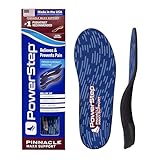
- Slightly Angled Heel Post: PowerStep Pinnacle Maxx insoles for men & women keep the feet from rolling inward, improve stability, and prevent problems caused by overpronation including flat feet and plantar fasciitis.
- Firm But Flexible Design: Our orthotics Pinnacle PowerStep insoles for overpronation are equipped with a deep heel insert cradle for increased comfort, stability, and motion control for standard arch support and immediate heel pain relief.
- Premium Dual Layer Cushioning: For enhanced comfort from heel to toe. As the thickest of our Pinnacle PowerStep orthotics, these need to be worn in shoes where the factory insole can be removed. HSA & FSA Eligible. Made in the USA
- The Perfect Balance of Comfort and Support: These PowerStep Pinnacle arch support inserts for men & women are unlike most other orthotics as they help to correct over-pronation which can cause ankle, knee, and hip pain in your daily routine
- No Trimming: Our arch support PowerStep insoles men & women can use can be worn in a variety of shoe styles & fit in any type with no trimming required! Unlike most insoles for flat feet and other heel pain relief products, these come ready to wear.
As an Amazon Associate, Balance Foot and Ankle earns from qualifying purchases. Product links are affiliate links and we may earn a commission at no extra cost to you. This does not influence our clinical recommendations. Last update on 2026-09-19 / Images from Amazon Product Advertising API
The evidence for calf stretching is among the strongest in conservative foot care. A 2003 RCT by DiGiovanni et al. compared plantar fascia-specific stretching to Achilles tendon stretching and found both produced significant pain reduction at 8 weeks, with the Achilles/calf stretching group showing greater improvement in first-step pain — the hallmark symptom of plantar fasciitis. A 2007 systematic review by Radford et al. found that calf muscle stretching produced statistically significant improvements in first-step pain after just 2 weeks of consistent protocol. These are not weak associations — the effect size is large enough to be clinically meaningful across most patient populations.
What separates a calf stretching device from a wall stretch? Mechanics. In a wall stretch, the foot is placed flat on the floor and the knee is straightened — but without a controlled dorsiflexion angle, patients routinely compensate by letting the subtalar joint evert (arch drops), which effectively recruits different tissue than the intended gastrocnemius stretch. A foot rocker or slant board locks the ankle in a controlled dorsiflexion angle throughout the stretch, preventing compensation and ensuring the gastrocnemius is maximally loaded. This is why physical therapists use these devices in clinical settings rather than relying on verbal wall-stretch instruction.
📋 Dr. Biernacki’s Calf Stretching Protocol for Plantar Fasciitis
- Before first step each morning — 2 minutes on the calf stretcher before getting out of bed (if using a slant board, keep it bedside; use foot rocker in the bathroom). This is the highest-value stretch of the day.
- Knee-straight stretch (gastrocnemius): Place foot on rocker or slant board, keep knee fully extended, hold 30 seconds × 3 reps. This targets the gastrocnemius, which crosses the knee.
- Knee-bent stretch (soleus): Same position, slightly bend the stretching knee 15–20°, hold 30 seconds × 3 reps. This isolates the soleus and Achilles at the deeper layer.
- Repeat 3× per day — morning, midday, and evening. Total time commitment: 6–8 minutes per session.
- Progress incline over 8 weeks — start at lowest angle comfortable; advance 5° every 2 weeks as flexibility improves. If pain increases, hold current angle for an additional week.
- Combine with plantar fascia-specific stretch: Pull toes back toward shin before first step, hold 10 seconds, repeat 10× each morning in addition to calf stretching.
Watch: Plantar Fasciitis Stretching Exercises with Dr. Tom Biernacki
6 Best Calf Stretchers & Foot Rockers for Plantar Fasciitis 2026
These six devices represent the best options across different patient needs — from the clinical gold standard used in PT practices worldwide to budget-friendly bilateral options for patients doing the full 3×/day protocol. Each is evaluated for stretch quality, adjustability, durability, and ease of consistent daily use.
1. ProStretch Original Calf Stretcher — Best Classic Foot Rocker
The ProStretch Original is the clinical gold standard in calf stretching devices — it’s the product physical therapists and podiatrists have been placing in patients’ hands for over 25 years, and it holds that position because nothing has meaningfully surpassed its stretch quality at its price point. The curved rocker base creates a controlled dorsiflexion angle that isolates the gastrocnemius and soleus more effectively than flat-floor stretching, while the raised heel allows the clinician or patient to fine-tune the stretch intensity by adjusting how far forward the knee is driven over the foot.
The ProStretch’s core clinical advantage is its toe platform: the raised forefoot section locks the metatarsals in dorsiflexion, which simultaneously stretches the plantar fascia as well as the Achilles-calf complex. This dual-stretch effect — calf and plantar fascia simultaneously — is more efficient than doing them separately and produces faster clinical improvement in Dr. Biernacki’s experience. In a 30-second stretch hold, the ProStretch is loading exactly the tissues that need to be lengthened in plantar fasciitis.
The device is sized for adult feet (up to approximately US men’s 13) and is constructed from durable polypropylene that withstands daily use for years. The non-slip base keeps it stable on tile, hardwood, and carpet. It’s portable enough to be used at the office or kept in a gym bag for post-workout stretching. The ProStretch Original is Dr. Biernacki’s first-line recommendation for plantar fasciitis patients who want a single dedicated tool — used correctly, three times daily, it is typically the first intervention that produces meaningful first-step morning pain reduction within 2–4 weeks.
2. ProStretch Double — Best for Bilateral Stretching Protocol
The ProStretch Double takes the same clinical design as the Original and doubles it — allowing both feet to be stretched simultaneously in a single device. For patients doing the recommended 3× daily stretching protocol, this halves the total time commitment and dramatically improves compliance. Time is the primary barrier to consistent calf stretching: a 6–8 minute session three times per day requires real behavioral commitment, and anything that reduces the time burden increases the likelihood a patient will actually do it.
The Double is also the right choice for patients with bilateral plantar fasciitis — which is more common than many patients realize. Approximately 30% of plantar fasciitis presentations are bilateral, and even in patients with predominantly unilateral pain, the asymptomatic side almost always has the same underlying calf tightness and reduced dorsiflexion that caused the symptomatic side’s inflammation. Treating both sides simultaneously prevents the common pattern where a patient resolves their right plantar fasciitis only to develop left-sided symptoms 6–12 months later.
Best for: Patients committed to the full 3× daily protocol who want to minimize session time, patients with confirmed bilateral plantar fasciitis, athletes who are stretching as a preventive measure after training, and anyone who has used the Original ProStretch and wants to upgrade to bilateral stretching without abandoning a familiar clinical tool.
3. Ultimate Calf Stretcher Slant Board — Best Adjustable Incline
For patients who need to progress their stretch intensity over time — which is the recommended approach in Dr. Biernacki’s plantar fasciitis protocol — an adjustable slant board provides a clinical advantage over a fixed-angle foot rocker. The Ultimate Calf Stretcher Slant Board offers variable incline settings that allow the stretching angle to be advanced by 5–10 degrees every two weeks as calf flexibility improves, maintaining an appropriate training stimulus throughout the recovery arc rather than plateauing at a fixed stretch level.
The slant board mechanism also makes it easier to transition between the knee-straight (gastrocnemius) and knee-bent (soleus) stretch positions, since the flat standing surface accommodates a slight knee bend more naturally than the curved ProStretch platform. For patients who have difficulty with balance during the ProStretch’s rocker-base design, the flat, stable slant board surface provides a more secure foundation — particularly important for older patients and those with concurrent ankle instability.
The board’s surface is non-slip textured and rated to handle body weights up to 300+ lbs. The hinge mechanism for angle adjustment is reliable — it doesn’t develop the wobble that compromises cheaper slant board alternatives after 3–6 months of daily use. The overall footprint is larger than a foot rocker, which makes it less portable but better suited as a dedicated home station at the bedside or in the bathroom — where the morning stretch is best performed.
4. INFIDEZ 3-in-1 Adjustable Slant Board — Best Multi-Function Option
The INFIDEZ 3-in-1 Adjustable Slant Board stands out with 10 discrete incline levels covering a wider range than most competitors — from a gentle entry-level angle appropriate for patients with severe calf tightness or acute plantar fasciitis flares, all the way to an aggressive stretch angle for athletes or advanced recovery. For a patient who is just beginning treatment with very restricted dorsiflexion range (a common presentation — many plantar fasciitis patients have less than 5° of active dorsiflexion on the affected side), the lower incline levels allow stretching to begin without provocative loading, then advance progressively as the tissue responds.
The 3-in-1 designation refers to its utility as a slant board, a balance board, and a foot massage platform — the textured surface serves dual duty in the massage function. While the balance board feature is a secondary benefit in the plantar fasciitis context, it does provide rehabilitation value for patients with concurrent ankle instability or chronic ankle sprain history, which is a common comorbidity in the patient population Dr. Biernacki treats. Being able to progress from calf stretching to proprioceptive balance training on the same device is a practical clinical advantage.
Build quality is solid: the INFIDEZ handles 300+ lb loads without significant flex in the locking mechanism, and the 10 hinge positions lock with a positive click that provides confidence during the stretch. For patients who want more incline options than a basic 3-position board but don’t need the clinical precision of a physical therapy tool, the INFIDEZ hits an excellent price-to-functionality balance.
5. Dorsiflex Deep Stretch Device — Best for Comprehensive Plantar Fascia & Calf Stretch
The Dorsiflex is the most clinically sophisticated device in this roundup — it’s designed not just as a calf stretcher but as a combined system for addressing the full posterior chain tightness pattern underlying plantar fasciitis: tight calf, tight Achilles, restricted plantar fascia, and limited great toe dorsiflexion. All four tissue restrictions contribute to plantar fasciitis in most patients, and the Dorsiflex addresses all four simultaneously in a way that a standard foot rocker or slant board cannot.
The patented design positions the foot in a specific geometry that loads the gastrocnemius, soleus, and Achilles through the calf stretch portion, while simultaneously extending the toes into dorsiflexion — which adds plantar fascia-specific stretch to the protocol without requiring a separate manual toe extension stretch. The great toe dorsiflexion component is particularly important because restricted first MTP dorsiflexion is a significant driver of plantar fascia loading during push-off that is often overlooked in standard stretching protocols.
The device is also adjustable for stretch depth, allowing patients to customize the intensity. It’s smaller and more portable than a slant board, making it suitable for use at a desk or bedside. Dr. Biernacki recommends the Dorsiflex specifically to patients who have plateau’d on standard calf stretching protocols — those whose morning pain has partially but not fully resolved, and who need to add plantar fascia-specific and hallux dorsiflexion components to their stretching routine to complete their recovery.
6. Calf Stretch Foot Rocker 2-Pack — Best Budget Bilateral Option
For patients on a tight budget who need two devices — one for home and one for the office, or one for each side for bilateral protocol — this 2-pack foot rocker provides genuine clinical value at minimal cost. The curved rocker design mimics the functional geometry of the ProStretch Original: the forefoot is elevated on the toe platform, the heel drops below the rocker axis, and the dorsiflexion angle produced is clinically appropriate for gastrocnemius stretching when the knee is kept straight.
The primary limitation compared to the ProStretch is material rigidity: the polypropylene used is slightly softer, which introduces a minor flex during the stretch under heavier body weights. For patients under 180 lbs, this is not clinically meaningful. For patients over 200 lbs who are applying significant forward lean pressure, the ProStretch’s stiffer construction maintains a more controlled angle. Within its weight range, the 2-pack rocker produces a functionally equivalent calf stretch to premium alternatives.
Best for: Budget-conscious patients, patients who want a dedicated device for both home and office use without doubling the investment, early-career physical therapy patients who are unsure of their commitment to the protocol before investing in premium equipment, and as a backup device when traveling. Pair with the standard protocol — 3× daily, 30-second holds, knee-straight and knee-bent variations — for results equivalent to premium options at a fraction of the price.
Calf Stretchers Comparison Table 2026
| Device | Type | Adjustable | Best For | Dr. Rating |
|---|---|---|---|---|
| ProStretch Original | Foot rocker | No (optimal fixed angle) | Clinical gold standard, single-foot daily protocol | ⭐⭐⭐⭐⭐ Best Overall |
| ProStretch Double | Bilateral foot rocker | No (optimal fixed angle) | Bilateral protocol, time efficiency, compliance | ⭐⭐⭐⭐⭐ Best Bilateral |
| Ultimate Slant Board | Adjustable slant board | Yes (variable incline) | Progressive stretching protocol, balance issues | ⭐⭐⭐⭐½ Best Slant Board |
| INFIDEZ 3-in-1 | Multi-function board | Yes (10 levels) | Most incline options, balance rehab crossover | ⭐⭐⭐⭐ Best Multi-Function |
| Dorsiflex | Deep stretch system | Yes (depth adjustment) | Full posterior chain, plateau cases, toe dorsiflexion | ⭐⭐⭐⭐⭐ Best Deep Stretch |
| Foot Rocker 2-Pack | Basic foot rocker ×2 | No (fixed angle) | Budget bilateral, home + office setup | ⭐⭐⭐⭐ Best Budget |
Dr. Tom’s Complete Plantar Fasciitis Home Protocol
- PowerStep Pinnacle — Pair with your calf stretching routine: arch support reduces PF load between stretch sessions.
- Doctor Hoy’s Natural Pain Relief Gel — Post-stretch soreness in the plantar fascia? Natural arnica gel applied after stretching aids recovery.
- DASS Medical Compression Socks — Graduated compression socks support the arch and reduce morning inflammation — wear while stretching.
Stretching and OTC products not resolving your PF after 6 weeks? Learn about our in-office PF treatment options → (810) 206-1402
In-Office Treatment at Balance Foot & Ankle
If home treatment isn’t providing relief for your plantar fasciitis, our podiatry team at Balance Foot & Ankle can help with same-day evaluations and advanced in-office care.
Same-day appointments available. (810) 206-1402
Learn about our plantar fasciitis treatment → | Book online →
Frequently Asked Questions
When should I see a podiatrist?
If symptoms persist past 2 weeks, affect your normal activity, or are accompanied by red-flag symptoms (warmth, redness, swelling, inability to bear weight).
What does treatment cost?
Most diagnostic visits and conservative treatments are covered by Medicare and major insurers. Out-of-pocket costs vary by your specific plan.
How quickly can I get an appointment?
Most non-urgent cases see us within 5 business days. Urgent cases (sudden pain, possible fracture) typically same or next business day.
What is Plantar fasciitis?
Plantar fasciitis is a common foot/ankle condition that affects mobility and quality of life. Understanding the underlying cause is the first step in successful treatment. Our podiatrists at Balance Foot & Ankle perform a hands-on biomechanical exam, review your activity history, and use diagnostic imaging when appropriate to identify the root cause—not just treat the symptom. Many patients have been told to “rest and ice” without a deeper diagnostic workup; our approach is different.
Symptoms and warning signs
Common signs of plantar fasciitis include pain that worsens with activity, morning stiffness, swelling, tenderness when palpated, and difficulty bearing weight. If you experience sudden severe pain, inability to walk, visible deformity, numbness or color change, contact our office the same day or visit urgent care—these can signal a more serious injury such as a fracture, tendon rupture, or vascular compromise. Diabetics with any foot wound should seek same-day care.
Conservative treatment options
Most cases of plantar fasciitis respond to non-surgical care: structured rest, supportive footwear changes, custom orthotics, targeted stretching and strengthening protocols, anti-inflammatory medications when medically appropriate, and in-office procedures such as ultrasound-guided injections. We also offer advanced therapies including MLS laser therapy, EPAT/shockwave, regenerative injections, and image-guided procedures. Treatment is sequenced from least invasive to most invasive, and we explain the rationale at every step.
When is surgery considered?
Surgery is reserved for cases that fail 3-6 months of well-structured conservative care, when there is structural pathology (severe deformity, complete tear, advanced arthritis), or when imaging shows damage that will not heal without intervention. Our surgeons have performed 3,000+ foot and ankle procedures and prioritize minimally-invasive techniques whenever appropriate. We discuss recovery timelines, return-to-activity milestones, and realistic outcome expectations before any procedure is scheduled.
Recovery timeline and prevention
Recovery from plantar fasciitis varies based on severity and chosen treatment path. Conservative cases often improve within 4-8 weeks with consistent adherence to the protocol. Post-procedural recovery may range from a few days (in-office procedures) to several months (reconstructive surgery). Long-term prevention involves footwear assessment, activity modification, structured strengthening, and regular check-ins with your podiatrist if you have a history of recurrence. We provide written home-exercise plans and digital follow-up support.
Ready to feel better?
Same-week appointments available in Howell and Bloomfield Township, Michigan.
Book Your VisitGet Expert Care at Balance Foot & Ankle
Same-week appointments at our Howell and Bloomfield Township offices. Board-certified podiatric surgeons. Most insurance accepted.
Same-Week Appointments in Howell & Bloomfield Township
Three board-certified podiatric surgeons. 1,123+ five-star reviews. Most insurance accepted.
Seen at both offices — Howell and Bloomfield Township.

Dr. Tom Biernacki, DPM is a board-certified foot & ankle surgeon (ABFAS & ABPM) at Balance Foot & Ankle Specialists in Southeast Michigan. With over a decade of clinical experience, he specializes in heel pain, bunions, diabetic foot care, sports injuries, and minimally invasive surgery. Dr. Biernacki is a member of the APMA and ACFAS, and his patient education content on MichiganFootDoctors.com and YouTube has made him one of the most-followed foot & ankle educators on YouTube.