
Quick answer: Best Foot Roller Massage Tools Plantar Fasciitis 2026 is a common foot/ankle topic that affects many patients. Effective treatment starts with a targeted diagnosis, conservative-first treatment, and escalation only when needed. We treat this regularly at our Howell and Bloomfield Township practices. Call (810) 206-1402.
Medically reviewed by Dr. Tom Biernacki, DPM · Board-Certified Podiatric Surgeon · Last reviewed: April 2026 · Editorial Policy
The most important clinical decision with Best Foot Roller Massage Tools Plantar Fasciitis 2026 isn’t which treatment to start with — it’s identifying the correct subtype. That changes everything. Call (810) 206-1402.
Quick Answer
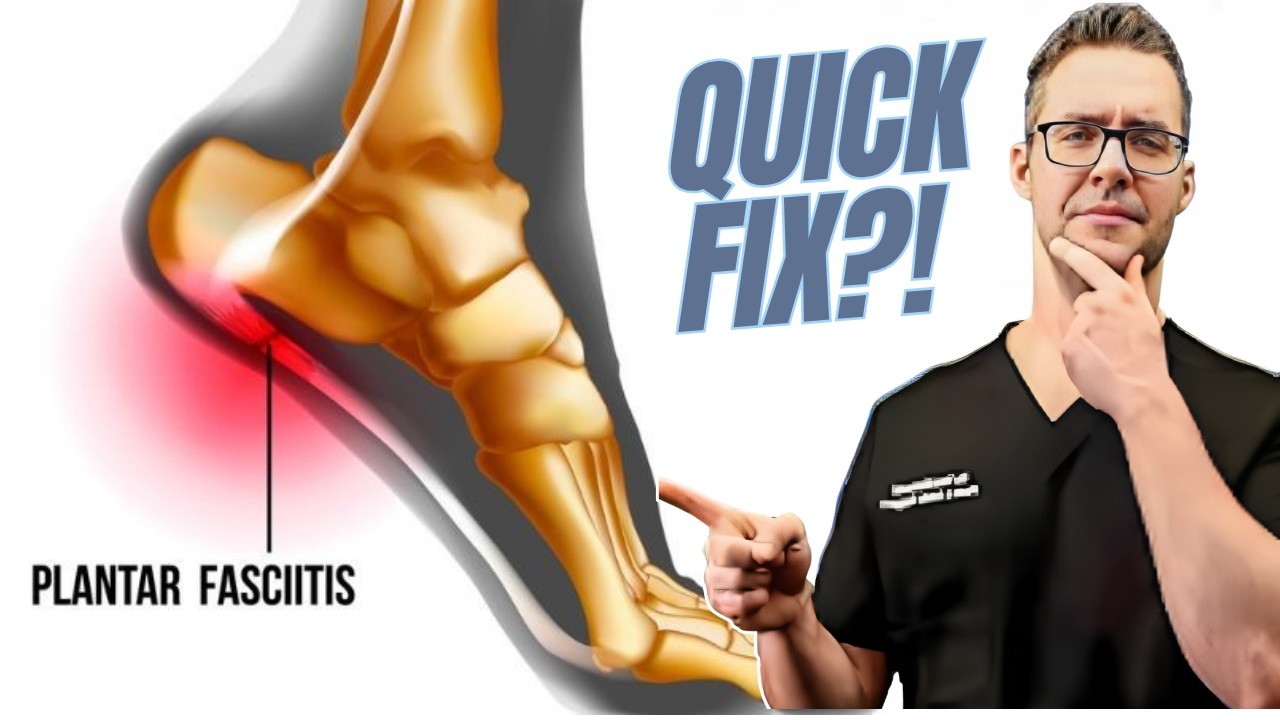
Best Foot Roller & Massage Tools for Plantar Fasciitis relates to plantar fasciitis — typically caused by tight calves and arch overload. Most patients improve in 6-12 weeks with conservative care. Same-week appointments in Howell + Bloomfield Township: (810) 206-1402.

Medically Reviewed by Dr. Tom Biernacki, DPM — Board-Certified Podiatrist, Balance Foot & Ankle Specialists, Michigan. Last updated April 2026.
Plantar fascia massage and rolling is one of the most evidence-supported home treatments for plantar fasciitis — more effective per dollar invested than most OTC interventions. Dr. Tom Biernacki, DPM at Balance Foot & Ankle reviews the best foot rollers and massage tools for plantar fasciitis in 2026 — and explains how and when to use them for maximum clinical benefit.
▶ Watch
👟 Dr. Tom Also Recommends
Podiatrist Recommended Shoes 2026: Dr. Tom’s Top Picks for Every Condition
The right footwear can make or break your recovery. Dr. Tom’s complete guide to the best shoes for plantar fasciitis, flat feet, neuropathy, bunions & more — with clinical picks for every foot type.
See Dr. Tom’s Top Shoe Picks →Quick Answer: Does Foot Rolling Actually Help Plantar Fasciitis?
Yes — the evidence is genuine. Self-myofascial release of the plantar fascia through rolling: reduces the viscoelastic stiffness that peaks in the morning (responsible for first-step pain); temporarily increases extensibility of the fascia before stretching exercises; reduces trigger point tension in the intrinsic foot muscles that indirectly load the plantar fascia; and improves local circulation to the chronic low-grade inflammatory tissue at the calcaneal insertion. Rolling is most effective as a warm-up before morning stretching — not as a standalone treatment, but as a preparation for the calf and plantar fascia stretching exercises that are the primary conservative intervention.
Best Frozen Rolling Option: Water Bottle in the Freezer
The podiatric standard remains the simplest and cheapest option: a frozen water bottle rolled under the foot for 10–15 minutes. The dual mechanism — myofascial compression and ice therapy — addresses both the mechanical stiffness and the inflammatory component of plantar fasciitis simultaneously. Technique: sit comfortably, place the foot on the frozen bottle, apply 50–70% body weight, roll from heel to ball and back, 10 minutes per session, 2–3 times daily. Cost: $0. Effectiveness: equal to or better than most commercial foot rollers in randomized trials of conservative plantar fasciitis treatment. The reason commercial rollers are still worth considering: durability, portability, and surface texture options.
Best Commercial Foot Roller: TheraBand Foot Roller
The TheraBand Foot Roller provides a textured cylindrical surface designed specifically for plantar fascia massage. The raised nodules create point-specific myofascial release — more effective than a smooth-surface roller for targeting trigger points in the intrinsic foot muscles. The dual hardness zones (firmer at the center for the arch, softer at the heel for calcaneal cushioning) mirror the differential treatment needs along the plantar fascia course. Dishwasher safe — unusually important for a device used post-workout or first thing in the morning. The size allows use while seated or standing without bending to the floor.
📍 Located in Michigan?
Our board-certified podiatrists treat this condition at two convenient locations. Same-day appointments often available.
View TheraBand Foot Roller on Amazon →
Best for Deep Tissue: Kieba Massage Lacrosse Ball
The Kieba Massage Lacrosse Ball Set provides the deepest myofascial release for plantar fasciitis trigger points. The firm rubber ball allows targeted treatment of the calcaneal insertion and the intrinsic muscle belly — the areas most responsible for morning pain. Technique: stand with one foot on the ball (reduce weight bearing from a chair for beginners), identify a tender spot, maintain sustained pressure for 20–30 seconds until tension releases, then move to the next trigger point. A lacrosse ball is firmer than most commercial “massage balls” — if pressure is uncomfortable, start with a tennis ball and progress. The Kieba set includes balls of two densities (hard and slightly softer) for progression.
View Kieba Massage Lacrosse Balls on Amazon →
Best Heat + Massage: ProSqueeze Spikey Massage Ball Heated
Combining heat with plantar fascia massage is more effective than either alone — heat increases tissue extensibility before the mechanical pressure of rolling, improving the myofascial release depth. The ProSqueeze Spikey Massage Ball with Heat Therapy microwaves to 110°F in 90 seconds and retains therapeutic heat for 15–20 minutes of treatment. The spiked surface provides the nodular myofascial release of the TheraBand roller with added thermal benefit. Best use: morning treatment before first steps — microwave the ball while still in bed, then 10 minutes of foot rolling before standing. This protocol specifically targets morning plantar fasciitis pain by warming and mechanically softening the fascia before it bears weight.
View ProSqueeze Heated Massage Ball on Amazon →
Most Common Foot Rolling Mistake
The most common mistake: rolling aggressively on the heel with maximum pressure immediately after waking. The plantar fascia is at its stiffest and most vulnerable first thing in the morning — aggressive deep tissue rolling on cold, stiff fascia can cause micro-tearing at the calcaneal insertion rather than therapeutic myofascial release. Correct approach: start with 30% body weight on the roller and gradually increase pressure over the first 2–3 minutes as the tissue warms. The goal is sustained pressure that produces a “hurts so good” release sensation — not sharp pain, which indicates too much pressure too quickly.
When Rolling Isn’t Enough
📧 Get Dr. Tom’s Free Lab Test Guide
Discover the 5 lab tests every person over 35 should ask their doctor about — explained in plain English by a board-certified physician.
Foot rolling is appropriate as part of a home treatment program for mild-to-moderate plantar fasciitis. If foot rolling, calf stretching, and footwear changes haven’t resolved your plantar fasciitis within 6–8 weeks, you likely need clinical evaluation — cortisone injection, custom orthotics, shockwave therapy, or PRP may be appropriate. Book online or call (810) 206-1402 at Balance Foot & Ankle — Howell and Bloomfield Township, Michigan.
Affiliate disclosure: As an Amazon Associate, Balance Foot & Ankle earns from qualifying purchases. Product recommendations are based on clinical criteria independent of commission.
Dr. Tom’s Recommended Insoles
PowerStep is the brand I prescribe most — medical-grade OTC support without the custom orthotic price tag.
- PowerStep Pinnacle Insoles — The OTC orthotic I recommend most — medical-grade arch support at a fraction of custom orthotic cost. Works in most shoes.
- PowerStep Maxx Insoles — For severe arch pain or flat feet — maximum correction and support when Pinnacle isn’t enough.
Affiliate disclosure: As an Amazon Associate, Balance Foot & Ankle earns from qualifying purchases. We only recommend products we trust for our own patients.
🧦 Dr. Tom’s Pick: DASS Medical Compression Socks
Medical-grade 15-20 mmHg graduated compression. DASS socks are the brand I recommend most to patients with swollen feet, poor circulation, and post-surgery recovery. Graduated compression means tightest at the ankle, gradually releasing up the leg — promoting upward venous blood flow.
View DASS Compression Socks on Amazon →Affiliate disclosure: As an Amazon Associate, Balance Foot & Ankle earns from qualifying purchases.
Join 950,000+ Learning About Foot Health
Dr. Tom shares honest medical advice, supplement reviews, and treatment guides you won’t find anywhere else.
Subscribe on YouTube →More Podiatrist-Recommended Plantar Fasciitis Essentials
Best Night Splint


![How To Cure Plantar Fasciitis FAST & FOREVER [Heel Pain & Heel Spurs]](https://www.michiganfootdoctors.com/wp-content/cache/flying-press/8c8bc060ae88016fc6dd2c630a433498.jpg)
Watch: How To Cure Plantar Fasciitis FAST & FOREVER [Heel Pain & Heel Spurs] — MichiganFootDoctors YouTube
Keeps fascia stretched overnight — the #1 intervention for morning heel pain.
Top Podiatrist-Recommended Insole

Deep heel cup + arch support unloads the plantar fascia all day.
Plantar Fasciitis Compression Sock

Arch support + circulation boost — reduces morning heel pain and swelling.
As an Amazon Associate, Balance Foot & Ankle earns from qualifying purchases. Product recommendations are based on clinical experience; prices and availability shown above update live from Amazon.

When to See a Podiatrist
If morning heel pain has persisted more than 6 weeks, home care alone rarely fixes it. At Balance Foot & Ankle, we combine in-office ultrasound diagnostics, custom orthotics, and — when needed — shockwave or PRP to resolve plantar fasciitis that hasn’t responded to stretching and inserts. Most patients are walking pain-free within 4-8 weeks of starting a structured plan.
Call Balance Foot & Ankle: (810) 206-1402 · Book online · Offices in Howell & Bloomfield Township
In Our Clinic
In our Balance Foot & Ankle clinic, the typical plantar fasciitis patient is a 40- to 60-year-old who noticed sharp heel pain on their very first steps in the morning or after sitting at a desk. Many arrive having already tried cheap shoe-store inserts and a week of ice without relief. On exam, we palpate the medial calcaneal tubercle, check for a positive windlass test, and rule out Baxter’s neuropathy and calcaneal stress fractures. Most of our plantar fasciitis patients respond to a custom orthotic + eccentric calf loading + night splinting protocol within 6–12 weeks — without injections or surgery.
Watch: Dr. Tom explains
Podiatrist-recommended products
As an Amazon Associate, Dr. Tom earns from qualifying purchases.
Pair rolling with arch support for sustained plantar fascia relief.
View on Amazon →Freeze a water bottle for combined ice-and-roll protocol.
View on Amazon →Apply before rolling for enhanced topical penetration.
View on Amazon →Follow rolling with targeted metatarsal support throughout the day.
View on Amazon →Related resources
Ready to solve this? Book today.
Same-week appointments · Howell & Bloomfield Township · 4.9★ (1,123+ reviews)
☎ (810) 206-1402Book Online →In-Office Treatment at Balance Foot & Ankle
When conservative care isn’t enough, Dr. Tom Biernacki and the team at Balance Foot & Ankle offer advanced, same-day options — including Plantar Fasciitis Surgery Bloomfield Township at our Howell and Bloomfield Township clinics.
Same-day appointments available. Call (810) 206-1402 or book online.
Pros & Cons of Conservative Care for plantar fasciitis
Advantages
- ✓ Conservative care resolves 90%+ of cases
- ✓ Multiple home treatment options
- ✓ Strong evidence base
- ✓ Imaging often not required
Considerations
- ✗ Recovery takes 6-12 weeks
- ✗ Mistakes prolong recovery
- ✗ Untreated can become chronic
- ✗ Can mimic other conditions
Dr. Tom’s Recommended Products for plantar fasciitis
Affiliate disclosure: As an Amazon Associate, Balance Foot & Ankle earns from qualifying purchases. We only recommend products we use with patients.
PowerStep Pinnacle Maxx Dr. Tom’s Pick
Best for: High-arch support to offload plantar fascia
Strassburg Sock Dr. Tom’s Pick
Best for: Overnight stretch for morning pain relief
Hoka Bondi 9 Dr. Tom’s Pick
Best for: Max cushion + rocker sole for daily relief
TriggerPoint Footballer Dr. Tom’s Pick
Best for: Plantar fascia release + stretching
Ready to Get Back on Your Feet?
Same-day appointments in Howell + Bloomfield Township. Most insurance accepted. Dr. Tom Biernacki, DPM & team.
Book Today — Same-Day Appointments Available
Call Now: (810) 206-1402
About Your Care Team at Balance Foot & Ankle
Dr. Tom Biernacki, DPM · Board-Certified Foot & Ankle Surgeon. Specializes in conservative-first care, minimally invasive bunion surgery, and complex reconstruction.
Dr. Carl Jay, DPM · Accepting new patients. Specializes in sports medicine, athletic injuries, and routine podiatric care.
Dr. Daria Gutkin, DPM, AACFAS · Accepting new patients. Specializes in surgical reconstruction and pediatric podiatry.
Locations: 4330 E Grand River Ave, Howell, MI 48843 · 43494 Woodward Ave Suite 208, Bloomfield Township, MI 48302
Hours: Mon–Fri 8:00 AM – 5:00 PM · (810) 206-1402
In-Office Treatment at Balance Foot & Ankle
If home treatment isn’t providing relief for your plantar fasciitis, our podiatry team at Balance Foot & Ankle can help with same-day evaluations and advanced in-office care.
Same-day appointments available. (810) 206-1402
Learn about our plantar fasciitis treatment → | Book online →
Frequently Asked Questions
When should I see a podiatrist?
If symptoms persist past 2 weeks, affect your normal activity, or are accompanied by red-flag symptoms (warmth, redness, swelling, inability to bear weight).
What does treatment cost?
Most diagnostic visits and conservative treatments are covered by Medicare and major insurers. Out-of-pocket costs vary by your specific plan.
How quickly can I get an appointment?
Most non-urgent cases see us within 5 business days. Urgent cases (sudden pain, possible fracture) typically same or next business day.
What is Plantar fasciitis?
Plantar fasciitis is a common foot/ankle condition that affects mobility and quality of life. Understanding the underlying cause is the first step in successful treatment. Our podiatrists at Balance Foot & Ankle perform a hands-on biomechanical exam, review your activity history, and use diagnostic imaging when appropriate to identify the root cause—not just treat the symptom. Many patients have been told to “rest and ice” without a deeper diagnostic workup; our approach is different.
Symptoms and warning signs
Common signs of plantar fasciitis include pain that worsens with activity, morning stiffness, swelling, tenderness when palpated, and difficulty bearing weight. If you experience sudden severe pain, inability to walk, visible deformity, numbness or color change, contact our office the same day or visit urgent care—these can signal a more serious injury such as a fracture, tendon rupture, or vascular compromise. Diabetics with any foot wound should seek same-day care.
Conservative treatment options
Most cases of plantar fasciitis respond to non-surgical care: structured rest, supportive footwear changes, custom orthotics, targeted stretching and strengthening protocols, anti-inflammatory medications when medically appropriate, and in-office procedures such as ultrasound-guided injections. We also offer advanced therapies including MLS laser therapy, EPAT/shockwave, regenerative injections, and image-guided procedures. Treatment is sequenced from least invasive to most invasive, and we explain the rationale at every step.
When is surgery considered?
Surgery is reserved for cases that fail 3-6 months of well-structured conservative care, when there is structural pathology (severe deformity, complete tear, advanced arthritis), or when imaging shows damage that will not heal without intervention. Our surgeons have performed 3,000+ foot and ankle procedures and prioritize minimally-invasive techniques whenever appropriate. We discuss recovery timelines, return-to-activity milestones, and realistic outcome expectations before any procedure is scheduled.
Recovery timeline and prevention
Recovery from plantar fasciitis varies based on severity and chosen treatment path. Conservative cases often improve within 4-8 weeks with consistent adherence to the protocol. Post-procedural recovery may range from a few days (in-office procedures) to several months (reconstructive surgery). Long-term prevention involves footwear assessment, activity modification, structured strengthening, and regular check-ins with your podiatrist if you have a history of recurrence. We provide written home-exercise plans and digital follow-up support.
Ready to feel better?
Same-week appointments available in Howell and Bloomfield Township, Michigan.
Book Your VisitReady for Expert Care?
Same-day appointments in Howell & Bloomfield Township, MI.
4.9★ | 1,123 Reviews | 3,000+ Surgeries
Or call: (810) 206-1402

Dr. Tom Biernacki, DPM is a board-certified foot & ankle surgeon (ABFAS & ABPM) at Balance Foot & Ankle Specialists in Southeast Michigan. With over a decade of clinical experience, he specializes in heel pain, bunions, diabetic foot care, sports injuries, and minimally invasive surgery. Dr. Biernacki is a member of the APMA and ACFAS, and his patient education content on MichiganFootDoctors.com and YouTube has made him one of the most-followed foot & ankle educators on YouTube.
More questions patients ask
What causes heel pain?
Heel pain most commonly results from plantar fasciitis (inflammation of the plantar fascia ligament), which accounts for approximately 80% of cases. Other causes include Achilles tendinitis, heel spurs, stress fractures, Baxter's nerve entrapment, and fat pad atrophy. Dr. Biernacki performs a thorough biomechanical evaluation to identify the precise cause. Call 810-206-1402 for a same-day appointment.
How long does plantar fasciitis take to heal?
With proper treatment, most plantar fasciitis cases improve within 6-12 weeks. Conservative treatments include custom orthotics, stretching protocols, physical therapy, and corticosteroid injections. For persistent cases beyond 6 months, Dr. Biernacki offers advanced options including shockwave therapy and minimally invasive procedures with 90%+ success rates.
Should I see a podiatrist for heel pain?
Yes. A board-certified podiatrist like Dr. Biernacki can accurately diagnose the cause of heel pain using X-rays and diagnostic ultrasound, ruling out stress fractures and other serious conditions. Self-treatment with over-the-counter insoles often delays proper treatment and can worsen the condition. Early intervention leads to faster recovery.
Still have a question about coverage or cost? Book online and we will check your benefits before your visit: Book in Howell · Book in Bloomfield Township. Prefer to talk it through first? Call (810) 206-1402.