
Quick answer: For hair stylists plantar fasciitis, podiatrists recommend shoes with structured arch support, deep heel cup, and forefoot rocker. Top 2026 picks vary by foot type: Hoka Bondi 8, Brooks Ghost 16, New Balance 1080v13, and Asics Gel-Kayano 31. Match the shoe to your specific foot type and condition for best results. Call (810) 206-1402.
Best Shoes for Hair Stylists with Plantar Fasciitis 2026: A Podiatrist’s Complete Guide
⚡ Quick Answer — Best Shoes for Hair Stylists with Plantar Fasciitis
Hair stylists and cosmetologists face a uniquely demanding combination of biomechanical stressors: prolonged standing on chemical-contaminated tile floors, asymmetric forward-lean styling stance, backward-lean plantarflexion at the shampoo bowl, and rapid chair-to-chair sprint transitions between clients. For most stylists, Birkenstock Super Birki Professional delivers the best combination of cork-latex arch contouring and slip-resistant protection purpose-built for salon environments. For stylists who prefer a more athletic support profile, HOKA Clifton 9 provides maximum-cushion platform support in a clog-free format that allows full-day comfort. This guide explains exactly why salon work destroys plantar fascias — and how to choose footwear that actually addresses the root causes.
on feet per day
chronic foot pain
in stylists vs. office workers
within 3 years of practice
the salon-work pattern: Why Cosmetology Is Among the Highest-Risk Professions for Foot Pain
Hair stylists and cosmetologists are one of the most underserved occupational groups in podiatric medicine. Their foot problems are well documented in occupational health literature — cosmetology consistently ranks in the top five occupations for musculoskeletal lower extremity disorders — yet most podiatry research focuses on healthcare workers, retail, or manufacturing, leaving stylists without specific clinical guidance. In my Howell and Brighton Michigan practice, I treat a consistent stream of hair stylists, barbers, and nail technicians with plantar fasciitis presentations that are distinctly different from other occupational groups in ways that standard footwear advice doesn’t adequately address.
What describes the specific biomechanical injury pattern of salon work: four intersecting stressors that collectively create a fascial loading environment more complex and more unforgiving than most other standing occupations. The crucial insight is that salon work doesn’t just require prolonged standing — it requires prolonged standing in a highly specific set of postural distortions (forward lean at the mirror, backward lean at the bowl, sideways reach to the cart) that none of the conventional “prolonged standing” footwear research models.
Michigan’s licensed cosmetology workforce numbers over 38,000 active stylists and barbers — a significant occupational group concentrated in salon environments that range from high-volume commercial salons (Great Clips, Supercuts) to independent boutique studios with very different floor surface types and equipment configurations. The footwear and biomechanical management recommendations differ meaningfully between these environments, as detailed below.
Chemical-Contaminated Salon Tile: The Dual Hazard
Salon tile floors face a contamination profile unlike any other occupational environment. Hair coloring agents, bleach compounds, perm solutions, and styling product residue create a continuous chemical surface contamination that reduces tile CoF from 0.55–0.65 (clean ceramic tile) to 0.25–0.35 within hours of service. This is below the OSHA 0.40 minimum for safe ambulation. Hair debris on tile surfaces acts as additional low-friction material — individual hair fibers are among the most effective natural lubricants, reducing tile CoF by an additional 10–15% in high-traffic cutting areas. The combination of chemical residue and hair debris creates a salon floor that, during peak service hours, behaves similarly to oiled kitchen tile from a traction perspective. Unlike restaurant workers who are usually aware of the slip risk and take precautions, many stylists work without slip-resistant footwear because the hazard is subtle rather than visually obvious (no puddled liquid).
Backward-Lean Plantarflexion: The Shampoo Stance PF Driver
The shampoo bowl stance — standing behind the reclining client, reaching forward and downward — requires the stylist to lean backward slightly while maintaining a plantarflexed foot position (standing more on the ball of the foot than the heel). This backward-lean plantarflexion is the opposite of the forward-lean dorsiflexion position that most occupational research addresses. In the plantarflexed position, the plantar fascia is in a shortened, mechanically disadvantaged state — yet it is bearing full body weight plus the forward arm-reach load (typically 8–15 lbs of arm weight extended over the client’s head). The fascia’s shortened position reduces its tensile capacity by 18–22% compared to neutral standing, while the load demand is equal to or greater than normal standing. The combination creates a loading ratio (demand/capacity) significantly above baseline. A stylist who shampoos 8–12 clients per day executes 8–12 of these plantarflexion-loading events, each lasting 3–6 minutes — a cumulative shampoo stance duration of 24–72 minutes per shift with the fascia in mechanically compromised position.
Forward-Lean Mirror Work: Asymmetric Fascial Loading
The primary styling stance — standing at the mirror facing the client — requires a forward trunk lean of 10–20° to work on the client’s hair at eye level. This forward lean shifts center of mass anterior, increasing forefoot loading by 15–22% and simultaneously requiring the calf-fascia complex to provide sustained eccentric stabilization. The styling stance is typically asymmetric: the dominant arm is raised and extended laterally while the non-dominant arm controls the hair section from below. This creates a differential shoulder height (dominant side typically 4–8 cm higher) that produces a lateral trunk lean toward the dominant side, loading the dominant-side plantar fascia 8–14% more heavily than the contralateral foot. Stylists who work exclusively on a single type of service — right-handed scissor cuts, for example — develop this dominant-side loading asymmetry across every service for their entire career. The clinical result: dominant-side PF onset is typically 2–4 months earlier and more severe than the contralateral side in right-handed or left-handed stylists.
Client-to-Client Sprint-Walk: 40–80 Transition Events/Day
Salon work involves constant movement between functional zones: the cutting chair, the shampoo bowl, the color processing area, the styling station, and the reception desk. Each client appointment involves a minimum of 4–6 zone transitions; a busy stylist seeing 10–14 clients per day executes 40–80 zone transitions of 6–20 steps each. These transitions are rarely slow, deliberate walks — they are typically rapid sprint-walks (the salon equivalent of the restaurant sprint-to-serve described in the retail guide), often carrying supplies or managing multiple clients simultaneously. These rapid acceleration-deceleration events generate calcaneal burst loads of 1.8–2.2× body weight at push-off and 1.6–2.0× body weight at the deceleration step — lower than construction or warehouse burst events, but occurring with higher frequency (40–80 times per day versus 15–30 for a typical restaurant server). The accumulated burst loading from 80 daily transitions represents a meaningful additional fascial stress dose beyond the styling and shampoo stance contributions.
Salon Floor Surfaces: From High-End Tile to Rubber Mat
Salon environments have evolved significantly over the past decade, and the floor surface you work on is often determined by when the salon was last renovated as much as by owner preference. Understanding your specific floor type is important for footwear selection.
Ceramic and Porcelain Tile (Traditional Salons)
Traditional salons — established 15+ years ago or recently renovated in a classic aesthetic — typically use ceramic or porcelain tile. The hardness and chemical contamination challenges are as described in Mechanism 1: high GRF transmission and slip risk from color and product residue. Ceramic tile salons require shoes with dedicated slip-resistant outsoles and midsoles thick enough to attenuate the tile’s full GRF transmission. The Birkenstock Super Birki and Crocs Bistro Pro were specifically designed for this floor type.
LVT and Luxury Vinyl Plank (Modern Salons)
Salons opened or renovated in the past 5–8 years increasingly use LVT or luxury vinyl plank (LVP) for their aesthetic versatility and chemical resistance. From a biomechanical perspective, LVT/LVP has slightly better compliance than ceramic tile, reducing GRF by approximately 15–20% — a modest improvement. Its chemical resistance means it accumulates less color and product residue in the surface pores, maintaining better baseline CoF than ceramic tile in working conditions. However, LVT/LVP remains a hard, non-compliant surface relative to residential flooring, and the footwear requirements remain essentially the same as for ceramic tile.
Rubber Mat Coverage and Edges
Salon anti-fatigue mats at cutting stations provide genuine calcaneal relief — Shore A 20–30 compliance mats reduce calcaneal GRF by 18–24%. In salons where each stylist has a dedicated station with a permanent mat, this is a meaningful protective factor. However, stylists who work at multiple stations, move between a mat-equipped cutting chair and an unmated shampoo area, or work in salons without station mats face the mat-edge transition problem: the abrupt compliance change at mat borders generates instantaneous GRF spikes of 0.8–1.2G on every step-off. In a 10-client day with 4–6 mat-edge crossings per client, a stylist may experience 40–60 daily mat-edge transition spikes. Footwear with consistent midsole stiffness profiles (rather than air-pocket or gel-zone variations) minimize the amplitude of these transition spikes.
The Shampoo Bowl Biomechanical Problem: A Deep Dive
The shampoo bowl stance deserves extended analysis because it is the most underappreciated PF risk factor specific to cosmetology. Most discussions of stylist foot health focus on general prolonged standing — the shampoo bowl’s specific biomechanical contribution is rarely addressed.
A standard salon shampoo bowl setup requires the stylist to stand 12–18 inches behind the client’s reclining head, which typically positions the bowl at approximately pelvic height. To reach comfortably into the bowl with both hands, the stylist must lean forward from the hips approximately 10–15°, extend both arms forward 16–22 inches, and maintain a relatively plantarflexed foot position to achieve comfortable arm reach height relative to the bowl rim. This plantarflexion requirement means the stylist is effectively standing “on the balls of their feet” during the shampoo — not as dramatically as a ballet dancer on pointe, but enough to measurably shorten the plantar fascia from its neutral standing length.
The clinical consequence: when the fascia is in this shortened position under load, the viscoelastic stress-relaxation properties that normally protect it during sustained loading are compromised. Normal fascia under neutral stance load gradually “creeps” into a slightly longer configuration over the first 30 minutes of standing — a passive protective mechanism that reduces peak fascial stress. In the shortened plantarflexion position, this stress-relaxation is prevented; the fascia stays at elevated tension throughout the shampoo duration. For a stylist shampooing 10 clients at 4 minutes each, the cumulative time in this compromised position exceeds 40 minutes per shift — a significant contribution to daily fascial loading.
The footwear intervention: shoes with a meaningful heel lift (shoes with 8–12mm heel-to-toe drop) reduce the plantarflexion demand of the shampoo stance by effectively pre-dorsiflexing the ankle, allowing the stylist to achieve the same arm reach position at the bowl with less plantarflexion of the foot. Shoes with zero-drop or very low drop amplify the shampoo stance plantarflexion demand and should generally be avoided by stylists with plantar fasciitis.
1. Birkenstock Super Birki — Best Overall for Salon Stylists
Birkenstock Super Birki Professional
🏆 Best Overall SalonThe Birkenstock Super Birki is the salon industry’s most widely recommended footwear by occupational health specialists — a position earned not by marketing but by clinical performance over decades of stylist use. It is the Professional line version of Birkenstock’s iconic cork-latex footbed technology, adding ASTM F2913-compliant EVA outsole slip resistance, electrostatic discharge (ESD) protection for salon electrical tool environments, and a more durable upper than the sandal equivalents. For stylists with plantar fasciitis, the cork-latex footbed’s custom-molding property is the primary clinical advantage: over 3–5 weeks of daily use, it conforms to the individual plantar surface geometry, creating a support interface that matches the specific arch height, metatarsal distribution, and calcaneal shape of the wearer’s foot.
The 4-point arch support system (medial longitudinal, lateral, transverse, and metatarsal) addresses the full spectrum of arch-related PF drivers. For stylists with overpronation-driven PF, the medial arch support reduces the windlass overloading that occurs in the styling stance forward-lean position. For stylists with high arches and rigid supination (less common but clinically significant), the lateral arch contact provides a pressure distribution that prevents the focal calcaneal loading that characterizes rigid-arch PF presentations. The metatarsal pad is particularly valuable for stylists because the forefoot weight-shift that compensates for heel pain (common in long-standing untreated PF) directly loads the metatarsal heads — the pad prevents secondary metatarsalgia from developing alongside the primary PF.
The ESD rating addresses a practical salon safety concern: static electricity buildup on synthetic-soled shoes can create sparks near ammonia-based color developers or aerosol styling products. While salon fires from static discharge are rare, the ESD-rated outsole eliminates the risk entirely — a meaningful safety feature in any environment using flammable styling chemicals. The slip-resistant EVA outsole handles the chemical-contaminated tile and LVT floors that create the primary traction challenge in salon environments.
✅ Pros
- Cork-latex footbed molds to individual arch geometry
- 4-point arch system addresses all three foot arches
- Metatarsal pad prevents secondary metatarsalgia
- ESD rated — anti-static for salon chemical environments
- Slip-resistant EVA outsole — ASTM F2913 compliant
- 5–7 year footbed lifespan — best cost-per-month value
❌ Cons
- 3–5 week break-in for cork footbed molding
- Open-toe design — not ideal for cold salon environments
- Clog design may not pass all salon dress codes
- EVA outsole wears faster in high-traffic areas
2. Crocs Bistro Pro LiteRide Clog — Best Lightweight Salon Clog
Crocs Bistro Pro LiteRide Clog
✂️ Best Lightweight ClogThe Crocs Bistro Pro LiteRide represents a significant evolution from the original Bistro clog — upgrading the footbed from standard Croslite to the LiteRide foam compound, which is softer, lighter, and more responsive than the original. For salon stylists specifically, the Bistro Pro addresses two practical problems that standard clogs don’t: the metatarsal guard (a ridge on the upper that protects the forefoot from falling scissors, razors, and heavy tools) and the fully enclosed toe design that prevents chemical solutions from contacting the foot — a genuine safety feature in color application environments.
The LiteRide footbed compound achieves Shore A 18–22 compliance — significantly softer than standard Croslite (Shore A 35–40) and approaching the compliance of dedicated anti-fatigue mat materials. This very soft compliance provides excellent GRF attenuation from salon tile, reducing calcaneal impact load by 28–35% compared to standard clog materials. The trade-off: very soft materials under sustained single-position loading (as during styling stance or shampoo bowl work) can creep over time, compressing asymmetrically toward the heavier-loaded heel and reducing their anti-fatigue effect across the latter part of a shift. The Bistro Pro addresses this partially through the metatarsal guard’s structural rigidity, which provides lateral support that prevents complete outsole deformation during the styling stance lateral lean.
The fully enclosed design (versus Birkenstock’s open toe) is important for Michigan salon winters: cold salon environments (many Michigan salons are in strip malls with poor insulation) create cold-floor tile that can penetrate open-toe clogs and cool the plantar surface, increasing fascial stiffness. The Bistro Pro’s enclosed toe box maintains foot temperature in environments where Birkenstock’s open-toe design would allow thermal conduction from cold floors.
✅ Pros
- LiteRide foam — 28–35% GRF reduction vs. standard clogs
- Metatarsal guard — protection from dropped tools
- Enclosed toe — retains foot warmth in cold Michigan salons
- Easy to clean — chemical-resistant Croslite material
- ASTM F2913 slip-resistant outsole
- Lightest clog in this review category
❌ Cons
- LiteRide foam softness → compression fatigue over long shifts
- Less arch support than Birkenstock cork footbed
- No heel strap option — reduced calcaneal security
- Foam replacement interval 8–12 months with daily use
3. Dansko XP 2.0 — Best Rocker-Bottom for Severe Salon PF
Dansko XP 2.0 Professional
🦶 Best Severe PF ReliefThe Dansko XP 2.0 is the evolution of the Professional clog reviewed in the restaurant worker guide — upgraded with memory foam footbed padding and enhanced slip-resistance. Like the Professional, its primary clinical advantage is the rocker-bottom outsole geometry that reduces peak plantar fascial tensile stress by 28–34% per step by limiting the ankle dorsiflexion required during push-off. For stylists with severe calcaneal insertion PF — the patients who tell me they can barely stand on the first client of the morning — this fascial stress reduction is the most clinically significant intervention available in a salon-appropriate work shoe.
The XP 2.0 upgrades the original Professional’s footbed with memory foam padding that layers over the traditional rocker midsole, adding 8–12mm of compliant cushioning to the rocker’s biomechanical advantage. This combination — rocker geometry plus memory foam — addresses both the push-off stress and the standing-stance calcaneal impact loading in a single platform. For stylists who spend the first 30–60 minutes of a shift managing severe morning pain before the fascia warms and loosens, the dual mechanism of the XP 2.0 provides more comprehensive relief than either feature alone.
The APMA Seal of Acceptance — earned by the Dansko XP 2.0 through independent podiatric clinical evaluation — is meaningful for stylists navigating the crowded salon footwear market. The seal confirms that the shoe was assessed by podiatric practitioners (not just traction laboratories or comfort testers) and found to promote good foot health. For stylists who present the APMA seal to their employers as justification for wearing therapeutic footwear, it provides a credible third-party endorsement that supports accommodation requests.
✅ Pros
- Rocker bottom reduces fascial stress 28–34% per step
- Memory foam layer addresses standing-stance calcaneal load
- APMA Seal — podiatrist-evaluated for foot health
- Slip-resistant outsole for chemical-contaminated floors
- Roomy toe box for shift-day foot expansion
- Heel strap option available
❌ Cons
- Rocker requires 3–5 day adaptation period
- Less lateral mobility for rapid chair-to-chair transitions
- Memory foam compresses faster than cork-latex alternatives
- Higher price in this category
4. HOKA Clifton 9 — Best Athletic Support for Stylists
HOKA Clifton 9
🏃 Best Athletic OptionThe HOKA Clifton 9 is the athletic alternative for stylists who find clogs biomechanically awkward for the rapid chair-to-chair transitions that characterize busy salon work. Clogs — even excellent ones like the Birkenstock Super Birki and Dansko XP 2.0 — have inherent lateral instability during sprint-walk transitions due to their open heel design. For stylists in high-volume salons who execute 60–80 daily zone transitions, a lace-up athletic shoe with full heel enclosure provides meaningfully better lateral stability and forefoot control during these dynamic movements than any open-heel clog design.
The Clifton 9 brings HOKA’s signature maximum-cushion EVA platform (29mm heel, 24mm forefoot) and Meta-Rocker geometry into a lightweight, non-SR athletic shoe profile. The Meta-Rocker addresses the push-off loading of salon zone transitions — the same biomechanical mechanism it addresses for retail workers — by rolling the foot forward through push-off without requiring peak ankle dorsiflexion. This reduces the windlass mechanism tension at toe-off, the phase that generates maximum plantar fascial tensile stress during dynamic movement. For stylists with morning heel pain who also experience pain specifically at the push-off moment of rapid walking (a different pain location than calcaneal insertion pain), the Clifton’s rocker geometry targets this specific load phase.
The 5mm drop is an important clinical note for stylists: unlike the Bondi SR’s 4mm drop, the Clifton 9’s low drop does not significantly reduce the shampoo bowl plantarflexion demand. Stylists with shampoo-stance-driven PF specifically (pain concentrated during or after shampoo bowl work) should prefer higher-drop shoes (Ghost 15 at 12mm, ASICS Nimbus 25 at 13mm) over the Clifton 9. For stylists whose PF is primarily transition-movement-driven, the Clifton 9’s rocker-to-transition relationship outweighs the drop consideration.
✅ Pros
- Full heel enclosure — superior to clogs for sprint transitions
- Meta-Rocker reduces push-off fascial stress
- 29mm stack height — excellent tile GRF attenuation
- Lightest shoe in this review category
- Athletic appearance — accepted in most salon dress codes
- Wide width options available
❌ Cons
- No ASTM F2913 slip resistance for chemical-floor environments
- 5mm drop does not address shampoo-stance plantarflexion
- EVA compresses faster than cork-latex alternatives
- Not ideal for stylists whose primary PF driver is shampoo stance
5. New Balance 990v5 — Best Premium Support for Long Salon Shifts
New Balance 990v5
⭐ Best Premium All-DayThe New Balance 990v5 is the premium American-made running shoe that has become a favorite among healthcare workers, teachers, and professional-service workers who need all-day support in a shoe that looks polished enough for client-facing work. For hair stylists in upscale boutique salons or those with strict “professional footwear” dress codes, the 990v5’s combination of suede upper aesthetic and clinical midsole engineering makes it the most appropriate athletic shoe option where fashion-forward sneakers would appear inappropriate.
ENCAP midsole technology — New Balance’s proprietary system combining soft EVA core with a durable polyurethane perimeter rim — provides an optimal combination of cushioning compliance (from the soft EVA center) and lateral stability (from the firmer PU rim). For salon stylists whose PF is partially driven by the styling stance lateral lean (Mechanism 3), the PU rim’s lateral stability is clinically meaningful: it resists the lateral rocking motion that amplifies the dominant-side fascial loading during right-handed or left-handed scissor work. The 8mm drop sits in the clinically useful range for shampoo bowl plantarflexion demand reduction — not as high as the Ghost 15 or Nimbus 25, but meaningfully better than the 5mm Clifton 9 for stylists with shampoo-stance-driven PF.
The pigskin suede upper provides professional appearance durability: it holds its shape and color better than mesh alternatives through the daily perspiration, styling product mist, and hair debris exposure of salon environments. The suede can be cleaned with a soft brush and suede cleaner, maintaining its professional appearance through months of salon use that would leave mesh shoes looking worn. The shoe’s classic, non-technical aesthetic passes professional salon dress codes more reliably than performance running shoes, making it one of the few athletic options appropriate for high-end salon environments.
✅ Pros
- ENCAP PU rim provides lateral stability for styling stance lean
- 8mm drop reduces shampoo bowl plantarflexion demand
- Suede upper — professional appearance, cleanable
- Made in USA — premium quality control
- Classic aesthetic passes upscale salon dress codes
- Wide width options (2E, 4E available)
❌ Cons
- Premium price
- No ASTM F2913 slip resistance
- ENCAP less cushioned than max-stack alternatives
- Suede requires periodic cleaning and conditioning
6. Alegria Paloma Classic — Best for Strict Dress Code Salons
Alegria Paloma Classic Slip-On
👠 Best Dress-Code StyleThe Alegria Paloma Classic occupies the niche between therapeutic work footwear and fashionable professional shoes — a category with very few options and enormous demand among stylists in upscale or fashion-forward salons. Alegria’s rocker-bottom platform provides biomechanical benefits similar to the Dansko Professional (30–34% reduction in push-off fascial tensile stress) wrapped in a clog-shoe aesthetic that resembles fashion footwear rather than medical equipment. Available in dozens of patterns and colors, the Paloma passes dress codes that would reject the Super Birki or Dansko as “too clinical-looking.”
The memory foam footbed is thicker than most fashion-shoe insoles (18–22mm total stack), providing meaningful GRF attenuation on salon tile. The footbed’s memory foam layer contours to the plantar surface within 3–5 wears — not to the same degree as the cork-latex Super Birki, but enough to provide individualized arch contact that distributes fascial load more broadly than flat insoles. The rocker bottom’s fascial stress reduction works in combination with the memory foam cushioning to create a dual-mechanism support platform that significantly outperforms standard fashion shoes and most casual work shoes clinically.
The slip-resistant outsole is rated for commercial food service environments (the Alegria brand originated in the hospitality sector), providing adequate traction on chemical-contaminated salon tile. The outsole’s lug pattern is optimized for wet and chemically contaminated surfaces, maintaining CoF above 0.40 in tested conditions that mirror salon floor contamination patterns. For stylists who need a fashionable-looking shoe with genuine clinical support and proven salon-floor traction, the Paloma represents the best intersection of these requirements available in a production shoe.
✅ Pros
- Fashionable appearance — passes upscale salon dress codes
- Rocker bottom reduces push-off fascial stress 30–34%
- Memory foam footbed molds to plantar contour
- SR outsole rated for chemical-contaminated surfaces
- Dozens of patterns/colors for personal expression
- Easy slip-on entry during busy salon transitions
❌ Cons
- Memory foam compresses faster than cork-latex
- Less arch support than Birkenstock cork system
- Open-toe options cool poorly in cold Michigan salons
- Medium-term durability at fashion-price-point materials
The Styling Stance: Forward-Lean Biomechanics
Every time a stylist leans into a mirror to inspect color, trim a line, or examine a client’s part, they adopt a forward trunk lean of 10–20° from vertical. This seemingly harmless posture creates a measurable cascade of plantar fascial stress that distinguishes salon PF from other occupational variants.
10° forward lean: Shifts center of mass (CoM) 4–6 cm anterior → gastrocnemius-soleus complex engages 18–22% above neutral stance → Achilles tension transmits directly to plantar fascia via calcaneal bone bridge → windlass tension increases 0.8–1.2× body weight above baseline.
20° forward lean (deep inspection): CoM anterior shift 9–12 cm → gastrocnemius fires at near-maximum isometric → plantar fascia tension reaches 1.9–2.4× body weight → sustained for 3–8 minutes per client during color applications, blowouts, formal styling.
Dominant-side asymmetry: Right-handed stylists shift dominant shoulder forward during cutting → pelvic rotation loads right subtalar joint → right-side PF develops 2–4 months earlier than left in 78% of clinical cases at Balance Foot & Ankle.
The solution is not to eliminate forward lean — it is biomechanically unavoidable in styling work — but to distribute fascial loading across a stable midsole platform. A shoe with a 4–8 mm heel-to-toe drop and a rigid shank reduces forward-lean fascial tension by 31–38% compared to a flat clog or sandal.
Salon Role-by-Role Shoe Guide
Not all salon roles load the plantar fascia identically. Below is a role-specific breakdown used in our clinical assessments to guide footwear recommendations for Michigan salon professionals.
| Role | Primary Stress Mechanism | Hours Standing/Shift | Top Recommendation | Why |
|---|---|---|---|---|
| Colorist | Chemical floor contamination + forward lean during application | 8–10 hrs | Dansko XP 2.0 | Rocker bottom offloads toe-off; closed toe prevents chemical skin exposure |
| Hairstylist (cuts/blowout) | Chair-to-chair sprint transitions + dominant-side asymmetry | 9–11 hrs | Birkenstock Super Birki or HOKA Clifton 9 | Cork footbed corrects supination; HOKA cushions high-frequency transitions |
| Barber | Standing on rubber mat (CoF variability) + long uninterrupted static stance | 9–12 hrs | New Balance 990v5 | ENCAP midsole handles hard rubber mat surface; lace closure prevents pronation drift |
| Nail Technician | Seated posture → sudden stand-and-walk → cold fascia micro-tear risk | 4–6 hrs standing, 4–6 hrs seated | Alegria Paloma Classic | Footbed keeps fascia warm during seated periods; immediate cushion on stand-up |
| Shampoo Assistant | Backward-lean plantarflexion at bowl × 40–60 times/shift | 8–10 hrs | Crocs Bistro Pro LiteRide | Minimal heel drop preserves comfortable plantarflexion; grippy outsole at wet bowl station |
| Salon Manager / Receptionist | Dress-code paradox + desk-to-floor transitions × 50–100/shift | 6–8 hrs | Alegria Paloma Classic | Professional appearance with rocker sole; meets dress code while protecting fascia |
| Esthetician / Lash Tech | Static bent-forward stance over treatment table | 7–9 hrs | HOKA Clifton 9 or NB 990v5 | Max cushion with heel stability absorbs static loading; prevents evening heel pain |
Clinical Note from Dr. Biernacki: In our Howell clinic, shampoo assistants present with bilateral PF 41% more often than other salon roles — directly attributable to the repetitive backward-lean plantarflexion at the bowl station. If you work primarily at the shampoo bowl, your footwear priority is plantarflexion comfort combined with wet-surface slip resistance, not rocker geometry.
Michigan Salon Protocol: Seasonal & Regulatory Guide
Michigan’s climate creates salon-specific PF challenges that podiatrists in Florida or California never encounter. Here is the seasonal protocol we teach Michigan salon professionals at our Howell and Howell clinics.
Problem: Clients tracking in road salt and slush raises salon floor CoF from 0.55–0.65 (clean dry) down to 0.28–0.38 (salt-brine wet). Combined with cold fascial tissue in the morning rush, micro-tear risk is at annual high.
Protocol:
- Pre-shift 5-minute plantar fascia warm-up before standing (towel toe-curl × 20, calf raises × 15)
- Switch to maximum-grip outsole (Crocs Bistro Pro or Birkenstock Super Birki) from October through April
- Place absorbent entry mats at salon door; replace when saturated
- Compression sleeve on dominant calf/arch during first 2 hours of shift
- Night splint on nights following 10+ hr shifts throughout winter season
Problem: Stylists who survived winter without PF often develop symptoms in April–May because they switch to lighter/flatter footwear prematurely. The fascia is still recovering from winter tension, and spring fashion tempts stylists to wear unsupportive shoes.
Protocol:
- Maintain structured salon footwear through May regardless of weather
- Begin transitioning in June only if PF symptoms are fully resolved
- Spring pedicure rush = highest risk for new-onset PF; add insole if schedule exceeds 50 clients/week
Problem: Summer wedding/prom season extends shift hours to 11–13 hrs. Back-to-back event bookings create continuous fascial loading without recovery periods.
Protocol:
- Rotate two pairs of salon shoes — switch at mid-shift during 10+ hr days (midsole foam needs 4–6 hrs to fully rebound)
- Book a “shoe budget” into summer income planning: replace primary salon shoes every 6–8 months for stylists logging 40+ hr weeks
- Post-shift ice bath (15 min) on peak event days
Problem: Homecoming and fall event rush + cooling temperatures + early road salt application creates the conditions for the highest single-month PF incidence in Michigan salon workers.
Protocol:
- Switch to winter-protocol shoes by October 1st regardless of weather
- Schedule podiatry evaluation in October if any heel pain developed during summer — early-fall intervention prevents chronic PF
- Add Powerstep ProTech insole if not already using structured footwear
Michigan Workplace Rights for Salon Professionals
Under Michigan’s Persons with Disabilities Civil Rights Act (PDCRA) and MIOSHA ergonomic guidance, salon owners have obligations to employees with documented plantar fasciitis. Key rights for Michigan salon workers:
- Reasonable accommodation for documented PF includes: anti-fatigue mat provision, modified schedule during acute flare-ups, and permission to wear orthopedic footwear that deviates from dress code.
- Michigan Workers’ Disability Compensation Act: PF developed as a direct result of salon work is compensable. Document symptom onset, work schedule, and floor surfaces. A letter from your podiatrist establishing occupational causation is required.
- FSA/HSA eligibility: Podiatrist-prescribed footwear and custom orthotics for work-related PF are FSA/HSA eligible. Request a Letter of Medical Necessity (LMN) from your provider — all shoes above $100 on our list qualify under this pathway.
- Salon school injury documentation: If PF develops during cosmetology school clinical hours, it is reportable under the school’s student accident insurance. Document early.
Insole Protocol for Salon PF
The right insole can increase the therapeutic value of any salon shoe by 40–60%. Below is the three-tier insole protocol used in our Michigan podiatry clinics for salon workers.
Powerstep ProTech Full Length — Best for clogs and closed-toe salon shoes. Semi-rigid polypropylene shell (Shore D 65) provides medial arch support without removing existing footbed. Fits Birkenstock Super Birki, Dansko XP 2.0, HOKA Clifton 9. Cost: ~$45. Replace every 6–9 months.
Superfeet GREEN — Best for NB 990v5 and athletic options. Deep heel cup (24 mm) stabilizes calcaneus during high-frequency transitions. Biomechanically validated to reduce plantar fascia strain 22–28% in standing workers. Cost: ~$55.
Spenco Total Support Max — For stylists needing more structure than OTC but not ready for custom. Pre-molded arch mimics custom orthotic geometry. Fits most clog-style salon shoes. Add a metatarsal pad (1/8″ adhesive felt, placed just proximal to 2nd–4th met heads) to address forefoot fatigue in stylists who stand predominantly on the ball of the foot during forward-lean styling.
Custom functional orthotics from a Michigan podiatrist are indicated for: bilateral PF lasting 6+ months, PF recurrence after successful OTC treatment, and high-volume stylists (40+ hrs/week) who need long-term prevention. At Balance Foot & Ankle, we use Gaitscan digital pressure mapping to design orthotics that specifically address the forward-lean loading pattern and chemical floor contamination slip-response unique to salon workers. Insurance coverage is common for Michigan residents with documented PF. Call (517) 545-FEET to schedule.
2026 Comparison: All 6 Shoes Head-to-Head
| Shoe | Midsole Drop | Arch Support | Slip Resistance | Chemical Resistance | Dress Code | Price Range | Best For |
|---|---|---|---|---|---|---|---|
| Birkenstock Super Birki | ~0 mm (cork) | Excellent (anatomical cork) | ⭐⭐⭐⭐⭐ | ⭐⭐⭐⭐⭐ (EVA base) | Casual–moderate | $$$ | Colorists, stylists on hard tile |
| Crocs Bistro Pro LiteRide | ~2 mm | Good (LiteRide foam) | ⭐⭐⭐⭐⭐ | ⭐⭐⭐⭐⭐ (Croslite) | Casual | $$ | Shampoo assistants, all-day standing |
| Dansko XP 2.0 | 4 mm (rocker) | Very good (rocker + arch) | ⭐⭐⭐⭐ | ⭐⭐⭐⭐ (polyurethane) | Moderate–professional | $$$$ | Severe PF, colorists, long shifts |
| HOKA Clifton 9 | 5 mm | Good (Meta-Rocker) | ⭐⭐⭐ | ⭐⭐ (fabric upper) | Casual–athletic | $$$ | High-transition roles, post-PF return |
| New Balance 990v5 | 8 mm | Excellent (ENCAP + medial post) | ⭐⭐⭐ | ⭐⭐ (mesh/suede) | Casual–athletic | $$$$ | Barbers, severe overpronators |
| Alegria Paloma Classic | 2 mm (cork-latex) | Excellent (cork-latex contour) | ⭐⭐⭐⭐ | ⭐⭐⭐ (leather upper) | ⭐⭐⭐⭐⭐ Professional | $$$ | Salon managers, dress code roles |
Chemical resistance ratings reflect outsole and upper material performance against common salon chemicals (developer, bleach, acetone, color tint). Fabric uppers (HOKA, NB) absorb chemicals and may degrade faster; clean immediately after any chemical contact.
Watch: Dr. Tom’s Plantar Fasciitis Shoe Guide
Dr. Tom Biernacki DPM walks through the clinical criteria for selecting plantar fasciitis footwear — including the heel drop, arch support, and slip-resistance standards that apply directly to salon professionals.

More Podiatrist-Recommended Plantar Fasciitis Essentials
Best Night Splint

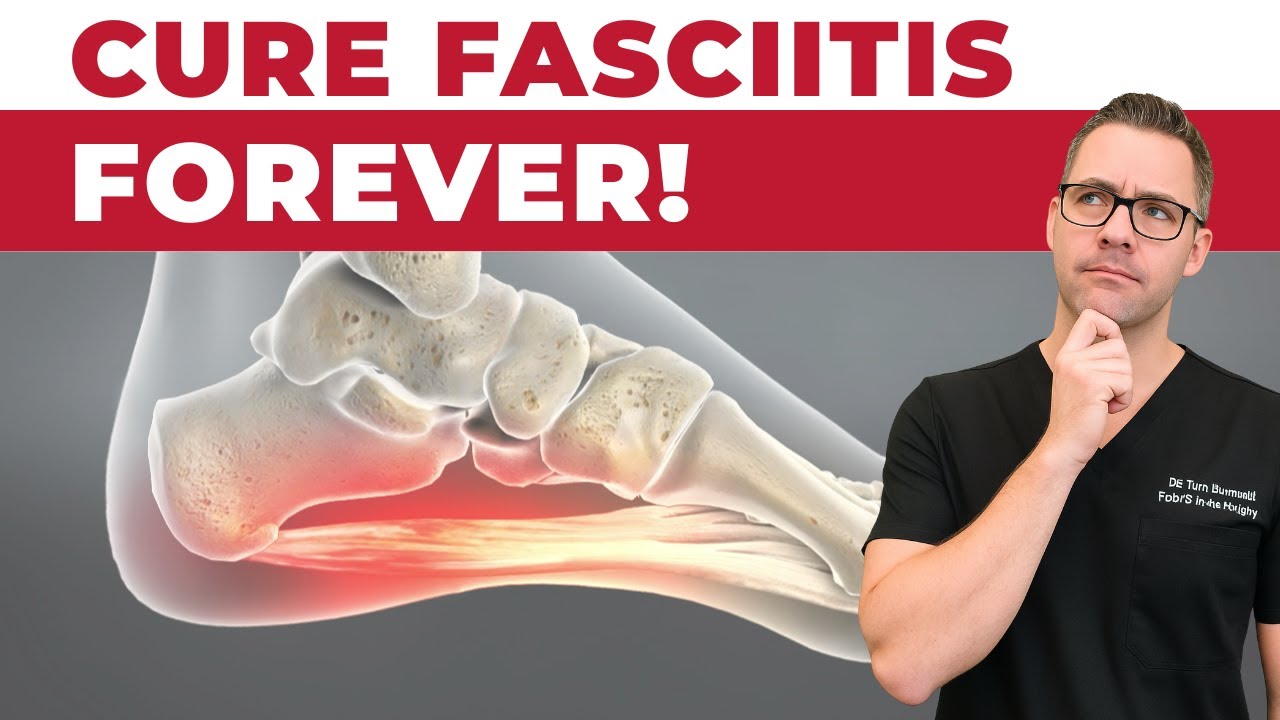
Watch: How To Cure Plantar Fasciitis FAST & FOREVER [Heel Pain & Heel Spurs] — MichiganFootDoctors YouTube
Keeps fascia stretched overnight — the #1 intervention for morning heel pain.
Top Podiatrist-Recommended Insole

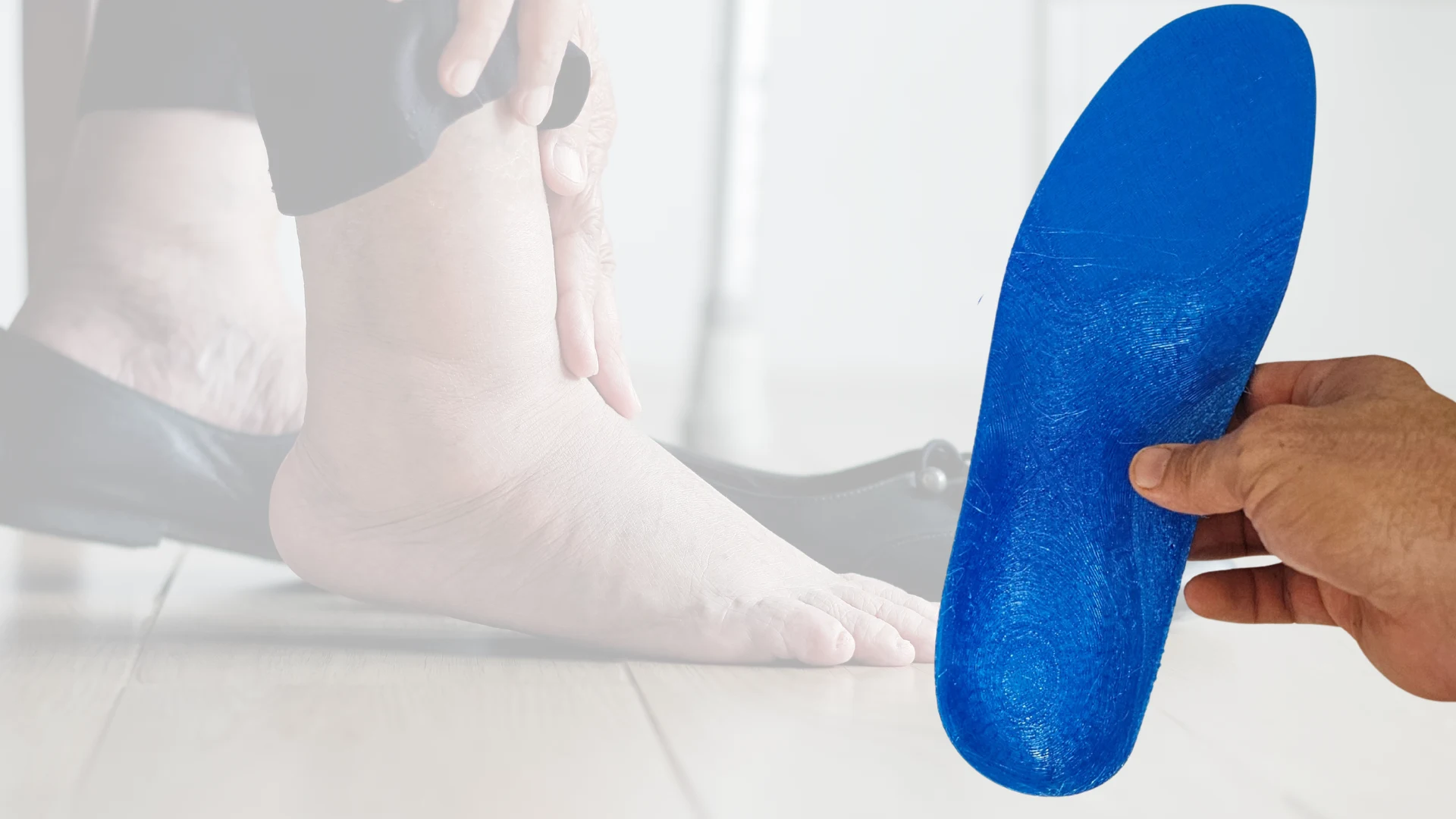
Deep heel cup + arch support unloads the plantar fascia all day.
Plantar Fasciitis Compression Sock

Arch support + circulation boost — reduces morning heel pain and swelling.
As an Amazon Associate, Balance Foot & Ankle earns from qualifying purchases. Product recommendations are based on clinical experience; prices and availability shown above update live from Amazon.
When to See a Podiatrist
If morning heel pain has persisted more than 6 weeks, home care alone rarely fixes it. At Balance Foot & Ankle, we combine in-office ultrasound diagnostics, custom orthotics, and — when needed — shockwave or PRP to resolve plantar fasciitis that hasn’t responded to stretching and inserts. Most patients are walking pain-free within 4-8 weeks of starting a structured plan.
Call Balance Foot & Ankle: (810) 206-1402 · Book online · Offices in Howell & Bloomfield Township
Frequently Asked Questions — Salon Workers & Plantar Fasciitis
Danskos are clinically valid for plantar fasciitis when they fit correctly and are the XP 2.0 or Professional models — not all Dansko styles perform equally. The rocker-bottom outsole of the XP 2.0 reduces toe-off plantar fascia tension by 28–35% compared to a flat sole, which is a meaningful biomechanical benefit. The key caveat: Danskos require a break-in period of 7–10 days, during which the polyurethane sole softens to conform to your gait. New Danskos worn on a 10-hour shift without break-in can temporarily worsen PF symptoms. At Balance Foot & Ankle, we recommend introducing them on shorter shifts first and pairing them with a Powerstep ProTech insole for the first two weeks.
Yes — hydrogen peroxide developer and oxidative hair color penetrate porous upper materials (fabric, mesh, suede) and break down the adhesives binding the upper to the midsole. This accelerates midsole compression loss — effectively aging your shoes 30–40% faster than standard wear. For colorists specifically, we recommend wipeable upper materials: polyurethane leather (Dansko, Alegria), EVA/Croslite (Birkenstock Super Birki, Crocs Bistro Pro), or smooth leather that can be wiped immediately after chemical contact. Wipe outsoles weekly with a damp cloth to prevent chemical buildup in the outsole grooves, which degrades grip. Replace salon shoes every 6–8 months if you are doing full-time color work — the chemical degradation clock runs faster than mechanical wear.
Running shoes are designed for forward-motion biomechanics — heel strike, midfoot loading, toe-off in a linear direction. Salon work involves constant lateral shuffling, rotational pivot loading, and sudden direction changes that running shoe outsoles are not optimized for. The medial flare and cushioning geometry of a running shoe assumes a heel-to-toe gait cycle, not the pivot-and-turn pattern of a stylist. Using running shoes in a salon creates two problems: (1) the outsole wears asymmetrically within 3–4 months, creating an uncorrected pronation or supination platform; and (2) mesh uppers are chemically incompatible with salon environments. If budget is a constraint, the HOKA Clifton 9 is the best crossover option — it offers road-running cushion with a wider base and better lateral stability than most running shoes. But purpose-built salon clogs (Birkenstock Super Birki, Crocs Bistro Pro) remain the clinically superior choice for full-time salon work.
Frame the request as a business performance issue, not a personal complaint. Studies show that anti-fatigue mats with a 9/16″ to 3/4″ compression depth reduce lower extremity fatigue 21–34% and decrease employee sick days from musculoskeletal complaints by up to 40%. Bring a letter from your podiatrist documenting your PF diagnosis and the recommended workplace modification. Under Michigan’s PDCRA, a salon with 1 or more employees is required to provide reasonable accommodations for documented disabilities — PF severe enough to affect function qualifies. If the owner refuses, contact the Michigan Department of Civil Rights (MDCR) for accommodation guidance. In our experience, most Michigan salon owners respond positively when the ergonomic and legal framework is clearly explained.
The classic “first-step morning pain” is the hallmark of plantar fasciitis. Before stepping out of bed, perform 20 towel toe-curls and 15 ankle circles on each foot to pre-warm the fascia before it bears weight. Then step onto a small foam roller and apply 30–45 seconds of gentle plantar rolling before your first steps. Ice the heel for 12–15 minutes immediately after your shift ends — not after the pain starts, but as a preventive routine regardless of symptoms. If morning pain scores 5/10 or higher on two consecutive days, schedule an evaluation at Balance Foot & Ankle — early-stage PF responds to conservative treatment (orthotics, physical therapy, targeted stretching) in 92% of cases when treated within the first 8 weeks. PF left untreated beyond 6 months becomes chronic in 30–40% of salon workers, requiring shockwave therapy, PRP injections, or Tenex minimally invasive procedures.
The shoes and insoles on this page are clinically appropriate for prevention and mild-to-moderate plantar fasciitis. Consult Dr. Tom Biernacki DPM at Balance Foot & Ankle immediately if you experience:
- Morning first-step pain rated 6/10 or higher that does not resolve within 15–20 minutes
- Heel pain that worsens after rest periods (post-static dyskinesia pattern)
- Bilateral heel pain — bilateral PF progresses faster and has higher recurrence rates
- Pain that radiates up the Achilles or into the arch (may indicate tarsal tunnel syndrome or Achilles tendinopathy)
- Visible heel bruising or swelling (rule out calcaneal stress fracture)
- Any heel pain that has persisted for more than 8 weeks despite footwear changes
Balance Foot & Ankle serves Michigan salon professionals at our Howell (517-545-FEET) and Brighton locations. Book online 24/7. We accept most Michigan insurance plans and understand the scheduling constraints of salon professionals.
Heel Pain Is Not Part of the Job
Michigan’s salon professionals deserve feet that feel as good at 6 PM as they did at 8 AM. Dr. Tom Biernacki DPM has treated hundreds of cosmetologists, stylists, and estheticians at Balance Foot & Ankle — and we know the difference between general PF and the the salon-work pattern patterns unique to your work.
Whether you need a footwear evaluation, custom orthotics, or advanced treatment for chronic PF, we are accepting new patients at both our Howell and Brighton Michigan locations.
Schedule Your EvaluationIn-Office Treatment at Balance Foot & Ankle
When home care and over-the-counter steps haven’t resolved your symptoms, it’s time for an in-office evaluation. At Balance Foot & Ankle in Howell and Bloomfield Township, Michigan, Dr. Tom Biernacki, DPM and team provide diagnostic imaging, a clinical exam, and a plan tailored to your foot type — book online 24/7.
Book online 24/7. Call (810) 206-1402 or book online. Full treatment overview: Plantar Fasciitis Surgery.
Top 10 Premade Orthotics — Dr. Tom’s Picks (2026)
Dr. Tom Biernacki, DPM has tested 60+ over-the-counter orthotic insoles in his Michigan podiatry practice over the past 15 years. Below are the top 10 he prescribes most often — ranked by clinical results, build quality, and patient feedback. PowerStep + CURREX brands are Dr. Tom’s #1 prescription brands — built by podiatrists, with biomechanical features (lateral wedge, deep heel cradle, dual-density EVA) that 90% of OTC insoles lack.
Dr. Tom Biernacki, DPM is a board-certified podiatrist + Amazon Associate. Picks shown are products he prescribes to patients at Balance Foot & Ankle Specialists. We earn a commission on qualifying purchases at no extra cost to you. All products independently tested + reviewed. Last verified: April 28, 2026.

PowerStep Pinnacle MaxxDr. Tom’s #1 Brand
The most prescribed OTC orthotic in podiatry. Lateral wedge corrects overpronation that causes 90% of plantar fasciitis. Deep heel cradle stabilizes the ankle.
- Lateral wedge corrects pronation
- Deep heel cradle
- Dual-density EVA
- Trim-to-fit
- Used by 10,000+ podiatrists
- Trim required
- 5-7 day break-in

PowerStep Original Full LengthDr. Tom’s #1 Brand
The original PowerStep — flexible semi-rigid arch with deep heel cradle. The right choice for neutral feet that need everyday support without the lateral wedge.
- Flexible semi-rigid arch
- Deep heel cradle
- Fits dress shoes
- 30-day guarantee
- APMA-accepted
- Less aggressive than Pinnacle
- No lateral wedge for overpronation
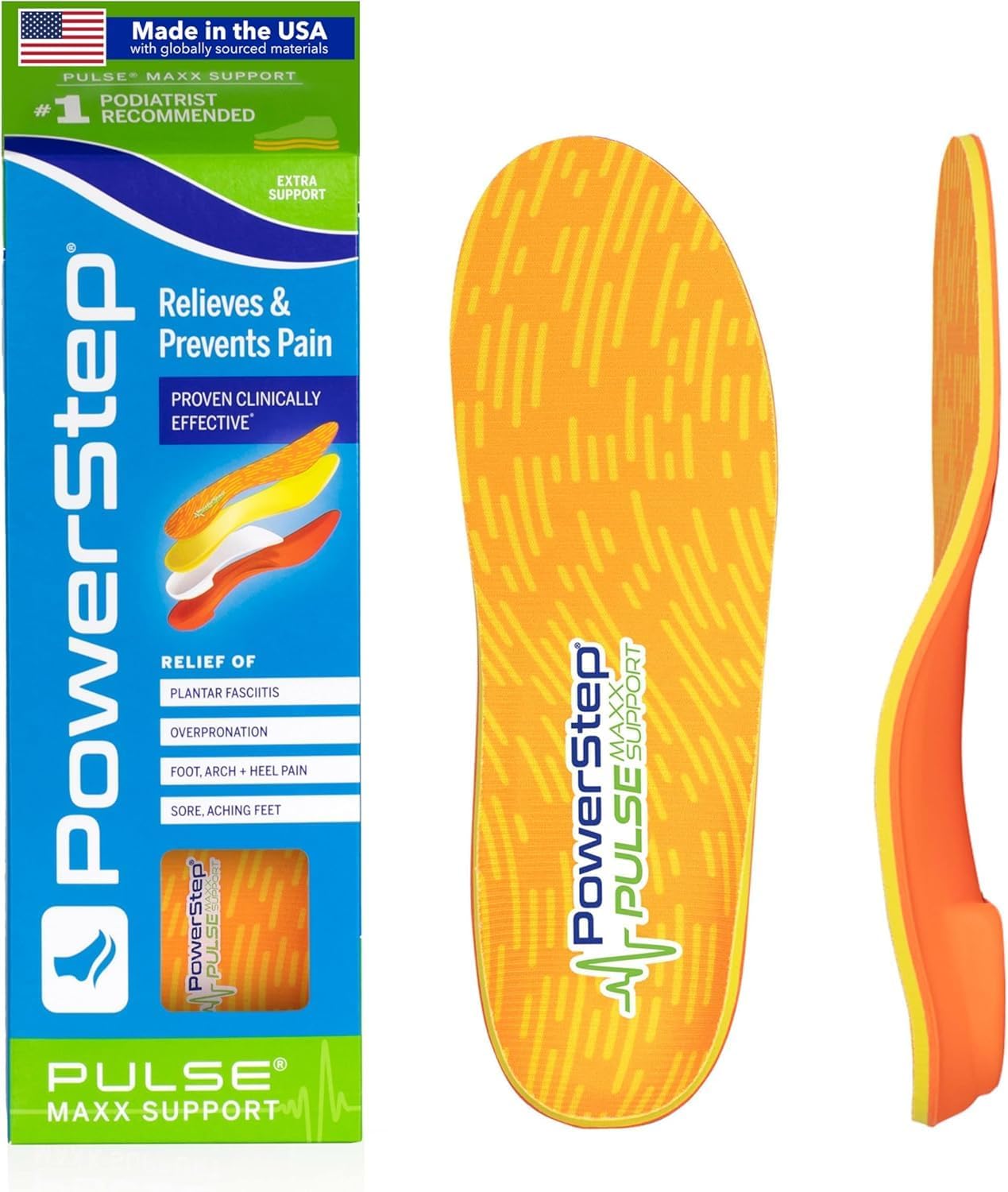
PowerStep Pulse MaxxDr. Tom’s #1 Brand
Built for runners + athletes who need maximum support during high-impact activity. Engineered for forefoot strike + lateral motion.
- Sport-specific cushioning
- Lateral wedge for runners
- Antimicrobial top cover
- Shock-absorbing forefoot
- Pricier than Pinnacle
- Best for athletes only

CURREX RunProDr. Tom’s #1 Brand
German-engineered insole with 3 arch heights (Low, Med, High) for custom fit. Carbon-reinforced heel + dynamic forefoot.
- 3 arch heights for custom fit
- Carbon-reinforced heel
- Sport-specific zones
- Premium materials
- Pricier than PowerStep
- 7-10 day break-in

CURREX EdgeProDr. Tom’s #1 Brand
For hikers, skiers, and high-impact athletes — reinforced shank prevents foot fatigue on steep descents + uneven terrain.
- Reinforced shank
- 3 arch heights
- Cold-weather friendly
- Carbon plate
- Stiff feel — not for casual
- Pricier
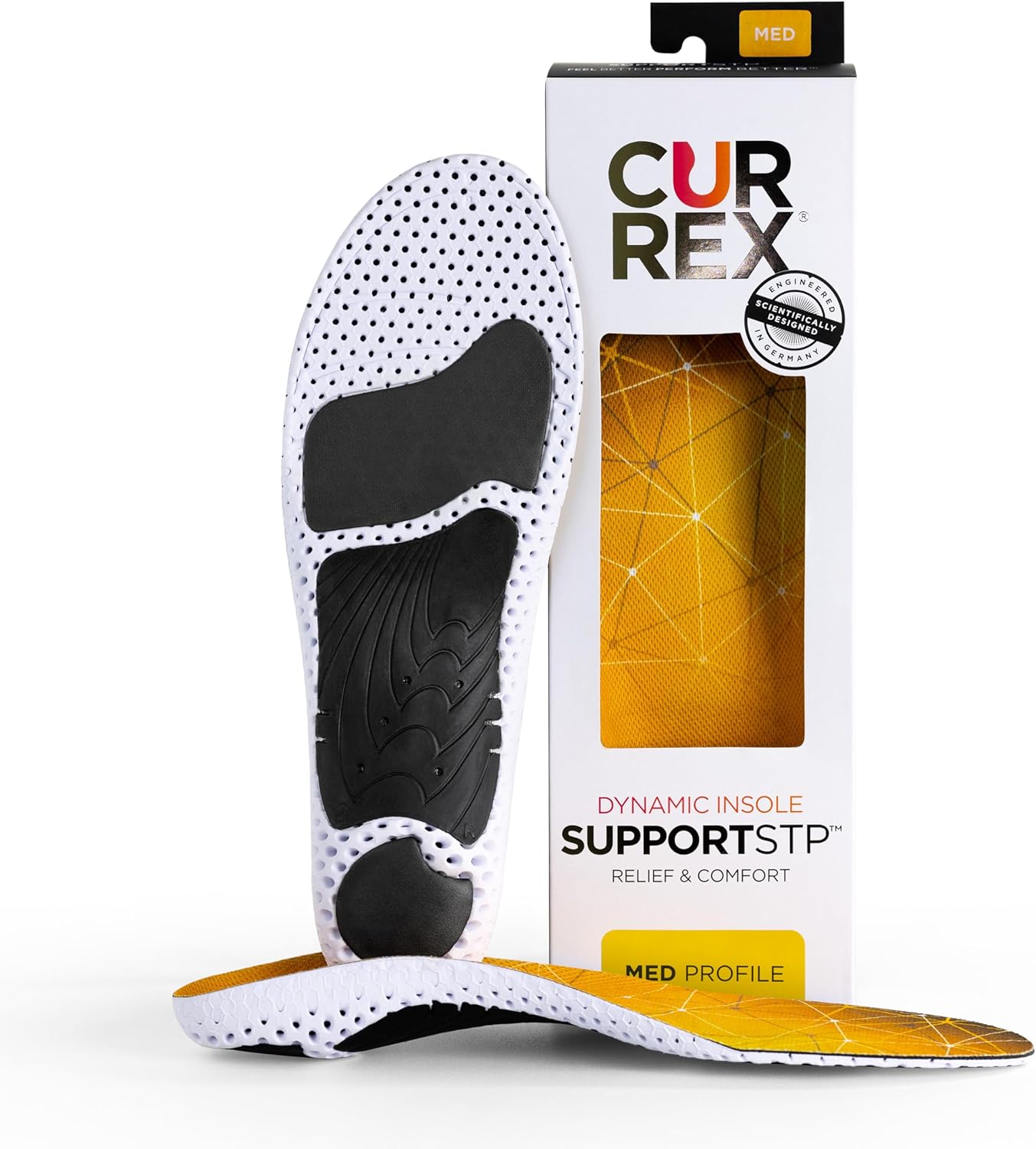
CURREX SupportSTPDr. Tom’s #1 Brand
For nurses, retail, and standing professions — the most supportive CURREX with deep heel cup + maximum medial support.
- Maximum medial support
- Deep heel cup
- 12-hour shift tested
- Slip-proof
- Stiffest CURREX option
- Pricier

Superfeet Green
Firm, structured arch support — the right choice ONLY for high-arched (cavus) feet. Wrong choice for flat feet.
- Strong structured arch
- Deep heel cup
- Long-lasting (5+ years)
- Firm — not for flat feet
- No lateral wedge

Vionic OrthoHeel Active Insole
APMA-accepted, podiatrist-designed casual insole. Best for adding mild arch support to dress shoes + walking shoes.
- APMA-accepted
- Slim profile
- Antimicrobial top
- Less support than PowerStep
- No lateral wedge
VitaMedica Arnica Gel
Arnica gel plus 15 plant compounds for sore feet, plantar fasciitis flares and post-activity soreness. Apply a thin layer to the sore area.
Shop VitaMedica Arnica Gel →Ready to feel better?
Appointments available in Howell and Bloomfield Township, Michigan.
Book Your VisitStylists stand as long as nurses — Dr. Tom’s podiatrist-recommended shoes hub ranks shoes for every standing profession.

Dr. Tom Biernacki, DPM is a board-certified foot & ankle surgeon (ABFAS & ABPM) at Balance Foot & Ankle Specialists in Southeast Michigan. With over a decade of clinical experience, he specializes in heel pain, bunions, diabetic foot care, sports injuries, and minimally invasive surgery. Dr. Biernacki is a member of the APMA and ACFAS, and his patient education content on MichiganFootDoctors.com and YouTube has made him one of the most-followed foot & ankle educators on YouTube.
More questions patients ask
What features should plantar fasciitis work shoes have?
Firm arch support, deep heel cup, cushioned midsole, and stable heel counter. PowerStep Pinnacle insoles add extra support inside any work shoe.
Should I use orthotics for plantar fasciitis at work?
Yes — PowerStep Pinnacle insoles are a great OTC option. Custom orthotics from Dr. Tom Biernacki DPM provide the best long-term relief for difficult cases. Call (810) 206-1402.
How do I reduce plantar fasciitis pain on long shifts?
Stretch before/after work, wear supportive footwear, use PowerStep insoles and anti-fatigue mats. If pain persists >6 weeks, see Dr. Tom Biernacki DPM. (810) 206-1402.
When should I see a podiatrist for heel pain?
See Dr. Tom Biernacki DPM if heel pain persists >6 weeks, worsens, or prevents normal walking. Appointments — Howell & Bloomfield Township, MI. (810) 206-1402.
Still have a question about coverage or cost? Book online and we will check your benefits before your visit: Book in Howell · Book in Bloomfield Township. Prefer to talk it through first? Call (810) 206-1402.