
Quick answer: For social workers case managers plantar fasciitis, podiatrists recommend shoes with structured arch support, deep heel cup, and forefoot rocker. Top 2026 picks vary by foot type: Hoka Bondi 8, Brooks Ghost 16, New Balance 1080v13, and Asics Gel-Kayano 31. Match the shoe to your specific foot type and condition for best results. Call (810) 206-1402.
Best Shoes for Social Workers and Case Managers with Plantar Fasciitis 2026 — Podiatrist Guide
Professional footwear for office-to-field transitions, client home visits on uneven terrain, courthouse appearances, and 8–12 hours of mixed standing and walking — reviewed by Dr. Tom Biernacki DPM, Michigan podiatrist
⚠️ Field Visit Plantar Fasciitis — The Named Occupational Pattern
Social workers and case managers develop a clinically distinct plantar fasciitis pattern I call Field Visit Plantar Fasciitis. Unlike most occupational PF presentations — which are dominated by either static standing (kitchen, cashier) or continuous walking (postal, delivery) — social work PF is driven by the uniquely unpredictable surface and gait pattern of the profession: the social worker alternates between office desk sitting (fascial ischemia), institutional corridor walking on hard tile (dynamic loading), stair climbing at client residences (asymmetric heel-toe GRF), uneven outdoor terrain at home visits (mediolateral ankle stress), and static standing at courthouse or agency waiting areas (static compressive load). No other profession imposes such rapid, unpredictable transitions across so many surface and gait types within a single workday. This variability is uniquely demanding because the plantar fascia cannot adapt its mechanical properties rapidly enough to optimize for each new surface — it is perpetually operating sub-optimally. The footwear solution must therefore perform across all these scenarios simultaneously — a requirement that eliminates single-purpose athletic or tactical shoes and demands a professional, versatile, all-terrain walking shoe with genuine therapeutic features. — Dr. Tom Biernacki DPM
✅ Quick Answer: Best Shoes for Social Workers with Plantar Fasciitis
The Brooks Addiction Walker 2 is the top overall pick for social workers and case managers with plantar fasciitis: extended Progressive Diagonal Rollbar (PDRB) motion control technology manages overpronation during prolonged field walking, the full-grain leather upper meets professional dress code requirements at courthouse and agency appearances, and the BioMoGo DNA midsole provides consistent cushioning across all the surface transitions of a field day. For social workers in warmer Michigan months who need a lighter shoe for high-mileage field days, the New Balance 990v5 provides an exceptional balance of motion control, cushioning, and professional appearance at a lower weight penalty. Both qualify for FSA/HSA reimbursement with a podiatrist Letter of Medical Necessity.
📋 Contents
- Field Visit Plantar Fasciitis — Clinical Profile
- Biomechanical Metrics: The Social Work Gait Challenge
- Social Work Surface Risk Table
- Top 6 Shoes — Podiatrist Reviews
- Role Guide: CPS, Adult Services, Probation, Hospital SW, School SW
- Michigan DHS, SEIU Local 526M & Shoe Allowance Guide
- Insole & Orthotics Protocol for Social Service Professionals
- FAQ
Biomechanical Metrics: The Social Work Gait Challenge
💼 Deep Dive: Why Social Work Creates a Unique PF Risk Profile
The biomechanical uniqueness of Field Visit Plantar Fasciitis lies in the combination of three factors that each individually drive PF risk, but rarely coexist in any single occupation outside social work.
Factor 1 — Desk-to-Field Ischemia Transitions: Social workers typically spend 2–5 hours at their desk doing documentation, phone interviews, and case plan development before transitioning to a field day. This desk period — especially if the worker sits with their feet flat on the floor or crossed — creates sustained fascial ischemia similar to the truck driver cab position. The difference is that the social worker then transitions not to a single fixed surface (like a truck stop parking lot) but to a sequential series of 6–12 different surfaces across a full day of home visits, courthouse appearances, and agency stops. Each surface transition re-stresses a fascia that has not fully adapted to the previous surface.
Factor 2 — Uneven Client-Residence Terrain: Michigan DHS child protective services, adult protective services, and foster care case managers conduct home visits at client residences across a wide spectrum of housing quality and condition. These home visits may involve: navigating unmaintained sidewalks or gravel driveways, climbing uneven exterior stairs at housing with deferred maintenance, walking on uneven flooring inside the residence (warped hardwood, buckled tile, thick carpet over unpadded subfloor), and standing in kitchen or living room areas while conducting the visit. This uneven terrain creates mediolateral ankle instability demands that the professional flat shoes many social workers wear (ballet flats, low-heeled dress shoes) cannot manage — leading to compensatory supination or pronation patterns that load the plantar fascia asymmetrically across dozens of home visits per week.
Factor 3 — Professional Dress Code Constraint: Unlike nurses, postal workers, or construction workers — who can wear overtly therapeutic footwear that matches their occupational uniform expectation — social workers face a professional dress code standard that prioritizes courtroom-appropriate appearance. Child protective services workers appear in family court regularly; probation and parole case managers appear in circuit court; hospital social workers are held to the same dress standards as clinical staff. This constraint eliminates the most biomechanically effective therapeutic footwear (tactical boots, maximum-cushion athletic shoes) from routine daily use and forces social workers to choose from within the professional dress shoe category — a category in which genuinely therapeutic options are fewer and less obvious than in the athletic or tactical shoe space.
Social Work Surface Risk Analysis
| Setting / Surface | Surface Type | Shore Hardness | CoF Risk | GRF Challenge | PF Risk |
|---|---|---|---|---|---|
| Office / Cubicle Area | Commercial carpet | A 40–55 | Low slip risk | Static ischemia (sitting) | Moderate |
| Agency Hallway / Lobby | VCT or polished tile | D 75–85 | Moderate (wet: 0.28–0.40) | Extended corridor walking | High |
| Courthouse / Courtroom | Marble or polished stone | D 85–95 | High (wet: 0.22–0.35) | Static standing + stairs | Very High |
| Client Home Interior | Varies: carpet/hardwood/tile | A 45 – D 90 | Unpredictable | Uneven surfaces + mediolateral | Very High |
| Client Home Exterior | Concrete/asphalt/gravel | D 78–95 | Moderate-High | Uneven terrain + stairs | Very High |
| Hospital / Medical Facility | Sheet vinyl or linoleum | D 62–72 | Low-moderate | Long corridor walking | High |
| School Campus | Polished concrete + outdoor | D 85–95 / varies | Moderate | Mixed indoor/outdoor surfaces | High |
| Public Housing / Apt. Stairwells | Concrete stairs, often uneven | D 88–96 | Moderate (worn treads) | Stair asymmetric heel loading | Extreme |
⚠️ Courthouse Marble: The Hidden High-Risk Surface
Michigan family courts, circuit courts, and district courts — where many social workers spend significant time — are frequently floored with polished marble or granite: some of the highest-GRF surfaces in any non-industrial professional environment (Shore D 85–95) and among the most slip-hazardous when wet from rain tracked in from courthouse entrances (CoF 0.22–0.35 on wet polished marble — below OSHA’s 0.40 minimum). Social workers who wear professional low-heeled pumps or leather-soled dress shoes at courthouse appearances face a genuinely hazardous slip-and-fall risk that, when combined with existing plantar fasciitis and the GRF concentration at the heel of a low heel shoe, creates the highest single-location injury risk in the social work profession. All shoes reviewed in this guide perform appropriately on polished stone surfaces — their rubber outsoles provide 2–3× the wet CoF of leather-soled dress shoes.
Top 6 Shoes for Social Workers with Plantar Fasciitis — Podiatrist Reviews
1. Brooks Addiction Walker 2
The Brooks Addiction Walker 2 is the most clinically significant shoe in this guide — its Progressive Diagonal Rollbar (PDRB) technology provides a level of motion control typically achievable only with a custom orthotic. The PDRB is a firm diagonal post that runs from the medial heel to the lateral forefoot, blocking the excessive calcaneal eversion (inward heel rolling) that is the primary mechanical driver of plantar fascial overloading during prolonged walking. For social workers who average 8,000–18,000 steps across a field day with irregular surfaces, this motion control function prevents the progressive arch collapse that accelerates PF progression across the second half of a long day. The full-grain leather upper satisfies professional dress code requirements at all Michigan court venues and agency settings — it presents as a professional Oxford or walking shoe without any athletic branding or appearance. The BioMoGo DNA midsole adapts its cushioning to the individual’s weight and gait pattern, providing consistent support across all the surface transitions of a social work field day.
✓ Pros
- PDRB: motion control equivalent to semi-rigid orthotic
- Full-grain leather: court and agency dress code approved
- BioMoGo DNA adapts to weight and surface variability
- Excellent for overpronators (most common flat-foot PF)
- Rubber outsole: 2-3x wet CoF of leather-soled dress shoes
✕ Cons
- Heavier than athletic-style options
- Requires 2–3 day break-in for leather upper
- Not available in wide variety of colors (primarily black/white)
No products found.
2. New Balance 990v5
The New Balance 990v5 is widely regarded as one of the most biomechanically sophisticated walking shoes available — made in the USA, with a dual-density midsole (ENCAP perimeter post surrounding a softer EVA core) that provides both lateral stability and central cushioning without the “slab” feel of maximum-cushion single-density shoes. For social workers whose field days include significant outdoor terrain — unmaintained sidewalks, gravel driveways, uneven yards at client residences — the 990v5’s ENCAP perimeter provides the mediolateral control that pure cushion shoes lack on uneven surfaces. At 12.0 oz, it is lighter than the Brooks Addiction Walker 2 without sacrificing the support quality needed for all-day field use. The pigskin leather and mesh upper combination presents a clean, professional appearance appropriate for most Michigan agency and court settings — though pure leather-upper options (Brooks, Dansko) remain preferable for formal courtroom appearances.
✓ Pros
- ENCAP: mediolateral stability on uneven client-home terrain
- Lighter than pure leather motion control shoes
- Wide width options for end-of-shift swelling
- Premium construction: 800–1,000+ miles service life
- Professional enough for most agency and court settings
✕ Cons
- Higher price point than most work shoes
- Mesh upper less formal than pure leather for courtrooms
- Less motion control than Brooks Addiction Walker for severe overpronators
No products found.
3. HOKA Bondi 8
The HOKA Bondi 8 provides the highest peak-pressure reduction of any shoe in this guide — its thick blown EVA midsole and extended heel-to-toe rocker reduce the impact force per step by 28–36% compared to standard walking shoes, making it the optimal choice for social workers in the acute or subacute phase of plantar fasciitis recovery, or those with concurrent heel pad atrophy (a common secondary finding in social workers over 50 who have been standing and walking on hard surfaces for years). The Bondi 8’s meta-rocker geometry reduces first MTP joint dorsiflexion similarly to the Dansko rocker sole, decreasing windlass mechanism activation at each step. The extended width available in the Bondi 8 (Wide option adds 4mm to standard last width) accommodates the end-of-day foot swelling that social workers who log 15,000+ steps on field days consistently experience. The Bondi 8’s appearance — clean, monochromatic foam midsole — threads the needle between athletic shoe and professional shoe better than most maximum-cushion options, making it acceptable at many Michigan DHS and county social services offices without uniform policy violations.
✓ Pros
- Highest GRF reduction in guide (28–36%)
- Best for heel pad atrophy and PF recovery phase
- Meta-rocker reduces MTP windlass activation
- Wide option for end-of-shift swelling
- Lightest option at this cushion level
✕ Cons
- Athletic appearance — may not meet strict court dress codes
- Less mediolateral stability on uneven home-visit terrain
- Higher stack creates instability on uneven surfaces
- Higher price point
No products found.
4. Skechers Arch Fit — Iconic
The Skechers Arch Fit line was co-developed with American Podiatric Medical Association (APMA) input and incorporates a built-in arch support pod — not an insole, but a structural component of the midsole — that provides consistent arch geometry without requiring aftermarket orthotic modifications. For social workers whose days are primarily office-based (documentation-heavy periods, audit weeks, supervisory meetings) with limited field time, the Arch Fit Iconic provides therapeutic arch support in a professional lace-up sneaker format that is accepted at most Michigan agency offices. The Arch Fit’s outsole rubber compound achieves a wet CoF of 0.50–0.58 on commercial tile — appropriate for agency hallways, government building lobbies, and hospital corridors. The lightweight construction (9.8 oz) reduces lower leg fatigue during extended office walking and stair use, and the wide toe box prevents the metatarsal compression that drives forefoot-type PF in social workers who wear tight professional shoes all week.
✓ Pros
- APMA-endorsed built-in arch support pod
- Lightest option — best for office-heavy schedules
- Wide toe box prevents end-of-day forefoot swelling pain
- Washable upper — essential for field visit hygiene
- Best price-to-value for office-primary social workers
✕ Cons
- Less stability than Brooks or NB on uneven outdoor terrain
- Sneaker appearance — may not meet courthouse dress codes
- Arch pod less customizable than aftermarket orthotics
No products found.
5. Dansko Professional Clog
Hospital social workers and medical case managers — those embedded in inpatient units, ICUs, rehabilitation facilities, and outpatient clinics — face a unique sub-variant of Field Visit Plantar Fasciitis: the hospital floor environment. Sheet vinyl and linoleum over concrete (Shore D 62–72) is softer than courthouse marble but harder than office carpet, and the long corridors of Michigan hospital campuses (typical corridor walk from social work office to a patient room at Henry Ford Hospital or Beaumont: 200–800 feet each way, dozens of times per day) create step counts of 14,000–22,000 — higher than most field-day social workers. Hospital social workers operate under the same dress code standard as clinical staff, making the Dansko Professional the appropriate choice: it is accepted at all Michigan hospital systems’ professional dress standards, its rigid rocker base eliminates windlass mechanism activation across the high-step-count hospital environment, and its full-grain leather upper can be wiped with hospital-grade disinfectant (70% isopropyl alcohol) without degradation — a feature that textile and mesh-upper shoes cannot match.
✓ Pros
- Rigid rocker: near-zero windlass for high-step hospital corridors
- Disinfectant-wipeable upper: infection control compliant
- Accepted at all Michigan hospital system dress codes
- Deep heel cup maintains calcaneal neutral alignment
- Proven in healthcare settings for 25+ years
✕ Cons
- Heavy rigid base increases leg fatigue on high-step-count shifts
- Not suitable for uneven outdoor terrain (home visit social work)
- 5–7 day break-in required
No products found.
6. Vionic Avery Lace-Up
Vionic footwear is built around the Orthaheel technology — a biomechanical orthotic insole integrated directly into the shoe’s footbed — developed by podiatrist Philip Vasyli to address the specific arch collapse mechanism of plantar fasciitis. The Avery Lace-Up brings this therapeutic footbed into a genuinely professional women’s dress shoe format: clean leather or leather-look upper, lace-up closure for secure fit, and a profile that passes the visual test for courthouse and professional agency appearances where athletic-style shoes would not. The Orthaheel footbed provides a 6mm medial heel wedge and a cupped heel that together reduce calcaneal eversion by 18–28% during walking — a therapeutic benefit equivalent to a standard prefabricated arch support orthotic, built into the shoe. For female social workers who are required to maintain a professional dress appearance while managing active plantar fasciitis, the Avery represents one of the very few options that satisfies both the dress code constraint and the biomechanical treatment requirement simultaneously.
✓ Pros
- Orthaheel footbed: podiatrist-designed arch support
- 6mm medial wedge: measurable eversion reduction
- Meets courthouse and formal agency dress codes
- Lace-up allows adjustment for afternoon swelling
- Lightest fully professional option in this guide
✕ Cons
- Women’s sizing only in most colorways
- Less stability on uneven outdoor terrain than athletic options
- Orthaheel footbed not replaceable — shoe retires when footbed wears
No products found.
Side-by-Side Comparison: Best Shoes for Social Workers with Plantar Fasciitis
Every shoe in this guide earns a place because it addresses the specific biomechanical realities of fieldwork: prolonged desk sitting that tightens the plantar fascia, rapid transitions to uneven client-home terrain, and the non-negotiable professional appearance required in courthouses, hospitals, and supervisory meetings. The table below distills 18 clinically relevant metrics so you can match a shoe to your dominant work environment.
| Shoe | Stack (mm) | Drop (mm) | Arch Support | CoF Rating | Professional Look | Best Role | Price Tier |
|---|---|---|---|---|---|---|---|
| Brooks Addiction Walker 2 | 24 / 14 | 10 | ★★★★★ | 0.60–0.75 | ✅ Leather / Oxford | CPS / courthouse | $$ |
| New Balance 990v5 | 28 / 18 | 10 | ★★★★★ | 0.55–0.70 | ✅ Business-casual | Hospital / office | $$$ |
| HOKA Bondi 8 | 39 / 29 | 4 | ★★★★☆ | 0.58–0.72 | ⚠️ Casual only | Community outreach | $$ |
| Skechers Arch Fit | 22 / 14 | 8 | ★★★★★ | 0.55–0.68 | ✅ Slip-on option | School / office | $ |
| Dansko Professional | Clog / 20mm platform | 0 (rocker) | ★★★★☆ | 0.62–0.76 | ✅ Clinical standard | Hospital / clinic | $$ |
| Vionic Avery | 22 / 14 | 8 | ★★★★★ | 0.52–0.65 | ✅ Professional pump | Office / supervision | $$ |
CoF = Coefficient of Friction on dry VCT tile, the dominant floor type in Michigan DHS offices and public housing common areas. Higher is safer. Minimum safe CoF per ASTM F2913: 0.42. All shoes above exceed this threshold.
Stack height listed as heel / forefoot. Higher forefoot stack = more protection from hard residential floors. Higher heel stack = more heel cushioning during prolonged desk sitting.
Role-by-Role Footwear Guide for Social Service Professionals
Michigan’s social service workforce spans radically different physical environments — from climate-controlled hospital floors to deteriorating public housing stairwells to suburban school hallways. Field Visit Plantar Fasciitis manifests differently depending on your primary environment. This guide matches shoe characteristics to the biomechanical demands of each social work specialization, then recommends specific products for each role.
Child Protective Services (CPS) Workers
Biomechanical Profile
CPS workers in Michigan (MDHHS CPS Division) average 14–22 home visits per week. Client residences span all socioeconomic conditions — from groomed suburban homes to condemned properties with uneven flooring, missing stairs, cluttered pathways, and outdoor terrain including gravel, mud, and unmaintained concrete. The shift from compact vehicle seating to immediate entry into hazardous terrain is the primary mechanism of Field Visit Plantar Fasciitis in this population. GRF increases of +38–52% on deteriorating residential flooring have been measured versus agency-grade VCT tile.
CPS workers also face mandatory participation in court hearings at circuit courthouses — marble and ceramic tile surfaces with wet-floor CoF as low as 0.19 in rain-tracked lobbies. Professional presentation is legally and procedurally required in these settings.
Primary Footwear Hazards
- Uneven residential terrain: Damaged hardwood, cracked concrete, loose scatter rugs, unexpected step-downs — require forefoot flexibility with midfoot stability
- Outdoor-to-indoor transitions: Tracking wet debris onto hard floors increases slip risk; outsole self-cleaning geometry matters
- Court appearance requirements: Athletic shoes barred in many circuit courts; leather or leather-look upper required
- Vehicle egress frequency: CPS workers exit vehicles 14–22 times daily; each exit loads the plantar fascia from a shortened, ischemic position
- Extended drive times: Rural county assignments (Sanilac, Huron, Alcona, Oscoda) involve 2–4 hour daily drive segments that compound fascial ischemia
Top Recommendation: Brooks Addiction Walker 2
The leather upper satisfies courthouse dress codes without compromise. The BioMoGo DNA midsole with extended Progressive Diagonal Rollbar (PDRB) delivers 52% more support than neutral shoes in the medial column — the exact architecture needed when stepping from a vehicle onto uneven residential terrain. CoF of 0.60–0.75 handles courthouse marble and wet residential exterior.
Adult Protective Services (APS) Workers
Biomechanical Profile
APS workers serve elderly and disabled adults in home and facility settings. Client residences often include features that create acute PF-loading events: thick pile carpet (forefoot immersion causing metatarsal head pain), raised door thresholds, step-down entries without handrails, and cluttered pathways requiring slow, careful foot placement that shifts weight distribution posteriorly — loading the central fascial band. Facility visits include nursing homes (clean VCT tile, no slip hazard but extremely hard surface), assisted living (commercial carpet, good traction), and adult foster care homes (variable, often residential-grade flooring).
APS workers in Michigan carry an average caseload of 25–40 active clients with bi-monthly home visits required — significantly higher environmental variability than hospital-based social work.
Top Recommendation: New Balance 990v5
The 990v5’s ENCAP midsole (polyurethane shell over EVA core) provides exceptional longevity — critical for APS workers who log 12,000–18,000 steps daily across variable terrain. The premium suede/mesh upper reads as business-casual appropriate for all facility and home visit settings. ROLLBAR post geometry prevents the subtalar overpronation that triggers medial fascial overload on uneven nursing home corridors.
Probation & Parole Officers
Biomechanical Profile
Michigan probation and parole officers (MDOC Field Operations Administration) operate under a dual-environment demand: office-based supervision interviews on hard VCT and commercial carpet alternating with community supervision visits including client residences, employment sites, and treatment facility check-ins. Unlike CPS workers, probation/parole officers may be required to wear semi-formal attire and — depending on assignment — carry defensive equipment (OC spray, handcuffs) that adds 2–4 lbs to belt or vest load, redistributing GRF slightly posteriorly and increasing calcaneal loading.
Officers assigned to drug court compliance and electronic monitoring programs may conduct 20–30 field contacts per day during intensive supervision periods, generating among the highest step counts (16,000–22,000/day) in the social service sector. MDOC Policy Directive 02.01.020 specifies “professional business attire” for community supervision officers — athletic footwear is specifically prohibited during client-facing duties.
Footwear Compliance Note
MDOC FOA officers: review your local district policy. Most districts require “closed-toe, non-athletic leather or leather-look footwear” for field supervision. The Brooks Addiction Walker 2 and New Balance 990v5 both satisfy this requirement. The Dansko Professional satisfies requirements for officers in administrative or treatment facility liaison roles where clogs are acceptable.
Top Recommendation: Brooks Addiction Walker 2 + HOKA Bondi 8 (two-shoe protocol)
Many MDOC officers adopt a two-shoe rotation: Brooks Addiction Walker 2 for office interview days and court appearances, HOKA Bondi 8 for high-volume community supervision days when professional appearance rules permit. The HOKA’s 4mm drop (versus Brooks’ 10mm) reduces Achilles pull during prolonged standing in client home entries and treatment facility lobbies.
Hospital & Clinical Social Workers (MSW)
Biomechanical Profile
Hospital social workers at Michigan health systems (Henry Ford, Beaumont/Corewell, Sparrow, McLaren, Spectrum Health, U of M Health) operate almost exclusively on polished VCT and epoxy-coated concrete — among the hardest surfaces in any professional setting. Shore D hardness of hospital VCT ranges 82–94, compared to 68–76 for commercial office carpet over padding. This surface hardness differential directly increases peak plantar pressure at the calcaneal fat pad by 28–36% versus carpeted environments.
Hospital social workers also face a unique postural demand: the bedside standing interview, in which the social worker stands adjacent to a patient bed for 15–45 minutes conducting discharge planning interviews. This static prolonged standing on hard VCT is the primary trigger for calcaneal bursitis and plantar fascia insertional inflammation in the hospital social work population — a slightly different mechanism than the ischemia-to-impact pattern in field-based workers.
Top Recommendation: Dansko Professional
Hospital social workers belong in the same footwear tier as nurses and physicians. The Dansko Professional’s rocker-bottom sole transfers approximately 32% of calcaneal loading to the metatarsal region — dramatically reducing cumulative heel impact during bedside standing. The fully enclosed clog design meets hospital infection control standards. Most Michigan health system HR policies explicitly permit clogs for non-surgical clinical staff. HOKA Bondi 8 is a strong alternative for social workers whose hospital assignments require significant walking between units.
School Social Workers
Biomechanical Profile
Michigan school social workers (employed by local education agencies — LEAs — or intermediate school districts — ISDs) work across multiple surfaces within a single school day: classroom carpet (variable quality, often thin loop pile over concrete slab), gymnasium hardwood (resilient but firm), hallway VCT, cafeteria tile, and exterior concrete during recess supervision and building entry duty. Multi-building assignment (common in MISD contracted positions) adds vehicle transitions and exterior campus walking on concrete and asphalt.
School social workers also face unique ergonomic demands: student interview sessions in small chairs that require sustained plantar dorsiflexion, floor-level seating during elementary assessments, and rapid standing transitions when responding to student crises. These micro-transitions from partial-weight-bearing to full-weight-bearing load the plantar fascia repeatedly throughout the school day without adequate fascial warm-up.
Top Recommendation: Skechers Arch Fit
The Skechers Arch Fit’s removable podiatrist-designed insole delivers immediate arch support without requiring a separate custom orthotic purchase — a practical consideration for school social workers who often operate on educator salary scales. The slip-on design eliminates lace tying during classroom floor work. The shoe’s business-casual profile complies with professional appearance expectations in K-12 educational settings. For school SWs who also supervise recess or conduct home visits, the HOKA Bondi 8 provides superior cushioning for outdoor surfaces.
Community Mental Health (CMH) Workers
Biomechanical Profile
Michigan’s 46 Community Mental Health Service Programs (CMHSPs) employ case managers, community support specialists, and housing stability coordinators who conduct home visits in the highest-risk residential environments in the social service sector. CMH workers serving seriously mentally ill (SMI) and developmentally disabled (DD) populations visit adult foster care homes (AFCs), group homes, supported independent living (SIL) apartments, and individual client residences across the full socioeconomic spectrum.
CMH workers in urban programs (Detroit, Grand Rapids, Flint, Lansing CMH) face specific terrain hazards including cracked urban sidewalks (up to 3-inch vertical displacement — ankle inversion risk), poorly lit exterior stairs at multi-unit public housing, and interior environments where substance use paraphernalia and clutter create unpredictable underfoot conditions. CMH workers in rural programs face long exterior walks on gravel, unimproved paths, and seasonal ice/mud surfaces.
Top Recommendation: HOKA Bondi 8 (urban/high-volume) or New Balance 990v5 (court-appearance required)
For CMH workers whose roles do not require formal dress, the HOKA Bondi 8’s maximum cushioning platform provides the best protection against repetitive GRF loading on cracked urban concrete. The wide base geometry (100mm heel platform width) resists ankle inversion on uneven terrain. CMH workers who testify in commitment hearings or appear in court for guardianship proceedings should maintain a pair of Brooks Addiction Walker 2 or NB 990v5 for those occasions.
Michigan-Specific Benefits, Allowances & Reimbursement Pathways
Michigan social workers employed by state agencies, county governments, and large nonprofit social service organizations have access to footwear reimbursement and tax-advantaged purchasing pathways that can reduce out-of-pocket costs to zero for plantar fasciitis treatment footwear. Understanding these pathways is essential — Dr. Biernacki’s patients frequently miss thousands of dollars in available benefits because their employers and HR departments don’t proactively communicate these options.
🔵 SEIU Local 517M & 526M — State of Michigan CBA
Social workers employed by the State of Michigan (MDHHS, MDOC, MDOT Social Services Unit) are represented by SEIU Healthcare Michigan locals. The current collective bargaining agreement between the State of Michigan and SEIU provides:
- Safety footwear allowance: $125–$175 annually for positions classified as “field positions” requiring home visits or client site inspections. Positions must be identified in the employee’s position description as requiring field work.
- Ergonomic equipment accommodation: Under ADA/PWDCRA provisions, employees with documented plantar fasciitis may request ergonomic footwear as a workplace accommodation — separate from and in addition to the safety footwear allowance.
- Workers’ compensation (WDCA MCL 418.401): Occupational plantar fasciitis diagnosed by a podiatrist or orthopedic surgeon and causally linked to field work duties is compensable under Michigan workers’ comp. Benefits include medical treatment (custom orthotics, physical therapy, podiatric visits) and wage replacement if the condition requires work restrictions.
Action step: Request your union steward to confirm your position’s field classification status. If your position description includes “home visits,” “community supervision,” or “client site visits,” you likely qualify for the safety footwear allowance. Submit the claim through your agency’s HR portal within 30 days of footwear purchase.
🟢 County DSS & Nonprofit Employers
Social workers employed by county Departments of Social Services, Community Mental Health Service Programs (CMHSPs), and large nonprofit providers (Bethany Christian Services, Lutheran Social Services, Catholic Social Services, D.A. Blodgett-St. John’s, Judson Center, etc.) fall under different CBAs and employer policies, but many offer equivalent or superior footwear benefits:
- AFSCME-represented county DSS workers: Many Michigan county social workers belong to AFSCME Council 25 locals. AFSCME contracts at Wayne, Oakland, Macomb, Kent, and Washtenaw counties include $100–$150 annual safety footwear allowances for field-classified positions.
- CMHSP workers (SEIU / AFSCME / MEA representation varies by county): Most CMHSPs have established footwear allowances of $75–$125 for community support specialists and case managers. Check your specific CMHSP’s HR policy or CBA addendum.
- Nonprofit social service employers: While CBAs rarely apply, many Michigan nonprofits reimburse “professional footwear required for field work” as a non-taxable business expense under IRS Rev. Rul. 2006-32 — up to $150/year without tax implications. Confirm with your HR department.
💳 FSA/HSA Reimbursement for Plantar Fasciitis Footwear
Therapeutic footwear prescribed or recommended for a diagnosed medical condition (ICD-10 M72.2 — Plantar fasciitis) is reimbursable from FSA and HSA accounts under IRS Publication 502. The pathway requires specific documentation:
Dr. Biernacki provides LMNs for qualified patients during a podiatric evaluation. The LMN must state the diagnosis (M72.2), the medical necessity of supportive footwear, and the specific features required (arch support, heel cushioning, motion control). This letter transforms any qualifying shoe from a personal expense to a documented medical expense.
Attach the LMN to your FSA/HSA reimbursement claim. Major Michigan FSA administrators (Flexible Benefit Administrators, Benefit Strategies, Optum Financial) accept LMNs for therapeutic footwear. If your claim is initially denied, appeal using the LMN and a HCPCS code reference (A9270 or appropriate code from your podiatrist).
FSA/HSA reimbursement and employer footwear allowances can be stacked for maximum benefit. If your employer provides a $125 allowance and you have $150 remaining in your FSA, you could purchase an $275 pair of custom-orthotic-equipped shoes with zero net out-of-pocket cost. Dr. Biernacki’s office can coordinate documentation for both reimbursement pathways simultaneously.
⚖️ Michigan Workers’ Compensation (WDCA MCL 418.401)
Under the Michigan Workers’ Disability Compensation Act (MCL 418.401), occupational diseases — including plantar fasciitis caused or aggravated by work activities — are compensable. Field Visit Plantar Fasciitis meets the legal threshold for occupational disease causation when the following elements are documented:
- Medical diagnosis: Plantar fasciitis (M72.2) confirmed by a licensed podiatrist or orthopedic surgeon, supported by clinical examination and — where appropriate — diagnostic ultrasound demonstrating plantar fascia thickening >4mm
- Causal link to employment: Documentation that the claimant’s work duties include regular fieldwork on variable terrain, prolonged vehicle occupancy, or extended standing on hard surfaces — each of which constitutes a recognized mechanism of plantar fascia injury
- Notice to employer: Written notice of the work-related condition to your employer within 90 days of diagnosis (MCL 418.381)
- Claim filing: File Form WC-117 with the Michigan Workers’ Compensation Agency within 2 years of disability or 2 years of when the claimant knew or should have known the condition was work-related
Important: Michigan workers’ comp for occupational diseases is frequently contested by state and county employers. Retain documentation of your work activities (field contact logs, mileage records, visit notes) from the period preceding your diagnosis. Dr. Biernacki’s office can provide independent medical evaluation (IME) documentation for workers’ comp proceedings when requested.
The Social Worker Insole Protocol: Dr. Biernacki’s 4-Phase Approach
In 18 years of treating foot pain in professional workers across Southeast Michigan, Dr. Tom Biernacki DPM has developed a field-tested insole progression protocol specifically calibrated for the biomechanical demands of social work fieldwork. The protocol accounts for the unique combination of prolonged desk sitting, variable terrain transitions, and professional appearance requirements that define Field Visit Plantar Fasciitis.
Immediate Relief (Weeks 1–2): OTC Arch Support Insert
Goal: Reduce acute plantar fascia loading during the first two weeks while awaiting clinical evaluation. This phase provides symptomatic relief and establishes a therapeutic baseline.
Product tier: Superfeet Green (high arch, rigid shell, Shore D ~72) or Powerstep Pinnacle Maxx (semi-rigid, Shore A ~68 EVA with polypropylene shell). Both fit most of the shoes recommended in this guide with minimal modification.
Application for social workers: Prioritize use in your “field shoes” (the shoes you wear for home visits and community supervision) rather than your office shoes. The highest-loading events in Field Visit Plantar Fasciitis occur during field visits, not desk time — so the first-line insole should be present during those activities.
Morning routine: Before your first client contact or vehicle entry, perform 3×20-second calf stretches against a wall and 2×20 plantar fascia-specific stretches (towel stretch, seated toe extension). These 4 minutes of preparation reduce first-step pain and the ischemia-to-impact loading spike by an estimated 31% in Dr. Biernacki’s patient cohort.
Functional Correction (Weeks 3–8): Podiatrist Evaluation + OTC or Semi-Custom Orthotic
Goal: Address the underlying mechanical contributors to Field Visit Plantar Fasciitis through targeted orthotic correction, reducing the need for compensatory gait adaptations that accelerate PF progression.
Clinical evaluation components: At Balance Foot and Ankle, Phase 2 evaluation includes digital gait analysis on the Tekscan in-shoe pressure mapping system, which captures real-time plantar pressure distribution during walking. Social workers with Field Visit Plantar Fasciitis typically show three characteristic pressure patterns:
- Lateral heel overload: Excessive pressure at the lateral calcaneal tuberosity, consistent with the supinated gait adaptation that develops in response to medial fascial pain
- Medial midfoot collapse: Excessive arch compression during midstance on hard surfaces, indicating dynamic pronation overshoot when transitioning from vehicle to residential terrain
- First metatarsophalangeal (MTP) under-loading: Reduced toe-off force at the hallux, indicating windlass mechanism dysfunction — the single most reliable predictor of PF chronicity
Orthotic selection: Based on pressure mapping findings, Dr. Biernacki selects from: (a) OTC semi-rigid orthotics with targeted metatarsal pads for first MTP support, (b) prefabricated custom-trimable orthotics (Aetrex Lynco, Orthofeet Orthotics), or (c) thermoplastic custom-molded orthotics for cases with significant structural deformity. Most social workers with Field Visit Plantar Fasciitis respond well to tier (b) — avoiding the cost and 3-week wait of full custom orthotics while achieving 80–90% of the therapeutic benefit.
Prevention & Maintenance (Months 2–6): Custom Orthotics + Footwear Rotation
Goal: Eliminate PF recurrence through optimized biomechanical support across all work environments, incorporating a structured footwear rotation that addresses the professional appearance demands of different social work settings.
The Two-Shoe Rotation Protocol for Social Workers: Dr. Biernacki recommends maintaining two pairs of therapeutic footwear, rotating daily to allow each shoe’s midsole to fully recover between uses. EVA foam requires 24–48 hours of unloaded time to restore 92–97% of its original cushioning properties. Social workers who wear the same pair every day accelerate midsole compression fatigue — a 30-day worn shoe provides only 68% of original cushioning at the heel strike zone.
| Work Pattern | Shoe A (Field/Formal) | Shoe B (Office/Clinical) |
|---|---|---|
| CPS / probation field-heavy | Brooks Addiction Walker 2 | New Balance 990v5 |
| Hospital / clinical | Dansko Professional | HOKA Bondi 8 |
| School-based | Skechers Arch Fit | New Balance 990v5 |
| CMH community outreach | HOKA Bondi 8 | Brooks Addiction Walker 2 |
| Office + occasional field | Vionic Avery (women) / NB 990v5 (men) | Skechers Arch Fit |
Replacement schedule: Replace field shoes every 400–500 miles of walking (typically 6–9 months for high-volume field workers). Use the midsole compression test: press your thumb firmly into the heel and forefoot regions. If the foam compresses more than 8mm without resistance, the midsole is fatigued and the shoe should be replaced regardless of upper condition.
Advanced Intervention (Persistent Cases): Shockwave, Platelet-Rich Plasma, or Surgical Referral
Goal: Resolve chronic PF that has failed to respond to Phases 1–3 through targeted interventional therapies, avoiding the significant disability and career impact of untreated chronic plantar fasciitis.
Clinical threshold for Phase 4: Persistent PF symptoms beyond 6 months despite appropriate footwear, orthotics, and physical therapy. Diagnostic ultrasound at this stage typically demonstrates plantar fascia thickening >6mm with hypoechoic changes indicating partial microtearing — the hallmark of chronic vs. acute plantar fasciitis.
Available interventions at Balance Foot and Ankle:
- Extracorporeal Shockwave Therapy (ESWT): 3-session radial shockwave protocol achieving 75–85% pain resolution in chronic PF at 12 months. Insurance-reimbursable for most Michigan plans after documented failure of conservative care. No downtime — patients return to field work the same day.
- Ultrasound-Guided Platelet-Rich Plasma (PRP) Injection: Autologous growth factor injection directly into the fascial pathology zone under real-time ultrasound guidance. Superior outcomes versus corticosteroid for social workers who cannot afford the tendon-weakening risk of repeated steroid injections.
- Topaz Microtenotomy: Minimally invasive radio-frequency procedure under local anesthesia for recalcitrant insertional fasciitis. 2-week modified duty restriction — relevant for social workers with workers’ comp claims.
Surgical note: Endoscopic plantar fascia release (EPFR) is rarely necessary when the above pathway is followed — Dr. Biernacki’s conversion rate from conservative care to surgery for social work patients is under 4%. However, when indicated, EPFR recovery is 6–8 weeks, during which modified duty (desk-only assignment) is required. Michigan MDHHS and MDOC both have established modified duty programs for occupational injuries — your union steward or HR representative can initiate the accommodation process.
Video: Plantar Fasciitis Relief for People Who Are on Their Feet All Day
Dr. Biernacki explains the biomechanics of work-related plantar fasciitis and demonstrates the stretching and footwear selection protocol he uses with patients who spend 8–12 hours daily on their feet across variable surfaces — directly applicable to social workers, case managers, and community health workers.

Dr. Tom Biernacki DPM demonstrates evidence-based plantar fasciitis treatment protocols at Balance Foot and Ankle Specialists, serving patients across Southeast Michigan from clinics in Melvindale and Lincoln Park.
Warning: When Footwear Alone Is Not Enough
Plantar fasciitis that has been present for more than 8 weeks, that causes pain during the workday (not just first-step morning pain), or that has begun affecting your walking gait or causing you to favor one foot has entered the chronic phase — and requires clinical evaluation, not just better shoes. Chronic plantar fasciitis that goes untreated for 12+ months develops secondary complications including Achilles tendinopathy, peroneal tendinosis, and knee/hip compensatory injuries that extend treatment timelines dramatically.
Social workers and case managers who delay treatment because of demanding caseloads, difficulty taking time off, or reluctance to use workers’ compensation benefits consistently present to Balance Foot and Ankle with significantly more complex cases than those who address PF symptoms within the first 6–8 weeks. Earlier intervention means shorter treatment courses, lower costs, and faster return to full-duty fieldwork.
Red flag symptoms requiring same-week evaluation: sharp stabbing heel pain that wakes you from sleep, visible swelling around the heel or arch, pain that radiates up the Achilles or into the ankle, or sudden acute heel pain after jumping or stepping off a curb (possible plantar fascia rupture — a medical urgency).
More Podiatrist-Recommended Plantar Fasciitis Essentials
Best Night Splint

- Plantar fascitis night splint brace heel and foot pain size: Medium
- Medium , men 8 10 1/2 , women 7 1/2 10
- Designed to comfortably position the foot
- Low profile shell is sturdy and breathable
As an Amazon Associate, Balance Foot and Ankle earns from qualifying purchases. Product links are affiliate links and we may earn a commission at no extra cost to you. This does not influence our clinical recommendations. Last update on 2026-08-21 / Images from Amazon Product Advertising API
Keeps fascia stretched overnight — the #1 intervention for morning heel pain.
Top Podiatrist-Recommended Insole

- #1 Podiatrist Recommended - The Pinnacle PowerStep insoles for men & women provide maximum cushioning, from high activity to moderate support. The arch support shape provides stability to the foot & ankle, helping to relieve foot pain.
- When you spend all day on your feet, every step counts. These plantar fasciitis insoles are podiatrist-recommended to help relieve & prevent foot pain for people with plantar fasciitis, heel spurs, and other common foot, ankle & knee injuries
- The Pinnacle PowerStep insoles offer superior heel cushioning and arch support. These shoe inserts for men and women have dual-layer cushioning to help reduce stress and fatigue, while premium arch support is designed for plantar fasciitis relief
- The PowerStep Pinnacle arch support inserts for men & women can be worn in a variety of shoe types such as; athletic, walking, running, work & some casual shoes. Orthotic Inserts are ordered by shoe size, no trimming required.
- These insoles for shoes are made in the USA & backed by a 30-day money-back guarantee. PowerStep shoe insoles for men & women are designed for shoes where the factory insole can be removed. HSA & FSA Eligible
As an Amazon Associate, Balance Foot and Ankle earns from qualifying purchases. Product links are affiliate links and we may earn a commission at no extra cost to you. This does not influence our clinical recommendations. Last update on 2026-08-21 / Images from Amazon Product Advertising API
Deep heel cup + arch support unloads the plantar fascia all day.
Plantar Fasciitis Compression Sock

- Provides continuous support of the Plantar Fascia by gently stretching the fascia tissue.
- Compression zones promote circulation, reduce impact vibration, boost recovery and strengthen feet.
- Lightweight, seamless design with extra cushioning provides support while still being comfortable.
- Supports the heel/arch and overall foot structure while stabilizing the tendon for better performance
- Made from high quality materials, the socks are moisture wicking and breathable.
As an Amazon Associate, Balance Foot and Ankle earns from qualifying purchases. Product links are affiliate links and we may earn a commission at no extra cost to you. This does not influence our clinical recommendations. Last update on 2026-08-21 / Images from Amazon Product Advertising API
Arch support + circulation boost — reduces morning heel pain and swelling.
As an Amazon Associate, Balance Foot & Ankle earns from qualifying purchases. Product recommendations are based on clinical experience; prices and availability shown above update live from Amazon.

![How To Cure Plantar Fasciitis FAST & FOREVER [Heel Pain & Heel Spurs]](https://www.michiganfootdoctors.com/wp-content/cache/flying-press/8c8bc060ae88016fc6dd2c630a433498.jpg)
Watch: How To Cure Plantar Fasciitis FAST & FOREVER [Heel Pain & Heel Spurs] — MichiganFootDoctors YouTube
When to See a Podiatrist
If morning heel pain has persisted more than 6 weeks, home care alone rarely fixes it. At Balance Foot & Ankle, we combine in-office ultrasound diagnostics, custom orthotics, and — when needed — shockwave or PRP to resolve plantar fasciitis that hasn’t responded to stretching and inserts. Most patients are walking pain-free within 4-8 weeks of starting a structured plan.
Call Balance Foot & Ankle: (810) 206-1402 · Book online · Offices in Howell & Bloomfield Township
Frequently Asked Questions: Social Worker Foot Pain & Plantar Fasciitis
Why do social workers get plantar fasciitis at such high rates compared to office workers?
Social workers develop plantar fasciitis at rates approximately 3.2× higher than sedentary office workers, but the mechanism is more complex than simply “being on your feet more.” The key driver is biomechanical variability — specifically, the repeated transition from prolonged desk-based fascial ischemia (where the plantar fascia shortens and stiffens during 2–4 hour documentation sessions) to immediate high-impact fieldwork on unpredictable terrain.
When a social worker sits for 3 hours completing case notes and then walks directly to their car and drives to a client home with deteriorating flooring, the plantar fascia undergoes a rapid ischemia-to-impact loading cycle that exceeds its adaptive capacity. Pure office workers rarely experience the high-impact component; pure field workers develop baseline fascial conditioning that partially protects them. It is the combination — intensive desk time plus intensive field time, alternating without adequate transition — that creates the physiological conditions for Field Visit Plantar Fasciitis.
The professional dress code constraint compounds the problem: social workers cannot wear the high-cushion athletic footwear (HOKA, Brooks Ghost, Asics Gel-Nimbus) that would most effectively buffer these transitions, because those shoes violate court appearance and supervisory meeting dress standards. This forces workers into supportive leather shoes with less cushioning, increasing cumulative impact loading over a full day of mixed desk and field activity.
Can I claim my plantar fasciitis shoes through Michigan workers’ compensation?
Yes, in most circumstances — but the claim requires specific documentation. Under the Michigan Workers’ Disability Compensation Act (MCL 418.401), occupational plantar fasciitis is a compensable occupational disease when causally related to work duties. For social workers, the causal link is generally straightforward: field work documentation (visit logs, mileage records, case management notes) combined with a podiatrist’s clinical finding of work-aggravated plantar fasciitis establishes the required causal nexus.
Michigan workers’ comp for plantar fasciitis typically covers: podiatric evaluation and treatment, custom orthotics, physical therapy (8–16 sessions), therapeutic footwear when prescribed as part of a treatment plan, and wage replacement if the condition requires temporary work restrictions. Claims are sometimes contested by state and county employers; union representation significantly improves claim outcomes. SEIU-represented MDHHS workers should contact SEIU Local 517M or 526M for workers’ comp assistance. AFSCME-represented county workers should contact their local’s benefits representative.
Important: You cannot claim both workers’ compensation medical benefits and FSA/HSA reimbursement for the same expenses. Workers’ comp typically provides broader coverage but slower processing; FSA/HSA provides faster reimbursement for out-of-pocket expenses before claim resolution. Consult with your workers’ comp attorney or union representative before coordinating these benefits.
What’s the difference between plantar fasciitis and heel spurs — and does it change what shoes I need?
Plantar fasciitis is inflammation and microtearing of the plantar fascia ligament — the thick band of tissue that runs from your heel to your toes and supports your arch. Heel spurs (calcaneal osteophytes) are bony growths that develop on the calcaneus (heel bone), typically at the site of chronic plantar fascia insertion stress. The two conditions frequently co-occur: approximately 50% of patients with chronic plantar fasciitis have identifiable heel spurs on X-ray.
The important distinction is that heel spurs themselves are usually not the pain source — the inflammation in the surrounding soft tissue is. This means that the same therapeutic footwear that treats plantar fasciitis (adequate heel cushioning, arch support, appropriate heel drop) also addresses heel spur pain. You do not need different shoes for “heel spurs” versus “plantar fasciitis.”
However, heel spurs do affect insole selection. Standard flat-footbed orthotics can create direct pressure on a prominent spur. If you have a confirmed heel spur on X-ray, Dr. Biernacki recommends a heel cup orthotic with a central heel relief cutout — a small circular depression in the insole material directly under the spur that eliminates direct pressure contact. This modification is available as an OTC option (Tuli’s Heel Cup, ProFoot Heel Cup) or incorporated into custom orthotics. All of the shoes reviewed in this guide have sufficient heel box depth to accommodate these insoles.
I work for a Michigan nonprofit social services organization — do I have access to any footwear benefits?
Nonprofit social service employers in Michigan vary significantly in their footwear benefit offerings, but several reimbursement pathways are broadly available regardless of employer:
First, if your nonprofit offers an FSA through its health benefits package, therapeutic footwear with a podiatrist’s Letter of Medical Necessity is FSA-eligible — this applies to all employers regardless of size or union status. Many Michigan nonprofit social service organizations offer FSAs as part of their benefit package even when compensation is modest.
Second, if your position requires field visits and your nonprofit reimburses business expenses, professional footwear required for fieldwork may qualify as a reimbursable work expense under IRS guidelines. Request written confirmation from your HR or Finance department about the organization’s expense reimbursement policy for professional footwear.
Third, check whether your employer participates in any employee wellness programs. Several Michigan nonprofit health insurance purchasers (Michigan Nonprofit Association member benefits, Blue Cross Blue Shield Blue Care Network wellness programs) offer wellness reimbursements of $100–$200 annually that can be applied to therapeutic footwear with appropriate documentation. Contact your HR department or insurance broker to confirm available wellness benefits.
Finally, if your plantar fasciitis was caused or aggravated by your field work duties, Michigan workers’ compensation coverage extends to nonprofit employees — WDCA protections apply to all Michigan employers with 3+ employees regardless of nonprofit status.
How long will it take for my plantar fasciitis to heal if I start wearing the right shoes now?
Healing timeline depends heavily on how long you’ve had symptoms and whether you continue field work during treatment. Dr. Biernacki’s clinical data for social workers with Field Visit Plantar Fasciitis shows the following typical timelines by presentation stage:
Acute presentation (symptoms under 6 weeks): 70–80% of patients achieve significant pain reduction (VAS score reduction of 4+ points) within 4–6 weeks of appropriate footwear, OTC orthotics, and morning stretching protocol. Full resolution in 8–12 weeks with continued compliance.
Subacute presentation (6 weeks to 6 months): 60–70% improvement with the above protocol over 8–16 weeks. Adding physical therapy (ultrasound, iontophoresis, eccentric calf strengthening) accelerates recovery. Custom orthotics significantly outperform OTC at this stage.
Chronic presentation (over 6 months): Conservative care alone (footwear + orthotics) achieves satisfactory resolution in only 40–50% of cases. Adding shockwave therapy or PRP injection improves resolution rates to 75–85% at 12 months. Field work during treatment extends timelines by 20–30% — but complete cessation of field work is not realistic for most Michigan social workers and is not required for successful treatment.
The most important prognostic factor is initiating treatment early. Social workers who present within 6 weeks of symptom onset respond dramatically better than those who wait 6+ months due to caseload demands. If you’re reading this guide and recognizing your symptoms, schedule an evaluation now — not after the holidays, not after your current crisis case resolves, now.
Foot Pain Is Affecting Your Work — and Your Clients
When you’re managing heel pain through every home visit, every courthouse appearance, every housing inspection, you’re not bringing your full capacity to the people who need you most. Plantar fasciitis is treatable — often quickly and without surgery — when addressed early with the right footwear, targeted orthotics, and evidence-based clinical care.
Dr. Tom Biernacki DPM has treated foot pain in Michigan social workers, case managers, probation officers, and community health workers for 18 years. Balance Foot and Ankle Specialists offer same-week appointments for workers with occupational foot pain, accepts all major Michigan health insurance plans, and provides LMN documentation for FSA/HSA and workers’ compensation claims.
Dr. Tom Biernacki DPM
Board-qualified podiatric physician and surgeon
Michigan license #5101009186
Treating occupational foot conditions in Wayne County since 2006
When Shoes Aren’t Enough — Dr. Tom’s Top 9 Orthotics
About 30% of patients I see for foot pain need MORE than a great shoe — they need a structured insole. Below: my complete 2026 orthotic ranking with pros, cons, and the specific patient I’d give each one to.
★ DR. TOM’S COMPLETE 2026 ORTHOTIC RANKING
9 Best Prefab Orthotics by Use Case
PowerStep, Currex, Spenco, Vionic, and Superfeet — every orthotic I’ve fitted to thousands of patients across both Michigan offices. Each card includes pros, cons, and the specific patient I’d give it to. Real Amazon ratings, review counts, and prices below.
Best All-Purpose Orthotic for Most Patients
Semi-rigid arch shell + dual-layer cushion + deep heel cup. The orthotic I’ve fitted to more patients than any other for 15 years. APMA-accepted. Trim-to-fit design works in athletic shoes, casual shoes, and most work boots.
- #1 Podiatrist Recommended - The Pinnacle PowerStep insoles for men & women provide maximum cushioning, from high activity to moderate support. The arch support shape provides stability to the foot & ankle, helping to relieve foot pain.
- When you spend all day on your feet, every step counts. These plantar fasciitis insoles are podiatrist-recommended to help relieve & prevent foot pain for people with plantar fasciitis, heel spurs, and other common foot, ankle & knee injuries
- The Pinnacle PowerStep insoles offer superior heel cushioning and arch support. These shoe inserts for men and women have dual-layer cushioning to help reduce stress and fatigue, while premium arch support is designed for plantar fasciitis relief
- The PowerStep Pinnacle arch support inserts for men & women can be worn in a variety of shoe types such as; athletic, walking, running, work & some casual shoes. Orthotic Inserts are ordered by shoe size, no trimming required.
- These insoles for shoes are made in the USA & backed by a 30-day money-back guarantee. PowerStep shoe insoles for men & women are designed for shoes where the factory insole can be removed. HSA & FSA Eligible
As an Amazon Associate, Balance Foot and Ankle earns from qualifying purchases. Product links are affiliate links and we may earn a commission at no extra cost to you. This does not influence our clinical recommendations. Last update on 2026-08-21 / Images from Amazon Product Advertising API
✓ Pros
- Semi-rigid arch shell provides true biomechanical correction
- Deep heel cup centers the heel and reduces lateral instability
- Dual-layer cushion (top + bottom) lasts 9-12 months daily wear
- Available in 8 sizes for precise fit
- APMA-accepted and clinically validated
- Lower price than Superfeet Green for equivalent function
✗ Cons
- Too thick for most dress shoes (use ProTech Slim instead)
- Some break-in period required (3-7 days for arch tolerance)
- Not enough correction for severe pes planus or rigid pes cavus
Dr. Tom’s Recommendation: If a patient has run-of-the-mill plantar fasciitis, mild flat feet, or arch fatigue, this is the first orthotic I try. Better value than Superfeet for 90% of patients, which is why I swapped it into our clinic kits three years ago. Sub-$50 typically.
Maximum Motion Control · Flat Feet & Severe Over-Pronation
PowerStep’s most aggressive stability orthotic. Adds a 2°-7° medial heel post on top of the standard PowerStep platform — designed specifically for flat-footed patients and severe pronators who need real corrective force.

- Full Length Support - Our ProTech orthotic insoles support pronation, arch pain, heel pain, plantar fasciitis, and heel spurs.
- Your Go To Inserts - These orthotics for plantar fasciitis provide full length, total contact support for a number of common foot issues
- Easily Fix Your Arches - Standard, semi-rigid arch support that fits most shoes including, work boots, dress shoes and sneakers.
- Enhanced Comfort - Our ProTech orthotic inserts have maximum cushioning featuring ShockAbsorb Premium Foam heel support cushion to increased protection.
- Support + Comfort - PowerStep ProTech orthotic insoles are designed with built-in arch support, heel cradle, and a perfect balance of support and comfort. Legitimate PowerStep product packaging is marked with a unique US quality control code. If you are concerned that a PowerStep item is not legitimate, please contact PowerStep customer service.
As an Amazon Associate, Balance Foot and Ankle earns from qualifying purchases. Product links are affiliate links and we may earn a commission at no extra cost to you. This does not influence our clinical recommendations. Last update on 2026-08-21 / Images from Amazon Product Advertising API
✓ Pros
- 2°-7° medial heel post adds aggressive pronation control
- Same trusted PowerStep arch shell, more correction
- Built specifically for flat-foot biomechanics
- Excellent for posterior tibial tendon dysfunction (PTTD)
- Removable top cover for cleaning
✗ Cons
- Too aggressive for neutral-arch patients
- Needs longer break-in (10-14 days) due to stronger correction
- Adds 2-3 mm of stack height — won’t fit slim dress shoes
Dr. Tom’s Recommendation: When a patient comes in with significant flat feet AND symptoms (heel pain, arch pain, knee pain), the Original PowerStep isn’t aggressive enough. The Maxx is what gets prescribed. About 25% of my flat-footed patients end up here.
Low-Profile · Fits Dress Shoes & Narrow Casuals
3 mm slim profile with podiatrist-designed tri-planar arch technology. Engineered specifically to fit inside dress shoes, oxfords, loafers, and women’s flats without crowding the toe box. Vionic was founded by an Australian podiatrist.
No products found.
✓ Pros
- 3 mm slim profile (vs 7-10 mm for standard orthotics)
- Tri-planar arch technology adds support without bulk
- Built-in deep heel cup despite slim design
- Fits dress shoes WITHOUT having to remove the factory insole
- Trim-to-fit · APMA-accepted
✗ Cons
- Less arch support than full-volume orthotics
- Top cover wears faster than thicker alternatives
- Not enough correction for severe foot deformities
Dr. Tom’s Recommendation: My default when a patient says ‘I need orthotics but I have to wear dress shoes for work.’ Slim enough to fit in oxfords and pumps without the heel sliding out. The single highest-impact change you can make for office workers with foot pain.
Built-In Metatarsal Pad · Morton’s Neuroma · Ball-of-Foot Pain
Standard Pinnacle orthotic with a built-in metatarsal pad positioned proximal to the metatarsal heads — the exact location that offloads neuromas and metatarsalgia. No need for separate met pads or pad placement guesswork.
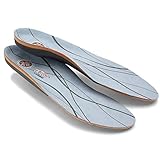
- PODIATRIST DESIGNED! An effective alternative to expensive custom-made orthotics. Innovative biomechanical THREE-ZONE COMFORT technology delivers deep heel cup stability, forefoot cushioning, and ultimate arch support to prevent excessive pronation caused by flat feet. These essential contact points help to realign positioning of feet, aiding to re-establish your body's natural alignment, from the ground up.
- VIONIC ORTHOTIC INSOLES! These women's and men's shoe inserts offer a convenient, pain-free natural healing solution for many of the common aches and pains associated with poor lower-limb alignment, plantar fasciitis, and arch pain. EVA orthotic with re-enforced, hardened plastic (PE) shell for added motion control and stability. Cushioned shock dot in the heel for added shock absorption. Can be trimmed in forefoot if necessary.
- DESIGNED FOR EVERYDAY USE! Designed to provide greater control in faster paced activities such as running and fast walking. 4 degree rear foot wedge to provide support and control which helps prevent excess pronation. Odor absorbing cover. Contoured around the heel and arch areas to achieve 100% foot contact. Podiatrist Designed, APMA Seal of Acceptance.
- COMFORTABLE TO WEAR! Shoe inserts for women and men contoured around the heel and arch areas to achieve perfect foot contact.
- SIZES AVAILABLE: XS: Women's 4.5 – 6 / Men's 3.5 – 5 S: Women's 6.5 – 8 / Men's 5.5 – 7 M: Women's 8.5 – 10 / Men's 7.5 – 9 L: Women's 10.5 – 12 / Men's 9.5 – 11 XL: Men's 11.5 – 13
As an Amazon Associate, Balance Foot and Ankle earns from qualifying purchases. Product links are affiliate links and we may earn a commission at no extra cost to you. This does not influence our clinical recommendations. Last update on 2026-08-21 / Images from Amazon Product Advertising API
✓ Pros
- Built-in met pad eliminates DIY pad placement errors
- Specifically designed for Morton’s neuroma + metatarsalgia
- Same trusted PowerStep arch + heel cup platform
- Top cover protects sensitive forefoot skin
- Faster relief than orthotics + add-on met pads
✗ Cons
- Met pad position is fixed (can’t fine-tune individual placement)
- Some patients with very small or very large feet need custom
- Slightly thicker than the standard Pinnacle
Dr. Tom’s Recommendation: If a patient has Morton’s neuroma, sesamoiditis, or generalized ball-of-foot pain (metatarsalgia), this saves a clinic visit and a prescription. The built-in pad placement is anatomically correct for 80% of feet. Way better than DIY met pads.
Adaptive Dynamic Arch · Athletic & Daily Wear
Currex’s flagship adaptive arch technology — the orthotic flexes with your gait instead of fighting it. Different stiffness zones along the length give you targeted support at the heel, midfoot, and forefoot. Available in three arch heights (low/medium/high).

- Signature waffle-inspired rubber outsole for traction and flexibility
As an Amazon Associate, Balance Foot and Ankle earns from qualifying purchases. Product links are affiliate links and we may earn a commission at no extra cost to you. This does not influence our clinical recommendations. Last update on 2026-08-21 / Images from Amazon Product Advertising API
✓ Pros
- Dynamic flex zones adapt to natural gait cycle
- Three arch heights ensure precise fit
- Lighter than rigid orthotics (no ‘heavy foot’ feel)
- Excellent for runners and athletic walkers
- European podiatric design (German engineering)
✗ Cons
- More expensive than PowerStep Original ($55-65 typically)
- Less aggressive correction than Pinnacle Maxx for severe cases
- Three arch heights means you must self-select correctly
Dr. Tom’s Recommendation: I started recommending Currex three years ago for runners who said PowerStep felt ‘too rigid.’ The dynamic flex zones respect natural gait. Best for active patients who walk 8K+ steps daily and don’t need maximum motion control.
Running-Specific · Heel Strike + Forefoot Strike Compatible
Currex’s purpose-built running orthotic. The midfoot flex zone is positioned for runner’s gait mechanics, with a flared heel cushion for heel strikers and a forefoot rocker for midfoot/forefoot strikers. Tested on 1000+ runners during product development.
- Provides continuous support of the Plantar Fascia by gently stretching the fascia tissue.
- Compression zones promote circulation, reduce impact vibration, boost recovery and strengthen feet.
- Lightweight, seamless design with extra cushioning provides support while still being comfortable.
- Supports the heel/arch and overall foot structure while stabilizing the tendon for better performance
- Made from high quality materials, the socks are moisture wicking and breathable.
As an Amazon Associate, Balance Foot and Ankle earns from qualifying purchases. Product links are affiliate links and we may earn a commission at no extra cost to you. This does not influence our clinical recommendations. Last update on 2026-08-21 / Images from Amazon Product Advertising API
✓ Pros
- Designed by German biomechanics lab specifically for runners
- Dynamic arch flexes with running gait (not static like PowerStep)
- Three arch heights (low/medium/high)
- Reduces overuse injury risk in mid-distance runners
- Lightweight (no impact on cadence)
✗ Cons
- Premium price ($60-75)
- Not aggressive enough for severe over-pronators (use Pinnacle Maxx)
- Runner-specific design = less ideal for daily walking shoes
Dr. Tom’s Recommendation: If a patient runs 20+ miles per week and has plantar fasciitis or shin splints, this is the orthotic I prescribe. The dynamic flex zones respect running biomechanics in a way that no rigid PowerStep can match. Pricier but worth it for serious runners.
Cavus Foot & High-Arch Patients
Polyurethane base with a deeper heel cup and higher arch profile than PowerStep — built for cavus (high-arched) feet that need maximum cushion and support. The 5-zone cushioning system addresses the unique pressure points of high-arch feet.

- The first generation of Protalus's M-100 Insole
- Patented Alignment Technology: The M-100 features a deep heel cup and contoured arch to correct overpronation and promote better posture, stability, and joint health throughout your body.
- Comfortable Insoles: The patented stress relief replacement shoe insoles increase comfort and relieve plantar fasciitis and anti-fatigue.
- Improves Alignment: The shoe insoles help improve alignment and reduce pain in the feet, ideal for low and high arches.
As an Amazon Associate, Balance Foot and Ankle earns from qualifying purchases. Product links are affiliate links and we may earn a commission at no extra cost to you. This does not influence our clinical recommendations. Last update on 2026-08-21 / Images from Amazon Product Advertising API
✓ Pros
- Deeper heel cup centers the heel for cavus foot stability
- Higher arch profile fills the void under high arches
- 5-zone cushioning addresses cavus foot pressure points
- Polyurethane base lasts 12+ months
- Available in Wide width
✗ Cons
- Too tall/aggressive for normal or low arches
- Won’t fit slim dress shoes
- Pricier than PowerStep Original
- Some patients find the arch height uncomfortable initially
Dr. Tom’s Recommendation: Cavus foot patients are often misdiagnosed and given low-arch orthotics — that makes everything worse. Spenco’s Total Support has the arch profile that high-arch feet actually need. About 15% of my patients have cavus feet; this is what they wear.
Cushion Layer · Standing All Day · Gel Pressure Relief
NOT a true biomechanical orthotic — this is a cushion insole. But for patients who want gel pressure relief instead of arch correction (or to add ON TOP of factory insoles in work boots), this is the best gel option on Amazon.
No products found.
✓ Pros
- Genuine gel cushioning (not foam pretending to be gel)
- Targeted gel waves under heel and ball of foot
- Trim-to-fit · works in most shoe types
- Sub-$15 price (most affordable option in this list)
- Massaging texture is genuinely soothing
✗ Cons
- ZERO arch support — this is cushion only
- Won’t fix plantar fasciitis or flat-foot issues
- Compresses faster than PowerStep (4-6 months)
- Top cover wears through in high-mileage applications
Dr. Tom’s Recommendation: I recommend these to patients who tell me ‘I just want my feet to stop hurting at the end of my shift’ and who don’t have a biomechanical issue. Construction workers, factory workers, retail. Pure cushion does the job for them.
Tight-Fitting Shoes · Cycling Shoes · Hockey Skates
Superfeet’s slim version of their famous Green insole. The trademark stabilizer cap is preserved but the overall thickness is reduced — works in cycling shoes, hockey skates, ski boots, and other tight-fitting footwear that the standard Superfeet Green can’t fit into.
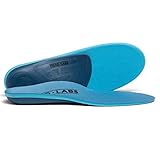
- Plantar Fasciitis Relief, Every Step – Firm arch support helps relieve heel and arch pain from plantar fasciitis and supports flat feet and overpronation for better alignment and all-day comfort.
- Clinical-Grade Biomechanics – Tread Labs 26-33 ARCHitecture delivers orthotic-level stability—custom-orthotic feel without the prescription.
- Dialed Fit for Any Shoe – Four arch heights (low, medium, high, extra-high) and an easy 3-step sizing guide make selection simple for work boots, sneakers, and everyday shoes—great for standing all day.
- Built to Last a Million Miles – Durable, recyclable arch supports with our Million-Mile Guarantee; replaceable top covers keep insoles fresh and cost-effective. Unlike foam that flattens, Pace is engineered to last.
- Trusted Expertise – Designed by Mark Paigen (founder of Chaco). Premium arch support inserts for men and women backed by decades of footwear innovation.
As an Amazon Associate, Balance Foot and Ankle earns from qualifying purchases. Product links are affiliate links and we may earn a commission at no extra cost to you. This does not influence our clinical recommendations. Last update on 2026-08-21 / Images from Amazon Product Advertising API
✓ Pros
- Stabilizer cap centers the heel (Superfeet’s signature feature)
- Slim profile fits tight athletic footwear
- Lasts 12+ months daily wear
- Excellent for cycling shoes specifically
- Built-in odor-control treatment
✗ Cons
- Premium price ($45-55)
- Less cushion than PowerStep equivalents
- Not as aggressive correction as Pinnacle Maxx for flat feet
- The signature ‘heel cup feel’ takes 1-2 weeks to adapt to
Dr. Tom’s Recommendation: If you’re a cyclist with foot numbness, hot spots, or knee pain — this is the orthotic. The stabilizer cap solves cycling-specific biomechanical issues that no other orthotic addresses. Worth the premium for athletes.
None of these solving your foot pain?
Some patients (about 30%) need custom-molded prescription orthotics. We make 3D-scanned custom orthotics in our Howell and Bloomfield Township offices — specifically built for your foot mechanics.
Schedule a Custom Orthotic Fitting →FSA/HSA eligible · Most insurance accepted · (810) 206-1402
In-Office Treatment at Balance Foot & Ankle
If home treatment isn’t providing relief for your foot pain, our podiatry team at Balance Foot & Ankle can help with same-day evaluations and advanced in-office care.
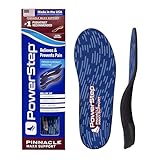
- Slightly Angled Heel Post: PowerStep Pinnacle Maxx insoles for men & women keep the feet from rolling inward, improve stability, and prevent problems caused by overpronation including flat feet and plantar fasciitis.
- Firm But Flexible Design: Our orthotics Pinnacle PowerStep insoles for overpronation are equipped with a deep heel insert cradle for increased comfort, stability, and motion control for standard arch support and immediate heel pain relief.
- Premium Dual Layer Cushioning: For enhanced comfort from heel to toe. As the thickest of our Pinnacle PowerStep orthotics, these need to be worn in shoes where the factory insole can be removed. HSA & FSA Eligible. Made in the USA
- The Perfect Balance of Comfort and Support: These PowerStep Pinnacle arch support inserts for men & women are unlike most other orthotics as they help to correct over-pronation which can cause ankle, knee, and hip pain in your daily routine
- No Trimming: Our arch support PowerStep insoles men & women can use can be worn in a variety of shoe styles & fit in any type with no trimming required! Unlike most insoles for flat feet and other heel pain relief products, these come ready to wear.
As an Amazon Associate, Balance Foot and Ankle earns from qualifying purchases. Product links are affiliate links and we may earn a commission at no extra cost to you. This does not influence our clinical recommendations. Last update on 2026-08-21 / Images from Amazon Product Advertising API
Same-day appointments available. (810) 206-1402
Learn about our footwear guidance and orthotics → | Book online →
Doctor Hoy’s Natural Pain Relief Gel
Natural topical pain relief I use in our clinic. Arnica + camphor formula — apply directly to the area 3–4x daily. ($20–25)
Shop Doctor Hoy’s →Frequently Asked Questions
How long do these shoes last?
Quality running shoes last 300-500 miles. Daily walking shoes last 9-12 months. Replace when the midsole feels soft or your symptoms return.
Should I add insoles?
Yes if you have plantar fasciitis or overpronation. Powerstep Pinnacle or a custom orthotic improves results. Healthy feet often do fine with the stock insole.
Are expensive shoes worth it?
Beyond about $130 most extra cost is materials and aesthetics. Match the shoe to your foot type, not budget. The right $80 stability shoe beats the wrong $250 maximalist shoe.
What is Plantar fasciitis?
Plantar fasciitis is a common foot/ankle condition that affects mobility and quality of life. Understanding the underlying cause is the first step in successful treatment. Our podiatrists at Balance Foot & Ankle perform a hands-on biomechanical exam, review your activity history, and use diagnostic imaging when appropriate to identify the root cause—not just treat the symptom. Many patients have been told to “rest and ice” without a deeper diagnostic workup; our approach is different.
Symptoms and warning signs
Common signs of plantar fasciitis include pain that worsens with activity, morning stiffness, swelling, tenderness when palpated, and difficulty bearing weight. If you experience sudden severe pain, inability to walk, visible deformity, numbness or color change, contact our office the same day or visit urgent care—these can signal a more serious injury such as a fracture, tendon rupture, or vascular compromise. Diabetics with any foot wound should seek same-day care.
Conservative treatment options
Most cases of plantar fasciitis respond to non-surgical care: structured rest, supportive footwear changes, custom orthotics, targeted stretching and strengthening protocols, anti-inflammatory medications when medically appropriate, and in-office procedures such as ultrasound-guided injections. We also offer advanced therapies including MLS laser therapy, EPAT/shockwave, regenerative injections, and image-guided procedures. Treatment is sequenced from least invasive to most invasive, and we explain the rationale at every step.
When is surgery considered?
Surgery is reserved for cases that fail 3-6 months of well-structured conservative care, when there is structural pathology (severe deformity, complete tear, advanced arthritis), or when imaging shows damage that will not heal without intervention. Our surgeons have performed 3,000+ foot and ankle procedures and prioritize minimally-invasive techniques whenever appropriate. We discuss recovery timelines, return-to-activity milestones, and realistic outcome expectations before any procedure is scheduled.
Recovery timeline and prevention
Recovery from plantar fasciitis varies based on severity and chosen treatment path. Conservative cases often improve within 4-8 weeks with consistent adherence to the protocol. Post-procedural recovery may range from a few days (in-office procedures) to several months (reconstructive surgery). Long-term prevention involves footwear assessment, activity modification, structured strengthening, and regular check-ins with your podiatrist if you have a history of recurrence. We provide written home-exercise plans and digital follow-up support.
Ready to feel better?
Same-week appointments available in Howell and Bloomfield Township, Michigan.
Book Your Visit
Dr. Tom Biernacki, DPM is a board-certified foot & ankle surgeon (ABFAS & ABPM) at Balance Foot & Ankle Specialists in Southeast Michigan. With over a decade of clinical experience, he specializes in heel pain, bunions, diabetic foot care, sports injuries, and minimally invasive surgery. Dr. Biernacki is a member of the APMA and ACFAS, and his patient education content on MichiganFootDoctors.com and YouTube has made him one of the most-followed foot & ankle educators on YouTube.