
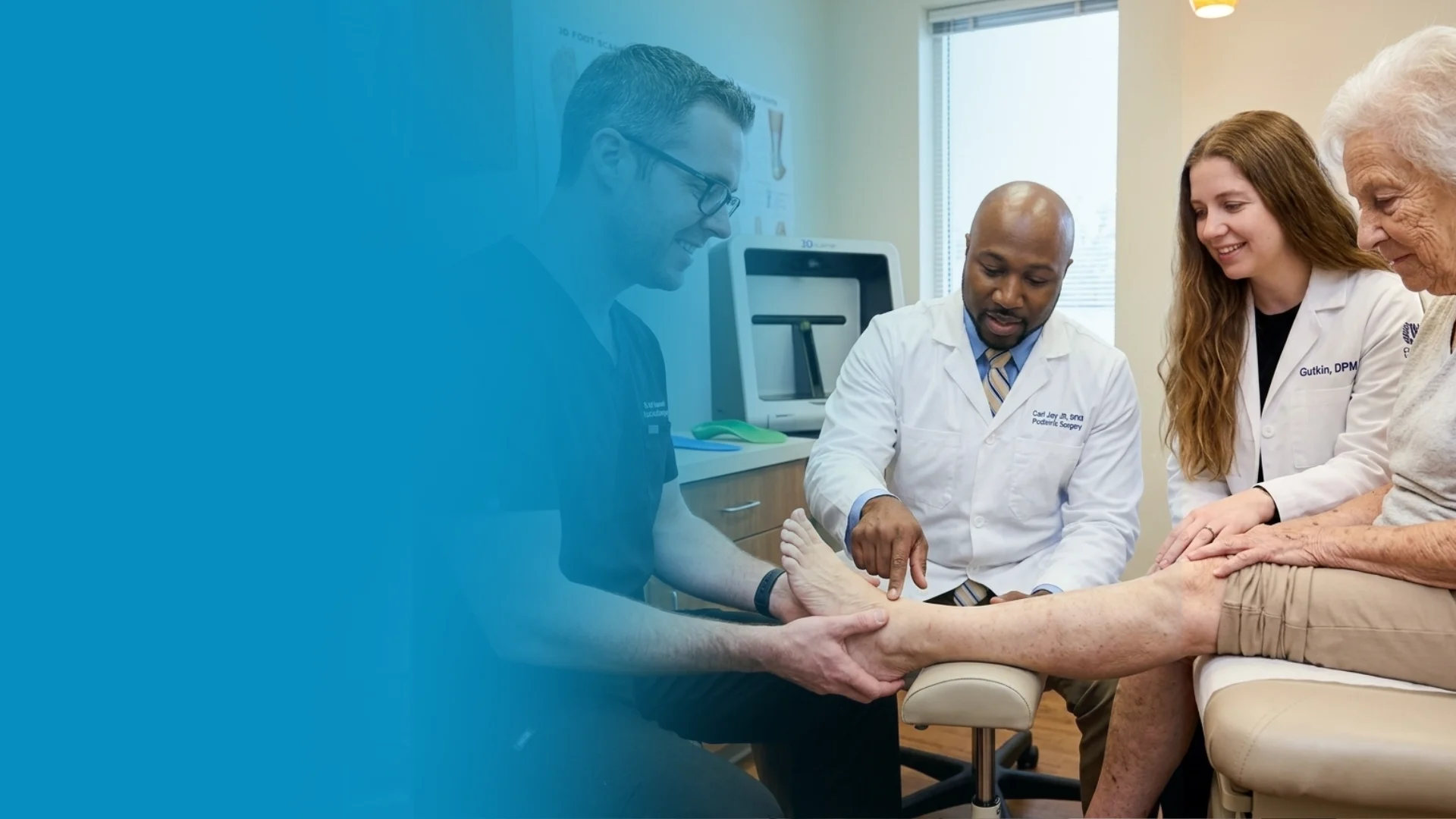
You are in the right place. Dr. Tom Biernacki, DPM, FACFAS — board-certified foot & ankle surgeon with 3,000+ surgeries — explains exactly what insurance coverage for wart removal means and what works. Call (810) 206-1402 for same-day appointment at Howell or Bloomfield Township.
Medically reviewed by Dr. Tom Biernacki, DPM · Board-Certified Podiatric Surgeon · Last reviewed: April 2026 · Editorial Policy
The most important clinical decision with Does Insurance Cover Wart Removal Feet isn’t which treatment to start with — it’s identifying the correct subtype. That changes everything. Call (810) 206-1402.
Related Conditions
Medically reviewed by Dr. Tom Biernacki, DPM
Board-certified podiatric surgeon | Balance Foot & Ankle
Last reviewed: May 2026
Quick Answer
Does Insurance Cover Wart Removal on Feet? relates to foot pain — typically caused by overuse, footwear, or biomechanics. Most patients improve in 6-12 weeks with conservative care. Same-week appointments in Howell + Bloomfield Township: (810) 206-1402.
Medically reviewed by Dr. Tom Biernacki, DPM — Board-certified foot & ankle surgeon, 3,000+ surgeries performed. Updated April 2026 with current clinical evidence. This article reflects real practice experience from Balance Foot & Ankle Specialists in Howell and Bloomfield Township, Michigan.
Quick Answer
Most foot and ankle problems respond to conservative care — proper footwear, supportive inserts, activity modification, and targeted stretching — within 4-8 weeks. Persistent pain beyond that window, or any symptom that prevents walking, warrants a podiatric evaluation to rule out fracture, tendon tear, or systemic cause.
Watch: Dr. Tom Biernacki, DPM

✅ Medically reviewed by Dr. Tom Biernacki, DPM — Board-Certified Podiatrist · Last updated April 6, 2026
Does Insurance Cover Wart Removal on Feet?
Plantar wart removal is covered by insurance when the wart causes documented pain or functional impairment. Purely cosmetic removal may not be covered. We verify your specific benefits before treatment.
What Are Plantar Warts?
Plantar warts (verruca plantaris) are caused by HPV (human papillomavirus) infection of the skin on the bottom of the foot. Unlike warts on other body areas, plantar warts grow inward due to walking pressure, creating a thick callus over the wart surface. They can be extremely painful — some patients describe the feeling of walking on a pebble or thumb tack. Plantar warts can be single (solitary) or cluster into a “mosaic wart” pattern covering a larger area. They are contagious and spread through skin contact, particularly on wet surfaces.
Does Blue Cross Blue Shield of Michigan cover wart removal?
Coverage depends on your specific policy and on whether the treatment is medically necessary, which is why our team runs a free, no-surprise benefit check and confirms exactly what your plan covers before any treatment. Balance Foot & Ankle is in-network with Blue Cross Blue Shield of Michigan (BCBS) and Blue Care Network (BCN), and we see patients at our Howell and Bloomfield Township offices. For a fuller explanation of what BCBS covers for podiatry and how to verify your benefits, see our Blue Cross Blue Shield podiatry coverage guide, or call (810) 206-1402 and we will check your coverage for you.
Insurance Coverage for Plantar Wart Treatment
Covered (typically): Wart removal when there is documented pain, difficulty walking, functional impairment, spread to multiple sites, or failure of self-treatment. Insurance covers professional treatment including cryotherapy (liquid nitrogen), chemical debridement (salicylic acid, cantharone), laser ablation, and surgical excision when medically indicated.
Not covered (typically): Warts removed purely for cosmetic reasons with no documented pain, functional limitation, or clinical concern. Most insurers require documented medical necessity for coverage.
Important note: If your wart hurts when you walk — which most plantar warts do — that IS medical necessity. Don’t assume non-coverage without verifying. We document appropriately for coverage.
Treatment Options We Offer
Cryotherapy (liquid nitrogen): The most common first-line treatment. The wart is frozen, causing blistering and eventual sloughing. Usually requires 2–4 sessions spaced 2–3 weeks apart. Covered by most insurance. Chemical debridement: Cantharadin (“beetle juice”) or salicylic acid applied professionally. Creates a blister under the wart that lifts it off. Multiple sessions needed. Laser ablation: Our toenail fungus laser can also target plantar warts — most effective for stubborn or mosaic warts. Coverage varies by insurer. Surgical excision: For resistant warts, in-office excision under local anesthetic provides definitive treatment. Covered with medical necessity documentation.
Why Not Just Use OTC Treatments?
Over-the-counter salicylic acid products work for some simple warts — but they require 12+ weeks of consistent application, often fail for deep or mosaic warts, and can cause skin damage if misapplied. For diabetic or vascular patients, OTC wart treatments are genuinely dangerous and should never be used without podiatric guidance. Professional treatment is faster, more effective, and for most patients, covered by insurance.
Not sure what your plan covers for wart removal? Our team contacts your insurance company directly and verifies your benefits before every appointment.
📞 (810) 206-1402 | Howell: 4330 E Grand River Ave | Bloomfield Township: 43494 Woodward Ave #208
We accept Medicare, Medicare Advantage, BCBS, Aetna, United Healthcare, Cigna, Humana, HAP, Meridian, Priority Health, McLaren, Workers’ Comp, VA, and most Michigan insurance plans.
✅ Toenail Fungus & Wart Laser | ✅ MLS Dual-Wavelength Laser
✅ 3D-Scanned Custom Orthotics | ✅ In-Office X-Ray & Ultrasound
📞 (810) 206-1402 | Howell & Bloomfield Township
More Podiatrist-Recommended Wart Essentials
Breathable Shoe for Foot Recovery
Orthofeet Sprint — deep toe box reduces pressure during wart treatment.
Moisture-Wicking Sock


OS1st FS4 — dry environment supports wart treatment recovery.
Indoor Recovery Slide
HOKA Ora 3 — keeps treated area protected at home without occlusive pressure.
As an Amazon Associate, Balance Foot & Ankle earns from qualifying purchases. Product recommendations are based on clinical experience; prices and availability shown above update live from Amazon.

When to See a Podiatrist
Warts that have been frozen 3+ times without clearing usually need stronger treatment — cantharidin, Swift microwave therapy, or in-office excision. Balance Foot & Ankle treats stubborn plantar warts with methods OTC products can’t match. Most stubborn warts clear in 1-3 in-office visits.
Call Balance Foot & Ankle: (810) 206-1402 · Book online · Offices in Howell & Bloomfield Township
Frequently Asked Questions
How many treatment sessions will I need? Most plantar warts require 3–6 treatment sessions with conventional cryotherapy. Stubborn or mosaic warts may benefit from laser treatment which can be more effective in fewer sessions. We set realistic expectations at your first visit.
Are plantar warts contagious to my family? Yes — HPV spreads through skin contact on wet surfaces (bathroom floors, pool decks). While family members are at risk, healthy immune systems often fight off the virus without developing warts. Wearing shower shoes and not sharing towels reduces transmission risk.
Will they come back after treatment? Warts can recur if the HPV virus persists in the skin. Complete removal with appropriate depth of treatment reduces recurrence risk. Laser treatment generally has lower recurrence rates than cryotherapy alone.
📞 Call (810) 206-1402 — same-day appointments often available for painful plantar warts.
Professional Podiatric Care in Michigan: Balance Foot & Ankle’s Comprehensive Services
At Balance Foot & Ankle, Michigan patients receive comprehensive podiatric care across the full spectrum of foot and ankle conditions. Our fellowship-trained podiatrists provide conservative and surgical treatment for all foot and ankle pathology — from plantar fasciitis, bunions, and nail disorders to complex reconstructive surgery, diabetic foot care, and sports injuries. Our clinical approach prioritizes accurate diagnosis, evidence-based treatment selection, and honest communication with patients about realistic outcomes.
We serve patients in Livingston and Oakland counties from two convenient Michigan locations: our Howell office at 4330 E Grand River (serving Brighton, Hartland, Pinckney, Howell, and all of Livingston County) and our Bloomfield Township office at 43494 Woodward Ave #208 (serving Troy, Birmingham, West Bloomfield, Farmington Hills, and all of Oakland County). Both offices offer in-office X-ray, same-week new patient appointments, and a full range of diagnostic and treatment services. We accept Blue Cross Blue Shield, Aetna, UnitedHealthcare, Cigna, Medicare, and most Michigan insurance plans. Call Balance Foot & Ankle at (810) 206-1402 to schedule your appointment.
Related Treatment Guides
- Corn & Callus Treatment
- Plantar Fasciitis & Heel Pain Treatment
- Custom 3D Orthotics
- Sports Foot & Ankle Injury Treatment
Michigan patients experiencing foot or ankle problems can schedule an appointment at Balance Foot & Ankle — with locations in Howell (4330 E Grand River) and Bloomfield Township (43494 Woodward Ave #208). Call (810) 206-1402 for same-week availability.
Insurance Accepted
BCBS · Medicare · Aetna · Cigna · United Healthcare · HAP · Priority Health · Humana · View All →
Howell Office
4330 E Grand River Ave
Howell, MI 48843
Get Directions →
Bloomfield Township Office
43494 Woodward Ave, #208
Bloomfield Township, MI 48302
Get Directions →
Your Board-Certified Podiatrists



Ready to Get Back on Your Feet?
Same-week appointments available at both locations.
Book Your AppointmentIn-Office Treatment at Balance Foot & Ankle
If home care isn’t resolving your plantar wart, a visit with a board-certified podiatrist is the fastest path to accurate diagnosis and a personalized plan. At Balance Foot & Ankle Specialists, Dr. Tom Biernacki, Dr. Carl Jay, and Dr. Daria Gutkin offer same-day and next-day appointments at both our Howell and Bloomfield Township offices. We perform on-site diagnostic ultrasound, digital X-ray, conservative care, advanced regenerative treatments, and minimally invasive surgery when indicated.
Call (810) 206-1402 or request an appointment online. Most insurance plans accepted, including Medicare, Blue Cross Blue Shield, Aetna, Cigna, and United Healthcare.
Most Common Mistake We See
The most common mistake we see is: Waiting too long before seeking care. Fix: any foot pain lasting more than 4 weeks, or any sudden severe symptom, deserves a professional evaluation rather than more rest.
Warning Signs That Need Same-Day Care
Seek immediate evaluation at Balance Foot & Ankle if you experience any of the following:
- Unable to bear weight
- Severe swelling with skin colour change
- Fever with foot pain (possible infection)
- Diabetes plus any new foot symptom
Call (810) 206-1402 — same-day and next-day appointments at our Howell and Bloomfield Township offices.
Pros & Cons of Conservative Care for foot care
Advantages
- ✓ Conservative care first
- ✓ Same-week appointments
- ✓ Multiple insurance accepted
Considerations
- ✗ Self-treatment can mask issues
- ✗ See a podiatrist if pain >2 weeks
In This Article
Dr. Tom’s Recommended Products for foot care
Affiliate disclosure: As an Amazon Associate, Balance Foot & Ankle earns from qualifying purchases. We only recommend products we use with patients.
Footnanny Heel Cream Dr. Tom’s Pick
Best for: Daily moisturizer for cracked heels
Ready to Get Back on Your Feet?
Same-day appointments in Howell + Bloomfield Township. Most insurance accepted. Dr. Tom Biernacki, DPM & team.
Book Today — Same-Day Appointments Available
Call Now: (810) 206-1402
About Your Care Team at Balance Foot & Ankle
Dr. Tom Biernacki, DPM · Board-Certified Foot & Ankle Surgeon. Specializes in conservative-first care, minimally invasive bunion surgery, and complex reconstruction.
Dr. Carl Jay, DPM · Accepting new patients. Specializes in sports medicine, athletic injuries, and routine podiatric care.
Dr. Daria Gutkin, DPM, AACFAS · Accepting new patients. Specializes in surgical reconstruction and pediatric podiatry.
Locations: 4330 E Grand River Ave, Howell, MI 48843 · 43494 Woodward Ave Suite 208, Bloomfield Township, MI 48302
Hours: Mon–Fri 8:00 AM – 5:00 PM · (810) 206-1402
Doctor Hoy’s Natural Pain Relief Gel
Natural topical pain relief I use in our clinic. Arnica + camphor formula — apply directly to the area 3–4x daily. ($20–25)
Shop Doctor Hoy’s →Related Care at Balance Foot & Ankle
Clinical wart services at our Howell and Bloomfield Township offices.
Get Expert Care at Balance Foot & Ankle
Same-week appointments at our Howell and Bloomfield Township offices. Board-certified podiatric surgeons. Most insurance accepted.
Ready for Expert Care?
Same-day appointments in Howell & Bloomfield Township, MI.
4.9★ | 1,123 Reviews | 3,000+ Surgeries
Or call: (810) 206-1402
Book an appointment with a podiatrist
Plantar warts spread and become more stubborn the longer they are left alone, and a podiatrist can confirm the diagnosis and begin treatment in a single visit. Balance Foot & Ankle sees patients at two offices — Howell in Livingston County, and Bloomfield Township in Oakland County.
Call (810) 206-1402 or use the form below and our team will find you an appointment time.

Dr. Tom Biernacki, DPM is a board-certified foot & ankle surgeon (ABFAS & ABPM) at Balance Foot & Ankle Specialists in Southeast Michigan. With over a decade of clinical experience, he specializes in heel pain, bunions, diabetic foot care, sports injuries, and minimally invasive surgery. Dr. Biernacki is a member of the APMA and ACFAS, and his patient education content on MichiganFootDoctors.com and YouTube has made him one of the most-followed foot & ankle educators on YouTube.
More questions patients ask
Does insurance cover plantar wart removal?
Most insurance plans cover plantar wart (verruca plantaris) removal when performed for medical necessity — typically pain, interference with daily activities, or spreading infection. Balance Foot & Ankle treats plantar warts using multiple methods: topical acid debridement (salicylic acid), cryotherapy (liquid nitrogen), cantharidine (blister beetle extract), laser treatment, or surgical excision for resistant cases. Standard specialist visit cost-sharing applies. Call (810) 206-1402 to schedule a wart evaluation at our Howell or Bloomfield Township office.
How many wart treatment sessions are typically covered by insurance?
Insurance generally covers multiple wart treatment sessions at Balance Foot & Ankle when required — plantar warts often need 3–8 treatment sessions at 2–4 week intervals. Documentation of persistent warts despite prior treatment supports coverage for continued care. Balance Foot & Ankle maintains detailed treatment records supporting ongoing insurance claims throughout the treatment course. The frequency and number of sessions is determined clinically by Dr. Tom Biernacki DPM based on treatment response.
Is cryotherapy or laser better for plantar warts?
Both work well with different profiles: cryotherapy (liquid nitrogen) is faster, less expensive, and works for most warts but can be painful and may require multiple sessions. Laser (CO2 or pulsed dye) is more precise, can address deeper warts, and has fewer recurrences in some studies — but higher cost. Balance Foot & Ankle selects treatment based on wart number, depth, patient age, and pain tolerance. Both are insurance-covered for medically necessary wart removal when properly documented.
What happens if plantar warts are left untreated?
Untreated plantar warts can: spread to other areas of the foot through autoinoculation, increase in size and number forming mosaic warts, become more painful as they grow deeper into the plantar surface, and persist for 1–5 years before potential spontaneous resolution (not guaranteed). Balance Foot & Ankle recommends timely treatment before warts spread — early solitary warts are significantly easier to treat than multiple large mosaic lesions.
Can plantar warts spread to family members?
Yes — plantar warts are caused by HPV and can spread through direct contact with contaminated surfaces (pool decks, locker room floors) or person-to-person. Family members sharing showers are at risk. Children are most susceptible due to developing immunity. Balance Foot & Ankle recommends treating active warts promptly, wearing sandals in shared shower areas, not sharing towels or foot care items, and having household members evaluated if new warts develop.
How do you get rid of plantar warts?
Professional treatments: cryotherapy, salicylic acid, laser therapy, surgical excision. Most resolve within 2-4 treatments. OTC treatments have limited effectiveness on thick foot skin. Call 810-206-1402.
What does a plantar wart look like?
Small, rough growths on foot sole with black dots. Painful when walking. Unlike calluses, warts interrupt skin lines and hurt when squeezed sideways.
Still have a question about coverage or cost? Book online and we will check your benefits before your visit: Book in Howell · Book in Bloomfield Township. Prefer to talk it through first? Call (810) 206-1402.