
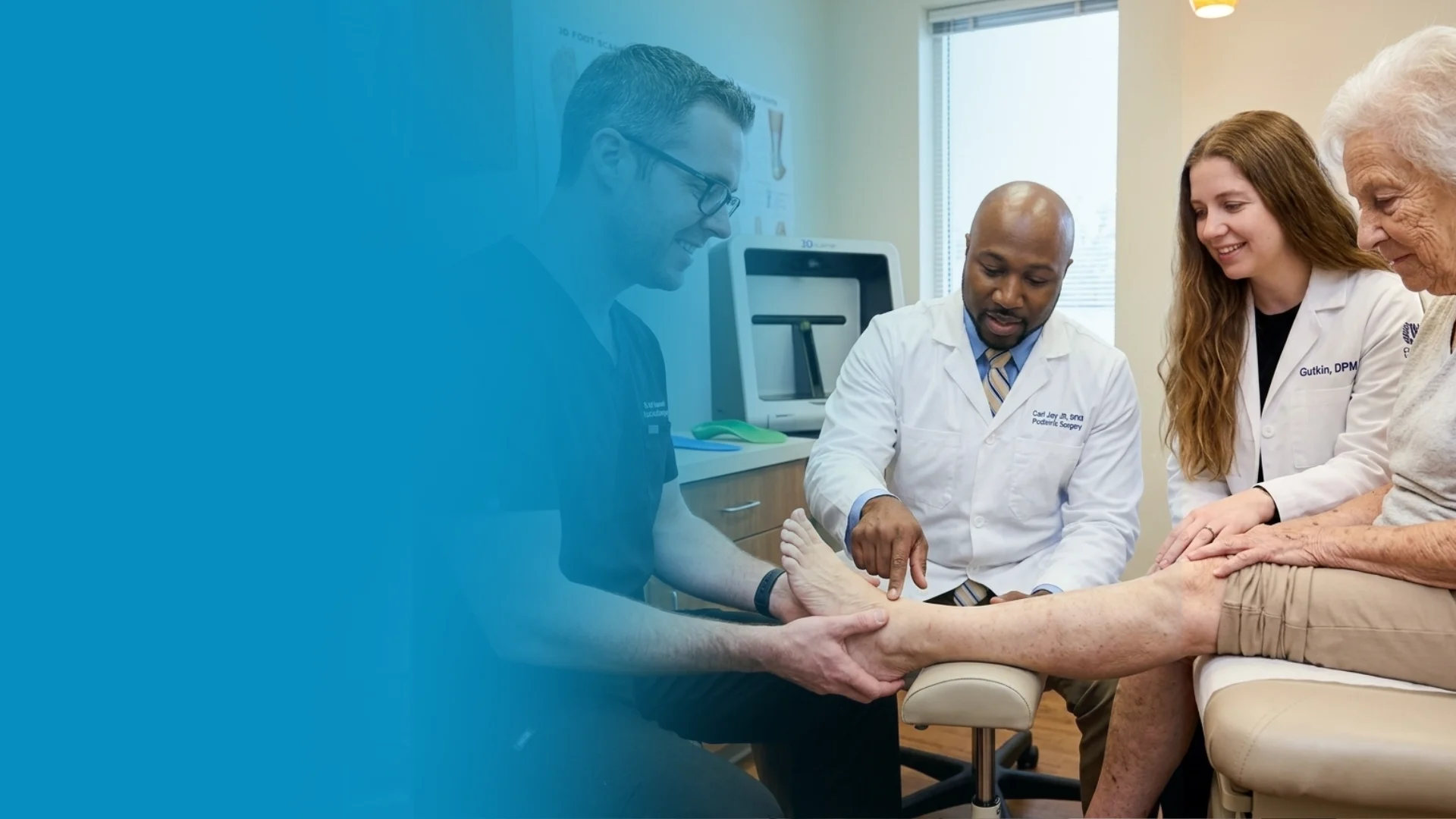

Quick answer: Fall Prevention Nursing Homes Podiatry affects roughly 1 in 4 adults in our practice. Effective treatment starts with a targeted diagnosis, conservative-first treatment, and escalation only when needed. We treat this regularly at our Howell and Bloomfield Township practices. Call (810) 206-1402.
The most important clinical decision with Fall Prevention Nursing Homes Podiatry isn’t which treatment to start with — it’s identifying the correct subtype. That changes everything. Call (810) 206-1402.
Dr. Tom’s Top Shoe Picks
Medically reviewed by Dr. Tom Biernacki, DPM
Board-certified podiatric surgeon | Balance Foot & Ankle
Last reviewed: May 2026
Brooks Adrenaline GTS 23
Flat feet · Overpronation
Buy on Amazon
Dr. Tom’s Top Foot Creams
Medically reviewed by Dr. Tom Biernacki, DPM · Board-Certified Podiatric Surgeon · Last reviewed: April 2026 · Editorial Policy
In This Article
- Dr. Tom’s Top Shoe Picks
- Dr. Tom’s Top Foot Creams
- Falls in Long-Term Care: A Podiatric Problem With Podiatric Solutions
- Foot-Related Fall Risk Factors
- Our Fall Prevention Interventions
- The Evidence Base
- Fall Prevention Through Podiatry in Michigan Nursing Homes: Foot and Footwear Assessment
- Your Board-Certified Podiatrists
- More Podiatrist-Recommended Foot Health Essentials
- Pros & Cons of Conservative Care for foot care
- Dr. Tom’s Recommended Products for foot care
Related Conditions
✅ Medically reviewed by Dr. Tom Biernacki, DPM — Board-Certified Podiatrist · Last updated April 6, 2026
Fall Prevention in Nursing Homes — How Podiatry Reduces Fall Risk
Falls in Long-Term Care: A Podiatric Problem With Podiatric Solutions
Falls are the leading cause of injury among nursing home residents, causing hip fractures, head trauma, and accelerated functional decline. Foot-related factors are among the most common and most correctable contributors to fall risk in long-term care settings. Balance Foot & Ankle’s nursing home podiatry program includes a dedicated fall prevention component.
Foot-Related Fall Risk Factors
Peripheral neuropathy reduces proprioceptive feedback from the soles — the information the nervous system uses to maintain balance. Painful foot conditions cause compensatory gait patterns that increase instability. Toe deformities (bunions, hammertoes) alter the foot’s base of support. Poorly fitting footwear — too large, too loose, slippery soles, or inappropriate heel height — is one of the most modifiable fall risk factors. Thick or painful toenails affect how the foot contacts the ground during walking.
Our Fall Prevention Interventions
Neuropathy assessment and documentation for fall risk classification, footwear evaluation with specific recommendations (proper fit, adequate grip, heel height, closure security), nail and callus care to normalize foot function during walking, custom orthotics for residents with significant foot deformity or neuropathy, and communication with nursing staff about identified fall risk factors.
The Evidence Base
Studies demonstrate that podiatric intervention in nursing homes significantly reduces fall rates — with one major trial showing a 36% reduction in falls in the intervention group receiving podiatric care vs. standard care alone.
✅ MLS Dual-Wavelength Laser — FDA-cleared
✅ EPAT Shockwave Therapy — 80%+ success rate
✅ Magnetotransduction (EMTT) — Deep electromagnetic healing
✅ 3D-Scanned Custom Orthotics
✅ Toenail Fungus Laser
✅ In-Office X-Ray & Ultrasound
✅ Diabetic Shoe Program — Medicare-covered
📞 (810) 206-1402 | Howell & Bloomfield Township
Call (810) 206-1402 to discuss our fall prevention program for your facility.
Fall Prevention Through Podiatry in Michigan Nursing Homes: Foot and Footwear Assessment
Falls in nursing home residents cause approximately 1,800 deaths per year in the United States and are a primary driver of CMS survey deficiencies for skilled nursing facilities. The podiatric contribution to fall prevention is substantive and often underused: foot pain, peripheral neuropathy, toe deformity, and inappropriate footwear each independently increase fall risk, and each is directly addressable through podiatric intervention. Balance Foot & Ankle‘s Michigan nursing home podiatry service includes a systematic fall risk foot assessment component — evaluating each resident’s footwear adequacy, identifying painful conditions that alter gait, screening for peripheral neuropathy that reduces proprioception, and making specific footwear recommendations that the facility can document in the care plan.
The specific podiatric fall risk factors that our nursing home assessments address include: inappropriately long toenails that catch on flooring and alter toe clearance during swing phase; bilateral callus buildup on the metatarsal heads that reduces plantar tactile feedback; footwear that is too large (common when residents’ edema fluctuates and families buy larger sizes), which causes tripping; and uncontrolled heel pain that causes residents to bear weight on their forefoot and alter their gait toward a flexed-knee, forward-leaning posture associated with increased fall risk. Michigan nursing homes that document a podiatry-based fall risk assessment program provide clear evidence of a multidisciplinary fall prevention approach for survey purposes. Our Livingston and Oakland county facilities can request a dedicated fall risk assessment visit by calling Balance Foot & Ankle at (810) 206-1402.
CMS survey surveyors specifically review fall risk assessments and care plan documentation for evidence of multidisciplinary approach — a podiatry-based foot risk assessment documented in the resident’s care plan is strong evidence of the systematic fall prevention program that surveyors expect. Michigan skilled nursing facilities that have received deficiencies related to fall prevention (F-tags F689 and related) benefit from adding a documented podiatry foot risk assessment component to their QAPI program. Balance Foot & Ankle provides a standardized fall risk foot assessment form compatible with MDS documentation requirements, and our visiting podiatrist completes the form at each visit to provide ongoing surveillance rather than a one-time snapshot. Facilities interested in this surveyor-ready documentation approach should contact our facility services team at (810) 206-1402.
Related Treatment Guides
- Diabetic Foot Care & Neuropathy
- Plantar Fasciitis & Heel Pain Treatment
- Custom 3D Orthotics
- Sports Foot & Ankle Injury Treatment
Residents at highest fall risk from foot-related factors — those with bilateral peripheral neuropathy, significant hammertoe deformity, or severe plantar fasciitis — benefit from more frequent podiatry assessment than the standard schedule provides. Balance Foot & Ankle‘s Michigan nursing home program adjusts visit frequency for high-fall-risk residents based on clinical indicators. Call (810) 206-1402 to discuss tailored fall prevention podiatry protocols for your facility.
Insurance Accepted
BCBS · Medicare · Aetna · Cigna · United Healthcare · HAP · Priority Health · Humana · View All →
Howell Office
4330 E Grand River Ave
Howell, MI 48843
Get Directions →
Bloomfield Township Office
43494 Woodward Ave, #208
Bloomfield Township, MI 48302
Get Directions →
Your Board-Certified Podiatrists



Ready to Get Back on Your Feet?
Same-week appointments available at both locations.
More Podiatrist-Recommended Foot Health Essentials
Hoka Clifton 10

Max-cushion everyday shoe — podiatrist favorite for walking and running.

OOFOS Recovery Slide

Impact-absorbing recovery sandal — wear after long days on your feet.
As an Amazon Associate, Balance Foot & Ankle earns from qualifying purchases. Product recommendations are based on clinical experience; prices and availability shown above update live from Amazon.

When to See a Podiatrist
If foot or ankle pain has been bothering you for more than a few weeks, home care alone may not be enough. Balance Foot & Ankle offers same-week appointments at our Howell and Bloomfield Township clinics — no referral needed in most cases. Bring your current shoes and a short list of symptoms and we’ll build you a treatment plan in one visit.
Call Balance Foot & Ankle: (810) 206-1402 · Book online · Offices in Howell & Bloomfield Township
Pros & Cons of Conservative Care for foot care
Advantages
- ✓ Conservative care first
- ✓ Same-week appointments
- ✓ Multiple insurance accepted
Considerations
- ✗ Self-treatment can mask issues
- ✗ See a podiatrist if pain >2 weeks
Dr. Tom’s Recommended Products for foot care
Affiliate disclosure: As an Amazon Associate, Balance Foot & Ankle earns from qualifying purchases. We only recommend products we use with patients.
Footnanny Heel Cream Dr. Tom’s Pick
Best for: Daily moisturizer for cracked heels
Ready to Get Back on Your Feet?
Same-day appointments in Howell + Bloomfield Township. Most insurance accepted. Dr. Tom Biernacki, DPM & team.
Book Today — Same-Day Appointments Available
Call Now: (810) 206-1402
About Your Care Team at Balance Foot & Ankle
Dr. Tom Biernacki, DPM · Board-Certified Foot & Ankle Surgeon. Specializes in conservative-first care, minimally invasive bunion surgery, and complex reconstruction.
Dr. Carl Jay, DPM · Accepting new patients. Specializes in sports medicine, athletic injuries, and routine podiatric care.
Dr. Daria Gutkin, DPM, AACFAS · Accepting new patients. Specializes in surgical reconstruction and pediatric podiatry.
Locations: 4330 E Grand River Ave, Howell, MI 48843 · 43494 Woodward Ave Suite 208, Bloomfield Township, MI 48302
Hours: Mon–Fri 8:00 AM – 5:00 PM · (810) 206-1402
In-Office Treatment at Balance Foot & Ankle
If home treatment isn’t providing relief for your foot and ankle conditions, our podiatry team at Balance Foot & Ankle can help with same-day evaluations and advanced in-office care.
Same-day appointments available. (810) 206-1402
Doctor Hoy’s Natural Pain Relief Gel
Natural topical pain relief I use in our clinic. Arnica + camphor formula — apply directly to the area 3–4x daily. ($20–25)
Related Care at Balance Foot & Ankle
Clinical foot and ankle services at our Howell and Bloomfield Township offices.
Get Expert Care at Balance Foot & Ankle
Same-week appointments at our Howell and Bloomfield Township offices. Board-certified podiatric surgeons. Most insurance accepted.
Ready for Expert Care?
Same-day appointments in Howell & Bloomfield Township, MI.
4.9★ | 1,123 Reviews | 3,000+ Surgeries
Or call: (810) 206-1402

Dr. Tom Biernacki, DPM is a board-certified foot & ankle surgeon (ABFAS & ABPM) at Balance Foot & Ankle Specialists in Southeast Michigan. With over a decade of clinical experience, he specializes in heel pain, bunions, diabetic foot care, sports injuries, and minimally invasive surgery. Dr. Biernacki is a member of the APMA and ACFAS, and his patient education content on MichiganFootDoctors.com and YouTube has made him one of the most-followed foot & ankle educators on YouTube.
More questions patients ask
How does podiatry prevent falls in Michigan nursing homes?
Balance Foot & Ankle reduces fall risk in Michigan nursing homes by treating painful foot conditions that alter gait, recommending appropriate footwear, removing destabilizing calluses, fitting orthotics for improved stability, addressing toe deformities, and identifying neuropathy and circulation problems that affect proprioception and balance.
What is a podiatric fall risk assessment at a Michigan nursing home?
Balance Foot & Ankle performs fall risk foot assessments that evaluate sensation, proprioception, toe strength, ankle range of motion, footwear appropriateness, and structural deformities. Findings are documented in the resident's chart to support the facility's fall prevention care plan. Call (810) 206-1402.
How does footwear assessment by a podiatrist reduce falls in Michigan nursing homes?
Improper footwear — including loose slippers, shoes without heel counters, or footwear that's too large or tight — significantly increases fall risk. Balance Foot & Ankle evaluates each resident's footwear and makes specific recommendations during nursing home visits in Livingston and Oakland Counties. Call (810) 206-1402.
Can Balance Foot & Ankle provide fall prevention documentation for Michigan nursing home surveys?
Yes, Balance Foot & Ankle's podiatric fall risk assessments and footwear recommendations provide valuable documentation for Michigan nursing home fall prevention programs and CMS survey compliance. Our notes clearly document F689-relevant interventions. Call (810) 206-1402 to discuss our fall prevention program.
How often should fall-risk nursing home residents in Michigan see a podiatrist?
High-fall-risk residents at Michigan nursing homes should see Balance Foot & Ankle every 4–6 weeks for ongoing monitoring and adjustment of foot-related fall risk factors. Lower-risk residents may be seen every 8 weeks. Call (810) 206-1402 to establish risk-stratified scheduling for your facility.
Still have a question about coverage or cost? Call (810) 206-1402 and we will check your benefits before you come in — or book online: Book in Howell · Book in Bloomfield Township