
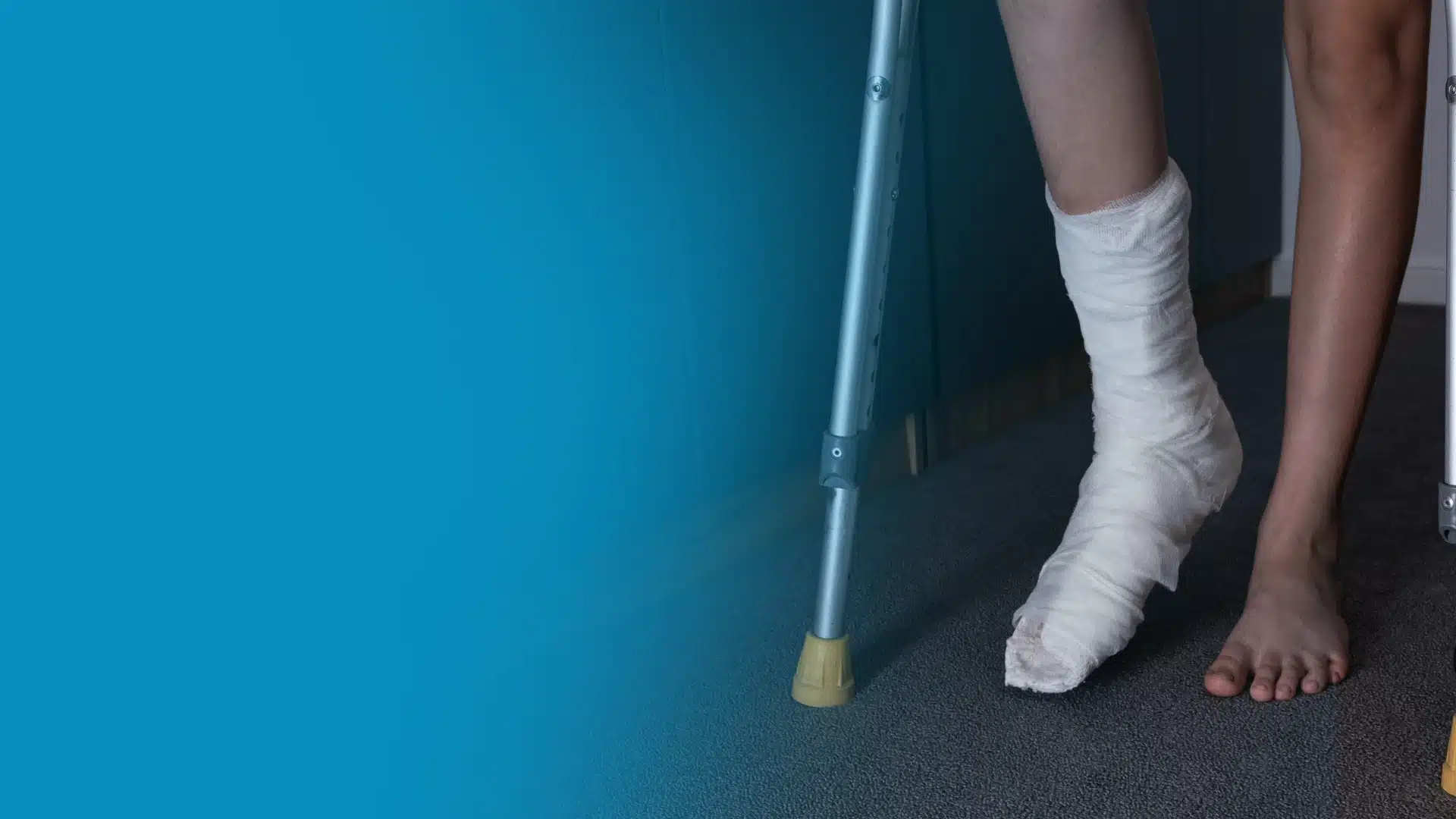
A fifth metatarsal fracture has three zones, and the zone determines whether you need surgery or just a boot.
You are in the right place. Dr. Tom Biernacki, DPM, FACFAS — board-certified foot & ankle surgeon with 3,000+ surgeries — explains exactly what fifth metatarsal fracture zones — Jones, dancer, avulsion means and what works. Call (810) 206-1402 to book at Howell or Bloomfield Township.
Medically reviewed by Dr. Tom Biernacki, DPM · Board-Certified Podiatric Surgeon · Last reviewed: April 2026 · Editorial Policy
Quick Answer
Fifth Metatarsal Fracture Guide 2026 DPM relates to foot/ankle injury — typically caused by trauma or twist. Most patients improve in 4-8 weeks with conservative care. Appointments in Howell + Bloomfield Township: (810) 206-1402.
Medically reviewed by Dr. Tom Biernacki, DPM — Board-Certified Podiatric Surgeon — Balance Foot & Ankle, Howell & Bloomfield Township, MI. Last updated April 2026.
▶ Watch
Medically Reviewed by Dr. Tom Biernacki, DPM — Board-Certified Podiatrist, Balance Foot & Ankle Specialists, Michigan. Last updated April 2026.
The fifth metatarsal is the second most commonly fractured bone in the foot, yet not all fifth metatarsal fractures are the same. The anatomic zone of the fracture determines blood supply, healing potential, and whether conservative treatment or surgery is appropriate. Misidentifying a high-risk Jones fracture as a low-risk avulsion fracture is a clinically significant error that can result in nonunion and prolonged disability.
Anatomy and Blood Supply
The fifth metatarsal has a base (proximal), shaft (diaphysis), and head (distal). At the base, the peroneus brevis tendon inserts on the dorsolateral tuberosity, and the plantar fascia attaches at the plantar base. A vascular watershed zone exists at the junction of the proximal shaft and metaphysis — the area of Jones fractures — where blood supply from two directions meets but is least dense, explaining why fractures in this zone have poor intrinsic healing capacity.
Zone 1: Avulsion Fractures (Dancer’s Fracture)
Zone 1 fractures involve the tuberosity at the very base of the fifth metatarsal, where the peroneus brevis tendon inserts. They occur from forced inversion ankle sprains — the peroneus brevis contracts eccentrically and avulses a fragment from its insertion. Alternatively, “dancer’s fractures” refer to spiral oblique shaft fractures (technically zones 2–3) from axial loading in pointed-toe position, though the term is used loosely.
True zone 1 tuberosity avulsions have excellent healing potential because they are within well-vascularized cancellous bone outside the watershed zone. Treatment is conservative: a stiff-soled shoe or walking boot for 4–6 weeks, with progressive weight-bearing as tolerated. Union rates exceed 95% with conservative management. Surgical fixation is rarely required except for large fragments involving the calcaneocuboid joint articular surface.
Zone 2: Jones Fracture (True Jones Fracture)
The Jones fracture — named for Sir Robert Jones who described his own injury in 1902 — occurs at the metaphyseal-diaphyseal junction, approximately 15–30 mm from the proximal tip of the fifth metatarsal. This is the vascular watershed zone. Jones fractures occur from excessive lateral loading of the forefoot, typically with the foot in plantarflexion and the ankle in slight adduction — a common mechanism in basketball and soccer.
Jones fractures are classified as acute or chronic (stress). Acute Jones fractures in non-athletic, low-demand patients can be treated conservatively with non-weight-bearing in a cast or boot for 6–8 weeks, with union rates of 75–80%. However, competitive athletes and high-demand patients are typically treated with surgical intramedullary screw fixation, which accelerates union (8–12 weeks to return to sport vs. 12–20 weeks conservatively) and reduces refracture risk.
Zone 3: Diaphyseal Stress Fractures
Zone 3 stress fractures occur in the proximal diaphysis distal to the Jones fracture zone, from repetitive loading without acute trauma. They present with insidious onset lateral foot pain in runners, dancers, military recruits, and basketball players. X-rays may show a stress fracture line with periosteal reaction and cortical hypertrophy; bone marrow edema on MRI confirms the diagnosis before X-ray changes appear.
Zone 3 stress fractures carry the highest nonunion risk of fifth metatarsal fractures because they share the watershed blood supply concern of zone 2 fractures and are subjected to repetitive loading in active patients. Surgical fixation with intramedullary screw is recommended for most athletes and active patients with zone 3 stress fractures to ensure reliable healing and early return to activity.
Distinguishing the Zones on X-Ray
Accurate zone identification is critical. On a lateral or oblique foot X-ray: zone 1 is the tuberosity at the very tip of the base; zone 2 begins approximately 15 mm distal to the proximal tip (at the 4th–5th metatarsal articulation); zone 3 extends distally into the diaphysis. When in doubt, CT scan provides the most precise fracture characterization and can identify cortical hypertrophy and sclerosis indicating chronicity.
At Balance Foot & Ankle, Dr. Biernacki evaluates fifth metatarsal fractures with weight-bearing foot X-rays at the first visit at both Bloomfield Township and Howell offices, accurately identifying fracture zone and guiding appropriate treatment. Call (810) 206-1402 for an evaluation.
Schedule Your Appointment at Balance Foot & Ankle
Board-certified podiatric physician and surgeon serving Southeast Michigan from Bloomfield Township and Howell.
📞 (810) 206-1402 | Book Online →
📍 Located in Michigan?
Our board-certified podiatrists treat this condition at two convenient locations. Book online 24/7 at either office.
Insurance Accepted
BCBS · Medicare · Aetna · Cigna · United Healthcare · HAP · Priority Health · Humana · View All →
Howell Office
4330 E Grand River Ave
Howell, MI 48843
Get Directions →
Bloomfield Township Office
43494 Woodward Ave, #208
Bloomfield Township, MI 48302
Get Directions →
More Podiatrist-Recommended Sports Essentials
Hoka Clifton 10


Watch: Metatarsalgia Treatment [BEST Ball of Foot Pain RELIEF 2024] — MichiganFootDoctors YouTube
Max-cushion everyday shoe — podiatrist favorite for walking and running.

OOFOS Recovery Slide

Impact-absorbing recovery sandal — wear after long days on your feet.
As an Amazon Associate, Balance Foot & Ankle earns from qualifying purchases. Product recommendations are based on clinical experience; prices and availability shown above update live from Amazon.

When to See a Podiatrist
Athletic injuries heal faster with sport-specific rehab protocols — not generic rest and ice. Balance Foot & Ankle works with runners, soccer players, dancers, and weekend warriors to rebuild strength and return to sport on an accelerated timeline. Don’t let a foot injury keep you sidelined longer than necessary.
Call Balance Foot & Ankle: (810) 206-1402 · Book online · Offices in Howell & Bloomfield Township
Differential Diagnosis: What Else Could It Be?
Not every case of jones fracture (5th metatarsal base) is straightforward. In our clinic we routinely rule out three look-alike conditions before confirming the diagnosis. If your symptoms don’t match the classic presentation, one of these may explain the pain — which is why physical exam matters more than self-diagnosis.
| Condition | How It Differs |
|---|---|
| Pseudo-Jones / avulsion fracture | Fracture proximal to metaphyseal-diaphyseal junction; heals faster with conservative care. |
| Peroneal tendonitis | Tenderness along the tendon sheath, not bone; no fracture on X-ray. |
| Cuboid syndrome | Pain slightly proximal on lateral column; no cortical disruption on imaging. |
Red Flags — When to See a Podiatrist Now
Seek expert evaluation at Balance Foot & Ankle if you notice any of the following:
- Inability to bear weight on lateral foot
- Pain at the 5th metatarsal base after inversion injury
- Delayed union or nonunion beyond 8 weeks
- Recurring fracture at the same location
Call (810) 206-1402 or request an appointment. For an urgent foot or ankle problem, call (810) 206-1402 and we’ll find the soonest opening.
In Our Clinic: What We See
Clinical perspective from Dr. Tom Biernacki, DPM — Balance Foot & Ankle, Howell & Bloomfield Township, MI:
Jones fractures look like ankle sprains when the patient walks in — they rolled the foot, lateral pain persisted, and the X-ray shows a break at the 5th metatarsal base. In our clinic we carefully distinguish true Jones (at the metaphyseal-diaphyseal junction, high non-union rate) from pseudo-Jones avulsions (proximal tip, heal reliably). True Jones fractures in athletes often need screw fixation; sedentary patients may heal in a boot over 8-12 weeks. Dr. Biernacki counsels every Jones patient: a missed Jones or a non-healed Jones will sideline you far longer than 6 weeks of strict non-weight-bearing upfront.
Watch: Dr. Tom explains
Podiatrist-recommended products
As an Amazon Associate, Dr. Tom earns from qualifying purchases.
Standard 5th metatarsal fracture immobilization – Jones fractures need non-weight-bearing.
Check price →Swelling control in acute fracture period.
Check price →Topical relief during prolonged healing.
View on Amazon →Post-healing arch support reduces recurrence.
Check price →Related resources
Ready to solve this? Book today.
Book online 24/7 · Howell & Bloomfield Township · 4.9★ (1,200+ reviews)
☎ (810) 206-1402Book Online →Pros & Cons of Conservative Care for foot care
Advantages
- ✓ Conservative care first
- ✓ Book online 24/7
- ✓ Multiple insurance accepted
Considerations
- ✗ Self-treatment can mask issues
- ✗ See a podiatrist if pain >2 weeks
Dr. Tom’s Recommended Products for foot care
Affiliate disclosure: As an Amazon Associate, Balance Foot & Ankle earns from qualifying purchases. We only recommend products we use with patients.
Footnanny Heel Cream Dr. Tom’s Pick
Best for: Daily moisturizer for cracked heels
Ready to Get Back on Your Feet?
Appointments in Howell + Bloomfield Township. Most insurance accepted. Dr. Tom Biernacki, DPM & team.
Call Now: (810) 206-1402
Ready to feel better?
Appointments available in Howell and Bloomfield Township, Michigan.
Book Your VisitReady for Expert Care?
Appointments in Howell & Bloomfield Township, MI.
4.9★ | 1,200+ Reviews | 3,000+ Surgeries
Or call: (810) 206-1402

Dr. Tom Biernacki, DPM is a board-certified foot & ankle surgeon (ABFAS & ABPM) at Balance Foot & Ankle Specialists in Southeast Michigan. With over a decade of clinical experience, he specializes in heel pain, bunions, diabetic foot care, sports injuries, and minimally invasive surgery. Dr. Biernacki is a member of the APMA and ACFAS, and his patient education content on MichiganFootDoctors.com and YouTube has made him one of the most-followed foot & ankle educators on YouTube.