
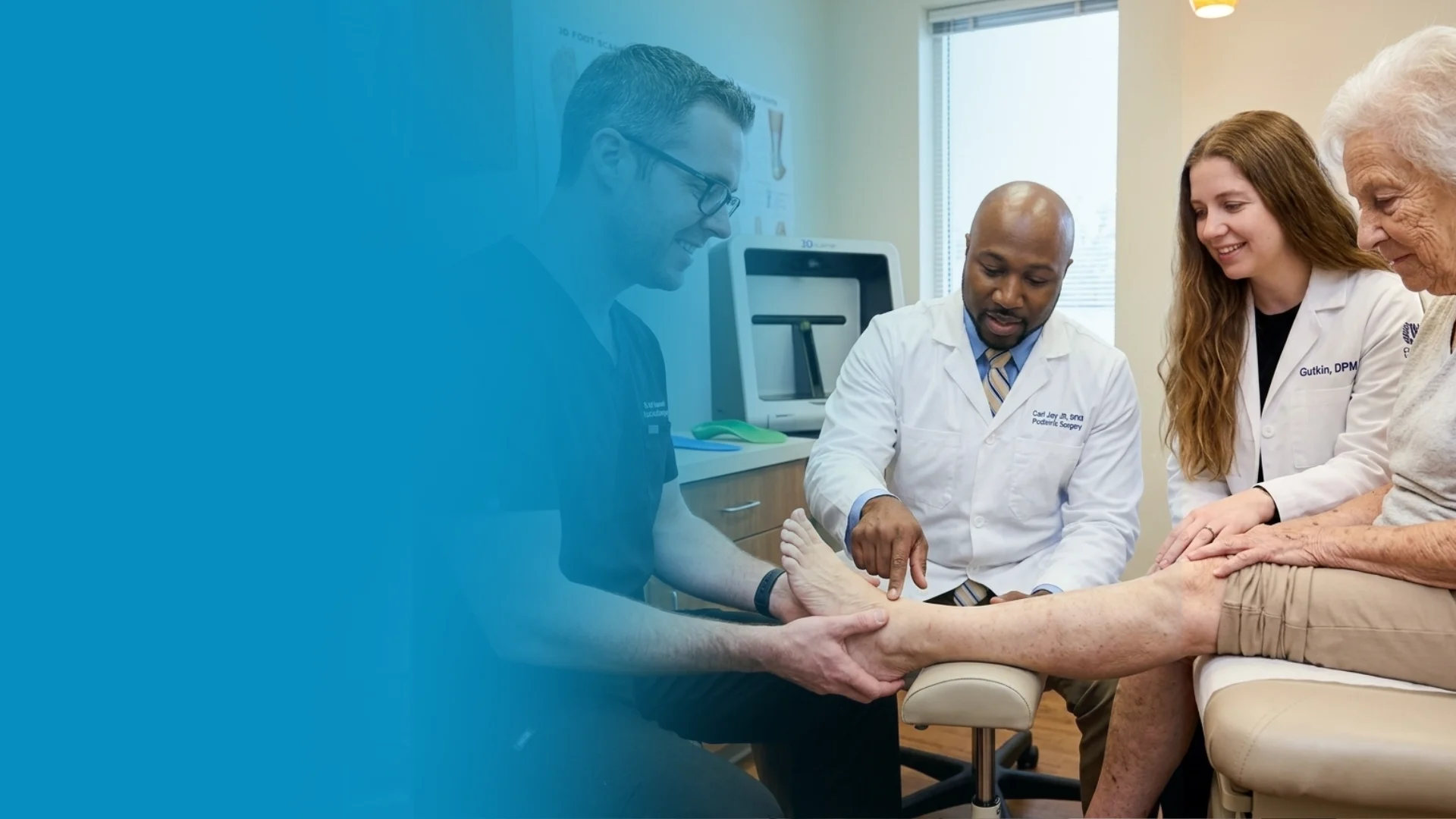
Quick answer: Feet that hurt after standing all day are usually reacting to four things: continuous plantar fascia load, compressed forefoot fat pads, pooled fluid from an inactive calf pump, and worn-out or unsupportive shoes. Most standing-worker foot pain resolves with the right footwear, a structured insole, compression socks, and a short end-of-shift recovery routine. Red flags that need prompt evaluation: warmth or redness, inability to bear weight, or one-sided swelling without injury. Call (810) 206-1402 for a same-week visit in Howell or Bloomfield Township.
Medically reviewed by Dr. Tom Biernacki, DPM — board-certified foot & ankle surgeon, Balance Foot & Ankle (Howell & Bloomfield Township, MI). Last reviewed June 2026.
In this guide
- Why standing all day damages your feet
- The 5 most common causes of standing-worker foot pain
- Red flags: when foot pain isn’t just fatigue
- The complete standing worker’s foot care system
- When home care isn’t enough
- Frequently asked questions
Why standing all day damages your feet
Standing is significantly harder on your feet than walking. When you walk, the calf muscle pump actively pushes blood and fluid back out of the feet, and pressure rolls from heel to toe so no one spot carries the load for long. When you stand still, that pump goes quiet: fluid pools in the feet and ankles, and pressure concentrates on the same small areas of your foot for hours. The plantar fascia bears continuous tensile load, the fat pads under the heel and ball of the foot stay compressed, and the small stabilizing muscles fatigue without a rest cycle.
Nurses, teachers, retail and factory workers, hairdressers, chefs — if you stand 6–12 hours a day, this is mechanical stress most people never experience, and research on high-standing occupations consistently links it to foot pain and lower-limb symptoms (Lewin, Naemi & Price, 2025). The good news: the vast majority of standing-related foot pain is preventable and treatable with the right combination of shoes, support, and a few targeted habits. Here’s the system we give our standing-worker patients.
The 5 most common causes of standing-worker foot pain
- 1. Plantar fasciitis — the most common. Continuous arch loading without the pressure relief of walking inflames the fascia’s attachment at the heel. The classic tell: heel pain that’s worst with your first steps in the morning or after sitting. See our full plantar fasciitis guide.
- 2. Metatarsalgia. Pain and burning in the ball of the foot from hours of loading the metatarsal heads on hard floors, often with callus buildup at the painful spots.
- 3. Acquired flat feet. Prolonged standing accelerates arch collapse over time. Once the arch drops, it sets off a biomechanical cascade that can reach the knees, hips, and lower back.
- 4. Poor footwear — the most correctable factor. Shoes worn past their support life, the wrong width, or no arch structure at all. Many “work” shoes trade support for looks.
- 5. Fatigue failure. Even structurally normal feet in good shoes reach a cumulative failure point after 8–12 hours. That’s not weakness — it’s physiology, and it’s what the recovery routine below is for.
Red flags: when foot pain isn’t just fatigue
Tired, achy feet at the end of a shift are a mechanical problem. These signs are not — get evaluated promptly if you notice:
- Warmth, redness, or swelling that appeared suddenly — possible infection, gout, or inflammatory arthritis.
- Inability to bear weight, or pain localized to one spot on a bone — possible stress fracture.
- Swelling in one leg or foot only, without an injury — this needs same-day evaluation to rule out a blood clot (DVT).
- Numbness, tingling, or burning in the toes or ball of the foot — possible nerve involvement (Morton’s neuroma, tarsal tunnel).
- Any foot symptom if you have diabetes.
The complete standing worker’s foot care system
Work through these in order — each layer builds on the one before it.
1. The right shoes (highest impact)
A firm heel counter, a stable midfoot, real cushioning, and a removable liner. This single change resolves more standing-worker foot pain than everything else combined. Our full breakdown by foot type and job is in the best shoes for standing all day guide, with dedicated guides for nurses and healthcare workers and concrete floors.
2. A structured insole
Work shoes rarely include real arch support. A semi-rigid insole with a deep heel cup fills that gap; replace it every 6–12 months because the support compresses with daily full-time use. Our picks are in the best insoles for standing all day guide. If you have structural flat feet or recurrent plantar fasciitis, custom orthotics are worth the investment.
3. Compression socks
Graduated 15–20 mmHg compression prevents the fluid pooling behind end-of-day swelling and aching — put them on at the start of the shift, not after. Especially important if you’ve already developed varicose veins or chronic swelling. Sizing and picks in our compression sock guide.
4. Anti-fatigue mats
At fixed workstations — counters, kitchen lines, assembly stations — a quality anti-fatigue mat meaningfully reduces the shock reaching your feet and joints compared to bare concrete or tile, and it works alongside good shoes, not instead of them.
5. Recovery footwear at home
What you wear after the shift matters too. A supportive recovery slide or structured slipper beats barefoot on hardwood for those evening hours — your feet need recovery support the same way athletes need recovery gear.
6. The end-of-shift routine
Ten minutes, every work day: elevate your feet above heart level for 20–30 minutes (the fastest way to clear fluid), ice any specific painful spot for 10–15 minutes, then stretch — plantar fascia stretch, calf stretch, ankle circles. Consistency with this routine is what separates workers who manage foot pain long-term from those who develop chronic problems.
When home care isn’t enough
If you’ve fixed the shoes, added a structured insole, and kept the routine for 4–6 weeks and your feet still hurt — or the pain is sharp, localized, or worse in the morning — the problem is usually a specific diagnosis, not general fatigue. At Balance Foot & Ankle we start with a gait analysis and in-office imaging, then treat the actual cause: targeted plantar fasciitis and heel pain treatment, custom 3D-scanned orthotics for structural problems, and workplace-specific footwear plans. Standing-job foot pain is one of the most fixable problems we see — and far easier to fix early.
Frequently asked questions
What’s the fastest way to relieve foot pain after standing all day?
Remove your shoes and elevate your feet above heart level for 20–30 minutes — the single fastest way to reduce fluid-related swelling and aching. Follow with 10–15 minutes of ice on any specific painful area and a gentle plantar fascia and calf stretch before bed.
How do nurses survive 12-hour shifts on their feet?
The nurses with the best outcomes in our practice run a system: they rotate between 2–3 quality pairs of work shoes so the same pressure points don’t accumulate, use structured or custom orthotics, wear compression socks every shift, and keep a consistent end-of-shift recovery routine. It’s a system, not a single product.
Why do my feet hurt worse in the morning than at work?
Sharp pain with the first steps after rest is the signature of plantar fasciitis — the fascia tightens overnight, then pulls at its heel attachment when you stand. Morning-dominant pain means inflammation, not simple fatigue, and it responds much better to early treatment.
How often should I replace work shoes?
For someone in their shoes 40+ hours a week: every 6–8 months. Cushioning and structure degrade long before the shoe looks worn. If your feet or back ache more than they used to, try new shoes before assuming something is structurally wrong.
Can standing all day permanently damage your feet?
Yes — years of prolonged standing without support can cause permanent arch collapse (adult-acquired flatfoot), chronic plantar fasciitis, bunion progression, and metatarsal stress injuries. The damage is cumulative, so the time for protective measures is before significant pain develops.
See a podiatrist in Howell or Bloomfield Township
Foot pain from work that’s affecting your quality of life is worth a proper diagnosis. Same-week appointments, gait analysis, in-office imaging, and most insurance accepted.
Call (810) 206-1402 or book a new-patient visit.
Howell: 4330 E Grand River Ave, Howell, MI 48843 · Bloomfield Township: 43494 Woodward Ave #208, Bloomfield Township, MI 48302.
Sources
- Lewin M, Naemi R, Price C. Important contributors to foot pain at work and subsequent footwear considerations. 2025.
- American Podiatric Medical Association — foot health and footwear guidance.

Dr. Tom Biernacki, DPM is a board-certified foot & ankle surgeon (ABFAS & ABPM) at Balance Foot & Ankle Specialists in Southeast Michigan. With over a decade of clinical experience, he specializes in heel pain, bunions, diabetic foot care, sports injuries, and minimally invasive surgery. Dr. Biernacki is a member of the APMA and ACFAS, and his patient education content on MichiganFootDoctors.com and YouTube has made him one of the most-followed foot & ankle educators on YouTube.
More questions patients ask
Why do feet hurt after standing all day?
Standing all day creates continuous compressive force on foot joints, plantar fascia, and Achilles tendon — without the pump action of walking that circulates blood. This causes: micro-trauma accumulation in the plantar fascia (plantar fasciitis), metatarsalgia (forefoot pain from sustained pressure), venous pooling and swelling, fatigue of intrinsic foot muscles, and worsening of underlying conditions like bunions and flat feet. The right footwear and insoles are essential preventive measures.
What shoes are best for standing all day at work?
For workers who stand all day: prioritize shoes with cushioned midsoles (EVA or PU foam), firm arch support, adequate depth for your insoles, rocker bottom to reduce forefoot pressure, slip-resistant outsole, and minimal heel-to-toe drop. Look for occupational footwear ratings if required for your job. Custom orthotics inside work-appropriate shoes dramatically improve comfort over off-the-shelf insoles.
Can standing all day cause permanent foot damage?
Prolonged standing contributes to permanent foot changes over time: flattening of the longitudinal arch, fat pad thinning (reducing natural cushioning), arthritis in weight-bearing joints, chronic plantar fasciitis, and venous insufficiency. Workers in standing occupations have higher rates of plantar fasciitis and lower back pain. Preventive care — proper footwear, orthotics, anti-fatigue mats, and periodic movement — significantly reduces long-term damage.
What can I do to relieve foot pain after a long work shift?
Post-shift foot pain relief: remove shoes and elevate feet 15-20 minutes, ice (or contrast warm/cold water soaking), stretch calves and plantar fascia before bed, roll a frozen water bottle under the arch, wear supportive slippers (not barefoot) at home, and use a foot massager with arch pressure. If pain is severe or occurs every night, see a podiatrist — chronic work-related foot pain has effective solutions that most workers aren't aware of.
Why do my feet hurt after standing all day?
Prolonged standing creates cumulative stress on the plantar fascia, heel pad, metatarsals, and joints that can exceed tissue tolerance, producing pain and inflammation. Without proper support and shock absorption, hard floors amplify this stress. Balance Foot & Ankle helps patients who stand all day for work with custom orthotics, footwear recommendations, and treatment of established conditions. Call (810) 206-1402.
What are the best ways to relieve foot pain from standing all day?
Balance Foot & Ankle recommends: custom orthotics for biomechanical support, quality footwear with excellent cushioning, anti-fatigue mats where possible, brief sitting or position change breaks, calf stretching throughout the day, compression socks for circulation, and professional evaluation if pain persists. For established conditions like plantar fasciitis, MLS laser and shockwave therapy provide effective relief.
Can custom orthotics help if my feet hurt from standing at work?
Custom orthotics from Balance Foot & Ankle are among the most effective solutions for work-related foot pain from prolonged standing. By correcting your specific biomechanical pattern and providing precise cushioning and support, custom orthotics significantly reduce the daily foot stress that causes pain. Most patients report major improvement within weeks of starting orthotic use.
What medical conditions can cause feet to hurt when standing?
Beyond mechanical overloading, feet that hurt excessively when standing may indicate plantar fasciitis, heel fat pad syndrome, metatarsalgia, tarsal tunnel syndrome, rheumatoid arthritis, or early diabetic neuropathy. Balance Foot & Ankle evaluates each patient to identify the specific cause of standing-related foot pain and provides targeted treatment for that diagnosis.
Should I see a podiatrist if my feet hurt every day from standing?
Yes. Daily foot pain from standing is not something to simply endure. Balance Foot & Ankle provides effective solutions that allow most patients to continue working and standing without significant pain. Don't wait for the problem to become debilitating. Call (810) 206-1402 to schedule at our Howell (4330 E Grand River) or Bloomfield Township (43494 Woodward Ave #208) office.
Still have a question about coverage or cost? Book online and we will check your benefits before your visit: Book in Howell · Book in Bloomfield Township. Prefer to talk it through first? Call (810) 206-1402.