
The most effective exercises for overpronation strengthen the tibialis posterior, intrinsic foot muscles, and hip abductors — the three muscle groups that collectively control how your arch and ankle load during walking and running. In our clinic, we pair exercises with orthotics and footwear guidance because exercise alone rarely corrects severe structural pronation. However, for mild-to-moderate functional overpronation, a consistent 6-week exercise program produces measurable improvement in arch height and reduces injury recurrence significantly.
You were told you pronate, given a pair of motion-control shoes, and sent on your way. Months later your arch still aches, your knees hurt on long runs, and nothing has really changed. The missing piece in most pronation treatment plans is targeted strengthening — because the foot does not overpronate because shoes are wrong; it overpronates because the muscles that resist excessive inversion are weak, fatigueable, or poorly coordinated. These exercises fix that.
What Overpronation Actually Is
Pronation is a normal, necessary motion. The foot pronates (rolls inward and flattens) during early stance phase to absorb ground reaction force. The problem is excessive or prolonged pronation — when the foot continues rolling inward past neutral through mid-stance and into late stance, collapsing the medial arch and internally rotating the tibia and femur up the chain.
In our clinic, we quantify pronation by measuring the navicular drop test (how far the navicular bone descends from seated to standing) and rearfoot eversion angle during single-leg stance. A navicular drop greater than 10mm or a rearfoot eversion angle greater than 4–6 degrees during standing qualifies as clinically significant overpronation. The amount of pronation that causes symptoms varies enormously by individual — some patients with severe flat feet are pain-free, while others with moderate pronation develop multiple tendinopathies.
Why Overpronation Causes Injury
Excessive pronation places three structures under abnormal stress simultaneously. The tibialis posterior tendon (the primary arch-supporting dynamic structure) is forced into an elongated, high-load position with every step, driving posterior tibial tendon dysfunction. The plantar fascia is repeatedly overstretched at the medial calcaneal insertion, contributing to plantar fasciitis. And the tibial internal rotation that accompanies foot pronation increases patellofemoral joint stress, explaining why overpronators are disproportionately represented among runner’s knee patients.
The 7 Best Exercises for Overpronation
These exercises specifically target the muscle groups that control pronation. Perform them in the order listed — they progress from intrinsic isolation to integrated functional movements.
1. Short Foot Exercise (Intrinsic Arch Activation)
Seated, foot flat on floor. Without curling your toes, shorten the foot by pulling the ball of the foot toward the heel — doming the arch. Hold 5 seconds, relax completely. 3 sets of 15 reps, both feet. This is the foundation exercise — it activates the intrinsic plantar muscles (flexor digitorum brevis, abductor hallucis) that form the arch’s muscular base. Most overpronators cannot do this correctly at first. Practice until you can hold the dome without the toes gripping.
2. Towel Toe Scrunches (Flexor Strengthening)
Place a small towel on a hard floor. Using only your toes, scrunch the towel toward you, then spread it back out. 3 sets of 20 scrunches. This isolates the lumbricals and flexor digitorum brevis — the small muscles that maintain the transverse arch and prevent the forefoot from splaying during the push-off phase that loads the arch most.
3. Single-Leg Heel Raise (Tibialis Posterior + Gastrocnemius)
Stand on one foot beside a wall for balance. Slowly rise on your toes (3 counts up, 3 counts down). 3 sets of 15 reps. The critical technique cue: as you rise, supinate the foot slightly — imagine screwing the ball of the foot into the floor. This activates tibialis posterior through its full range. If your arch collapses when you rise (the heel everts), reduce speed and focus on the supination cue before adding reps.
4. Tibialis Posterior Resisted Inversion
Sit with your leg crossed, resistance band looped around the forefoot (pull from the inside). From a neutral position, invert and plantarflex the foot — pulling against the band. Slow controlled return. 3 sets of 15 reps. This is the most direct tibialis posterior isolation exercise and is the closest gym equivalent to the dynamic arch support function this muscle performs with every step.
5. Calf Raises with Arch Supination (Eccentric Focus)
Using a slant board or step edge for full range of motion, perform slow eccentric (lowering phase) heel raises — 3 seconds up, 5 seconds down. Focus on keeping the heel slightly supinated throughout. 3 sets of 12 reps. The eccentric component is crucial because tibialis posterior undergoes eccentric loading during every stance phase of gait. Concentric-only training misses the primary loading pattern.
6. Hip Abductor Clamshells (Proximal Control)
Lie on your side, hips bent 45 degrees, knees bent 90 degrees. Keeping feet together, raise the top knee toward the ceiling like a clamshell opening. Hold 2 seconds at top. 3 sets of 20 reps each side. The hip abductors — particularly gluteus medius — control the degree of femoral internal rotation that drives tibial rotation and foot pronation. Weak hip abductors are consistently found in overpronators with knee and hip downstream injuries.
7. Single-Leg Balance on Unstable Surface (Proprioception Integration)
Stand on one leg on a folded towel or balance board for 30–60 seconds. Focus on keeping the arch domed (use the short foot position) while maintaining balance. Progress to eyes closed. 3 sets each side. This integrates all the isolated strengthening into functional proprioceptive control — the neuromotor pattern that determines how quickly your foot resists unwanted pronation during dynamic activities.
6-Week Pronation Correction Program
Consistency over intensity. Perform this program 5 days per week. Each session takes 15–20 minutes.
| Week | Focus | Exercises | Notes |
|---|---|---|---|
| 1–2 | Intrinsic Activation | Short foot, Towel scrunches, Clamshells | Master the short foot position before adding load |
| 3–4 | Tibialis Posterior Loading | Add: Resisted inversion, Slow heel raises | Use moderate resistance — form over load |
| 5–6 | Functional Integration | Full 7-exercise circuit + single-leg balance | Progress balance to unstable surface |
Why Exercises and Orthotics Work Better Together
The most common mistake we see with overpronation treatment is choosing between exercises and orthotics rather than combining them. Orthotics passively correct foot position and reduce stress on injured structures while the exercises rebuild active muscular control. Using orthotics while strengthening means you are not loading the arch under excessive stress during the weeks when your muscles are still developing. Once the exercise program is complete, many patients can wean off orthotics entirely for low-demand activities — though high-impact sports often warrant continued orthotic support long-term.
- Arch or heel pain persists more than 6 weeks despite consistent exercise
- Inner ankle pain with swelling (may indicate posterior tibial tendon dysfunction)
- Progressive flat foot deformity in an adult (PTTD stage II or III)
- Knee, hip, or low back pain linked to your flat feet
- Exercise increases rather than decreases your symptoms
- One foot is significantly flatter than the other (asymmetric pronation)
The ideal companion to a pronation exercise program: PowerStep Pinnacle Maxx insoles provide firm medial arch support and a deep heel cup to passively control rearfoot eversion while your tibialis posterior and intrinsic muscles develop active strength. Using them during the 6-week program means your exercises are training the muscles in a supported position — building strength without repeatedly loading healing or strained structures. Part of our Foundation Wellness portfolio.
Not Ideal For: High-arch (supinated) feet. Size down half a size for most casual shoes.
Shop PowerStep at MFDFor overpronating runners specifically, CURREX RunPro insoles provide a dynamic arch response that adapts to each footstrike — delivering pronation control during the push-off phase without over-correcting the natural pronation that contributes to shock absorption. We recommend these for runners who are using exercises to address pronation but need support during active training runs while the strengthening program is in progress.
Not Ideal For: Walking shoes or casual footwear — these are performance insoles optimized for running gait.
Shop CURREX at MFDIn-Office Pronation Treatment at Balance Foot & Ankle
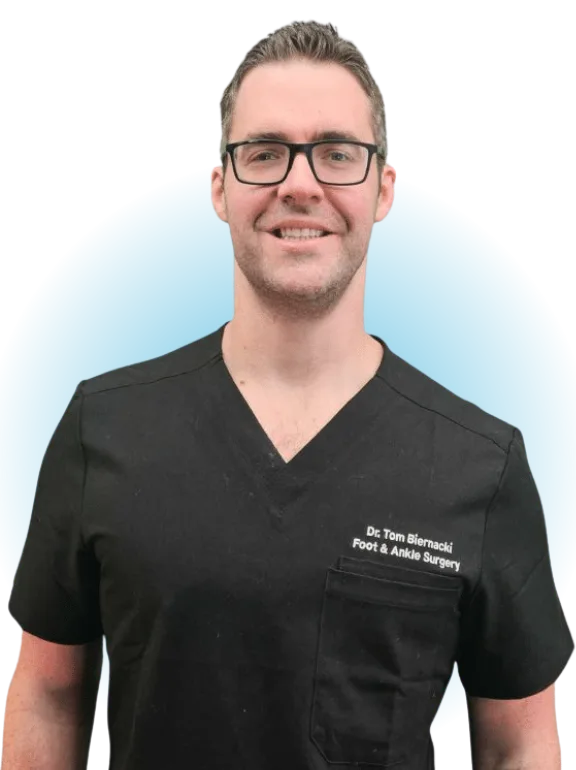
When overpronation is driving significant pain — plantar fasciitis, posterior tibial tendon dysfunction, shin splints, or knee pain — a podiatric evaluation identifies the underlying structural and functional drivers and builds a personalized plan. At Balance Foot & Ankle, Dr. Tom Biernacki performs a comprehensive biomechanical assessment including gait analysis and digital pressure mapping to determine whether custom orthotics, a targeted exercise prescription, or both will be most effective for your specific foot mechanics.

- High Arch Support: PowerStep supination insoles deliver firm, flexible high arch support plus a deep heel cradle for comfort, stability & motion control, helping align feet, reduce pain, and protect against ball & heel pressure.
- All Day Comfort & Support: PowerStep Pinnacle High shoe inserts for women and men use premium dual layer cushioning to deliver heel to toe comfort and responsive bounce back with every step, without going flat.
- Relieves & Helps Prevent Pain: PowerStep Pinnacle High insoles for supination can help alleviate common foot conditions often linked to supination, including plantar fasciitis, Achilles tendonitis, fat pad atrophy, and Morton’s neuroma.
- No Trimming: PowerStep insoles move easily from shoe to shoe. Inserts are sized by shoe size for footwear with removable factory insoles. Designed for walking, running, work & casual dress shoes; pairs well with best walking shoes for women and men.
- Made in the USA: We stand behind our PowerStep Insoles for women and men. Proudly made in the USA & backed by a 30-day money-back guarantee. HSA & FSA Eligible
Book online 24/7. Dr. Biernacki — 3,000+ surgeries, 4.9 stars, 1,200+ reviews.
Book Online (810) 206-1402Howell: 4330 E Grand River Ave · Bloomfield Township: 43494 Woodward Ave #208
Frequently Asked Questions
Can exercises actually fix overpronation?
Exercises can significantly reduce functional overpronation by strengthening the muscles that actively control arch position and rearfoot alignment. For structural flat feet (where the bones themselves are positioned differently), exercises improve symptoms and reduce injury risk but do not change the underlying bone architecture. Custom orthotics address structural pronation; exercises address functional pronation — most patients need both.
How long does it take for pronation exercises to work?
Most patients notice reduced fatigue and improved arch awareness within 2–3 weeks. Measurable strength and neuromuscular improvement takes 6–8 weeks of consistent training. Full functional integration — where the corrected movement pattern is automatic during running and sports — typically requires 3–4 months of progressive exercise.
What is the most important exercise for overpronation?
The short foot exercise is the foundation because it directly activates the intrinsic arch muscles that are most atrophied in overpronators. Without intrinsic muscle activation, the tibialis posterior cannot effectively maintain arch height against body weight during dynamic activity. Master the short foot exercise before progressing to the loaded movements.
Should I stop wearing orthotics while doing pronation exercises?
No — continue wearing orthotics while completing the exercise program. Orthotics reduce the mechanical load on injured or strained structures while you build strength. After 8–12 weeks of consistent exercise, your podiatrist can re-assess whether orthotic support can be reduced for certain activities.
When should I see a podiatrist about overpronation?
See a podiatrist if overpronation is causing pain that interferes with daily activity or sport, if one foot is significantly flatter than the other, if you have tried exercises for 6+ weeks without improvement, or if you notice progressive arch collapse as an adult. Adult-acquired flatfoot (PTTD) is a progressive condition that responds much better to early intervention.
Sources
- Headlee DL, et al. Fatigue of the plantar intrinsic foot muscles increases navicular drop. J Electromyogr Kinesiol. 2008;18(3):420–425.
- Hintermann B, Nigg BM. Pronation in runners: implications for injuries. Sports Med. 1998;26(3):169–176.
- Mulligan EP, Cook PG. Effect of plantar intrinsic muscle training on medial longitudinal arch morphology and dynamic function. Man Ther. 2013;18(5):425–430.
- Rathleff MS, et al. Is hip strength a risk factor for patellofemoral pain? A systematic review. Br J Sports Med. 2014;48(14):1088.
- Balance Foot & Ankle. Flat Foot Treatment — Dr. Tom Biernacki DPM.
VitaMedica Arnica Gel
Natural topical relief I recommend for sore feet: an arnica gel with 15 homeopathic ingredients and soothing aloe. Massage a thin layer into the sore area.
Shop VitaMedica Arnica Gel →Appointments in Howell & Bloomfield Township
Three board-certified podiatric surgeons. 1,200+ five-star reviews. Most insurance accepted.
