


Lacrosse foot and ankle injuries combine cleat-related impacts, lateral cuts, and frequent turf toe — and the right cleat plus prevention routine reduces injury rates dramatically.
You’re in the right place. Dr. Tom Biernacki, DPM, FACFAS — board-certified foot & ankle surgeon with 3,000+ surgeries — explains exactly what lacrosse foot and ankle injuries means and what works. Call (810) 206-1402 for same-day appointment at Howell or Bloomfield Township.
Quick answer: Lacrosse Foot Ankle Injuries Turf Toe Ankle Sprains Cleats 2 is a common foot/ankle topic that affects many patients. The 2026 evidence-based approach combines proper diagnosis, conservative-first treatment, and escalation only when needed. We treat this regularly at our Howell and Bloomfield Township practices. Call (810) 206-1402.
Medically Reviewed by Dr. Tom Biernacki, DPM — Board-Certified Podiatrist, Balance Foot & Ankle Specialists, Michigan. Last updated April 2026.
Medical Review
Medically reviewed by: Dr. Tom Biernacki, DPM — Board-certified podiatrist and foot surgeon at Balance Foot & Ankle, Southeast Michigan. Over 15 years of clinical experience treating sport-specific foot and ankle injuries in lacrosse players and multi-sport athletes.
Last updated: April 2026
Quick Answer
Lacrosse places unique demands on the feet and ankles due to the combination of running on uneven natural turf, rapid direction changes (cutting, dodging, pivoting), sudden acceleration and deceleration, and the physical contact inherent in the sport. The most common lacrosse foot injuries include ankle sprains (particularly lateral sprains from cutting on uneven surfaces), turf toe from playing on artificial surfaces, Achilles tendinitis from repetitive sprinting, metatarsal stress fractures from overtraining, and plantar fasciitis from inadequate footwear on hard ground. Proper cleat selection, conditioning programs, and early treatment of symptoms prevent most serious injuries and keep players on the field.
Table of Contents
- Quick Answer
- Why Lacrosse Is Hard on Your Feet
- Ankle Sprains in Lacrosse
- Turf Toe and Forefoot Injuries
- Achilles Tendinitis
- Metatarsal Stress Fractures
- Plantar Fasciitis in Lacrosse Players
- Cleat-Related Injuries
- Contusion and Impact Injuries
- Midfoot Sprains (Lisfranc Injuries)
- Cleat Selection Guide for Lacrosse
- Best Products for Lacrosse Foot Care
- Prevention and Conditioning
- Return to Play Guidelines
- Most Common Mistake
- Warning Signs You Need Immediate Care
- Watch Our Video
- Frequently Asked Questions
- Sources
- Schedule Your Appointment
- Related Articles
Affiliate disclosure: This page contains affiliate links to products we trust and recommend. As an Amazon Associate, we earn from qualifying purchases. We also participate in the Foundation Wellness affiliate program. These partnerships support our practice and allow us to continue providing evidence-based foot care education. Product recommendations are based on clinical experience — we only recommend what we would use for our own patients.
Why Lacrosse Is Hard on Your Feet
Lacrosse has become one of the fastest-growing sports in the United States, and with that growth has come increased recognition of the sport-specific injury patterns that affect players’ feet and ankles. Unlike sports played on consistent indoor surfaces, lacrosse is primarily an outdoor sport played on natural grass, artificial turf, or a combination of both — and the playing surface significantly influences which injuries occur and how severely.
The biomechanical demands of lacrosse combine elements from several high-risk sports. Like soccer, lacrosse requires continuous running with sudden direction changes on a large field. Like basketball, it demands explosive lateral movements, pivoting, and rapid acceleration. Like football, it involves physical contact, body checks, and the potential for direct trauma to the feet and ankles. This combination creates a multi-directional loading environment where the feet must simultaneously absorb impact, generate propulsive force, provide lateral stability, and resist traumatic forces from contact — all while wearing cleats that grip aggressively into the playing surface.
Playing surface matters enormously. Natural grass provides some shock absorption but introduces surface irregularities — divots, uneven patches, wet areas — that increase ankle sprain risk. Modern artificial turf provides a consistently flat surface but generates higher friction coefficients that increase the risk of turf toe and rotational knee and ankle injuries because the foot does not slide on the surface during cutting movements. Indoor box lacrosse played on sport court or concrete creates the highest impact loading due to the completely unforgiving surface. Understanding your primary playing surface helps target prevention strategies to the injuries most likely on that surface.
Position-specific demands also influence injury patterns. Attackers and midfielders who perform frequent cutting, dodging, and change-of-direction movements have higher rates of ankle sprains and turf toe. Defenders who must backpedal and perform lateral slides while maintaining a low defensive stance develop more Achilles tendinitis and plantar fasciitis. Goalies who must make explosive lateral dives from a stationary position are susceptible to Achilles strains and metatarsal stress injuries from the repetitive push-off demands of their position.
Ankle Sprains in Lacrosse
Ankle sprains are the most frequently reported injury in lacrosse, accounting for approximately 15 to 25 percent of all lacrosse injuries across multiple epidemiological studies. The lateral ankle sprain — involving the anterior talofibular ligament (ATFL) and potentially the calcaneofibular ligament (CFL) — dominates because lacrosse movements consistently place the ankle in vulnerable positions on surfaces that are often uneven.
The mechanisms specific to lacrosse include stepping on an opponent’s foot during a ground ball scramble, landing on an uneven surface after a dodge or shot, planting the foot for a cut while the cleat grips the turf and the ankle rolls inward, and being body-checked while the foot is planted. Cleat design contributes to ankle sprain risk — longer cleat studs on soft ground provide excellent traction but also increase the rotational resistance at the ground interface, meaning the ankle absorbs more force during direction changes rather than the foot sliding slightly on the surface.
Lacrosse-specific considerations for ankle sprain management include assessing whether the high-top or mid-cut cleat provides adequate ankle support for your playing style, using prophylactic ankle bracing for players with a history of sprains (which reduces recurrence by approximately 50 percent without significantly affecting agility), and ensuring complete rehabilitation — including proprioceptive retraining on grass surfaces — before return to play. The uneven natural surfaces typical of lacrosse demand superior ankle proprioception compared to sports played on flat indoor courts.
Turf Toe and Forefoot Injuries
Turf toe — a hyperextension sprain of the first metatarsophalangeal (MTP) joint — has become increasingly common in lacrosse as more programs play on artificial turf surfaces. The mechanism is straightforward: the foot is fixed on the high-friction turf surface, and a force (either from running momentum or a body check from behind) drives the body forward over the planted forefoot, bending the big toe beyond its physiological extension limit. The plantar plate and capsular structures of the first MTP joint tear partially or completely depending on the severity of the hyperextension.
Artificial turf significantly increases turf toe risk in lacrosse because the combination of a flat, high-friction surface and flexible cleats allows the forefoot to grip aggressively while the rest of the foot continues forward. Natural grass, while providing less consistent traction, allows some slippage that distributes the hyperextension force and may prevent the extreme toe hyperextension that causes turf toe. Players who transition from natural grass to artificial turf should be particularly aware of turf toe risk and consider stiffer-soled cleats or carbon fiber insoles that limit MTP joint motion.
Treatment involves protecting the first MTP joint from further hyperextension using stiff insoles, taping techniques, and activity modification. Mild Grade I sprains may allow continued play with taping and stiff insoles, while Grade II and III sprains require 3 to 8 weeks away from the field. The challenge in lacrosse is that the first MTP joint must tolerate significant push-off forces during sprinting, cutting, and dodging — returning before adequate healing often leads to chronic pain and functional limitation that is worse than the original injury.
Achilles Tendinitis
The Achilles tendon endures substantial repetitive loading during lacrosse due to the sport’s combination of sustained running, explosive sprinting, and rapid deceleration. Midfielders who cover the most ground during a game — running 3 to 5 miles per game with frequent sprint intervals — are particularly susceptible to Achilles overload. The cleat-to-grass or cleat-to-turf interface also influences Achilles tendon loading: cleats on soft ground allow the heel to sink slightly into the surface, which stretches the Achilles tendon beyond its comfortable range during each stride.
Early Achilles tendinitis presents as stiffness and mild pain in the back of the ankle during warm-up that improves as the tendon warms up but returns after practice. This “warm-up phenomenon” lulls many athletes into believing the problem is minor — but it represents the tendon’s limited ability to buffer the repetitive loading it is enduring. If activity level continues without modification, the tendinitis progresses to pain during activity, pain after activity, and eventually pain at rest. The transition from reactive tendinopathy to degenerative tendinopathy represents a critical threshold — degenerative changes are much harder to reverse than early reactive inflammation.
Management focuses on eccentric heel drop exercises (the Alfredson protocol), temporary activity modification (reducing practice intensity and duration by 30 to 50 percent), heel lifts to reduce Achilles tendon strain, and addressing calf tightness with systematic stretching. For lacrosse players, maintaining cardiovascular fitness through cycling or pool running during the modified activity period prevents deconditioning while allowing the tendon to recover.
Metatarsal Stress Fractures
Stress fractures in lacrosse players most commonly affect the second and third metatarsals due to the repetitive running and push-off demands of the sport. The spring season timing of many lacrosse programs creates a classic risk scenario — players transition from winter indoor conditioning (often on softer surfaces or cross-training activities) to intensive outdoor running on harder surfaces in a short period. This sudden increase in impact loading without adequate bone adaptation time creates the conditions for stress fracture development.
The fifth metatarsal Jones fracture deserves special attention in lacrosse players because the lateral foot loading during cutting movements concentrates force through the proximal fifth metatarsal — a region with poor blood supply that heals unreliably without surgical intervention. Any lacrosse player with progressive lateral foot pain that worsens during cutting movements should be evaluated for a Jones fracture, as early detection and treatment (potentially including prophylactic screw fixation in competitive athletes) produces significantly better outcomes than treatment of a completed fracture.
Prevention focuses on gradual progression of running volume during preseason training (following the 10 percent rule — increasing weekly mileage by no more than 10 percent per week), ensuring adequate calcium and vitamin D intake, wearing properly cushioned cleats, and recognizing early warning signs (vague forefoot aching that resolves with rest but returns with activity). Female lacrosse players should be screened for the female athlete triad (disordered eating, menstrual irregularity, low bone density), as this constellation dramatically increases stress fracture risk.
Plantar Fasciitis in Lacrosse Players
Plantar fasciitis in lacrosse players develops from the combination of repetitive running impact on hard surfaces (particularly turf and dry natural grass) and the relatively thin midsoles typical of lacrosse cleats. Unlike running shoes designed with significant cushioning and arch support, most lacrosse cleats prioritize ground feel, traction, and low weight over foot protection. This design philosophy works well for short-duration activities but becomes problematic during the long practices (2 to 3 hours) and frequent game schedules typical of competitive lacrosse seasons.
The characteristic morning heel pain of plantar fasciitis — sharp pain with the first steps after sleep that improves with walking — develops insidiously during the lacrosse season. Players often attribute early symptoms to general soreness from training and push through, allowing the condition to progress from mild irritation to significant limitation. By the time players seek treatment, they have often been compensating for weeks, developing secondary problems in the opposite foot, knee, or hip from the asymmetric loading of guarding the painful heel.
Treatment must balance healing the fascia with maintaining competitive readiness. Replacing factory cleat insoles with arch-supportive orthotics is the single most effective intervention — it provides the biomechanical support that lacrosse cleats inherently lack. Night splints address the overnight fascial contracture that causes morning pain. Calf stretching and intrinsic foot strengthening address the biomechanical contributors. Strategic load management — reducing practice intensity during acute flares while maintaining position-specific skills — allows continued participation while the fascia recovers.
Cleat-Related Injuries
The cleats worn in lacrosse directly influence injury risk through their effect on traction, cushioning, ankle support, and pressure distribution. Lacrosse cleats with aggressive stud patterns on artificial turf create high rotational resistance that increases ankle sprain and knee injury risk — the foot grips the surface so effectively that the ankle and knee must absorb all the rotational force during cutting movements rather than allowing some controlled sliding.
Blisters, black toenails (subungual hematoma), and metatarsal pressure injuries are common in lacrosse players who wear poorly fitting cleats. The combination of running, cutting, and sudden stopping creates significant foot-to-cleat friction and repetitive impact of the toes against the front of the shoe. Properly fitting cleats should have approximately one finger-width of space between the longest toe and the end of the shoe, a snug midfoot that prevents side-to-side sliding, and a secure heel that does not slip during running. Breaking in new cleats gradually during training rather than debuting them in a game prevents acute blister formation.
Cleat stud configuration affects forefoot pressure distribution. Studs positioned directly under the metatarsal heads can create focal pressure points that cause metatarsalgia (forefoot pain) and sesamoiditis during the running and pivoting demands of lacrosse. Cleat models with distributed stud patterns or blade-style studs spread pressure more evenly across the forefoot. Players experiencing forefoot pain should evaluate whether their cleat stud pattern is contributing to the problem before attributing the pain to a structural condition.
Contusion and Impact Injuries
Direct impact injuries are unique to lacrosse among field sports because of the hard rubber ball (weighing 5 to 5.25 ounces) and the physical contact permitted in men’s lacrosse. A lacrosse ball striking the foot at shot speeds exceeding 90 miles per hour can cause bone contusions, metatarsal fractures, and severe soft tissue trauma. Goalies face the highest risk because they intentionally block shots with their body, and foot and ankle strikes are common despite protective footwear.
Body checks in men’s lacrosse can cause foot and ankle injuries when a player’s planted foot is loaded from an unexpected direction during a check. The combination of a firmly planted cleat (creating a fixed base) and a forceful body contact (creating an uncontrolled rotational force) creates conditions for ankle sprains, syndesmotic injuries (high ankle sprains), and even fractures. Players should be aware that their injury risk increases when they are in a static, planted position compared to when they are moving — a moving foot can respond to unexpected forces, but a firmly planted foot cannot.
Midfoot Sprains (Lisfranc Injuries)
Lisfranc injuries — sprains or fracture-dislocations of the tarsometatarsal joint complex — are among the most serious foot injuries in lacrosse and are frequently underdiagnosed. The mechanism involves axial loading through a plantarflexed foot (such as landing on another player’s foot or being stepped on during a ground ball) or rotational force through the midfoot during a cutting movement when the forefoot is fixed and the body rotates.
The danger of Lisfranc injuries lies in their subtle presentation — initial radiographs may appear normal, and the midfoot swelling and pain can be mistaken for a simple sprain. However, even minor instability at the Lisfranc joint can lead to progressive midfoot collapse, chronic pain, and post-traumatic arthritis if not properly identified and treated. Any lacrosse player with midfoot pain and swelling after a twisting injury, inability to perform a single-leg heel rise, or bruising on the bottom of the midfoot should be evaluated with weight-bearing radiographs and potentially MRI or CT scan to assess the Lisfranc joint complex.
Stable Lisfranc sprains without displacement can be treated with 6 to 8 weeks of non-weight-bearing immobilization followed by gradual return to activity. Unstable injuries with displacement require surgical fixation to restore the anatomical alignment of the midfoot — failure to surgically stabilize an unstable Lisfranc injury reliably produces chronic midfoot pain, arch collapse, and inability to return to competitive lacrosse.
Cleat Selection Guide for Lacrosse
Proper cleat selection is one of the most impactful preventive measures for lacrosse foot injuries. The ideal lacrosse cleat must balance traction, ankle support, cushioning, and weight for your specific playing surface, position, and foot type.
For natural grass surfaces, molded rubber cleats provide consistent traction across varying ground conditions without the excessive grip that increases rotational injury risk. Detachable metal studs offer superior traction on wet, soft ground but increase rotational resistance — use them only when conditions demand it. Mid-cut or high-top cleats are recommended for players with ankle instability or a history of sprains. Low-cut cleats maximize agility for players with strong, stable ankles but provide minimal ankle protection.
For artificial turf, turf-specific shoes or cleats with shorter, more numerous rubber studs provide appropriate traction without the dangerous rotational grip that longer studs create on artificial surfaces. Never wear cleats designed for natural grass on artificial turf — the combination generates excessive traction that dramatically increases ankle and knee injury risk. Turf shoes also typically provide better cushioning than grass cleats, which helps compensate for the harder turf surface.
Replace cleats when the stud tips are worn smooth (reducing traction) or when the midsole feels compressed and no longer cushions effectively. Most competitive players should replace cleats at least once per season, and players who practice 5 or more times per week may need replacement mid-season. Aftermarket insoles significantly improve the inadequate arch support and cushioning of most factory cleat insoles.
Best Products for Lacrosse Foot Care
These products address the specific foot care needs of lacrosse players and are what I consistently recommend to the lacrosse athletes in my practice.
PowerStep Pinnacle Insoles — Cleat Upgrade
PowerStep Pinnacle insoles transform lacrosse cleats from minimal-support footwear into properly supportive shoes. Most lacrosse cleat factory insoles provide negligible arch support and minimal cushioning — replacing them with PowerStep Pinnacles adds structured arch support that prevents the excessive pronation contributing to plantar fasciitis, medial tibial stress syndrome, and posterior tibial tendinitis. The dual-layer cushioning absorbs impact forces that the thin cleat midsole cannot. This single upgrade addresses the most common biomechanical deficiency in lacrosse footwear and is my number one recommendation for lacrosse players with any type of foot pain.
Doctor Hoy’s Natural Pain Relief Gel — Post-Game Recovery
Doctor Hoy’s Natural Pain Relief Gel provides effective topical pain relief for the multiple sources of post-game foot and ankle soreness that lacrosse players experience. The arnica and menthol formulation quickly addresses Achilles tendon stiffness, plantar fascia soreness, ankle sprain residual pain, and general forefoot aching after competition. Apply immediately after removing cleats and again before bed to support overnight recovery. The natural formulation absorbs quickly without greasy residue — important for athletes who need to change quickly after games.
DASS Compression Ankle Sleeve — Game-Day Ankle Support
The DASS Compression Ankle Sleeve provides the compression and proprioceptive feedback that lacrosse players need for ankle injury prevention and recovery. For players returning from ankle sprains, the sleeve provides meaningful support without the bulk of rigid braces that can interfere with cleat fit and running mechanics. The graduated compression controls swelling during and after play. The enhanced proprioception — the ankle’s sense of its position — helps compensate for the proprioceptive damage caused by previous sprains and reduces the risk of recurrence during the cutting and dodging movements central to lacrosse.
Prevention and Conditioning
Injury prevention in lacrosse requires a sport-specific approach that addresses the unique combination of running endurance, agility, contact readiness, and surface-specific adaptation that the sport demands. The most effective prevention programs are performed consistently during both the preseason and competitive season rather than abandoned once games begin.
Ankle strengthening and proprioception training are the highest-priority prevention activities for lacrosse players. Single-leg balance exercises on unstable surfaces (wobble boards, foam pads, BOSU balls) train the reflexive ankle stabilization that prevents sprains during unexpected surface irregularities and contact events. Resistance band eversion and inversion exercises strengthen the peroneal muscles and tibialis posterior that actively stabilize the ankle during cutting movements. These exercises take only 5 to 10 minutes daily but dramatically reduce ankle sprain rates when performed consistently.
Progressive conditioning during preseason prevents the overuse injuries (stress fractures, Achilles tendinitis, plantar fasciitis) that result from sudden increases in training volume. A structured 4 to 6 week preseason program that progressively increases running volume, sprint intensity, and cutting drill frequency allows the bones, tendons, and fascia to adapt to the demands of competitive play. Players who transition directly from winter inactivity to full-intensity spring lacrosse practice are at highest risk for overuse injuries.
Return to Play Guidelines
Returning to lacrosse after a foot or ankle injury requires meeting specific functional criteria rather than simply reaching a calendar date. The multi-directional demands of lacrosse — cutting, dodging, pivoting, sprinting, and absorbing contact — require a higher level of functional readiness than sports involving primarily straight-line movement.
Return-to-play criteria specific to lacrosse include pain-free walking and jogging on grass surfaces (not just flat indoor surfaces), ability to perform cutting and dodging drills at full speed without pain or compensatory movement patterns, full single-leg balance on the injured side (at least 90 percent of the uninjured side), ability to perform position-specific skills (shooting, ground balls, face-offs) without pain, and psychological confidence in the injured foot during contact drills. Meeting these criteria typically requires 4 to 8 weeks for moderate ankle sprains, 6 to 12 weeks for stress fractures, and 3 to 8 weeks for turf toe depending on severity.
Most Common Mistake
🔑 Key Takeaway: The most common mistake lacrosse players make with foot injuries is wearing the same cleats on artificial turf that they wear on natural grass. Natural grass cleats have longer, fewer studs designed to penetrate soft ground — when worn on artificial turf, these studs create dangerously high traction that dramatically increases the risk of ankle sprains, turf toe, and knee injuries because the foot cannot release from the surface during cutting movements. Always use surface-appropriate footwear: shorter, more numerous rubber studs or turf-specific shoes for artificial surfaces, and molded or detachable studs for natural grass. This single equipment adjustment prevents a significant percentage of lacrosse foot and ankle injuries.
Warning Signs You Need Immediate Care
⚠️ Seek immediate evaluation if you experience any of these during or after lacrosse:
• Inability to bear weight on the foot after an ankle injury — this may indicate fracture or severe ligament rupture
• Midfoot swelling and bruising on the bottom of the foot after a twisting injury — concerning for Lisfranc injury that requires urgent evaluation
• A sudden pop in the back of the ankle followed by weakness pushing off — suggesting Achilles tendon rupture
• Visible deformity or obvious displacement at any foot or ankle joint — indicating fracture or dislocation
• Progressive numbness, tingling, or color changes in the toes after an injury — suggesting vascular or nerve compromise
• Severe forefoot pain and swelling after being struck by a lacrosse ball — potential metatarsal fracture requiring imaging
• Foot pain that worsens despite rest and is present at night — raising concern for stress fracture or other conditions requiring imaging
Watch Our Video
Watch Dr. Biernacki discuss common sports foot injuries, prevention strategies, and when to seek professional evaluation:
More Podiatrist-Recommended Ankle Sprain Essentials
Stability Walking/Running Shoe
Brooks Adrenaline GTS 25 — lateral support during recovery walking.
KT Tape for Ankle Support
KT Tape — proprioceptive support for athletic return-to-play.
Supportive Insole

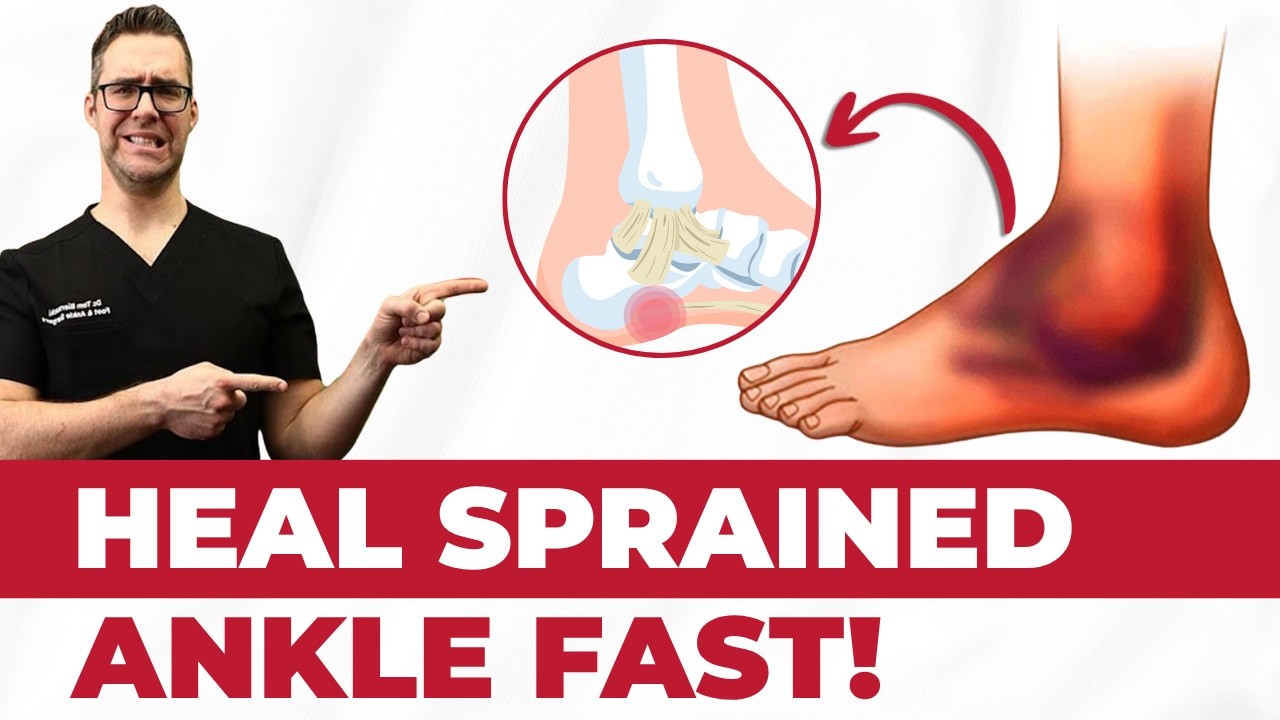
Watch: Fix TWISTED Ankle, ROLLED Ankle or SPRAINED Ankle Ligaments FASTER! — MichiganFootDoctors YouTube
PowerStep Pinnacle — arch support reduces re-injury risk during recovery.
As an Amazon Associate, Balance Foot & Ankle earns from qualifying purchases. Product recommendations are based on clinical experience; prices and availability shown above update live from Amazon.

When to See a Podiatrist
A sprain that hasn’t fully recovered after 6 weeks often has residual ligament laxity or occult fracture that keeps the ankle unstable. Balance Foot & Ankle X-rays and stress-tests every lingering sprain — if the ligament is torn, we offer bracing, PRP, and (for chronic instability) minimally-invasive repair. Don’t keep re-rolling the same ankle; let us stabilize it properly.
Call Balance Foot & Ankle: (810) 206-1402 · Book online · Offices in Howell & Bloomfield Township
Frequently Asked Questions
What is the most common foot injury in lacrosse?
Ankle sprains are the most common foot and ankle injury in lacrosse, accounting for 15 to 25 percent of all injuries. Lateral ankle sprains from cutting on uneven surfaces, stepping on opponents’ feet, and planting during direction changes are the most frequent mechanism. Turf toe, Achilles tendinitis, metatarsal stress fractures, and plantar fasciitis round out the top five lacrosse-specific foot injuries.
Should I wear high-top or low-top lacrosse cleats?
The best choice depends on your ankle history and playing style. High-top or mid-cut cleats are recommended for players with a history of ankle sprains or chronic ankle instability — they provide external support that reduces inversion injury risk. Low-cut cleats maximize agility and speed for players with healthy, stable ankles. Regardless of cut height, proper fit, surface-appropriate stud configuration, and aftermarket arch-supportive insoles are more important than ankle height for overall foot health.
Can I play lacrosse with plantar fasciitis?
You can often continue playing with plantar fasciitis if you use arch-supportive orthotics in your cleats, perform calf stretching before and after every practice and game, ice the heel after activity, and reduce training volume during acute flares. Replacing factory cleat insoles with PowerStep Pinnacle insoles is the most effective single intervention. If pain progressively worsens despite these measures, a brief period of reduced activity (1 to 2 weeks) may be needed before resuming modified play.
How do I prevent ankle sprains in lacrosse?
The most effective prevention strategies include daily ankle proprioception training (single-leg balance on unstable surfaces), peroneal muscle strengthening with resistance bands, wearing surface-appropriate cleats (shorter studs for turf, longer for grass), prophylactic ankle bracing for players with previous sprains, and adequate warm-up before practices and games. Consistent proprioceptive training during both preseason and competitive season reduces ankle sprain rates by approximately 50 percent.
When should a lacrosse player see a podiatrist?
See a podiatrist if foot or ankle pain persists beyond 2 weeks despite rest and home treatment, if pain is severe enough to alter your running or cutting mechanics, if you experience an acute injury with significant swelling, inability to bear weight, or visible deformity, or if you have midfoot swelling after a twisting injury (possible Lisfranc injury requiring urgent evaluation). Progressive forefoot pain that worsens during the season warrants evaluation for stress fracture before it becomes a complete fracture.
Differential Diagnosis: What Else Could It Be?
Not every case of turf toe / first mtp sprain is straightforward. In our clinic we routinely rule out three look-alike conditions before confirming the diagnosis. If your symptoms don’t match the classic presentation, one of these may explain the pain — which is why physical exam matters more than self-diagnosis.
| Condition | How It Differs |
|---|---|
| Hallux rigidus | Chronic progressive stiffness, not a single hyperextension event; dorsal osteophyte on X-ray. |
| Sesamoiditis | Pain under the joint (at the sesamoid bones), not on top; worse with push-off. |
| Gout | Warm, erythematous, crystal-driven flare; elevated uric acid and crystal arthrocentesis. |
Red Flags — When to See a Podiatrist Now
Seek same-day evaluation at Balance Foot & Ankle if you notice any of the following:
- Inability to push off big toe
- Swelling and bruising across entire joint
- Grade 3 injury on MRI (complete plantar plate tear)
- Progressive hallux valgus after injury
Call (810) 206-1402 or request an appointment. Our Howell and Bloomfield Township offices reserve same-day slots for urgent foot and ankle issues.
In Our Clinic: What We See
Clinical perspective from Dr. Tom Biernacki, DPM — Balance Foot & Ankle, Howell & Bloomfield Township, MI:
Turf toe is the injury everyone remembers — a football cleat stuck in the turf, a yoga pose that forced the toe too far back, or a misstep off a curb. In our clinic we grade 1, 2, or 3. Grade 1 is taping, a stiff-soled shoe, and return to play in a week. Grade 2 frequently takes 4-6 weeks and may need a carbon-fiber plate inside the shoe. Grade 3 plantar-plate tears need imaging and often surgical repair. We have patients keep a photo of the toe in neutral so we can track swelling and bruising across follow-ups. Return-to-sport is earned, not timed.
Sources
- Dick R, et al. “Descriptive epidemiology of collegiate men’s lacrosse injuries: NCAA Injury Surveillance System, 1988-2003.” Journal of Athletic Training. 2007;42(2):255-261.
- Hinton RY, et al. “Epidemiology of lacrosse injuries in high school-aged girls and boys.” American Journal of Sports Medicine. 2005;33(9):1305-1314.
- Kerr ZY, et al. “Epidemiology of National Collegiate Athletic Association men’s and women’s lacrosse injuries, 2009-2015.” Journal of Athletic Training. 2017;52(3):249-256.
- McCormick JJ, Anderson RB. “Turf toe: anatomy, diagnosis, and treatment.” Sports Health. 2010;2(6):487-494.
- Waterman BR, et al. “The epidemiology of ankle sprains in the United States.” Journal of Bone and Joint Surgery. 2010;92(13):2279-2284.
Schedule Your Appointment
🥍 Lacrosse taking a toll on your feet and ankles?
Whether you are dealing with ankle sprains, turf toe, stress fractures, or Achilles tendon pain, Dr. Biernacki at Balance Foot & Ankle provides expert sports podiatry care to get you back on the field safely.
SCHEDULE YOUR APPOINTMENT →
Related Articles
- Ankle Sprains: Complete Guide to Treatment and Prevention
- Stress Fractures of the Foot: Diagnosis and Treatment
- Achilles Tendinitis: Expert Treatment Guide
- Plantar Fasciitis: Causes, Treatment, and Recovery
- Basketball Foot Injuries: Podiatrist Treatment Guide
- Podiatrist Recommended Foot Care Products 2026
Insurance Accepted
BCBS · Medicare · Aetna · Cigna · United Healthcare · HAP · Priority Health · Humana · View All →
Howell Office
4330 E Grand River Ave
Howell, MI 48843
Get Directions →
Bloomfield Township Office
43494 Woodward Ave, Suite 208
Bloomfield Township, MI 48302
Get Directions →
Your Board-Certified Podiatrists



Ready to Get Back on Your Feet?
Same-week appointments available at both locations.
Book Your AppointmentWatch: Lacrosse Foot & Ankle Injuries
Dr. Tom on lacrosse injuries — turf toe from cut-and-cleat, ankle sprains, stick-related contusions, goalie-specific crease injuries, cleat fit, recovery protocols.

Lacrosse Foot Kit
Mid-field ready. Dr. Tom’s kit:
As an Amazon Associate, Balance Foot & Ankle earns from qualifying purchases. This supports our free patient education content.
Cut-and-cleat sprain prevention.
Cleat arch support.
Post-practice inflammation.
Topical post-match relief.
Related: Turf Toe · Ankle Sprain · Book Same-Week Appointment
Frequently Asked Questions
When should I see a podiatrist?
If symptoms persist past 2 weeks, affect your normal activity, or are accompanied by red-flag symptoms (warmth, redness, swelling, inability to bear weight).
What does treatment cost?
Most diagnostic visits and conservative treatments are covered by Medicare and major insurers. Out-of-pocket costs vary by your specific plan.
How quickly can I get an appointment?
Most non-urgent cases see us within 5 business days. Urgent cases (sudden pain, possible fracture) typically same or next business day.
What is Ankle sprain?
Ankle sprain is a common foot/ankle condition that affects mobility and quality of life. Understanding the underlying cause is the first step in successful treatment. Our podiatrists at Balance Foot & Ankle perform a hands-on biomechanical exam, review your activity history, and use diagnostic imaging when appropriate to identify the root cause—not just treat the symptom. Many patients have been told to “rest and ice” without a deeper diagnostic workup; our approach is different.
Symptoms and warning signs
Common signs of ankle sprain include pain that worsens with activity, morning stiffness, swelling, tenderness when palpated, and difficulty bearing weight. If you experience sudden severe pain, inability to walk, visible deformity, numbness or color change, contact our office the same day or visit urgent care—these can signal a more serious injury such as a fracture, tendon rupture, or vascular compromise. Diabetics with any foot wound should seek same-day care.
Conservative treatment options
Most cases of ankle sprain respond to non-surgical care: structured rest, supportive footwear changes, custom orthotics, targeted stretching and strengthening protocols, anti-inflammatory medications when medically appropriate, and in-office procedures such as ultrasound-guided injections. We also offer advanced therapies including MLS laser therapy, EPAT/shockwave, regenerative injections, and image-guided procedures. Treatment is sequenced from least invasive to most invasive, and we explain the rationale at every step.
When is surgery considered?
Surgery is reserved for cases that fail 3-6 months of well-structured conservative care, when there is structural pathology (severe deformity, complete tear, advanced arthritis), or when imaging shows damage that will not heal without intervention. Our surgeons have performed 3,000+ foot and ankle procedures and prioritize minimally-invasive techniques whenever appropriate. We discuss recovery timelines, return-to-activity milestones, and realistic outcome expectations before any procedure is scheduled.
Recovery timeline and prevention
Recovery from ankle sprain varies based on severity and chosen treatment path. Conservative cases often improve within 4-8 weeks with consistent adherence to the protocol. Post-procedural recovery may range from a few days (in-office procedures) to several months (reconstructive surgery). Long-term prevention involves footwear assessment, activity modification, structured strengthening, and regular check-ins with your podiatrist if you have a history of recurrence. We provide written home-exercise plans and digital follow-up support.
Ready to feel better?
Same-week appointments available in Howell and Bloomfield Township, Michigan.
Book Your VisitIn-Office Treatment at Balance Foot & Ankle
If home treatment isn’t providing relief for your ankle sprains, our podiatry team at Balance Foot & Ankle can help with same-day evaluations and advanced in-office care.
Same-day appointments available. (810) 206-1402
Get Expert Care at Balance Foot & Ankle
Same-week appointments at our Howell and Bloomfield Township offices. Board-certified podiatric surgeons. Most insurance accepted.

Dr. Tom Biernacki, DPM is a board-certified foot & ankle surgeon (ABFAS & ABPM) at Balance Foot & Ankle Specialists in Southeast Michigan. With over a decade of clinical experience, he specializes in heel pain, bunions, diabetic foot care, sports injuries, and minimally invasive surgery. Dr. Biernacki is a member of the APMA and ACFAS, and his patient education content on MichiganFootDoctors.com and YouTube has made him one of the most-followed foot & ankle educators on YouTube.
More questions patients ask
How long does an ankle sprain take to heal?
Recovery time depends on severity: Grade 1 (mild stretching) typically heals in 1-3 weeks, Grade 2 (partial tear) in 3-6 weeks, and Grade 3 (complete tear) in 6-12 weeks or longer. Proper rehabilitation is critical to prevent chronic ankle instability, which affects up to 40% of patients who don't receive adequate treatment. Dr. Biernacki creates customized recovery plans.
When should I see a doctor for a sprained ankle?
Seek professional evaluation if you can't bear weight, notice significant swelling or bruising, hear a pop at the time of injury, have numbness, or if pain hasn't improved after 5-7 days of RICE treatment. X-rays or MRI may be needed to rule out fractures. Dr. Biernacki offers same-day urgent evaluations at 810-206-1402.
Can a sprained ankle heal without treatment?
While mild sprains may heal with rest and home care, undiagnosed ligament tears and improperly rehabilitated sprains frequently lead to chronic ankle instability, recurrent sprains, and early-onset arthritis. A proper evaluation ensures appropriate treatment and reduces your risk of long-term complications significantly.
Still have a question about coverage or cost? Book online and we will check your benefits before your visit: Book in Howell · Book in Bloomfield Township. Prefer to talk it through first? Call (810) 206-1402.