
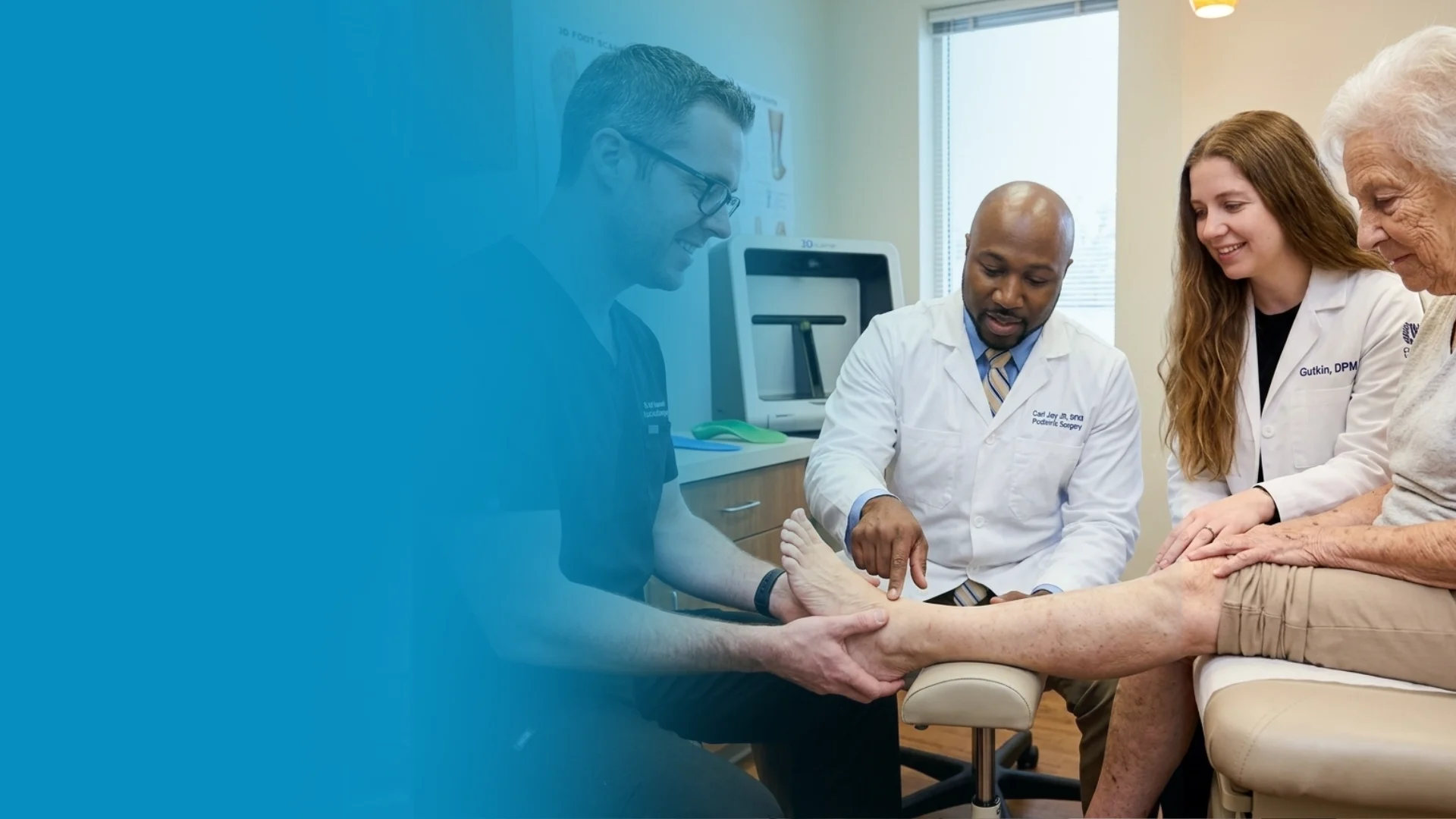
Quick answer: Senior Foot Care Guide affects roughly 1 in 4 adults in our practice. Effective treatment starts with a targeted diagnosis, conservative-first treatment, and escalation only when needed. We treat this regularly at our Howell and Bloomfield Township practices. Call (810) 206-1402.
Dr. Tom’s Top Shoe Picks
Medically reviewed by Dr. Tom Biernacki, DPM
Board-certified podiatric surgeon | Balance Foot & Ankle
Last reviewed: May 2026
Brooks Adrenaline GTS 23
Flat feet · Overpronation
Buy on Amazon
Dr. Tom’s Top Foot Creams
In This Article
Related Conditions
Quick Answer
Foot Care for Seniors: Common Problems, Fall Prevention  relates to foot pain — typically caused by overuse, footwear, or biomechanics. Most patients improve in 6-12 weeks with conservative care. Same-week appointments in Howell + Bloomfield Township: (810) 206-1402.
✅ Medically reviewed by Dr. Tom Biernacki, DPM — Board-Certified Podiatrist · Last updated April 6, 2026
Foot health becomes increasingly important as we age — and increasingly neglected. Over 80% of adults 65 and older have at least one foot problem, yet foot pain is often dismissed as an inevitable part of aging. It isn’t. Healthy, comfortable feet support independence, mobility, balance, and overall quality of life.
At Balance Foot & Ankle in Howell and Bloomfield Township, MI, we provide specialized foot care for older adults and work with patients’ broader medical teams to address the foot-related implications of diabetes, vascular disease, arthritis, and other conditions common in this population.
How Aging Changes Your Feet
| Change | Effect on the Foot | Common Result |
|---|---|---|
| Loss of fat pad thickness | The natural cushioning under the heel and metatarsal heads thins, reducing shock absorption | Metatarsalgia, heel pain, increased bone stress |
| Reduced collagen quality | Tendons, ligaments, and fascia become stiffer and less resilient | Plantar fasciitis, Achilles tendinopathy, reduced flexibility |
| Decreased muscle mass | Intrinsic foot muscles weaken, reducing arch support and toe control | Progressive flat feet, hammertoes, balance problems |
| Skin changes | Skin becomes thinner, drier, and more fragile; reduced sweating | Cracked heels, increased wound risk, slower healing |
| Nail changes | Nails become thicker, more brittle, harder to trim | Onychomycosis (fungal nails), ingrown nails, subungual pain |
| Reduced proprioception | Fewer sensory nerve endings; slower nerve conduction | Balance impairment, fall risk |
| Circulatory changes | Reduced arterial flow and venous return efficiency | Swelling, slower healing, increased cold sensitivity |
| Foot widening and lengthening | Ligament laxity allows the foot to spread and flatten | Ill-fitting shoes that were once comfortable; bunion progression |
Common Foot Conditions in Older Adults
Toenail Fungus (Onychomycosis)
Affects over 50% of adults over 70. Thickened, discolored, brittle nails are caused by dermatophyte fungi and are notoriously difficult to treat. Oral antifungals have meaningful success rates but drug interactions (especially with statins and blood thinners) limit their use in older adults. Laser treatment offers a safer alternative. Professional nail debridement is important to prevent ingrown nails and painful pressure on the nail bed. Read our guide on toenail health.
Bunions and Hammertoes
Progressive deformities that worsen with age and accumulating years of footwear wear. In older adults, the primary goal shifts from correction to accommodation — ensuring adequate footwear and padding to prevent complications. Surgical correction remains an option for those who are medically fit and have sufficient functional limitations to warrant it.
Ankle and Foot Arthritis
Post-traumatic ankle arthritis, hallux rigidus (big toe joint arthritis), and midfoot arthritis become more prevalent with age. Conservative management — custom orthotics, rocker-sole footwear, intra-articular injections — can maintain comfortable function for many years before surgical intervention is considered. See our foot arthritis guide.
Peripheral Arterial Disease
PAD affects 12-20% of adults over 65. Foot symptoms — coldness, color changes, leg cramping with walking, slow wound healing — may be the first signs of significant vascular disease. Podiatric evaluation can identify PAD before it causes serious complications. See our guide on PAD foot symptoms.
Heel Pain
Plantar fasciitis, heel bursitis, and fat pad atrophy all cause heel pain in older adults but have different treatment approaches. Thinning of the heel fat pad is a common contributor in adults over 60 — orthotics with gel heel cups or extra cushioning address this. See our plantar fasciitis treatment guide.
Venous Insufficiency and Edema
Chronic leg and foot swelling from venous insufficiency is extremely common in older adults. Compression therapy (graduated compression stockings) and leg elevation remain the cornerstone of management. More advanced venous disease may benefit from procedural treatment. See our guide on venous insufficiency and foot swelling.
Fall Prevention: The Foot’s Role
Falls are the leading cause of injury in adults 65 and older. Foot and ankle problems are a significant and underappreciated contributor to fall risk:
- Peripheral neuropathy impairs proprioception — the ankle’s ability to sense its position and react to instability
- Bunions, hammertoes, and deformities alter how the foot contacts the ground, destabilizing balance
- Reduced ankle range of motion limits the ability to recover from balance perturbations
- Inappropriate footwear — slippers without backs, worn-out athletic shoes, non-slip soles missing — is implicated in a large proportion of home falls
- Pain causes protective compensations that actually increase fall risk
Evidence-based interventions for fall risk reduction that involve the foot:
- Custom orthotics with proprioceptive enhancement (textured materials)
- Ankle strengthening and balance exercises (proven to reduce fall rates by 35-40%)
- Appropriate footwear — enclosed, non-slip sole, low heel, adequate toe box, secure fastening
- Vitamin D supplementation (reduces fall and fracture risk)
- Addressing neuropathy causes (B12 deficiency, thyroid disease, medication review)
Footwear for Older Adults: Evidence-Based Guidance
Footwear for seniors deserves more attention than it typically gets:
- Enclosed heel: Slippers and open-back footwear require constant toe gripping to stay on — this disrupts normal gait and increases fall risk significantly
- Non-slip sole: Textured rubber outsole appropriate for indoor and outdoor surfaces
- Velcro or wide opening: For those with dexterity limitations or significant swelling
- Wide toe box: Accommodates bunions, hammertoes, and the natural widening of aging feet
- Firm heel counter: Provides rearfoot stability for those with balance impairment
- Diabetic-certified for diabetic patients: Extra-depth shoes with seamless interiors protect insensate feet
How Often Should Seniors See a Podiatrist?
| Situation | Recommended Frequency | What’s Covered |
|---|---|---|
| Healthy older adult, no complicating conditions | Annual foot exam | Nail care, skin check, circulation/sensation assessment, footwear evaluation |
| Diabetes without neuropathy | Every 3-6 months | Monofilament testing, circulation check, nail care, ulcer risk assessment |
| Diabetes with neuropathy or vascular disease | Every 1-3 months | Comprehensive diabetic foot care; wound prevention |
| Active foot condition (arthritis, chronic pain) | As needed (typically 2-4 times/year) | Treatment, monitoring, orthotic adjustment |
Medicare covers annual foot exams and nail care for diabetic patients. Call Balance Foot & Ankle at (810) 206-1402 to schedule your appointment in Howell or Bloomfield Township.
Frequently Asked Questions
Q: Is foot pain normal as you get older?
A: Foot problems become more common with age, but pain is not a normal or inevitable part of aging that should simply be accepted. Most foot pain in older adults has a specific, treatable cause. Evaluation by a podiatrist often reveals conditions that respond well to treatment.
Q: My feet have gotten wider and longer as I’ve aged — do I need to remeasure?
A: Yes, absolutely. Foot size and shape can change significantly with age due to ligament laxity and structural changes. Many older adults are wearing shoes that are too narrow or too short because they haven’t been measured in years. This is a major driver of foot pain and deformity progression.
Related Patient Guides
- Diabetic Foot Care: Daily Routine & Warning Signs
- Foot Arthritis: Types, Symptoms & Treatment Options
- Peripheral Arterial Disease: Foot Symptoms Guide
- Venous Insufficiency & Foot Swelling
- Peripheral Neuropathy in the Feet: Symptoms & Care
- Toenail Health: What Your Nails Reveal
- How to Choose the Right Shoes for Your Foot Type
- Medicare Diabetic Shoe Benefit: What You Get & How to Qualify
- Michigan Podiatrist Home Visit: Who Qualifies & How to Request
Insurance Accepted
BCBS · Medicare · Aetna · Cigna · United Healthcare · HAP · Priority Health · Humana · View All →
Howell Office
4330 E Grand River Ave
Howell, MI 48843
Get Directions →
Bloomfield Township Office
43494 Woodward Ave, #208
Bloomfield Township, MI 48302
Get Directions →
Your Board-Certified Podiatrists



Ready to Get Back on Your Feet?
Same-week appointments available at both locations.
Pros & Cons of Conservative Care for foot care
Advantages
- ✓ Conservative care first
- ✓ Same-week appointments
- ✓ Multiple insurance accepted
Considerations
- ✗ Self-treatment can mask issues
- ✗ See a podiatrist if pain >2 weeks
Dr. Tom’s Recommended Products for foot care
Affiliate disclosure: As an Amazon Associate, Balance Foot & Ankle earns from qualifying purchases. We only recommend products we use with patients.
Footnanny Heel Cream Dr. Tom’s Pick
Best for: Daily moisturizer for cracked heels
Ready to Get Back on Your Feet?
Same-week appointments in Howell + Bloomfield Township. Most insurance accepted. Dr. Tom Biernacki, DPM & team.
Book Today — Same-Week Appointments Available
Call Now: (810) 206-1402
About Your Care Team at Balance Foot & Ankle
Dr. Tom Biernacki, DPM · Board-Certified Foot & Ankle Surgeon. Specializes in conservative-first care, minimally invasive bunion surgery, and complex reconstruction.
Dr. Carl Jay, DPM · Accepting new patients. Specializes in sports medicine, athletic injuries, and routine podiatric care.
Dr. Daria Gutkin, DPM, AACFAS · Accepting new patients. Specializes in surgical reconstruction and pediatric podiatry.
Locations: 4330 E Grand River Ave, Howell, MI 48843 · 43494 Woodward Ave Suite 208, Bloomfield Township, MI 48302
Hours: Mon–Fri 8:00 AM – 5:00 PM · (810) 206-1402
Ready for Expert Care?
Same-week appointments in Howell & Bloomfield Township, MI.
4.9★ | 1,123 Reviews | 3,000+ Surgeries
Or call: (810) 206-1402
