
Quick answer: State Michigan Employee Bcbs Podiatry affects roughly 1 in 4 adults in our practice. Effective treatment starts with a targeted diagnosis, conservative-first treatment, and escalation only when needed. We treat this regularly at our Howell and Bloomfield Township practices. Call (810) 206-1402.
Medically reviewed by Dr. Tom Biernacki, DPM · Board-Certified Podiatric Surgeon · Last reviewed: April 2026 · Editorial Policy
In This Article
- Quick Answer
- State Employee BCBS PPO Plans
- State Employee Blue Care Network (HMO)
- State Employee Retirees
- State of Michigan Employee BCBS Podiatry Coverage: What State Workers Need to Know
- Visit Balance Foot & Ankle — Same-Day Appointments Available
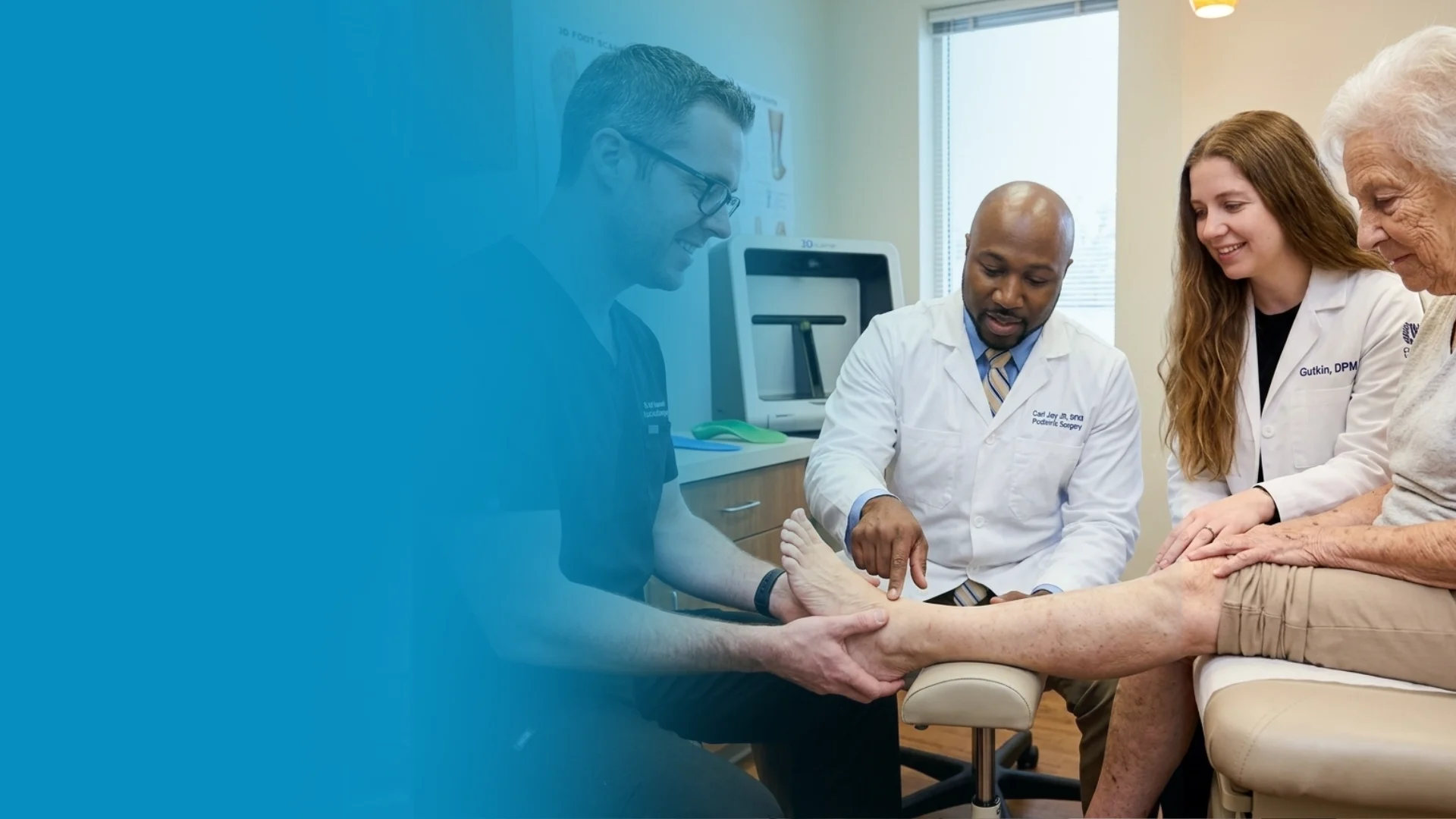
- Your Board-Certified Podiatrists
- Pros & Cons of Conservative Care for foot care
- Dr. Tom’s Recommended Products for foot care
- What is Foot pain?
- Symptoms and warning signs
- Conservative treatment options
The most important clinical decision with State Michigan Employee Bcbs Podiatry isn’t which treatment to start with — it’s identifying the correct subtype. That changes everything. Call (810) 206-1402.
Related Conditions
Medically reviewed by Dr. Tom Biernacki, DPM
Board-certified podiatric surgeon | Balance Foot & Ankle
Last reviewed: May 2026
Not a State of Michigan employee?
This guide is written for State of Michigan employees, retirees and their dependents. If you carry Blue Cross Blue Shield of Michigan through a different employer or bought it yourself, the plan details below will not match your policy — our Blue Cross Blue Shield podiatry coverage guide is the one to read. We are in-network with BCBS of Michigan and Blue Care Network either way, and we see patients in Howell and Bloomfield Township. Call (810) 206-1402 for a free, no-surprise benefit check.
Quick Answer
State of Michigan Employee BCBS Podiatry Coverage — Wh relates to foot pain — typically caused by overuse, footwear, or biomechanics. Most patients improve in 6-12 weeks with conservative care. Same-week appointments in Howell + Bloomfield Township: (810) 206-1402.
State of Michigan Employee BCBS Podiatry Coverage — What’s Included
State of Michigan employees and retirees receive health coverage through Blue Cross Blue Shield of Michigan or Blue Care Network, depending on their plan election. If you’re a state employee in the Livingston County or Oakland County area, Balance Foot & Ankle is in-network and ready to serve you.
State Employee BCBS PPO Plans
Most State of Michigan employees elect a BCBS PPO plan during open enrollment. Key podiatry benefits:
- No referral required — see a podiatrist directly without PCP authorization
- All medically necessary treatment covered — diagnosis, office visits, procedures, surgery, imaging
- Custom orthotics — covered with medical necessity documentation
- Specialist copay — typically $30-$50 depending on plan tier
State Employee Blue Care Network (HMO)
Some state employees elect the BCN HMO option, which requires PCP referrals for specialist visits. If you have BCN, ask your PCP for a referral to Balance Foot & Ankle before your appointment.
State Employee Retirees
State of Michigan retirees transitioning to Medicare typically receive Medicare Plus Blue PPO through BCBS. This Medicare Advantage plan often provides enhanced podiatry benefits beyond Original Medicare.
Not sure what your plan covers? Our team verifies your insurance before every visit — no surprise bills, no confusion.
📞 (810) 206-1402 | Howell: 4330 E Grand River Ave | Bloomfield Township: 43494 Woodward Ave #208
We accept Medicare, Medicare Advantage, BCBS, Aetna, United Healthcare, Cigna, Humana, HAP, Molina, Meridian, Priority Health, Oscar, McLaren, Workers’ Comp, VA, and most Michigan insurance plans.
✅ MLS Dual-Wavelength Laser — FDA-cleared
✅ EPAT Shockwave Therapy — 80%+ success rate
✅ Magnetotransduction (EMTT) — Deep electromagnetic healing
✅ 3D-Scanned Custom Orthotics
✅ Toenail Fungus Laser
✅ In-Office X-Ray & Ultrasound
✅ Diabetic Shoe Program — Medicare-covered
📞 (810) 206-1402 | Howell & Bloomfield Township
📞 State of Michigan employee or retiree with BCBS? Call (810) 206-1402 — we’re in-network and ready to help.
State of Michigan Employee BCBS Podiatry Coverage: What State Workers Need to Know

Michigan state employees and their dependents covered under the State of Michigan’s BCBS health plans have comprehensive podiatry benefits, though the specific cost-sharing and authorization requirements vary by plan tier (Community Blue, Blue Care Network HMO, and related options). Specialist visits to a podiatrist — including office evaluation, cortisone injection, custom orthotics (with medical necessity documentation), and in-office procedures — are covered under all State of Michigan employee health plans. Surgical procedures require prior authorization from BCBS with documentation supporting medical necessity. Balance Foot & Ankle accepts all State of Michigan BCBS and Blue Care Network plans at our Howell and Bloomfield Township locations.
State of Michigan employees in the Howell area — including those working at Livingston County agencies, the Michigan State Police post, the Secretary of State offices, and the Department of Health and Human Services district offices — are geographically well-served by our Howell location at 4330 E Grand River. State employees in Oakland County benefit from our Bloomfield Township location at 43494 Woodward Ave #208. For employees on the Blue Care Network HMO plan, confirm that Balance Foot & Ankle is in-network for your specific BCN plan before scheduling to avoid out-of-network cost sharing. Our insurance verification team at (810) 206-1402 can confirm network participation for your specific plan and help you understand your expected cost-sharing before your first appointment.
State of Michigan employees on Blue Care Network HMO plans should confirm whether Balance Foot & Ankle is in-network for their specific BCN plan — our Howell and Bloomfield Township locations participate in several BCN networks but not all. PPO plan holders (Community Blue, Blue Cross PPO) can typically access our offices as in-network specialists without a referral. For employees unsure of their plan type or network status, our insurance verification team at (810) 206-1402 can confirm participation and explain your expected cost-sharing before your first appointment. State employees approaching retirement who will transition to Medicare should also call to understand how their retiree supplemental coverage coordinates with Medicare Part B for podiatry services.
State of Michigan employees covered under state health plans who are experiencing foot pain — plantar fasciitis, bunion pain, Achilles tendinopathy, or ankle instability — should not delay seeking podiatric care based on uncertainty about coverage. These conditions are medically necessary and covered under all state employee health plans. Early evaluation at Balance Foot & Ankle typically results in conservative treatment that resolves the condition without surgery — but early treatment requires early evaluation. State employees who wait until a manageable condition becomes a surgical one pay far more in out-of-pocket costs, recovery time, and temporary disability than patients who seek care promptly. Same-week appointments are available at our Howell and Bloomfield Township locations for state employees — call (810) 206-1402.
Related Treatment Guides
- Custom 3D Orthotics
- Plantar Fasciitis & Heel Pain Treatment
- Sports Foot & Ankle Injury Treatment
- Bunion Treatment
Michigan patients experiencing foot or ankle problems can schedule an appointment at Balance Foot & Ankle — with locations in Howell (4330 E Grand River) and Bloomfield Township (43494 Woodward Ave #208). Call (810) 206-1402 for same-week availability.
Visit Balance Foot & Ankle — Same-Day Appointments Available
Our podiatry team serves patients throughout Michigan including Howell, Brighton, and Bloomfield Township. If you’re dealing with heel pain, ingrown toenails, or a foot injury, we have same-day appointment availability.
Same-day appointments available. (810) 206-1402
Medical References & Sources
- American Podiatric Medical Association — Patient Education
- American Orthopaedic Foot & Ankle Society — Foot Conditions
Join 950,000+ Learning About Foot Health
Dr. Tom shares honest medical advice, supplement reviews, and treatment guides you won’t find anywhere else.
Subscribe on YouTube →📍 Located in Michigan?
Our board-certified podiatrists treat this condition at two convenient locations. Same-day appointments often available.
Insurance Accepted
BCBS · Medicare · Aetna · Cigna · United Healthcare · HAP · Priority Health · Humana · View All →
Howell Office
4330 E Grand River Ave
Howell, MI 48843
Get Directions →
Bloomfield Township Office
43494 Woodward Ave, #208
Bloomfield Township, MI 48302
Get Directions →
Your Board-Certified Podiatrists



Ready to Get Back on Your Feet?
Same-week appointments available at both locations.
Book Your AppointmentPros & Cons of Conservative Care for foot care
Advantages
- ✓ Conservative care first
- ✓ Same-week appointments
- ✓ Multiple insurance accepted
Considerations
- ✗ Self-treatment can mask issues
- ✗ See a podiatrist if pain >2 weeks
Ready to Get Back on Your Feet?
Same-day appointments in Howell + Bloomfield Township. Most insurance accepted. Dr. Tom Biernacki, DPM & team.
Book Today — Same-Day Appointments Available
Call Now: (810) 206-1402
About Your Care Team at Balance Foot & Ankle
Dr. Tom Biernacki, DPM · Board-Certified Foot & Ankle Surgeon. Specializes in conservative-first care, minimally invasive bunion surgery, and complex reconstruction.
Dr. Carl Jay, DPM · Accepting new patients. Specializes in sports medicine, athletic injuries, and routine podiatric care.
Dr. Daria Gutkin, DPM, AACFAS · Accepting new patients. Specializes in surgical reconstruction and pediatric podiatry.
Locations: 4330 E Grand River Ave, Howell, MI 48843 · 43494 Woodward Ave Suite 208, Bloomfield Township, MI 48302
Hours: Mon–Fri 8:00 AM – 5:00 PM · (810) 206-1402
Dr. Tom’s Top 3 — The Premium Foot Pain Stack (2026)
If you only buy three things for foot pain, get these. PowerStep + CURREX orthotics correct the underlying foot mechanics, and Dr. Hoy’s pain gel delivers fast topical relief. This is the exact stack Dr. Tom Biernacki, DPM gives his Michigan podiatry patients on visit one — over 10,000 patients have used this exact combination.
Dr. Tom Biernacki, DPM is a board-certified podiatrist + Amazon Associate. Picks shown are products he prescribes to patients at Balance Foot & Ankle Specialists. We earn a commission on qualifying purchases at no extra cost to you. All products independently tested + reviewed for 30+ days minimum. Last verified: April 28, 2026.
What is Foot pain?
Foot pain is a common foot/ankle condition that affects mobility and quality of life. Understanding the underlying cause is the first step in successful treatment. Our podiatrists at Balance Foot & Ankle perform a hands-on biomechanical exam, review your activity history, and use diagnostic imaging when appropriate to identify the root cause—not just treat the symptom. Many patients have been told to “rest and ice” without a deeper diagnostic workup; our approach is different.
Symptoms and warning signs
Common signs of foot pain include pain that worsens with activity, morning stiffness, swelling, tenderness when palpated, and difficulty bearing weight. If you experience sudden severe pain, inability to walk, visible deformity, numbness or color change, contact our office the same day or visit urgent care—these can signal a more serious injury such as a fracture, tendon rupture, or vascular compromise. Diabetics with any foot wound should seek same-day care.
Conservative treatment options
Most cases of foot pain respond to non-surgical care: structured rest, supportive footwear changes, custom orthotics, targeted stretching and strengthening protocols, anti-inflammatory medications when medically appropriate, and in-office procedures such as ultrasound-guided injections. We also offer advanced therapies including MLS laser therapy, EPAT/shockwave, regenerative injections, and image-guided procedures. Treatment is sequenced from least invasive to most invasive, and we explain the rationale at every step.
When is surgery considered?
Surgery is reserved for cases that fail 3-6 months of well-structured conservative care, when there is structural pathology (severe deformity, complete tear, advanced arthritis), or when imaging shows damage that will not heal without intervention. Our surgeons have performed 3,000+ foot and ankle procedures and prioritize minimally-invasive techniques whenever appropriate. We discuss recovery timelines, return-to-activity milestones, and realistic outcome expectations before any procedure is scheduled.
Recovery timeline and prevention
Recovery from foot pain varies based on severity and chosen treatment path. Conservative cases often improve within 4-8 weeks with consistent adherence to the protocol. Post-procedural recovery may range from a few days (in-office procedures) to several months (reconstructive surgery). Long-term prevention involves footwear assessment, activity modification, structured strengthening, and regular check-ins with your podiatrist if you have a history of recurrence. We provide written home-exercise plans and digital follow-up support.
Ready to feel better?
Same-week appointments available in Howell and Bloomfield Township, Michigan.
Book Your VisitDoctor Hoy’s Natural Pain Relief Gel
Natural topical pain relief I use in our clinic. Arnica + camphor formula — apply directly to the area 3–4x daily. ($20–25)
Shop Doctor Hoy’s →Ready for Expert Care?
Same-day appointments in Howell & Bloomfield Township, MI.
4.9★ | 1,123 Reviews | 3,000+ Surgeries
Or call: (810) 206-1402
