
Affiliate disclosure: As an Amazon Associate, Balance Foot & Ankle earns from qualifying purchases. We may also earn a commission from brand partners linked on this page.
This page covers the clinical evaluation, evidence-based treatment options, and recovery timeline for when to replace running shoes miles at Balance Foot & Ankle in Michigan. To book at our Howell or Bloomfield Township offices, call (810) 206-1402.

When to Replace Running Shoes (Mileage Guide)
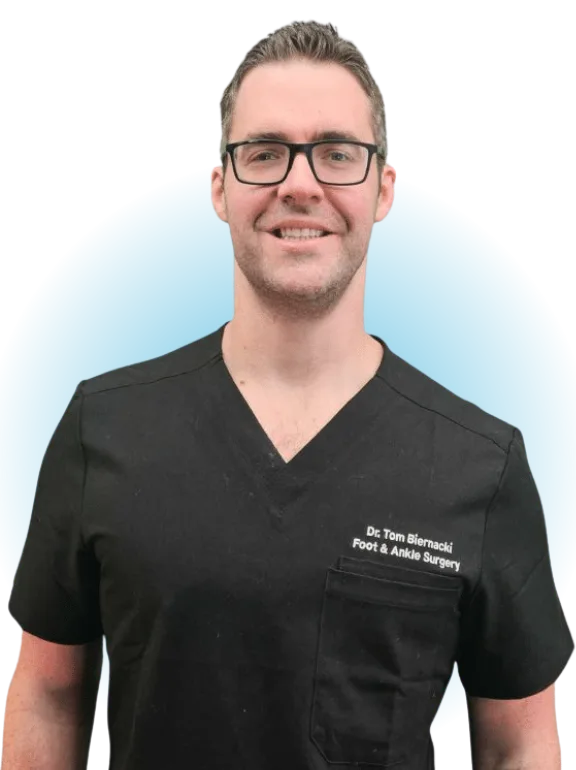
Dr. Tom Biernacki, DPM explains replace running shoes. Call (810) 206-1402.
Our podiatrists treat the underlying cause, not just the symptom. Appointments at our Howell and Bloomfield Township, Michigan offices.
In-Office Treatment at Balance Foot & Ankle
If home treatment isn’t providing relief for your foot and ankle conditions, our podiatry team at Balance Foot & Ankle can help with expert evaluations and advanced in-office care.
Book online 24/7. (810) 206-1402
VitaMedica Arnica Gel
Arnica gel plus 15 plant compounds for sore feet, plantar fasciitis flares and post-activity soreness. Apply a thin layer to the sore area.
Shop VitaMedica Arnica Gel →Get Expert Care at Balance Foot & Ankle
Appointments at our Howell and Bloomfield Township offices. Board-certified podiatric surgeons. Most insurance accepted.
Appointments in Howell & Bloomfield Township
Three board-certified podiatric surgeons. 1,200+ five-star reviews. Most insurance accepted.

Dr. Tom Biernacki, DPM is a board-certified foot & ankle surgeon (ABFAS & ABPM) at Balance Foot & Ankle Specialists in Southeast Michigan. With over a decade of clinical experience, he specializes in heel pain, bunions, diabetic foot care, sports injuries, and minimally invasive surgery. Dr. Biernacki is a member of the APMA and ACFAS, and his patient education content on MichiganFootDoctors.com and YouTube has made him one of the most-followed foot & ankle educators on YouTube.
More questions patients ask
How many miles should running shoes last?
Running shoe midsole foam degrades with use regardless of visible outsole wear — the compression-absorbing EVA or PEBA foam that provides impact cushioning and controls pronation loses approximately 40–50% of its cushioning capacity after 300–500 miles, even when the outsole rubber appears relatively unworn. The 300–500 mile guideline: this range applies to most traditional EVA-foam midsole running shoes (the dominant construction for decades); the wide range reflects significant variation by: runner body weight — heavier runners (180+ pounds) compress the foam more per step, wearing it out closer to 300 miles; lighter runners (120–140 pounds) may get 500+ miles; running surface — road running degrades foam faster than trail running on softer surfaces; running biomechanics — overpronators who compress the medial midsole heavily wear shoes out faster in that specific area; shoe construction — some shoes use denser, more durable foams that last toward 500 miles, while softer, more cushioned foams wear faster. Carbon-fiber plated performance shoes: the super shoes (Nike Vaporfly, Adidas Adizero, New Balance SC Elite, ASICS Metaspeed) with PEBA foam and carbon fiber plates typically last only 200–300 miles before the PEBA foam noticeably degrades; PEBA foam is more resilient but degrades rapidly at high mileage; these shoes are not designed for daily training mileage. How to tell when shoes need replacement: the foam compression test — press your thumb firmly into the midsole; if it compresses easily and quickly springs back, it's still good; if it feels dense and doesn't spring back well, it's degraded; visible midsole compression lines or wrinkles indicate significant foam breakdown; new pain or discomfort — plantar fasciitis flare-ups, knee pain, or shin pain developing in an otherwise pain-free runner after accumulating high mileage often signals midsole degradation rather than training error; outsole wear through to the midsole foam (visible white foam showing through rubber) in high-wear areas.
What happens if you run in worn-out shoes?
Running in shoes whose midsole cushioning has degraded significantly increases injury risk through multiple biomechanical mechanisms — the impact forces that the shoes normally attenuate are transmitted directly to the musculoskeletal system at greater magnitude. How worn midsoles increase injury risk: impact force increase — a fresh running shoe absorbs 10–20% of the initial impact force during heel strike; degraded foam reduces this absorption, transmitting more force to the bone, joint, and soft tissue; repetitive high-impact forces are a primary driver of stress fractures, bone stress reactions, and joint cartilage damage; pronation control loss — stability and motion-control shoes incorporate medially dense foam to reduce excessive inward rolling; as this medial posting degrades, the pronation control diminishes; this is particularly problematic for runners with overpronation who experience knee pain, ITB syndrome, and plantar fasciitis from the loss of the stabilizing foam; specific injuries associated with worn running shoes: plantar fasciitis — reduced heel cushioning increases plantar fascia strain; stress fractures of the metatarsals and tibia — increased impact force with inadequate attenuation; Achilles tendinopathy — altered shoe mechanics change the ankle position and Achilles loading; IT band syndrome and patellofemoral pain — loss of pronation control increases tibial rotation and lateral knee loading; shin splints (medial tibial stress syndrome) — increased tibial impact loading. The 'mileage tracking' habit: keeping a training log with shoe mileage is the most reliable way to know when to replace footwear; most running GPS watches and apps allow shoe mileage tracking; buying the same shoe model again when your current pair hits 350–400 miles (rather than waiting for the pain signal) prevents injury gaps. For runners who train in multiple pairs: rotating 2–3 pairs of running shoes extends each pair's life (allows foam to fully decompress between runs) and provides different stimulus variation that may reduce injury risk.
Do expensive running shoes last longer than cheaper ones?
The relationship between running shoe price and durability is not straightforward — expensive shoes are often the shortest-lasting because they use soft, performance-focused foams that degrade faster, while moderately priced shoes with denser foams frequently outlast their premium counterparts. What price actually buys in running shoes: super shoes ($150–$280 — Nike Vaporfly, Adidas Adizero, ASICS Metaspeed): PEBA/ZoomX foam that is extremely bouncy and fast; carbon fiber plate for propulsive energy return; shorter lifespan — 200–300 miles; designed for race day and tempo work, not daily training; you are paying for performance per mile, not durability per mile; premium daily trainers ($130–$180 — Brooks Ghost, Saucony Endorphin Shift, ASICS Gel-Nimbus): high-quality EVA or hybrid foam; 400–500 miles typical lifespan; the most cost-effective category for most runners; high-end trail shoes ($150–$250): durable rubber outsoles for trail grip last longer on soft surfaces; foam lifespan similar to road shoes but outsole may outlast it; budget running shoes ($60–$100): lower-density foam degrades faster — often 250–350 miles; may be adequate for occasional runners or walkers; quality control can be less consistent. Cost-per-mile calculation — the most useful comparison: a $160 shoe lasting 450 miles costs $0.36 per mile; a $280 super shoe lasting 250 miles costs $1.12 per mile; a $90 budget shoe lasting 300 miles costs $0.30 per mile; from a pure cost-efficiency standpoint, moderately priced daily trainers deliver the best value; the super shoe premium is justified for racing and performance gains, not longevity. Podiatrist recommendation: the most important shoe quality metric is fit and biomechanical appropriateness for the individual runner, not price; a $90 shoe perfectly fitted to your foot biomechanics will outperform a $200 shoe that doesn't match your gait pattern.
How do you know if your running shoes are causing your foot pain?
Running shoes can cause foot pain through several distinct mechanisms — identifying which mechanism is responsible for your pain guides the solution. Midsole degradation causing pain: the most common scenario; the foam has lost its cushioning and motion-control properties; the characteristic pattern: pain develops after several months of running in a specific shoe pair, correlates with accumulated mileage (particularly after 350+ miles), and resolves when switching to a fresh pair of the same or similar shoe; plantar fasciitis, shin pain, and knee pain are the most common presentations; test: press your thumb firmly into the midsole near the heel — if it feels dense and doesn't compress easily, the foam is spent. Wrong shoe type for foot mechanics: an overpronator in a neutral shoe (lacking medial support) develops medial knee pain, plantar fasciitis, and ankle fatigue; a supinator (high arch) in a stability shoe develops excessive lateral loading and lateral ankle stress; the pain develops early in the shoe's life (not after high mileage) and may be present in any pair of this shoe type; a gait analysis at a specialty running store identifies the appropriate motion-control level. Toe box too narrow: causes blisters, black toenails (toes hitting shoe front), Morton's neuroma-type forefoot pain, bunion irritation; the forefoot of the shoe visibly compresses the toes when weight-bearing; solution: a shoe with a wider toe box (most Hoka models, Altra, New Balance D/2E width options). Heel counter irritation: Achilles bursitis or insertional Achilles irritation from a rigid heel counter; redness and pain directly where the heel counter contacts the posterior heel; solution: a softer heel counter or cut-out at the Achilles insertion. How to test whether shoes are the cause: purchase a fresh pair of the same or equivalent shoe and wear them for 2 weeks; if pain resolves, the old shoes were the cause; run the same routes and mileage to control for training variables.
Still have a question about coverage or cost? Book online and we will check your benefits before your visit: Book in Howell · Book in Bloomfield Township. Prefer to talk it through first? Call (810) 206-1402.