
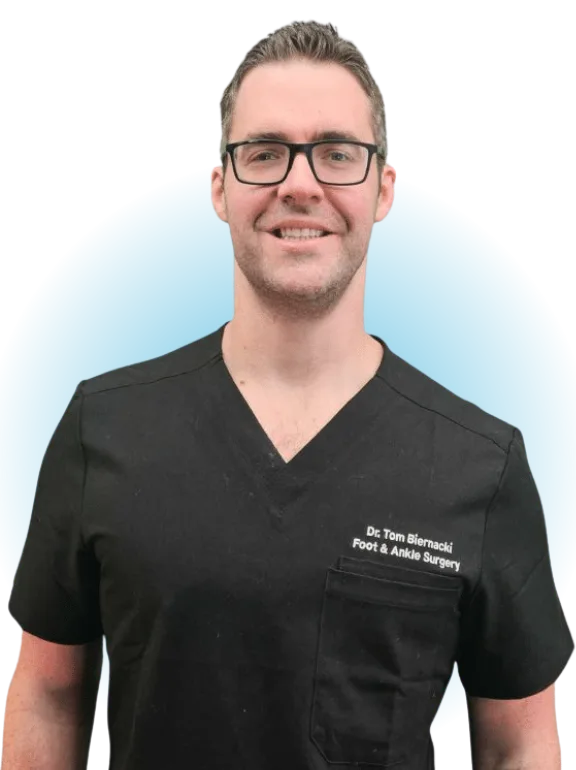
Medically reviewed by Dr. Tom Biernacki, DPM
Board-certified podiatric surgeon | Balance Foot & Ankle
Last reviewed: May 2026
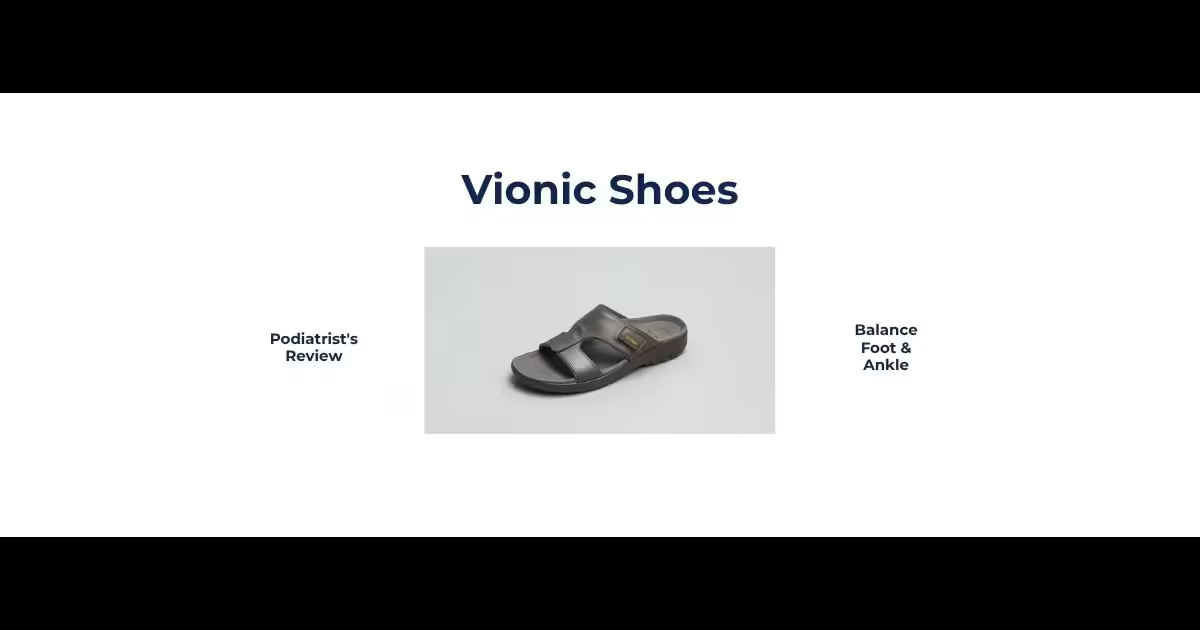
Vionic shoes use a built-in orthotic based on the Biomechanical Research Foundation’s foot alignment system — but the level of support matches mild-to-moderate pronation and won’t correct severe flatfoot or significant structural deformity. Most patients don’t know where Vionic’s support ends and custom orthotic territory begins. Call (810) 206-1402 — footwear and orthotic evaluation in Michigan.
Vionic is unusual in the footwear industry: it was founded by a podiatrist. Dr. Philip Vasyli, an Australian podiatric physician, developed the brand in the 1980s specifically to bring orthotic-grade foot support to mainstream consumer footwear. His core insight was that most patients who needed arch support could not afford or access custom orthotics — and that a well-designed built-in orthotic could deliver meaningful clinical benefit at a fraction of the cost.
Four decades later, Vionic sells over 200 styles across shoes, boots, sandals, and slippers — all with that same foundational orthotic footbed built in. This review evaluates Vionic’s clinical effectiveness, its best models for specific foot conditions, and how it compares to custom orthotics and competing brands.
Disclosure: This review contains affiliate links. If you purchase through our links, we may earn a small commission at no extra cost to you. This does not influence our clinical recommendations.
What Makes Vionic Different: The VioMotion Footbed
Every Vionic shoe contains the VioMotion™ footbed — a three-zone orthotic support system that addresses the three key contact points of the foot:
- Heel zone: Deep heel cup (similar to a custom orthotic shell) that centers the calcaneus and compresses the heel fat pad for shock absorption
- Arch zone: Contoured medial arch support designed to reduce pronation and support the plantar fascia across its length
- Forefoot zone: Slight metatarsal support to distribute forefoot pressure and reduce ball-of-foot pain
This three-zone approach mirrors the functional zones of a custom orthotic device — which is precisely why podiatrists tend to respond positively to Vionic. The footbed geometry is not cosmetic; it is mechanically designed to reduce the pronation forces that strain the plantar fascia and posterior tibial tendon.
An independent clinical study published in the Journal of the American Podiatric Medical Association found that patients wearing Vionic footwear experienced significantly greater improvement in plantar fasciitis pain scores compared to control footwear over an eight-week trial. This level of clinical evidence is rare for consumer footwear brands and gives Vionic legitimate credibility among podiatric professionals.
Best Vionic Shoes for Foot Health
Vionic Sandals (Best Category for Plantar Fasciitis)
1. Vionic Rest Bella / Minna — Best Flip Flop Replacement
The Vionic Bella and Minna are thong-style sandals with the full VioMotion orthotic footbed integrated under a cushioned EVA base. For patients who love flip flops but are suffering from plantar fasciitis, these are the single most impactful swap I can recommend. Standard flip flops are flat and unsupportive — among the worst possible footwear for plantar fasciitis. The Vionic Bella provides a near-identical aesthetic with genuine arch support and a heel cup.
The thong post sits between the first and second toes comfortably without the narrow pinching common in fashion flip flops. Available in over 20 colors and priced around $70–$90, the Bella is an outstanding value-to-clinical-benefit ratio.
2. Vionic Rest Tide — Best Slide Sandal
The Vionic Tide is a slide sandal — no toe post — with a single forefoot strap and the full VioMotion footbed. It is the most popular Vionic sandal in my patient population because it offers the ease of a slip-on sandal without the toe-gripping problem of traditional slides. The deep heel cup is particularly prominent in the Tide, making it especially good for patients with heel spurs.
3. Vionic Amber — Best Supportive Sandal
The Vionic Amber is a three-strap sandal with an ankle strap that provides the heel retention missing from most slide sandals. The full VioMotion footbed with ankle security makes this one of the most clinically complete sandal options in the Vionic lineup. For patients who will be walking significant distances in a sandal — outdoor events, travel, summer tourism — the Amber is the best Vionic choice.
Vionic Walking and Everyday Shoes
Vionic’s walking line now also includes the Walk Max, a rocker-bottom walking shoe with a removable footbed. Our shoe-review site has a spec analysis of it: Vionic Walk Max at Podiatrist Tested.
4. Vionic Walk Strider / Captivate — Best Walking Shoe
Vionic’s walking shoe lineup brings the VioMotion footbed into a traditional lace-up athletic shoe format with a cushioned midsole. The Strider and Captivate models add meaningful underfoot cushioning to complement the orthotic footbed — a combination that makes them appropriate for patients transitioning from custom orthotics to OTC support or those who want their footbed built in rather than insertable.
The walking shoe models run true to size and are available in medium and wide widths, accommodating patients with bunions, hammertoes, or wide feet who struggle to find supportive shoes that fit comfortably.
5. Vionic Agile Kea / Wave — Best Slip-On
For patients who need easy on-and-off (post-surgical patients, elderly patients, or those with limited mobility), Vionic’s slip-on sneaker and mule styles deliver the same VioMotion support in a laceless format. The Wave slip-on is particularly popular with patients who need both convenience and support — it works well for errands, light walking, and casual daily wear.
Vionic Dress and Work Shoes
One of Vionic’s strongest differentiators from brands like ASICS and Brooks is its dress shoe category. Vionic makes heels, pumps, loafers, oxfords, and boots — all with the VioMotion footbed. This matters enormously for patients who work in professional environments and cannot wear athletic shoes daily.
A nurse or teacher who needs to stand all day in business-casual attire has very limited options for supportive footwear. Vionic fills this gap: the Vionic Josie loafer, the Vionic Waverly pump, and the Vionic Makia ankle boot all provide clinical-grade arch support in professional styling that would be acceptable in any Michigan clinic, school, or office setting.
Check Vionic Dress Shoes on Amazon →
Vionic vs. Custom Orthotics: Is There a Difference?
This is the question I get most often about Vionic: “Are these as good as the custom orthotics you make?” The honest answer is no — but the gap is smaller than most patients expect, and for many patients, Vionic is sufficient.
Custom orthotics are fabricated from a cast or scan of your individual foot, correcting for your specific arch height, heel alignment, forefoot deformity, and gait pattern. They are prescribed after biomechanical evaluation and adjusted as needed. A well-made custom orthotic is more precise and more durable than any over-the-counter device.
Vionic’s VioMotion footbed is designed for the statistical average of foot anatomy — it works well for patients who fall near that average. For patients with significant flat feet, high arches, leg length discrepancy, or other biomechanical complexities, custom orthotics will provide meaningfully better results.
My clinical algorithm: I recommend patients try Vionic as a first-line intervention for mild to moderate plantar fasciitis or arch pain. If symptoms improve significantly within four to six weeks, Vionic may be sufficient long-term. If symptoms persist or are severe, we proceed to custom orthotic fabrication. This approach saves patients several hundred dollars in many cases where OTC support is adequate.
Vionic for Specific Foot Conditions
Vionic for Plantar Fasciitis
Vionic is among the most evidence-supported consumer footwear options for plantar fasciitis. The VioMotion footbed directly addresses the two primary biomechanical drivers of plantar fasciitis: excessive pronation and inadequate arch support. For patients with mild to moderate plantar fasciitis and normal to low-normal arch profiles, Vionic sandals or shoes — especially worn as house footwear to eliminate barefoot morning steps — can produce significant improvement within two to four weeks.
Vionic for Flat Feet
Vionic is often better than Birkenstock for flat feet because the VioMotion arch profile is contoured lower — closer to the collapsed arch position — than Birkenstock’s prominent cork arch. Many flat-footed patients who find Birkenstock uncomfortable report that Vionic is immediately comfortable. For patients with flexible flat feet or mild posterior tibial tendon dysfunction, Vionic is an appropriate first-line supportive shoe.
Vionic for Bunions
Vionic’s wide-width options and softer upper materials make several Vionic styles appropriate for mild to moderate bunions. The Wave slip-on and the wider sandal styles accommodate the first metatarsophalangeal joint without compressing it. Patients with severe bunions — particularly those with rigid deformity — should look for shoes with a wide toe box, and Vionic’s wide-width lineup delivers this in multiple styles.
Vionic for Diabetic Patients
Several Vionic styles are appropriate for patients with diabetes and peripheral neuropathy who need consistent arch support without pressure points. The seamless interiors of Vionic’s slip-on and sandal styles reduce the risk of skin irritation in neuropathic feet. However, patients with diabetic foot ulcers or Charcot foot require proper diabetic footwear (Medicare-covered therapeutic shoes) rather than consumer brands. Vionic is appropriate for diabetic patients with intact skin and mild neuropathy.
Key Takeaway: Why Podiatrists Like Vionic
Vionic is the rare consumer footwear brand with genuine podiatric credibility — founded by a podiatrist, designed around orthotic principles, and backed by clinical research. It fills a critical gap for patients who need more support than standard shoes provide but don’t yet require custom orthotics. I recommend Vionic to patients regularly, particularly their sandal and dress shoe categories where supportive alternatives are scarce.
Frequently Asked Questions
Are Vionic shoes worth the money?
At $70–$150 per pair, Vionic is priced similarly to quality athletic brands but significantly below custom orthotic costs ($300–$600+). For patients with mild to moderate plantar fasciitis, flat feet, or arch fatigue, Vionic provides clinical-grade support at consumer shoe prices. The value proposition is strong, particularly for the sandal category where supportive options are limited.
Can I wear my own orthotics in Vionic shoes?
Yes — most Vionic shoes have a removable footbed, allowing you to insert custom orthotics. However, removing the VioMotion footbed and replacing it with a custom device eliminates the main benefit of buying Vionic. If you are already wearing custom orthotics, you may be better served by a neutral shoe with a removable insole (like ASICS Gel-Nimbus or Brooks Ghost) that provides a better platform for your custom device.
Do Vionic shoes run true to size?
Vionic shoes generally run true to size, though some dress shoe styles can run slightly narrow. Vionic offers wide-width (W) options across most categories, which I recommend for patients with bunions, wide feet, or any swelling. When in doubt, order a half size up to ensure the arch support aligns correctly with your arch peak.
Are Vionic shoes good for standing all day?
Yes — Vionic walking shoes and slip-ons are excellent for prolonged standing. The VioMotion footbed reduces the progressive arch fatigue that develops over long shifts, and the cushioned EVA midsoles in walking styles absorb the impact of hard-surface standing. Healthcare workers, teachers, and retail employees who need both support and professional appearance will find Vionic one of the best options available.
When to See a Podiatrist
Vionic is an excellent starting point for foot pain management, but it is not a diagnostic tool. If you are experiencing significant, persistent, or worsening foot pain, a podiatric evaluation is the appropriate next step — not just a better shoe. Specific reasons to seek evaluation include:
- Foot pain that persists despite six or more weeks of wearing supportive footwear
- Severe morning heel pain lasting more than 15 minutes
- Numbness, tingling, or color changes in the foot
- Foot or ankle swelling that does not resolve with rest
- Pain following a specific injury or unusual activity
Custom orthotics, corticosteroid injections, shockwave therapy, and other targeted interventions can address pain that supportive footwear alone cannot resolve. The podiatrists at Balance Foot & Ankle offer comprehensive biomechanical evaluation and custom orthotic fabrication at our Michigan locations.
Need Custom Orthotics or a Biomechanical Evaluation?
Balance Foot & Ankle’s podiatrists offer custom orthotic fabrication, gait analysis, and comprehensive treatment for plantar fasciitis, flat feet, and all arch-related conditions. Vionic is a great start — we can help determine if you need more. Book online 24/7.
Our podiatrists treat the underlying cause, not just the symptom. Appointments at our Howell and Bloomfield Township, Michigan offices.
Appointments in Howell & Bloomfield Township
Three board-certified podiatric surgeons. 1,200+ five-star reviews. Most insurance accepted.
For a complete clinical overview: Podiatrist-Recommended Shoes Guide — shoe recommendations for every foot condition
What makes a shoe podiatrist-recommended?
Wide toe box, firm heel counter, adequate arch support, cushioned midsole, and at least a thumb-width of space past the longest toe.
How often should I replace my shoes?
Every 300-500 miles or 6-12 months — compressed midsole or worn outsole signals it’s time.
Doctor Answer
Are Vionic shoes recommended for people with plantar fasciitis?
Vionic shoes incorporate built-in orthotic technology developed with podiatrist input, providing meaningful arch support and heel cushioning for people with plantar fasciitis, flat feet, and general foot fatigue. Many patients find them helpful as part of a broader treatment plan. Dr. Tom Biernacki at Balance Foot & Ankle recommends supportive footwear like Vionic alongside custom orthotics and targeted stretching for lasting plantar fasciitis relief.
Are Vionic shoes recommended by podiatrists for plantar fasciitis?
Vionic shoes are among the most commonly recommended brands by podiatrists for plantar fasciitis. Built on Orthaheel technology — a deep heel cup, rearfoot posting, and forefoot cushioning — Vionic applies the same biomechanical principles as prescription orthotics directly into the shoe construction. This controls overpronation, the primary mechanical driver of plantar fascia overload. Vionic is an excellent first-step conservative option before custom orthotics are considered.
Can Vionic shoes replace custom orthotics?
Vionic shoes may be sufficient for mild plantar fasciitis with moderate pronation. However, custom orthotics provide prescription-level correction tailored to your exact foot shape and biomechanical measurements — Vionic uses a standardized arch that may under- or over-correct individual patients. If Vionic provides significant but incomplete relief, a custom orthotic in a standard supportive shoe typically produces superior results for most patients.
Which Vionic styles are best for plantar fasciitis?
Lace-up sneakers from the Vionic Active and Walk series provide maximum support — the enclosed heel counter and lacing prevent rear-foot eversion better than slip-ons. Vionic Walker and WILLA II maintain the Orthaheel footbed in a dress-casual profile. The Tide sandal is Vionic’s best sandal option with a deep heel cup and adjustable strap security superior to standard flip flops. All Vionic shoes accommodate custom orthotics after removing the factory footbed.

Dr. Tom Biernacki, DPM is a board-certified foot & ankle surgeon (ABFAS & ABPM) at Balance Foot & Ankle Specialists in Southeast Michigan. With over a decade of clinical experience, he specializes in heel pain, bunions, diabetic foot care, sports injuries, and minimally invasive surgery. Dr. Biernacki is a member of the APMA and ACFAS, and his patient education content on MichiganFootDoctors.com and YouTube has made him one of the most-followed foot & ankle educators on YouTube.
More questions patients ask
Are Vionic shoes good for plantar fasciitis?
Vionic shoes are among the best over-the-counter options for plantar fasciitis, with built-in arch support that reduces plantar fascia strain better than most standard footwear. Their forefoot flexibility combined with rearfoot support mimics a functional orthotic for mild-to-moderate cases. For severe plantar fasciitis or structural foot conditions, custom orthotics inserted into Vionic shoes provide better outcomes than Vionic's built-in support alone.
Who makes Vionic shoes?
Vionic footwear was founded by Phillip Vasyli, an Australian podiatrist and orthotic expert. The shoes are designed around his foot alignment principles and have been endorsed by the American Podiatric Medical Association (APMA). The APMA Seal of Acceptance indicates a product has been evaluated and found to promote good foot health — Vionic holds this seal.
How long do Vionic shoes last?
Vionic shoes typically last 12–18 months of regular daily wear before the built-in orthotic support significantly degrades. The outsole may show minimal wear while the midsole and orthotic have lost meaningful support — the same issue as any athletic footwear. Signs of breakdown: return of arch or heel pain, visible compression of the footbed, or uneven wear patterns on the outsole.
Still have a question about coverage or cost? Book online and we will check your benefits before your visit: Book in Howell · Book in Bloomfield Township. Prefer to talk it through first? Call (810) 206-1402.