
Medically reviewed by Dr. Tom Biernacki, DPM
Board-certified podiatric surgeon | Balance Foot & Ankle
Last reviewed: May 2026
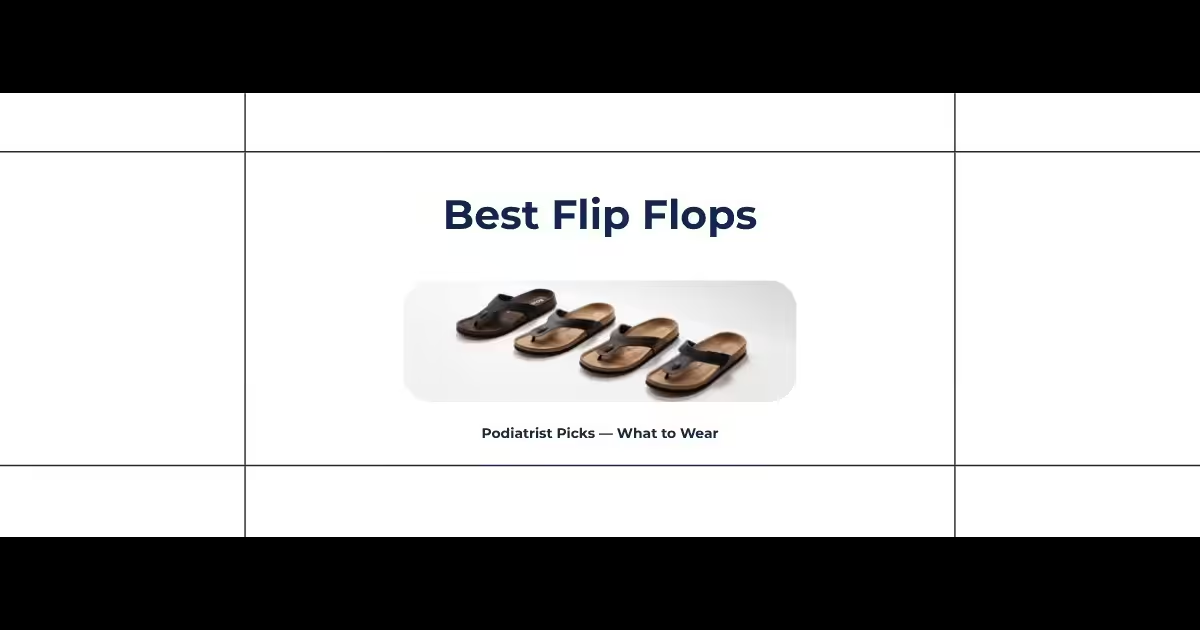

Most flip-flops worsen plantar fasciitis because the flat sole and lack of heel cup allow uncontrolled pronation with every step — but there are four structural features that separate therapeutic sandals from harmful ones, and most ‘plantar fasciitis flip-flop’ lists get them wrong. Call (810) 206-1402 — footwear guidance for plantar fasciitis in Michigan.
Summer is peak season for plantar fasciitis flares — and flip flops are a major reason why. The flat, unsupported sole of a standard flip flop eliminates every biomechanical protection that keeps the plantar fascia healthy. No arch support. No heel cup. No cushion. Just a thin rubber or foam layer between your foot and the ground.
The good news: not all flip flops are biomechanically equal. A new generation of supportive flip flops combines the open-toe convenience of traditional thong sandals with genuine orthotic features — arch support, heel cups, and impact-absorbing cushioning — that make them appropriate for patients with plantar fasciitis. This guide covers every option worth considering, plus the warning signs of flip flops that will make your heel pain worse.
Disclosure: This review contains affiliate links. If you purchase through our links, we may earn a small commission at no extra cost to you. This does not influence our clinical recommendations.
Why Standard Flip Flops Cause Plantar Fasciitis
Standard flat flip flops create three biomechanical problems that directly cause and worsen plantar fasciitis:
1. Zero arch support — The plantar fascia acts as a bowstring supporting the arch. Without external arch support, every step requires the fascia to bear the full weight of arch maintenance. Over thousands of steps per day in a flat flip flop, this repetitive strain inflames the fascia at its heel attachment.
2. No heel cup — The heel fat pad is the body’s natural shock absorber. A deep heel cup keeps the fat pad compressed and centered directly beneath the calcaneus. Without a heel cup, the fat pad spreads laterally on impact, reducing shock absorption and increasing the load on the plantar fascia insertion.
3. Toe-gripping gait — To keep a flip flop on the foot, the toes must grip on every step. This toe-clawing activates the toe flexors and, via the windlass mechanism, increases tension through the entire plantar fascia. Patients who have resolved plantar fasciitis by wearing supportive shoes can trigger a full relapse within days of switching to flat flip flops.
⚠️ Flip Flops to Avoid with Plantar Fasciitis
Avoid these types entirely if you have plantar fasciitis: flat rubber flip flops (Old Navy, Havaianas Original, Rainbow flat), thin foam slides, designer flat sandals with no arch contour, and any thong sandal with under 6mm of heel cushion. These will worsen your pain.
Best Flip Flops for Plantar Fasciitis 2026
1. OOFOS OOriginal Thong — Best for Recovery and Cushioning
OOFOS is the gold standard for post-activity recovery footwear and my first recommendation for plantar fasciitis patients who need a flip flop. The OOriginal uses OOFOS’s proprietary OOfoam™ — a closed-cell foam that absorbs 37% more impact than standard EVA foam — creating an exceptionally cushioned landing for a sensitive heel.
The OOriginal also features a contoured footbed with a modest but meaningful arch support ridge and a slightly cupped heel. It is not as aggressive as a Vionic or Birkenstock arch, but it provides significantly more support than a flat flip flop. OOFOS is particularly beneficial as a poolside or post-run recovery sandal — the cushioning unloads the plantar fascia between training sessions or after long days on your feet.
One caveat: the OOFOS sole is quite soft, which means it compresses significantly under body weight. Patients who are heavier or who need firm arch support may find the arch feeling “washes out” under their weight. For those patients, the Vionic or Birkenstock options below provide firmer support.
Best for: Post-activity recovery, poolside wear, patients prioritizing cushioning, Achilles tendinopathy
Not ideal for: Patients needing firm arch support, heavy patients where soft foam compresses fully
2. Vionic Rest Bella Thong — Best for Arch Support
The Vionic Bella is the most clinically structured flip flop on the market. Its VioMotion™ footbed — the same podiatrist-designed orthotic system in all Vionic shoes — is built directly into a traditional thong sandal silhouette. The deep heel cup centers the calcaneus, the contoured arch support reduces pronation and plantar fascia strain, and the EVA base provides adequate cushioning for daily wear.
I recommend the Bella as the primary flip flop for plantar fasciitis patients who need firm, consistent arch support. Unlike OOFOS, the Vionic arch does not compress under weight — it maintains its contour throughout the day. Available in dozens of colors, machine washable, and priced around $70–$90.
Best for: Plantar fasciitis, flat feet, overpronation, patients who previously wore custom orthotics
Not ideal for: High arches (the arch profile can feel aggressive for cavus foot types)
3. Birkenstock Gizeh — Best Natural Arch Support
The Birkenstock Gizeh is the thong-style Birkenstock — a single toe post with the iconic cork footbed. It provides the same contoured arch support, deep heel cup, and toe bar as the Arizona and Boston styles, in a thong sandal format. The cork footbed molds to the individual foot over several weeks of wear, gradually conforming to your specific arch shape — a feature no foam-based sandal replicates.
The Gizeh is particularly well-suited for patients with normal to high arches and mild to moderate plantar fasciitis. For flat-footed patients, the Vionic Bella is typically better tolerated. The Gizeh is also available in a Soft Footbed version with additional foam padding — I recommend the Soft Footbed for patients with active heel pain.
Best for: Normal to high arches, patients who respond well to cork support, chronic plantar fasciitis
Not ideal for: Flat feet, patients needing immediate cushioning (new cork is firm)
4. Reef Cushion Court Flip Flop — Best Budget Option
Reef’s Cushion Court is the best clinically reasonable flip flop at the under-$50 price point. The memory foam footbed provides better cushioning than standard EVA flat soles, and the anatomically-contoured arch is modest but present. It does not match the clinical depth of OOFOS, Vionic, or Birkenstock, but it is a meaningful improvement over flat flip flops for patients who cannot access premium options.
The Reef Cushion Court is also a good “beach and pool” option — a scenario where you want the casual look and easy washability of a traditional flip flop but need more support than a flat foam sole. Keep your Vionic or OOFOS for primary daily wear; the Reef is acceptable for beach-to-restaurant transitions.
5. Rainbow Sandals Premier Leather — Best Leather Flip Flop
Rainbow Sandals’ Premier Leather is the best traditional leather flip flop for mild plantar fasciitis. The multi-layer midsole (up to 4 layers of cushioning) and the contoured single arch support layer provide more biomechanical structure than flat rubber flip flops. The leather footbed molds to the foot over time. Rainbow Sandals are not as clinically supportive as OOFOS or Vionic, but among “traditional” flip flops that look like flip flops, they are among the best choices available.
What to Look for in a Flip Flop for Plantar Fasciitis
When evaluating any flip flop for plantar fasciitis suitability, I assess five features:
1. Heel Cup Depth
The heel cup should be visibly recessed — not flat — and deep enough to feel the walls of the cup contacting the sides of your heel. At minimum, 5–8mm of rim around the heel. OOFOS, Vionic, and Birkenstock all meet this standard. Flat-soled flip flops fail entirely.
2. Arch Contour
Run your finger along the medial (inner) edge of the footbed from heel to toe. A properly contoured flip flop will have a raised ridge that peaks under the navicular bone (the high point of the arch). This is obvious in Birkenstock cork and Vionic footbeds. OOFOS has a subtle version of this. Flat foam flip flops have none.
3. Heel-to-Toe Drop
A 5–15mm heel lift reduces Achilles tension and decreases the dorsiflexion demand that strains the plantar fascia during walking. Most supportive flip flops achieve this through a thicker heel section. Zero-drop or perfectly flat flip flops maximize plantar fascia strain.
4. Cushion Thickness
At least 10mm of cushion underfoot at the heel is the minimum threshold for patients with plantar fasciitis. OOFOS achieves approximately 20–25mm. Birkenstock cork provides 15–18mm. Flat rubber flip flops provide 3–5mm.
5. Thong Post Security
The toe post should sit snugly between the first and second toes without requiring gripping effort to retain. A loose-fitting thong encourages toe clawing. The best flip flops for plantar fasciitis have a properly sized post that holds the foot without active toe engagement.
Key Takeaway: The Summer Flip Flop Rule
If you have plantar fasciitis, the rule is simple: never wear a flat flip flop. Every step in an unsupported thong sandal works against your recovery. The OOFOS OOriginal, Vionic Bella, and Birkenstock Gizeh are the three flip flops I recommend most often — pick based on whether you need maximum cushion (OOFOS), firm arch support (Vionic), or natural cork molding (Birkenstock Gizeh).
Frequently Asked Questions
Can flip flops cause plantar fasciitis?
Yes. Flat flip flops are one of the most common triggers for plantar fasciitis, particularly when worn for extended periods in summer. The combination of zero arch support, no heel cup, and toe-gripping gait creates the exact biomechanical conditions that inflame the plantar fascia. Switching from supportive shoes to flat flip flops — even for a week of vacation — can trigger a plantar fasciitis flare in susceptible patients.
Are OOFOS flip flops worth it for plantar fasciitis?
Yes — OOFOS are among the highest-value purchases for plantar fasciitis management. At $50–$60, they deliver recovery-grade cushioning and reasonable arch support in a casual flip flop format. The OOfoam technology demonstrably reduces impact load compared to standard foam. I recommend OOFOS specifically as poolside, post-workout, and home recovery footwear alongside a supportive running shoe for active wear.
Can I wear flip flops with plantar fasciitis?
You can wear supportive flip flops with plantar fasciitis — specifically OOFOS, Vionic, or Birkenstock styles with a heel cup and arch support. Standard flat flip flops should be avoided entirely during active plantar fasciitis flares and used only minimally (brief pool or beach use) once symptoms resolve. The upgrade from a flat flip flop to an OOFOS or Vionic Bella is one of the highest-impact, lowest-cost footwear changes a plantar fasciitis patient can make.
Are Havaianas bad for plantar fasciitis?
Standard Havaianas — the Original and Classic styles — are among the worst flip flops for plantar fasciitis. They are completely flat, provide zero arch support or heel cupping, and offer minimal cushioning. Havaianas does offer some elevated styles (the Hav You) and platform versions with more underfoot material, but none approach the clinical standard of OOFOS or Vionic. If you like the Havaianas aesthetic, wear them only for very brief, low-impact use.
When to See a Podiatrist
Upgrading your flip flops is a meaningful intervention for plantar fasciitis management, but it is not a substitute for professional evaluation when symptoms are significant. See a podiatrist if:
- Heel pain does not improve within four to six weeks of wearing supportive footwear consistently
- First-step morning pain lasts more than 10–15 minutes
- Pain is bilateral (both heels) or asymmetric and worsening
- Pain occurs at rest or wakes you from sleep
- You have diabetes, peripheral neuropathy, or a history of foot surgery
The podiatrists at Balance Foot & Ankle specialize in plantar fasciitis and heel pain, offering custom orthotics, shockwave therapy, corticosteroid injections, and minimally invasive procedures for cases that do not respond to footwear modification alone. Same-week appointments available across our Michigan locations.
Heel Pain That Isn’t Getting Better?
Better flip flops are a great first step — but persistent plantar fasciitis needs professional care. Balance Foot & Ankle’s podiatrists treat heel pain with custom orthotics, shockwave therapy, and more. Same-week appointments available in Michigan.
Our podiatrists treat the underlying cause, not just the symptom. Same-week appointments at our Howell and Bloomfield Township, Michigan offices.
Same-Week Appointments in Howell & Bloomfield Township
Three board-certified podiatric surgeons. 1,123+ five-star reviews. Most insurance accepted.
For a complete clinical overview: Plantar Fasciitis Treatment Guide — every treatment from stretching to surgery
What makes a shoe podiatrist-recommended?
Wide toe box, firm heel counter, adequate arch support, cushioned midsole, and at least a thumb-width of space past the longest toe.
How often should I replace my shoes?
Every 300-500 miles or 6-12 months — compressed midsole or worn outsole signals it’s time.
Doctor Answer
What makes a flip flop good for people with plantar fasciitis?
Flip flops that work well for plantar fasciitis feature deep heel cups, solid arch support, and firm midsoles that prevent the foot from over-pronating under load. Thin, flat flip flops without structural support are a common trigger for plantar fasciitis flare-ups. Dr. Tom Biernacki at Balance Foot & Ankle helps patients select footwear with the right support features to protect their feet during warmer months.

Dr. Tom Biernacki, DPM is a board-certified foot & ankle surgeon (ABFAS & ABPM) at Balance Foot & Ankle Specialists in Southeast Michigan. With over a decade of clinical experience, he specializes in heel pain, bunions, diabetic foot care, sports injuries, and minimally invasive surgery. Dr. Biernacki is a member of the APMA and ACFAS, and his patient education content on MichiganFootDoctors.com and YouTube has made him one of the most-followed foot & ankle educators on YouTube.
More questions patients ask
What should I look for in a plantar fasciitis-friendly sandal?
Plantar fasciitis-safe sandals need: a contoured footbed with built-in arch support (not flat), a deep heel cup that controls rearfoot position, a slight heel elevation (10–15mm), and a secure strap that prevents toe gripping. Brands meeting all four criteria include OOFOS, Vionic, and Birkenstock's Arizona model (for patients with moderate arch height). Avoid any sandal with a completely flat, thin sole.
Still have a question about coverage or cost? Book online and we will check your benefits before your visit: Book in Howell · Book in Bloomfield Township. Prefer to talk it through first? Call (810) 206-1402.