

This page covers the clinical evaluation, evidence-based treatment options, and recovery timeline for athlete’s foot home remedy at Balance Foot & Ankle in Michigan. For same-week appointments at our Howell or Bloomfield Township offices, call (810) 206-1402.
| Home Remedy | Active Component | Evidence | Instructions | Effectiveness |
|---|---|---|---|---|
| OTC clotrimazole cream 1% (Lotrimin) | Azole antifungal | Strong — FDA-approved first-line | Apply between toes 2x daily × 4 weeks | High (70–80% cure) |
| OTC terbinafine cream 1% (Lamisil AT) | Allylamine antifungal | Strong — FDA-approved; superior to azoles | Apply 1x daily × 1–2 weeks (shorter course) | High (75–85% cure) |
| OTC miconazole powder (Zeasorb AF) | Azole + moisture absorption | Moderate | Apply inside shoes and between toes daily | Moderate–High; best as maintenance |
| Tea tree oil 100% | Terpinen-4-ol antifungal | Low–Moderate (small RCTs) | Apply undiluted 2x daily × 4 weeks | Moderate; inferior to OTC antifungals |
| Garlic (ajoene extract) | Organosulfur antifungal | Limited (1 small study) | Not standardized; impractical | Low |
| Apple cider vinegar soak | Acidity alters skin pH | No clinical trials in tinea pedis | Not recommended | Insufficient evidence |
| Baking soda paste | Alkaline pH; moisture absorption | No antifungal clinical evidence | Not recommended for cure; drying only | Low for cure; mild for moisture control |
| Athlete’s Foot Type | Appearance | Best OTC Treatment | When to Prescribe |
|---|---|---|---|
| Interdigital (between toes) | Scaling, maceration, peeling, itching between toes | Terbinafine 1% cream × 1 week | If unresolved after 4 weeks OTC |
| Moccasin (plantar) | Diffuse scaling + hyperkeratosis on sole and sides | Terbinafine 1% cream × 2 weeks | Usually requires oral terbinafine; poor OTC response |
| Vesicular (blistering) | Fluid-filled blisters on arch; intensely itchy | Clotrimazole cream + drying agent | Oral antifungal if blisters spread; rule out bacterial superinfection |
| Ulcerative | Open lesions; oozing; secondary bacterial infection | Do NOT self-treat | DPM immediately — bacterial complication requires antibiotics |
Foot pain isn't resolving?
Same-week appointments at Howell & Bloomfield Township
Athlete’s foot (tinea pedis) is the most common fungal skin infection in humans. In our clinic at Balance Foot & Ankle, we see it year-round — in runners, teachers, office workers, and teenagers. Most cases genuinely can be treated at home with the right OTC product, but knowing which product to use and how to use it correctly makes the difference between a 10-day cure and a 6-month battle. This guide covers what actually works, what’s overrated, and when you need prescription treatment instead.
What Is Athlete’s Foot
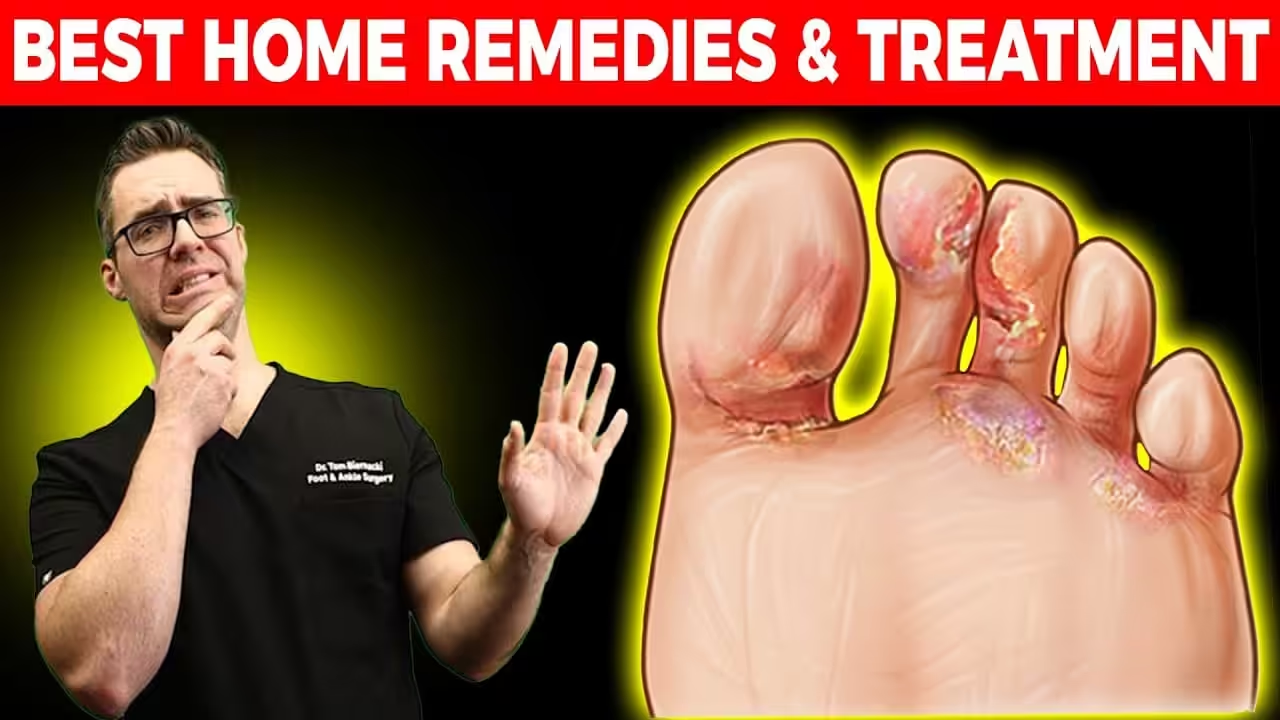
Tinea pedis is a superficial fungal infection of the skin caused by dermatophytes — most commonly Trichophyton rubrum, Trichophyton mentagrophytes, and Epidermophyton floccosum. These fungi consume keratin, the structural protein in the outer skin layer, and thrive in warm, moist environments. Dermatophytes are highly contagious through direct contact with infected skin cells shed on floors, shower areas, pool decks, and inside shoes.
Approximately 15–25% of the population has tinea pedis at any given time. It is more common in men than women, in adults than children, and in people who wear closed shoes for long periods. It is not a sign of poor hygiene — even meticulous people can contract it from contaminated surfaces. The fungus is ubiquitous in locker rooms, shared showers, and gyms.
The Three Types You Need to Know
Athlete’s foot is not one single presentation. There are three distinct patterns, and treatment approach and timeline differ significantly between them. Misidentifying the type leads to using the right antifungal in the wrong way.
| Type | Appearance | Location | Treatment Duration |
|---|---|---|---|
| Interdigital | Maceration, scaling, itching between toes | 4th–5th toe web space most common | 7–14 days OTC |
| Moccasin (chronic) | Dry, silvery scale over entire sole and sides of foot | Plantar surface + heel + sides | 4–6+ weeks, often needs prescription |
| Vesicular (blistering) | Vesicles and pustules, intense itching | Arch, instep, sides of foot | 2–4 weeks, often needs prescription |
The interdigital type is the most common and responds best to OTC treatment. The moccasin type — with its thick, dry, scaly presentation covering the entire sole — has poor penetration with topical antifungals alone and frequently requires oral terbinafine or fluconazole. The vesicular type involves a hypersensitivity component and may flare before it improves.
Best OTC Antifungal Remedies Ranked
Not all over-the-counter antifungals are equally effective. The mechanism matters. Here is how the main options compare, based on clinical cure rates from randomized controlled trials:
| Active Ingredient | Brand Example | Mechanism | Clinical Cure Rate | Duration |
|---|---|---|---|---|
| Terbinafine 1% | Lamisil AT | Fungicidal (kills fungus) | 70–80% | 7–14 days |
| Butenafine 1% | Lotrimin Ultra | Fungicidal | 75–80% | 7–14 days |
| Clotrimazole 1% | Lotrimin AF | Fungistatic (stops growth) | 60–70% | 4 weeks |
| Miconazole 2% | Desenex, Zeasorb | Fungistatic | 55–65% | 4 weeks |
| Tolnaftate 1% | Tinactin | Fungistatic | 50–60% | 4 weeks |
The bottom line: Terbinafine (Lamisil AT) and butenafine (Lotrimin Ultra) are the highest-performing OTC options because they are fungicidal — they kill the organism rather than simply stopping its growth. They also require shorter treatment durations (7–14 days vs. 4 weeks), which improves compliance. If you have been using tolnaftate or clotrimazole without success, switching to terbinafine often resolves the infection.
Application technique matters: Apply the cream not only to the affected area but 1–2 cm beyond its borders. Continue using it for the full recommended duration even after symptoms resolve — stopping early is the primary reason for recurrence. After applying cream between toes, allow to dry before putting on socks.
Natural Remedies — Evidence Review
Many patients ask about natural remedies before trying OTC antifungals. Here is an honest, evidence-based assessment of the most commonly discussed options. Some have real (if modest) evidence; others are largely internet mythology.
| Remedy | Evidence | How to Use | Verdict |
|---|---|---|---|
| Tea tree oil | 2 small RCTs show 50% solution comparable to tolnaftate for symptoms, but inferior for mycological cure | 50% dilution twice daily (never undiluted) | ⚠ Modest benefit; inferior to terbinafine |
| Apple cider vinegar soak | No clinical trials; in vitro antifungal activity at low pH only | 1:1 dilution soak 15 min/day | ❌ Insufficient evidence; may dry skin excessively |
| Garlic (ajoene) | 1 small study of ajoene cream vs. terbinafine — comparable at 60 days | Topical ajoene extract only; rubbing raw garlic is ineffective | ⚠ Interesting but not commercially available |
| Baking soda paste | No clinical evidence; fungistatic only at high concentrations not practical topically | Paste application | ❌ Not effective; may help with odor only |
| Hydrogen peroxide soak | No RCTs; some antifungal activity in vitro but rapidly neutralized in vivo | 3% solution soak | ❌ Not recommended; can damage skin |
| Urea cream (30–40%) | Not antifungal itself, but keratolytic — breaks down thickened skin to improve antifungal penetration in moccasin type | Applied to thick areas before antifungal | ✅ Useful adjunct for moccasin-type |
In our clinic, we do not discourage patients from trying tea tree oil for mild interdigital tinea pedis, but we emphasize that it must be used at the correct concentration (50% dilution) and will work more slowly than terbinafine. For anything beyond mild interdigital infection, the evidence strongly favors OTC terbinafine or butenafine as the first-line home remedy.
Recommended Products for Athlete’s Foot
Beyond the antifungal cream itself, managing the footwear environment is critical to preventing recurrence. These are the products we recommend in our clinic.
FLAT SOCKS No-Show Inserts — Shoe Decontamination Strategy
Fungal spores shed into shoes survive on insole surfaces for months and reinfect treated feet — this is the single most overlooked cause of recurrence. FLAT SOCKS no-sock shoe inserts act as a washable, replaceable barrier between your foot and the contaminated insole. Unlike cotton socks that trap moisture, FLAT SOCKS are designed for breathable, low-moisture environments. Replace or wash them regularly while treating active infection.
Best for: Casual shoes, loafers, slip-ons, and sneakers where going barefoot inside is the norm. Excellent for preventing re-exposure to fungal spores in frequently worn footwear.
Not Ideal For: Athletic shoes used for training — in those, full moisture-wicking socks provide better sweat management. Not a substitute for antifungal treatment.
Plantar Fasciitis Compression Socks — Moisture-Wicking During Treatment
Maintaining a dry foot environment during treatment is as important as the antifungal itself. Plantar Fasciitis Compression Socks (15-20 mmHg) draw moisture away from the skin surface and provide light graduated compression that improves circulation and reduces the maceration between toes that allows fungal growth. The compression component also helps with the mild swelling some patients experience during a vesicular tinea pedis flare.
Best for: Patients who spend long hours on their feet, those with mild interdigital maceration, and during the active treatment phase when keeping feet dry is critical.
Not Ideal For: Patients with peripheral arterial disease or ABI <0.8. Not a replacement for antifungal medication.
Prevention: Stop Athlete’s Foot From Coming Back
Treating athlete’s foot without changing the conditions that allowed it to develop guarantees recurrence. In our practice, we find that the most compliant patients with antifungal treatment still relapse if they return immediately to the same moisture-saturated footwear environment. Prevention requires addressing four categories simultaneously.
Footwear hygiene: Spray shoes with antifungal spray (Lysol or terbinafine-based sprays) and allow them to dry completely — ideally 24–48 hours — before re-wearing. Rotate between at least two pairs of shoes. Never wear the same pair two days in a row. Consider UV shoe sanitizers for closed athletic footwear.
Moisture control: Change socks immediately after exercise. Dry between toes after showering — this single step is underestimated. Use antifungal or moisture-absorbing foot powder in socks and shoes. Avoid walking barefoot in communal areas: gym floors, pool decks, locker rooms, hotel bathrooms.
Chronic suppression therapy: For patients with recurrent tinea pedis (more than 2–3 episodes per year), twice-weekly application of terbinafine or clotrimazole cream to the web spaces and soles — even when asymptomatic — dramatically reduces recurrence rates. This is evidence-based and we routinely recommend it for chronically affected patients.
Household precautions: Treat any concurrent onychomycosis (toenail fungus) — infected nails serve as a reservoir for tinea pedis reinfection. Family members with untreated tinea pedis can re-expose you via shared bathrooms. Wash bath mats and towels frequently on hot cycles when active infection is present.
Most Common Mistake Patients Make
The most common mistake we see is stopping antifungal treatment as soon as itching resolves — typically after 3–5 days. The itching stops because the inflammatory response is settling down, not because the fungus is gone. Dermatophytes remain viable in the skin for days to weeks after symptoms disappear. Stopping treatment early allows the surviving fungus to repopulate, and the infection recurs within 2–4 weeks.
The fix: complete the full labeled treatment course regardless of symptom resolution. For terbinafine, that is 7–14 days. For clotrimazole or miconazole, that is 4 full weeks. Set a reminder if needed. The extra days of treatment after you feel better are what produce lasting mycological clearance.
Warning Signs — When Home Remedies Fail
- No improvement after 4 weeks of correct OTC antifungal use — may need prescription oral terbinafine
- Skin breaks down into open sores — risk of bacterial superinfection (cellulitis)
- Redness, warmth, or swelling spreading up the foot — possible secondary cellulitis requiring antibiotics
- Blisters that become painful, cloudy, or weeping — vesicular tinea may require prescription treatment and possible drainage
- Nails are thickened, discolored, or crumbling — concurrent onychomycosis requires separate oral antifungal treatment
- You are diabetic — any foot skin breakdown warrants prompt evaluation to prevent ulceration
- Recurrence within 6 weeks of completing a full treatment course — indicates inadequate treatment, resistant organism, or ongoing re-exposure source
In-Office Treatment at Balance Foot & Ankle
When OTC treatment fails, our team at Balance Foot & Ankle has the full diagnostic and treatment toolkit. We perform KOH preparation to confirm dermatophyte infection (and exclude look-alikes like contact dermatitis or psoriasis), culture testing when needed, and prescribe oral terbinafine or fluconazole for resistant or moccasin-type tinea pedis. We also evaluate and treat concurrent onychomycosis — the most common reservoir for reinfection.
Dr. Tom Biernacki, Dr. Carl Jay, and Dr. Daria Gutkin see patients at our Howell location (4330 E Grand River Ave, MI 48843) and Bloomfield Township location (43494 Woodward Ave #208, MI 48302). Same-week appointments are often available. Call (810) 206-1402 or book online.
Athlete’s Foot That Won’t Clear With OTC Creams
We’ll confirm the diagnosis and prescribe what actually works. Same-week appointments available.
Book an Appointment(810) 206-1402
Howell & Bloomfield Township, MI · 4.9 Stars · 1,123 Reviews
How long does athlete’s foot take to clear up?
With terbinafine 1% cream applied twice daily, most mild-to-moderate interdigital athlete’s foot clears within 7–14 days. The moccasin type (dry, scaly sole) often takes 4–6 weeks or longer and may require oral antifungal medication. Symptoms (itching, burning) typically improve within 3–5 days of starting treatment, but continue treatment for the full labeled duration to achieve mycological cure.
Can athlete’s foot spread to other parts of the body?
Yes. Tinea pedis can spread to toenails (onychomycosis), the groin area (tinea cruris, or “jock itch”) via towel or hand contact, the hands (tinea manuum), and occasionally the scalp. Avoiding touching the affected area and then touching other body parts without washing hands reduces spread risk. Treating the foot infection promptly prevents dissemination.
Is athlete’s foot contagious to family members?
Yes, athlete’s foot is moderately contagious through shared surfaces — bath mats, shower floors, towels, and socks. Not everyone exposed will develop infection; individual susceptibility varies. During active infection, avoid sharing towels, wear flip-flops in shared showers, wash bath mats on hot cycles, and use separate towels for the affected feet.
Does insurance cover athlete’s foot treatment at a podiatrist?
Yes. Evaluation and treatment of tinea pedis by a podiatrist is covered by most major insurance plans as medically necessary. Prescription antifungals are typically covered by pharmacy benefits. At Balance Foot & Ankle, we verify your insurance before your visit — call (810) 206-1402 to confirm.
Sources
- Ameen M. “Epidemiology of superficial fungal infections.” Clin Dermatol. 2010;28(2):197–201.
- Crawford F, et al. “Topical treatments for fungal infections of the skin and nails of the foot.” Cochrane Database Syst Rev. 2007;(3):CD001434.
- Satchell AC, et al. “Treatment of interdigital tinea pedis with 25% and 50% tea tree oil solution: a randomized, placebo-controlled, blinded study.” Australas J Dermatol. 2002;43(3):175–178.
- Bell-Syer SE, et al. “Oral treatments for fungal infections of the skin of the foot.” Cochrane Database Syst Rev. 2012;10:CD003584.
- Gupta AK, Cooper EA. “Update in antifungal therapy of dermatophytosis.” Mycopathologia. 2008;166(5-6):353–367.
Ready to get relief? Book an appointment at Balance Foot & Ankle or call (810) 206-1402. Same-week appointments available in Howell & Bloomfield Township, MI.
In-Office Treatment at Balance Foot & Ankle
If home treatment isn’t providing relief for your toenail fungus, our podiatry team at Balance Foot & Ankle can help with same-week evaluations and advanced in-office care.
Same-week appointments available. (810) 206-1402
Learn about our laser toenail fungus treatment → | Book online →
Doctor Hoy’s Natural Pain Relief Gel
Natural topical pain relief I use in our clinic. Arnica + camphor formula — apply directly to the area 3–4x daily. ($20–25)
Shop Doctor Hoy’s →Our podiatrists treat the underlying cause, not just the symptom. Same-week appointments at our Howell and Bloomfield Township, Michigan offices.
Get Expert Care at Balance Foot & Ankle
Same-week appointments at our Howell and Bloomfield Township offices. Board-certified podiatric surgeons. Most insurance accepted.
Same-Week Appointments in Howell & Bloomfield Township
Three board-certified podiatric surgeons. 1,123+ five-star reviews. Most insurance accepted.

Dr. Tom Biernacki, DPM is a board-certified foot & ankle surgeon (ABFAS & ABPM) at Balance Foot & Ankle Specialists in Southeast Michigan. With over a decade of clinical experience, he specializes in heel pain, bunions, diabetic foot care, sports injuries, and minimally invasive surgery. Dr. Biernacki is a member of the APMA and ACFAS, and his patient education content on MichiganFootDoctors.com and YouTube has made him one of the most-followed foot & ankle educators on YouTube.
More questions patients ask
DASS Medical Compression Socks — Moisture-Wicking During Treatment
Maintaining a dry foot environment during treatment is as important as the antifungal itself. DASS Medical Compression Socks (15-20 mmHg) draw moisture away from the skin surface and provide light graduated compression that improves circulation and reduces the maceration between toes that allows fun
Still have a question about coverage or cost? Book online and we will check your benefits before your visit: Book in Howell · Book in Bloomfield Township. Prefer to talk it through first? Call (810) 206-1402.