
The most important clinical decision with Best Orthopedic Slippers Podiatrist Guide isn’t which treatment to start with — it’s identifying the correct subtype. That changes everything. Book online or call (810) 206-1402.
Best Orthopedic Slippers 2026: Podiatrist Guide for Plantar Fasciitis & Foot Pain

For patients with plantar fasciitis, the worst moment of the day happens before they leave their bedroom. The first steps out of bed — when the plantar fascia contracts overnight and is suddenly loaded with full body weight — produce the characteristic stabbing heel pain that Dr. Biernacki’s patients describe as “like stepping on broken glass.” What many don’t realize is that the surface they step onto first matters enormously: walking barefoot on hard floors first thing in the morning is one of the most damaging things a plantar fasciitis patient can do.
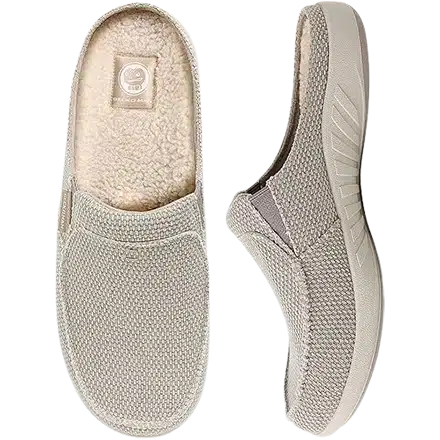
Orthopedic slippers — house shoes with genuine arch support, cushioning, and heel cup geometry — bridge the gap between your bed and your supportive daily footwear. They’re the clinical intervention that costs under $60 and should be the very first thing plantar fasciitis patients, post-surgical foot patients, and anyone with chronic heel pain puts on in the morning. Yet the majority of people still reach for flat flip-flops, thin foam slippers, or go barefoot — undoing the benefit of their expensive custom orthotics and supportive shoes the moment they wake up.
This guide covers the six best orthopedic slippers of 2026, selected based on arch support geometry, cushioning technology, heel cup design, and clinical benefit for the most common conditions Dr. Biernacki treats. We include specific recommendations for plantar fasciitis, flat feet, post-surgical recovery, and diabetic foot patients. If you are choosing mainly on arch support rather than on a diagnosis, start with our main guide to slippers for plantar fasciitis, which compares the full indoor range we recommend on arch support and heel-cup depth.
Why Barefoot at Home Is a Clinical Problem
The human foot was designed for varied, unpacked earth — soft grass, sand, soil. Modern homes feature tile, hardwood, laminate, and concrete — surfaces with near-zero shock absorption that transmit ground reaction forces directly into the plantar fascia, heel fat pad, and metatarsal heads. For healthy feet, this is uncomfortable. For feet with plantar fasciitis, arthritis, or post-surgical healing, it is medically contraindicated.
During sleep, the plantar fascia shortens to its resting length. The first step out of bed stretches it rapidly from this contracted position — the mechanical event that produces the signature first-step heel pain of plantar fasciitis. Research shows that the severity of this first-step pain correlates directly with the stiffness and height of the surface contacted on the first morning steps. Patients who step onto a hard floor in bare feet experience significantly higher peak plantar pressure and pain scores than those who slip into a cushioned, arch-supported slipper first.
Additionally, many patients with chronic foot conditions spend their evenings at home — after changing out of their supportive work shoes — walking on hard floors in unsupportive slippers or socks for 3–6 hours. The cumulative damage of these barefoot hours can negate the benefit of wearing proper footwear during the work day. Orthopedic slippers extend the biomechanical protection of your supportive shoes into every moment you spend at home.
🧦 What Makes a Slipper “Orthopedic”?
- Arch support: A contoured footbed that supports the longitudinal arch — preventing the arch collapse that stresses the plantar fascia
- Deep heel cup: Centralizes the calcaneal fat pad under the heel bone, improving shock absorption by 20–30%
- Firm midsole: Structural cushioning that doesn’t bottom out under body weight — flat foam fails within weeks
- Non-slip outsole: Rubber or TPR sole for traction on tile, hardwood, and wet bathroom floors
- Enclosed heel or adjustable strap: Prevents the compensatory toe-gripping gait that develops with backless mules
- Roomy toe box: Allows natural toe splay — important for bunion patients and those with hammertoes
Dr. Tom Biernacki explains the clinical criteria for supportive footwear — including why podiatrists insist on arch support and cushioning at all times, even at home. The first steps of the day are your most vulnerable, and what you wear during them determines whether plantar fasciitis heals or worsens.
The 6 Best Orthopedic Slippers in 2026
Each slipper below was selected for its clinical arch support features, cushioning durability, and proven outcomes in patients with plantar fasciitis, flat feet, and chronic heel pain. We’ve noted specific patient profiles and conditions each slipper addresses best.
1. OOFOS OOahh Sport Slide — Best Recovery Slipper for Plantar Fasciitis
Best for: Plantar fasciitis patients, post-run or post-workout recovery, and anyone whose primary complaint is heel and arch pain on first morning steps. OOFOS created a new category of footwear with their OOfoam technology — a proprietary closed-cell foam compound that absorbs 37% more impact than standard EVA foam while providing a responsive, body-weight-adaptive cushioning feel. The OOahh Sport Slide is the most versatile in the OOFOS line: a unisex design with a sport-friendly outsole that works on wet bathroom tile, pool decks, and hardwood floors without the slip risk that makes most recovery slides inappropriate for indoor use.
The biomechanical design includes a patented footbed arch that positions the foot in a mild pronation-control position — reducing the calcaneal valgus (inward heel tilt) that stresses the plantar fascia at its insertion point. Unlike flat flip-flops, the OOFOS footbed geometry means the arch is actively engaged with every step rather than passively carrying weight on a flat surface. Multiple clinical studies on recovery footwear have cited OOFOS’s design as producing measurable reductions in plantar pressure, particularly at the medial heel. For patients who can afford only one orthopedic slipper investment, this is the one Dr. Biernacki recommends most frequently.
Dr. Biernacki’s verdict: “I recommend OOFOS to virtually every plantar fasciitis patient. Keep them bedside — put them on before your first step in the morning. That single habit change produces measurable reduction in first-step pain within 2 weeks. It sounds almost too simple, but it’s one of the highest-impact, lowest-cost interventions I have.”
2. OOFOS OOahh Recovery Slide — Best Everyday Home Recovery Slipper
Best for: Everyday indoor wear for patients who want the OOFOS recovery technology in a classic open-toe slide profile, and those who need easy on/off access due to limited bending range (back pain, post-surgical patients, seniors with arthritis). The OOahh Recovery Slide is the original OOFOS design — simpler, lighter, and with a slightly more casual appearance than the Sport version. It shares the same OOfoam midsole and patented arch footbed, delivering identical biomechanical benefit. The smooth outsole is better for indoor hard floors than outdoor surfaces, making it the choice for patients who primarily need support moving around the house rather than in wet outdoor environments.
The recovery slide design has been adopted by professional athletic trainers across the NFL, NBA, and marathon running communities as the standard post-exercise footwear — a fact that underscores both its clinical efficacy and its durability under heavy daily use. For patients transitioning from a long day in work boots or dress shoes, the immediate relief of stepping into an OOFOS slide is often dramatic — the foam decompresses to accommodate the swollen end-of-day foot while still maintaining enough structure for arch support. Machine washable, making it appropriate for kitchen and bathroom use where foot hygiene is important.
Dr. Biernacki’s verdict: “If the sport slide is for the active patient, the OOahh slide is for everyone else. Simple, effective, and genuinely loved by patients with plantar fasciitis, post-surgical feet, and general end-of-day foot fatigue. It holds up for 1–2 years of daily use.”
3. Orthofeet Charlotte — Best Enclosed Orthopedic Slipper for Women
Best for: Women with plantar fasciitis, bunions, flat feet, or diabetic foot conditions who need a fully enclosed slipper with the clinical support of a therapeutic shoe. The Orthofeet Charlotte is designed by the same podiatric and biomechanical engineers behind Orthofeet’s therapeutic footwear line — and it shows. The slipper features a premium anatomical orthotic insole with arch support and a deep heel cup, a non-binding wide toe box that accommodates bunions and hammertoes without pressure, and a soft faux fur interior for warmth and comfort. The adjustable strap allows the instep volume to be customized, which is essential for patients with edema or for fitting over diabetic foot dressings.
What distinguishes the Charlotte from the typical women’s “comfort slipper” sold at department stores is the structural integrity of the midsole. Most women’s slippers use thin foam that compresses to near-zero support within weeks — the Charlotte’s orthotic system maintains its support geometry for the lifespan of the slipper. The insole is also removable, allowing the slipper to accommodate custom orthotics prescribed by Dr. Biernacki’s office. For women who have been told to never go barefoot, the Charlotte is the indoor extension of the clinical support system — allowing barefoot-free movement throughout the home in a slipper that looks and feels like genuine footwear.
Dr. Biernacki’s verdict: “The Charlotte is the best enclosed women’s orthopedic slipper available without a prescription. For my female patients with plantar fasciitis, bunions, or diabetic neuropathy, this is the slipper I put in my clinical handout. It does what a slipper is supposed to do: protect and support the foot at home.”
4. OrthoComfoot Men’s Arch Support Slippers — Best Enclosed Orthopedic Slipper for Men
Best for: Men with plantar fasciitis, flat feet, heel pain, or those who spend evenings on their feet in the kitchen or home workshop and need a supportive, breathable indoor shoe rather than a soft moccasin. The OrthoComfoot men’s slipper addresses a gap in the men’s orthopedic footwear market: most men’s slippers are either too casual (flat foam moccasins) or too clinical-looking for home use. The OrthoComfoot design combines a breathable mesh upper with a structured orthopedic insole featuring genuine longitudinal arch support — not merely a raised foam bump, but a contoured support platform with a deep heel cup and metatarsal offloading.
The adjustable velcro fastening system allows the slipper to accommodate wide feet, edema, and the volume differences that develop between morning and evening. Men with wide feet (2E–4E) who struggle to find enclosed slippers that don’t pinch the forefoot consistently report that the OrthoComfoot adjustable design solves this problem without requiring a wide-specific model. The anti-slip rubber outsole is durable enough for light outdoor use — taking out the trash, stepping onto a porch — while maintaining sufficient traction for interior tile and hardwood. For men told to “never go barefoot” by their podiatrist, this slipper is the most practical, comfortable indoor solution that meets that clinical directive.
Dr. Biernacki’s verdict: “Men consistently under-treat their foot pain at home — they’ll wear custom orthotics to work and then walk around in flat slippers all evening undoing the benefit. The OrthoComfoot is the simplest fix for this pattern. Affordable, supportive, and actually looks like something a man would wear.”
5. ERGOfoot Orthotic Slippers — Best Budget Orthopedic Clog for Indoor/Outdoor Use
Best for: Patients who need a versatile indoor/outdoor slipper that can be worn from the bedroom to the mailbox, those on a tighter budget who still want genuine arch support, and patients who prefer a clog-style design with easy slip-on convenience. The ERGOfoot orthotic slipper fills a price-point gap in the orthopedic footwear market: it delivers genuine contoured arch support and a deep heel cup at a price point below most OOFOS and Orthofeet models. The clog design with semi-enclosed heel is more secure than open-toe slides, reducing the compensatory toe-gripping that occurs with backless slippers and places excess tension on the plantar fascia and lesser toe tendons.
The anti-skid rubber sole is rated for both indoor and outdoor use, making the ERGOfoot appropriate for patients who need to transition from house to garden, driveway, or porch without changing footwear. The orthotic footbed is removable for patients who want to insert their own custom orthotics. Available in a range of colors and sizes with accommodation for wide feet. For patients who are skeptical about spending $60–$120 on recovery slippers before they’re convinced of the benefit, the ERGOfoot provides a lower-cost entry point to understand what proper indoor arch support feels like — with the realistic expectation that the materials may not last as long as premium models.
Dr. Biernacki’s verdict: “Not every patient can afford OOFOS or Orthofeet. The ERGOfoot is a legitimate budget alternative — the arch geometry is real and the heel cup is functional. If budget is the barrier to going barefoot-free at home, this is the solution.”
6. Vionic Adjustable Open-Toe Slipper — Best for Bunions & Wide Forefoot at Home
Best for: Women with bunions, hammertoes, or wide forefoot anatomy who need a slipper that accommodates these conditions without creating pressure over the medial first toe joint. Vionic holds the APMA (American Podiatric Medical Association) Seal of Acceptance — a designation earned by products that demonstrate biomechanical benefit to foot health. The adjustable open-toe slipper features Vionic’s three-zone comfort system with a firm heel cup, longitudinal arch support, and deep forefoot bed. The open-toe design completely eliminates any pressure on the bunion or hammertoes, while the adjustable hook-and-loop strap across the instep allows the slipper to be secured without relying on the forefoot to grip.
The Vionic arch support profile is slightly lower and more gradual than OOFOS — making it more comfortable for patients transitioning from flat slippers who find higher-profile arch support initially uncomfortable. The soft microfiber lining is gentle against sensitive skin, and the lightweight EVA midsole provides adequate cushioning for low-to-moderate activity levels around the home. Women who have bunion surgery scheduled and want to establish supportive at-home habits before their procedure, and post-bunion surgery patients cleared for light indoor ambulation, find the Vionic adjustable slipper particularly appropriate as it can be set exactly as loose or firm as comfort and healing require.
Dr. Biernacki’s verdict: “For my bunion patients who can’t wear anything closed over the first MTP joint, the Vionic open-toe is the best option. The APMA seal matters — it means the design has been independently reviewed for podiatric benefit rather than just marketed as orthopedic.”
Quick Comparison: Orthopedic Slippers at a Glance
| Slipper | Style | Best For | Arch Support | Who |
|---|---|---|---|---|
| OOFOS OOahh Sport | Open-toe slide | Plantar fasciitis, recovery | High (OOfoam) | Unisex |
| OOFOS OOahh Recovery | Open-toe slide | Everyday home recovery | High (OOfoam) | Unisex |
| Orthofeet Charlotte | Enclosed fur-lined | Diabetic, bunions, flat feet | Maximum (orthotic) | Women |
| OrthoComfoot Men’s | Enclosed adjustable | Men’s indoor support | High (contoured) | Men |
| ERGOfoot Clog | Clog / mule | Budget, indoor/outdoor | Moderate (contoured) | Unisex |
| Vionic Adjustable | Open-toe adjustable | Bunions, wide forefoot | Moderate (APMA) | Women |
More Podiatrist-Recommended Foot Health Essentials
Hoka Clifton 10

Max-cushion everyday shoe — podiatrist favorite for walking and running.

OOFOS Recovery Slide

Impact-absorbing recovery sandal — wear after long days on your feet.
As an Amazon Associate, Balance Foot & Ankle earns from qualifying purchases. Product recommendations are based on clinical experience; prices and availability shown above update live from Amazon.
When to See a Podiatrist
If foot or ankle pain has been bothering you for more than a few weeks, home care alone may not be enough. Balance Foot & Ankle offers same-week appointments at our Howell and Bloomfield Township clinics — no referral needed in most cases. Bring your current shoes and a short list of symptoms and we’ll build you a treatment plan in one visit.
Call Balance Foot & Ankle: (810) 206-1402 · Book online · Offices in Howell & Bloomfield Township
Frequently Asked Questions: Orthopedic Slippers
Should I always wear slippers at home if I have plantar fasciitis?
Yes — this is one of the most impactful behavioral changes for plantar fasciitis management. The clinical guideline from most podiatric associations is: never take a step without arch support during an active plantar fasciitis episode. This includes steps to the bathroom at night, first steps in the morning, and evening hours at home after removing work shoes. Keep slippers bedside, in the bathroom, and near the kitchen. The goal is zero barefoot time on hard floors until the plantar fascia has healed.
Can orthopedic slippers replace custom orthotics?
No — orthopedic slippers provide general arch support and cushioning appropriate for a range of foot types, but cannot replicate the precise, individualized correction of custom orthotics prescribed by a podiatrist. They complement custom orthotics rather than replacing them. For home use, a quality OTC orthopedic slipper combined with custom orthotics in your work shoes provides a comprehensive, round-the-clock support system. Some orthopedic slippers (Orthofeet, OrthoComfoot) have removable insoles that allow insertion of custom orthotics for patients who need prescription-level support even at home.
How long do orthopedic slippers last?
OOFOS OOfoam maintains its cushioning and arch geometry for approximately 12–18 months of daily home use — significantly longer than standard foam slippers. Orthofeet and OrthoComfoot orthotic slippers maintain support for 12–18 months as well, as the structural orthotic component is more durable than foam insoles. Budget models (ERGOfoot) typically maintain effective support for 9–12 months. Replace when the heel cup shows visible compression or when foot pain returns after a period of relief — these are the clinical indicators that the slipper’s support has degraded below therapeutic threshold.
Are orthopedic slippers good for seniors?
Absolutely — seniors are among the patients who benefit most from quality orthopedic slippers, for two reasons: (1) the heel fat pad thins progressively with age, reducing natural shock absorption and requiring external cushioning to compensate; (2) slip-and-fall risk is the leading cause of injury-related death in adults over 65, and the non-slip outsoles on orthopedic slippers are a critical safety feature that flat foam slippers lack. For seniors with diabetic neuropathy, the enclosed designs (Orthofeet Charlotte, OrthoComfoot) protect the foot from the abrasions and pressure sores that can develop when neuropathic feet contact hard surfaces without protection.
Can I use orthopedic slippers outdoors?
It depends on the model. OOFOS slides have a textured outsole suitable for light outdoor use on dry surfaces. The ERGOfoot clog is specifically designed for indoor/outdoor versatility. Orthofeet Charlotte and most enclosed orthopedic slippers have lighter-duty outsoles best suited for indoor use. For patients who want a single pair that transitions from bedroom to driveway, the ERGOfoot or OOFOS Sport Slide are the best options. Avoid exposing faux-fur-lined slippers to wet conditions, which accelerates liner breakdown and creates moisture retention — a hygiene concern, especially for diabetic patients.
Complete Your Home Foot Care Routine
Orthopedic slippers are one component of a comprehensive at-home foot care system. Combine them with these clinically-reviewed products for maximum benefit:
- Best Ice Packs for Plantar Fasciitis 2026 — evening icing after activity reduces inflammation
- Best Foot Rollers for Plantar Fasciitis 2026 — morning plantar fascia massage before first steps
- Podiatrist-Recommended Orthotics 2026 — pair with slippers for round-the-clock support
- Best Night Splints for Plantar Fasciitis 2026 — keep the fascia stretched overnight
- Best Epsom Salt Foot Soaks 2026 — evening inflammation and tension relief
- Best Foot Cream for Cracked Heels 2026 — heel skin integrity for barefoot-free living
- Plantar Fasciitis Treatment Guide — complete clinical protocol
Still Waking Up with Heel Pain Despite Supportive Slippers?
Get a complete plantar fasciitis evaluation from Dr. Tom Biernacki — board-certified podiatric surgeon in Howell, Michigan. In-office treatment options include corticosteroid injection, shockwave therapy, and custom orthotics.
Book Your Appointment Today📍 4148 Crofoot Rd, Howell, MI 48843 | 📞(810) 206-1402
In Our Clinic
In our Balance Foot & Ankle clinic, the typical plantar fasciitis patient is a 40- to 60-year-old who noticed sharp heel pain on their very first steps in the morning or after sitting at a desk. Many arrive having already tried cheap shoe-store inserts and a week of ice without relief. On exam, we palpate the medial calcaneal tubercle, check for a positive windlass test, and rule out Baxter’s neuropathy and calcaneal stress fractures. Most of our plantar fasciitis patients respond to a custom orthotic + eccentric calf loading + night splinting protocol within 6–12 weeks — without injections or surgery.
Watch: Dr. Tom explains
Podiatrist-recommended products
As an Amazon Associate, Dr. Tom earns from qualifying purchases.
Arch-supporting indoor slippers.
View on Amazon →Slipper with removable insole.
View on Amazon →Recovery-foam slipper.
View on Amazon →Add to existing slippers.
View on Amazon →Related resources
Ready to solve this? Book today.
Same-week appointments · Howell & Bloomfield Township · 4.9★ (1,123+ reviews)
☎ (810) 206-1402Book Online →In-Office Treatment at Balance Foot & Ankle
If home treatment isn’t providing relief for your foot pain, our podiatry team at Balance Foot & Ankle can help with same-day evaluations and advanced in-office care.
Same-day appointments available. (810) 206-1402
Learn about our foot pain evaluation and treatment → | Book online →
Get Expert Care at Balance Foot & Ankle
Same-week appointments at our Howell and Bloomfield Township offices. Board-certified podiatric surgeons. Most insurance accepted.
Same-Week Appointments in Howell & Bloomfield Township
Three board-certified podiatric surgeons. 1,123+ five-star reviews. Most insurance accepted.

Dr. Tom Biernacki, DPM is a board-certified foot & ankle surgeon (ABFAS & ABPM) at Balance Foot & Ankle Specialists in Southeast Michigan. With over a decade of clinical experience, he specializes in heel pain, bunions, diabetic foot care, sports injuries, and minimally invasive surgery. Dr. Biernacki is a member of the APMA and ACFAS, and his patient education content on MichiganFootDoctors.com and YouTube has made him one of the most-followed foot & ankle educators on YouTube.