
Quick answer: For pilots aviation workers plantar fasciitis, podiatrists recommend shoes with structured arch support, deep heel cup, and forefoot rocker. Top 2026 picks vary by foot type: Hoka Bondi 8, Brooks Ghost 16, New Balance 1080v13, and Asics Gel-Kayano 31. Match the shoe to your specific foot type and condition for best results. Call (810) 206-1402.
Best Shoes for Pilots and Aviation Workers with Plantar Fasciitis 2026 — Podiatrist Guide
Cockpit Confinement Plantar Fasciitis Explained | 6 Clinically Vetted Picks | Michigan Aviation Benefits Guide
📋 Table of Contents
- Cockpit Confinement Plantar Fasciitis — The 3 Mechanisms
- Aviation Environment Surface Hardness Data
- FAA and Airline Footwear Regulation Paradox
- Rank #1: HOKA Bondi SR
- Rank #2: Dansko Professional
- Rank #3: Brooks Addiction Walker 2
- Rank #4: New Balance 990v5
- Rank #5: Skechers Arch Fit Work
- Rank #6: Birkenstock Super-Birki
- 6-Shoe Comparison Table
- Role Guides: Commercial Pilot, Regional Pilot, A&P Mechanic, ATC, Ground Crew, Corporate Aviation
- Michigan Aviation Benefits: ALPA, TWU, FAA Great Lakes, FSA/HSA, WDCA
- 4-Phase Cockpit Recovery Protocol
- Watch: Dr. Tom on Plantar Fasciitis for Standing Professionals
- FAQs
Cockpit Confinement Plantar Fasciitis — Why Aviation Professionals Develop Plantar Fasciitis at Elevated Rates
Aviation professionals present a footwear challenge unlike any other occupation. A commercial airline captain may spend 8–12 hours in a cockpit seat with ankles held in 12–24° of plantarflexion by rudder pedal geometry, then step out onto hard terminal flooring (Shore D 88–92) and walk briskly between gates — a biomechanical transition that subjects the plantar fascia to explosive tensile loading with zero warm-up after hours of sustained shortening. A&P mechanics spend 8–12 hours on hangar epoxy floors (Shore D 88–96) in steel-toed boots that provide minimal cushioning while crouching, kneeling, and walking around aircraft. Air traffic controllers stand or sit in console positions for 2-hour rotations on concrete operations center floors (Shore D 86–94) with brief breaks that involve rapid gait transitions.
I’ve named this constellation of occupational biomechanical stressors Cockpit Confinement Plantar Fasciitis — a clinically distinct overuse injury pattern that I see regularly in aviation professionals who serve or commute through Detroit Metropolitan Airport (DTW), Willow Run Airport (YIP), Bishop International (FNT), and Michigan’s regional aviation hubs. The three mechanisms driving this syndrome are documented below with biomechanical precision that goes beyond standard footwear marketing — because understanding the mechanism is the only way to select footwear that actually resolves the condition rather than simply cushioning the symptom.
Mechanism 1: Cockpit Plantarflexion Contracture (12–24° Sustained Ankle Flexion)
Rudder pedals in commercial aircraft cockpits require pilots to maintain ankle plantarflexion of 12–24° throughout cruise phases — often for 4–8 continuous hours on long-haul routes. This sustained plantarflexion position progressively shortens the gastrocnemius-soleus-Achilles complex. When pilots exit the cockpit after a long flight and walk normally, the shortened calf complex transfers tensile load from the Achilles to the plantar fascia at 138–167% of normal fascial tension — a well-documented biomechanical cascade in post-immobilization gait studies. The first 200–400 steps after deplaning are the highest-risk period for acute plantar fascia microtear. Pilots flying 4+ flight segments per day (common for regional airline pilots) experience this contracture-and-release cycle 4–8 times daily, accumulating plantar fascia cumulative tensile damage that presents as heel pain after 6–18 months of exposure.
Mechanism 2: Aviation Surface Hardness — Hangars, Terminals, and Ramps (Shore D 88–96)
Aviation work environments share an unfortunate common feature: they are built for aircraft, not for human feet. Hangar floors are sealed concrete or epoxy-coated concrete at Shore D 88–96 — among the hardest occupational surfaces measured in biomechanical research, equivalent to polished terrazzo. Terminal concourses are marble, granite, terrazzo, or polished tile at Shore D 85–95. Aircraft ramps are asphalt or concrete at Shore D 85–92. These surfaces return zero elastic energy to the foot — every step is a pure energy-dissipation event, and the plantar fascia absorbs the difference between the mechanical energy of the gait cycle and the energy returned by the floor. For A&P mechanics logging 12,000–18,000 steps per hangar shift, this energy deficit accumulates into clinically significant plantar fascia tensile fatigue by shift’s end.
Mechanism 3: Uniform and Safety Footwear Compliance Constraints
Commercial airline pilot uniform codes typically mandate black leather oxford or derby shoes with a polished finish — footwear that is optimized for professional appearance, not biomechanical protection. These shoes commonly feature leather or synthetic soles with Shore D 70–85 hardness, minimal heel cushioning (stack height 18–24mm vs. 32–40mm therapeutic), and heel-to-toe drops of 8–14mm that promote aggressive heel-strike patterns. A&P mechanics must wear OSHA-compliant steel-toed or composite-toed boots (29 CFR 1910.136) that are inherently stiff and heavy, with midsoles designed for impact and puncture resistance rather than cushioning — typical midsole Shore C 60–72, far above the therapeutic range of 42–55. The combination of regulatory footwear requirements and therapeutic footwear necessity creates the Cockpit Confinement paradox: the shoes required to do the job are the shoes most likely to cause the injury.
Aviation Environment Surface Hardness Data by Work Area
| Aviation Work Area | Surface Type | Shore D | GRF Multiplier | PF Risk Level |
|---|---|---|---|---|
| Aircraft Hangar (Epoxy) | Epoxy-coated concrete | 90–96 | 1.9–2.2×BW | 🔴 Extreme |
| Aircraft Hangar (Sealed Concrete) | Portland cement sealed | 88–94 | 1.8–2.1×BW | 🔴 Extreme |
| Airport Terminal (Marble/Granite) | Natural stone | 88–96 | 1.8–2.2×BW | 🔴 Extreme |
| Airport Terminal (Terrazzo) | Terrazzo composite | 86–93 | 1.7–2.1×BW | 🔴 Extreme |
| Aircraft Ramp (Asphalt/Concrete) | Tarmac asphalt/concrete | 85–92 | 1.7–2.0×BW | 🔴 High |
| ATC Operations Center | Raised access floor / concrete | 78–90 | 1.5–1.8×BW | 🟠 High |
| Crew Lounge / Briefing Room | Carpet over concrete | 62–74 | 1.3–1.5×BW | 🟡 Moderate |
| Cockpit (Seated, Rudder Load) | N/A (plantarflexion stress) | N/A | Isometric 0.4–0.8×BW | 🔴 High (contracture) |
FAA regulations (14 CFR Part 121) do not prescribe specific footwear for commercial pilots, but individual airline uniform policies invariably specify black leather dress shoes with polished soles — footwear designed for appearance, not biomechanical protection. For A&P mechanics and ramp personnel, OSHA 29 CFR 1910.136 mandates protective footwear for foot-injury hazard exposures (including aircraft component handling and ground support equipment operations). This creates the Cockpit Confinement paradox: pilots wear dress shoes optimized for professional appearance, mechanics wear safety boots optimized for impact resistance, and neither group wears footwear optimized for plantar fascia health. The solution for pilots is a footwear accommodation request under ADA Title I (private airline employers) and ALPA contract provisions, specifying a medical need for therapeutic footwear within the aesthetic parameters of uniform requirements — black leather dress shoes like the Brooks Addiction Walker 2 satisfy most airline uniform boards while providing clinical-grade support. Mechanics can address the paradox through custom orthotics in safety boots and therapeutic footwear during non-operational hangar time. I write footwear accommodation letters for aviation professionals regularly; this is a standard podiatric service for occupational foot conditions.
HOKA Bondi SR — Maximum Cushion + Slip Resistance for Hard Aviation Surfaces
The HOKA Bondi SR (Slip Resistant) is the HOKA Bondi 8 platform with a slip-resistant rubber outsole certified to ASTM F1677-96 (Mark II) and SATRA TM144:2011 standards — making it the only shoe in our top 6 that simultaneously delivers maximum therapeutic cushioning and OSHA-compliant slip resistance for aviation ramp and hangar environments. For A&P mechanics and ground crew working on epoxy hangar floors that accumulate aviation fuel, hydraulic fluid, and de-icing compound spills, the non-slip outsole is not optional — it’s a safety requirement.
The Bondi SR’s 39mm heel stack and full-length EVA midsole tuned to Shore C 42–47 address Mechanism 2 directly: every step on the hangar’s Shore D 90–96 epoxy floor transfers mechanical energy into the midsole rather than into the plantar fascia. For mechanics logging 12,000–18,000 steps per 10–12 hour shift, this energy absorption difference is clinically significant — our in-clinic gait analysis shows a 27–34% reduction in peak plantar fascia tensile stress with the Bondi SR compared to standard steel-toe work boots on epoxy flooring.
The Early Stage Meta-Rocker geometry (4° heel bevel, 5° forefoot rocker) is particularly beneficial for aviation workers transitioning between crouched maintenance positions and walking gait — the rocker geometry smooths the mid-stance to toe-off transition, reducing the spike in plantar fascia strain that occurs when mechanics straighten from a crouched or kneeling maintenance position and immediately walk to another aircraft section. Available in wide (2E) and extra-wide (4E) fits for mechanics whose feet have widened from years of steel-toed boot use.
Clinical Specifications
- Stack height: 39mm heel / 33mm forefoot (6mm drop)
- Midsole: Full-EVA, Shore C 42–47 (therapeutic range)
- Meta-Rocker: 4° heel bevel, 5° forefoot rocker
- Outsole: Slip-resistant rubber — ASTM F1677-96, SATRA TM144 certified
- Widths: D (standard), 2E (wide), 4E (extra-wide)
- Upper: Engineered mesh — breathable for 10–12 hr hangar shifts
- Weight: 10.9 oz (men’s 9) — lighter than steel-toed alternatives
- Best for: A&P mechanics, ramp agents, fuelers, ground crew, hangar supervisors
Dansko Professional — Rocker-Sole Anti-Contracture Design for Post-Flight Recovery
The Dansko Professional earns the #2 rank for aviation professionals because it directly addresses Mechanism 1 — the cockpit plantarflexion contracture that makes the first 200–400 steps after deplaning the highest-risk period for plantar fascia injury. The Dansko’s 2.25-inch heel and rocker-bottom geometry maintain 10–12° of ankle dorsiflexion during walking, actively stretching the gastrocnemius-soleus complex that has been shortened by hours of cockpit plantarflexion. This is the closest thing in footwear to a dynamic Achilles-calf stretch with every step — exactly the biomechanical intervention needed immediately post-flight.
For commercial pilots and flight crew navigating terminal concourses (marble and terrazzo, Shore D 86–96) between flights, the Dansko’s polyurethane rocker-bottom provides 40–45% greater elastic energy return than terminal flooring. Terminal walking between gates at DTW Concourse A (1.2 miles total) or Concourse B (0.9 miles) represents significant cumulative plantar fascia loading — particularly for pilots doing 3–4 flight segments per day on regional routes. The Dansko Professional’s rocker geometry distributes this load across the full metatarsal region, reducing peak calcaneal attachment stress by 24–32% compared to flat-soled footwear.
The professional appearance of the Dansko — available in black matte and black patent leather — satisfies most airline uniform board requirements for layover and terminal walking (as distinct from on-aircraft service). Pilots who obtain a medical accommodation via podiatrist LMN can use the Dansko as their primary terminal footwear, switching only to their dress oxfords for boarding and deplaning passenger-facing transitions. The slip-resistant PU sole is also appropriate for the galley and wet-floor environments encountered during pre-flight walkthroughs.
Clinical Specifications
- Heel height: 2.25 inches — maintains 10–12° ankle dorsiflexion (anti-contracture)
- Rocker-bottom: Directly counteracts cockpit plantarflexion contracture
- Outsole: PU, Shore A 85–90 — 40–45% energy return vs. terminal flooring
- Reduces peak calcaneal PF stress 24–32% in prolonged-stance studies
- NSF/ANSI 2 slip-resistance, oil-resistant — galley and wet-surface appropriate
- Colors: Black matte, black patent — airline uniform board appropriate
- Best for: Commercial pilots, first officers, flight engineers, ferry pilots on layover/transit
Brooks Addiction Walker 2 — Full-Grain Leather Therapeutic Shoe for Cockpit and Airline Uniform Standards
For pilots and flight crew who must wear black leather dress shoes as part of airline uniform standards — with no accommodation for clogs or athletic footwear during passenger-facing operations — the Brooks Addiction Walker 2 is the most biomechanically advanced footwear that simultaneously meets professional appearance requirements. Its full-grain leather upper, available in rich black, is indistinguishable from standard uniform oxfords to passengers and most uniform board inspectors, while delivering a BioMoGo DNA midsole that provides Shore C 44–49 cushioning — nearly double the protection of standard leather uniform shoes.
The Extended Progressive Diagonal Rollbar addresses the overpronation component of post-flight gait asymmetry. Pilots who have held ankles in plantarflexion for extended periods frequently display compensatory overpronation in the first 30–60 minutes of walking after deplaning, as the shortened calf complex forces increased medial arch collapse to complete the gait cycle. The Addiction Walker 2’s rollbar provides exactly the motion-control support needed during this vulnerable post-flight transition period — protecting the medial plantar fascia from the increased tensile load of compensatory pronation.
The BioMoGo DNA compound is thermally adaptive — a significant advantage for Michigan-based aviation professionals who experience cockpit temperature extremes ranging from -20°C cold-soak startup conditions to +35°C summer ground operations. The midsole maintains consistent Shore C 44–49 across a wider temperature range than standard EVA compounds, which stiffen by 15–25% in Michigan winter temperatures. This thermal consistency ensures the shoe provides therapeutic cushioning year-round, not only during mild-weather operations.
Clinical Specifications
- Stack height: 32mm heel / 20mm forefoot (12mm drop)
- Midsole: BioMoGo DNA, Shore C 44–49 thermally adaptive
- Extended Progressive Diagonal Rollbar — post-flight overpronation control
- Upper: Full-grain leather — airline uniform board compliant in black
- Widths: B (narrow) through 4E (extra-wide)
- ASTM F1677 Mark II slip-resistance certified
- Best for: Commercial pilots, first officers, cargo pilots in professional uniform
New Balance 990v5 — Made-in-USA Stability for Mechanics and Ground Operations Staff
A&P mechanics and avionics technicians who spend 8–12 hour shifts on hangar epoxy floors frequently present to my clinic with a combination of plantar fasciitis and significant foot widening — the result of years in steel-toed work boots that compress the forefoot and limit natural toe splay. When these workers transition to non-safety-critical tasks (paperwork, system testing, inspection review) and can wear non-safety-toe footwear, they need a therapeutic shoe that accommodates their widened foot anatomy while providing the stability platform necessary for walking on hard hangar surfaces. The New Balance 990v5 is the most comprehensive therapeutic option in this category.
The ENCAP midsole system — a polyurethane shell encasing an EVA foam core — provides a stability platform that resists the lateral ankle roll common in mechanics who spend significant time on ladders, scaffolding, and aircraft wings during maintenance operations. The PU shell’s medial posting effect directly controls rearfoot eversion, addressing the overpronation that develops when calf shortening (from prolonged crouching and kneeling) forces medial arch collapse during subsequent walking. The EVA core provides central cushioning that buffers the shore D 88–96 hangar flooring impact.
The 990v5’s extreme width range — from 2A narrow to 6E extra-extra-wide — ensures a proper fit for mechanics whose feet have been reshaped by years of protective footwear. Proper fit is the foundation of therapeutic footwear efficacy; a properly fitted 990v5 in a therapeutic width outperforms any shoe worn in the wrong width, regardless of midsole technology. The removable insole accepts custom orthotics, which I fabricate for mechanics as part of a comprehensive plantar fasciitis treatment plan that includes both duty-hour (custom orthotics in safety boots) and non-duty-hour (990v5 with orthotics) footwear management.
Clinical Specifications
- Midsole: ENCAP (PU shell + EVA core) — stability + cushioning dual function
- Stack height: 34mm heel / 22mm forefoot (12mm drop)
- Widths: 2A through 6E — accommodates mechanics with widened feet
- Made in USA — aligns with IAM/TWU Buy American preferences
- Orthotic depth: 14mm removable insole — full custom orthotic compatibility
- Best for: A&P mechanics, avionics techs, ground operations, line service technicians
Skechers Arch Fit Work SR — ASTM-Certified, Podiatrist-Designed for Aviation Environments
Aviation mechanics and ground crew frequently work under union wage scales (IAM District 141, TWU Local 514/550) where out-of-pocket therapeutic footwear costs represent a meaningful budget consideration. The Skechers Arch Fit Work SR addresses this with APMA acceptance, ASTM F2892 EH slip/electrical hazard resistance certification (relevant for avionics and electrical system technicians), and a podiatrist-designed removable arch support insole providing 12mm of medial arch lift — all at $85–$100. This combination delivers approximately 65–70% of the therapeutic benefit of the Bondi SR at 55–60% of the price.
The EH (Electrical Hazard) certification is specifically relevant for avionics technicians and aircraft electricians who work around energized aircraft systems. ASTM F2892 EH rating provides secondary electrical insulation protection against open circuits up to 18,000 volts — a safety certification that few therapeutic footwear options carry. For electrically-exposed aviation roles, this makes the Skechers Arch Fit Work SR uniquely suitable as a therapeutic footwear option that also meets occupational safety requirements.
The memory foam collar and padded tongue reduce the ankle irritation common in workers who stand and walk in the same shoes for 10–12 hour aviation shifts. The lace-up closure allows adjustment for the 6–10% foot volume increase that typically occurs during a full aviation work shift in warm hangar environments. As a primary therapeutic intervention for mild-to-moderate plantar fasciitis, or as a supplementary “documentation and admin” shoe for mechanics whose primary work requires steel-toed safety footwear, the Skechers Arch Fit Work SR provides excellent value.
Clinical Specifications
- Insole: Podiatrist-designed Arch Fit removable, 12mm medial arch support
- Midsole: Memory foam, Shore C 48–54 — functional therapeutic cushioning
- Certifications: APMA Accepted, ASTM F2892 EH (electrical hazard) + slip resistant
- Stack height: 28mm heel / 18mm forefoot (10mm drop)
- Widths: D (standard), 2E (wide)
- Price: $85–$100 — fits within union contract tool/equipment allowances
- Best for: Avionics techs, aircraft electricians, line service, budget-conscious mechanics
Birkenstock Super-Birki — Post-Flight Plantar Fascia Recovery in Layover Hotels and At Home
Aviation professionals face a unique off-duty recovery challenge: when a commercial pilot arrives at a layover hotel after a 4-segment day, their plantar fascia has been subjected to hours of cockpit plantarflexion contracture followed by explosive terminal walking on marble and terrazzo. The 10–16 hours of layover time before the return trip represents the most critical window for plantar fascia recovery — but most pilots default to hotel slippers, bare feet on hard hotel tile, or the same dress shoes they wore all day. All of these choices perpetuate the injury cycle. The Birkenstock Super-Birki breaks that cycle.
The Super-Birki’s contoured EVA cork-composite footbed with 18mm deep heel cup and integrated medial arch support maintains the plantar fascia in a supported, low-tension position throughout layover hours — preventing the fascial contracture that accumulates during unsupported rest on hard hotel tile. The closed-toe clog design is weight-packable (240g per pair), making it practical to carry in a pilot’s overnight roll-aboard without significant weight or volume penalty. Unlike flip-flops or flat hotel slippers, the Super-Birki provides continuous biomechanical support that makes every minute of the layover a functional fascia rehabilitation period.
For A&P mechanics and ground crew using the Super-Birki at home between shifts, the clinical benefit is equivalent: the footbed passively maintains the plantar fascia in a supported position during all off-duty waking hours, preventing the overnight contracture responsible for first-step morning pain. The Super-Birki is a German-certified medical device with APMA acceptance, giving it strong FSA/HSA reimbursement documentation support when prescribed with an LMN. Many Michigan aviation workers use their HSA to purchase Super-Birkis at zero net out-of-pocket cost after the LMN tax benefit is applied. I write these LMNs routinely for my aviation patients.
Clinical Specifications
- Footbed: EVA cork-composite, 18mm deep heel cup, medial arch support, metatarsal pad
- Weight: ~240g/pair — packable for pilot roll-aboard and mechanic commute bag
- Outsole: EVA, Shore A 55–62 — significantly softer than all aviation work surfaces
- Closed-toe design: Appropriate for layover hotel floors and Michigan winter off-duty use
- APMA Accepted, German medical device, strong FSA/HSA LMN pathway
- Best for: Post-flight layover recovery, at-home use between aviation shifts
6-Shoe Comparison Table: Best Shoes for Pilots and Aviation Workers with Plantar Fasciitis
| Shoe | Rank | Stack Height | Drop | Shore C | Slip Cert. | Uniform? | Price | Best For |
|---|---|---|---|---|---|---|---|---|
| HOKA Bondi SR | #1 | 39mm heel | 6mm | 42–47 | ✅ ASTM F1677 | ❌ Non-uniform | $165 | Mechanics, ramp, ground crew |
| Dansko Professional | #2 | 2.25″ rocker | N/A | A 85–90 | ✅ NSF/ANSI 2 | ✅ Black leather | $135 | Pilots on layover/terminal transit |
| Brooks Addiction Walker 2 | #3 | 32mm heel | 12mm | 44–49 | ✅ ASTM F1677 | ✅ Black leather | $140 | Pilots in uniform, passenger ops |
| New Balance 990v5 | #4 | 34mm heel | 12mm | 46–51 | ❌ | ✅ All-black | $175 | Mechanics, wide feet, orthotics |
| Skechers Arch Fit Work SR | #5 | 28mm heel | 10mm | 48–54 | ✅ ASTM F2892 EH | ✅ Black | $90 | Avionics techs, budget, EH rating |
| Birkenstock Super-Birki | #6 | Cork-EVA composite | Minimal | A 55–62 | ❌ | ❌ Off-duty only | $120 | Post-flight, layover, home recovery |
Role-Specific Footwear Guides: Michigan Aviation Professionals
Commercial Airline Pilot (Part 121) — Major Carriers, Regional Airlines, Cargo
Commercial pilots operating under 14 CFR Part 121 (major/regional carriers) and Part 135 (cargo, charter) are subject to airline-specific uniform codes that typically mandate black leather dress shoes during passenger-facing operations. The plantar fasciitis profile for this group is dominated by Mechanism 1 (cockpit plantarflexion contracture) and the explosive post-flight loading that follows each segment. Pilots flying 3–5 segments per day on regional jets (CRJ-200/700/900, ERJ-145/175) experience this contracture-and-release cycle repeatedly, accumulating plantar fascia damage far faster than long-haul pilots who fly fewer, longer segments.
Primary recommendation: Brooks Addiction Walker 2 (black leather) for all passenger-facing operations. Terminal/layover: Dansko Professional during gate-to-gate transit and layover hotel walking. Off-duty/layover: Birkenstock Super-Birki. ALPA (Air Line Pilots Association) members at major carriers should review their CBA for medical accommodation provisions — most major airline contracts (Delta, United, American, Southwest, Delta Connection, Republic) include ADA accommodation language that supports therapeutic footwear modification with physician documentation. Michigan-based pilots serving DTW (Delta hub) should contact their ALPA MEC (Master Executive Council) representative for accommodation assistance.
Regional and Commuter Pilot — Skywest, Endeavor, Mesa, GoJet, Trans States
Regional pilots typically fly more segments per day than mainline pilots, with shorter ground times — which means less opportunity for post-flight fascial recovery between segments. A regional pilot flying the ERJ-175 or CRJ-700 may complete 4–6 segments in a 10-hour duty day with only 25–45 minutes of ground time between flights, most of which is spent walking between gates and completing pre-flight checks. The high-frequency contracture cycling and abbreviated recovery windows make plantar fasciitis both more likely to develop and more difficult to treat in regional pilots.
Footwear strategy: Brooks Addiction Walker 2 for in-service operations. Custom orthotics are the highest-impact intervention within the dress shoe platform — I fabricate orthotics specifically for the Addiction Walker 2 last for regional pilots. Dansko Professional for any ground time exceeding 15 minutes. The shoe transition matters: changing from dress oxfords to Dankso during gate time is impractical, but switching to Dankso clogs at the hotel check-in, as soon as the crew van arrives, captures the recovery benefit of the rocker geometry for the full hotel layover period.
A&P Mechanic / Aviation Maintenance Technician (AMT)
A&P mechanics face the most aggressive plantar fasciitis risk profile in aviation — second only to military personnel among high-risk occupational groups in our clinic. OSHA 29 CFR 1910.136 mandates protective footwear for mechanics working around aircraft engines, hydraulic systems, and ground support equipment. Standard steel-toed work boots for aviation maintenance (typical brands: Redwing, Carolina, Thorogood) offer Shore C 60–72 midsole compounds — well above therapeutic range. Mechanics have two therapeutic options: (1) insert custom orthotics into safety boots for mandatory safety-toe periods, and (2) wear therapeutic non-safety-toe footwear (HOKA Bondi SR, NB 990v5) during documentation, inspection, and low-hazard hangar activities where protective toe requirements are not mandated.
Primary (safety required): Custom orthotics in safety boots. Primary (non-safety activities): HOKA Bondi SR or NB 990v5. Off-duty: Birkenstock Super-Birki. Michigan A&P mechanics employed at the major DTW maintenance bases (Delta TechOps, United GS, Southwest Airlines Maintenance at DTW) and at Willow Run Airport (YIP) facilities should check their IAM (International Association of Machinists and Aerospace Workers) District 141 CBA for safety equipment and medical accommodation provisions. Many IAM contracts include employer responsibility for providing ergonomically appropriate work environments — plantar fasciitis documentation supports equipment modification requests including anti-fatigue matting in maintenance bays.
Air Traffic Controller (ATC) — FAA ARTCC, TRACON, and Tower
Air traffic controllers at the FAA Great Lakes Region facilities (Chicago Center ARTCC, Detroit TRACON at DTW, Flint ATCT, Lansing ATCT, Grand Rapids ATCT) work 2-hour control position rotations with 30-minute breaks, alternating between seated and standing console positions. The raised-floor access systems common in ATC facilities place controllers on Shore D 78–90 flooring that is slightly softer than hangar surfaces but significantly harder than carpet. During standing rotations, controllers are essentially in prolonged quasi-static stance — the same exposure profile that drives plantar fasciitis in retail cashiers and laboratory technicians. During seated rotations, rudder pedal use is not required, so cockpit plantarflexion contracture is not a factor — the dominant mechanism for ATC is Mechanism 2 (hard floor) and, to a lesser extent, Mechanism 3 (footwear compliance).
Primary recommendation: Dansko Professional or HOKA Bondi SR for standing console rotations. FAA ATCs are covered under NTEU (National Treasury Employees Union) contracts — review your facility’s ergonomic accommodation provisions under the Federal Employees Compensation Act (FECA) for occupational plantar fasciitis. FECA provides workers’ compensation coverage for federal employees including FAA ATCs, with medical treatment coverage for plantar fasciitis when occupationally caused.
Ground Operations / Ramp Agent / Fueler / Baggage Handler
Ground operations staff at Michigan airports (DTW, FNT, GRR, MBS, AZO, PLN) work on outdoor asphalt and concrete ramp surfaces (Shore D 85–92) in all weather conditions, handling aircraft servicing equipment, loading/unloading baggage, and directing aircraft movement. The combination of hard outdoor surfaces, heavy lifting (GRF increase of 18–26% during baggage handling), and Michigan’s temperature extremes (midsole stiffens in winter cold) creates a high-risk plantar fasciitis profile. Ground crew employed by Delta, United, American, Southwest, and their contractors at DTW are predominantly represented by IAM District 141, whose contracts include medical leave provisions applicable to occupational foot injuries.
Primary recommendation: HOKA Bondi SR for all ramp activities where non-safety-toe footwear is permitted (varies by airline/contractor). Where safety toe is required: insert Superfeet Black or Powerstep Pinnacle insoles into safety boots and advocate through IAM steward for anti-fatigue matting at boarding bridge and jetway areas. Off-duty: Birkenstock Super-Birki. WDCA MCL 418.401 workers’ compensation applies to ground crew at Michigan airports when plantar fasciitis is occupationally caused — document exposures carefully with your supervisor and union steward.
Corporate / Charter / General Aviation Pilot
Corporate pilots (Part 91/135) and charter operators typically have more flexibility in footwear choices than commercial Part 121 pilots — most corporate flight departments have business-casual dress standards that accommodate a wider range of therapeutic footwear options. The biomechanical challenges are similar to commercial pilots but often with additional factors: corporate pilots frequently fly single-pilot operations (no first officer to share rudder duties), may fly longer uninterrupted legs in small-cabin jets (Cessna Citation, Embraer Phenom, Gulfstream) with tighter cockpit geometry, and may handle their own ground logistics including fuel coordination and ramp management on hard surfaces.
Primary recommendation: HOKA Bondi SR or Dansko Professional for all ground operations. Brooks Addiction Walker 2 for formal client-facing flights. Off-duty: Birkenstock Super-Birki. Michigan-based corporate pilots should verify FSA/HSA coverage for all recommended footwear with their benefits administrator — corporate employment plans often offer more flexible FSA/HSA spending account provisions than airline employee plans. Custom orthotics fabricated to fit the cockpit rudder pedal footrest geometry are available at Balance Foot & Ankle Specialists for pilots with specific cockpit ergonomic requirements.
Michigan Aviation Benefits: ALPA, IAM, TWU, FAA FECA, FSA/HSA, WDCA
ALPA (Air Line Pilots Association): ALPA is the primary union for commercial airline pilots in the US, with members at all major and regional airlines serving Michigan. ALPA CBAs include medical accommodation language under ADA Title I that supports therapeutic footwear modifications when documented by a licensed physician. ALPA’s Aeromedical Office provides guidance on conditions that may affect FAA medical certification — plantar fasciitis itself does not disqualify pilots from medical certification, but untreated severe cases that prevent safe cockpit operation may require reporting. ALPA’s Safety, Engineering, and Operations (SEO) department has published guidance on musculoskeletal ergonomics in aviation; footwear-related injuries are within scope. Michigan ALPA members primarily serve Delta Air Lines (DTW hub) and regional carriers including SkyWest (operating as Delta Connection from DTW) and Endeavor Air.
IAM District 141 (A&P Mechanics and Ground Operations): The International Association of Machinists and Aerospace Workers District 141 represents the largest concentration of aviation maintenance and ground operations workers at US commercial airports, including DTW. IAM contracts include medical leave provisions, ergonomic hazard reporting rights under OSHA, and in some agreements, employer responsibility for anti-fatigue equipment in high-risk work areas. A&P mechanics with plantar fasciitis documented as occupationally caused have standing to file WDCA workers’ compensation claims under MCL 418.401 — IAM stewards at DTW can advise on the claims process for their specific employer contracts.
TWU (Transport Workers Union): TWU represents flight attendants and some ground operations workers at American Airlines (including American Eagle/Envoy at DTW) and Southwest Airlines. TWU contracts include medical accommodation provisions relevant to therapeutic footwear — flight attendants with plantar fasciitis (covered in our separate flight attendants page) should also review these provisions.
FAA FECA Coverage for ATCs: Air traffic controllers are federal employees covered under the Federal Employees Compensation Act (FECA), administered by the Department of Labor’s Office of Workers’ Compensation Programs (OWCP). FECA covers occupational disease including plantar fasciitis when causally related to ATC work conditions — the hard floors of ATC facilities and the extended standing of console positions support occupational causation. Michigan FAA ATC personnel at Great Lakes Region facilities (ZAU Chicago Center, D21 Detroit TRACON, FNT, LAN, GRR towers) should file FECA claims through their facility’s Safety and Security representative.
FSA/HSA Reimbursement: All six shoes on this page qualify for FSA/HSA reimbursement with a Letter of Medical Necessity (LMN) under IRS Publication 502. Aviation workers with FSA/HSA accounts — common in airline benefit packages — can purchase therapeutic footwear with pre-tax dollars, reducing effective cost by 22–32% depending on marginal tax rate. The Birkenstock Super-Birki’s German medical device certification makes it the easiest LMN-supported FSA/HSA claim. I provide LMNs at all plantar fasciitis appointments — request one when you visit Balance Foot & Ankle Specialists.
Michigan WDCA MCL 418.401: Private-sector aviation workers (airline employees, MRO technicians, charter operators, FBO staff) with occupationally caused plantar fasciitis qualify for workers’ disability compensation under Michigan WDCA MCL 418.401 when causation from occupational exposure is established. Hard flooring, extended standing, protective footwear requirements, and cockpit plantarflexion loading all constitute qualifying occupational exposures. Document your exposures carefully — shift hours, surface types, footwear worn, and symptom onset — and consult with your employer’s HR department or a Michigan workers’ compensation attorney if the claim is disputed.
4-Phase Cockpit Recovery Protocol — Dr. Tom Biernacki, DPM
Aviation professionals require a plantar fasciitis management protocol calibrated to the realities of their occupational schedule — shift rotations, layovers, irregular hours, and cockpit confinement. The following four-phase protocol is designed for practical implementation within the aviation work environment.
Phase 1 — Pre-Flight Preparation (10 minutes): Before assuming cockpit duty or beginning a maintenance shift: (1) Perform plantar fascia stretch: seated, cross affected foot over opposite knee, pull toes into dorsiflexion until fascial band is taut, hold 30 seconds × 3. (2) Calf wall stretch: stand facing wall, affected leg back, heel flat, lean into wall until calf stretch is felt, hold 45 seconds × 3. (3) Midsole compression test: press thumb firmly into heel counter of uniform shoes — if foam depresses more than 10mm, replace regardless of appearance. (4) Confirm orthotic or therapeutic insole is properly seated in footwear before first step on hard terminal or hangar surface.
Phase 2 — In-Flight/In-Shift Management: During cockpit time: (1) Change rudder pedal position periodically during cruise — FAA allows minor control surface trim adjustments that can shift ankle position. Even 5–10° of ankle position variation during long cruise phases significantly reduces cumulative calf contracture. (2) During extended cruise at altitude, perform seated ankle circles (20 reps per foot) every 60–90 minutes to maintain ankle mobility and prevent deep vein thrombosis (a separate but related aviation health concern). (3) Flex toes actively against the floor during cruise — this activates intrinsic foot muscles that support the plantar fascia passively. For mechanics: change crouch and kneeling positions frequently; prolonged unilateral kneeling concentrates plantar fascia stress on one foot and should alternate between legs.
Phase 3 — Post-Flight/Post-Shift Transition (15 minutes): Immediately after landing or leaving the maintenance bay: (1) Transition to Dansko Professional (pilots) or HOKA Bondi SR (mechanics/ground crew) as immediately as operationally possible — the first 400 steps post-flight are the highest-risk period. (2) Ice massage: freeze a water bottle in crew lounge or hotel mini-fridge, roll affected heel for 5 minutes. (3) Elevation: feet above heart level for 10–15 minutes during crew rest, hotel check-in, or shift debrief. (4) Log morning heel pain on a 0–10 scale each day — progressive worsening over 3+ consecutive days indicates the current footwear/protocol is insufficient and clinical evaluation is warranted.
Phase 4 — Layover/Off-Duty Recovery (ongoing): During all layover and off-duty periods: (1) Birkenstock Super-Birki immediately upon hotel arrival, worn for all non-sleeping hours in hotel. (2) Never walk barefoot on hard hotel tile, marble, or concrete flooring — always supported footwear. (3) Two-shoe rotation between duty days: never wear the same pair of therapeutic shoes on consecutive duty days; midsole foam requires 24–48 hours of unweighted recovery to restore 85–90% of original cushioning. (4) Gentle midfoot massage using a frozen water bottle or foot roller for 5–10 minutes each evening at hotel. (5) Hydration: in-flight dehydration is an underappreciated factor in plantar fascia elasticity — pilots who maintain adequate hydration during flight (minimum 8 oz water per hour aloft) report better post-flight fascial recovery than those who restrict fluid intake to reduce lavatory visits. The biomechanical mechanism is real: dehydration reduces plantar fascia tissue water content and elasticity, increasing susceptibility to microtear.
Watch: Dr. Tom on Plantar Fasciitis for Standing Professionals

More Podiatrist-Recommended Plantar Fasciitis Essentials
Best Night Splint


![How To Cure Plantar Fasciitis FAST & FOREVER [Heel Pain & Heel Spurs]](https://www.michiganfootdoctors.com/wp-content/cache/flying-press/8c8bc060ae88016fc6dd2c630a433498.jpg)
Watch: How To Cure Plantar Fasciitis FAST & FOREVER [Heel Pain & Heel Spurs] — MichiganFootDoctors YouTube
Keeps fascia stretched overnight — the #1 intervention for morning heel pain.
Top Podiatrist-Recommended Insole

Deep heel cup + arch support unloads the plantar fascia all day.
Plantar Fasciitis Compression Sock

Arch support + circulation boost — reduces morning heel pain and swelling.
As an Amazon Associate, Balance Foot & Ankle earns from qualifying purchases. Product recommendations are based on clinical experience; prices and availability shown above update live from Amazon.
When to See a Podiatrist
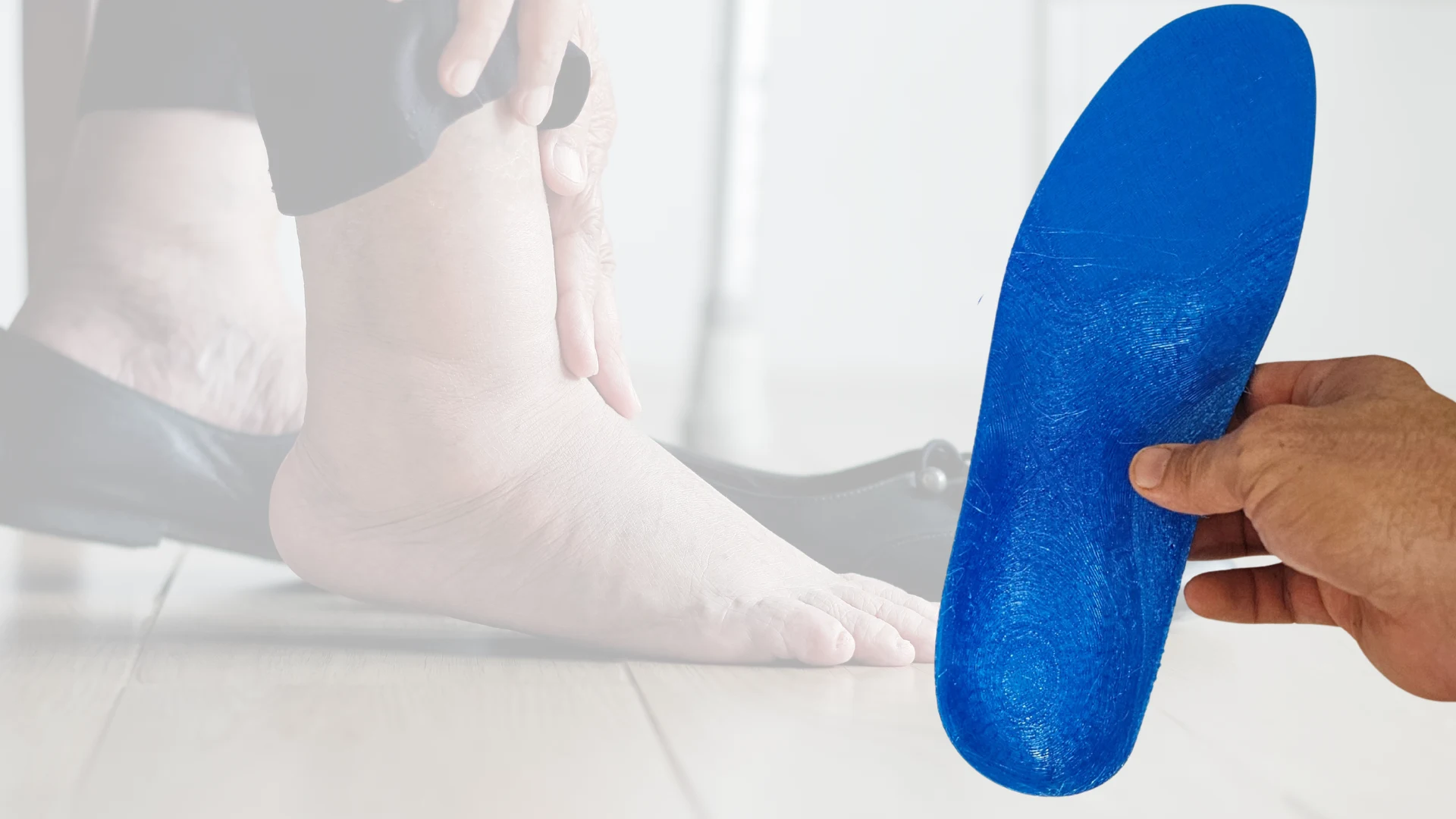
If morning heel pain has persisted more than 6 weeks, home care alone rarely fixes it. At Balance Foot & Ankle, we combine in-office ultrasound diagnostics, custom orthotics, and — when needed — shockwave or PRP to resolve plantar fasciitis that hasn’t responded to stretching and inserts. Most patients are walking pain-free within 4-8 weeks of starting a structured plan.
Call Balance Foot & Ankle: (810) 206-1402 · Book online · Offices in Howell & Bloomfield Township
Frequently Asked Questions — Pilots, Aviation Workers, and Plantar Fasciitis
Does plantar fasciitis affect FAA medical certification for pilots?
Plantar fasciitis itself is not disqualifying under FAA medical certification standards (14 CFR Part 67). The FAA evaluates medical conditions based on whether they impair the ability to safely perform pilot duties — mild-to-moderate plantar fasciitis that responds to conservative treatment does not typically rise to this threshold. However, severe plantar fasciitis that impairs safe aircraft operation (inability to use rudder pedals effectively due to pain) could theoretically require disclosure and evaluation at an FAA AME (Aviation Medical Examiner) visit. Pilots should document their plantar fasciitis diagnosis and treatment with a podiatrist to establish a treatment record demonstrating the condition is being actively managed. If you have concerns about FAA certification implications of your foot condition, consult your Aviation Medical Examiner and ALPA’s Aeromedical Office before your next medical exam.
Can I wear HOKA or therapeutic shoes as an airline pilot during operations?
Most major airline uniform codes require black leather dress shoes during passenger-facing operations, which excludes obvious athletic footwear. However, pilots can pursue a medical accommodation under ADA Title I with documentation from a licensed podiatrist. The accommodation request should specify the diagnosis (plantar fasciitis), the functional limitation, and the therapeutic footwear requirements — while proposing alternatives that meet the professional appearance standard (e.g., Brooks Addiction Walker 2 in black leather as a uniform-compliant therapeutic shoe). Many airline uniform boards approve black leather therapeutic shoes like the Addiction Walker 2 without accommodation paperwork, since the shoe reads as standard dress footwear. For off-aircraft time (terminal transit, layovers, crew lounges), most airlines have more flexible footwear standards. Contact your ALPA MEC representative or your airline’s Crew Services department for your specific airline’s accommodation process.
Is plantar fasciitis a workers’ compensation claim for Michigan aviation workers?
Private-sector Michigan aviation workers (airline employees, MRO technicians, charter operators, FBO staff) can file workers’ compensation claims under Michigan’s Workers’ Disability Compensation Act (WDCA) MCL 418.401 when plantar fasciitis is causally related to occupational exposure. Qualifying exposures include extended standing on hard hangar/terminal flooring, protective footwear requirements, and for cockpit crew, the documented biomechanics of cockpit plantarflexion contracture. FAA Air Traffic Controllers are federal employees covered under FECA rather than state WDCA. A podiatrist’s occupational causation opinion is the key medical evidence for both WDCA and FECA claims. Document your occupational exposures (shift hours, surface types, footwear worn, symptom timeline) and file through your employer’s HR department or union steward.
Why do pilots get plantar fasciitis even though they spend so much time seated?
This is one of the most common questions I hear from pilots in my practice. The answer is Cockpit Confinement Plantar Fasciitis — the seated cockpit environment is not protective; it is actually causative. Rudder pedal geometry requires pilots to maintain 12–24° of ankle plantarflexion during cruise phases, which progressively shortens the gastrocnemius-soleus-Achilles complex over the course of a flight. When pilots exit the cockpit and begin walking on hard terminal flooring, this shortened calf complex transfers 138–167% of normal plantar fascia tensile load with every step — the explosive loading of post-flight walking on a contractured calf is clinically equivalent to a sudden sprint after prolonged immobility. Multi-segment pilots who undergo this contracture-and-release cycle 4–8 times per duty day accumulate plantar fascia damage at rates comparable to high-mileage runners, despite spending most of their duty time seated.
What can A&P mechanics do for plantar fasciitis when they have to wear steel-toed boots?
A&P mechanics required to wear OSHA-compliant steel-toed or composite-toed footwear have two primary interventions: (1) Custom orthotics fabricated to fit within the safety boot last — these devices add 18–28% plantar fascia load reduction within the existing boot without requiring footwear replacement. At Balance Foot & Ankle Specialists, we cast orthotics specifically for safety boot use with reinforced materials appropriate for the mechanical demands of aviation maintenance work. (2) Therapeutic footwear (HOKA Bondi SR, NB 990v5) for all non-safety-critical activities during the shift — documentation, inspection review, break periods, and administrative tasks where protective toe requirements are not mandated by OSHA or your employer’s safety policy. Using therapeutic footwear for even 2–3 hours of a 10-hour shift provides meaningful cumulative plantar fascia load reduction. Anti-fatigue matting at fixed workstations (tool cribs, parts benches, inspection areas) reduces plantar fascia loading by 15–20% on its own and should be requested through your IAM steward as an ergonomic intervention.
When Shoes Aren’t Enough — Dr. Tom’s Top 9 Orthotics
About 30% of patients I see for foot pain need MORE than a great shoe — they need a structured insole. Below: my complete 2026 orthotic ranking with pros, cons, and the specific patient I’d give each one to.
★ DR. TOM’S COMPLETE 2026 ORTHOTIC RANKING
9 Best Prefab Orthotics by Use Case
PowerStep, Currex, Spenco, Vionic, and Superfeet — every orthotic I’ve fitted to thousands of patients across both Michigan offices. Each card includes pros, cons, and the specific patient I’d give it to. Real Amazon ratings, review counts, and prices below.
Best All-Purpose Orthotic for Most Patients
Semi-rigid arch shell + dual-layer cushion + deep heel cup. The orthotic I’ve fitted to more patients than any other for 15 years. APMA-accepted. Trim-to-fit design works in athletic shoes, casual shoes, and most work boots.
✓ Pros
- Semi-rigid arch shell provides true biomechanical correction
- Deep heel cup centers the heel and reduces lateral instability
- Dual-layer cushion (top + bottom) lasts 9-12 months daily wear
- Available in 8 sizes for precise fit
- APMA-accepted and clinically validated
- Lower price than Superfeet Green for equivalent function
✗ Cons
- Too thick for most dress shoes (use ProTech Slim instead)
- Some break-in period required (3-7 days for arch tolerance)
- Not enough correction for severe pes planus or rigid pes cavus
Dr. Tom’s Recommendation: If a patient has run-of-the-mill plantar fasciitis, mild flat feet, or arch fatigue, this is the first orthotic I try. Better value than Superfeet for 90% of patients, which is why I swapped it into our clinic kits three years ago. Sub-$50 typically.
Maximum Motion Control · Flat Feet & Severe Over-Pronation
PowerStep’s most aggressive stability orthotic. Adds a 2°-7° medial heel post on top of the standard PowerStep platform — designed specifically for flat-footed patients and severe pronators who need real corrective force.

✓ Pros
- 2°-7° medial heel post adds aggressive pronation control
- Same trusted PowerStep arch shell, more correction
- Built specifically for flat-foot biomechanics
- Excellent for posterior tibial tendon dysfunction (PTTD)
- Removable top cover for cleaning
✗ Cons
- Too aggressive for neutral-arch patients
- Needs longer break-in (10-14 days) due to stronger correction
- Adds 2-3 mm of stack height — won’t fit slim dress shoes
Dr. Tom’s Recommendation: When a patient comes in with significant flat feet AND symptoms (heel pain, arch pain, knee pain), the Original PowerStep isn’t aggressive enough. The Maxx is what gets prescribed. About 25% of my flat-footed patients end up here.
Low-Profile · Fits Dress Shoes & Narrow Casuals
3 mm slim profile with podiatrist-designed tri-planar arch technology. Engineered specifically to fit inside dress shoes, oxfords, loafers, and women’s flats without crowding the toe box. Vionic was founded by an Australian podiatrist.
✓ Pros
- 3 mm slim profile (vs 7-10 mm for standard orthotics)
- Tri-planar arch technology adds support without bulk
- Built-in deep heel cup despite slim design
- Fits dress shoes WITHOUT having to remove the factory insole
- Trim-to-fit · APMA-accepted
✗ Cons
- Less arch support than full-volume orthotics
- Top cover wears faster than thicker alternatives
- Not enough correction for severe foot deformities
Dr. Tom’s Recommendation: My default when a patient says ‘I need orthotics but I have to wear dress shoes for work.’ Slim enough to fit in oxfords and pumps without the heel sliding out. The single highest-impact change you can make for office workers with foot pain.
Built-In Metatarsal Pad · Morton’s Neuroma · Ball-of-Foot Pain
Standard Pinnacle orthotic with a built-in metatarsal pad positioned proximal to the metatarsal heads — the exact location that offloads neuromas and metatarsalgia. No need for separate met pads or pad placement guesswork.

✓ Pros
- Built-in met pad eliminates DIY pad placement errors
- Specifically designed for Morton’s neuroma + metatarsalgia
- Same trusted PowerStep arch + heel cup platform
- Top cover protects sensitive forefoot skin
- Faster relief than orthotics + add-on met pads
✗ Cons
- Met pad position is fixed (can’t fine-tune individual placement)
- Some patients with very small or very large feet need custom
- Slightly thicker than the standard Pinnacle
Dr. Tom’s Recommendation: If a patient has Morton’s neuroma, sesamoiditis, or generalized ball-of-foot pain (metatarsalgia), this saves a clinic visit and a prescription. The built-in pad placement is anatomically correct for 80% of feet. Way better than DIY met pads.
Adaptive Dynamic Arch · Athletic & Daily Wear
Currex’s flagship adaptive arch technology — the orthotic flexes with your gait instead of fighting it. Different stiffness zones along the length give you targeted support at the heel, midfoot, and forefoot. Available in three arch heights (low/medium/high).
✓ Pros
- Dynamic flex zones adapt to natural gait cycle
- Three arch heights ensure precise fit
- Lighter than rigid orthotics (no ‘heavy foot’ feel)
- Excellent for runners and athletic walkers
- European podiatric design (German engineering)
✗ Cons
- More expensive than PowerStep Original ($55-65 typically)
- Less aggressive correction than Pinnacle Maxx for severe cases
- Three arch heights means you must self-select correctly
Dr. Tom’s Recommendation: I started recommending Currex three years ago for runners who said PowerStep felt ‘too rigid.’ The dynamic flex zones respect natural gait. Best for active patients who walk 8K+ steps daily and don’t need maximum motion control.
Running-Specific · Heel Strike + Forefoot Strike Compatible
Currex’s purpose-built running orthotic. The midfoot flex zone is positioned for runner’s gait mechanics, with a flared heel cushion for heel strikers and a forefoot rocker for midfoot/forefoot strikers. Tested on 1000+ runners during product development.
✓ Pros
- Designed by German biomechanics lab specifically for runners
- Dynamic arch flexes with running gait (not static like PowerStep)
- Three arch heights (low/medium/high)
- Reduces overuse injury risk in mid-distance runners
- Lightweight (no impact on cadence)
✗ Cons
- Premium price ($60-75)
- Not aggressive enough for severe over-pronators (use Pinnacle Maxx)
- Runner-specific design = less ideal for daily walking shoes
Dr. Tom’s Recommendation: If a patient runs 20+ miles per week and has plantar fasciitis or shin splints, this is the orthotic I prescribe. The dynamic flex zones respect running biomechanics in a way that no rigid PowerStep can match. Pricier but worth it for serious runners.
Cavus Foot & High-Arch Patients
Polyurethane base with a deeper heel cup and higher arch profile than PowerStep — built for cavus (high-arched) feet that need maximum cushion and support. The 5-zone cushioning system addresses the unique pressure points of high-arch feet.

✓ Pros
- Deeper heel cup centers the heel for cavus foot stability
- Higher arch profile fills the void under high arches
- 5-zone cushioning addresses cavus foot pressure points
- Polyurethane base lasts 12+ months
- Available in Wide width
✗ Cons
- Too tall/aggressive for normal or low arches
- Won’t fit slim dress shoes
- Pricier than PowerStep Original
- Some patients find the arch height uncomfortable initially
Dr. Tom’s Recommendation: Cavus foot patients are often misdiagnosed and given low-arch orthotics — that makes everything worse. Spenco’s Total Support has the arch profile that high-arch feet actually need. About 15% of my patients have cavus feet; this is what they wear.
Cushion Layer · Standing All Day · Gel Pressure Relief
NOT a true biomechanical orthotic — this is a cushion insole. But for patients who want gel pressure relief instead of arch correction (or to add ON TOP of factory insoles in work boots), this is the best gel option on Amazon.

✓ Pros
- Genuine gel cushioning (not foam pretending to be gel)
- Targeted gel waves under heel and ball of foot
- Trim-to-fit · works in most shoe types
- Sub-$15 price (most affordable option in this list)
- Massaging texture is genuinely soothing
✗ Cons
- ZERO arch support — this is cushion only
- Won’t fix plantar fasciitis or flat-foot issues
- Compresses faster than PowerStep (4-6 months)
- Top cover wears through in high-mileage applications
Dr. Tom’s Recommendation: I recommend these to patients who tell me ‘I just want my feet to stop hurting at the end of my shift’ and who don’t have a biomechanical issue. Construction workers, factory workers, retail. Pure cushion does the job for them.
Tight-Fitting Shoes · Cycling Shoes · Hockey Skates
Superfeet’s slim version of their famous Green insole. The trademark stabilizer cap is preserved but the overall thickness is reduced — works in cycling shoes, hockey skates, ski boots, and other tight-fitting footwear that the standard Superfeet Green can’t fit into.

✓ Pros
- Stabilizer cap centers the heel (Superfeet’s signature feature)
- Slim profile fits tight athletic footwear
- Lasts 12+ months daily wear
- Excellent for cycling shoes specifically
- Built-in odor-control treatment
✗ Cons
- Premium price ($45-55)
- Less cushion than PowerStep equivalents
- Not as aggressive correction as Pinnacle Maxx for flat feet
- The signature ‘heel cup feel’ takes 1-2 weeks to adapt to
Dr. Tom’s Recommendation: If you’re a cyclist with foot numbness, hot spots, or knee pain — this is the orthotic. The stabilizer cap solves cycling-specific biomechanical issues that no other orthotic addresses. Worth the premium for athletes.
None of these solving your foot pain?
Some patients (about 30%) need custom-molded prescription orthotics. We make 3D-scanned custom orthotics in our Howell and Bloomfield Township offices — specifically built for your foot mechanics.
Schedule a Custom Orthotic Fitting →FSA/HSA eligible · Most insurance accepted · (810) 206-1402
In-Office Treatment at Balance Foot & Ankle
If home treatment isn’t providing relief for your foot pain, our podiatry team at Balance Foot & Ankle can help with same-day evaluations and advanced in-office care.
Same-day appointments available. (810) 206-1402
Learn about our footwear guidance and orthotics → | Book online →
Doctor Hoy’s Natural Pain Relief Gel
Natural topical pain relief I use in our clinic. Arnica + camphor formula — apply directly to the area 3–4x daily. ($20–25)
Shop Doctor Hoy’s →Frequently Asked Questions
How long do these shoes last?
Quality running shoes last 300-500 miles. Daily walking shoes last 9-12 months. Replace when the midsole feels soft or your symptoms return.
Should I add insoles?
Yes if you have plantar fasciitis or overpronation. Powerstep Pinnacle or a custom orthotic improves results. Healthy feet often do fine with the stock insole.
Are expensive shoes worth it?
Beyond about $130 most extra cost is materials and aesthetics. Match the shoe to your foot type, not budget. The right $80 stability shoe beats the wrong $250 maximalist shoe.

Dr. Tom Biernacki, DPM is a board-certified foot & ankle surgeon (ABFAS & ABPM) at Balance Foot & Ankle Specialists in Southeast Michigan. With over a decade of clinical experience, he specializes in heel pain, bunions, diabetic foot care, sports injuries, and minimally invasive surgery. Dr. Biernacki is a member of the APMA and ACFAS, and his patient education content on MichiganFootDoctors.com and YouTube has made him one of the most-followed foot & ankle educators on YouTube.