
All three look like crooked toes — the joint that bends tells us which one and what to do about it.
You are in the right place. Dr. Tom Biernacki, DPM, FACFAS — board-certified foot & ankle surgeon with 3,000+ surgeries — explains exactly what claw toe vs hammertoe vs mallet toe means and what works. Book online or call (810) 206-1402 for same-day appointment at Howell or Bloomfield Township.
Medically reviewed by Dr. Tom Biernacki, DPM · Board-Certified Podiatric Surgeon · Last reviewed: April 2026 · Editorial Policy
The most important clinical decision with Claw Toe Vs Hammertoe Vs Mallet Toe Differences Treatment isn’t which treatment to start with — it’s identifying the correct subtype. That changes everything. Call (810) 206-1402.
Quick Answer
Claw Toe vs. Hammertoe vs. Mallet Toe: Understanding the Dif relates to toe deformity — typically caused by imbalanced muscles + footwear. Most patients improve in depends on severity with conservative care. Same-week appointments in Howell + Bloomfield Township: (810) 206-1402.
▶ Watch
Medically Reviewed by Dr. Tom Biernacki, DPM — Board-Certified Podiatrist, Balance Foot & Ankle Specialists, Michigan. Last updated April 2026.
Toe deformities are among the most common structural problems treated in podiatric practice, but patients — and sometimes non-specialist clinicians — frequently confuse three distinct deformities: hammertoe, claw toe, and mallet toe. While all three involve abnormal bending of the lesser toes, they differ in which joint is affected, what causes them, and how they should be treated. Correct identification matters because treatment — both conservative and surgical — is joint-specific.
The Three Lesser Toe Joints
Understanding these deformities requires knowing the three joints in each lesser toe. The metatarsophalangeal joint (MTPJ) connects the toe to the foot. The proximal interphalangeal joint (PIPJ) is the middle knuckle. The distal interphalangeal joint (DIPJ) is the joint nearest the toenail. Each deformity involves a different combination of these joints.
Hammertoe
A hammertoe involves flexion (downward bending) at the PIPJ — the middle joint — with the MTPJ either neutral or slightly extended and the DIPJ neutral or slightly flexed. The result is a characteristic “hammer” shape with the middle knuckle raised and the toe tip pointing downward. Hammertoes most commonly affect the second toe, though any lesser toe can be involved.
Causes of Hammertoe
Hammertoes develop from muscle-tendon imbalance — the intrinsic muscles of the foot (which flex the MTPJ and extend the IP joints) become overpowered by the extrinsic flexors and extensors. Contributing factors include ill-fitting footwear (too short or pointed), bunion deformity pushing the second toe out of alignment, neuromuscular conditions affecting intrinsic muscle function, and traumatic tendon injury.
Hammertoe Treatment
Flexible hammertoes (correctable passively) respond well to conservative care: wider shoe boxes, padding the raised knuckle against shoe friction, toe sleeve separators, and physical therapy to strengthen intrinsic muscles. When the deformity becomes rigid (fixed) or causes skin breakdown and pain that conservative care cannot control, surgical correction via proximal interphalangeal joint arthroplasty or arthrodesis (fusion) reliably restores alignment.
Claw Toe
Claw toe involves hyperextension at the MTPJ combined with flexion at both the PIPJ and DIPJ — producing a “claw” posture with the toe base raised and both IP joints curled downward. This deformity affects all lesser toes more uniformly and is often associated with systemic neurological or metabolic conditions.
Causes of Claw Toe
Claw toes signal intrinsic muscle weakness or denervation — the intrinsics normally flex the MTPJ and extend the IP joints; when they fail, extrinsic tendons create the characteristic claw posture. Associated conditions include peripheral neuropathy (especially diabetic), Charcot-Marie-Tooth disease, rheumatoid arthritis, and compartment syndrome sequelae. Multiple-toe claw deformity in a patient without prior foot surgery should prompt investigation for systemic neurological disease.
Claw Toe Treatment
Conservative management involves deep toe box shoes, metatarsal pads to offload the metatarsal heads (where calluses form due to MTPJ hyperextension), and custom orthotics. Surgical correction for rigid claw toes requires addressing both the PIPJ (arthrodesis) and the MTPJ hyperextension (extensor tendon lengthening or MTPJ release).
Mallet Toe
Mallet toe is the simplest of the three: isolated flexion at the DIPJ only — the tip of the toe curls downward while the PIPJ and MTPJ remain straight. The result is a toe with a downward-curved tip that presses against the floor or shoe, causing a painful callus or corn at the distal tip.
Causes of Mallet Toe
Mallet toe most commonly results from footwear with an insufficient toe box height that chronically compresses the toe tip, or from distal flexor tendon tightness. A single mallet toe (especially the second) may follow a hyperextension injury at the DIPJ. Unlike claw toes, mallet toe is rarely associated with systemic disease.
Mallet Toe Treatment
Conservative treatment with padded toe caps, toe straightening splints, and shoe modification (extra depth at the toe box) manages most cases. Surgical correction via DIPJ arthroplasty (joint resection) or arthrodesis (fusion) resolves fixed deformities and eliminates the distal tip corn permanently.
Flexible vs. Rigid: The Most Important Clinical Distinction
Regardless of deformity type, the most important clinical determination is whether the deformity is flexible (passively correctable) or rigid (fixed). Flexible deformities respond to conservative measures and, when surgical correction is needed, allow simpler soft tissue procedures. Rigid deformities typically require bony procedures (arthroplasty or arthrodesis). The longer deformities go untreated, the more likely they are to progress from flexible to rigid — making early evaluation important.
Evaluation at Balance Foot & Ankle
Dr. Biernacki performs a thorough assessment of toe deformities including weight-bearing X-rays to quantify joint alignment, assessment of deformity flexibility, evaluation for underlying neurological or systemic causes, and a discussion of all conservative and surgical options appropriate to the specific deformity type and severity.
Toe Deformity Evaluation — Bloomfield Township & Howell, MI
Hammertoes, claw toes, and mallet toes are correctable — the sooner treatment begins, the simpler the solution. Dr. Biernacki at Balance Foot & Ankle provides expert evaluation and a clear treatment plan.
📞 (810) 206-1402 |
📧 Get Dr. Tom’s Free Lab Test Guide
Discover the 5 lab tests every person over 35 should ask their doctor about — explained in plain English by a board-certified physician.
📍 Located in Michigan?
Our board-certified podiatrists treat this condition at two convenient locations. Same-day appointments often available.
More Podiatrist-Recommended Hammertoe Essentials
Extra-Depth Orthopedic Shoe
Orthofeet Sprint — tall toe box prevents hammertoe rubbing and friction.
Wide-Toe-Box Walking Shoe
New Balance 990v6 — accommodates curled toes without pressure.
Supportive Insole


Watch: How to Fix Hammer Toes at Home [Overlapping & Crossover Toes]! — MichiganFootDoctors YouTube
PowerStep Pinnacle — reduces forefoot pressure that drives hammertoe.
As an Amazon Associate, Balance Foot & Ankle earns from qualifying purchases. Product recommendations are based on clinical experience; prices and availability shown above update live from Amazon.
When to See a Podiatrist
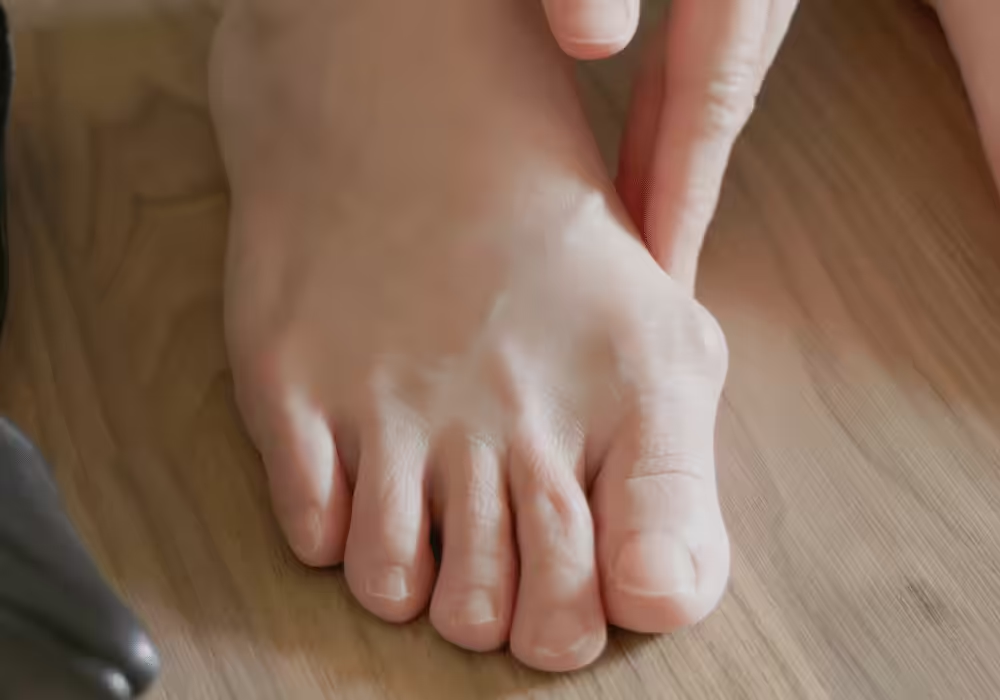
Rigid hammertoes don’t reduce with splinting alone — the tendon and capsule have contracted. If the toe no longer straightens passively, surgical correction restores alignment in one short outpatient visit. Call Balance Foot & Ankle to see whether your deformity is still flexible (and responsive to the conservative tools above) or if it’s time for a 20-minute in-office correction.
Call Balance Foot & Ankle: (810) 206-1402 · Book online · Offices in Howell & Bloomfield Township
In Our Clinic
Hammertoes come to our clinic in two flavors: flexible (the toe still passively straightens) and rigid (it doesn’t). For flexible hammertoes we use gel toe crests, roomier toe boxes, custom orthotics to address the underlying instability, and sometimes night splints. Rigid hammertoes with a corn on top of the PIP joint, or a callus under the metatarsal head, usually need a minor outpatient procedure (PIP arthroplasty or fusion) to straighten the toe. The patients who wait too long develop fixed deformities and skin breakdown — we would much rather address a flexible hammertoe early.
Watch: Dr. Tom explains
Podiatrist-recommended products
As an Amazon Associate, Dr. Tom earns from qualifying purchases.
Target specific toe deformity types.
View on Amazon →Forefoot cushion for deformed toes.
View on Amazon →Reduce inflammation around corns.
View on Amazon →Topical toe-joint relief.
View on Amazon →Related resources
Ready to solve this? Book today.
Same-week appointments · Howell & Bloomfield Township · 4.9★ (1,123+ reviews)
☎ (810) 206-1402Book Online →In-Office Treatment at Balance Foot & Ankle
When conservative care isn’t enough, Dr. Tom Biernacki and the team at Balance Foot & Ankle offer advanced, same-day options — including Hammertoe Treatment Michigan at our Howell and Bloomfield Township clinics.
Same-day appointments available. Call (810) 206-1402 or book online.
Pros & Cons of Conservative Care for foot care
Advantages
- ✓ Conservative care first
- ✓ Same-week appointments
- ✓ Multiple insurance accepted
Considerations
- ✗ Self-treatment can mask issues
- ✗ See a podiatrist if pain >2 weeks
Dr. Tom’s Recommended Products for foot care
Affiliate disclosure: As an Amazon Associate, Balance Foot & Ankle earns from qualifying purchases. We only recommend products we use with patients.
Footnanny Heel Cream Dr. Tom’s Pick
Best for: Daily moisturizer for cracked heels
Ready to Get Back on Your Feet?
Same-day appointments in Howell + Bloomfield Township. Most insurance accepted. Dr. Tom Biernacki, DPM & team.
Book Today — Same-Day Appointments Available
Call Now: (810) 206-1402
About Your Care Team at Balance Foot & Ankle
Dr. Tom Biernacki, DPM · Board-Certified Foot & Ankle Surgeon. Specializes in conservative-first care, minimally invasive bunion surgery, and complex reconstruction.
Dr. Carl Jay, DPM · Accepting new patients. Specializes in sports medicine, athletic injuries, and routine podiatric care.
Dr. Daria Gutkin, DPM, AACFAS · Accepting new patients. Specializes in surgical reconstruction and pediatric podiatry.
Locations: 4330 E Grand River Ave, Howell, MI 48843 · 43494 Woodward Ave Suite 208, Bloomfield Township, MI 48302
Hours: Mon–Fri 8:00 AM – 5:00 PM · (810) 206-1402
In-Office Treatment at Balance Foot & Ankle
If home treatment isn’t providing relief for your hammertoes, our podiatry team at Balance Foot & Ankle can help with same-day evaluations and advanced in-office care.
Same-day appointments available. (810) 206-1402
Frequently Asked Questions
Which is better for plantar fasciitis?
The shoe with more cushioning and a stronger rocker typically wins for plantar fasciitis. See full comparison for our specific verdict.
Which lasts longer?
Both options typically last 300-500 miles for runners or 9-12 months for daily walkers. Material durability varies; check our detailed comparison.
Which is better for flat feet?
Flat feet need stability or motion control. The neutral option is not ideal unless paired with a custom orthotic.
What is Hammertoe?
Hammertoe is a common foot/ankle condition that affects mobility and quality of life. Understanding the underlying cause is the first step in successful treatment. Our podiatrists at Balance Foot & Ankle perform a hands-on biomechanical exam, review your activity history, and use diagnostic imaging when appropriate to identify the root cause—not just treat the symptom. Many patients have been told to “rest and ice” without a deeper diagnostic workup; our approach is different.
Symptoms and warning signs
Common signs of hammertoe include pain that worsens with activity, morning stiffness, swelling, tenderness when palpated, and difficulty bearing weight. If you experience sudden severe pain, inability to walk, visible deformity, numbness or color change, contact our office the same day or visit urgent care—these can signal a more serious injury such as a fracture, tendon rupture, or vascular compromise. Diabetics with any foot wound should seek same-day care.
Conservative treatment options
Most cases of hammertoe respond to non-surgical care: structured rest, supportive footwear changes, custom orthotics, targeted stretching and strengthening protocols, anti-inflammatory medications when medically appropriate, and in-office procedures such as ultrasound-guided injections. We also offer advanced therapies including MLS laser therapy, EPAT/shockwave, regenerative injections, and image-guided procedures. Treatment is sequenced from least invasive to most invasive, and we explain the rationale at every step.
When is surgery considered?
Surgery is reserved for cases that fail 3-6 months of well-structured conservative care, when there is structural pathology (severe deformity, complete tear, advanced arthritis), or when imaging shows damage that will not heal without intervention. Our surgeons have performed 3,000+ foot and ankle procedures and prioritize minimally-invasive techniques whenever appropriate. We discuss recovery timelines, return-to-activity milestones, and realistic outcome expectations before any procedure is scheduled.
Recovery timeline and prevention
Recovery from hammertoe varies based on severity and chosen treatment path. Conservative cases often improve within 4-8 weeks with consistent adherence to the protocol. Post-procedural recovery may range from a few days (in-office procedures) to several months (reconstructive surgery). Long-term prevention involves footwear assessment, activity modification, structured strengthening, and regular check-ins with your podiatrist if you have a history of recurrence. We provide written home-exercise plans and digital follow-up support.
Ready to feel better?
Same-week appointments available in Howell and Bloomfield Township, Michigan.
Book Your VisitSame-Week Appointments in Howell & Bloomfield Township
Three board-certified podiatric surgeons. 1,123+ five-star reviews. Most insurance accepted.
Ready for Expert Care?
Same-day appointments in Howell & Bloomfield Township, MI.
4.9★ | 1,123 Reviews | 3,000+ Surgeries
Or call: (810) 206-1402

Dr. Tom Biernacki, DPM is a board-certified foot & ankle surgeon (ABFAS & ABPM) at Balance Foot & Ankle Specialists in Southeast Michigan. With over a decade of clinical experience, he specializes in heel pain, bunions, diabetic foot care, sports injuries, and minimally invasive surgery. Dr. Biernacki is a member of the APMA and ACFAS, and his patient education content on MichiganFootDoctors.com and YouTube has made him one of the most-followed foot & ankle educators on YouTube.
More questions patients ask
What is a hammertoe?
A hammertoe is a deformity where the toe bends abnormally at the middle joint, creating a hammer-like appearance. It typically affects the second through fifth toes and results from muscle imbalance, tight shoes, genetics, or underlying conditions like arthritis. Without treatment, flexible hammertoes become rigid and may require surgical correction. Dr. Biernacki offers both conservative and surgical treatment options.
Can hammertoes be fixed without surgery?
Flexible hammertoes (those that can still be straightened manually) often respond to conservative treatment including toe splints, padding, shoe modifications, custom orthotics, and stretching exercises. Once a hammertoe becomes rigid, surgery may be necessary. Early intervention provides the best outcomes for non-surgical management.
What does hammertoe surgery involve?
Modern hammertoe correction typically involves a minimally invasive approach where Dr. Biernacki releases the contracted tendon and removes a small bone segment through a tiny incision. Recovery involves wearing a surgical shoe for 3-4 weeks with most patients returning to regular shoes within 6 weeks. Success rates exceed 90% with low recurrence rates.
Still have a question about coverage or cost? Book online and we will check your benefits before your visit: Book in Howell · Book in Bloomfield Township. Prefer to talk it through first? Call (810) 206-1402.