
Medically reviewed by Dr. Tom Biernacki, DPM — Board-certified foot & ankle surgeon, 3,000+ surgeries performed. Updated April 2026 with current clinical evidence. This article reflects real practice experience from Balance Foot & Ankle Specialists in Howell and Bloomfield Hills, Michigan.
Quick Answer
Custom orthotics are prescription inserts made from a 3D scan of your foot. They address the structural cause of plantar fasciitis, flat feet, or metatarsalgia rather than just cushioning symptoms. Most patients feel improvement within 2-4 weeks. Covered by most PPO plans and Medicare when medically indicated.
Watch: Dr. Tom Biernacki, DPM

Medically reviewed by Dr. Tom Biernacki, DPM — Board-Certified Podiatric Surgeon — Balance Foot & Ankle, Howell & Bloomfield Hills, MI. Last updated April 2026.
Treatment at Balance Foot & Ankle: Custom 3D Orthotics →
▶ Watch
📋 Dr. Tom Also Recommends
Podiatrist Recommended Orthotics 2026: Dr. Tom’s Top 10 Insoles & Arch Supports
A podiatrist’s complete clinical guide to the best insoles — custom orthotics, OTC picks, and what actually works for plantar fasciitis, flat feet, neuropathy & more.
Read the Full Guide →Medically reviewed by Dr. Tom Biernacki, DPM
Board-certified podiatric surgeon | Balance Foot & Ankle
Last reviewed: April 2026
Quick answer: Custom orthotics are prescription medical devices molded to your unique foot anatomy and biomechanics. OTC insoles provide generic cushioning and arch support. Custom orthotics are warranted when structural foot issues, chronic pain, or diabetic neuropathy require precise biomechanical correction that off-the-shelf products cannot deliver.
Custom Orthotics vs Over-the-Counter Insoles
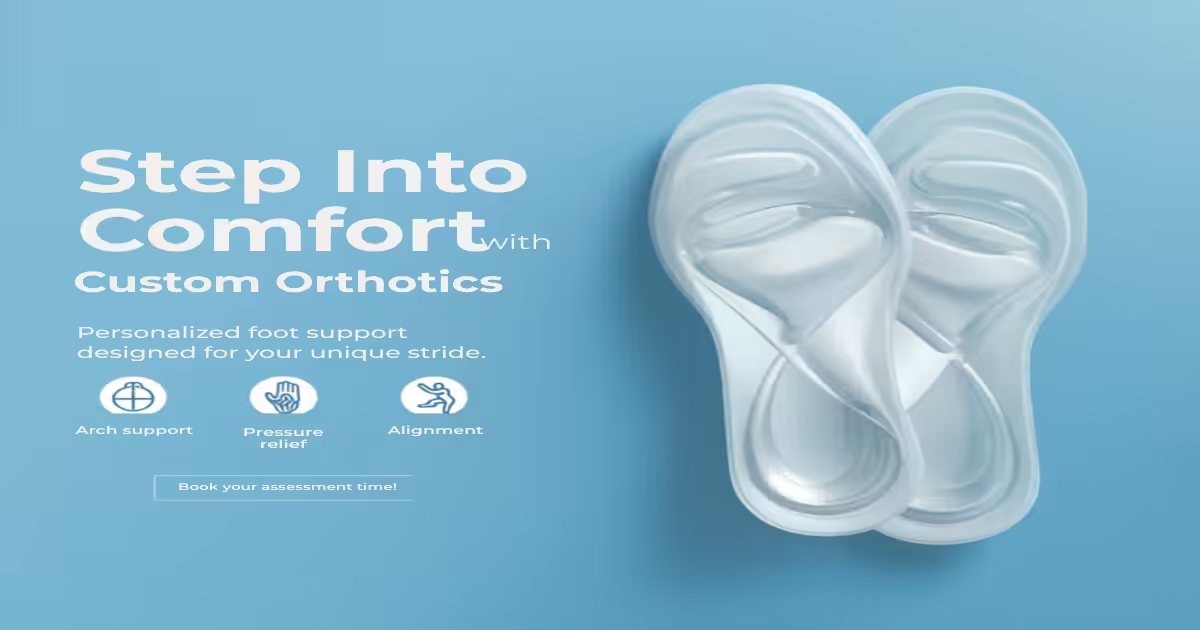
Over-the-counter insoles and custom orthotics are frequently confused, but they serve fundamentally different purposes and are manufactured in entirely different ways. Over-the-counter insoles — including arch supports sold at pharmacies and sporting goods stores — are mass-produced in standardized sizes and shapes based on population averages. Custom orthotics are prescription medical devices fabricated from a three-dimensional impression of an individual patient is foot, designed to address that specific person is unique biomechanical characteristics, foot structure, and pathology.
The functional difference is analogous to the difference between reading glasses from a drugstore rack and prescription lenses ground to your exact refractive error. The store glasses may help some people with mild, average-range conditions, but anyone with a distinct prescription, astigmatism, or significant correction will achieve far better results with custom fabrication. The same principle applies to foot orthotics.
How Custom Orthotics Work
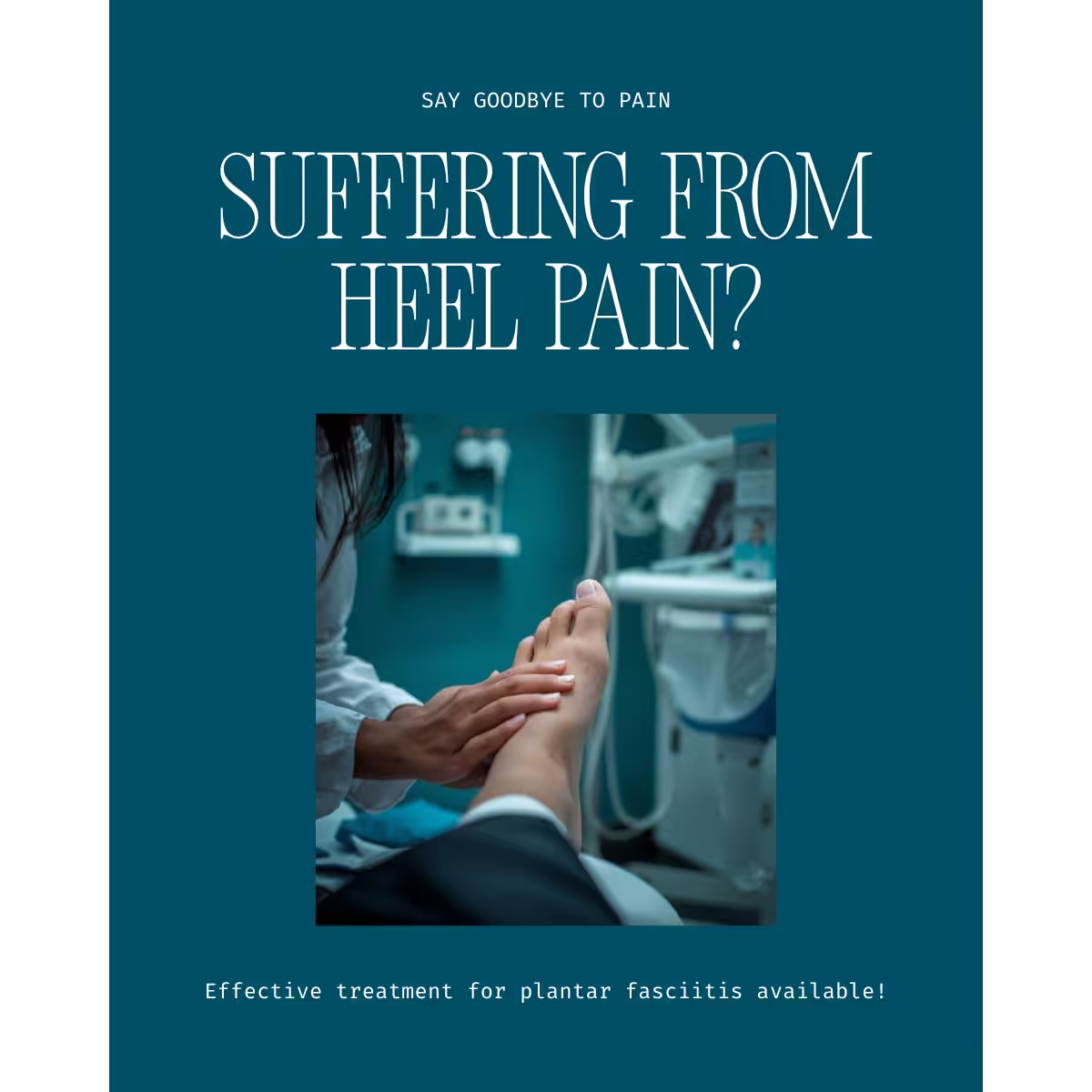
Custom orthotics are fabricated from plaster casts, foam box impressions, or 3D optical scans of the patient is feet taken in a controlled position determined by the prescribing podiatrist. The prescription specifies corrections, accommodations, and materials based on the individual is gait analysis, foot type, and condition being treated. Rigid functional orthotics control abnormal motion — they are prescribed for conditions like adult-acquired flatfoot, overpronation causing plantar fasciitis or tibial stress syndrome, and biomechanical leg length discrepancy. Accommodative orthotics redistribute pressure — they are prescribed for diabetic plantar ulcer prevention, metatarsalgia, sesamoiditis, and post-surgical accommodation.
When to consider custom orthotics over OTC insoles:
- Plantar fasciitis or heel pain that has not responded to OTC arch supports
- Structural foot deformities such as flat feet or high arches
- Diabetic neuropathy requiring pressure redistribution
- Recurring injuries related to gait or biomechanical imbalances
Who Benefits Most from Custom Orthotics
 diabetic foot care podiatrist” class=”wp-image-57390″ width=”800″ height=”450″ loading=”lazy” decoding=”async”/>
Patients who are most likely to benefit significantly from custom over store-bought orthotics include those with significant structural foot deformity such as flat feet or high arches, those who have tried multiple over-the-counter products without adequate relief, patients with diabetes who need precise plantar pressure redistribution, athletes with recurrent overuse injuries linked to foot biomechanics, and patients recovering from foot or ankle surgery who need graduated functional support. At Balance Foot & Ankle, our podiatrists perform gait analysis and biomechanical examination before prescribing custom orthotics to ensure the prescription addresses the underlying mechanical issue driving the patient is symptoms. Most insurance plans including Medicare, Blue Cross Blue Shield, Aetna, and United Healthcare provide coverage for custom orthotics when prescribed for a qualifying medical indication.
Recommended OTC Insoles We Trust
For patients who do not yet need custom orthotics, we recommend these OTC insoles as effective starting points.
PowerStep Pinnacle Insoles — Our most-recommended OTC insole. Provides structured arch support and a deep heel cradle that mimics some features of custom devices at a fraction of the cost. Check price on Amazon
PowerStep Maxx Insoles — Maximum support version with a firmer arch and deeper heel cup for patients with moderate flat feet or overpronation. Check price on Amazon
In-Office Treatment at Balance Foot & Ankle
If home care isn’t resolving your your foot or ankle concern, a visit with a board-certified podiatrist is the fastest path to accurate diagnosis and a personalized plan. At Balance Foot & Ankle Specialists, Dr. Tom Biernacki, Dr. Carl Jay, and Dr. Daria Gutkin offer same-day and next-day appointments at both our Howell and Bloomfield Hills offices. We perform on-site diagnostic ultrasound, digital X-ray, conservative care, advanced regenerative treatments, and minimally invasive surgery when indicated.
Call (810) 206-1402 or request an appointment online. Most insurance plans accepted, including Medicare, Blue Cross Blue Shield, Aetna, Cigna, and United Healthcare.
More Podiatrist-Recommended Orthotics Essentials
PowerStep Pinnacle

- The Pinnacle Full length insoles for men & women provide maximum cushioning, from high activity to moderate support. The PowerStep arch support shape provides stability to the foot and ankle, helping to relieve foot pain.
- When you spend all day on your feet, every step counts. PowerStep insoles are a podiatrist-recommended orthotic to help relieve & prevent foot pain related to athletes, runners, Plantar Fasciitis, heel spurs & other common foot, ankle & knee injuries
- The Pinnacle plantar fasciitis insoles offer superior heel cushioning and arch support. The dual-layer cushioning is designed to reduce stress and fatigue, while PowerStep premium arch support is designed for plantar fasciitis relief.
- The PowerStep Pinnacle arch support inserts for men & women can be worn in a variety of shoe types such as; athletic, walking, running, work & some casual shoes. Orthotic Inserts are ordered by shoe size, no trimming required.
- Made in the USA & backed by a 30-day money-back guarantee. PowerStep orthotic inserts for men & women are designed for shoes where the factory insole can be removed. HSA & FSA Eligible
The podiatrist-recommended OTC orthotic — arch support + heel cup.
CURREX RunPro Insole

- FEEL BETTER, PERFORM BETTER: Flexible support and shock absorbing cushioning from heel to toe help reduce fatigue, prevent common running injuries such as shin splints, and boost performance everywhere you run, from the trails to the track; the insoles also fold at the flex point, enabling maximum flexibility with movement
- 3D Dynamic Arch Technology & Multiprofile Arch Support: Our dynamic arch support insoles come in low, medium and high arch support profiles; they feature a deep decoupled heel cup that fits, wraps and locks the heel in place, improving stability, reducing pressure, and providing a perfect fit
- Engineered to Energize Your Running: Rebound cushioning and controlled power transmission provide faster regeneration and powerful propulsion with every stride; plus, a zero heel drop provides a great fit in most running shoes with optimized motion for all running foot strikes (insoles can also be trimmed to fit for the perfect fit)
- Moisture Management & Breathability: Top layer mesh and PORON premium foam design help dehumidify the inside of shoe, keeping the feet dry and running shoes fresh throughout exercise; note you should replace your CURREX insoles after 500+ miles or 12 months, whichever comes first
- Made for What Moves You: CURREX is the only insole company that offers a full line of activity-specific insoles customized to help improve how you move; whatever you or your family loves to do, from the workday through the weekend, CURREX makes moving more comfortable, leading to better performance and more fun
Performance insole for runners — reduces fatigue and prevents injuries.
Tuli’s Heel Cups
- ✶ALLEVIATES HEEL PAIN – Tuli’s Heavy Duty Heel Cups provide heel pain relief caused by plantar fasciitis, Sever’s disease, excessive pronation, Achilles tendonitis, etc. Ideal for those on their feet for most of the day or those looking for added comfort.
- ✶PODIATRIST PREFERRED – In an independent study conducted by M3 Global Research, podiatrists chose Tuli’s as the clear winner of recommended heel cup brands.
- ✶SHOCK-ABSORBING DESIGN – The multi-cell, multi-layer design absorbs shock and impact energy, mimicking the natural shock-absorbing system of your feet. As you walk or run, the design reduces the stress on your feet.
- ✶DOCTOR RECOMMENDED & APMA ACCEPTED – Tuli’s Heel Cups were designed by a leading podiatrist and have the honor of being accepted by the American Podiatric Medical Association.
- ✶FITS MOST LACE-UP SHOES – Best used in spacious lace-up shoes like athletic shoes / sneakers.
Shock-absorbing heel cushion — adds lift and relief under painful heels.
As an Amazon Associate, Balance Foot & Ankle earns from qualifying purchases. Product recommendations are based on clinical experience; prices and availability shown above update live from Amazon.

When to See a Podiatrist
Off-the-shelf inserts help 70% of patients — but if you’ve tried several without relief, custom orthotics molded to your specific foot mechanics are usually the next step. Balance Foot & Ankle makes custom orthotics in-office and most major insurance plans cover them. We’ll cast or scan your feet and have them ready in about 2 weeks.
Call Balance Foot & Ankle: (810) 206-1402 · Book online · Offices in Howell & Bloomfield Hills
Frequently Asked Questions About Custom vs OTC Insoles
Are custom orthotics worth the cost?
For patients with structural foot issues, chronic heel pain, or conditions like diabetic neuropathy, custom orthotics provide significantly better outcomes than OTC alternatives. They typically last 3-5 years and are often covered by insurance, making the per-year cost comparable to replacing OTC insoles every 6-12 months.
Does insurance cover custom orthotics?
Many insurance plans cover custom orthotics when prescribed by a podiatrist for a documented medical condition. Medicare covers therapeutic insoles for qualifying diabetic patients through the Therapeutic Shoe Program. Our office verifies your coverage before ordering.
How long do custom orthotics last?
Custom orthotics typically last 3-5 years depending on activity level and materials. We recommend annual check-ups to assess wear and ensure the devices still match your biomechanics, especially after significant weight changes or new injuries.
The Bottom Line on Custom vs OTC Insoles
Not every patient needs custom orthotics. In our clinic in Howell and Bloomfield Hills, Michigan, we start many patients with high-quality OTC insoles and only progress to custom devices when the clinical situation warrants it. The distinction matters because the right support at the right time prevents chronic problems from developing. If OTC insoles are not resolving your symptoms after 4-6 weeks of consistent use, a biomechanical evaluation can determine whether custom orthotics would make the difference.
Ready to Get Relief?
Same-day appointments available in Howell & Bloomfield Hills, MI
4.9★ | 1,123 Reviews | 3,000+ Surgeries
Or call: (810) 206-1402
Custom Orthotics at Balance Foot & Ankle
Not sure if you need custom orthotics or over-the-counter insoles? Our podiatrists can evaluate your feet and recommend the right support at our Howell and Bloomfield Hills offices.
Learn About Custom Orthotics | Book Your Appointment | Call (810) 206-1402
Clinical References
- Landorf KB, et al. Effectiveness of foot orthoses to treat plantar fasciitis: a randomized trial. Arch Intern Med. 2006;166(12):1305-1310.
- Mills K, et al. A systematic review and meta-analysis of the biomechanical function of custom-made foot orthoses. J Foot Ankle Res. 2013;6(Suppl 1):O32.
- Hawke F, et al. Custom-made foot orthoses for the treatment of foot pain. Cochrane Database Syst Rev. 2008;(3):CD006801.
Insurance Accepted
BCBS · Medicare · Aetna · Cigna · United Healthcare · HAP · Priority Health · Humana · View All →
Howell Office
3980 E Grand River Ave, Suite 140
Howell, MI 48843
Get Directions →
Bloomfield Hills Office
43700 Woodward Ave, Suite 207
Bloomfield Hills, MI 48302
Get Directions →
Your Board-Certified Podiatrists



Ready to Get Back on Your Feet?
Same-week appointments available at both locations.
Book Your Appointment👟 Dr. Tom’s Complete Footwear Library
Podiatrist-Approved Guides for Every Foot Type & Condition
Clinically reviewed by Dr. Tom Biernacki, DPM — Board-Certified Podiatrist
All guides are written and reviewed by licensed podiatrists. Schedule an appointment →
In Our Clinic
The patients we see for custom orthotic consultations usually fall into two groups. First are athletes — runners, hikers, basketball players — looking to correct a biomechanical asymmetry they’ve identified themselves or their coach has flagged. Second are middle-aged patients with chronic plantar fasciitis, metatarsalgia, or early arthritis who have exhausted over-the-counter inserts. Our process begins with a 3D foot scan plus a gait-video analysis on our in-office treadmill. We select materials based on activity — a stiffer carbon composite for performance running, a softer plastazote top cover for diabetic patients, a semi-rigid polypropylene for everyday wear. Most patients adapt in 2–4 weeks.
Most Common Mistake We See
The most common mistake we see is: Wearing new orthotics all day from day one. Fix: break-in schedule of 2 hours on day one, adding 2 hours per day until full-day tolerance.
Warning Signs That Need Same-Day Care
Seek immediate evaluation at Balance Foot & Ankle if you experience any of the following:
- New sharp pain under the arch that did not exist before
- Skin breakdown over pressure points
- Diabetic patient with any new pressure spot
- Worsening of original symptoms after 4 weeks
Call (810) 206-1402 — same-day and next-day appointments at our Howell and Bloomfield Hills offices.

Dr. Tom Biernacki, DPM is a double board-certified podiatrist and foot & ankle surgeon at Balance Foot & Ankle Specialists in Southeast Michigan. With over a decade of clinical experience, he specializes in heel pain, bunions, diabetic foot care, sports injuries, and minimally invasive surgery. Dr. Biernacki is a member of the APMA and ACFAS, and his patient education content on MichiganFootDoctors.com and YouTube has reached over one million views.
- Plantar Fasciitis: Diagnosis and Conservative Management (PubMed)
- Plantar Fasciitis (APMA)
- Diagnosis and Treatment of Plantar Fasciitis (PubMed / AAFP)
- Heel Pain (APMA)
Recommended Products from Dr. Tom