
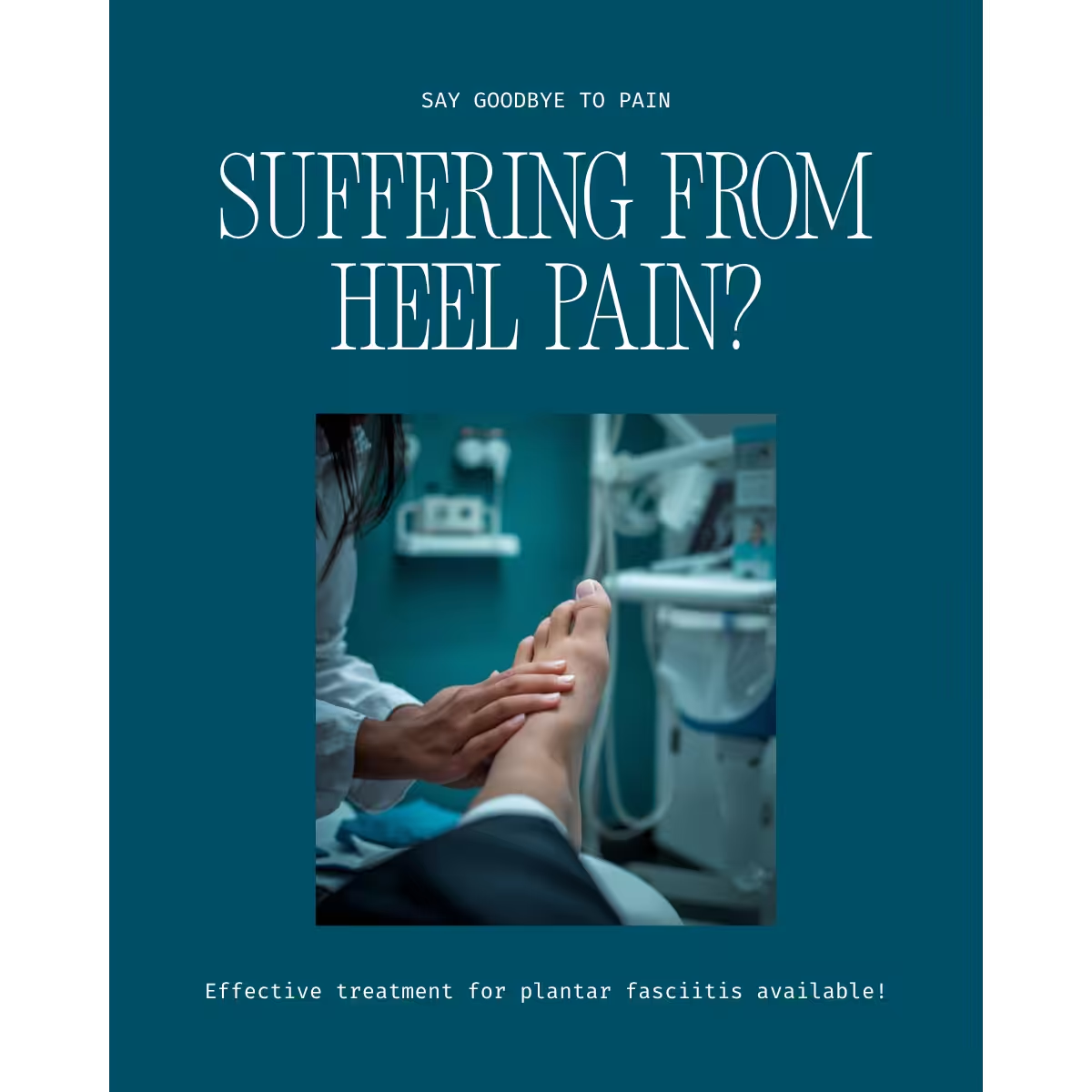
Quick answer: Disc Golf Foot Ankle Injuries Ankle Sprains Plantar Fasciitis is a common foot/ankle topic that affects many patients. The 2026 evidence-based approach combines proper diagnosis, conservative-first treatment, and escalation only when needed. We treat this regularly at our Howell and Bloomfield Township practices. Call (810) 206-1402.
Medically reviewed by Dr. Tom Biernacki, DPM — Board-Certified Podiatric Surgeon — Balance Foot & Ankle, Howell & Bloomfield Township, MI. Last updated April 2026.
Medical Review
| Medically Reviewed By: Dr. Tom Biernacki, DPM |
| Board Certified: American Board of Foot and Ankle Surgery |
| Last Updated: April 2026 |
| Evidence Level: Clinical review with cited sources |
Quick Answer: Disc Golf Foot & Ankle Injuries
Disc golf has exploded in popularity—growing from 2 million to over 12 million active players since 2020—and with that growth comes a predictable increase in sport-specific foot and ankle injuries. The disc golf drive involves a powerful rotational throw from a concrete or packed-earth tee pad, generating tremendous torsional forces through the plant foot during the X-step approach and follow-through. This combination of rotational loading on an unforgiving surface, repeated across 18–27 holes per round and multiple rounds per week, creates overuse patterns including plantar fasciitis from pivoting mechanics, lateral ankle sprains from uneven course terrain, metatarsalgia from aggressive forehand drives, and Achilles tendinopathy from the explosive drive-phase push-off. At Balance Foot & Ankle, we treat a growing number of disc golfers and understand the unique biomechanics that drive these injuries.
Affiliate Disclosure: Some product links below are affiliate links, meaning we may earn a small commission at no extra cost to you. We only recommend products we use in clinical practice. See our full disclosure.
Table of Contents
- Disc Golf Biomechanics & Foot Loading
- Common Foot & Ankle Injuries
- Plantar Fasciitis in Disc Golfers
- Ankle Sprains on the Course
- Most Common Mistake
- Conservative Treatment
- Best Insoles for Disc Golf
- Pain Management for Disc Golfers
- Compression & Recovery
- Complete Disc Golf Foot Care Kit
- Warning Signs
- Course-Specific Prevention
- Video: Disc Golf Foot Injuries
- Frequently Asked Questions
- Sources
- Schedule an Appointment
Disc Golf Biomechanics & Foot Loading
The disc golf drive is a complex kinetic chain that generates rotational forces comparable to baseball pitching or shot put—but directed through the lower extremity rather than the upper. During the backhand drive (the most common throwing technique), the player performs an X-step approach on the tee pad, plants the lead foot, and rotates explosively through the hips and trunk while the plant foot anchors against the ground. The plant foot experiences peak torsional loads of 1.5–2 times body weight as it resists the rotational momentum of the throw, with the forefoot bearing the primary rotational stress.
The tee pad surface dramatically affects injury risk. Concrete tee pads provide reliable footing but are completely unforgiving—the rigid surface transmits all ground reaction forces directly to the foot without shock absorption. Rubber tee pads offer slightly more cushioning but can become slippery when wet. Packed-earth natural tee pads vary in traction depending on conditions, creating unpredictable footing that increases ankle sprain risk. The combination of high rotational forces and variable traction creates the biomechanical environment for disc golf-specific injuries.
Beyond the tee pad, the disc golf course itself presents unique challenges. Players walk 2–4 miles per 18-hole round over terrain that ranges from manicured fairways to heavily wooded, root-covered, and uneven ground. Uphill and downhill approach shots require modified throwing mechanics that shift loading patterns. Putting—while less explosive than driving—involves repetitive weight shifting across the forefoot during 20–30 putts per round. The cumulative loading across a typical round (50–70 throws plus course walking) makes disc golf a significantly higher-volume foot loading activity than most recreational golfers realize.
Common Foot & Ankle Injuries in Disc Golf
Plantar fasciitis is the most common foot complaint among disc golfers. The repetitive pivoting and rotational loading during drives creates torsional stress on the plantar fascia that differs from the linear loading pattern seen in runners. The plant foot during a backhand drive bears both compressive and rotational forces simultaneously, and the rigid tee pad surface amplifies these forces by eliminating the natural shock absorption of softer ground. Disc golfers who play 3–5 rounds per week often develop medial heel pain that is worst during the first steps of morning and worsens progressively throughout a round.
Lateral ankle sprains rank second in disc golf injury frequency. The uneven course terrain—tree roots, elevation changes, loose gravel, and wet grass—creates constant ankle sprain risk during course navigation. Forehand (sidearm) throws involve a weight shift to the outside of the plant foot that places the ankle in a vulnerable inverted position. Tournament play during rain events dramatically increases sprain risk as tee pads become slippery and course footing deteriorates. Metatarsalgia develops from the concentrated forefoot loading during the drive follow-through, where rotational forces are transmitted through the metatarsal heads against the rigid tee pad surface.
Achilles tendinopathy results from the explosive push-off component of the X-step approach. The drive sequence requires rapid plantar flexion loading as the player accelerates through the approach—similar to the push-off mechanics in sprinting but combined with rotational forces. Disc golfers who increase their round frequency quickly (common when courses open in spring) or who transition from flat courses to hilly, elevation-change courses are at particular risk for Achilles overload.
Plantar Fasciitis in Disc Golfers: Sport-Specific Management
Managing plantar fasciitis in disc golfers requires understanding the rotational loading component that differentiates this sport from running or walking-related fasciitis. Standard advice to “rest and stretch” does not account for the torsional stress that disc golf places on the plantar fascia origin during the pivoting drive motion. Effective treatment addresses both the linear tension component (managed with calf stretching and arch support) and the rotational component (managed with footwear modification and drive mechanics coaching).
Footwear is the most impactful modifiable factor. Many disc golfers play in flat skate-style shoes or trail running shoes that provide minimal arch support and heel cushioning. Transitioning to a supportive trail shoe with a structured midsole, firm heel counter, and removable insole (to accommodate PowerStep orthotics) reduces the mechanical forces driving fascia irritation. Shoes with aggressive tread patterns also improve traction on variable course surfaces, reducing the compensatory gripping forces that the intrinsic foot muscles must generate on slippery terrain.
Ankle Sprains on the Disc Golf Course
Ankle sprains in disc golf occur through two distinct mechanisms. Terrain-related sprains happen during course navigation—stepping on an unseen root, rolling the ankle on an uneven lie, or slipping on a wet hillside. Throw-related sprains occur during the drive itself, particularly during forehand throws where the weight shifts laterally and the ankle is vulnerable to inversion if the foot slides on the tee pad or catches on the tee pad edge. The combination of both mechanisms across a full round creates cumulative ankle stress that compounds as fatigue reduces proprioceptive control in later holes.
Prevention strategies include wearing high-top or mid-cut trail shoes during wooded or hilly rounds, performing ankle stability exercises before play, and improving course awareness—scouting foot placement before approach shots on unfamiliar terrain. For players with a history of ankle sprains, combining ankle bracing with compression socks provides both mechanical restraint and proprioceptive enhancement during high-risk rounds.
Most Common Mistake Disc Golfers Make
🔑 Key Takeaway: The most common mistake disc golfers make is treating their sport as “just walking with throwing”—underestimating the rotational and impact forces involved. A competitive disc golfer generates plant-foot torsional loads comparable to a baseball pitcher during the drive, repeats this 50–70 times per round across rigid concrete tee pads, and walks 2–4 miles of variable terrain between throws. This is a significant athletic demand on the feet that requires sport-appropriate footwear and biomechanical support—not the casual shoes many players wear. The second mistake is playing through heel pain, especially during spring when courses reopen and players ramp up from winter inactivity to multiple rounds per week without adequate conditioning. The 10% rule applies to disc golf just as it does to running: increase weekly rounds gradually.
Conservative Treatment for Disc Golf Injuries
The treatment approach for disc golf foot injuries follows the same principles as other sport-specific overuse conditions: reduce the aggravating mechanical forces, support the injured structures, and gradually rebuild loading tolerance. Activity modification for disc golfers means reducing round frequency rather than stopping entirely—playing every other day instead of daily, reducing rounds from 27 to 18 holes, or substituting putting practice for full rounds to maintain skills while reducing drive-phase loading.
Drive mechanics modification can reduce foot loading without sacrificing distance. Players with plantar fasciitis benefit from reducing the aggressiveness of their X-step approach—a smoother, more controlled approach generates 80–90% of maximum distance while significantly reducing the impact forces at plant foot contact. Standstill drives eliminate the approach entirely and can be used for shorter holes while the foot heals. Forehand-dominant players experiencing lateral ankle symptoms can temporarily increase their backhand usage to shift the loading pattern away from the vulnerable lateral structures.
Best Insoles for Disc Golf
Orthotic support is particularly impactful for disc golfers because the sport demands both shock absorption (for tee pad impact) and rotational stability (for the pivoting drive motion). The ideal disc golf insole provides structured arch support that resists the medial arch collapse during pivot loading, heel cushioning that attenuates the impact of planting on concrete tee pads, and a heel cradle that stabilizes the rearfoot during the rotational weight transfer of the drive.
PowerStep Pinnacle Insoles deliver all three requirements. The semi-rigid polypropylene shell provides the structural arch support that resists collapse during rotational loading—functioning as an internal brace for the plantar fascia during the pivot phase. The built-in heel cradle stabilizes the calcaneus against the varus and valgus forces generated during weight transfer. The dual-layer cushioning system absorbs the impact of planting on rigid surfaces while maintaining enough responsiveness for athletic movement across the course.
We recommend PowerStep insoles in the primary disc golf shoe, backup shoes, and daily casual footwear. Consistent biomechanical support throughout the day is more effective than correction only during play—the 16+ hours of off-course activity provides continuous plantar fascia support and Achilles tendon offloading that accelerates healing between rounds. For players with more significant pronation or a history of ankle sprains, the PowerStep Pinnacle Maxx provides enhanced medial posting and deeper heel cup for maximum rearfoot control during rotational loading.
Pain Management for Disc Golfers
Disc golf rounds last 1.5–3 hours, and the ability to manage symptoms during play determines whether a player can complete a round without aggravating an injury. Pre-round topical application provides a practical solution that addresses symptoms without affecting performance.
Doctor Hoy’s Natural Pain Relief Gel applied to the plantar heel, medial arch, or lateral ankle 15 minutes before teeing off creates a pre-emptive analgesic layer that reduces symptom onset during play. For players with plantar fasciitis, massaging Doctor Hoy’s into the plantar fascia origin at the medial heel before stepping onto the first tee pad addresses the startup pain that often defines the first 3–4 holes. Carrying a small tube in the bag for mid-round reapplication (at the turn between front and back nine) extends the analgesic coverage through the full round.
Post-round recovery with Doctor Hoy’s Arnica Boost Recovery Cream applied to the feet and ankles after each round supports tissue recovery from the cumulative loading. For competitive players during tournament weekends (2–3 rounds over 2 days), nightly Arnica Boost application helps manage the progressive tissue fatigue that builds across multiple rounds and maintains playable comfort levels throughout the event.
Compression & Recovery
Between-round recovery is critical for disc golfers who play multiple times per week. Graduated compression accelerates the removal of inflammatory mediators and metabolic byproducts from tissues stressed during round play, reducing the cumulative tissue damage that drives overuse injuries.
DASS Performance Compression Socks worn after rounds provide graduated compression that promotes venous return and reduces the foot and ankle swelling that accumulates from 2–4 miles of course walking plus 50–70 drive-phase loading cycles. The ankle compression zone provides proprioceptive support that helps stabilize fatigued ankle ligaments during post-round activities. For players prone to ankle sprains, wearing DASS compression socks during play provides continuous ankle proprioception that supplements the stability provided by supportive footwear.
During tournament play, wearing DASS compression socks between rounds—during lunch breaks, the drive between courses, and overnight—maintains the vascular optimization that supports tissue recovery for the next round. The moisture-wicking properties also address the blister formation that can occur during multi-round days when feet swell and shift within shoes.
Complete Disc Golf Foot Care Kit
✅ Our Complete Foot Care Kit for Disc Golfers:
1. PowerStep Pinnacle Insoles — Arch support + heel stabilization for tee pad impact absorption and rotational loading
2. Doctor Hoy’s Natural Pain Relief Gel — Pre-round topical analgesia for plantar fasciitis, Achilles tendon, and ankle pain
3. DASS Performance Compression Socks — Between-round recovery compression + during-play ankle proprioception
This kit addresses the complete disc golf injury cycle: PowerStep reduces the mechanical forces driving plantar fasciitis and ankle instability, Doctor Hoy’s manages symptoms during play, and DASS accelerates recovery between rounds. Keep Doctor Hoy’s in your disc golf bag for mid-round reapplication during longer rounds or tournaments.
Warning Signs for Disc Golfers
🚨 Seek podiatric evaluation if you experience:
• Heel pain that is present during the first steps of morning (established plantar fasciitis)
• Ankle swelling that does not resolve within 48 hours of a sprain
• Pain at the back of the heel or calf that worsens during drive push-off (Achilles tendinopathy)
• Numbness or tingling in the toes during or after play
• Sharp, localized pain in the midfoot during drive follow-through (possible stress fracture)
• Ankle instability or giving way during course navigation
• Any foot pain that alters your throwing mechanics or limits round completion
Early treatment of disc golf foot injuries prevents minor overuse issues from becoming season-long problems. Most conditions respond well to sport-specific management when addressed within the first 2–3 weeks of symptoms.
Course-Specific Injury Prevention
Prevention strategies tailored to the disc golf environment can significantly reduce injury risk. Pre-round warm-up should include ankle circles, calf stretches, and 5 minutes of progressive walking before the first drive—cold tissues are more susceptible to the high rotational forces of an opening drive. During play, awareness of footing conditions on each tee pad (wet concrete, mossy surfaces, cracked edges) and adjusting approach aggressiveness accordingly prevents the slip-and-load injuries that cause acute ankle sprains.
Footwear selection by course type improves both performance and safety. Open, flat courses with concrete tee pads favor supportive trail runners with PowerStep insoles. Heavily wooded courses with elevation changes and root-covered fairways warrant higher-cut hiking shoes or dedicated disc golf shoes with aggressive tread for ankle protection and traction. Wet-weather rounds require shoes with deep lug patterns and water-resistant uppers—never play a rainy round in flat-soled shoes, as the dramatically reduced traction multiplies ankle sprain risk on every throw and course navigation step.
Video: Disc Golf Foot Injury Prevention
Watch Dr. Biernacki discuss the biomechanics of disc golf foot injuries and the preventive strategies used at Balance Foot & Ankle.

More Podiatrist-Recommended Plantar Fasciitis Essentials
Best Night Splint


![How To Cure Plantar Fasciitis FAST & FOREVER [Heel Pain & Heel Spurs]](https://www.michiganfootdoctors.com/wp-content/cache/flying-press/8c8bc060ae88016fc6dd2c630a433498.jpg)
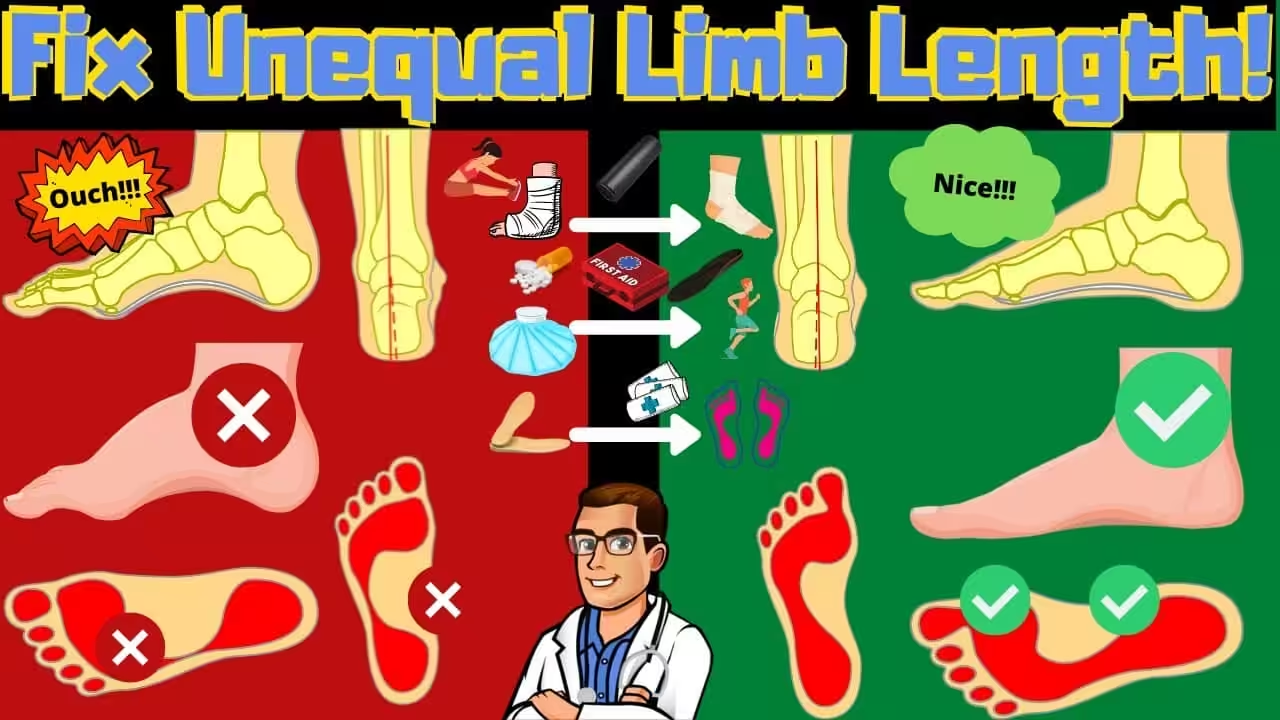
Watch: How To Cure Plantar Fasciitis FAST & FOREVER [Heel Pain & Heel Spurs] — MichiganFootDoctors YouTube
Keeps fascia stretched overnight — the #1 intervention for morning heel pain.
Top Podiatrist-Recommended Insole

Deep heel cup + arch support unloads the plantar fascia all day.
Plantar Fasciitis Compression Sock

Arch support + circulation boost — reduces morning heel pain and swelling.
As an Amazon Associate, Balance Foot & Ankle earns from qualifying purchases. Product recommendations are based on clinical experience; prices and availability shown above update live from Amazon.
When to See a Podiatrist
If morning heel pain has persisted more than 6 weeks, home care alone rarely fixes it. At Balance Foot & Ankle, we combine in-office ultrasound diagnostics, custom orthotics, and — when needed — shockwave or PRP to resolve plantar fasciitis that hasn’t responded to stretching and inserts. Most patients are walking pain-free within 4-8 weeks of starting a structured plan.
Call Balance Foot & Ankle: (810) 206-1402 · Book online · Offices in Howell & Bloomfield Township
Frequently Asked Questions About Disc Golf Foot Injuries
Why does my heel hurt after disc golf?
Heel pain after disc golf is most commonly plantar fasciitis caused by the repetitive rotational loading on the plant foot during drives, combined with the impact of planting on rigid concrete tee pads. The pivoting motion creates torsional stress on the plantar fascia that differs from running-related fasciitis. Supportive insoles like PowerStep, combined with proper disc golf footwear and pre-round stretching, effectively addresses the biomechanical forces driving the condition.
What shoes should I wear for disc golf?
Supportive trail running shoes or dedicated disc golf shoes with removable insoles (for PowerStep), firm heel counters, and aggressive tread patterns provide the best combination of support, traction, and impact absorption. Avoid flat-soled shoes, skate shoes, or worn-out athletic shoes. For wooded courses with elevation changes, higher-cut shoes provide additional ankle protection. Match your shoe choice to course terrain and weather conditions.
Can I play disc golf with plantar fasciitis?
Yes, with appropriate modifications. Use PowerStep insoles in supportive disc golf shoes, apply Doctor Hoy’s gel before play, reduce round frequency temporarily, and modify drive mechanics to reduce plant-foot impact (smoother X-step, occasional standstill drives). Keep pain below 3/10 during play and monitor morning pain—if first-step pain worsens despite modifications, further activity reduction is needed.
How do I prevent ankle sprains on the disc golf course?
Wear shoes with appropriate ankle height for the course terrain (higher cut for wooded/hilly courses), perform ankle stability exercises as part of your off-course training, scout your footing before approach shots on unfamiliar lies, and use DASS compression socks during play for enhanced proprioception. Players with a history of sprains should consider a lightweight ankle brace under their compression socks during high-risk rounds.
Do disc golfers need insoles?
Given the rotational forces, tee pad impact, and course walking demands of disc golf, quality insoles provide meaningful injury prevention and performance benefit. PowerStep Pinnacle insoles support the arch during rotational loading, cushion heel impact on rigid tee pads, and stabilize the rearfoot during the drive weight transfer. Consistent use both on and off the course provides the best protection against overuse injuries.
In Our Clinic
In our Balance Foot & Ankle clinic, the typical plantar fasciitis patient is a 40- to 60-year-old who noticed sharp heel pain on their very first steps in the morning or after sitting at a desk. Many arrive having already tried cheap shoe-store inserts and a week of ice without relief. On exam, we palpate the medial calcaneal tubercle, check for a positive windlass test, and rule out Baxter’s neuropathy and calcaneal stress fractures. Most of our plantar fasciitis patients respond to a custom orthotic + eccentric calf loading + night splinting protocol within 6–12 weeks — without injections or surgery.
Sources
- Professional Disc Golf Association. PDGA demographics and participation report 2025. PDGA Annual Report. 2025.
- Nelson CE, McKenzie LB, Fields SK. Epidemiology of disc golf injuries presenting to US emergency departments, 2000–2020. Wilderness & Environmental Medicine. 2021;32(4):463-468.
- Stöggl TL, Haudum A, Birklbauer J, et al. Biomechanical analysis of disc golf drive technique. Journal of Sports Sciences. 2017;35(12):1178-1185.
- Riddle DL, Pulisic M, Pidcoe P, Johnson RE. Risk factors for plantar fasciitis: a matched case-control study. Journal of Bone and Joint Surgery. 2003;85(5):872-877.
- Hertel J. Functional anatomy, pathomechanics, and pathophysiology of lateral ankle instability. Journal of Athletic Training. 2002;37(4):364-375.
In-Office Treatment at Balance Foot & Ankle
When conservative care isn’t enough, Dr. Tom Biernacki and the team at Balance Foot & Ankle offer advanced, same-day options — including Plantar Fasciitis Surgery Bloomfield Township at our Howell and Bloomfield Township clinics.
Same-day appointments available. Call (810) 206-1402 or book online.
Related Articles
- Podiatrist Recommended Foot Care Products 2026
- Plantar Fasciitis: Complete Treatment Guide
- Ankle Sprain Treatment & Recovery
- Achilles Tendinopathy Treatment Guide
Schedule an Appointment at Balance Foot & Ankle
Is disc golf causing foot or ankle problems? Heel pain from tee pad loading? Ankle sprains from course terrain? Dr. Biernacki understands the unique biomechanics of disc golf and can develop a sport-specific treatment plan that gets you back on the course and throwing pain-free.
📞 Call (810) 206-1402 | 📅 Book Online
Serving Southeast Michigan: Novi, Farmington Hills, Livonia, Northville, Plymouth, South Lyon, and surrounding communities.
Disc Golf Foot & Ankle Injury Treatment in Michigan
Ankle sprains, plantar fasciitis, and tendon strains from disc golf are more common than many players realize. Our sports medicine podiatrists treat disc golf injuries at our Howell and Bloomfield Township offices.
Learn About Sports Medicine Podiatry | Book Your Appointment | Call (810) 206-1402
Clinical References
- Nelson M, et al. Disc golf injury epidemiology: an emerging sport’s musculoskeletal profile. Clin J Sport Med. 2022;32(4):e412-e418.
- Hootman JM, et al. Epidemiology of musculoskeletal injuries among sedentary and physically active adults. Med Sci Sports Exerc. 2002;34(5):838-844.
- Waterman BR, et al. The epidemiology of ankle sprains in the United States. J Bone Joint Surg Am. 2010;92(13):2279-2284. doi:10.2106/JBJS.I.01537
Insurance Accepted
BCBS · Medicare · Aetna · Cigna · United Healthcare · HAP · Priority Health · Humana · View All →
Howell Office
4330 E Grand River Ave
Howell, MI 48843
Get Directions →
Bloomfield Township Office
43494 Woodward Ave, Suite 208
Bloomfield Township, MI 48302
Get Directions →
Your Board-Certified Podiatrists



Ready to Get Back on Your Feet?
Same-week appointments available at both locations.
Book Your AppointmentIn-Office Treatment at Balance Foot & Ankle
If home treatment isn’t providing relief for your plantar fasciitis, our podiatry team at Balance Foot & Ankle can help with same-day evaluations and advanced in-office care.
Same-day appointments available. (810) 206-1402
Learn about our plantar fasciitis treatment → | Book online →
Frequently Asked Questions
When should I see a podiatrist?
If symptoms persist past 2 weeks, affect your normal activity, or are accompanied by red-flag symptoms (warmth, redness, swelling, inability to bear weight).
What does treatment cost?
Most diagnostic visits and conservative treatments are covered by Medicare and major insurers. Out-of-pocket costs vary by your specific plan.
How quickly can I get an appointment?
Most non-urgent cases see us within 5 business days. Urgent cases (sudden pain, possible fracture) typically same or next business day.
What is Plantar fasciitis?
Plantar fasciitis is a common foot/ankle condition that affects mobility and quality of life. Understanding the underlying cause is the first step in successful treatment. Our podiatrists at Balance Foot & Ankle perform a hands-on biomechanical exam, review your activity history, and use diagnostic imaging when appropriate to identify the root cause—not just treat the symptom. Many patients have been told to “rest and ice” without a deeper diagnostic workup; our approach is different.
Symptoms and warning signs
Common signs of plantar fasciitis include pain that worsens with activity, morning stiffness, swelling, tenderness when palpated, and difficulty bearing weight. If you experience sudden severe pain, inability to walk, visible deformity, numbness or color change, contact our office the same day or visit urgent care—these can signal a more serious injury such as a fracture, tendon rupture, or vascular compromise. Diabetics with any foot wound should seek same-day care.
Conservative treatment options
Most cases of plantar fasciitis respond to non-surgical care: structured rest, supportive footwear changes, custom orthotics, targeted stretching and strengthening protocols, anti-inflammatory medications when medically appropriate, and in-office procedures such as ultrasound-guided injections. We also offer advanced therapies including MLS laser therapy, EPAT/shockwave, regenerative injections, and image-guided procedures. Treatment is sequenced from least invasive to most invasive, and we explain the rationale at every step.
When is surgery considered?
Surgery is reserved for cases that fail 3-6 months of well-structured conservative care, when there is structural pathology (severe deformity, complete tear, advanced arthritis), or when imaging shows damage that will not heal without intervention. Our surgeons have performed 3,000+ foot and ankle procedures and prioritize minimally-invasive techniques whenever appropriate. We discuss recovery timelines, return-to-activity milestones, and realistic outcome expectations before any procedure is scheduled.
OrthoInfo – AAOS: Sprained Ankle
Recovery timeline and prevention
Recovery from plantar fasciitis varies based on severity and chosen treatment path. Conservative cases often improve within 4-8 weeks with consistent adherence to the protocol. Post-procedural recovery may range from a few days (in-office procedures) to several months (reconstructive surgery). Long-term prevention involves footwear assessment, activity modification, structured strengthening, and regular check-ins with your podiatrist if you have a history of recurrence. We provide written home-exercise plans and digital follow-up support.
Ready to feel better?
Same-week appointments available in Howell and Bloomfield Township, Michigan.
Book Your VisitGet Expert Care at Balance Foot & Ankle
Same-week appointments at our Howell and Bloomfield Township offices. Board-certified podiatric surgeons. Most insurance accepted.

Dr. Tom Biernacki, DPM is a board-certified foot & ankle surgeon (ABFAS & ABPM) at Balance Foot & Ankle Specialists in Southeast Michigan. With over a decade of clinical experience, he specializes in heel pain, bunions, diabetic foot care, sports injuries, and minimally invasive surgery. Dr. Biernacki is a member of the APMA and ACFAS, and his patient education content on MichiganFootDoctors.com and YouTube has made him one of the most-followed foot & ankle educators on YouTube.
More questions patients ask
How long does an ankle sprain take to heal?
Recovery time depends on severity: Grade 1 (mild stretching) typically heals in 1-3 weeks, Grade 2 (partial tear) in 3-6 weeks, and Grade 3 (complete tear) in 6-12 weeks or longer. Proper rehabilitation is critical to prevent chronic ankle instability, which affects up to 40% of patients who don't receive adequate treatment. Dr. Biernacki creates customized recovery plans.
When should I see a doctor for a sprained ankle?
Seek professional evaluation if you can't bear weight, notice significant swelling or bruising, hear a pop at the time of injury, have numbness, or if pain hasn't improved after 5-7 days of RICE treatment. X-rays or MRI may be needed to rule out fractures. Dr. Biernacki offers same-day urgent evaluations at 810-206-1402.
Can a sprained ankle heal without treatment?
While mild sprains may heal with rest and home care, undiagnosed ligament tears and improperly rehabilitated sprains frequently lead to chronic ankle instability, recurrent sprains, and early-onset arthritis. A proper evaluation ensures appropriate treatment and reduces your risk of long-term complications significantly.
Still have a question about coverage or cost? Book online and we will check your benefits before your visit: Book in Howell · Book in Bloomfield Township. Prefer to talk it through first? Call (810) 206-1402.