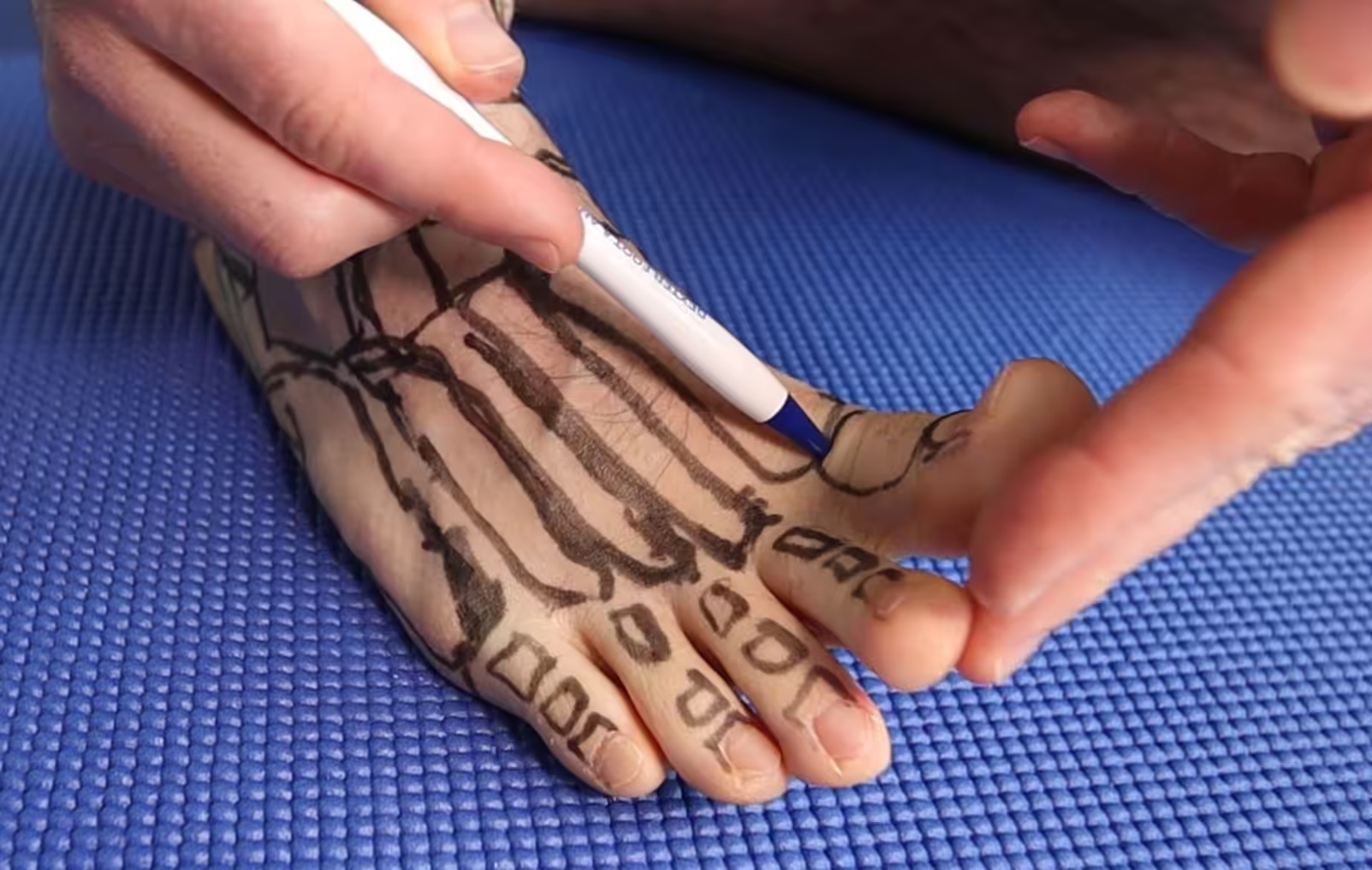
First MTP sesamoid injuries — fracture, sesamoiditis, and avascular necrosis — all cause sharp pain under the big toe. Imaging is essential to distinguish, since treatment timelines differ dramatically.
You’re in the right place. Dr. Tom Biernacki, DPM, FACFAS — board-certified foot & ankle surgeon with 3,000+ surgeries — explains exactly what first MTP sesamoid injuries means and what works. Call (810) 206-1402 for same-day appointment at Howell or Bloomfield Township.
The most important clinical decision with First Mtp Sesamoid Injuries Fracture Sesamoiditis Avascular Necrosis isn’t which treatment to start with — it’s identifying the correct subtype. That changes everything. Call (810) 206-1402.
Quick Answer
First MTP Sesamoid Injuries: Fracture, Sesamoiditis, and Ava relates to foot/ankle injury — typically caused by trauma or twist. Most patients improve in 4-8 weeks with conservative care. Same-week appointments in Howell + Bloomfield Township: (810) 206-1402.
Medically reviewed by Dr. Tom Biernacki, DPM — Board-certified foot & ankle surgeon, 3,000+ surgeries performed. Updated April 2026 with current clinical evidence. This article reflects real practice experience from Balance Foot & Ankle Specialists in Howell and Bloomfield Township, Michigan.
Quick Answer
Most foot and ankle problems respond to conservative care — proper footwear, supportive inserts, activity modification, and targeted stretching — within 4-8 weeks. Persistent pain beyond that window, or any symptom that prevents walking, warrants a podiatric evaluation to rule out fracture, tendon tear, or systemic cause.
Watch: Dr. Tom Biernacki, DPM
Medically reviewed by Dr. Tom Biernacki, DPM — Board-Certified Podiatric Surgeon — Balance Foot & Ankle, Howell & Bloomfield Township, MI. Last updated April 2026.
▶ Watch
Medically Reviewed by Dr. Tom Biernacki, DPM — Board-Certified Podiatrist, Balance Foot & Ankle Specialists, Michigan. Last updated April 2026.
The two sesamoid bones of the first metatarsophalangeal joint — the medial (tibial) and lateral (fibular) sesamoids — are embedded within the flexor hallucis brevis tendons and bear up to three times body weight during push-off. Sesamoid injuries produce plantar first MTP pain that is frequently attributed to plantar fasciitis or metatarsalgia and treated suboptimally for months before the sesamoid is identified as the pain generator.
Sesamoid Fracture vs. Bipartite Sesamoid
The medial sesamoid is bipartite (naturally divided into two ossicles) in 10–30% of normal feet — radiographically indistinguishable from a fracture without comparison views or MRI. The key distinguishing features: a fracture produces jagged, irregular margins; a bipartite sesamoid has smooth, corticated borders and the same finding is typically present on the contralateral foot (bilateral in 85% of bipartite cases). MRI is the definitive study: acute fracture shows bone marrow edema and cortical disruption; bipartite sesamoid has fibrocartilaginous union without edema; avascular necrosis (AVN) shows decreased T1 signal with preserved or enhanced T2 signal reflecting marrow ischemia.
Management by Diagnosis
Sesamoiditis (stress response without fracture): reduced weight-bearing on the sesamoid with a sesamoid dancer pad (a U-shaped cut-out pad placed proximal to the sesamoid, transferring load to the metatarsal shaft rather than the sesamoid); custom orthotics with sesamoid relief; activity modification for 6–12 weeks. Sesamoid fracture: non-weight-bearing cast for 4–6 weeks for acute non-displaced fractures; surgical excision of the fractured sesamoid fragment for displaced fractures or non-union after 3 months of conservative management. AVN of the sesamoid: excision of the avascular sesamoid when conservative management fails; sesamoidectomy requires careful closure of the flexor hallucis brevis tendon to prevent hallux cock-up deformity from loss of flexion force. Dr. Biernacki at Balance Foot & Ankle evaluates plantar first MTP pain with weight-bearing X-ray and MRI when sesamoid pathology is suspected. Call (810) 206-1402 at our Bloomfield Township or Howell office.
📧 Get Dr. Tom’s Free Lab Test Guide
Discover the 5 lab tests every person over 35 should ask their doctor about — explained in plain English by a board-certified physician.
Many foot conditions can be managed conservatively at home, but some require professional evaluation. See a podiatrist promptly if you experience:
Pain that persists for more than 2 weeks despite rest
Swelling, redness, or warmth that isn’t improving
Numbness, tingling, or burning in the feet
A wound or sore that is not healing within 2 weeks
Any foot concern if you have diabetes or poor circulation
Nail changes that suggest fungal infection or other problems
At Balance Foot & Ankle, our three board-certified podiatrists — Dr. Tom Biernacki, Dr. Carl Jay, and Dr. Daria Gutkin — provide comprehensive foot and ankle care at our Howell and Bloomfield Township offices. Most insurance plans are accepted.
Board-certified podiatrists Dr. Tom Biernacki, Dr. Carl Jay, and Dr. Daria Gutkin see patients daily at our Howell and Bloomfield Township, MI offices.
class=”mfd-patient-scenario” id=”in-our-clinic”>In Our Clinic: What We See
Clinical perspective from Dr. Tom Biernacki, DPM — Balance Foot & Ankle, Howell & Bloomfield Township, MI:
In our Balance Foot & Ankle clinic, sesamoiditis patients are usually dancers, runners, or women who have spent significant time in heels. They describe pain directly UNDER the big toe joint — not at the joint (that’s hallux rigidus) — which worsens with push-off. On exam we palpate each sesamoid separately (tibial and fibular) and assess for sensitivity. We always get X-rays to look for sesamoid fracture or bipartite sesamoid (a normal variant). Treatment uses a dancer’s pad to offload the sesamoid, stiff-soled footwear to reduce push-off stress, and activity modification.
class=”mfd-differential” id=”differential-diagnosis”>Differential Diagnosis: What Else Could It Be?
Not every case of sesamoiditis is straightforward. In our clinic we routinely rule out three look-alike conditions before confirming the diagnosis. If your symptoms don’t match the classic presentation, one of these may explain the pain — which is why physical exam matters more than self-diagnosis.
Condition
How It Differs
Sesamoid stress fracture
Acute or gradually worsening sharp pain, tender directly over one sesamoid, positive findings on MRI.
Hallux rigidus
Stiff, painful big toe joint with limited dorsiflexion — pain is AT the joint, not UNDER the ball.
Turf toe (plantar plate injury)
Acute hyperextension mechanism, diffuse swelling of the 1st MTP, positive 1st MTP drawer test.
Red Flags — When to See a Podiatrist Now
Seek same-day evaluation at Balance Foot & Ankle if you notice any of the following:
Sudden sharp onset (possible fracture)
Bruising or swelling under the big toe
Pain at rest or at night
Inability to push off during gait
Call (810) 206-1402 or request an appointment. Our Howell and Bloomfield Township offices reserve same-day slots for urgent foot and ankle issues.
class=”wp-block-heading mfd-treatment-bridge” id=”in-office-treatment”>In-Office Treatment at Balance Foot & Ankle
If home care isn’t resolving your your foot or ankle concern, a visit with a board-certified podiatrist is the fastest path to accurate diagnosis and a personalized plan. At Balance Foot & Ankle Specialists, Dr. Tom Biernacki, Dr. Carl Jay, and Dr. Daria Gutkin offer same-day and next-day appointments at both our Howell and Bloomfield Township offices. We perform on-site diagnostic ultrasound, digital X-ray, conservative care, advanced regenerative treatments, and minimally invasive surgery when indicated.
The most common mistake we see is: Waiting too long before seeking care. Fix: any foot pain lasting more than 4 weeks, or any sudden severe symptom, deserves a professional evaluation rather than more rest.
Warning Signs That Need Same-Day Care
Seek immediate evaluation at Balance Foot & Ankle if you experience any of the following:
Impact-absorbing recovery sandal — wear after long days on your feet.
As an Amazon Associate, Balance Foot & Ankle earns from qualifying purchases. Product recommendations are based on clinical experience; prices and availability shown above update live from Amazon.
When to See a Podiatrist
If foot or ankle pain has been bothering you for more than a few weeks, home care alone may not be enough. Balance Foot & Ankle offers same-week appointments at our Howell and Bloomfield Township clinics — no referral needed in most cases. Bring your current shoes and a short list of symptoms and we’ll build you a treatment plan in one visit.
Dr. Tom Biernacki, DPM · Board-Certified Foot & Ankle Surgeon. Specializes in conservative-first care, minimally invasive bunion surgery, and complex reconstruction.
Dr. Carl Jay, DPM · Accepting new patients. Specializes in sports medicine, athletic injuries, and routine podiatric care.
Dr. Daria Gutkin, DPM, AACFAS · Accepting new patients. Specializes in surgical reconstruction and pediatric podiatry.
Locations: 4330 E Grand River Ave, Howell, MI 48843 · 43494 Woodward Ave Suite 208, Bloomfield Township, MI 48302
If symptoms persist past 2 weeks, affect your normal activity, or are accompanied by red-flag symptoms (warmth, redness, swelling, inability to bear weight).
What does treatment cost?
Most diagnostic visits and conservative treatments are covered by Medicare and major insurers. Out-of-pocket costs vary by your specific plan.
How quickly can I get an appointment?
Most non-urgent cases see us within 5 business days. Urgent cases (sudden pain, possible fracture) typically same or next business day.
Dr. Tom Biernacki, DPM is a board-certified foot & ankle surgeon (ABFAS & ABPM) at Balance Foot & Ankle Specialists in Southeast Michigan. With over a decade of clinical experience, he specializes in heel pain, bunions, diabetic foot care, sports injuries, and minimally invasive surgery. Dr. Biernacki is a member of the APMA and ACFAS, and his patient education content on MichiganFootDoctors.com and YouTube has made him one of the most-followed foot & ankle educators on YouTube.
Balance Foot & Ankle surgeons are affiliated with Trinity Health Michigan, Corewell Health, and Henry Ford Health — three of Michigan’s largest health systems.