

Quick answer: Foot Pain Under Ankle has multiple potential causes including mechanical, neurological, vascular, and inflammatory. The patterns we see most often are overuse, poorly-fitted shoes, and biomechanical imbalance. Red flags requiring urgent evaluation: warmth/redness (infection), inability to bear weight (fracture), and unilateral swelling without injury (DVT). Book online or call (810) 206-1402.
Dont Let Pain Under Your Ankle Stop You
Foot Pain Under Ankle: Diagnosis, Causes & Best Home Treatment
The top causes of foot pain under the ankle include: #1 posterior tibial tendonitis (inside of the ankle) and #2 peroneal tendonitis (outside of the ankle)!
BOOK A CONSULTATION https://youtu.be/X1mtD7XUIscWhat Causes Foot Pain Under the Ankle? Understanding the Problem
Foot pain under the ankle is a common complaint that can affect your daily movement, especially when walking or standing. This pain may stem from conditions like posterior tibial tendon dysfunction (PTTD), tarsal tunnel syndrome, ligament strain, or even stress fractures. It’s often associated with overuse, flat feet, trauma, or poor foot alignment. The pain can range from mild and achy to sharp and debilitating. Proper diagnosis is key to treating the underlying issue, which may involve physical therapy, custom orthotics, anti-inflammatory treatments, or in some cases, surgery.
Foot Pain Under Ankle
There are many types pain in this area- follow our guide whether it be front, inside, outside or back of the ankle pain.
Foot Pain Under Ankle: Best Diagnosis and Treatment Foot Pain Under Ankle: Best Diagnosis and Treatment in 2025!
Stop Suffering from Ankle Pain—Get a Professional Diagnosis Today
If you’re dealing with persistent foot pain under the ankle, don’t wait. The podiatry team at Balance Foot & Ankle Specialists in Michigan offers expert evaluations and customized treatment plans to relieve your pain and restore mobility. Book your consultation today and take the first step toward recovery.
BOOK NOW https://www.youtube.com/watch?v=X1mtD7XUIsc
Most Likely Causes
1. Outside of the Ankle:
This is easily the most commonly injured area in the ankle and perhaps even the foot. This can not only lead to pain in the outside of the ankle, but also along the entire outside of the foot as the 5th metatarsal is very easily damaged.
This includes:
- Inversion ankle sprain pain.
- Peroneal tendon pain
- Sinus tarsi pain.

2. Front of the Ankle
This area can very easily be damaged and just become sore from forcefully extending the foot down or up. This is very common in gymnastics, but it can also get sore in many runners and other athletics.
The most common causes of pain in this area are:
- Tibialis Anterior Tendinopathy.
- Anterior Impingement.
- Anterior Shin Splints.
- Inferior Tibiofibular joint injury.

3. Inside of the Ankle:
These causes of pain are not usually due to an ankle sprain like the outside of the ankle. This type of heel pain is more due to flat foot, obesity and nerve pain.
The most common causes of pain in this area are:
- Tibialis Posterior Tendinopathy.
- Flexor Hallicis Longus Tendinopathy.
- Tarsal Tunnel Syndrome.
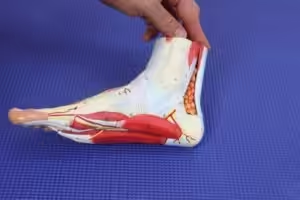
4. Back of the Ankle Pain
The most common types of pain in the back of the foot are:
- Achilles tendinitis.
- Haglund’s bump.
- Radiating pain of tarsal tunnel syndrome.

5. Entire Ankle & Leg On One Side:
If the entire ankle & leg on one side hurt without any normal cause, consider a deep vein thrombosis.

Less Likely
- Heel Pain or Bottom of the Foot Pain
- Back of the heel or Bottom of the Heel.
- Calf Pain
- Shin Pain
- Top of the Foot Pain
- Foot Arthritis.
Associated Conditions
- Flat Foot
Book Your Appointment Today—Relief Starts with One Call
Fast, Friendly, and Professional Treatment You Can Trust
(810) 206-1402 BOOK A SCHEDULEFoot Pain Under Ankle – Frequently Asked Questions
What causes pain just below the ankle?Common causes include tendonitis, tarsal tunnel syndrome, arthritis, and stress fractures.
Can flat feet cause pain under the ankle?Yes—flat feet can strain the posterior tibial tendon, leading to pain in this area.Yes—flat feet can strain the posterior tibial tendon, leading to pain in this area.
Is it normal to feel a burning sensation under the ankle?A burning or tingling sensation may signal nerve compression, such as tarsal tunnel syndrome.
Can I treat foot pain under the ankle at home?Rest, ice, compression, and elevation (RICE) can help, but lasting pain should be evaluated by a specialist.
How is ankle-related foot pain diagnosed?A podiatrist may use physical exams, imaging (like X-rays or MRI), and gait analysis.
Do I need custom orthotics for this type of pain?In many cases, orthotics can help support your arch and reduce stress on painful areas.
Can ankle pain be related to an old injury?Yes—scar tissue or joint instability from previous injuries can contribute to recurring pain.
What shoes are best for foot pain under the ankle?Supportive, cushioned shoes with good arch support are ideal. Avoid flat or worn-out footwear.
Is surgery ever needed for pain under the ankle?In severe or chronic cases, surgery may be an option to repair damaged tendons or decompress nerves.
Should I see a podiatrist or orthopedic doctor for this pain?A podiatrist is a foot and ankle specialist and is the best starting point for this type of pain.
Related Treatment Guides
Pain Under Your Ankle Bone?
Pain below the ankle can indicate subtalar joint issues, sinus tarsi syndrome, or tendon problems. Our podiatrists pinpoint the cause and provide effective treatment.
📞 Or call us directly: (810) 206-1402
Clinical References
- Helgeson K. Examination and intervention for sinus tarsi syndrome. N Am J Sports Phys Ther. 2009;4(1):29-37.
- Davda K, et al. Peroneal tendon disorders. EFORT Open Rev. 2017;2(6):281-292.
- Deland JT, et al. Posterior tibial tendon insufficiency. Foot Ankle Int. 2005;26(6):427-435.
Insurance Accepted
BCBS · Medicare · Aetna · Cigna · United Healthcare · HAP · Priority Health · Humana · View All →
👟 Dr. Tom Also Recommends
Podiatrist Recommended Shoes 2026: Dr. Tom’s Top Picks for Every Condition
The right footwear can make or break your recovery. Dr. Tom’s complete guide to the best shoes for plantar fasciitis, flat feet, neuropathy, bunions & more — with clinical picks for every foot type.
See Dr. Tom’s Top Shoe Picks →Howell Office
4330 E Grand River Ave
Howell, MI 48843
Get Directions →
Bloomfield Township Office
43494 Woodward Ave, #208
Bloomfield Township, MI 48302
Get Directions →
Your Board-Certified Podiatrists



Ready to Get Back on Your Feet?
Same-week appointments available at both locations.
Book Your AppointmentPodiatrist-Recommended Products
🏆 Doctor Hoy’s Natural Pain Relief Gel — Our top recommendation for reducing foot pain and inflammation naturally. Apply daily to affected areas.
PowerStep Pinnacle Orthotic Insoles — Reduces mechanical stress on foot structures that cause pain. Physician-grade support in an OTC package.
CURREX Support Insoles — Dynamic arch support in low, medium, and high arch profiles for a personalized fit.
More Podiatrist-Recommended Foot Health Essentials
Hoka Clifton 10


Max-cushion everyday shoe — podiatrist favorite for walking and running.

OOFOS Recovery Slide

Impact-absorbing recovery sandal — wear after long days on your feet.
As an Amazon Associate, Balance Foot & Ankle earns from qualifying purchases. Product recommendations are based on clinical experience; prices and availability shown above update live from Amazon.
When to See a Podiatrist
If foot or ankle pain has been bothering you for more than a few weeks, home care alone may not be enough. Balance Foot & Ankle offers same-week appointments at our Howell and Bloomfield Township clinics — no referral needed in most cases. Bring your current shoes and a short list of symptoms and we’ll build you a treatment plan in one visit.
Call Balance Foot & Ankle: (810) 206-1402 · Book online · Offices in Howell & Bloomfield Township
Dr. Tom’s Subtalar and Peroneal Pain Relief Protocol
- PowerStep Pinnacle — Sinus tarsi syndrome and subtalar arthritis: arch support reduces the subtalar pronation that compresses the sinus tarsi.
- Doctor Hoy’s Natural Pain Relief Gel — Peroneal tendon and sinus tarsi pain under the ankle: arnica + camphor gel applied laterally 3-4x daily.
- Plantar Fasciitis Compression Socks — Ankle swelling with subtalar pain: graduated compression reduces periarticular edema that worsens subtalar joint compression.
Chronic pain under the ankle not resolving with rest? Ankle instability and subtalar evaluation → (810) 206-1402
In-Office Treatment at Balance Foot & Ankle
If home treatment isn’t providing relief for your foot or ankle condition, our podiatry team at Balance Foot & Ankle can help with same-day evaluations and advanced in-office care.
Frequently Asked Questions
When should I see a doctor?
See a podiatrist if pain persists past 2 weeks, prevents normal activity, or is accompanied by red-flag symptoms (warmth, swelling, numbness, inability to bear weight).
Can I treat this at home?
Mild cases respond to RICE protocol (rest, ice, compression, elevation), supportive shoes, and OTC anti-inflammatories. Persistent symptoms need professional evaluation.
How long does it take to heal?
Most soft tissue injuries resolve in 2-6 weeks with appropriate care. Bone injuries take 6-12 weeks. Chronic conditions need longer-term management.
What is Foot pain?
Foot pain is a common foot/ankle condition that affects mobility and quality of life. Understanding the underlying cause is the first step in successful treatment. Our podiatrists at Balance Foot & Ankle perform a hands-on biomechanical exam, review your activity history, and use diagnostic imaging when appropriate to identify the root cause—not just treat the symptom. Many patients have been told to “rest and ice” without a deeper diagnostic workup; our approach is different.
Symptoms and warning signs
Common signs of foot pain include pain that worsens with activity, morning stiffness, swelling, tenderness when palpated, and difficulty bearing weight. If you experience sudden severe pain, inability to walk, visible deformity, numbness or color change, contact our office the same day or visit urgent care—these can signal a more serious injury such as a fracture, tendon rupture, or vascular compromise. Diabetics with any foot wound should seek same-day care.
Conservative treatment options
Most cases of foot pain respond to non-surgical care: structured rest, supportive footwear changes, custom orthotics, targeted stretching and strengthening protocols, anti-inflammatory medications when medically appropriate, and in-office procedures such as ultrasound-guided injections. We also offer advanced therapies including MLS laser therapy, EPAT/shockwave, regenerative injections, and image-guided procedures. Treatment is sequenced from least invasive to most invasive, and we explain the rationale at every step.
When is surgery considered?
Surgery is reserved for cases that fail 3-6 months of well-structured conservative care, when there is structural pathology (severe deformity, complete tear, advanced arthritis), or when imaging shows damage that will not heal without intervention. Our surgeons have performed 3,000+ foot and ankle procedures and prioritize minimally-invasive techniques whenever appropriate. We discuss recovery timelines, return-to-activity milestones, and realistic outcome expectations before any procedure is scheduled.
Recovery timeline and prevention
Recovery from foot pain varies based on severity and chosen treatment path. Conservative cases often improve within 4-8 weeks with consistent adherence to the protocol. Post-procedural recovery may range from a few days (in-office procedures) to several months (reconstructive surgery). Long-term prevention involves footwear assessment, activity modification, structured strengthening, and regular check-ins with your podiatrist if you have a history of recurrence. We provide written home-exercise plans and digital follow-up support.
Ready to feel better?
Same-week appointments available in Howell and Bloomfield Township, Michigan.
Book Your Visit
Dr. Tom Biernacki, DPM is a board-certified foot & ankle surgeon (ABFAS & ABPM) at Balance Foot & Ankle Specialists in Southeast Michigan. With over a decade of clinical experience, he specializes in heel pain, bunions, diabetic foot care, sports injuries, and minimally invasive surgery. Dr. Biernacki is a member of the APMA and ACFAS, and his patient education content on MichiganFootDoctors.com and YouTube has made him one of the most-followed foot & ankle educators on YouTube.