
| Procedure Type | Indication | Joint Motion Preserved | Recurrence Rate | Recovery |
|---|---|---|---|---|
| Flexor Tenotomy | Flexible hammertoe; early contracture | Full | 20–30% over 5 years | Immediate WB; 2–3 weeks |
| Flexor-to-Extensor Transfer (Girdlestone-Taylor) | Flexible hammertoe with MTP subluxation | Good | 15–20% | Surgical shoe 3–4 weeks |
| PIP Joint Arthroplasty (resection) | Rigid hammertoe, moderate severity | Residual (~15–20°) | 15–25% | Surgical shoe 4–6 weeks |
| PIP Joint Arthrodesis (K-wire) | Rigid hammertoe, severe or recurrent | None (fused) | 5–10% | Surgical shoe + pin removal at 4–6 weeks |
| PIP Arthrodesis (Smart Toe implant) | Rigid hammertoe, high recurrence risk | None (fused) | 3–7% | Surgical shoe 4–6 weeks; no pin removal |
| MTP Joint Capsulotomy | MTP subluxation + hammertoe | Improved MTP motion | Depends on PIP correction | Combined with PIP procedure |
| Weil Metatarsal Osteotomy | MTP dislocation with hammertoe | Preserved | Low for MTP component | Surgical shoe 4–6 weeks |
| Hammertoe Severity | Passively Correctable | MTP Status | Recommended Procedure | Prognosis |
|---|---|---|---|---|
| Stage 1 — Flexible | Yes | Reduced (subluxed) | Conservative or flexor tenotomy | Excellent if early intervention |
| Stage 2 — Semi-rigid | Partially | Subluxed to dislocated | Girdlestone-Taylor + MTP capsulotomy | Good; 15–20% recurrence |
| Stage 3 — Rigid | No | Dislocated | PIP arthrodesis + Weil osteotomy | Good with appropriate procedure; 5–10% recurrence |
| Stage 4 — Severe/Recurrent | No | Dislocated + arthritic | PIP arthrodesis + implant + MTP procedure | Fair; complex; 10–15% complications |
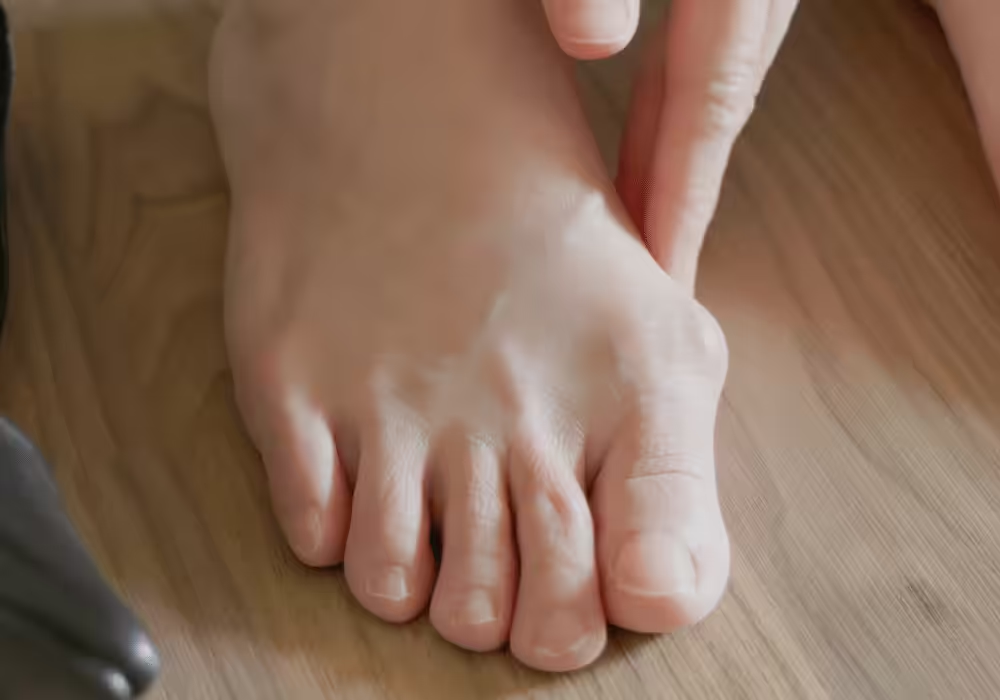
Hammertoe correction depends on whether the toe is still flexible or has become rigid — flexible hammertoes respond to splints and exercises, rigid ones often need surgical release.
You’re in the right place. Dr. Tom Biernacki, DPM, FACFAS — board-certified foot & ankle surgeon with 3,000+ surgeries — explains exactly what hammertoe correction means and what works. Call (810) 206-1402 to book at Howell or Bloomfield Township.
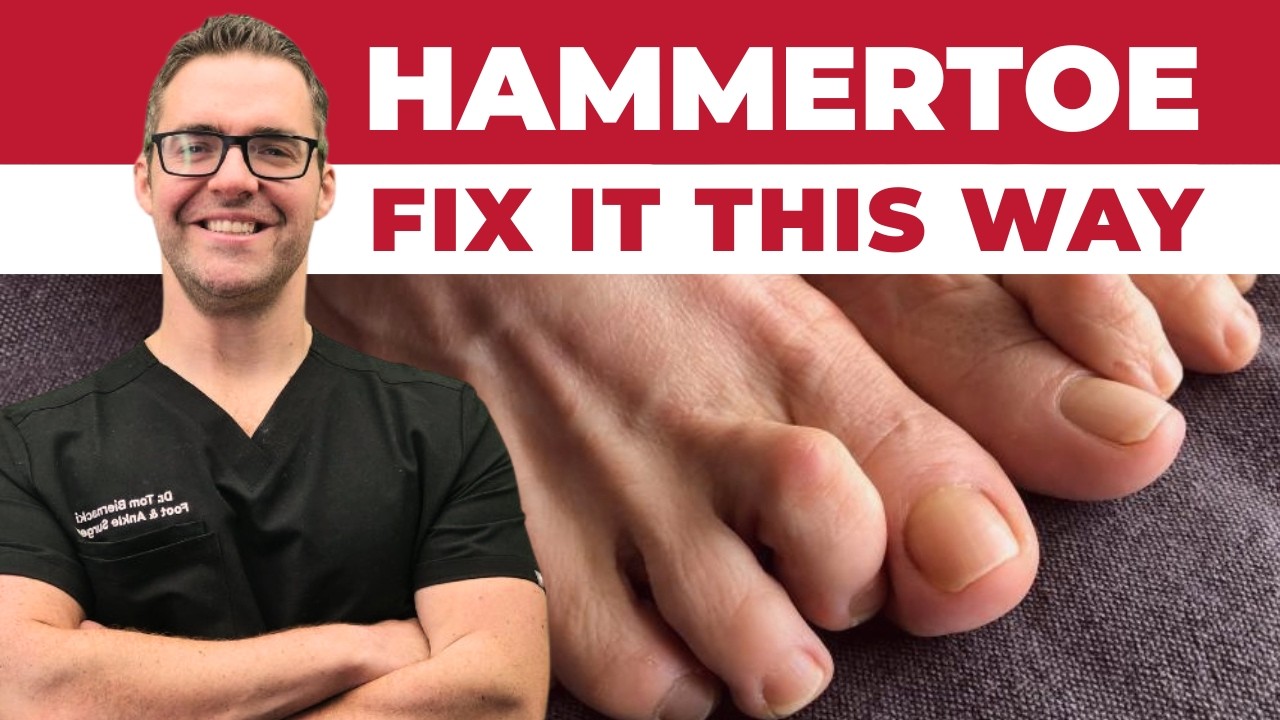
Watch: How to Fix Hammer Toes at Home [Overlapping & Crossover Toes]! — MichiganFootDoctors YouTube
Board-Certified Podiatric Foot & Ankle Surgeon · Last reviewed: May 4, 2026
Medically Reviewed | Dr. Tom Biernacki, DPM | Board-Certified Podiatric Surgeon | Balance Foot & Ankle, Michigan
Related Conditions
In This Article

What Is a Hammertoe?
A hammertoe is a flexion contracture of the proximal interphalangeal (PIP) joint of the lesser toes — causing the toe to buckle into an “upside down V” or hammer shape. The deformity places the dorsal PIP joint against the shoe, creating painful corns, and causes the tip of the toe to press against the ground, producing painful calluses. The second toe is most commonly affected, followed by the third and fourth.
Flexible vs. Rigid Hammertoes
Flexible hammertoe: The toe is in the contracted position at rest but can be passively straightened with finger pressure. The joint is not yet fixed. Conservative management is effective at this stage — the goal is to maintain flexibility, relieve symptoms, and slow or halt progression to rigidity.
Rigid hammertoe: The PIP joint is fixed in the contracted position and cannot be straightened passively. Articular cartilage damage has occurred and the deformity will not respond to conservative management. Surgical correction is required for definitive relief.
The transition from flexible to rigid occurs gradually over years and is accelerated by wearing shoes that continuously hold the toe in the buckled position. Early intervention at the flexible stage prevents the need for surgical correction.
Conservative Treatment for Flexible Hammertoes
Orthotics: A custom orthotic addresses the metatarsal head prominence that creates the ground reactive force driving toe buckling. By redistributing plantar pressure away from the metatarsal heads and controlling hypermobility of the first ray (which shifts load to the lesser metatarsals), orthotics reduce the forces that perpetuate the hammertoe deformity.
Toe splints and crests: Silicone toe crests placed beneath the contracted toe tip provide passive extension force at the PIP joint. Worn consistently, they maintain tissue extensibility and reduce plantar tip callus pressure. Commercial hammertoe splints provide similar correction.
Footwear modification: Shoes with a high toe box (measured in height above the toes, not just width) eliminate the dorsal compression that causes corn formation. Roomy athletic shoes with adequate toe box depth are often the single most impactful conservative intervention for flexible hammertoe symptoms.
Corn and callus management: Regular professional debridement of the dorsal corn and tip callus reduces the pain associated with hammertoe deformity. This is symptomatic management, not structural correction, but it significantly improves quality of life during conservative management.
Surgical Correction for Rigid Hammertoes
Surgical correction of rigid hammertoes involves PIP joint arthroplasty (resection of the proximal end of the middle phalanx) or PIP arthrodesis (fusion of the joint in a straight position). Arthroplasty produces a flail, slightly floppy toe but eliminates the contracture and corn. Arthrodesis produces a straight, solid toe but sacrifices PIP joint motion. Dr. Biernacki discusses the specific procedure appropriate for each patient’s deformity pattern, activity level, and footwear goals.
Extensor tendon lengthening and digital flexor tenotomy are often performed in combination with osseous procedures to achieve complete correction. Hammertoe surgery is performed outpatient under local anesthesia with mild sedation and typically requires 4–6 weeks of postoperative protected weight-bearing.
Dr. Tom's Product Recommendations

PediFix Hammertoe Straightener
⭐ Highly Rated
Medical-grade silicone hammertoe crest providing passive extension force at the PIP joint. Reduces tip callus pressure and maintains toe flexibility in flexible hammertoe stage.
Flexible hammertoes, PIP joint crest support, tip callus relief
Not for rigid fixed hammertoes requiring surgical correction
Disclosure: We earn a commission at no extra cost to you.

New Balance 928v3 Walking Shoe
⭐ Highly Rated
Walking shoe with high and wide toe box — critical for hammertoe corn prevention. ROLLBAR technology and ABZORB cushioning. Available in wide and extra-wide widths.
Hammertoe corn prevention, high wide toe box essential, walking and daily use
Not for high-performance running requiring race-specific footwear
Disclosure: We earn a commission at no extra cost to you.
✅ Pros / Benefits
- Flexible vs. rigid hammertoe classification guides conservative vs. surgical recommendation
- Comprehensive conservative protocol: orthotics, splinting, footwear, and professional corn care
- Minimally invasive hammertoe surgery with outpatient recovery for rigid cases
- Early intervention at flexible stage prevents progression to surgical indication
❌ Cons / Risks
- Rigid hammertoes cannot be corrected conservatively — surgery is required for structural resolution
- Recurrence possible after conservative management if footwear habits are not modified
Dr. Tom Biernacki’s Recommendation
Hammertoes are a condition where timing matters enormously. A patient with a flexible hammertoe managed with orthotics and wide shoes might never need surgery. The same patient who ignores their flexible hammertoe for 5 years ends up with a rigid contracture and a surgical procedure that could have been avoided. Early evaluation changes the trajectory.
— Dr. Tom Biernacki, DPM | Board-Certified Podiatric Surgeon | Balance Foot & Ankle
Frequently Asked Questions
Can hammertoes be corrected without surgery?
Flexible hammertoes can be managed without surgery through toe splints, custom orthotics, wide-toe-box footwear, and professional callus care. These measures relieve symptoms and slow progression but do not eliminate the deformity. Rigid hammertoes — fixed in the contracted position and no longer passively correctable — require surgical correction for definitive relief.
How do I know if my hammertoe needs surgery?
Your hammertoe likely needs surgery if: it cannot be straightened with passive finger pressure (rigid), it is causing painful corns that recur despite footwear changes and professional debridement, it is overriding or underlapping adjacent toes, or it is causing significant functional limitation. Conservative management has failed when adequate footwear and orthotics no longer provide acceptable pain control.
What is hammertoe surgery recovery like?
Hammertoe surgery recovery typically involves 4–6 weeks of protected weight-bearing in a postoperative shoe or sandal. Most patients can bear weight immediately after surgery, though running and athletic activity is restricted for 6–8 weeks. Final surgical result, including full toe flexibility or arthrodesis fusion, is assessed at 3-month follow-up.
Do hammertoes get worse without treatment?
Yes — untreated hammertoes progress from flexible to rigid over months to years. Corn formation at the dorsal PIP joint increases as the deformity worsens. Adjacent toe crowding can cause secondary deformity in neighboring toes. Early conservative intervention at the flexible stage significantly slows progression and may indefinitely delay the need for surgery.
Michigan Foot Pain? See Dr. Biernacki In Person
4.9★ rated | 1,200+ Reviews | 3,000+ Surgeries
Book online 24/7 · Howell & Bloomfield Township
📞 (810) 206-1402 Book Online →Frequently Asked Questions
What is hammertoe correction?
Hammertoe correction is a surgical or non-surgical procedure to straighten a bent, curled, or claw-shaped toe. Non-surgical: silicone toe straighteners, custom orthotics, shoe modifications, and stretching. Surgical: arthroplasty (joint resection), arthrodesis (joint fusion), or tendon transfer. Choice depends on flexibility (early flexible vs rigid late stage).
How long does hammertoe surgery take to heal?
Recovery: 0-2 weeks in surgical shoe with limited weight-bearing; 2-4 weeks transitioning to wider athletic shoes; 6-8 weeks return to most activities; 3-6 months for full healing and final result. Most patients return to desk work in 1 week, walking activities in 4 weeks. Athletic shoe with wide toe box is essential during recovery.
Can hammertoes be fixed without surgery?
Yes for FLEXIBLE hammertoes — silicone toe straighteners worn at night, daily stretching, custom orthotics, wide-toe-box shoes, and metatarsal pads can manage symptoms and slow progression. Severity matters: rigid (fixed) hammertoes generally need surgery for permanent correction. Early treatment preserves flexibility.
What’s the success rate of hammertoe surgery?
Modern hammertoe correction has 85-95% success rate for pain relief and cosmetic correction. Smileridge fixation, internal pin fixation, and bioabsorbable implants have improved outcomes. Best results when done before the toe becomes rigidly fixed and after addressing underlying foot mechanics with custom orthotics.
When should I have hammertoe surgery?
Consider surgery when: toe is rigid (no longer flexible), painful corns/calluses persist despite treatment, shoes don’t fit comfortably, hammertoe is progressing, or affecting quality of life. Most surgeons recommend waiting until conservative care has failed and the deformity is causing functional issues.
Frequently Asked Questions
Will my bunion get worse over time?
In most cases, yes — gradually. Bunions are progressive deformities; without intervention, the metatarsal bone continues to drift outward over years. The rate of progression varies enormously: some bunions are stable for decades; others worsen significantly within 5 years. Wearing narrow, pointed-toe footwear accelerates progression. If your bunion is causing pain or limiting footwear choices and is still mild-to-moderate, earlier surgical correction has better outcomes than waiting for severe deformity.
Can I fix a bunion without surgery?
Conservative treatment manages symptoms but cannot structurally correct the deformity. Wide toe-box shoes, bunion pads, toe separators, and orthotics reduce pain and slow progression. They cannot realign the metatarsal bone because the deviation involves structural changes to the joint capsule and ligaments. If the goal is permanent cosmetic and functional correction, surgery is the only option. If the goal is pain management and living comfortably with the bunion, conservative care can be effective for years.
Can splints or bunion braces straighten a bunion?
No — this is one of the most common misconceptions. Bunion splints maintain toe alignment while being worn and may slow progression, but cannot reverse the bony deviation. The first metatarsal has physically rotated and shifted laterally — no external splint can move bone. Studies show splints worn nightly improve comfort and reduce inflammation but do not change bunion angle on X-ray. They’re a useful adjunct for pain management, not correction.
What causes bunions? Are they genetic?
Bunions have a strong genetic component — about 70% of patients with bunions have a first-degree relative with bunions. The underlying cause is a biomechanical instability of the first metatarsophalangeal joint, likely inherited. Footwear doesn’t cause bunions but accelerates them — tight, narrow shoes in a genetically predisposed person progress much faster than in someone who wears supportive shoes. Women develop bunions more often than men largely due to footwear choices over decades.
What shoes should I wear with a bunion?
Wide toe box is non-negotiable — the box must accommodate the bunion without compressing it. Avoid anything with a tapered or pointed toe, stiletto heels, or thin canvas uppers that press against the bump. Best options: Hoka Bondi, New Balance 574, Brooks Ghost (wide), Altra (all models have anatomical toe box). For dress occasions, Vionic and Orthofeet make supportive wide-toe options. The general rule: your toes should never feel compressed.
How long is recovery from bunion surgery?
Recovery depends on the procedure. Simple bunionectomy (soft tissue only): 4–6 weeks. Osteotomy (bone cut and realignment, the most common modern approach): 6–12 weeks non-weight-bearing in a boot, full recovery 4–6 months. Lapidus procedure (fusion at the base of the first metatarsal): 6–8 weeks non-weight-bearing, 6–9 months full recovery. The Lapidus has the lowest recurrence rate and is preferred for severe bunions or hypermobile first rays. We discuss the specific procedure during your surgical consultation.
Will I be able to walk after bunion surgery?
Yes — most patients walk in a surgical boot immediately or within 1–2 weeks. Full return to regular shoes takes 6–12 weeks depending on the procedure. Return to athletic activity typically takes 4–6 months. The question we hear most often is whether the foot will be comfortable and functional long-term — the answer is yes for the vast majority. Over 90% of patients are satisfied with bunion surgery outcomes at 5-year follow-up.
Can bunions come back after surgery?
Yes — recurrence is possible, especially without lifestyle changes. With modern osteotomy procedures, recurrence runs 5–10% at 10 years. The Lapidus procedure has the lowest recurrence rate (2–5%) because it addresses the hypermobility at the metatarsal base. The single biggest recurrence factor is returning to narrow, pointed-toe shoes within 6 months of surgery. We follow patients for 2 years post-surgery specifically to catch early recurrence signs.
Does insurance cover bunion surgery?
Most PPO and Medicare plans cover bunion surgery when it’s functionally necessary — meaning pain limits daily activity, conservative care has been attempted, and X-rays show a meaningful deformity. Purely cosmetic bunionectomy is not covered. We document conservative treatment failure and functional limitation prior to surgery to build the strongest possible insurance case. Call our office at (810) 206-1402 and we’ll verify your coverage before your consultation.
Can children get bunions?
Yes — juvenile bunions account for about 10% of all bunions and are typically bilateral and genetic. They’re most common in girls aged 10–15. Treatment in growing children is conservative whenever possible — wide-toe-box shoes and monitoring. Surgical correction is generally delayed until skeletal maturity (16–18) because operating on open growth plates increases recurrence risk. If your child has a painful or rapidly progressing bunion, evaluation is warranted to track progression.
When is bunion surgery actually necessary?
Surgery is appropriate when: pain is consistent and limits daily activities despite 3–6 months of conservative care, footwear options are severely restricted, there’s a secondary deformity (hammer toe, crossover toe) being driven by the bunion, or joint arthritis is developing. Mild, painless bunions don’t require surgery even if they look significant on X-ray. The decision is always functional, not cosmetic — we operate on pain, not appearance.
Ready to get relief? Book an appointment at Balance Foot & Ankle or call (810) 206-1402. Book online 24/7 in Howell & Bloomfield Township, MI.
VitaMedica Arnica Gel
Arnica gel plus 15 plant compounds for sore feet, plantar fasciitis flares and post-activity soreness. Apply a thin layer to the sore area.
Shop VitaMedica Arnica Gel →PowerStep Pinnacle Insoles
Medical-grade arch support. The OTC insole I recommend most in our clinic. Reduces stress on the foot with every step. ($25–35)
Shop PowerStep →In-Office Treatment at Balance Foot & Ankle
If home treatment isn’t providing relief for your foot and ankle issues, our podiatry team at Balance Foot & Ankle can help with expert evaluations and advanced in-office care.
Book online 24/7. (810) 206-1402
Learn about our podiatry appointment booking → | Book online →
Our podiatrists treat the underlying cause, not just the symptom. Appointments at our Howell and Bloomfield Township, Michigan offices.
Appointments in Howell & Bloomfield Township
Three board-certified podiatric surgeons. 1,200+ five-star reviews. Most insurance accepted.

Dr. Tom Biernacki, DPM is a board-certified foot & ankle surgeon (ABFAS & ABPM) at Balance Foot & Ankle Specialists in Southeast Michigan. With over a decade of clinical experience, he specializes in heel pain, bunions, diabetic foot care, sports injuries, and minimally invasive surgery. Dr. Biernacki is a member of the APMA and ACFAS, and his patient education content on MichiganFootDoctors.com and YouTube has made him one of the most-followed foot & ankle educators on YouTube.