

Medically reviewed by Dr. Tom Biernacki, DPM · Board-Certified Podiatric Surgeon · Last reviewed: April 2026 · Editorial Policy
Quick Answer
Hammertoe vs. Mallet Toe vs. Claw Toe: Differences & Tr relates to toe deformity — typically caused by imbalanced muscles + footwear. Most patients improve in depends on severity with conservative care. Same-week appointments in Howell + Bloomfield Township: (810) 206-1402.
Quick Answer
Hammertoe is an abnormal bend at the middle joint of the toe that can become fixed over time. Flexible hammertoes respond to toe pads, splints, and roomier shoes. Rigid hammertoes that are causing corns or pain often require surgical straightening.
Medically reviewed by Dr. Tom Biernacki, DPM — Board-Certified Podiatric Surgeon — Balance Foot & Ankle, Howell & Bloomfield Township, MI. Last updated April 2026.
Watch: Dr. Tom Biernacki, DPM
👟 Dr. Tom Also Recommends
Podiatrist Recommended Shoes 2026: Dr. Tom’s Top Picks for Every Condition
The right footwear can make or break your recovery. Dr. Tom’s complete guide to the best shoes for plantar fasciitis, flat feet, neuropathy, bunions & more — with clinical picks for every foot type.
See Dr. Tom’s Top Shoe Picks →Toe deformities are among the most common foot complaints seen in podiatry, yet patients — and even some clinicians — often use the terms “hammertoe,” “mallet toe,” and “claw toe” interchangeably. These are distinct deformities involving different joints, caused by different muscle imbalances, and requiring different treatment approaches. At Balance Foot & Ankle in Southeast Michigan, Dr. Tom Biernacki diagnoses each deformity precisely and tailors surgical and non-surgical treatment accordingly.
The Three Deformities Defined
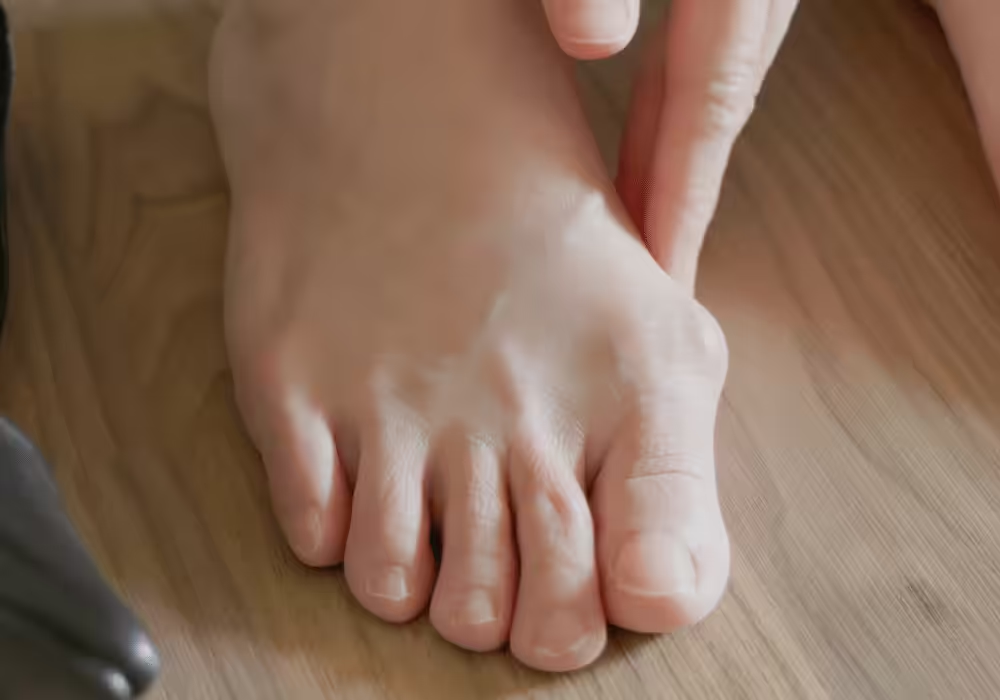
A hammertoe involves flexion (downward bending) of the proximal interphalangeal joint (PIPJ) — the middle joint of the toe — with the MTP (knuckle) joint in a neutral or slightly extended position. The toe resembles an inverted “V” when viewed from the side. A mallet toe involves flexion deformity only at the distal interphalangeal joint (DIPJ) — the joint nearest the tip of the toe. The tip of the toe curls down. The PIPJ and MTP joints are normal. A claw toe involves extension (upward bending) at the MTP joint AND flexion at both the PIPJ and DIPJ — the entire toe arches upward at the base and curls at both middle and tip joints, creating a “claw” appearance. Claw toes are more commonly associated with neurological conditions (Charcot-Marie-Tooth, peripheral neuropathy, cavovarus foot) than simple shoe pressure.
Flexible vs. Rigid Deformities
Each deformity type is further classified as flexible (the deformed joint can be manually straightened to neutral) or rigid (the joint cannot be passively corrected, indicating fixed contracture of the joint capsule and shortening of the soft tissue structures). Flexible deformities respond to conservative management; rigid deformities typically require surgical correction to achieve sustained improvement. The distinction is made on clinical examination and determines the treatment pathway.
Conservative Treatment
For flexible deformities, conservative management aims to reduce symptoms from shoe pressure and delay progression. Wider toe-box shoes to relieve top-of-toe corn pressure are the first intervention. Gel toe sleeves or foam padding cushion bony prominences. Hammertoe splints and buddy taping maintain toe alignment during activity. Metatarsal pads behind the ball of the foot unload the MTP joint, reducing the muscle imbalance that drives PIPJ flexion. Stretching the toe flexors passively daily maintains flexibility. These measures control symptoms in many patients for years.
Surgical Correction
Surgery for rigid hammertoes involves arthroplasty or arthrodesis of the PIPJ. Arthroplasty removes the head of the proximal phalanx to allow the toe to lie flat — historically the most common approach, producing a “floppy” but non-deformed toe. Arthrodesis fuses the PIPJ in a straightened position, producing a firmer but permanently corrected toe — preferred for structural predictability and durability. Both are performed through a small dorsal incision, often with concurrent extensor tendon release and MTP joint capsulotomy if extension deformity is present. Mallet toe surgery addresses only the DIPJ. Claw toe surgery typically requires MTP joint correction (extensor tendon lengthening or release plus flexor-to-extensor transfer) in addition to interphalangeal joint procedures.
More Podiatrist-Recommended Hammertoe Essentials
Extra-Depth Orthopedic Shoe
Orthofeet Sprint — tall toe box prevents hammertoe rubbing and friction.
Wide-Toe-Box Walking Shoe
New Balance 990v6 — accommodates curled toes without pressure.
Supportive Insole


PowerStep Pinnacle — reduces forefoot pressure that drives hammertoe.
As an Amazon Associate, Balance Foot & Ankle earns from qualifying purchases. Product recommendations are based on clinical experience; prices and availability shown above update live from Amazon.
When to See a Podiatrist
Rigid hammertoes don’t reduce with splinting alone — the tendon and capsule have contracted. If the toe no longer straightens passively, surgical correction restores alignment in one short outpatient visit. Call Balance Foot & Ankle to see whether your deformity is still flexible (and responsive to the conservative tools above) or if it’s time for a 20-minute in-office correction.
Call Balance Foot & Ankle: (810) 206-1402 · Book online · Offices in Howell & Bloomfield Township
Frequently Asked Questions
Can hammertoe correct itself without treatment?
No. Hammertoe, mallet toe, and claw toe are progressive structural deformities — they do not self-correct and tend to worsen over time as the tendons shorten and the joints become rigid. Early intervention with conservative measures slows progression; surgical correction is the only way to straighten a rigid deformity.
Is hammertoe surgery painful?
The surgery itself is performed under local anesthesia with sedation. Post-operative discomfort is typically mild to moderate and managed with anti-inflammatories and elevation. Swelling and stiffness persist for weeks to months. Most patients report the long-term result — a straight, pain-free toe — is well worth the short-term recovery.
How long is recovery after hammertoe surgery?
Most hammertoe surgeries allow weight-bearing in a surgical shoe immediately post-operatively. Swelling peaks at 1–2 weeks and gradually resolves over 3–6 months. Transition to a regular shoe typically occurs at 4–6 weeks. Full resolution of swelling and return to athletic footwear may take 3–4 months.
What causes claw toes vs. hammertoes?
Hammertoes are most commonly caused by shoe pressure and muscle imbalance in the flexors/extensors of the lesser toes, often associated with a long second metatarsal or bunion deformity pushing on the adjacent toes. Claw toes are more frequently associated with underlying neurological conditions (neuropathy, Charcot-Marie-Tooth disease), cavovarus foot type, or inflammatory arthropathy (rheumatoid). All toe deformities are worsened by tight, narrow footwear.
Not sure what kind of toe deformity you have? Contact Balance Foot & Ankle for an accurate diagnosis and plan tailored to your foot type from Dr. Biernacki in Southeast Michigan.
Dr. Tom’s Recommended Products for Hammertoes
📍 Located in Michigan?
Our board-certified podiatrists treat this condition at two convenient locations. Most new patients are seen the same week.
These are products I personally use and recommend to my patients at Balance Foot & Ankle.
- PediFix Hammer Toe Crest Pad — Loops over curled toe to straighten and cushion — reduces corns on dorsal PIP joint against shoe box
- Correct Toes Toe Spacers — Realigns all five toes to anatomical position — slows hammertoe progression and reduces forefoot crowding
- Wide Toe Box Shoes — New Balance 574 — Wider last accommodates hammer toe deformity without friction — significantly extends time between surgical intervention
Affiliate disclosure: As an Amazon Associate, Balance Foot & Ankle earns from qualifying purchases. We only recommend products we trust for our own patients.
Dr. Tom’s Recommended Insoles
PowerStep is the brand I prescribe most — medical-grade OTC support without the custom orthotic price tag.
- PowerStep Pinnacle Insoles — The OTC orthotic I recommend most — medical-grade arch support at a fraction of custom orthotic cost. Works in most shoes.
- PowerStep Maxx Insoles — For severe arch pain or flat feet — maximum correction and support when Pinnacle isn’t enough.
Affiliate disclosure: As an Amazon Associate, Balance Foot & Ankle earns from qualifying purchases. We only recommend products we trust for our own patients.
Join 950,000+ Learning About Foot Health
Dr. Tom shares honest medical advice, supplement reviews, and treatment guides you won’t find anywhere else.
Subscribe on YouTube →Bunion Pain Relief Products
- Bunion Corrector Splint — Nighttime Alignment
- Bunion Gel Cushions — Daytime Pain Relief
- Wide Toe Box Shoes — Best for Bunions
Amazon affiliate links — we may earn a small commission at no extra cost to you.
Medically Reviewed by: Dr. Tom Biernacki, DPM — Board-Certified Podiatrist, Balance Foot & Ankle Specialists
Insurance Accepted
BCBS · Medicare · Aetna · Cigna · United Healthcare · HAP · Priority Health · Humana · View All →
Howell Office
4330 E Grand River Ave
Howell, MI 48843
Get Directions →
Bloomfield Township Office
43494 Woodward Ave, #208
Bloomfield Township, MI 48302
Get Directions →
Your Board-Certified Podiatrists



Ready to Get Back on Your Feet?
Same-week appointments available at both locations.
Book Your AppointmentDifferential Diagnosis: What Else Could It Be?
Several conditions share symptoms with Hammertoe and are commonly misdiagnosed in the first office visit. Considering these alternatives is part of every Balance Foot & Ankle exam:
- Mallet toe. Bend at the distal joint only (DIP), not the middle joint.
- Claw toe. Both joints (PIP + DIP) bent — usually multiple toes, often diabetic.
- Crossover toe (2nd MTP). Drift across the big toe — often plantar plate tear underneath.
If your symptoms don’t fit the textbook pattern, ask your podiatrist which differentials they ruled out — that conversation often shortcuts months of trial-and-error treatment.
In Our Clinic
Hammertoes come to our clinic in two flavors: flexible (the toe still passively straightens) and rigid (it doesn’t). For flexible hammertoes we use gel toe crests, roomier toe boxes, custom orthotics to address the underlying instability, and sometimes night splints. Rigid hammertoes with a corn on top of the PIP joint, or a callus under the metatarsal head, usually need a minor outpatient procedure (PIP arthroplasty or fusion) to straighten the toe. The patients who wait too long develop fixed deformities and skin breakdown — we would much rather address a flexible hammertoe early.
Most Common Mistake We See
The most common mistake we see is: Cutting corns at home with scissors or razors. Fix: professional podiatric enucleation with sterile instruments prevents infection and recurrence.
Warning Signs That Need Same-Day Care
Seek immediate evaluation at Balance Foot & Ankle if you experience any of the following:
- Open wound under the bent toe
- Inability to straighten the toe even passively
- Diabetic skin breakdown at the toe joint
- Cold or blue discolouration of the toe
Call (810) 206-1402 — same-week appointments at our Howell and Bloomfield Township offices.
In-Office Treatment at Balance Foot & Ankle
When conservative care isn’t enough, Dr. Tom Biernacki and the team at Balance Foot & Ankle offer advanced, same-day options — including Hammertoe Treatment Michigan at our Howell and Bloomfield Township clinics.
Same-week appointments available. Call (810) 206-1402 or book online.
Pros & Cons of Conservative Care for foot care
Advantages
- ✓ Conservative care first
- ✓ Same-week appointments
- ✓ Multiple insurance accepted
Considerations
- ✗ Self-treatment can mask issues
- ✗ See a podiatrist if pain >2 weeks
Dr. Tom’s Recommended Products for foot care
Affiliate disclosure: As an Amazon Associate, Balance Foot & Ankle earns from qualifying purchases. We only recommend products we use with patients.
Footnanny Heel Cream Dr. Tom’s Pick
Best for: Daily moisturizer for cracked heels
Ready to Get Back on Your Feet?
Same-week appointments in Howell + Bloomfield Township. Most insurance accepted. Dr. Tom Biernacki, DPM & team.
Book Today — Same-Week Appointments Available
Call Now: (810) 206-1402
About Your Care Team at Balance Foot & Ankle
Dr. Tom Biernacki, DPM · Board-Certified Foot & Ankle Surgeon. Specializes in conservative-first care, minimally invasive bunion surgery, and complex reconstruction.
Dr. Carl Jay, DPM · Accepting new patients. Specializes in sports medicine, athletic injuries, and routine podiatric care.
Dr. Daria Gutkin, DPM, AACFAS · Accepting new patients. Specializes in surgical reconstruction and pediatric podiatry.
Locations: 4330 E Grand River Ave, Howell, MI 48843 · 43494 Woodward Ave Suite 208, Bloomfield Township, MI 48302
Hours: Mon–Fri 8:00 AM – 5:00 PM · (810) 206-1402
What is Hammertoe?
Hammertoe is a common foot/ankle condition that affects mobility and quality of life. Understanding the underlying cause is the first step in successful treatment. Our podiatrists at Balance Foot & Ankle perform a hands-on biomechanical exam, review your activity history, and use diagnostic imaging when appropriate to identify the root cause—not just treat the symptom. Many patients have been told to “rest and ice” without a deeper diagnostic workup; our approach is different.
Symptoms and warning signs
Common signs of hammertoe include pain that worsens with activity, morning stiffness, swelling, tenderness when palpated, and difficulty bearing weight. If you experience sudden severe pain, inability to walk, visible deformity, numbness or color change, contact our office the same day or visit urgent care—these can signal a more serious injury such as a fracture, tendon rupture, or vascular compromise. Diabetics with any foot wound should seek same-day care.
Conservative treatment options
Most cases of hammertoe respond to non-surgical care: structured rest, supportive footwear changes, custom orthotics, targeted stretching and strengthening protocols, anti-inflammatory medications when medically appropriate, and in-office procedures such as ultrasound-guided injections. We also offer advanced therapies including laser therapy, EPAT/shockwave, regenerative injections, and image-guided procedures. Treatment is sequenced from least invasive to most invasive, and we explain the rationale at every step.
When is surgery considered?
Surgery is reserved for cases that fail 3-6 months of well-structured conservative care, when there is structural pathology (severe deformity, complete tear, advanced arthritis), or when imaging shows damage that will not heal without intervention. Our surgeons have performed 3,000+ foot and ankle procedures and prioritize minimally-invasive techniques whenever appropriate. We discuss recovery timelines, return-to-activity milestones, and realistic outcome expectations before any procedure is scheduled.
Recovery timeline and prevention
Recovery from hammertoe varies based on severity and chosen treatment path. Conservative cases often improve within 4-8 weeks with consistent adherence to the protocol. Post-procedural recovery may range from a few days (in-office procedures) to several months (reconstructive surgery). Long-term prevention involves footwear assessment, activity modification, structured strengthening, and regular check-ins with your podiatrist if you have a history of recurrence. We provide written home-exercise plans and digital follow-up support.
Ready to feel better?
Same-week appointments available in Howell and Bloomfield Township, Michigan.
Book Your Visit🏥 Dr. Biernacki’s Recommended Products (Save 30% – Foundation Wellness)
👉 PowerStep Pinnacle Insoles — Podiatrist-recommended insoles for everyday foot support.
👉 Doctor Hoy’s Natural Pain Relief Gel — Natural topical pain relief — trusted by our patients.
Our podiatrists treat the underlying cause, not just the symptom. Same-week appointments at our Howell and Bloomfield Township, Michigan offices.
In-Office Treatment at Balance Foot & Ankle
If home treatment isn’t providing relief for your hammertoes, our podiatry team at Balance Foot & Ankle can help with same-week evaluations and advanced in-office care.
Same-week appointments available. (810) 206-1402
Same-Week Appointments in Howell & Bloomfield Township
Three board-certified podiatric surgeons. 1,123+ five-star reviews. Most insurance accepted.
Ready for Expert Care?
Same-week appointments in Howell & Bloomfield Township, MI.
4.9★ | 1,123 Reviews | 3,000+ Surgeries
Or call: (810) 206-1402

Dr. Tom Biernacki, DPM is a board-certified foot & ankle surgeon (ABFAS & ABPM) at Balance Foot & Ankle Specialists in Southeast Michigan. With over a decade of clinical experience, he specializes in heel pain, bunions, diabetic foot care, sports injuries, and minimally invasive surgery. Dr. Biernacki is a member of the APMA and ACFAS, and his patient education content on MichiganFootDoctors.com and YouTube has made him one of the most-followed foot & ankle educators on YouTube.
More questions patients ask
What is a hammertoe?
A hammertoe is a deformity where the toe bends abnormally at the middle joint, creating a hammer-like appearance. It typically affects the second through fifth toes and results from muscle imbalance, tight shoes, genetics, or underlying conditions like arthritis. Without treatment, flexible hammertoes become rigid and may require surgical correction. Dr. Biernacki offers both conservative and surgical treatment options.
Can hammertoes be fixed without surgery?
Flexible hammertoes (those that can still be straightened manually) often respond to conservative treatment including toe splints, padding, shoe modifications, custom orthotics, and stretching exercises. Once a hammertoe becomes rigid, surgery may be necessary. Early intervention provides the best outcomes for non-surgical management.
What does hammertoe surgery involve?
Modern hammertoe correction typically involves a minimally invasive approach where Dr. Biernacki releases the contracted tendon and removes a small bone segment through a tiny incision. Recovery involves wearing a surgical shoe for 3-4 weeks with most patients returning to regular shoes within 6 weeks. Success rates exceed 90% with low recurrence rates.
Still have a question about coverage or cost? Book online and we will check your benefits before your visit: Book in Howell · Book in Bloomfield Township. Prefer to talk it through first? Call (810) 206-1402.