

Insertional Achilles tendinopathy hurts where the tendon attaches to the heel — and unlike mid-portion Achilles tendinopathy, it does not respond to standard eccentric heel-drop exercises. The treatment is different.
You’re in the right place. Dr. Tom Biernacki, DPM, FACFAS — board-certified foot & ankle surgeon with 3,000+ surgeries — explains exactly what insertional Achilles tendinopathy means and what works. Call (810) 206-1402 for same-day appointment at Howell or Bloomfield Township.
Quick answer: Treatment for insertional achilles tendinopathy heel pain treatment follows a stepwise approach: 1) conservative care first (rest, ice, supportive footwear, OTC anti-inflammatories), 2) physical therapy and targeted exercises, 3) in-office treatments (injections, custom orthotics) if conservative fails at 4-6 weeks, 4) surgery for refractory cases. Most patients resolve at step 1 or 2. Call (810) 206-1402.
![Achilles Tendonitis & Back of Heel Pain [BEST Home Treatments 2024!]](https://www.michiganfootdoctors.com/wp-content/cache/flying-press/d645ea3f3d27024136b88a074b2b7894.jpg)
Watch: Achilles Tendonitis & Back of Heel Pain [BEST Home Treatments 2024!] — MichiganFootDoctors YouTube
Medically Reviewed by Dr. Tom Biernacki, DPM, FACFAS — Board-certified podiatrist & foot surgeon | Balance Foot & Ankle | Last updated: May 2026
Quick Answer: What Is Insertional Achilles Tendinopathy?
Insertional Achilles tendinopathy is degeneration and pain at the point where the Achilles tendon attaches to the back of the heel bone (calcaneus). Unlike mid-portion Achilles tendinopathy (which occurs 2–6 cm above the heel), the insertional form involves calcification within the tendon, a bony spur at the insertion (Haglund’s deformity), and retrocalcaneal bursitis — all of which respond differently to treatment. Key distinguishing feature: pain at the very back of the heel bone, worsened by stiff-backed shoes pressing directly on the insertion. Most cases respond to conservative care over 3–6 months; refractory cases have excellent outcomes with targeted procedures.
Insertional vs. Mid-Portion Achilles: Why the Distinction Matters
These two conditions are frequently lumped together under “Achilles tendinopathy,” but they have different anatomy, different biomechanics, different responses to exercise, and different treatment protocols. Getting the distinction right early prevents months of the wrong rehab.
| Feature | Insertional (at heel bone) | Mid-Portion (2–6 cm above heel) |
|---|---|---|
| Pain location | Posterior heel bone, at insertion | Tendon body, 2–6 cm above heel |
| Calcification | Common (intratendinous calcification) | Uncommon |
| Haglund’s deformity | Frequently associated | Not associated |
| Eccentric heel drops | ⚠️ Can worsen — use with caution | ✅ First-line treatment |
| Heel lift | Helpful — reduces tension at insertion | Less effect |
| Stretching | Neutral/isometric preferred; aggressive stretching worsens | Eccentric loading effective |
What Causes Insertional Achilles Tendinopathy
The insertion of the Achilles tendon onto the calcaneal tuberosity is a fibrocartilaginous enthesis — a specialized attachment zone designed to transfer massive tensile loads. Insertional tendinopathy develops when cumulative loading exceeds the repair capacity of this zone, leading to fibrocartilage degeneration, calcification, and reactive bony changes. Risk factors: sudden increases in training volume or intensity (the most common trigger in runners and active patients), tight gastroc-soleus complex, high-heeled footwear that compresses the posterior heel, and a prominent posterior calcaneal tuberosity (Haglund’s deformity) that impinges on the tendon with dorsiflexion.
The condition is most prevalent in recreational runners aged 35–55 and in active patients who have recently transitioned to lower-heeled footwear (particularly the “transition to minimalist shoes” injury pattern). Men are affected more frequently than women. Unlike mid-portion tendinopathy, insertional disease tends to be more persistent and requires longer treatment courses.
Conservative Treatment: What Works for Insertional Achilles
Heel lifts: A 6–10mm heel lift reduces tension at the Achilles insertion by decreasing dorsiflexion demand. This is typically the most immediately effective conservative measure and can provide significant pain relief within 1–2 weeks. Heel lifts go in both shoes (equal bilateral height is important to prevent leg length discrepancy symptoms).
Modified exercise protocol: Unlike mid-portion Achilles tendinopathy where eccentric heel drops are gold standard, aggressive eccentric loading of the insertional zone compresses the degenerated tissue against the calcaneal spur and can worsen symptoms. For insertional tendinopathy, isometric calf loading (standing calf raise held for 30–45 seconds, 5 repetitions, 3× daily) provides tendon stimulus without the compressive component. Heavy slow resistance (HSR) training is transitioned in after 4–6 weeks of isometric loading.
Footwear modification: Avoid stiff heel counters that press directly on the posterior heel insertion. Open-back shoes or shoes with a soft heel counter, combined with the heel lift, remove the mechanical irritant. Running should be in shoes with an 8–12mm heel-to-toe drop during the treatment phase.
Shockwave therapy (ESWT): Particularly effective for insertional tendinopathy with calcification — ESWT has been shown to break down calcific deposits, stimulate neovascularization, and promote collagen remodeling. Typical protocol: 3–5 weekly sessions. Best results when combined with the modified loading program.
Most Common Mistake: Doing Eccentric Heel Drops for Insertional Achilles Pain
⚠️ The treatment mistake that keeps patients in pain: A patient Googles “Achilles tendinopathy exercises” and starts doing eccentric heel drops off a step — the classic Alfredson protocol. Within a week their posterior heel pain is significantly worse. The Alfredson protocol is excellent for mid-portion Achilles tendinopathy (tendon body, 2–6 cm above the heel). For insertional tendinopathy, the step eccentric drop compresses the degenerated insertion tissue against the calcaneal tuberosity at maximum dorsiflexion — exactly what the insertional zone cannot tolerate. I see this every week. The right exercise for insertional Achilles is isometric and heavy slow resistance loading within a pain-free range, avoiding maximum dorsiflexion. If your posterior heel pain is getting worse with “Achilles exercises,” this is probably why — and switching to isometric loading often produces rapid improvement.
Watch: Insertional Achilles Tendinopathy Home Treatment — Dr. Tom Explains
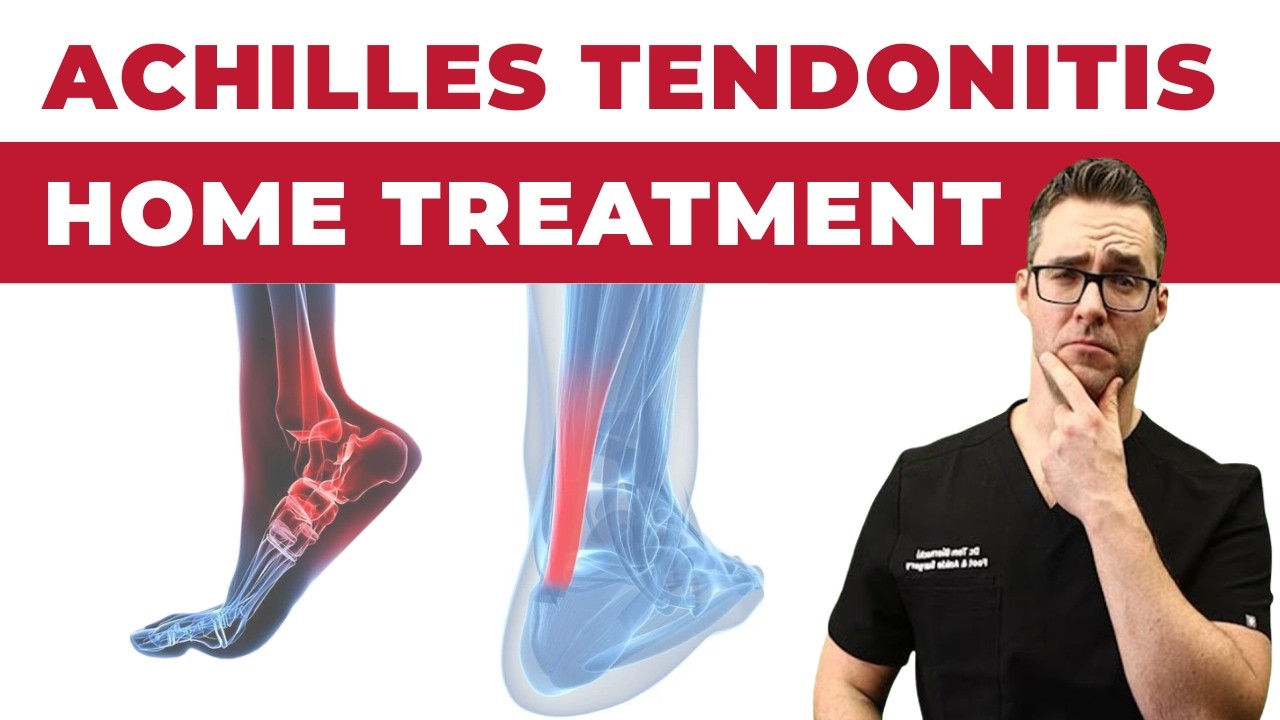
Dr. Tom Biernacki, DPM demonstrates at-home treatment for insertional Achilles tendinopathy, including the correct exercise protocol and what to avoid.
Insertional Achilles Tendinopathy FAQ
What is Haglund’s deformity and does it need to be removed?
Haglund’s deformity is a prominent bony enlargement of the posterior-superior calcaneus — the “pump bump” at the back of the heel bone. When large, it can impinge on the Achilles tendon and retrocalcaneal bursa during dorsiflexion, contributing to both insertional tendinopathy and retrocalcaneal bursitis. Most patients with Haglund’s deformity don’t require surgery — appropriate footwear (no rigid heel counter), heel lifts to reduce dorsiflexion range, and conservative tendon treatment manage the vast majority of cases. Surgery (calcaneal osteotomy or Haglund’s resection with tendon debridement) is reserved for refractory cases with persistent severe symptoms after a minimum of 4–6 months of proper conservative care. Results from Haglund’s surgery are good when properly indicated.
Can I run with insertional Achilles tendinopathy?
Running through acute flares (pain above 4/10 during or after running) delays healing significantly. During the early treatment phase, cross-training with cycling, swimming, or elliptical maintains fitness while reducing insertional load. As symptoms improve with loading therapy and footwear modification, running can be gradually reintroduced — typically starting with walk-run intervals on flat terrain in appropriate footwear with heel lifts. The 10% rule (no more than 10% weekly mileage increase) prevents recurrence during return to running. Most patients with insertional tendinopathy can return to full running within 3–6 months of proper treatment initiation.
Do steroid injections help insertional Achilles tendinopathy?
Corticosteroid injection into the Achilles tendon itself is contraindicated — it significantly increases the risk of Achilles tendon rupture, one of the most serious complications in musculoskeletal medicine. However, targeted injection into the retrocalcaneal bursa (the fluid-filled sac between the tendon and heel bone) is appropriate when significant bursitis is a component of the presentation, and carries a much lower rupture risk when properly placed under ultrasound guidance. PRP (platelet-rich plasma) injection at the tendon insertion is an alternative that promotes healing without the rupture risk of corticosteroids. At Balance Foot & Ankle, all tendon-region injections are performed under ultrasound guidance for precision and safety.
How is insertional Achilles tendinopathy different from plantar fasciitis?
Both cause heel pain, but the location is the key differentiator: insertional Achilles tendinopathy causes pain at the BACK of the heel bone (posterior calcaneus), while plantar fasciitis causes pain at the BOTTOM of the heel bone (inferior calcaneus). Insertional Achilles pain is worse when a shoe presses on the back of the heel and during dorsiflexion activities; plantar fasciitis is worst with the first steps in the morning and with push-off. On X-ray, insertional Achilles may show a posterior superior calcaneal spur and Haglund’s prominence; plantar fasciitis shows an inferior calcaneal spur. Both can coexist in the same patient, which is why clinical examination is essential for distinguishing and appropriately treating each component.
When is surgery needed for insertional Achilles tendinopathy?
Surgery is indicated after a minimum of 4–6 months of properly executed conservative care has failed to provide adequate symptom relief — specifically: structured loading therapy (isometric then heavy slow resistance), ESWT, footwear modification, and heel lifts. The surgical procedure typically involves open debridement of the degenerated tendon tissue, removal of the calcaneal spur and Haglund’s deformity, and retrocalcaneal bursectomy. When the Achilles insertion is significantly weakened by the debridement, tendon reconstruction with an FHL (flexor hallucis longus) tendon transfer may be required. Recovery from insertional Achilles surgery is typically 3–6 months to return to light activity, 6–12 months to return to running. Outcomes are generally excellent in appropriately selected patients.
Posterior Heel Pain? Get the Right Diagnosis and Treatment Plan
Dr. Tom Biernacki is a board-certified foot & ankle surgeon specializing in Achilles tendon conditions at Balance Foot & Ankle in Howell and Bloomfield Township, MI. Same-day appointments available.
Book an Appointment Call (810) 206-1402Related Resources
- Morning Heel Pain: Causes & Treatment Guide
- Plantar Fasciitis Treatment
- Chronic Ankle Pain After a Sprain
- Custom Orthotics for Achilles Support
- About Dr. Tom Biernacki, DPM FACFAS
Frequently Asked Questions
How long does treatment take to work?
Most patients see improvement in 4-8 weeks with consistent conservative care. Persistent symptoms after 8 weeks need imaging and escalation.
When is surgery needed?
Surgery is reserved for cases that fail 3-6 months of conservative care, structural deformities, or fractures requiring stabilization.
Is this covered by insurance?
Most diagnostic visits and conservative treatments are covered by Medicare and major insurers. Custom orthotics often require diabetic or post-surgical justification.
What is Heel pain?
Heel pain is a common foot/ankle condition that affects mobility and quality of life. Understanding the underlying cause is the first step in successful treatment. Our podiatrists at Balance Foot & Ankle perform a hands-on biomechanical exam, review your activity history, and use diagnostic imaging when appropriate to identify the root cause—not just treat the symptom. Many patients have been told to “rest and ice” without a deeper diagnostic workup; our approach is different.
Symptoms and warning signs
Common signs of heel pain include pain that worsens with activity, morning stiffness, swelling, tenderness when palpated, and difficulty bearing weight. If you experience sudden severe pain, inability to walk, visible deformity, numbness or color change, contact our office the same day or visit urgent care—these can signal a more serious injury such as a fracture, tendon rupture, or vascular compromise. Diabetics with any foot wound should seek same-day care.
Conservative treatment options
Most cases of heel pain respond to non-surgical care: structured rest, supportive footwear changes, custom orthotics, targeted stretching and strengthening protocols, anti-inflammatory medications when medically appropriate, and in-office procedures such as ultrasound-guided injections. We also offer advanced therapies including MLS laser therapy, EPAT/shockwave, regenerative injections, and image-guided procedures. Treatment is sequenced from least invasive to most invasive, and we explain the rationale at every step.
When is surgery considered?
Surgery is reserved for cases that fail 3-6 months of well-structured conservative care, when there is structural pathology (severe deformity, complete tear, advanced arthritis), or when imaging shows damage that will not heal without intervention. Our surgeons have performed 3,000+ foot and ankle procedures and prioritize minimally-invasive techniques whenever appropriate. We discuss recovery timelines, return-to-activity milestones, and realistic outcome expectations before any procedure is scheduled.
Recovery timeline and prevention
Recovery from heel pain varies based on severity and chosen treatment path. Conservative cases often improve within 4-8 weeks with consistent adherence to the protocol. Post-procedural recovery may range from a few days (in-office procedures) to several months (reconstructive surgery). Long-term prevention involves footwear assessment, activity modification, structured strengthening, and regular check-ins with your podiatrist if you have a history of recurrence. We provide written home-exercise plans and digital follow-up support.
Ready to feel better?
Same-week appointments available in Howell and Bloomfield Township, Michigan.
Book Your VisitReady to fix this for good?
Reading goes only so far. The fastest path to relief is a 30-minute office visit with Dr. Biernacki — same-day Howell or Bloomfield Township. Call (810) 206-1402 or use our online booking.
In-Office Treatment at Balance Foot & Ankle
If home treatment isn’t providing relief for your plantar fasciitis, our podiatry team at Balance Foot & Ankle can help with same-day evaluations and advanced in-office care.
Same-day appointments available. (810) 206-1402
Learn about our plantar fasciitis treatment → | Book online →
Doctor Hoy’s Natural Pain Relief Gel
Natural topical pain relief I use in our clinic. Arnica + camphor formula — apply directly to the area 3–4x daily. ($20–25)
Shop Doctor Hoy’s →
Dr. Tom Biernacki, DPM is a board-certified foot & ankle surgeon (ABFAS & ABPM) at Balance Foot & Ankle Specialists in Southeast Michigan. With over a decade of clinical experience, he specializes in heel pain, bunions, diabetic foot care, sports injuries, and minimally invasive surgery. Dr. Biernacki is a member of the APMA and ACFAS, and his patient education content on MichiganFootDoctors.com and YouTube has made him one of the most-followed foot & ankle educators on YouTube.
More questions patients ask
What causes heel pain?
Heel pain most commonly results from plantar fasciitis (inflammation of the plantar fascia ligament), which accounts for approximately 80% of cases. Other causes include Achilles tendinitis, heel spurs, stress fractures, Baxter's nerve entrapment, and fat pad atrophy. Dr. Biernacki performs a thorough biomechanical evaluation to identify the precise cause. Call 810-206-1402 for a same-day appointment.
How long does plantar fasciitis take to heal?
With proper treatment, most plantar fasciitis cases improve within 6-12 weeks. Conservative treatments include custom orthotics, stretching protocols, physical therapy, and corticosteroid injections. For persistent cases beyond 6 months, Dr. Biernacki offers advanced options including shockwave therapy and minimally invasive procedures with 90%+ success rates.
Should I see a podiatrist for heel pain?
Yes. A board-certified podiatrist like Dr. Biernacki can accurately diagnose the cause of heel pain using X-rays and diagnostic ultrasound, ruling out stress fractures and other serious conditions. Self-treatment with over-the-counter insoles often delays proper treatment and can worsen the condition. Early intervention leads to faster recovery.
Still have a question about coverage or cost? Book online and we will check your benefits before your visit: Book in Howell · Book in Bloomfield Township. Prefer to talk it through first? Call (810) 206-1402.