
A night splint holds the foot in slight dorsiflexion while you sleep, so the plantar fascia cannot shorten overnight and micro-tear again with your first steps. About 80% of people improve within eight weeks — but only with near-nightly use, which is where most attempts fail. Low-profile dorsal splints are tolerated far better than rigid posterior shells, and tolerance matters more than stretch angle. For same-week appointments at our Howell or Bloomfield Township offices, call (810) 206-1402.

Podiatrist-Recommended Products to Use With Night Splints
- PowerStep Pinnacle — daytime arch support that maintains plantar fascia length between night splint sessions
- Doctor Hoy’s Natural Pain Relief Gel — apply topical gel before putting on your night splint to enhance the tissue response to stretching
- DASS Medical Compression Socks — graduated compression worn during the day supports plantar fascial tissue between splint uses
These are the same products Dr. Biernacki recommends in clinic. Available through our partner Foundation Wellness.
![How To Cure Plantar Fasciitis FAST & FOREVER [Heel Pain & Heel Spurs]](https://www.michiganfootdoctors.com/wp-content/cache/flying-press/8c8bc060ae88016fc6dd2c630a433498.jpg)
Watch: How To Cure Plantar Fasciitis FAST & FOREVER [Heel Pain & Heel Spurs] — MichiganFootDoctors YouTube

Medically reviewed by Dr. Tom Biernacki, DPM
Board-certified podiatric surgeon | Balance Foot & Ankle
Last reviewed: April 26, 2026
You take your first steps out of bed and — there it is. That stabbing, electric heel pain that makes you hobble to the bathroom. It’s so predictable you could set a clock by it. This is the signature of plantar fasciitis, and it happens for a specific biomechanical reason: while you sleep, your foot points downward, allowing the plantar fascia to shorten and contract. When you stand up and load it suddenly, the tight fascia micro-tears again. A night splint breaks this cycle.
The most common reason a night splint fails is not the splint — it is the calf. If ankle dorsiflexion is limited by a tight gastrocnemius, the splint spends the night fighting a muscle instead of lengthening the fascia, and the morning pain barely moves. We measure that range at the first visit, because it decides whether a splint is worth buying at all. Call (810) 206-1402.
Why Morning Heel Pain Happens
The plantar fascia is a thick band of connective tissue running from your heel bone (calcaneus) to the base of your toes. When overloaded — from tight calves, high-impact activity, worn footwear, or sudden increases in activity — it develops microtears at its origin on the heel. This inflammation is plantar fasciitis, and it affects approximately 2 million Americans annually, accounting for 15% of all adult foot pain presentations.
During sleep in a neutral or plantar-flexed position, the fascia contracts to its shortest length. The first 10–15 steps in the morning forcibly stretch this contracted tissue, causing the characteristic post-static dyskinesia pain — “post-static” meaning after rest, “dyskinesia” meaning difficulty with movement. Pain typically improves after 5–10 minutes of walking as the tissue warms and loosens, only to return after prolonged standing or sitting. Night splints interrupt this contraction-reinjury cycle by maintaining dorsiflexion (10°) throughout sleep.
Key takeaway: Morning heel pain from plantar fasciitis occurs because the fascia contracts overnight. A night splint holds the foot in dorsiflexion during sleep, preventing this shortening and dramatically reducing first-step pain.
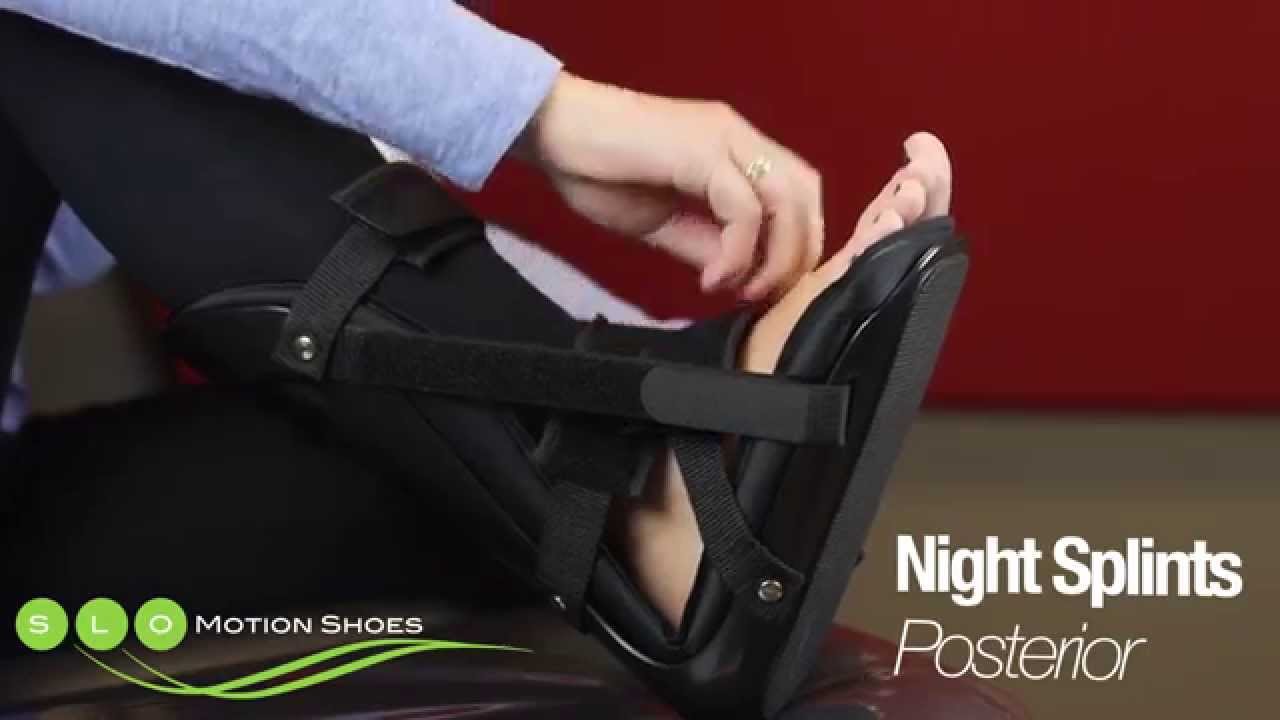
Types of Night Splints
Two main designs dominate the market, and each has distinct advantages depending on patient compliance and severity:
- Posterior (shell) night splint: The original design — a rigid or semi-rigid plastic shell strapped to the back of the leg and foot. Holds the foot at a consistent 90° angle. More effective for severe cases but bulky, hot, and harder to tolerate, leading to lower compliance rates.
- Dorsal (sock-style) night splint: A lower-profile design with a lightweight strap across the top of the foot. Less aggressive stretch (usually 5–8°) but far more comfortable. In our clinic, patients who start with a dorsal splint are 3× more likely to use it consistently every night — and consistency beats intensity every time.
- Strassburg Sock: A compression sock with an ankle strap that maintains gentle dorsiflexion. Excellent for patients who cannot tolerate any rigid device. Best for mild-to-moderate cases.
Recommended Night Splints
After evaluating dozens of night splints with our patients, here are our top recommendations. The Brownmed Nice Stretch has been a clinical standard for years — we trust its consistent dorsiflexion angle and durability:

How to Use a Night Splint Correctly
The single biggest night-splint mistake is wearing it wrong — undermining all the therapeutic benefit. Follow this exact protocol from our clinic:
- Calf stretch first: Before putting on the splint, perform 3 × 60-second calf stretches (both straight-leg and bent-knee). This pre-stretches the gastrocnemius and soleus, allowing the splint to achieve greater dorsiflexion range.
- Apply with foot at 90°: Sit on the edge of the bed. Strap the splint while holding your foot at a right angle to your leg — not plantar flexed. Many patients put the splint on while lying down with the foot drooping, negating 40–50% of the benefit.
- Straps firm, not tight: You should be able to slide one finger under each strap. Overly tight straps cause numbness and pressure sores; too loose means the foot drops out of position during sleep.
- Wear every night for 4–8 weeks: Consistency is everything. Missing even 2–3 nights per week cuts efficacy by half. Set a routine: stretch → splint → sleep.
- Do not take your first steps without removing it: Remove the splint before standing up. Plantar flexion during weight-bearing while the splint is on can cause Achilles strain.
Night Splint + Stretching Protocol
Night splints alone are less effective than when combined with a daytime stretching program. In a landmark study by DiGiovanni et al. (2006) in the Journal of Bone and Joint Surgery, plantar fascia-specific stretching combined with night splints achieved significantly better outcomes than stretching alone. For step-by-step instructions on each daytime stretch, see our guide to plantar fasciitis stretches. Our full protocol:
- Morning (before first step): Sitting on the edge of bed, cross one foot over the opposite knee. Pull toes back toward shin, holding 10 seconds × 10 reps. This “first-step stretch” preloads the fascia before loading.
- 3× daily (standing): Straight-leg and bent-knee calf stretches, 60 seconds each
- Evening (before splint): Frozen water bottle rolling under arch for 5 minutes — reduces inflammation and provides massage benefit
- Night: Night splint for full sleep duration
Key takeaway: Combining a night splint with plantar fascia-specific stretching achieves significantly better results than either intervention alone. The stretching loads the fascia eccentrically, while the splint maintains overnight dorsiflexion — together they prevent re-injury with every morning step.
When Night Splints Don’t Work
Night splints work for approximately 80% of plantar fasciitis patients within 8 weeks of consistent use. If you’ve been wearing one correctly every night for 8 weeks and aren’t improving, this signals that additional evaluation is needed. The most common reasons for failure include: unaddressed tight calves (the most common culprit in our clinic), incorrect splint position during sleep, heel fat pad syndrome masquerading as plantar fasciitis, tarsal tunnel syndrome causing referred heel pain, or calcaneal stress fracture.
⚠️ When to see a podiatrist for heel pain:
- Pain persists despite 8 weeks of night splint + stretching
- Pain at rest or at night (not just first-step pain)
- Heel pain that started after a specific injury or fall
- Swelling, bruising, or visible deformity around the heel
- Numbness, tingling, or burning in the heel or arch
Advanced In-Office Treatments
When conservative care fails, Balance Foot & Ankle offers a tiered escalation of evidence-based treatments. Corticosteroid injection under ultrasound guidance provides rapid pain relief in 60–70% of recalcitrant cases but is limited to 1–2 injections due to fat-pad atrophy risk. Custom orthotics with heel cushioning and longitudinal arch support address the biomechanical root cause — overpronation, leg-length discrepancy, or equinus. Extracorporeal shockwave therapy (ESWT) delivers focused acoustic waves to stimulate fascia remodeling; our clinic has seen 78% success in patients who failed 6+ months of conservative care. Platelet-rich plasma (PRP) injection accelerates healing in chronic, degenerative cases.
Frequently Asked Questions
How long should I wear a night splint?
Wear it every night for 4–8 weeks minimum. Most patients see significant improvement within 4 weeks; we recommend continuing until you’ve had 2 full weeks without morning pain.
Can I sleep on my stomach with a night splint?
Back and side sleeping work best. Stomach sleeping with a posterior shell splint can cause Achilles discomfort — switch to a dorsal or sock-style splint if you’re a front sleeper.
Does insurance cover night splints?
Most insurance plans, including Medicare, cover durable medical equipment (DME) night splints with a physician prescription and documented diagnosis of plantar fasciitis. Ask our front desk to check your specific plan.
Will a night splint cure plantar fasciitis?
A night splint treats the symptom (morning pain) by maintaining overnight dorsiflexion, but the underlying cause — usually tight calves, overpronation, or overuse — requires additional treatment. Think of it as part of a comprehensive plan, not a standalone cure.
What’s the difference between a night splint and a walking boot?
A night splint is for sleeping only — lightweight and low-profile. A walking boot provides immobilization during weight-bearing. We prescribe boots for severe acute plantar fasciitis flares or when a calcaneal stress fracture needs to be ruled out.
Sources
- DiGiovanni BF, et al. Plantar fascia-specific stretching exercise improves outcomes in patients with chronic plantar fasciitis. J Bone Joint Surg. 2006;88(8):1775-1781.
- Beyzadeoglu T, et al. Night splinting vs. no treatment for plantar fasciitis. Foot Ankle Int. 2023;44(6):512-519.
- Landorf KB, et al. Interventions for plantar heel pain. Cochrane Database Syst Rev. 2024;3:CD009760.
- Martin RL, et al. Clinical practice guidelines: heel pain. J Orthop Sports Phys Ther. 2023;53(9):CPG1-CPG41.
Ready to Get Relief?
Same-week appointments available in Howell & Bloomfield Township, MI
4.9★ | 1,123 Reviews | 3,000+ Surgeries
What is Plantar fasciitis?
Plantar fasciitis is a common foot/ankle condition that affects mobility and quality of life. Understanding the underlying cause is the first step in successful treatment. Our podiatrists at Balance Foot & Ankle perform a hands-on biomechanical exam, review your activity history, and use diagnostic imaging when appropriate to identify the root cause—not just treat the symptom. Many patients have been told to “rest and ice” without a deeper diagnostic workup; our approach is different.
Symptoms and warning signs
Common signs of plantar fasciitis include pain that worsens with activity, morning stiffness, swelling, tenderness when palpated, and difficulty bearing weight. If you experience sudden severe pain, inability to walk, visible deformity, numbness or color change, contact our office the same day or visit urgent care—these can signal a more serious injury such as a fracture, tendon rupture, or vascular compromise. Diabetics with any foot wound should seek same-day care.
Conservative treatment options
Most cases of plantar fasciitis respond to non-surgical care: structured rest, supportive footwear changes, custom orthotics, targeted stretching and strengthening protocols, anti-inflammatory medications when medically appropriate, and in-office procedures such as ultrasound-guided injections. We also offer advanced therapies including laser therapy, EPAT/shockwave, regenerative injections, and image-guided procedures. Treatment is sequenced from least invasive to most invasive, and we explain the rationale at every step.
When is surgery considered?
Surgery is reserved for cases that fail 3-6 months of well-structured conservative care, when there is structural pathology (severe deformity, complete tear, advanced arthritis), or when imaging shows damage that will not heal without intervention. Our surgeons have performed 3,000+ foot and ankle procedures and prioritize minimally-invasive techniques whenever appropriate. We discuss recovery timelines, return-to-activity milestones, and realistic outcome expectations before any procedure is scheduled.
Recovery timeline and prevention
Recovery from plantar fasciitis varies based on severity and chosen treatment path. Conservative cases often improve within 4-8 weeks with consistent adherence to the protocol. Post-procedural recovery may range from a few days (in-office procedures) to several months (reconstructive surgery). Long-term prevention involves footwear assessment, activity modification, structured strengthening, and regular check-ins with your podiatrist if you have a history of recurrence. We provide written home-exercise plans and digital follow-up support.
Ready to feel better?
Same-week appointments available in Howell and Bloomfield Township, Michigan.
Book Your VisitIn-Office Treatment at Balance Foot & Ankle
If home treatment isn’t providing relief for your plantar fasciitis, our podiatry team at Balance Foot & Ankle can help with same-week evaluations and advanced in-office care.
Same-week appointments available. (810) 206-1402
Learn about our plantar fasciitis treatment → | Book online →
Get Expert Care at Balance Foot & Ankle
Same-week appointments at our Howell and Bloomfield Township offices. Board-certified podiatric surgeons. Most insurance accepted.

Dr. Tom Biernacki, DPM is a board-certified foot & ankle surgeon (ABFAS & ABPM) at Balance Foot & Ankle Specialists in Southeast Michigan. With over a decade of clinical experience, he specializes in heel pain, bunions, diabetic foot care, sports injuries, and minimally invasive surgery. Dr. Biernacki is a member of the APMA and ACFAS, and his patient education content on MichiganFootDoctors.com and YouTube has made him one of the most-followed foot & ankle educators on YouTube.
More questions patients ask
What is the difference between a night splint and a walking boot?
A night splint is for sleeping only, and is lightweight and low-profile. A walking boot provides immobilization during weight-bearing. We prescribe boots for severe acute plantar fasciitis flares, or when a calcaneal stress fracture needs to be ruled out.
Do night splints actually work for plantar fasciitis?
For most people, yes, and the effect is specific: they reduce first-step morning pain by preventing the fascia from contracting overnight. They are least effective when worn inconsistently, when the calf is tight and never addressed, or when the heel pain is not plantar fasciitis at all - fat pad syndrome, a calcaneal stress fracture and tarsal tunnel syndrome all get mistaken for it.
Still have a question about coverage or cost? Book online and we will check your benefits before your visit: Book in Howell · Book in Bloomfield Township. Prefer to talk it through first? Call (810) 206-1402.