

Quick answer: Plantar Fibromatosis Ledderhose Disease Foot Nodules is a clinical condition that responds to evidence-based treatment when caught early. Symptoms include pain, swelling, and altered function. Diagnosis requires clinical exam, often imaging. Treatment ladder: conservative care first (4-6 weeks), then targeted interventions if needed. Call (810) 206-1402.
Medically reviewed by Dr. Tom Biernacki, DPM — Board-Certified Podiatric Surgeon — Balance Foot & Ankle, Howell & Bloomfield Township, MI. Last updated April 2026.
▶ Watch
Medically reviewed by Dr. Tom Biernacki, DPM | Board-certified podiatrist | 3,000+ surgeries performed
Last updated: April 2, 2026
The most important clinical decision with Plantar Fibromatosis Ledderhose Disease Foot Nodules isn't which treatment to start with — it's which subtype or underlying cause you actually have. Our podiatrists regularly see patients who've been treated for months for the wrong diagnosis. The correct identification changes the entire treatment path. Call (810) 206-1402 — Dr. Tom evaluates this condition at both Howell and Bloomfield Township locations.
What Is Plantar Fibromatosis?
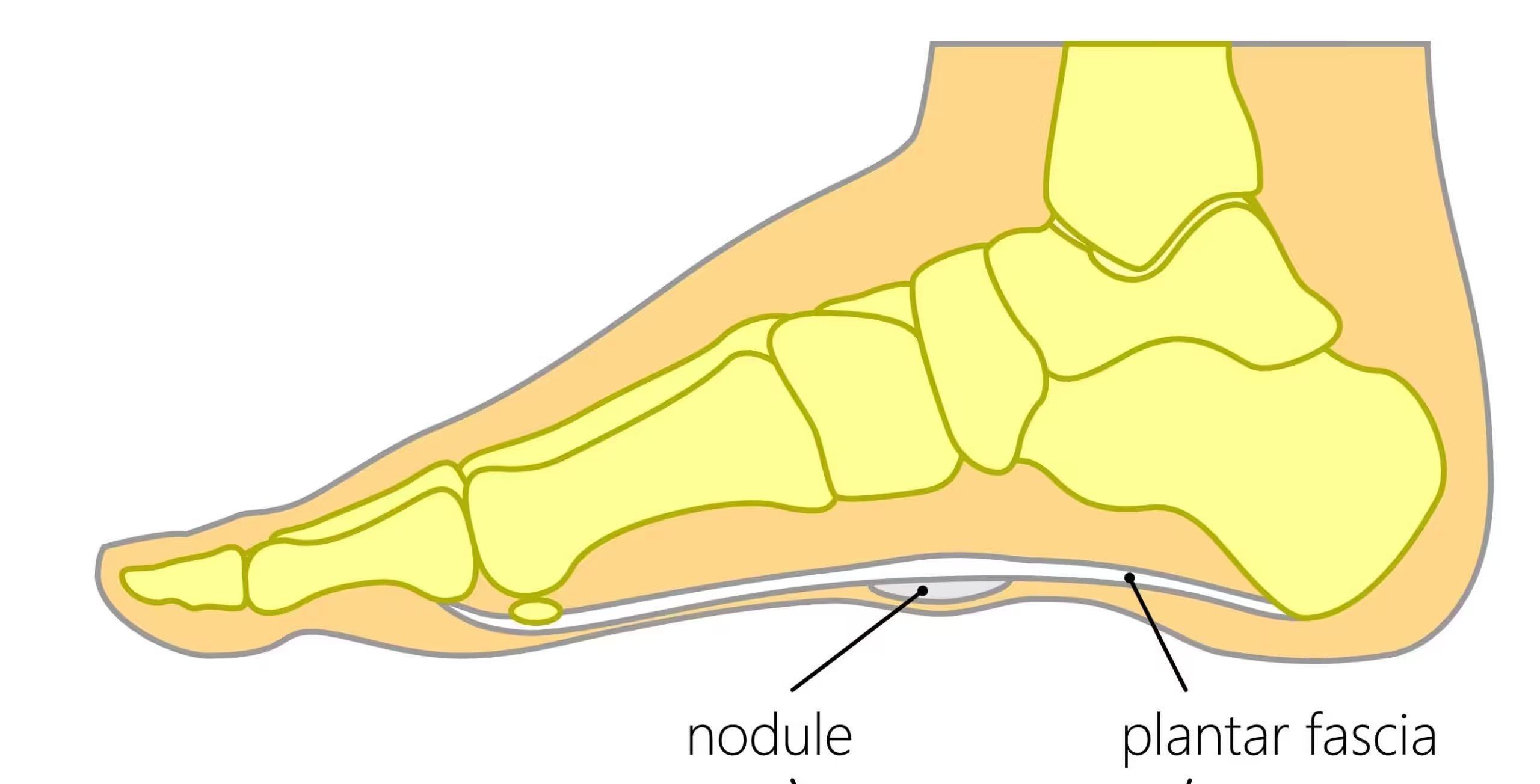
Plantar fibromatosis is a fibroproliferative disorder in which dense fibrous nodules form within the plantar fascia — the thick band of connective tissue spanning the bottom of the foot from heel to toes. Unlike plantar fasciitis, which involves inflammation and microtearing of the fascia, fibromatosis produces distinct palpable lumps that grow slowly over months to years.
The condition is part of the broader family of superficial fibromatoses that includes Dupuytren’s contracture in the hand and Peyronie’s disease. Research published in the Journal of Foot and Ankle Surgery (2024) found that approximately 25% of patients with plantar fibromatosis also develop Dupuytren’s contracture, suggesting a shared genetic predisposition involving fibroblast growth factor signaling pathways.
Nodules typically appear along the medial band of the plantar fascia, most commonly in the central arch region. They range from small pea-sized growths to large multilobulated masses several centimeters in diameter. While the nodules themselves are benign and never become cancerous, their location and progressive enlargement can cause significant functional impairment.
Causes and Risk Factors
The exact cause of plantar fibromatosis remains incompletely understood, but several factors contribute to abnormal fibroblast proliferation within the plantar fascia. Genetic predisposition plays a significant role — the condition is more common in people of Northern European descent and frequently runs in families with a history of fibromatous conditions.
Chronic microtrauma to the plantar fascia from repetitive impact activities, prolonged standing on hard surfaces, or biomechanical abnormalities like excessive pronation may trigger the fibroproliferative cascade. Certain medications, particularly beta-blockers and anti-seizure drugs like phenytoin, have been associated with increased fibromatosis risk in epidemiological studies.
Additional risk factors include diabetes mellitus, chronic liver disease, epilepsy, and alcoholism. A 2024 systematic review in Foot & Ankle International identified age over 40, male sex, and bilateral foot involvement as independent predictors of disease progression requiring surgical intervention.
Symptoms and Diagnosis
The hallmark symptom is one or more firm, round or oval nodules palpable on the bottom of the foot, typically in the arch region. Early nodules may be painless and discovered incidentally during foot examination. As nodules enlarge, patients often report aching pain with prolonged standing, walking on hard surfaces, or wearing shoes with thin soles that allow direct pressure on the growths.
Diagnosis is primarily clinical — experienced podiatrists like Dr. Tom Biernacki can typically identify plantar fibromatosis through physical examination alone. The nodules have a characteristic firm, rubbery texture that moves with the plantar fascia during toe dorsiflexion. Ultrasound imaging provides excellent visualization of nodule size, number, and relationship to surrounding structures.
MRI is reserved for cases where the diagnosis is uncertain, nodules are unusually large or rapidly growing, or surgical planning requires detailed anatomical mapping. MRI demonstrates the nodules as well-defined lesions within the plantar fascia with characteristic low signal intensity on both T1 and T2 sequences, distinguishing them from other soft tissue tumors.
Conservative Treatment Options
First-line treatment focuses on reducing pressure on the nodules and managing pain without surgical intervention. Custom orthotic inserts with accommodative cutouts precisely positioned over nodule locations redistribute weight-bearing forces away from the sensitive areas. PowerStep Pinnacle inserts provide excellent arch support that reduces tension across the plantar fascia.
Corticosteroid injections directly into symptomatic nodules can temporarily reduce pain and inflammation, though they don’t eliminate the nodules. Studies show approximately 60-70% of patients experience meaningful pain relief lasting 3-6 months following ultrasound-guided injection. Doctor Hoy’s topical pain relief applied over the nodule area provides supplementary comfort between clinical treatments.
Low-dose radiation therapy (radiotherapy) has emerged as an effective nonsurgical option for early-stage plantar fibromatosis. A 2025 prospective study demonstrated that 3 Gy delivered in 5 fractions over one week prevented nodule progression in 84% of patients and achieved measurable nodule shrinkage in 62% at two-year follow-up. This treatment works best when nodules are small and the disease is in an active growth phase.
Surgical Treatment for Severe Cases
Surgery is considered when conservative measures fail to provide adequate pain relief and nodules significantly impair daily activities or shoe wear. The standard surgical approach involves complete fasciectomy — removal of the entire affected segment of plantar fascia along with all nodules — rather than simple nodule excision, which carries recurrence rates exceeding 50%.
Dr. Tom Biernacki performs plantar fasciectomy through a longitudinal medial arch incision that provides excellent surgical exposure while minimizing risk to the lateral plantar nerve and artery. The procedure involves careful dissection to remove all diseased fascia while preserving healthy tissue margins. Skin flap management is critical because the plantar skin must heal over what was previously a space-occupying lesion.
Recovery from plantar fasciectomy requires 6-8 weeks of protected weight bearing in a surgical boot, followed by gradual return to regular footwear with custom orthotics. Physical therapy focusing on scar management, arch strengthening, and gait retraining typically begins at 4 weeks postoperatively. Complete recovery to full activity takes 3-4 months for most patients.
Recurrence Prevention and Long-Term Management
Recurrence is the primary challenge in plantar fibromatosis management, occurring in 10-25% of patients following complete fasciectomy and up to 60% after simple nodule excision. Risk factors for recurrence include young age at diagnosis, bilateral disease, family history of fibromatosis, and incomplete surgical margins.
Long-term management strategies focus on regular monitoring, ongoing use of supportive orthotics, and prompt evaluation of any new nodule formation. Patients who have undergone surgery should continue wearing custom orthotics indefinitely to provide structural support compensating for the removed fascia segment. CURREX RunPro insoles offer excellent daily support for post-surgical patients during exercise and recreational activities.
Emerging therapies under investigation include collagenase injections (similar to treatment for Dupuytren’s contracture), targeted anti-fibrotic medications, and cryotherapy. While none have yet achieved widespread adoption for plantar fibromatosis specifically, early clinical trials show promising results that may expand the nonsurgical treatment armamentarium in coming years.
Warning Signs Requiring Urgent Evaluation
- function bold() { [native code] } — undefined
- function bold() { [native code] } — undefined
- function bold() { [native code] } — undefined
- function bold() { [native code] } — undefined
The Most Common Mistake We See
The most common mistake patients make with plantar fibromatosis is assuming the nodules are calluses or plantar warts and attempting to treat them with over-the-counter pads, salicylic acid, or home remedies. These approaches are completely ineffective against fibrous tissue growths and delay proper diagnosis. Early identification allows for nonsurgical interventions like radiation therapy that work best when nodules are small and actively growing.
Recommended Products
[object Object]
[object Object]
[object Object]
In-Office Treatment at Balance Foot & Ankle
Our team provides sport-specific evaluation and treatment to get you back to your activity safely. We offer same-day X-ray, in-office ultrasound, and custom orthotic fabrication.
Same-day appointments available. Call (810) 206-1402 or book online.
More Podiatrist-Recommended Foot Health Essentials
Hoka Clifton 10


Max-cushion everyday shoe — podiatrist favorite for walking and running.

OOFOS Recovery Slide

Impact-absorbing recovery sandal — wear after long days on your feet.
As an Amazon Associate, Balance Foot & Ankle earns from qualifying purchases. Product recommendations are based on clinical experience; prices and availability shown above update live from Amazon.
When to See a Podiatrist
If foot or ankle pain has been bothering you for more than a few weeks, home care alone may not be enough. Balance Foot & Ankle offers same-week appointments at our Howell and Bloomfield Township clinics — no referral needed in most cases. Bring your current shoes and a short list of symptoms and we’ll build you a treatment plan in one visit.
Call Balance Foot & Ankle: (810) 206-1402 · Book online · Offices in Howell & Bloomfield Township
Frequently Asked Questions
Is plantar fibromatosis the same as plantar fasciitis?
No. Plantar fasciitis involves inflammation and microtearing of the plantar fascia causing heel pain, while plantar fibromatosis produces firm fibrous nodules within the fascia, typically in the arch area. They are completely different conditions requiring different treatments, though they can occasionally coexist.
Can plantar fibromatosis nodules become cancerous?
Plantar fibromatosis nodules are benign and do not become cancerous. However, any rapidly growing soft tissue mass should be evaluated by a podiatrist to rule out other conditions. In rare cases, imaging or biopsy may be recommended to confirm the diagnosis.
How long does recovery take after plantar fibromatosis surgery?
Recovery from plantar fasciectomy typically requires 6-8 weeks of protected weight bearing in a surgical boot, followed by physical therapy. Most patients return to regular shoes with custom orthotics by 8-10 weeks and full activity by 3-4 months.
Does plantar fibromatosis always require surgery?
No. Many patients manage plantar fibromatosis successfully with conservative treatments including custom orthotics, corticosteroid injections, and radiation therapy. Surgery is reserved for cases where nodules cause significant pain and functional impairment despite comprehensive nonsurgical treatment.
The Bottom Line
Plantar fibromatosis is a manageable condition when diagnosed early and treated with the right combination of conservative and, when necessary, surgical approaches. At Balance Foot & Ankle, Dr. Tom Biernacki provides hands-on exam plus imaging when needed including ultrasound imaging to accurately assess nodule size and location, develop plan tailored to your foot types, and perform advanced surgical techniques when conservative options have been exhausted.
In-Office Treatment at Balance Foot & Ankle
If home treatment isn’t providing relief for your foot and ankle conditions, our podiatry team at Balance Foot & Ankle can help with same-day evaluations and advanced in-office care.
Same-day appointments available. (810) 206-1402
Sources
- Journal of Foot and Ankle Surgery (2024) — Fibromatosis association with Dupuytren’s contracture
- Foot & Ankle International (2024) — Risk factors for surgical progression
- Radiation Oncology (2025) — Low-dose radiotherapy outcomes for plantar fibromatosis
- Clinical Orthopaedics and Related Research (2024) — Fasciectomy vs nodule excision recurrence rates
Expert Plantar Fibromatosis Treatment in Michigan
Dr. Tom Biernacki has performed over 3,000 foot and ankle surgeries with a 4.9-star rating from 1,123 patient reviews.
Or call (810) 206-1402 for same-day appointments
Plantar Fibromatosis Treatment in Michigan
Plantar fibromatosis (Ledderhose disease) causes painful nodules on the bottom of the foot that can grow and interfere with walking. Our podiatrists at Balance Foot & Ankle provide expert diagnosis and treatment at our Howell and Bloomfield Township offices.
Explore Our Foot Pain Treatment Options | Book Your Appointment | Call (810) 206-1402
Clinical References
- Espert M, et al. “Ledderhose disease: an unusual presentation.” J Am Podiatr Med Assoc. 2015;105(4):362-365.
- Young JR, et al. “Plantar fibromatosis.” RadioGraphics. 2019;39(5):1462-1478.
- Lee TH, et al. “Plantar fibromatosis: a review of current practice.” Foot Ankle Spec. 2013;6(5):389-394.
Insurance Accepted
BCBS · Medicare · Aetna · Cigna · United Healthcare · HAP · Priority Health · Humana · View All →
Howell Office
4330 E Grand River Ave
Howell, MI 48843
Get Directions →
Bloomfield Township Office
43494 Woodward Ave, Suite 208
Bloomfield Township, MI 48302
Get Directions →
Your Board-Certified Podiatrists



Ready to Get Back on Your Feet?
Same-week appointments available at both locations.
Book Your AppointmentWatch: Dr. Tom explains
Podiatrist-recommended products
As an Amazon Associate, Dr. Tom earns from qualifying purchases.
Cushions fibromatosis nodules during walking.
View on Amazon →Topical relief for nodule discomfort.
View on Amazon →Reduces surrounding inflammation.
View on Amazon →Post-injection or post-excision offloading.
View on Amazon →Related resources
Ready to solve this? Book today.
Same-week appointments · Howell & Bloomfield Township · 4.9★ (1,123+ reviews)
☎ (810) 206-1402Book Online →⚕ Doctor Recommended
Doctor Hoy’s Natural Pain ReliefTopical relief for foot & ankle pain
View Product →
Dr. Tom Biernacki, DPM is a board-certified foot & ankle surgeon (ABFAS & ABPM) at Balance Foot & Ankle Specialists in Southeast Michigan. With over a decade of clinical experience, he specializes in heel pain, bunions, diabetic foot care, sports injuries, and minimally invasive surgery. Dr. Biernacki is a member of the APMA and ACFAS, and his patient education content on MichiganFootDoctors.com and YouTube has made him one of the most-followed foot & ankle educators on YouTube.