
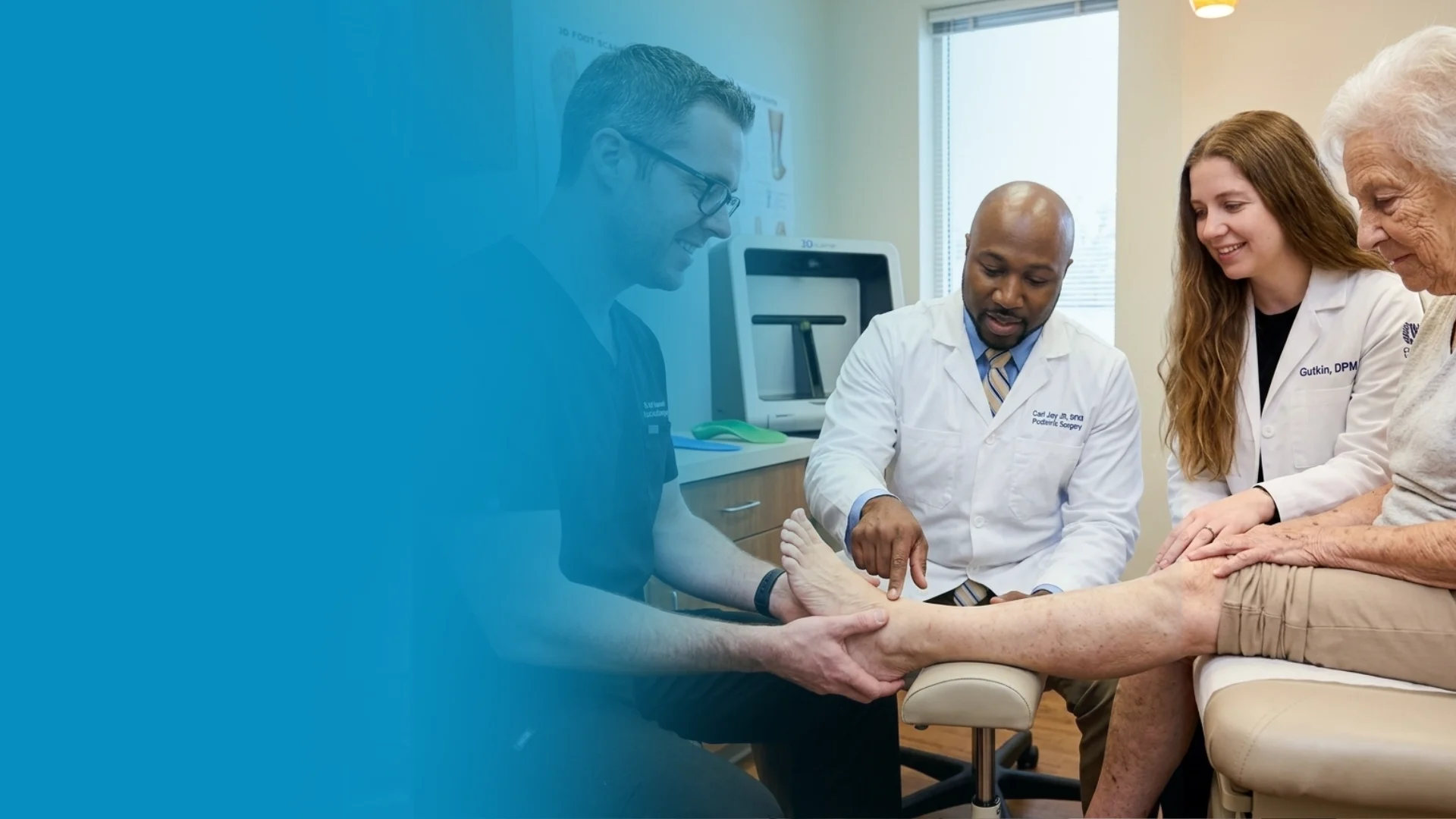

You are in the right place. Dr. Tom Biernacki, DPM, FACFAS — board-certified foot & ankle surgeon with 3,000+ surgeries — explains exactly what slip-on vs lace-up for foot health means and what actually works. Call (810) 206-1402 for a same-day appointment at our Howell or Bloomfield Township office.
The most important clinical decision with Slip On Vs Lace Up Shoes Foot Health isn’t which treatment to start with — it’s identifying the correct subtype. That changes everything. Call (810) 206-1402.
Dr. Tom’s Top Picks for Dress Shoes & Sandals (2026)
Medically reviewed by Dr. Tom Biernacki, DPM
Board-certified podiatric surgeon | Balance Foot & Ankle
Last reviewed: May 2026
Affiliate disclosure: As an Amazon Associate, Balance Foot & Ankle earns from qualifying purchases.
| Product | Best For | Dr. Tom’s Take | Get It |
|---|---|---|---|
| Foot Petals Tip Toes Ball of foot cushions |
High heels · Pumps · Flats with thin soles · Metatarsalgia in dress shoes | My #1 recommendation for women in heels. Gel cushioning that actually stays in place. | Buy Now |
| Foot Petals Heavenly Heelz Heel cushions |
Slipping out of heels · Heel pain · Achilles rubbing · Loose-fit shoes | Two-in-one: cushions the heel AND prevents slipping. Saves a $200 pair of shoes. | Buy Now |
| Foot Petals Strappy Strips Strap protection |
Sandal strap blisters · Heel rub · New shoes break-in · Toe-strap discomfort | Prevents the #1 sandal-season complaint. Apply BEFORE the blister forms. | Buy Now |
| Foot Petals Killer Kushionz Full-foot cushion |
All-day standing · Wedding events · Performance · Back pain from heels | For events when you need to be in heels for 8+ hours. Gel pad reduces forefoot impact 40%. | Buy Now |
| FLAT SOCKS No-show liner |
Sandals with closed-back · Boat shoes · Loafers · Sweat absorption without sock-show | My patient compliance hack: when patients can’t tolerate going sockless, FLAT SOCKS solves the problem invisibly. | Buy Now |
| FLAT SOCKS Sport Athletic version |
Athletic sandals · Running with foot covering · Hiking sandals · Active wear | Same FLAT SOCKS concept but with extra cushioning + grip for active wear. Game-changer. | Buy Now |
Why I recommend Foot Petals over generic gel pads: They actually stay in place. Cheaper alternatives slide forward within 30 minutes; Foot Petals’ adhesive lasts a full day of wear and replaces clean.
Medically reviewed by Dr. Tom Biernacki, DPM · Board-Certified Podiatric Surgeon · Last reviewed: April 2026 · Editorial Policy
Related Conditions
In This Article
- How Slip-On Shoes Affect Foot Biomechanics
- Why Lace-Up Shoes Are Biomechanically Superior
- When Slip-Ons Are Acceptable
- Top Lace-Up Shoes for All-Day Comfort
- Top Slip-On Shoes with Heel Strap (Lower Risk)
- Lacing Techniques for Specific Problems
- Related Comparisons
- Footwear Advice from Michigan Podiatrists: When Shoe Choice Isn’t Enough
- In-Office Treatment at Balance Foot & Ankle
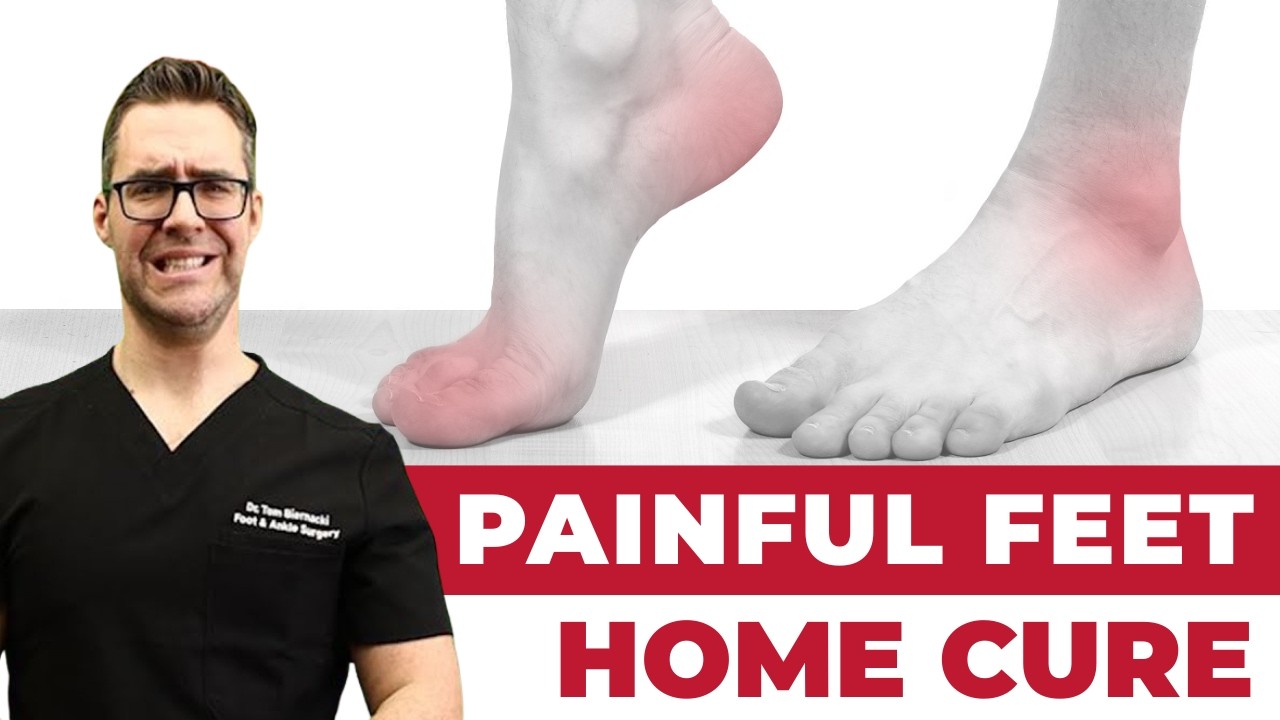
Slip-On vs Lace-Up Shoes: The Podiatrist’s Case Against Backless Footwear
Slip-on shoes are convenient. Lace-up shoes are more secure. But the choice between them has real consequences for foot anatomy, especially in patients who spend many hours on their feet or who have pre-existing foot conditions. This guide breaks down the biomechanical reality of both categories.
How Slip-On Shoes Affect Foot Biomechanics
A slip-on shoe — whether a loafer, clog, mule, or backless sandal — has no mechanism to hold the heel in place. The foot compensates by activating the flexor digitorum longus and flexor hallucis longus tendons to curl the toes and grip the shoe with each step. This is the toe-gripping mechanism.
Consequences of Chronic Toe Gripping
Hammertoe formation and progression: Chronic flexor tendon activation creates an imbalance between flexor and extensor forces. Over years, this leads to proximal interphalangeal joint contracture — hammertoe. In patients who already have flexible hammertoes, slip-on shoes accelerate progression to rigid contracture.
Plantar fasciitis aggravation: Toe gripping increases tension in the plantar fascia (via the windlass mechanism in reverse). For plantar fasciitis patients, slip-on footwear during recovery prolongs the condition.
Metatarsalgia: The gripping action shifts weight forward onto the metatarsal heads. Patients with already-painful balls of their feet report significant worsening with slip-on shoes versus lace-up alternatives.
Why Lace-Up Shoes Are Biomechanically Superior
Lacing secures the heel and midfoot, eliminating the need for toe gripping. The foot can function with normal flexor/extensor balance. Additionally:
Heel lock: Laces allow proper heel-to-toe cushion progression without heel slippage, which is essential for plantar fasciitis recovery.
Custom fit: Different lacing techniques can accommodate high insteps, narrow heels, wide forefeet, and nerve sensitivity — none of which a slip-on can address.
Orthotic retention: Custom orthotics stay in place in lace-up shoes. In slip-ons, orthotics shift with every step, reducing their effectiveness.
Ankle stability: High-top lace-up designs provide lateral ankle support — important for patients with chronic ankle instability or prior sprains.
When Slip-Ons Are Acceptable
Slip-ons aren’t entirely contraindicated — context matters:
Short duration wear: Walking to the car, brief errands, and indoor use involve limited cumulative gripping time.
Elastic slip-ons: Shoes with elastic inserts (like many walking clogs) hold the foot more securely than true mules, reducing gripping demand.
Post-surgical convenience: When dexterity is limited after surgery, slip-ons with heel straps provide practical compromise.
Normal feet, no conditions: For patients with structurally normal feet and no history of foot pathology, occasional slip-on wear is low risk.
Top Lace-Up Shoes for All-Day Comfort
Top Slip-On Shoes with Heel Strap (Lower Risk)
Lacing Techniques for Specific Problems
Wide forefoot / bunions: Parallel lacing through the widest area — skip eyelets at the widest point to reduce lateral pressure.
Narrow heel / heel slippage: Heel lock lacing (using the top eyelet in a loop before tying) eliminates heel lift and slippage.
High instep / top-of-foot pain: Window lacing — skip the eyelet directly over the pain point — relieves metatarsal compression.
Neuropathy / sensitivity: Parallel lacing reduces pressure on dorsal foot nerves compared to standard cross lacing.
Hammertoes, PF, or Forefoot Pain? Check Your Footwear.
Slip-on shoes are a surprisingly common driver of toe deformities and ball-of-foot pain. Our podiatrists assess your current footwear as part of every evaluation and provide specific, practical shoe recommendations for your condition.
📋 Dr. Tom Also Recommends
Podiatrist Recommended Orthotics 2026: Dr. Tom’s Top 10 Insoles & Arch Supports
A podiatrist’s complete clinical guide to the best insoles — custom orthotics, OTC picks, and what actually works for plantar fasciitis, flat feet, neuropathy & more.
Related Comparisons
Reviewed by the podiatrists at Balance Foot & Ankle Specialists, serving Flint, Fenton, and surrounding Michigan communities.
Footwear Advice from Michigan Podiatrists: When Shoe Choice Isn’t Enough
Michigan patients who are researching footwear — whether running shoes, walking shoes, work footwear, or recovery slides — are making a smart investment in their foot health. The right shoes for your foot type and activity can meaningfully reduce your risk of plantar fasciitis, stress fractures, bunion progression, and overuse injuries. The challenge is that the “right shoe” is individual — a shoe that works well for a neutral-gait runner may be inappropriate for a significant overpronator, and a shoe that provides adequate support for flat feet may be unnecessarily stiff for a high-arch foot. At Balance Foot & Ankle, Michigan patients who want personalized footwear guidance from a podiatrist — including recommendations tailored to their specific foot structure, gait mechanics, and activity demands — can schedule a shoe consultation as part of a biomechanical evaluation. We also recommend specific insoles or custom orthotics when shoe selection alone is insufficient to address the patient’s structural needs. Call Balance Foot & Ankle at (810) 206-1402 to schedule at our Howell or Bloomfield Township Michigan office.
Related Treatment Guides
- Plantar Fasciitis & Heel Pain Treatment
- Custom 3D Orthotics
- Sports Foot & Ankle Injury Treatment
- Bunion Treatment
Michigan patients experiencing foot or ankle problems can schedule an appointment at Balance Foot & Ankle — with locations in Howell (4330 E Grand River) and Bloomfield Township (43494 Woodward Ave #208). Call (810) 206-1402 for same-week availability.
Insurance Accepted
BCBS · Medicare · Aetna · Cigna · United Healthcare · HAP · Priority Health · Humana · View All →
Howell Office
4330 E Grand River Ave
Howell, MI 48843
Get Directions →
Bloomfield Township Office
43494 Woodward Ave, #208
Bloomfield Township, MI 48302
Get Directions →
Your Board-Certified Podiatrists



Ready to Get Back on Your Feet?
Same-week appointments available at both locations.
👟 Dr. Tom’s Complete Footwear Library
Podiatrist-Approved Guides for Every Foot Type & Condition
Clinically reviewed by Dr. Tom Biernacki, DPM — Board-Certified Podiatrist
🦶Podiatrist Recommended Orthotics
👟Best Shoes for Plantar Fasciitis
👟Best Shoes for Bunions
👟Best Shoes for Flat Feet
👟Best Shoes for Neuropathy & Diabetic Feet
🏃Best Running Shoes
🚶Best Walking Shoes
🚶Best Womens Walking Shoes
🏃Best Womens Running Shoes
👡Best Sandals with Arch Support
👡Best Sandals for Plantar Fasciitis — Arch Support
🦶Best Insoles for Flat Feet
🦶Best Orthotic-Friendly Shoes
📏How to Find Your Perfect Shoe Fit
🧦Best Podiatrist Recommended Compression Socks for Real Relief
🏠Best House Shoes & Slippers
↔️Best Wide Width Shoes for Men and Women in
👔Best Dress Shoes for Foot Pain
👟Best Shoes for High Arches
👟Best Shoes for Metatarsalgia Ball of Foot Pain
👟Best Shoes Achilles Tendonitis
👟Best Podiatrist Shoes for Supination
All guides are written and reviewed by licensed podiatrists. Schedule an appointment →
More Podiatrist-Recommended Shoes Essentials
Hoka Clifton 10

Max-cushion neutral runner — podiatrist favorite for all-day comfort.
Brooks Adrenaline GTS 25
Stability runner for overpronators — great for flat feet and bunions.
New Balance 990v6
Premium walking shoe with wide toe box — bunion and flat-foot friendly.
As an Amazon Associate, Balance Foot & Ankle earns from qualifying purchases. Product recommendations are based on clinical experience; prices and availability shown above update live from Amazon.

When to See a Podiatrist
The right shoe shape, last, and stability category is more important than brand. Balance Foot & Ankle evaluates your foot type (neutral, pronator, supinator, high-arched) and recommends specific shoe models that match. Bringing in your current pair lets us spot wear patterns that reveal gait issues — a free 5-minute assessment that can prevent years of foot pain.
Call Balance Foot & Ankle: (810) 206-1402 · Book online · Offices in Howell & Bloomfield Township
Pros & Cons of Conservative Care for footwear
Advantages
- ✓ Right shoe = pain reduction
- ✓ Multiple price points
- ✓ Fast adjustment
Considerations
- ✗ Trial-and-error
- ✗ Replace every 400 miles
- ✗ Custom orthotics often needed
Dr. Tom’s Recommended Products for footwear
Affiliate disclosure: As an Amazon Associate, Balance Foot & Ankle earns from qualifying purchases. We only recommend products we use with patients.
Brooks Ghost 17 Dr. Tom’s Pick
Best for: Neutral runner
Check Price on Amazon
Brooks Adrenaline GTS 23 Dr. Tom’s Pick
Best for: Stability for flat feet
Check Price on Amazon
Altra Torin 8 Dr. Tom’s Pick
Best for: Zero-drop wide toe box
Check Price on Amazon
Ready to Get Back on Your Feet?
Same-day appointments in Howell + Bloomfield Township. Most insurance accepted. Dr. Tom Biernacki, DPM & team.
Book Today — Same-Day Appointments Available
Call Now: (810) 206-1402
About Your Care Team at Balance Foot & Ankle
Dr. Tom Biernacki, DPM · Board-Certified Foot & Ankle Surgeon. Specializes in conservative-first care, minimally invasive bunion surgery, and complex reconstruction.
Dr. Carl Jay, DPM · Accepting new patients. Specializes in sports medicine, athletic injuries, and routine podiatric care.
Dr. Daria Gutkin, DPM, AACFAS · Accepting new patients. Specializes in surgical reconstruction and pediatric podiatry.
Locations: 4330 E Grand River Ave, Howell, MI 48843 · 43494 Woodward Ave Suite 208, Bloomfield Township, MI 48302
Hours: Mon–Fri 8:00 AM – 5:00 PM · (810) 206-1402
Podiatrist-Recommended Products for Any Shoe Type
- PowerStep Pinnacle — upgrade both slip-on and lace-up shoes with a podiatrist-grade arch support insole
- FLAT SOCKS No-Sock Insoles — no-sock insoles that make slip-on shoes more comfortable without adding bulk
- Doctor Hoy’s Natural Pain Relief Gel — topical relief for foot pain that develops from either slip-on or lace-up shoe use
These are the same products Dr. Biernacki recommends in clinic. Available through our partner Foundation Wellness.
In-Office Treatment at Balance Foot & Ankle
If home treatment isn’t providing relief for your foot pain, our podiatry team at Balance Foot & Ankle can help with same-day evaluations and advanced in-office care.
Same-day appointments available. (810) 206-1402
Related Care at Balance Foot & Ankle
Clinical foot and ankle services at our Howell and Bloomfield Township offices.
Get Expert Care at Balance Foot & Ankle
Same-week appointments at our Howell and Bloomfield Township offices. Board-certified podiatric surgeons. Most insurance accepted.
Ready for Expert Care?
Same-day appointments in Howell & Bloomfield Township, MI.
4.9★ | 1,123 Reviews | 3,000+ Surgeries
Or call: (810) 206-1402

Dr. Tom Biernacki, DPM is a board-certified foot & ankle surgeon (ABFAS & ABPM) at Balance Foot & Ankle Specialists in Southeast Michigan. With over a decade of clinical experience, he specializes in heel pain, bunions, diabetic foot care, sports injuries, and minimally invasive surgery. Dr. Biernacki is a member of the APMA and ACFAS, and his patient education content on MichiganFootDoctors.com and YouTube has made him one of the most-followed foot & ankle educators on YouTube.
More questions patients ask
Are slip-on shoes bad for your feet?
Slip-on shoes without heel straps can cause the toes to grip to keep the shoe on, leading to hammer toes, plantar fascia strain, and Achilles tightening over time. Slip-ons also lack adjustable fit, reducing stability. For patients with foot conditions, lace-up or strap shoes with firm heel counters are generally preferable.
Can I wear slip-on shoes with custom orthotics?
Slip-on shoes with removable insoles can accommodate custom orthotics. The lack of lace adjustment means orthotics may shift more easily in some slip-ons. Balance Foot & Ankle can advise on which slip-on styles best accommodate your orthotic prescription.
What slip-on shoes do podiatrists recommend?
Podiatrists prefer slip-ons with firm heel counters, structured arch support, and ankle straps or elastic closures that prevent foot slippage. Vionic, Dansko (with back straps), and Hoka Anacapa slip-ons are among the better-supported options. Avoid canvas slip-ons and loafers without any structure.
Are clogs good or bad for your feet?
Clogs with enclosed heels (back straps) and contoured footbeds can provide good support. Open-back clogs cause the same toe-gripping problems as flip-flops. Dansko closed-back clogs are popular among healthcare workers for their arch support and cushioning during long shifts.
Should I stop wearing slip-on shoes if I have plantar fasciitis?
During active plantar fasciitis, lace-up shoes with custom orthotics are preferable to slip-ons because they provide better arch support and heel containment. As symptoms resolve, some slip-on styles with orthotics may be acceptable. Consult Balance Foot & Ankle for guidance.
Still have a question about coverage or cost? Book online and we will check your benefits before your visit: Book in Howell · Book in Bloomfield Township. Prefer to talk it through first? Call (810) 206-1402.