
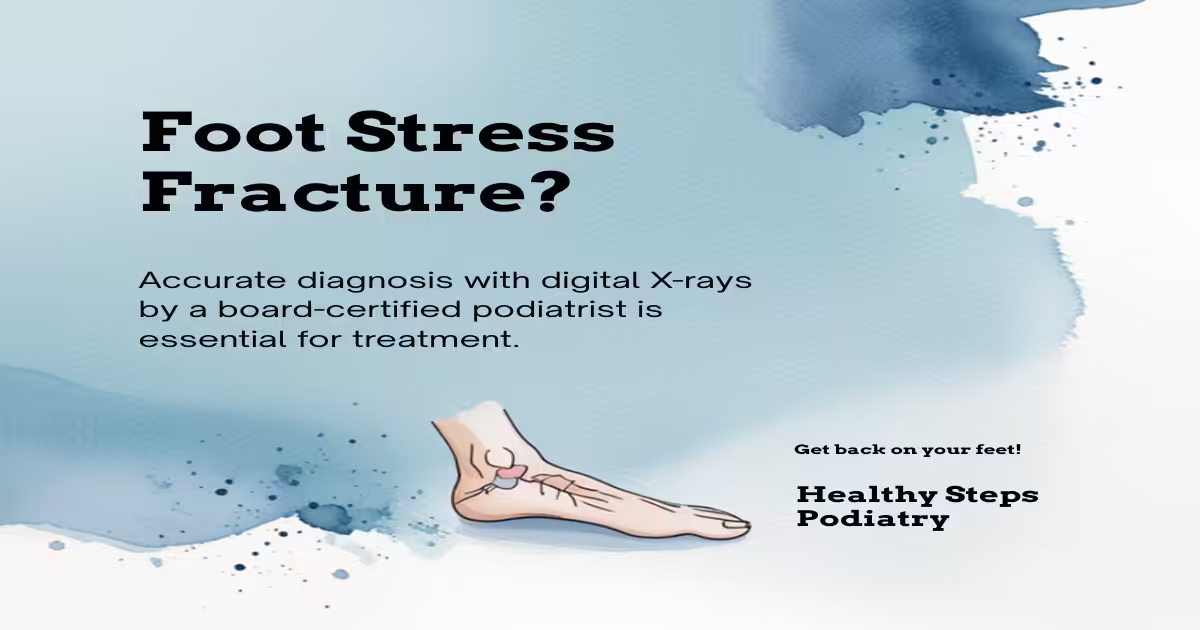
The most important clinical decision with Stress Fracture Foot Michigan isn’t which treatment to start with — it’s identifying the correct subtype. That changes everything. Book online or call (810) 206-1402.
Dr. Tom’s Top Foot Health Supplements
Affiliate disclosure: Amazon Associate. Always discuss supplements with your physician before starting.
Vitamin B12 Methylcobalamin
Neuropathy support · Nerve repair
PROS
- Active B12 form
- Sublingual absorption
- Neuropathy adjunct
CONS
- Effects take 2-3 months
- Doesn’t replace medical care
Alpha Lipoic Acid 600mg
Diabetic neuropathy · Nerve antioxidant
PROS
- Peer-reviewed for neuropathy
- Both fat- and water-soluble
- Clinical doses available
CONS
- Possible blood sugar effect
- GI upset possible
Acetyl-L-Carnitine (ALCAR)
Diabetic neuropathy · Energy
PROS
- Crosses blood-brain barrier
- Studied for nerve repair
- Pairs with ALA
CONS
- Effects gradual (3+ months)
- Higher cost
Vitamin D3 5000 IU
Bone health · Stress fracture prevention
PROS
- Improves bone density
- Most patients deficient
- Affordable preventive
CONS
- Get blood test first
- Toxicity at very high doses
Dr. Tom’s Wound Care Kit
Dr. Tom’s Top Pain Relief Picks — Dr. Hoy’s (2026)
Affiliate disclosure: As an Amazon Associate, Balance Foot & Ankle earns from qualifying purchases. I personally use Dr. Hoy’s in my practice for patients who need topical relief.
| Product | Best For | Dr. Tom’s Take | Get It |
|---|---|---|---|
| Dr. Hoy’s Natural Pain Relief Gel 3.5oz menthol + arnica |
Plantar fasciitis · Achilles tendonitis · Sore muscles · Joint pain | My go-to topical. Cooling-then-warming sensation. No greasy residue. Non-NSAID alternative. | Buy Now |
| Dr. Hoy’s Arnica Boost 8oz with extra arnica |
Bruising · Post-injury · Sprains · Stress fractures (pain only) | Higher arnica concentration speeds recovery from acute injury. Use 4x daily for first 7 days. | Buy Now |
| Dr. Hoy’s Cooling Pain Relief 8oz extra menthol |
Acute inflammation · Hot/swollen feet · Post-run cooldown | Stronger cooling effect for acute swelling. Pair with ice for first 48 hours after injury. | Buy Now |
| Dr. Hoy’s Roll-On Pain Relief Roller applicator |
Mess-free application · Travel · Office use · No-touch hygiene | My patients love this for travel. Glides on without hand contact — cleanest application available. | Buy Now |
| Dr. Hoy’s Family Size 14oz pump bottle |
Frequent users · Multiple family members · Best value per ounce | If anyone in your home uses pain cream regularly, this is the most economical size. Same formula. | Buy Now |
Why I recommend Dr. Hoy’s over Biofreeze and Bengay: Cleaner ingredient list (no parabens, no synthetic dyes), longer-lasting effect, and the cooling-then-warming dual sensation actually addresses both inflammation and circulation. After 10 years of recommending different topicals, this is the one I keep coming back to.
Quick Compare: Dr. Tom’s Top Running Shoes
| Shoe | Best For | Watch Out For | Buy | ||||||||||||||||||||||||
|---|---|---|---|---|---|---|---|---|---|---|---|---|---|---|---|---|---|---|---|---|---|---|---|---|---|---|---|
| Hoka Bondi 9 | Plantar fasciitis, max cushion | Heavy, tall stack | Buy | ||||||||||||||||||||||||
| Brooks Ghost 17 | Neutral runners, first running shoe | Not for 200+lb runners | Buy | ||||||||||||||||||||||||
| Brooks Adrenaline GTS 23 | Flat feet, overpronation | Snug toe box | Buy | ||||||||||||||||||||||||
| Altra Torin 8 | Wide feet, bunions, Morton’s toe | Zero-drop transition | Buy | ||||||||||||||||||||||||
| Hoka Clifton 10 | Daily training, lighter Hoka | Less cushion than Bondi | Buy | ||||||||||||||||||||||||
| NB 990v6 | Senior fall prevention, 6E width |
Dr. Tom’s Top Pain Relief Picks — Dr. Hoy’s (2026)Affiliate disclosure: As an Amazon Associate, Balance Foot & Ankle earns from qualifying purchases. I personally use Dr. Hoy’s in my practice for patients who need topical relief.
Why I recommend Dr. Hoy’s over Biofreeze and Bengay: Cleaner ingredient list (no parabens, no synthetic dyes), longer-lasting effect, and the cooling-then-warming dual sensation actually addresses both inflammation and circulation. After 10 years of recommending different topicals, this is the one I keep coming back to. | Buy |
For full detailed reviews with pros/cons/Dr. Tom’s tips, see our complete shoe guide.
Medically reviewed by Dr. Tom Biernacki, DPM · Board-Certified Podiatric Surgeon · Last reviewed: April 2026 · Editorial Policy
Related Conditions
Quick Answer
Stress Fracture in the Foot: Treatment in Michigan Balance relates to foot/ankle injury — typically caused by trauma or twist. Most patients improve in 4-8 weeks with conservative care. Same-week appointments in Howell + Bloomfield Township: (810) 206-1402.

Quick Answer
Most foot and ankle problems respond to conservative care — proper footwear, supportive inserts, activity modification, and targeted stretching — within 4-8 weeks. Persistent pain beyond that window, or any symptom that prevents walking, warrants a podiatric evaluation to rule out fracture, tendon tear, or systemic cause.
Watch: Dr. Tom Biernacki, DPM

Medically reviewed by Dr. Tom Biernacki, DPM — Board-Certified Podiatric Surgeon — Balance Foot & Ankle, Howell & Bloomfield Township, MI. Last updated April 2026.
▶ Watch
👟 Dr. Tom Also Recommends
Podiatrist Recommended Shoes 2026: Dr. Tom’s Top Picks for Every Condition
The right footwear can make or break your recovery. Dr. Tom’s complete guide to the best shoes for plantar fasciitis, flat feet, neuropathy, bunions & more — with clinical picks for every foot type.
See Dr. Tom’s Top Shoe Picks →A stress fracture is a small crack in a bone caused by repetitive loading rather than a single traumatic impact. In the foot and ankle, stress fractures are among the most commonly missed injuries — initially appearing normal on X-ray while causing significant pain. At Balance Foot & Ankle, our Michigan podiatrists diagnose and manage all types of foot stress fractures with bone-specific protocols to ensure proper healing and prevent complications.
What Causes Stress Fractures?

Bone remodels constantly — osteoclasts remove old bone while osteoblasts lay down new bone. When loading exceeds the bone’s ability to remodel (either from sudden increases in activity or from weakened bone), microscopic cracks accumulate faster than they can be repaired, eventually forming a stress fracture.
Common causes and risk factors include:
- Sudden increase in training volume or intensity (“too much too soon”)
- Transition from soft to hard training surfaces
- Inadequate footwear or worn-out shoes
- Low bone density (osteoporosis, osteopenia) — especially postmenopausal women
- Female Athlete Triad (low energy availability, menstrual irregularity, low bone density)
- Vitamin D and calcium deficiency
- High-arched rigid feet (reduced shock absorption) or flat feet (altered loading patterns)
Common Locations in the Foot
Metatarsal Stress Fractures
The 2nd and 3rd metatarsals are most commonly affected — sometimes called a “march fracture” after soldiers who developed them during extended marching. The 5th metatarsal has two important stress fracture zones: the proximal diaphysis (Jones fracture zone), which has notoriously poor blood supply and a high non-union rate requiring aggressive treatment, and the avulsion base, which typically heals well conservatively.
Navicular Stress Fractures
The navicular bone in the midfoot is a “high-risk” stress fracture location due to poor central blood supply and high mechanical stress. Navicular stress fractures are common in sprinters, basketball players, and hurdlers. They often require non-weight-bearing immobilization for 6–8 weeks and may need surgical fixation with screws if displaced or failing to heal.
Sesamoid Stress Fractures
The two small sesamoid bones beneath the first metatarsal head are subjected to enormous force during push-off. Sesamoid stress fractures are difficult to distinguish from a bipartite sesamoid (a normal anatomical variant) and require MRI or bone scan for diagnosis. Non-union is common, and surgical sesamoidectomy is occasionally needed for chronic cases.
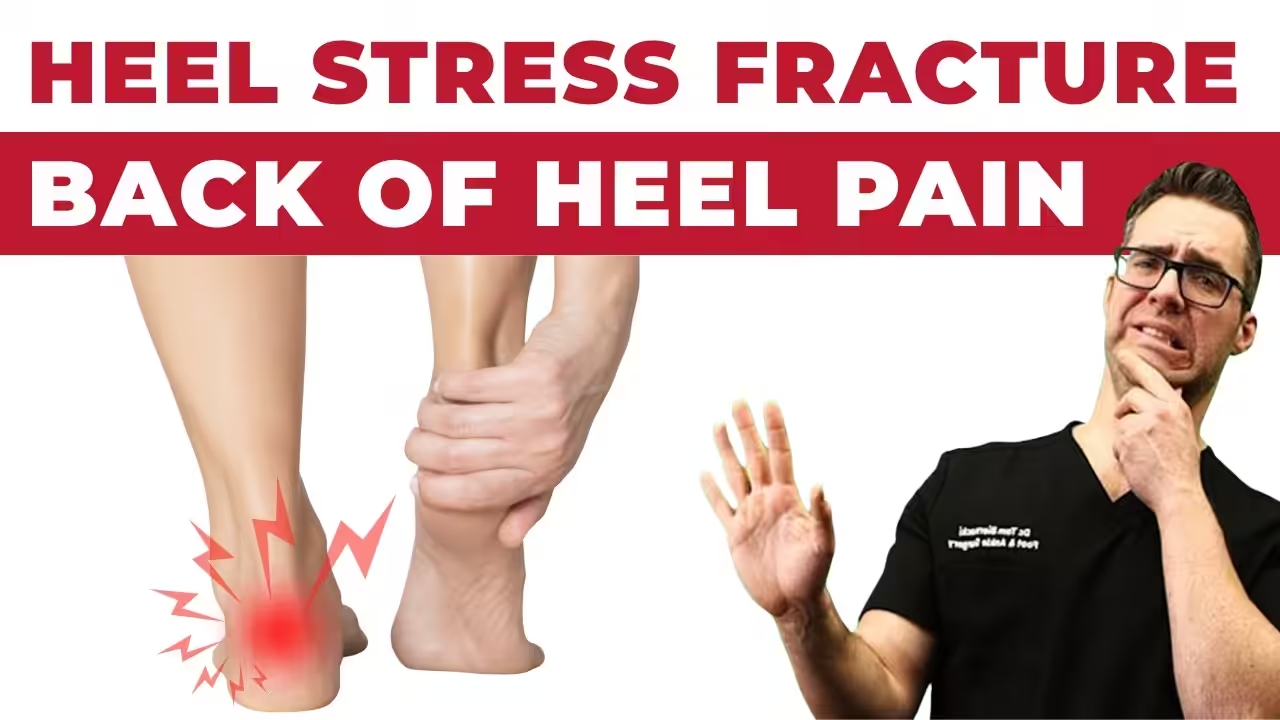
Calcaneal (Heel) Stress Fractures
Heel bone stress fractures occur in military recruits, runners, and patients with osteoporosis. They cause diffuse deep heel pain that increases with activity. A positive “squeeze test” (compressing both sides of the heel simultaneously produces pain) is a useful clinical sign. Most heal with protected weight bearing over 6–8 weeks.
Diagnosis: Why X-Ray Often Misses Stress Fractures
Plain X-rays are often normal during the first 2–3 weeks of a stress fracture — the periosteal reaction (a thin line of new bone) that makes fractures visible on X-ray takes time to develop. MRI is the gold standard for early diagnosis, detecting bone marrow edema within 1–2 days of injury and providing information about fracture severity and soft tissue involvement. A bone scan (technetium scintigraphy) is highly sensitive but less specific. CT scan is used for surgical planning when displacement or non-union is suspected.
Treatment by Risk Category
Low-Risk Fractures (2nd–4th Metatarsals, Calcaneus)
These fractures heal reliably with relative rest, a stiff-soled shoe or walking boot for 4–6 weeks, activity modification, and gradual return to loading. Most athletes return to sport in 6–8 weeks with close monitoring for symptom recurrence. Nutritional optimization (vitamin D, calcium) and bone density evaluation are performed for patients with multiple or recurrent stress fractures.
High-Risk Fractures (Navicular, Jones Zone 5th Metatarsal, Sesamoid)
These fractures require more aggressive management due to high non-union and complication rates. Competitive athletes with navicular or Jones-zone fractures are often recommended early surgical fixation with an intramedullary screw rather than extended non-weight-bearing, because surgical outcomes are more predictable and return-to-sport time is shorter (8–12 weeks vs. 12–16 weeks conservative). Non-surgical management requires strict non-weight-bearing in a cast for 6–8 weeks — partial weight bearing leads to non-union in high-risk zones.
In-Office Treatment at Balance Foot & Ankle
If home care isn’t resolving your stress fracture, a visit with a board-certified podiatrist is the fastest path to accurate diagnosis and a personalized plan. At Balance Foot & Ankle Specialists, Dr. Tom Biernacki, Dr. Carl Jay, and Dr. Daria Gutkin offer same-day and next-day appointments at both our Howell and Bloomfield Township offices. We perform on-site diagnostic ultrasound, digital X-ray, conservative care, advanced regenerative treatments, and minimally invasive surgery when indicated.
Call (810) 206-1402 or request an appointment online. Most insurance plans accepted, including Medicare, Blue Cross Blue Shield, Aetna, Cigna, and United Healthcare.
Frequently Asked Questions
How do I know if I have a stress fracture or just a sprain?
Stress fractures typically cause localized point tenderness directly over a specific bone — pressing on that exact spot reproduces sharp pain. Sprains cause more diffuse tenderness over ligaments with pain aggravated by rotational or inversion stress. Stress fractures worsen progressively with activity (often the pain is mild at the start of a run and becomes severe as you continue). Ultimately, MRI or bone scan is needed to reliably distinguish the two — plain X-rays are frequently normal with stress fractures.
Can I walk on a stress fracture in my foot?
It depends on the location. Low-risk metatarsal stress fractures often allow protected weight bearing in a stiff boot. High-risk fractures — navicular, Jones zone of the 5th metatarsal — require strict non-weight-bearing to prevent displacement and non-union. Walking on these fractures can cause complete displacement and dramatically worsen the prognosis. This is why early accurate diagnosis and bone-specific treatment protocols are essential.
How long does a foot stress fracture take to heal?
Most low-risk foot stress fractures heal within 6–8 weeks of protected activity. High-risk fractures (navicular, Jones zone) treated conservatively require 12–16 weeks. Surgically fixed fractures in athletes typically allow return to sport in 8–12 weeks. Patients with osteoporosis, vitamin D deficiency, or nutritional deficiencies may heal more slowly and require metabolic optimization alongside orthopedic treatment.
Is stress fracture surgery covered by insurance in Michigan?
Yes — surgical fixation of stress fractures is a covered procedure under all major Michigan health insurance plans. MRI for diagnosis may require prior authorization from some insurers. Our office handles all insurance verification, authorization, and coding to minimize your out-of-pocket expenses. Visit our Insurance & Costs page for details.
Where can I get a foot stress fracture evaluated in Michigan?
📧 Get Dr. Tom’s Free Lab Test Guide
Discover the 5 lab tests every person over 35 should ask their doctor about — explained in plain English by a board-certified physician.
Balance Foot & Ankle offers same-week or urgent appointments for suspected stress fractures at our clinics in Howell and Brighton. We perform in-office diagnostic ultrasound and obtain same-day X-rays, with MRI referral when needed. Our podiatrists use bone-specific treatment protocols to guide your recovery safely. Call us or book online.
For insurance coverage information, visit our Insurance & Costs page.
Join 950,000+ Learning About Foot Health
Dr. Tom shares honest medical advice, supplement reviews, and treatment guides you won’t find anywhere else.
Subscribe on YouTube →📍 Located in Michigan?
Our board-certified podiatrists treat this condition at two convenient locations. Same-day appointments often available.
Insurance Accepted
BCBS · Medicare · Aetna · Cigna · United Healthcare · HAP · Priority Health · Humana · View All →
Howell Office
4330 E Grand River Ave
Howell, MI 48843
Get Directions →
Bloomfield Township Office
43494 Woodward Ave, #208
Bloomfield Township, MI 48302
Get Directions →
Your Board-Certified Podiatrists



Ready to Get Back on Your Feet?
Same-week appointments available at both locations.
Book Your AppointmentMost Common Mistake We See
The most common mistake we see is: Waiting too long before seeking care. Fix: any foot pain lasting more than 4 weeks, or any sudden severe symptom, deserves a professional evaluation rather than more rest.
Warning Signs That Need Same-Day Care
Seek immediate evaluation at Balance Foot & Ankle if you experience any of the following:
- Unable to bear weight
- Severe swelling with skin colour change
- Fever with foot pain (possible infection)
- Diabetes plus any new foot symptom
Call (810) 206-1402 — same-day and next-day appointments at our Howell and Bloomfield Township offices.
Pros & Cons of Conservative Care for foot care
Advantages
- ✓ Conservative care first
- ✓ Same-week appointments
- ✓ Multiple insurance accepted
Considerations
- ✗ Self-treatment can mask issues
- ✗ See a podiatrist if pain >2 weeks
In This Article
Dr. Tom’s Recommended Products for foot care
Affiliate disclosure: As an Amazon Associate, Balance Foot & Ankle earns from qualifying purchases. We only recommend products we use with patients.
Footnanny Heel Cream Dr. Tom’s Pick
Best for: Daily moisturizer for cracked heels
Ready to Get Back on Your Feet?
Same-day appointments in Howell + Bloomfield Township. Most insurance accepted. Dr. Tom Biernacki, DPM & team.
Book Today — Same-Day Appointments Available
Call Now: (810) 206-1402
About Your Care Team at Balance Foot & Ankle
Dr. Tom Biernacki, DPM · Board-Certified Foot & Ankle Surgeon. Specializes in conservative-first care, minimally invasive bunion surgery, and complex reconstruction.
Dr. Carl Jay, DPM · Accepting new patients. Specializes in sports medicine, athletic injuries, and routine podiatric care.
Dr. Daria Gutkin, DPM, AACFAS · Accepting new patients. Specializes in surgical reconstruction and pediatric podiatry.
Locations: 4330 E Grand River Ave, Howell, MI 48843 · 43494 Woodward Ave Suite 208, Bloomfield Township, MI 48302
Hours: Mon–Fri 8:00 AM – 5:00 PM · (810) 206-1402

Dr. Tom Biernacki, DPM is a board-certified foot & ankle surgeon (ABFAS & ABPM) at Balance Foot & Ankle Specialists in Southeast Michigan. With over a decade of clinical experience, he specializes in heel pain, bunions, diabetic foot care, sports injuries, and minimally invasive surgery. Dr. Biernacki is a member of the APMA and ACFAS, and his patient education content on MichiganFootDoctors.com and YouTube has made him one of the most-followed foot & ankle educators on YouTube.