
Quick answer: Tarsal Tunnel Syndrome Nerve Entrapment Ankle is a clinical condition that responds to evidence-based treatment when caught early. Symptoms include pain, swelling, and altered function. Diagnosis requires clinical exam, often imaging. Treatment ladder: conservative care first (4-6 weeks), then targeted interventions if needed. Call (810) 206-1402.
▶ Watch
Medically Reviewed by Dr. Tom Biernacki, DPM — Board-Certified Podiatrist, Balance Foot & Ankle Specialists, Michigan. Last updated April 2026.
What Is Tarsal Tunnel Syndrome?
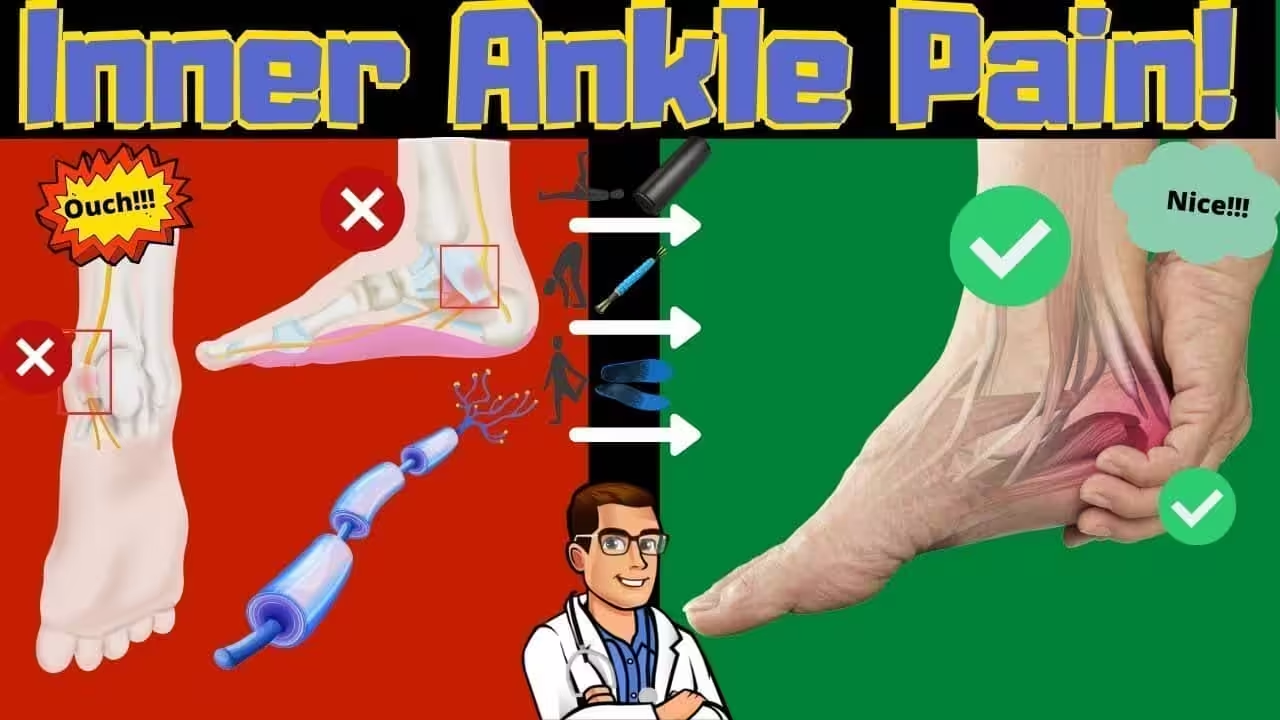
Tarsal tunnel syndrome (TTS) is a compressive neuropathy of the posterior tibial nerve as it passes through the tarsal tunnel — an anatomical corridor formed by the flexor retinaculum (a fibrous band) on the medial side and the bony structures of the medial ankle and subtalar joint on the lateral side. The posterior tibial nerve, along with the posterior tibial artery and three major tendons (posterior tibial, flexor digitorum longus, and flexor hallucis longus), travels through this narrow tunnel as it transitions from the leg into the foot.
Compression of the posterior tibial nerve within the tarsal tunnel produces a constellation of symptoms affecting the heel and plantar (bottom) surface of the foot: burning, tingling, numbness, and electric shooting pain that may radiate both proximally up the leg and distally into the toes. TTS is often described as the ‘carpal tunnel syndrome of the foot’ — a useful analogy for patients, though the anatomical and clinical details differ considerably.
Anatomy of the Tarsal Tunnel
The tarsal tunnel is located posterior and inferior to the medial malleolus (the bony prominence on the inner ankle). Within this tunnel, the posterior tibial nerve typically divides into three branches: the medial plantar nerve (supplying the medial plantar foot and first 3.5 toes), the lateral plantar nerve (supplying the lateral plantar foot and lateral toes), and the medial calcaneal nerve (supplying heel pad sensation). Entrapment can affect the main trunk or any of these branches, producing correspondingly varied symptom distributions.
Causes and Risk Factors
Space-Occupying Lesions
The most clearly defined cause of TTS is a space-occupying lesion within the tarsal tunnel that physically compresses the nerve: ganglion cysts (the most common cause in many series), lipomas, varicose veins, accessory muscles, or neurilemmomas (benign nerve sheath tumors). These lesions are identified by MRI and often managed with surgical excision.
Hindfoot Valgus and Pronation
Excessive pronation stretches the posterior tibial nerve around the medial ankle and increases the volume of structures passing through the fixed tunnel space. Flatfoot deformity (pes planus) is consistently associated with TTS, and correction of the underlying alignment through orthotics or — in severe cases — surgical flatfoot reconstruction often provides significant neurological relief.
Post-Traumatic Scarring
Previous ankle fractures, particularly those involving the medial malleolus or calcaneus, produce periosteal and fibrous scar tissue that can progressively narrow the tarsal tunnel. TTS following ankle fracture may present months to years after the original injury as scar tissue matures and contracts.
Systemic Conditions
Inflammatory arthritis (rheumatoid arthritis), diabetes mellitus, hypothyroidism, and pregnancy — all of which cause fluid retention or peripheral nerve vulnerability — increase TTS susceptibility. Diabetic patients with TTS present a diagnostic challenge: distinguishing TTS from diabetic peripheral neuropathy requires electrodiagnostic testing.
Symptoms and Clinical Presentation
TTS symptoms are characteristically worse with prolonged standing and walking, relieved by rest, and often more prominent at night. The classic complaint is a burning or electric pain on the bottom of the foot — particularly the heel and arch — that may shoot into the toes. Numbness and tingling in the plantar foot are common. Some patients report worsening during cold weather, while others note improvement.
Tinel’s sign — reproduction of tingling or electric sensations by tapping over the posterior tibial nerve behind the medial malleolus — is positive in approximately 60–70% of TTS cases. Compression test (sustained manual pressure over the tarsal tunnel for 30–60 seconds) is a more sensitive provocative maneuver in some studies.
Diagnostic Workup
Electrodiagnostic Studies
Nerve conduction velocity (NCV) studies and electromyography (EMG) are the primary diagnostic tools for TTS. They demonstrate slowed conduction across the tarsal tunnel and denervation changes in plantar foot muscles in established cases. Sensitivity is approximately 85–90% for moderate-to-severe TTS but may be normal in early or mild cases.
MRI
MRI of the ankle and foot identifies space-occupying lesions, characterizes nerve edema, and reveals associated pathology such as posterior tibial tendon disease or tarsal coalition that may contribute to nerve compression. It is the primary imaging tool when a structural cause is suspected.
Conservative Treatment
Conservative management is appropriate for mild TTS without identifiable structural cause. Custom foot orthotics controlling excessive pronation reduce dynamic nerve traction and are effective in patients with flatfoot-associated TTS. NSAIDs reduce perineural inflammation. Activity modification reduces provocative loading. B-vitamin supplementation (particularly B6 and B12) supports peripheral nerve health. Corticosteroid injection into the tarsal tunnel — guided by ultrasound for precision — reduces perineural inflammation and provides diagnostic confirmation when symptoms resolve temporarily.
Surgical Tarsal Tunnel Release
When conservative management fails after 3–6 months, or when a space-occupying lesion is identified, surgical tarsal tunnel release (tarsal tunnel decompression) is indicated. The procedure is performed through a curvilinear incision behind and below the medial malleolus. The flexor retinaculum is divided along its full length, decompressing the main posterior tibial nerve. Each nerve branch is followed distally into the foot and released from any constricting bands — particularly the calcaneal tunnel (Master Knot of Henry) where the medial and lateral plantar nerves separate. Any space-occupying lesions are excised. Outcomes are generally favorable: 70–85% of patients with confirmed TTS achieve significant relief after surgical release, with best results in patients with identifiable structural causes and shorter duration of symptoms before surgery.
Expert Podiatric Care Across Southeast Michigan
Board-certified podiatrists — same-week appointments, most insurance accepted.
Request an AppointmentInsurance Accepted
BCBS · Medicare · Aetna · Cigna · United Healthcare · HAP · Priority Health · Humana · View All →
Howell Office
4330 E Grand River Ave
Howell, MI 48843
Get Directions →
Bloomfield Hills Office
43494 Woodward Ave, Suite 208
Bloomfield Township, MI 48302
Get Directions →
Your Board-Certified Podiatrists



Ready to Get Back on Your Feet?
Same-week appointments available at both locations.
Book Your AppointmentDifferential Diagnosis: What Else Could It Be?
Not every case of tarsal tunnel syndrome is straightforward. In our clinic we routinely rule out three look-alike conditions before confirming the diagnosis. If your symptoms don’t match the classic presentation, one of these may explain the pain — which is why physical exam matters more than self-diagnosis.
| Condition | How It Differs |
|---|---|
| Plantar fasciitis | Sharp morning heel pain at the medial calcaneal tubercle, NOT numbness or shooting pain into the toes. |
| Diabetic peripheral neuropathy | Bilateral stocking-glove distribution, progressive, affects toes first — NOT reproduced by Tinel’s at medial ankle. |
| S1 radiculopathy | Pain originates in low back, follows S1 dermatome, positive straight-leg raise. |
Red Flags — When to See a Podiatrist Now
Seek same-day evaluation at Balance Foot & Ankle if you notice any of the following:
- Progressive foot weakness
- Muscle atrophy in the foot
- Severe night pain disrupting sleep
- Space-occupying lesion palpable at the medial ankle
Call (810) 206-1402 or request an appointment. Our Howell and Bloomfield Hills offices reserve same-day slots for urgent foot and ankle issues.
In Our Clinic: What We See
Clinical perspective from Dr. Tom Biernacki, DPM — Balance Foot & Ankle, Howell & Bloomfield Hills, MI:
In our Balance Foot & Ankle clinic, tarsal tunnel patients typically describe burning, tingling, or shock-like pain on the bottom of the foot, often worst at night. Unlike plantar fasciitis (sharp morning pain at the heel), tarsal tunnel causes neuropathic symptoms extending into the arch and toes. The classic exam finding is a positive Tinel’s sign over the posterior tibial nerve at the medial ankle. We assess for space-occupying lesions (ganglion, varicosity, accessory muscle) with ultrasound or MRI. Conservative management with orthotics, anti-inflammatories, and night splints resolves most cases; refractory cases may need surgical release.
More Podiatrist-Recommended Foot Health Essentials
Hoka Clifton 10


Max-cushion everyday shoe — podiatrist favorite for walking and running.

OOFOS Recovery Slide

Impact-absorbing recovery sandal — wear after long days on your feet.
As an Amazon Associate, Balance Foot & Ankle earns from qualifying purchases. Product recommendations are based on clinical experience; prices and availability shown above update live from Amazon.

When to See a Podiatrist
If foot or ankle pain has been bothering you for more than a few weeks, home care alone may not be enough. Balance Foot & Ankle offers same-week appointments at our Howell and Bloomfield Hills clinics — no referral needed in most cases. Bring your current shoes and a short list of symptoms and we’ll build you a treatment plan in one visit.
Call Balance Foot & Ankle: (810) 206-1402 · Book online · Offices in Howell & Bloomfield Hills
In-Office Treatment at Balance Foot & Ankle
When conservative care isn’t enough, Dr. Tom Biernacki and the team at Balance Foot & Ankle offer advanced, same-day options — including Tarsal Tunnel Release Michigan at our Howell and Bloomfield Hills clinics.
Same-day appointments available. Call (810) 206-1402 or book online.
What is Foot pain?
Foot pain is a common foot/ankle condition that affects mobility and quality of life. Understanding the underlying cause is the first step in successful treatment. Our podiatrists at Balance Foot & Ankle perform a hands-on biomechanical exam, review your activity history, and use diagnostic imaging when appropriate to identify the root cause—not just treat the symptom. Many patients have been told to “rest and ice” without a deeper diagnostic workup; our approach is different.
Symptoms and warning signs
Common signs of foot pain include pain that worsens with activity, morning stiffness, swelling, tenderness when palpated, and difficulty bearing weight. If you experience sudden severe pain, inability to walk, visible deformity, numbness or color change, contact our office the same day or visit urgent care—these can signal a more serious injury such as a fracture, tendon rupture, or vascular compromise. Diabetics with any foot wound should seek same-day care.
Conservative treatment options
Most cases of foot pain respond to non-surgical care: structured rest, supportive footwear changes, custom orthotics, targeted stretching and strengthening protocols, anti-inflammatory medications when medically appropriate, and in-office procedures such as ultrasound-guided injections. We also offer advanced therapies including MLS laser therapy, EPAT/shockwave, regenerative injections, and image-guided procedures. Treatment is sequenced from least invasive to most invasive, and we explain the rationale at every step.
When is surgery considered?
Surgery is reserved for cases that fail 3-6 months of well-structured conservative care, when there is structural pathology (severe deformity, complete tear, advanced arthritis), or when imaging shows damage that will not heal without intervention. Our surgeons have performed 3,000+ foot and ankle procedures and prioritize minimally-invasive techniques whenever appropriate. We discuss recovery timelines, return-to-activity milestones, and realistic outcome expectations before any procedure is scheduled.
Recovery timeline and prevention
Recovery from foot pain varies based on severity and chosen treatment path. Conservative cases often improve within 4-8 weeks with consistent adherence to the protocol. Post-procedural recovery may range from a few days (in-office procedures) to several months (reconstructive surgery). Long-term prevention involves footwear assessment, activity modification, structured strengthening, and regular check-ins with your podiatrist if you have a history of recurrence. We provide written home-exercise plans and digital follow-up support.
Ready to feel better?
Same-week appointments available in Howell and Bloomfield Hills, Michigan.
Book Your VisitIn-Office Treatment at Balance Foot & Ankle
If home treatment isn’t providing relief for your foot and ankle conditions, our podiatry team at Balance Foot & Ankle can help with same-day evaluations and advanced in-office care.
Same-day appointments available. (810) 206-1402
Doctor Hoy’s Natural Pain Relief Gel
Natural topical pain relief I use in our clinic. Arnica + camphor formula — apply directly to the area 3–4x daily. ($20–25)
Shop Doctor Hoy’s →Same-Week Appointments in Howell & Bloomfield Hills
Three board-certified podiatric surgeons. 1,123+ five-star reviews. Most insurance accepted.

Dr. Tom Biernacki, DPM is a board-certified foot & ankle surgeon (ABFAS & ABPM) at Balance Foot & Ankle Specialists in Southeast Michigan. With over a decade of clinical experience, he specializes in heel pain, bunions, diabetic foot care, sports injuries, and minimally invasive surgery. Dr. Biernacki is a member of the APMA and ACFAS, and his patient education content on MichiganFootDoctors.com and YouTube has made him one of the most-followed foot & ankle educators on YouTube.