

The most important clinical decision with Achilles Rupture Recovery isn’t which treatment to start with — it’s identifying the correct subtype. That changes everything. Call (810) 206-1402.
Dr. Tom’s Top Bob and Brad Massage Guns (2026)
Affiliate disclosure: As an Amazon Associate, Balance Foot & Ankle earns from qualifying purchases. Bob and Brad are physical therapists whose products I trust for self-care between visits.
Dr. Tom’s Top Pain Relief Picks — Dr. Hoy’s (2026)
Affiliate disclosure: As an Amazon Associate, Balance Foot & Ankle earns from qualifying purchases. I personally use Dr. Hoy’s in my practice for patients who need topical relief.
| Product | Best For | Dr. Tom’s Take | Get It |
|---|---|---|---|
| Dr. Hoy’s Natural Pain Relief Gel 3.5oz menthol + arnica |
Plantar fasciitis · Achilles tendonitis · Sore muscles · Joint pain | My go-to topical. Cooling-then-warming sensation. No greasy residue. Non-NSAID alternative. | Buy Now |
| Dr. Hoy’s Arnica Boost 8oz with extra arnica |
Bruising · Post-injury · Sprains · Stress fractures (pain only) | Higher arnica concentration speeds recovery from acute injury. Use 4x daily for first 7 days. | Buy Now |
| Dr. Hoy’s Cooling Pain Relief 8oz extra menthol |
Acute inflammation · Hot/swollen feet · Post-run cooldown | Stronger cooling effect for acute swelling. Pair with ice for first 48 hours after injury. | Buy Now |
| Dr. Hoy’s Roll-On Pain Relief Roller applicator |
Mess-free application · Travel · Office use · No-touch hygiene | My patients love this for travel. Glides on without hand contact — cleanest application available. | Buy Now |
| Dr. Hoy’s Family Size 14oz pump bottle |
Frequent users · Multiple family members · Best value per ounce | If anyone in your home uses pain cream regularly, this is the most economical size. Same formula. | Buy Now |
Why I recommend Dr. Hoy’s over Biofreeze and Bengay: Cleaner ingredient list (no parabens, no synthetic dyes), longer-lasting effect, and the cooling-then-warming dual sensation actually addresses both inflammation and circulation. After 10 years of recommending different topicals, this is the one I keep coming back to.
Quick Compare: Dr. Tom’s Top Running Shoes
| Shoe | Best For | Watch Out For | Buy | ||||||||||||||||||||||||
|---|---|---|---|---|---|---|---|---|---|---|---|---|---|---|---|---|---|---|---|---|---|---|---|---|---|---|---|
| Hoka Bondi 9 | Plantar fasciitis, max cushion | Heavy, tall stack | Buy | ||||||||||||||||||||||||
| Brooks Ghost 17 | Neutral runners, first running shoe | Not for 200+lb runners | Buy | ||||||||||||||||||||||||
| Brooks Adrenaline GTS 23 | Flat feet, overpronation | Snug toe box | Buy | ||||||||||||||||||||||||
| Altra Torin 8 | Wide feet, bunions, Morton’s toe | Zero-drop transition | Buy | ||||||||||||||||||||||||
| Hoka Clifton 10 | Daily training, lighter Hoka | Less cushion than Bondi | Buy | ||||||||||||||||||||||||
| NB 990v6 | Senior fall prevention, 6E width |
Dr. Tom’s Top Pain Relief Picks — Dr. Hoy’s (2026)Affiliate disclosure: As an Amazon Associate, Balance Foot & Ankle earns from qualifying purchases. I personally use Dr. Hoy’s in my practice for patients who need topical relief.
Why I recommend Dr. Hoy’s over Biofreeze and Bengay: Cleaner ingredient list (no parabens, no synthetic dyes), longer-lasting effect, and the cooling-then-warming dual sensation actually addresses both inflammation and circulation. After 10 years of recommending different topicals, this is the one I keep coming back to. | Buy |
For full detailed reviews with pros/cons/Dr. Tom’s tips, see our complete shoe guide.
Medically reviewed by Dr. Tom Biernacki, DPM · Board-Certified Podiatric Surgeon · Last reviewed: April 2026 · Editorial Policy
Related Conditions
Quick Answer
Achilles Rupture Recovery Guide 2026 Podiatrist DPM relates to Achilles tendonitis — typically caused by sudden activity increase. Most patients improve in 8-12 weeks with conservative care. Same-week appointments in Howell + Bloomfield Township: (810) 206-1402.
Medically reviewed by Dr. Tom Biernacki, DPM — Board-certified foot & ankle surgeon, 3,000+ surgeries performed. Updated April 2026 with current clinical evidence. This article reflects real practice experience from Balance Foot & Ankle Specialists in Howell and Bloomfield Township, Michigan.
Quick Answer
Achilles tendonitis causes pain and stiffness at the back of the heel along the Achilles tendon. Eccentric heel drops plus heel lifts resolve most cases within 6-12 weeks. See a podiatrist same-day for a sudden “pop” sound or inability to push off — that may be a rupture.
Watch: Dr. Tom Biernacki, DPM
Medically reviewed by Dr. Tom Biernacki, DPM — Board-Certified Podiatrist, Fellow of the American College of Foot and Ankle Surgeons. Updated April 2026.
What Is an Achilles Tendon Rupture? For specialized treatment, see our Achilles tendinopathy treatment Michigan.
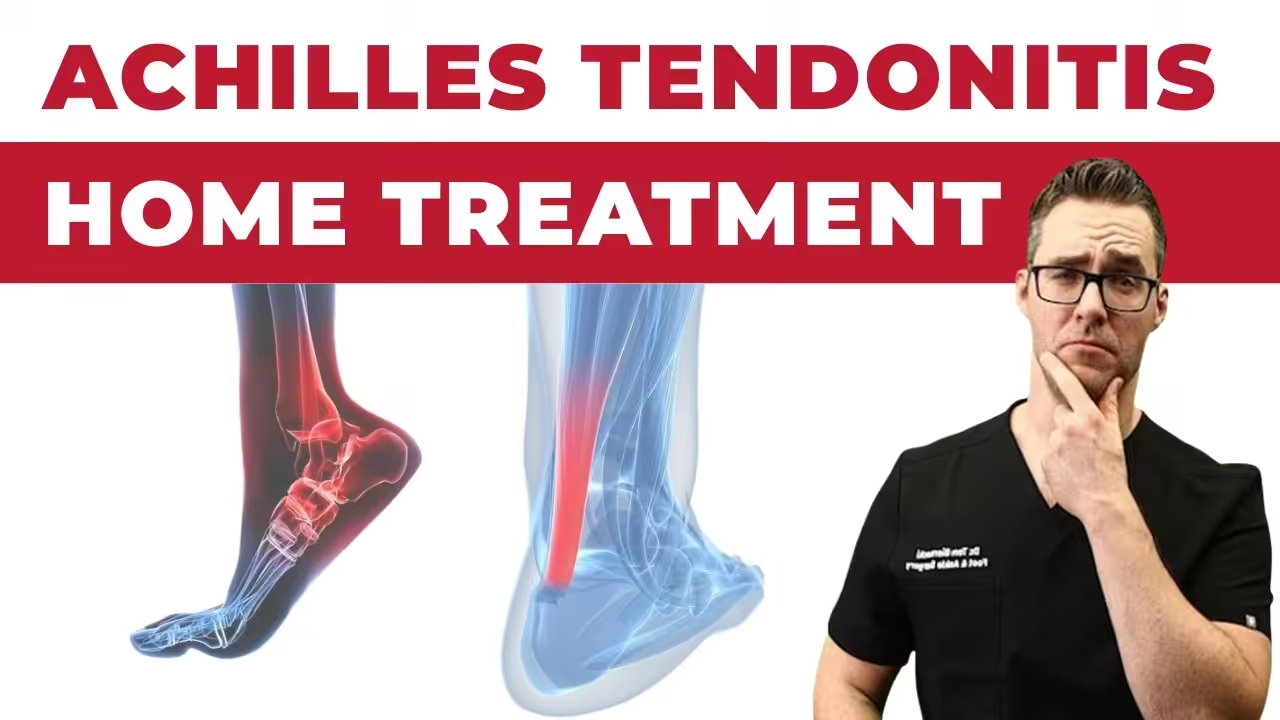
An Achilles tendon rupture is a complete or partial tear of the Achilles tendon—the largest and strongest tendon in the body, connecting the calf muscles (gastrocnemius and soleus) to the heel bone. A complete rupture is a significant injury that makes active push-off impossible. The classic mechanism: a sudden forceful push-off or acceleration during athletic activity, often described by patients as feeling like they were “kicked” or “shot” in the back of the leg, followed by immediate inability to push up on the affected foot. Many patients hear or feel a pop at the moment of injury.
Achilles ruptures most commonly affect men ages 30–50, particularly “weekend warrior” athletes who engage in intermittent high-intensity activities. The tendon often has pre-existing degenerative changes (tendinopathy) at the classic rupture site—2–6 cm above the heel bone insertion—making it vulnerable to rupture with sudden loading. Fluoroquinolone antibiotics (such as ciprofloxacin) increase Achilles rupture risk and are a contraindication in patients with Achilles tendinopathy.
Diagnosing an Achilles Rupture
The diagnosis is primarily clinical. The Thompson test (calf squeeze test) is the key physical exam finding: with the patient prone and the knee bent at 90 degrees, squeezing the calf should produce plantarflexion of the foot. If the foot does not move—a positive Thompson test—complete Achilles rupture is confirmed. A palpable gap in the tendon approximately 2–6 cm above the insertion confirms the rupture location. MRI provides definitive confirmation and characterizes the gap size and tendon quality, which influences surgical planning, but is not always necessary when clinical diagnosis is clear.
Surgery vs. Conservative Treatment
The treatment of Achilles rupture has evolved significantly. Historically, surgical repair was preferred for active patients due to lower re-rupture rates. Modern functional rehabilitation protocols with early weight-bearing in an equinus boot have shown comparable re-rupture rates to surgery in properly selected patients—approximately 3–5% re-rupture in both groups in recent high-quality trials. The advantage of surgery is potentially faster return to sport and higher tendon strength; the disadvantage is surgical risk (wound healing complications, infection, nerve injury at the sural nerve) estimated at 4–5% complication rate.
Current decision-making: competitive athletes and younger, active patients with a significant gap on MRI often benefit from surgical repair with early weight-bearing rehabilitation. Older, less active patients, those with medical comorbidities affecting wound healing (diabetes, peripheral vascular disease, immunosuppression), and those with small residual gap showing good apposition in equinus position may do equally well with non-surgical functional rehabilitation. The decision should be individualized after discussion of the evidence, lifestyle factors, and patient preference.
Recovery Timeline
Weeks 1–6: Early Immobilization
Whether surgical or non-surgical treatment is chosen, the initial phase involves immobilization in a plantarflexed (equinus) position in a cast or boot to allow tendon healing without tensioning the repair. Modern functional protocols allow progressive weight-bearing beginning as early as 2 weeks with heel lifts inside a walking boot. The degree of equinus is progressively reduced over weeks 2–6. Protected weight-bearing in a boot continues throughout this phase.
Weeks 6–12: Progressive Loading
Transition to two-shoe walking typically occurs around 6–8 weeks with continued heel lift in regular shoes. Physical therapy begins focusing on range-of-motion, gentle calf strengthening, and gait normalization. The tendon is fragile during this period—avoiding sudden passive dorsiflexion is critical. Swimming and cycling can begin for non-impact conditioning. Gait pattern normalization is the key focus, as patients develop protective antalgic patterns that affect long-term function if not corrected.
3–6 Months: Strength Building
Calf strength building progresses with double-leg heel raises transitioning to single-leg heel raises—the benchmark of adequate strength recovery. Single-leg heel raise capacity to 25–30 repetitions is the standard criteria for return to running. Running typically begins at 4–5 months with a graded return-to-running program. Impact sports return requires adequate single-leg heel raise strength, normal gait pattern, sport-specific training without pain, and psychological readiness.
6–12 Months: Return to Sport
Return to competitive sport typically occurs at 6–9 months for recreational athletes, and 9–12 months for high-level competitive athletes. The Achilles tendon continues to remodel and strengthen for up to 2 years after rupture. Premature return to sport before adequate strength recovery significantly increases re-rupture risk. A sport-specific functional assessment by a physical therapist before return-to-sport clearance is best practice.
More Podiatrist-Recommended Achilles Essentials
Achilles Night Splint
Gentle dorsiflexion overnight reduces morning tendon stiffness.
Heel-Lifting Insole
Reduces Achilles tension by offloading the tendon during every step.
Calf Massage Ball
Rolling the calf releases the upstream tension that inflames the Achilles.
As an Amazon Associate, Balance Foot & Ankle earns from qualifying purchases. Product recommendations are based on clinical experience; prices and availability shown above update live from Amazon.

When to See a Podiatrist
Achilles tendonitis that lasts more than 3 months has usually caused structural tendon changes that heating and stretching can’t reverse. Balance Foot & Ankle offers shockwave therapy and ultrasound-guided PRP for chronic Achilles pain — both treatments rebuild tendon tissue without surgery. If you’ve been icing, stretching, and modifying activity without improvement, it’s time for an in-office evaluation.
Call Balance Foot & Ankle: (810) 206-1402 · Book online · Offices in Howell & Bloomfield Township
Frequently Asked Questions
How do I know if my Achilles is ruptured or just strained?
A complete Achilles rupture typically presents more dramatically than a strain: sudden onset of severe pain during activity, a felt or audible pop, immediate inability to push off on the foot or stand on tiptoe, and a positive Thompson test. A partial tear or Achilles tendinopathy presents with pain and limited function but preserved ability to push off and a negative Thompson test. If you can rise on your tiptoes on the affected foot, a complete rupture is unlikely. If the Thompson test is negative, complete rupture is unlikely. When in doubt—particularly after a sudden injury with inability to push off—seek immediate evaluation. Untreated Achilles ruptures that develop scarring in a lengthened position have worse outcomes and are more difficult to treat. Same-day urgent care or emergency room evaluation is appropriate if complete rupture is suspected.
Can you walk on a ruptured Achilles tendon?
Surprisingly, some patients with complete Achilles rupture can walk—though with a significant limp and using a flat-footed gait pattern rather than a normal heel-to-toe stride. The ankle dorsiflexors (muscles lifting the foot), the toe flexors, and hip and knee mechanics can partially compensate for lost Achilles function. This ability to walk fools some patients (and occasionally clinicians) into thinking the injury is a sprain rather than a rupture, delaying diagnosis. The test is whether you can rise on tiptoe on the affected foot alone—complete Achilles rupture makes this impossible. Being able to walk somewhat normally does not exclude rupture.
Does Achilles tendon rupture require surgery?
Not necessarily. High-quality evidence from randomized controlled trials shows that functional non-surgical treatment with an early weight-bearing rehabilitation protocol produces outcomes comparable to surgery in terms of re-rupture rate, return-to-sport, and patient-reported function. The re-rupture rate is approximately 3–5% with modern non-surgical protocols—similar to surgical repair. Surgical treatment has a 4–5% risk of wound complications. For competitive athletes who need the fastest possible return to high-level sport, surgery may offer a modest advantage in recovery speed. For recreational athletes and less active patients, non-surgical treatment with an appropriate rehabilitation protocol is a reasonable first choice. The best decision depends on individual factors discussed with your treating physician.
Medical References & Sources
- American Orthopaedic Foot & Ankle Society — Achilles Tendon Disorders
- PubMed Research — Achilles Rupture Surgery vs. Conservative RCT
- PubMed Research — Achilles Rupture Functional Rehabilitation
Dr. Tom Biernacki, DPM is a board-certified podiatric surgeon at Balance Foot & Ankle in Howell and Bloomfield Township, Michigan. He evaluates and manages Achilles tendon ruptures with both surgical repair and functional rehabilitation protocols, individualized to each patient’s activity level and goals.
Dr. Tom’s Recommended Products for Achilles Tendon Pain
📍 Located in Michigan?
Our board-certified podiatrists treat this condition at two convenient locations. Same-day appointments often available.
These are products I personally use and recommend to my patients at Balance Foot & Ankle.
- Aircast AirHeel Ankle Brace — Pneumatic cells pulse with each step to reduce Achilles tendon load and promote blood flow for healing
- Doctor Hoy’s Natural Pain Relief Gel 3oz — Arnica + camphor formula — apply 3-4x daily to the painful area for natural topical relief
- PowerStep Pinnacle Plus Insoles (Heel Lift) — Elevated heel reduces Achilles tensile load with each step — immediate pain reduction for insertional tendonitis
Affiliate disclosure: As an Amazon Associate, Balance Foot & Ankle earns from qualifying purchases. We only recommend products we trust for our own patients.
Dr. Tom’s Recommended: Natural Topical Pain Relief
This is what I actually use in our clinic at Balance Foot & Ankle.
- Doctor Hoy’s Natural Pain Relief Gel — Natural topical pain relief I use in our clinic. Arnica + camphor formula. Apply directly to the painful area 3-4x daily for fast-acting relief without NSAIDs.
📧 Get Dr. Tom’s Free Lab Test Guide
Discover the 5 lab tests every person over 35 should ask their doctor about — explained in plain English by a board-certified physician.
Affiliate disclosure: As an Amazon Associate, Balance Foot & Ankle earns from qualifying purchases. We only recommend products we trust for our own patients.





