
Quick answer: Treatment for stress fracture foot diagnosis treatment michigan follows a stepwise approach: 1) conservative care first (rest, ice, supportive footwear, OTC anti-inflammatories), 2) physical therapy and targeted exercises, 3) in-office treatments (injections, custom orthotics) if conservative fails at 4-6 weeks, 4) surgery for refractory cases. Most patients resolve at step 1 or 2. Call (810) 206-1402.
Medically reviewed by Dr. Tom Biernacki, DPM · Board-Certified Podiatric Surgeon · Last reviewed: April 2026 · Editorial Policy
The most important clinical decision with Stress Fracture Foot Diagnosis Treatment Michigan isn’t which treatment to start with — it’s identifying the correct subtype. That changes everything. Call (810) 206-1402.
Quick Answer
Stress Fracture in the Foot: Diagnosis, Treatment & Ret relates to foot/ankle injury — typically caused by trauma or twist. Most patients improve in 4-8 weeks with conservative care. Same-week appointments in Howell + Bloomfield Township: (810) 206-1402.

Medically reviewed by Dr. Tom Biernacki, DPM — Board-Certified Podiatric Surgeon — Balance Foot & Ankle, Howell & Bloomfield Township, MI. Last updated April 2026.
▶ Watch
👟 Dr. Tom Also Recommends
Podiatrist Recommended Shoes 2026: Dr. Tom’s Top Picks for Every Condition
The right footwear can make or break your recovery. Dr. Tom’s complete guide to the best shoes for plantar fasciitis, flat feet, neuropathy, bunions & more — with clinical picks for every foot type.
See Dr. Tom’s Top Shoe Picks →Medically Reviewed by Dr. Tom Biernacki, DPM — Board-Certified Podiatrist, Balance Foot & Ankle Specialists, Michigan. Last updated April 2026.
Stress Fracture in the Foot: Diagnosis, Treatment & Return to Activity in Michigan
Medically reviewed by Dr. Tom Biernacki, DPM — Balance Foot & Ankle, Howell & Bloomfield Township, MI
What Is a Stress Fracture of the Foot?
A stress fracture is a partial or complete crack in a bone resulting from repetitive mechanical loading that exceeds the bone’s remodeling capacity — unlike traumatic fractures caused by a single high-energy impact. The foot and ankle account for approximately 20–25% of all stress fractures seen in active populations, making them the most common anatomical location. In our Howell and Bloomfield Township clinics, foot stress fractures are diagnosed in runners, military recruits, dancers, and patients who have rapidly increased activity levels or who have underlying bone density reduction from osteoporosis, vitamin D deficiency, or hormonal factors. The most commonly affected bones in the foot are the second and third metatarsals, the navicular, the calcaneus, and — most seriously — the fifth metatarsal at the proximal diaphysis (the “Jones fracture” zone).
Why Some Stress Fractures Are More Serious Than Others
The clinical significance of a stress fracture depends heavily on location. “Low-risk” stress fractures (second, third, fourth metatarsal shafts; calcaneus; fibula) have excellent blood supply, respond reliably to conservative treatment (protected weight-bearing for 4–6 weeks), and rarely require surgery. “High-risk” stress fractures (navicular, fifth metatarsal zone II [Jones fracture], sesamoids, medial tibia) have poor blood supply, high non-union rates with conservative treatment, and often require surgical fixation — particularly in athletes who need expedited return to activity. The navicular stress fracture is the most commonly missed high-risk fracture; it presents as vague midfoot pain and requires CT or MRI for diagnosis since it is invisible on plain X-ray until advanced.
Symptoms and Initial Presentation
Stress fractures present as activity-related pain that is initially present only during exercise, then during normal walking, and eventually at rest in advanced cases. Point tenderness over the affected bone — reproducible by direct finger pressure on a specific bony surface — is the most reliable clinical sign and highly specific for stress fracture (as opposed to muscle strain or tendinitis which produce broader tenderness). The “hop test” (single-leg hopping on the affected foot provokes pain) is positive for lower extremity stress fractures in approximately 80% of cases. Swelling and bruising may be minimal or absent, particularly in early-stage stress responses.
Diagnosis: Why X-Rays Often Miss Stress Fractures
Plain X-rays are normal in 50–85% of stress fractures during the first 2 weeks because the fracture line and periosteal reaction require time to become visible on X-ray. This is the most common reason stress fractures are initially misdiagnosed as soft tissue injuries. MRI is the gold standard for stress fracture diagnosis — it detects bone marrow edema (the earliest stress injury stage) before any structural fracture develops, and characterizes the severity of injury. Bone scan has high sensitivity but poor specificity (cannot distinguish stress fracture from other bone pathology). CT is superior to MRI for confirming fracture line geometry and is essential for navicular stress fractures and pre-surgical planning. Dr. Biernacki orders appropriate advanced imaging at the initial visit when clinical suspicion is high.
Treatment: Protecting the Bone While Maintaining Fitness
Treatment is stratified by fracture location risk category. For low-risk metatarsal stress fractures: a stiff-soled shoe or removable boot for 4–6 weeks allows weight-bearing while protecting the healing bone. Activity modification is strict — no running or impact activity — but non-impact conditioning (swimming, pool running, upper body work) is strongly encouraged to maintain cardiovascular fitness during recovery. Custom orthotics with metatarsal pads are prescribed to reduce repetitive metatarsal loading after healing to prevent recurrence. For high-risk fractures (navicular, Jones fracture): non-weight-bearing in a cast or boot for 6–8 weeks is standard for athletic patients. Many sports medicine guidelines recommend prophylactic surgical fixation for high-risk stress fractures in competitive athletes regardless of severity, as surgical fixation reduces time to return to sport from 5–6 months (conservative) to 8–10 weeks (surgical).
Nutrition, Bone Health, and the Female Athlete Triad
Stress fractures in low bone density patients require nutritional evaluation alongside mechanical treatment. Vitamin D deficiency (target serum 25-OH-D >40 ng/mL) and calcium inadequacy directly increase fracture risk and impair healing. Female athletes with menstrual irregularity, low body weight, and stress fractures should be screened for the Relative Energy Deficiency in Sport (RED-S) syndrome — the updated term for the female athlete triad. Bone density DEXA scan is ordered in patients with recurrent stress fractures or fractures occurring at low activity levels.
Return to Running After a Stress Fracture
A structured return-to-run protocol is essential after stress fracture healing — abrupt return to pre-injury mileage has a 30–40% re-fracture rate within 6 months. Dr. Biernacki uses the following return protocol: MRI confirmation of healing (resolution of marrow edema) before any running, pain-free brisk walking for 2 weeks, then a 12–16 week graduated running program starting at 50% of pre-injury volume and increasing 10% per week. Running surface, shoes, and cadence are reviewed and corrected. Biomechanical factors (overpronation, hip weakness, running form) driving the fracture are addressed with orthotics and physical therapy before return to full training.
Stress Fracture Treatment at Balance Foot & Ankle Michigan
📧 Get Dr. Tom’s Free Lab Test Guide
Discover the 5 lab tests every person over 35 should ask their doctor about — explained in plain English by a board-certified physician.
Dr. Tom Biernacki diagnoses and treats foot stress fractures at Howell (4330 E Grand River Ave) and Bloomfield Township (43494 Woodward Ave #208) with in-office X-ray and same-day MRI ordering. Same-day appointments for acute foot pain. Book online or call (810) 206-1402.
More Podiatrist-Recommended Stress Fracture Essentials
Max-Cushion Walking Shoe
Hoka Bondi 9 — maximum shock absorption during stress fracture recovery.
Foam Roller for Recovery
TriggerPoint foam roller — maintains lower-leg mobility during return to activity.
Supportive Insole


![Calcaneus Stress Fracture Treatment [Heel Stress Fracture RECOVERY!]](https://www.michiganfootdoctors.com/wp-content/cache/flying-press/cdfca81fb25b3ea56c6af7d70a9e3fb0.jpg)
Watch: Calcaneus Stress Fracture Treatment [Heel Stress Fracture RECOVERY!] — MichiganFootDoctors YouTube
PowerStep Pinnacle — distributes impact evenly across the foot.
As an Amazon Associate, Balance Foot & Ankle earns from qualifying purchases. Product recommendations are based on clinical experience; prices and availability shown above update live from Amazon.
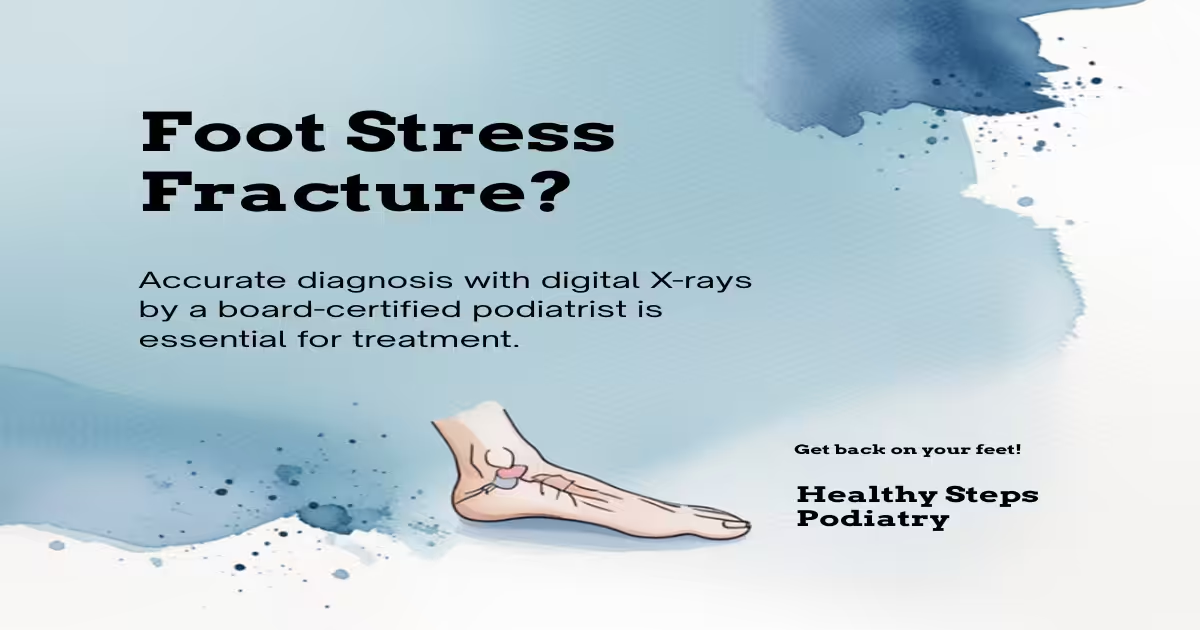
When to See a Podiatrist
Most foot stress fractures heal in 6-8 weeks of protected weight-bearing — but rushing back to activity can turn a hairline fracture into a full break. Balance Foot & Ankle confirms stress fractures on X-ray or MRI and guides your return-to-running protocol. Don’t guess — we’ll tell you the exact week you can start jogging again.
Call Balance Foot & Ankle: (810) 206-1402 · Book online · Offices in Howell & Bloomfield Township
Frequently Asked Questions — Stress Fractures
How long does a foot stress fracture take to heal?
Low-risk metatarsal stress fractures typically show clinical healing in 4–6 weeks with protected weight-bearing. MRI evidence of complete bone marrow edema resolution — which is required before returning to running — usually occurs at 6–10 weeks. High-risk stress fractures (navicular, Jones fracture zone) require 8–12 weeks of non-weight-bearing for conservative treatment. Surgical fixation of high-risk fractures in athletes accelerates return to running to 8–12 weeks from surgery. Total time from injury to unrestricted running: 3–5 months for most low-risk fractures, 4–6 months for high-risk fractures treated conservatively, 2–4 months for surgically fixated high-risk fractures.
Can I walk on a foot stress fracture?
For low-risk metatarsal stress fractures, walking in a stiff-soled shoe or removable boot is generally permitted — the protection comes from limiting forefoot bending forces, not from eliminating all weight-bearing. For high-risk stress fractures (navicular, fifth metatarsal Jones fracture), non-weight-bearing is typically required to prevent fracture displacement and non-union. Your specific activity restrictions depend on fracture location, severity, and whether you are in competition season. Never attempt to run through a stress fracture — the risk of complete fracture displacement requiring surgery is significant.
Does insurance cover stress fracture treatment in Michigan?
Yes — diagnosis (X-ray, MRI), office visits, boots or casts, and surgical treatment when indicated are covered by most PPO plans, BCBS, and Medicare Part B with appropriate diagnosis coding. Custom orthotics prescribed to prevent recurrence after stress fracture healing are covered when documented with a biomechanical indication. Call Balance Foot & Ankle at (810) 206-1402 to schedule and verify your specific plan’s coverage.
Join 950,000+ Learning About Foot Health
Dr. Tom shares honest medical advice, supplement reviews, and treatment guides you won’t find anywhere else.
Subscribe on YouTube →📍 Located in Michigan?
Our board-certified podiatrists treat this condition at two convenient locations. Same-day appointments often available.
Insurance Accepted
BCBS · Medicare · Aetna · Cigna · United Healthcare · HAP · Priority Health · Humana · View All →
Howell Office
4330 E Grand River Ave
Howell, MI 48843
Get Directions →
Bloomfield Township Office
43494 Woodward Ave, #208
Bloomfield Township, MI 48302
Get Directions →
Your Board-Certified Podiatrists



Ready to Get Back on Your Feet?
Same-week appointments available at both locations.
Book Your AppointmentWatch: Dr. Tom explains
Podiatrist-recommended products
As an Amazon Associate, Dr. Tom earns from qualifying purchases.
Standard immobilization for foot stress fractures – 4-6 weeks offloading.
View on Amazon →Controls swelling during the acute stress fracture period.
View on Amazon →Post-healing forefoot offloading prevents re-injury.
View on Amazon →Return-to-activity arch support reduces bone load during rehab.
View on Amazon →Related resources
Ready to solve this? Book today.
Same-week appointments · Howell & Bloomfield Township · 4.9★ (1,123+ reviews)
☎ (810) 206-1402Book Online →In-Office Treatment at Balance Foot & Ankle
When conservative care isn’t enough, Dr. Tom Biernacki and the team at Balance Foot & Ankle offer advanced, same-day options — including Foot & Ankle Fracture Repair Michigan at our Howell and Bloomfield Township clinics.
Same-day appointments available. Call (810) 206-1402 or book online.
Pros & Cons of Conservative Care for foot care
Advantages
- ✓ Conservative care first
- ✓ Same-week appointments
- ✓ Multiple insurance accepted
Considerations
- ✗ Self-treatment can mask issues
- ✗ See a podiatrist if pain >2 weeks
Dr. Tom’s Recommended Products for foot care
Affiliate disclosure: As an Amazon Associate, Balance Foot & Ankle earns from qualifying purchases. We only recommend products we use with patients.
Footnanny Heel Cream Dr. Tom’s Pick
Best for: Daily moisturizer for cracked heels
Ready to Get Back on Your Feet?
Same-day appointments in Howell + Bloomfield Township. Most insurance accepted. Dr. Tom Biernacki, DPM & team.
Book Today — Same-Day Appointments Available
Call Now: (810) 206-1402
About Your Care Team at Balance Foot & Ankle
Dr. Tom Biernacki, DPM · Board-Certified Foot & Ankle Surgeon. Specializes in conservative-first care, minimally invasive bunion surgery, and complex reconstruction.
Dr. Carl Jay, DPM · Accepting new patients. Specializes in sports medicine, athletic injuries, and routine podiatric care.
Dr. Daria Gutkin, DPM, AACFAS · Accepting new patients. Specializes in surgical reconstruction and pediatric podiatry.
Locations: 4330 E Grand River Ave, Howell, MI 48843 · 43494 Woodward Ave Suite 208, Bloomfield Township, MI 48302
Hours: Mon–Fri 8:00 AM – 5:00 PM · (810) 206-1402
In-Office Treatment at Balance Foot & Ankle
If home treatment isn’t providing relief for your stress fractures, our podiatry team at Balance Foot & Ankle can help with same-day evaluations and advanced in-office care.
Same-day appointments available. (810) 206-1402
Doctor Hoy’s Natural Pain Relief Gel
Natural topical pain relief I use in our clinic. Arnica + camphor formula — apply directly to the area 3–4x daily. ($20–25)
Shop Doctor Hoy’s →Frequently Asked Questions
How long does treatment take to work?
Most patients see improvement in 4-8 weeks with consistent conservative care. Persistent symptoms after 8 weeks need imaging and escalation.
When is surgery needed?
Surgery is reserved for cases that fail 3-6 months of conservative care, structural deformities, or fractures requiring stabilization.
Is this covered by insurance?
Most diagnostic visits and conservative treatments are covered by Medicare and major insurers. Custom orthotics often require diabetic or post-surgical justification.
What is Stress fracture?
Stress fracture is a common foot/ankle condition that affects mobility and quality of life. Understanding the underlying cause is the first step in successful treatment. Our podiatrists at Balance Foot & Ankle perform a hands-on biomechanical exam, review your activity history, and use diagnostic imaging when appropriate to identify the root cause—not just treat the symptom. Many patients have been told to “rest and ice” without a deeper diagnostic workup; our approach is different.
Symptoms and warning signs
Common signs of stress fracture include pain that worsens with activity, morning stiffness, swelling, tenderness when palpated, and difficulty bearing weight. If you experience sudden severe pain, inability to walk, visible deformity, numbness or color change, contact our office the same day or visit urgent care—these can signal a more serious injury such as a fracture, tendon rupture, or vascular compromise. Diabetics with any foot wound should seek same-day care.
Conservative treatment options
Most cases of stress fracture respond to non-surgical care: structured rest, supportive footwear changes, custom orthotics, targeted stretching and strengthening protocols, anti-inflammatory medications when medically appropriate, and in-office procedures such as ultrasound-guided injections. We also offer advanced therapies including MLS laser therapy, EPAT/shockwave, regenerative injections, and image-guided procedures. Treatment is sequenced from least invasive to most invasive, and we explain the rationale at every step.
When is surgery considered?
Surgery is reserved for cases that fail 3-6 months of well-structured conservative care, when there is structural pathology (severe deformity, complete tear, advanced arthritis), or when imaging shows damage that will not heal without intervention. Our surgeons have performed 3,000+ foot and ankle procedures and prioritize minimally-invasive techniques whenever appropriate. We discuss recovery timelines, return-to-activity milestones, and realistic outcome expectations before any procedure is scheduled.
Recovery timeline and prevention
Recovery from stress fracture varies based on severity and chosen treatment path. Conservative cases often improve within 4-8 weeks with consistent adherence to the protocol. Post-procedural recovery may range from a few days (in-office procedures) to several months (reconstructive surgery). Long-term prevention involves footwear assessment, activity modification, structured strengthening, and regular check-ins with your podiatrist if you have a history of recurrence. We provide written home-exercise plans and digital follow-up support.
Ready to feel better?
Same-week appointments available in Howell and Bloomfield Township, Michigan.
Book Your VisitOur podiatrists treat the underlying cause, not just the symptom. Same-week appointments at our Howell and Bloomfield Township, Michigan offices.
Ready for Expert Care?
Same-day appointments in Howell & Bloomfield Township, MI.
4.9★ | 1,123 Reviews | 3,000+ Surgeries
Or call: (810) 206-1402

Dr. Tom Biernacki, DPM is a board-certified foot & ankle surgeon (ABFAS & ABPM) at Balance Foot & Ankle Specialists in Southeast Michigan. With over a decade of clinical experience, he specializes in heel pain, bunions, diabetic foot care, sports injuries, and minimally invasive surgery. Dr. Biernacki is a member of the APMA and ACFAS, and his patient education content on MichiganFootDoctors.com and YouTube has made him one of the most-followed foot & ankle educators on YouTube.