
Ready to be seen? Book a real appointment time online, 24/7 — Howell or Bloomfield Township. Prompt openings are usually available.
Quick answer: Toes that suddenly separate or drift apart — most often the 2nd and 3rd — are usually a sign of a plantar plate tear or weakening of the ligaments that hold the toe in place. A bunion, Morton’s neuroma, or arthritis can also drive it. It doesn’t correct itself, but early treatment — taping, the right footwear, orthotics, and in-office care — can stop the drift and often avoid surgery.
2nd and 3rd toes separating is a specific pattern. When those two toes gap apart and you feel burning, tingling, or a “pebble in the shoe” sensation between the ball of your foot and those toes, the underlying cause is almost always different from why the big toe separates — and the treatment is completely different too. The 7 causes of toe separation Dr. Tom sees in practice split almost evenly between two structural categories, and which category you fall into determines whether conservative care works or whether you’re headed toward a longer recovery. Book online or call (810) 206-1402 — same-day appointments available at Howell & Bloomfield Hills.

- Alleviate Discomfort – These flexible corn cushions help reduce rubbing and chafing. Each corn cushion measures approximately 1″ x 3/4′. The hole is approximately 1/4″ in diameter.
- Thick, Supportive Fabric – Toe cushions for corns or calluses are made with a thick, flexible layer that properly covers the affected area for all-day relief.
- Water Resistant Adhesive – The back of each foot corn cushion features a self-sticking callus cover that stays on even if your foot or toes get wet.
- High Quality Materials – Designed with a skin safe latex base, small corn cushions are gentle on sensitive skin and fit men and women equally.
- Improved Foot Comfort – Soft corn cushions fit comfortably inside socks or shoes without bunching, sliding or falling off; even while running or working out.

- COMFORTABLE SUPPORT: 1/4 inch thick felt metatarsal pads provide gentle cushioning under the ball of the foot for daily wear
- VALUE PACK: Includes 6 pairs (12 pieces) to ensure long-lasting comfort and convenience
- ADHESIVE BACKING: Strong adhesive keeps the pad in place inside shoes or directly on the foot
- MADE IN THE USA: Proudly designed, cut, and manufactured in the United States
- EASY TO CUSTOMIZE: Can be trimmed with scissors for a better fit inside a variety of footwear

Toe separation is a symptom, not a diagnosis. The same visible gap between your 2nd and 3rd toes can mean 4 completely different things clinically — and treating the wrong one delays recovery by months. One cause responds immediately to a single in-office injection. Another needs a shoe change and nothing else. Two others require addressing a structural problem in the foot itself. The difference comes down to 3 clinical signs Dr. Tom checks in every new patient with this complaint. (810) 206-1402 — same-day evaluation.
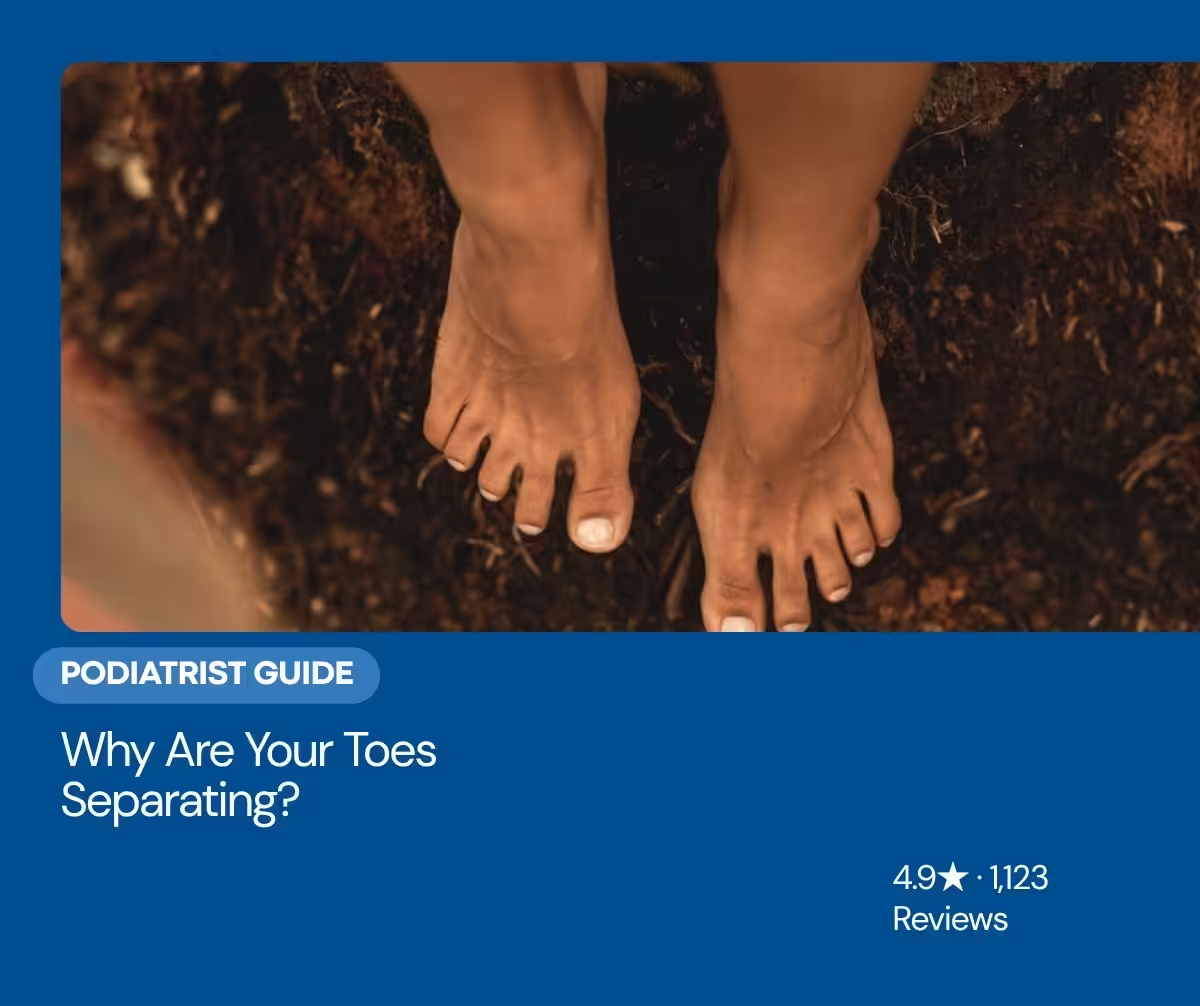
When your toes start drifting apart from each other — especially the second and third toes — it is rarely cosmetic. More often it points to a structural cause — most commonly a plantar plate tear at the 2nd or 3rd toe, with a Morton’s neuroma the next most common driver.
You’re in the right place. Dr. Tom Biernacki, DPM, FACFAS — board-certified foot & ankle surgeon with 3,000+ surgeries — explains exactly what why your toes are separating means and what works. Book online or call (810) 206-1402 for same-day appointment at Howell or Bloomfield Hills.

Toes that drift apart or separate are usually a sign of something developing underneath: a ligament strain that lets the toes splay, swelling between the toes (such as a Morton neuroma or a ganglion cyst), an early bunion shifting the alignment, or arthritis. Below we cover the most common causes and how a podiatrist tells them apart. Call (810) 206-1402 or book online.
What Does It Mean When Toes Separate?
Your toes do not hold their own position. Each one is anchored by a sling of three structures: the plantar plate, a thick pad of fibrocartilage running underneath the joint where the toe meets the foot; the collateral ligaments on either side of that joint; and the tendons that cross it. Toe alignment is passive. Nothing is gripping — the toe simply sits where those restraints hold it.
So a gap that was not there before means one of three things has happened. A restraint has stretched or torn. Something has swollen between the bones and pushed the toes apart. Or the bones themselves have shifted, and the toes moved with them.
That is why the most useful thing you can tell us is not that your toes separated, but how they separated.
A gap that is new, one-sided, or getting wider
This is the pattern that matters clinically. A restraint is failing, most often the plantar plate beneath the second toe, and it tends to progress — the toe drifts sideways first, then begins to lift. Compare both feet in a mirror. If one foot has changed and the other has not, that asymmetry is the finding.
A gap that has always been there and matches on both feet
This is usually just your foot shape. Toe length pattern, a naturally broad forefoot, and the angle of the metatarsals are inherited. If it does not hurt, has not changed, and looks the same on both sides, it generally needs nothing beyond shoes that fit the width you actually have.
Toes that spread or separate on their own
Some people describe toes that visibly splay or pull apart without being asked to, often when standing and sometimes at night. Most of the time this is not a torn ligament. Three things account for the majority of it:
- Splay under load. The forefoot widens when you put weight on it. If the transverse arch has flattened, that spread becomes visible and the toes separate as the metatarsals behind them fan apart. It disappears when you sit down.
- Cramping and muscle activity. The small muscles inside the foot can fire and pull toes apart, particularly at night, after hard exercise, or in tight shoes. It is usually brief and settles on its own.
- Footwear. A toe box that is tapered or too short can hold toes in a splayed position long enough that they still look separated once the shoe is off.
Movement that is truly involuntary and persistent — toes that repeatedly pull or curl on their own, rather than simply resting apart — belongs in a different category and is worth having examined, because it points away from the mechanical causes covered here.
The 7 Causes of Separating Toes (and How to Tell Which One You Have)
| Cause | Telltale Sign | What It Feels Like |
|---|---|---|
| Plantar plate tear (most common) | The 2nd toe drifts upward or toward the big toe | Pain in the ball of the foot just behind the toe; the toe won’t stay down |
| Morton’s neuroma | Toes splay apart (the “daylight sign”) | Burning or tingling between the toes; like walking on a pebble |
| Capsulitis of the 2nd toe | Swelling at the base of the 2nd toe joint | A marble-under-the-foot feeling; pain when pushing off |
| Bunion crowding | A visible bunion pushes the 2nd toe over | Pressure and rubbing where the toes overlap |
| Hammertoe / muscle imbalance | The toe buckles or contracts | A bent toe with a gap that widens over time |
| Arthritis | Several toe joints are stiff and achy | Morning stiffness; gradual, symmetric changes |
| Age-related forefoot splay | The whole forefoot gradually widens | Shoes feel tighter; toes spread over time |
The two structural categories: problems that push the toes apart (a mass or deformity taking up space) and problems that let them drift apart (a failed ligament or muscle imbalance no longer holding the toe in line). Push-apart causes usually respond well to conservative care; drift-apart causes need the underlying instability addressed or they progress.
1. Plantar plate tear (the most common cause of a 2nd–3rd toe gap)
The plantar plate is the small ligament under each toe joint that keeps the toe anchored. When it frays or tears — usually under the 2nd toe — the toe slowly drifts and a V-shaped gap opens between the 2nd and 3rd toes. The tell: ball-of-foot pain near the base of the toe that feels worse barefoot, and a gap that has gradually widened over months. This is a drift-apart cause and the one we most want to catch early, because taping and offloading work far better before the tear completes.
2. Morton’s neuroma (the “daylight sign”)
A thickened nerve between the metatarsal heads — most often the 3rd and 4th — physically wedges the toes apart, which is why podiatrists call visible splaying the daylight sign. The tell: burning or electric pain shooting into the toes, a pebble-in-the-shoe feeling, and relief when you take tight shoes off. A push-apart cause.
3. Capsulitis of the second toe joint
Inflammation of the joint capsule that often precedes a plantar plate tear — same location, earlier stage. The tell: aching and swelling under the 2nd toe joint with a gap that is just beginning to appear. Treated early, this is the most reversible cause on the list.
4. A bunion crowding the second toe
As the big toe angles toward the lesser toes, it pushes the 2nd toe out of line; the 2nd toe escapes upward or sideways and gaps form between neighboring toes. The tell: the separation is happening on a foot with a visible bunion. Fixing the spacing without addressing the bunion fails.
5. Hammertoe and muscle imbalance
When the small stabilizing muscles lose the tug-of-war against the long tendons, toes curl and drift — separation often shows up alongside early hammertoe curling. The tell: the gapping toe is also starting to bend at the middle joint.
6. Inflammatory or degenerative arthritis
Rheumatoid arthritis in particular inflames the toe joints and stretches their supporting structures, producing progressive splay — usually in both feet, often with morning stiffness. Osteoarthritis after an old toe injury can widen a single joint the same way.
7. Age-related forefoot splay and arch change
Feet genuinely widen with age: the arch settles, the forefoot spreads, and toes that touched for decades develop visible space. The tell: gradual, symmetric, painless spreading in both feet. This one is normal — it needs roomier shoes, not treatment.
One-sided, sudden, or painful separation is not the “normal aging” kind. A gap that appeared over weeks — especially with ball-of-foot pain or swelling — points to a plantar plate injury or neuroma, and earlier treatment means simpler treatment. Prompt appointments at Howell & Bloomfield Hills →
What Actually Helps: Dr. Tom’s Product Picks for Spreading Toes
Before scheduling surgery, the right combination of footwear, toe spacing, and arch support resolves the majority of toe-splay cases. Here are the products I recommend most in our clinic for patients whose toes are separating.
🛒 Dr. Tom’s Picks for Toe Separation
Affiliate disclosure: As an Amazon Associate, Balance Foot & Ankle earns from qualifying purchases at no extra cost to you.
Correct Toes Toe Spacers — My #1 recommendation when toes are separating due to bunion progression or metatarsal splay. These silicone spacers realign toes into the natural anatomical position, offload the first metatarsophalangeal joint, and reduce the progressive drift. Wear during activity for best results — unlike static separators worn only at night.
Wide Toe Box Walking Shoes — The single most important change you can make. Narrow toe boxes compress the metatarsal heads, accelerate splay, and worsen Morton’s neuroma symptoms. Look for a toe box wide enough that all five toes can spread naturally. See our full flat feet and wide toe box guide for specific models.
Metatarsal Pad Insoles — A metatarsal pad placed just behind the ball of the foot redistributes pressure away from the metatarsal heads. This directly reduces the nerve compression that causes Morton’s neuroma, one of the most common causes of toe separation. Critical for any patient whose toes splay because of interdigital nerve pain.
PowerStep Pinnacle Insoles (Foundation Wellness) — The OTC orthotic I recommend most for flatfoot-driven toe splay. Proper medial arch support prevents the arch collapse that causes progressive metatarsal spread.
Gel Toe Separators for Night Use — For bunion-related toe drift, a soft gel separator worn between the first and second toes during rest periods provides passive correction without the compression of footwear. Not a cure, but helpful as a component of a thorough conservative plan.
MOST COMMON MISTAKE WE SEE
Most patients treat drifting or separating toes by focusing on the toe itself — doing toe separation exercises, wearing toe spreaders, and stretching. These help with symptoms but don’t address the primary driver in most cases: a structural problem with the toe joint or forefoot mechanics. The most common cause of 2nd/3rd toe separation is a plantar plate tear — a ligamentous injury at the ball of the foot that causes the toe to float and drift. Toe spreaders cannot repair a plantar plate; the correct treatment is a metatarsal pad, offloading orthotic, and in progressive cases, a minimally invasive plantar plate repair.
WHAT ELSE TO CONSIDER — RELATED CONDITIONS & COMPLICATIONS
- Plantar plate tear — the toe floats or drifts upward and laterally; positive drawer test at the 2nd or 3rd MTP joint; MRI or ultrasound confirms
- Morton’s neuroma — web space pain with burning or tingling; the toes separate due to the neuroma mass occupying the web space; Mulder’s click test positive
- Hallux valgus (bunion) — the big toe drifts toward the 2nd toe, physically pushing it; as the bunion worsens, cascade deformity develops through all lesser toes
- Hammertoe / crossover toe deformity — the 2nd toe drifts over the big toe; intrinsic muscle imbalance; worse in pointed shoes; progressive without intervention
- Rheumatoid arthritis — symmetric joint involvement; morning stiffness; positive serology; classic rheumatoid forefoot shows splaying, subluxation, and drift of all lesser toes
RED FLAGS — SEE A PODIATRIST URGENTLY
- Rapid progression of toe separation over weeks (possible plantar plate rupture)
- Toe that has completely crossed over or under an adjacent toe
- Significant swelling or joint warmth with toe drift (possible inflammatory arthritis)
- Toe separation in both feet symmetrically with morning stiffness (rheumatoid)
- Pain at the ball of the foot with every step accompanied by toe drift
Call (810) 206-1402 or book online.
Related Conditions
In This Article
- What Does It Mean When Toes Separate?
- 7 Causes of Toes Separating (Most to Least Common)
- How We Diagnose Toe Separation in Our Clinic
- Treatment for Toes Separating: From Shoes to Surgery
- The Most Common Mistake We See
- Warning Signs: When Toe Separation Needs Urgent Evaluation
- Frequently Asked Questions
- The Bottom Line
- Sources
How We Diagnose Toe Separation in Our Clinic
Because the same visible gap can come from a torn plantar plate, an irritated nerve, an inflamed joint capsule, or a shifting bone, the examination has to tell those apart before any treatment is chosen. Three findings do most of that work.
1. The drawer test
Dr. Tom steadies the metatarsal with one hand and pushes the base of the toe upward with the other. A toe with an intact plantar plate barely moves. A toe whose plate has torn or stretched slides upward, and that movement usually reproduces the pain the patient came in with.
It is the most informative single test available for this problem. In patients with surgically confirmed tears, a positive drawer sign identified high-grade plantar plate tears with roughly 92% sensitivity — but on its own it was not specific, flagging plenty of low-grade cases too (Klein et al., 2014). That is exactly why it is one of three findings rather than the whole examination.
2. Where it hurts under direct pressure
The location of tenderness separates the two causes patients most often confuse.
- Directly under the joint, at the base of the toe on the sole of the foot: plantar plate injury or capsulitis of the second toe joint.
- In the web space between two toes, where squeezing across the forefoot reproduces a click or an electric, burning radiation out into the toes: an interdigital (Morton’s) neuroma. That click has been a recognized sign since Mulder first described it in 1951.
People frequently arrive certain they have a neuroma when the tenderness is actually plantar, or the reverse. The two are treated very differently, so this single step changes the plan more often than any other.
3. What the forefoot does under body weight
The last part of the examination is done standing. A gap that appears or widens only when you bear weight points to structural spread — a flattening transverse arch, a lengthening first ray, or a bunion crowding the second toe from the inside. A gap that looks identical sitting and standing points back to the soft tissue instead.
When imaging gets added
Most cases are settled on examination alone. Weight-bearing X-rays are used when alignment is the open question, because they show both the deviation of the toe and the relative metatarsal lengths that drove it. Klein and colleagues found that pairing a positive drawer test with more than 15 degrees of deviation at the third metatarsophalangeal joint raised specificity for a high-grade tear to 82–89%, which is why those two findings are read together rather than in isolation. Ultrasound or MRI is reserved for cases where surgery is on the table or the picture simply does not fit.
In-Office Treatment at Balance Foot & Ankle

If you’re experiencing toe separation, spreading, or deformity and home management isn’t providing relief, our team at Balance Foot & Ankle offers advanced evaluation and treatment options at both our Howell and Bloomfield Hills locations.
Same-day appointments available. Book online or call (810) 206-1402
Our podiatrists treat the underlying cause, not just the symptom. Prompt appointments at our Howell and Bloomfield Hills, Michigan offices.
Get Expert Care at Balance Foot & Ankle
Prompt appointments at our Howell and Bloomfield Hills offices. Board-certified podiatric surgeons. Most insurance accepted.
Same-Week Appointments in Howell & Bloomfield Hills
Three board-certified podiatric surgeons. 1,193+ patient reviews. Most insurance accepted.
Why do toes spread apart or separate?
Toes spreading apart most commonly results from nerve impingement (Morton’s neuroma causing the 3rd–4th toes to spread), capsulitis or collateral ligament weakness causing plantar plate tear (2nd–3rd toes drift), bunion pushing the second toe sideways, or wearing minimalist footwear that allows natural toe splay. Rheumatoid arthritis can also cause forefoot splaying as the transverse arch collapses.
Is it normal for toes to separate and drift?
Mild toe spread in wider shoes is normal and indicates appropriate toe box sizing. However, progressive spreading — especially a second toe drifting toward the first toe or a toe that stays spread apart even without shoes — indicates underlying structural problems. A plantar plate tear or capsulitis requires early treatment to prevent irreversible deformity. See a podiatrist if a toe is visibly drifting from its normal alignment.
What is a plantar plate tear and how does it cause toe separation?
The plantar plate is a thick fibrocartilage structure that anchors the toes to the metatarsals and prevents dorsal (upward) drifting. When it tears — usually from chronic hyperextension, high-impact sports, or a single trauma — the toe loses its anchoring and begins to drift or float upward and away from adjacent toes. The 2nd toe is most commonly affected. Diagnosis is by MRI or ultrasound; treatment ranges from taping and orthotics to surgical repair.
Can Morton’s neuroma cause toes to spread apart?
Yes. One hallmark sign of Morton’s neuroma is the Mulder’s sign: squeezing the foot causes pain and a palpable click, and patients often report their toes feel as if they are spreading apart. The neuroma (actually a benign nerve fibrosis) occupies space in the intermetatarsal space and pushes adjacent toes apart. Treatment ranges from wider footwear and cortisone injection to alcohol sclerosing therapy or surgical excision.
Ready to Get Relief?
Same-day appointments available in Howell & Bloomfield Hills, MI
4.9★ | 1,193+ Reviews | 3,000+ Surgeries
Or call: (810) 206-1402
For a complete clinical overview: Heel Pain Causes & Treatment Guide — every cause of foot and heel pain diagnosed
The Most Common Mistake We See
The mistake is not picking the wrong product. It is assuming every gap between toes is the same kind of problem. There are really two, and they need close to opposite things.
A gap driven by width — a bunion pushing across, or a forefoot that has splayed — is an alignment problem. The toes are being crowded apart from the side. Toe spacers, a genuinely wide toe box, and a metatarsal pad all work with that, because they address position and spread.
A gap driven by a failing plantar plate is not a width problem at all. The restraint underneath the toe has given way, so the toe drifts sideways and begins to lift. That toe does not need to be held apart — it needs to be held down. Taping that keeps the toe pointed toward the floor, offloading just behind the joint, and a stiffer sole that stops the joint bending are what change its trajectory. Something that sits between the toes never reaches the structure that actually failed.
So the honest answer to “how do I close the gap between my toes” is that it depends entirely on which of those two you have. That is a short examination, not a guess — and getting it wrong is what turns a treatable problem into a stubborn one.
The second half of the mistake is waiting
Plantar plate injury is one of the few forefoot problems where the window genuinely matters. Early, while the toe still sits in line at rest, taping and offloading can hold it and let the tissue calm down. Once the toe has drifted far enough to cross over or ride above its neighbor, the plate does not re-tension on its own, and the conversation moves toward surgical repair (Coughlin, 1993; Nery et al., 2016).
Most people wait because it does not hurt much at first. The drift is nearly painless long before it is obvious, which is precisely backwards from how patients decide when to be seen. If the gap is new and widening, that is the moment to have it looked at — not once the toe is visibly crossing. If there is pain in the ball of the foot alongside the gap, that combination moves it up the list further.
Which Separating Toes Should Be Looked At Sooner
Toe separation is a sign rather than a diagnosis, and the useful question is not whether the toes have drifted but what moved them. Most of the causes above are slow, mechanical and not urgent. Two patterns are worth acting on rather than watching.
A gap that opened between two specific toes, with pain in the ball of the foot
When the second and third toes, or the third and fourth, splay apart into a visible V while the rest of the foot looks normal, that separation is often being produced by something sitting in the space between the metatarsal heads pushing them apart. A Morton’s neuroma is the classic cause — the splayed-toe appearance is a recognised clinical sign of one. A ganglion or bursa in the same space can do it too. What makes this worth investigating is that the visible gap usually appears well after the burning, numbness or pebble-in-the-shoe sensation started, so by the time toes separate the problem has typically been present a while.
A single toe that has drifted sideways, usually the second
One toe angling away from its neighbour, often with pain directly underneath its base and a feeling that the toe no longer sits flat, points toward a plantar plate tear — a failure of the thick ligament that anchors the toe under the joint. This is the one situation on this page where timing genuinely changes the outcome. Caught while the toe still moves normally, it is often managed conservatively with taping, offloading and footwear change. Left long enough, the toe drifts up and across permanently and the repair becomes surgical. A second toe that has started to cross toward the big toe is worth having assessed rather than monitored.
And which ones genuinely can wait
Toes that have gradually spread as the forefoot widened over years, separation that has always been there, and separation without pain or numbness are all reasonable to manage with footwear and support rather than urgency. Widening feet are common in adulthood, particularly after pregnancy or weight change, and a broader forefoot is not in itself a problem to be corrected.
Balance Foot & Ankle sees patients at our Howell podiatry office and our Bloomfield Hills podiatry office. Call (810) 206-1402 or book as a new patient. A photo of the foot from above, taken standing, is genuinely helpful — and if you have an older photo for comparison, bring that too.
Frequently Asked Questions: Toes Separating
Why are my 2nd and 3rd toes separating?
Toe separation or drifting is commonly caused by capsulitis, Morton’s neuroma, crossover toe deformity, bunions, rheumatoid arthritis, or ligament laxity from ill-fitting footwear. As the ligaments supporting the metatarsophalangeal joint weaken, the toe loses its alignment and begins to drift or rise above the adjacent toes.
Can separated toes be corrected without surgery?
Yes — when addressed early. Conservative treatment including toe splints, buddy taping, wider-toe-box footwear, and custom orthotics can stabilize and often correct toe separation. Anti-inflammatory therapy helps resolve underlying joint capsule irritation. Surgery is reserved for rigid deformity or cases that fail conservative care.
When should I see a podiatrist for spreading toes?
See a podiatrist if your toes are visibly crossing, drifting apart, or causing pain and instability with walking. Early intervention prevents progression to a rigid deformity requiring surgery. At Balance Foot & Ankle, we offer prompt appointments for acute toe and forefoot concerns.
Will separating toes go back together on their own?
Early, flexible toe drift can improve with wider shoes, a metatarsal pad, and daytime toe spacers — especially when footwear or a mild neuroma is the driver. But a true plantar plate tear or an advancing bunion will not close on its own, because the toe is drifting from a changed ligament or joint alignment. The earlier it is assessed, the more likely conservative care works and the less likely surgery becomes necessary.
When does a separating toe need imaging or surgery?
Weight-bearing X-rays show bunion angle and joint alignment, while ultrasound or MRI confirms a plantar plate tear or Morton’s neuroma. Imaging is warranted when a toe is rapidly drifting, has crossed over a neighbor, or stays separated at rest. Surgery is considered only after taping, offloading orthotics, and footwear changes have failed, or when there is a complete plantar plate rupture or a severe, fixed deformity.

Dr. Tom Biernacki, DPM is a double board-certified podiatrist and foot & ankle surgeon at Balance Foot & Ankle Specialists in Southeast Michigan. With over a decade of clinical experience, he specializes in heel pain, bunions, diabetic foot care, sports injuries, and minimally invasive surgery. Dr. Biernacki is a member of the APMA and ACFAS, and his patient education content on MichiganFootDoctors.com and YouTube has reached over one million views.
- Plantar Fasciitis: Diagnosis and Conservative Management (PubMed)
- Plantar Fasciitis (APMA)
- Diagnosis and Treatment of Plantar Fasciitis (PubMed / AAFP)
- Heel Pain (APMA)
Dr. Tom Biernacki, DPM is a double board-certified podiatrist and foot & ankle surgeon at Balance Foot & Ankle Specialists in Southeast Michigan. With over a decade of clinical experience, he specializes in heel pain, bunions, diabetic foot care, sports injuries, and minimally invasive surgery. Dr. Biernacki is a member of the APMA and ACFAS, and his patient education content on MichiganFootDoctors.com and YouTube has reached over one million views.
Footwear & Orthotics for Separating Toes
Properly fitted shoes and orthotics can take pressure off shifting toes and support the forefoot. See our podiatrist-recommended shoes, and book an evaluation if the gap is widening.
Toes drifting apart can point to an underlying deformity — read more in our bunions & toe deformities guide.
The Bottom Line
Toe separation is a symptom rather than a diagnosis. Closing the gap is a fair thing to want — but what actually closes it depends on which structure gave way, or whether anything gave way at all.
- A new, one-sided, or widening gap — most often between the second and third toes — usually means the plantar plate under that joint is failing. It does not resolve on its own.
- A longstanding gap that matches on both feet and does not hurt is normally inherited foot shape, and needs nothing beyond correctly fitting width.
- Burning, tingling, or a pebble-underfoot feeling between the toes points toward an interdigital neuroma rather than a torn plate. Different problem, different treatment.
- Three examination findings settle most cases: the drawer test, where tenderness sits under direct pressure, and what the forefoot does standing.
- Width problems and plantar plate problems need opposite things. One is helped by holding the toes apart; the other needs the toe held down.
- Timing changes the outcome. Early plantar plate injury responds to taping, offloading, and footwear. A toe that has already crossed over generally does not.
Sources
- Klein EE, Weil L Jr, Weil LS Sr, Bowen M, Fleischer AE. Positive drawer test combined with radiographic deviation of the third metatarsophalangeal joint suggests high grade tear of the second metatarsophalangeal joint plantar plate. Foot & Ankle Specialist. 2014;7(6):466–470. doi:10.1177/1938640014539810
- Coughlin MJ. Second metatarsophalangeal joint instability in the athlete. Foot & Ankle. 1993;14(6):309–319. PMID 8406245
- Nery C, Umans H, Baumfeld D. Etiology, clinical assessment, and surgical repair of plantar plate tears. Seminars in Musculoskeletal Radiology. 2016;20(2):205–213. PMID 27336454
- Mulder JD. The causative mechanism in Morton’s metatarsalgia. Journal of Bone and Joint Surgery (British volume). 1951;33-B(1):94–95. PMID 14814167
- American Academy of Orthopaedic Surgeons. Morton’s neuroma. OrthoInfo patient education library.
Toes drifting apart? Get the cause pinned down.
Separating toes can signal a bunion, arthritis, or a nerve problem — each treated differently. In Michigan? Our board-certified podiatrists can tell you exactly what’s going on and how to fix it. Prompt visits in Howell & Bloomfield Hills.
📅 Book an Appointment 📞 (810) 206-1402★ 4.9 from 1,193+ Google reviews · Prompt visits · We verify your insurance free — most visits are just a copay.
Book an appointment with a podiatrist
Toes that have started to drift apart are usually reporting a mechanical change underneath them — a splaying forefoot, a bunion crowding its neighbours, or a plantar plate that has begun to give way. The last of those worsens quietly and is much easier to hold than to repair. Balance Foot & Ankle sees patients at two offices — Howell in Livingston County, and Bloomfield Township in Oakland County.
Book online or call (810) 206-1402 or use the form below and our team will find you an appointment time.
Dr. Tom Biernacki, DPM is a board-certified foot & ankle surgeon (ABFAS & ABPM) at Balance Foot & Ankle Specialists in Southeast Michigan. With over a decade of clinical experience, he specializes in heel pain, bunions, diabetic foot care, sports injuries, and minimally invasive surgery. Dr. Biernacki is a member of the APMA and ACFAS, and his patient education content on MichiganFootDoctors.com and YouTube has made him one of the most-followed foot & ankle educators on YouTube.
More questions patients ask
Why are my toes spreading apart or separating?
Toe separation or spreading can be caused by: neuroma (swelling between metatarsals pushing toes apart — a classic Morton's neuroma sign), ligament disruption from Lisfranc injury or capsulitis, abnormal interosseous muscle function, or systemic inflammatory conditions like rheumatoid arthritis eroding joint structures. Balance Foot & Ankle evaluates toe spreading symptoms to identify the underlying cause. Call (810) 206-1402 for a comprehensive evaluation.
Is toe separation a sign of Morton's neuroma?
Yes. Splaying of the 3rd and 4th toes (or any adjacent toes) can be a classic sign of Morton's neuroma as the enlarged nerve mass pushes toes apart. Balance Foot & Ankle diagnoses Morton's neuroma through clinical examination (Mulder's click, transverse compression pain), ultrasound imaging, and symptom pattern. Custom orthotics with metatarsal pads effectively treat most neuromas without surgery. Call (810) 206-1402.
Can toe separation indicate a serious condition?
Significant toe separation with pain, swelling, or recent injury may indicate serious conditions including Lisfranc (midfoot) injury or rheumatoid arthritis joint erosion. Balance Foot & Ankle evaluates toe spacing changes carefully. Lisfranc injuries are frequently missed and can cause permanent disability without proper treatment. Any new toe separation after an injury warrants urgent evaluation. Call (810) 206-1402 for prompt assessment.
How does Balance Foot & Ankle treat toe separation issues?
Treatment depends on the cause. Morton's neuroma causing toe separation is treated with custom orthotics, footwear modification, and when needed injections or surgery. Inflammatory arthritis requires coordinated care with rheumatology. Ligamentous causes may need bracing or surgical stabilization. Balance Foot & Ankle provides accurate diagnosis and coordinates appropriate treatment for all causes of pathological toe spacing changes.
When should I see a doctor for toes spreading apart?
See Balance Foot & Ankle promptly for toe separation that is new and progressive, associated with forefoot pain and burning, occurs after a foot injury, involves visible swelling or skin changes, or causes difficulty fitting in footwear. Early evaluation and treatment prevents conditions like Morton's neuroma and Lisfranc injury from causing permanent damage. Call (810) 206-1402 or visit our Howell or Bloomfield Township office.
Still have a question about coverage or cost? Book online and we will check your benefits before your visit: Book in Howell · Book in Bloomfield Township. Prefer to talk it through first? Call (810) 206-1402.