

You are in the right place. Dr. Tom Biernacki, DPM, FACFAS — board-certified foot & ankle surgeon with 3,000+ surgeries — explains exactly what best foot cream for diabetic neuropathy means and what actually works. Call (810) 206-1402 for a same-day appointment at our Howell or Bloomfield Township office.
Quick answer: Best Foot Cream Diabetic Neuropathy Dry Skin 2026 is a common foot/ankle topic that affects many patients. Effective treatment starts with a targeted diagnosis, conservative-first treatment, and escalation only when needed. We treat this regularly at our Howell and Bloomfield Township practices. Call (810) 206-1402.
Medically reviewed by Dr. Tom Biernacki, DPM · Board-Certified Podiatric Surgeon · Last reviewed: April 2026 · Editorial Policy
The most important clinical decision with Best Foot Cream Diabetic Neuropathy Dry Skin 2026 isn’t which treatment to start with — it’s identifying the correct subtype. That changes everything. Call (810) 206-1402.
Quick Answer
Best Foot Creams for Diabetic Feet & Neuropathy 2026 P relates to diabetic foot care — typically caused by reduced circulation + neuropathy. Most patients improve in ongoing daily inspection with conservative care. Same-week appointments in Howell + Bloomfield Township: (810) 206-1402.

Medically reviewed by Dr. Tom Biernacki, DPM — Board-Certified Podiatric Surgeon — Balance Foot & Ankle, Howell & Bloomfield Township, MI. Last updated April 2026.
▶ Watch
👟 Dr. Tom Also Recommends
Podiatrist Recommended Shoes 2026: Dr. Tom’s Top Picks for Every Condition
The right footwear can make or break your recovery. Dr. Tom’s complete guide to the best shoes for plantar fasciitis, flat feet, neuropathy, bunions & more — with clinical picks for every foot type.
See Dr. Tom’s Top Shoe Picks →Medically Reviewed by Dr. Tom Biernacki, DPM — Board-Certified Podiatrist, Balance Foot & Ankle Specialists, Michigan. Last updated April 2026.
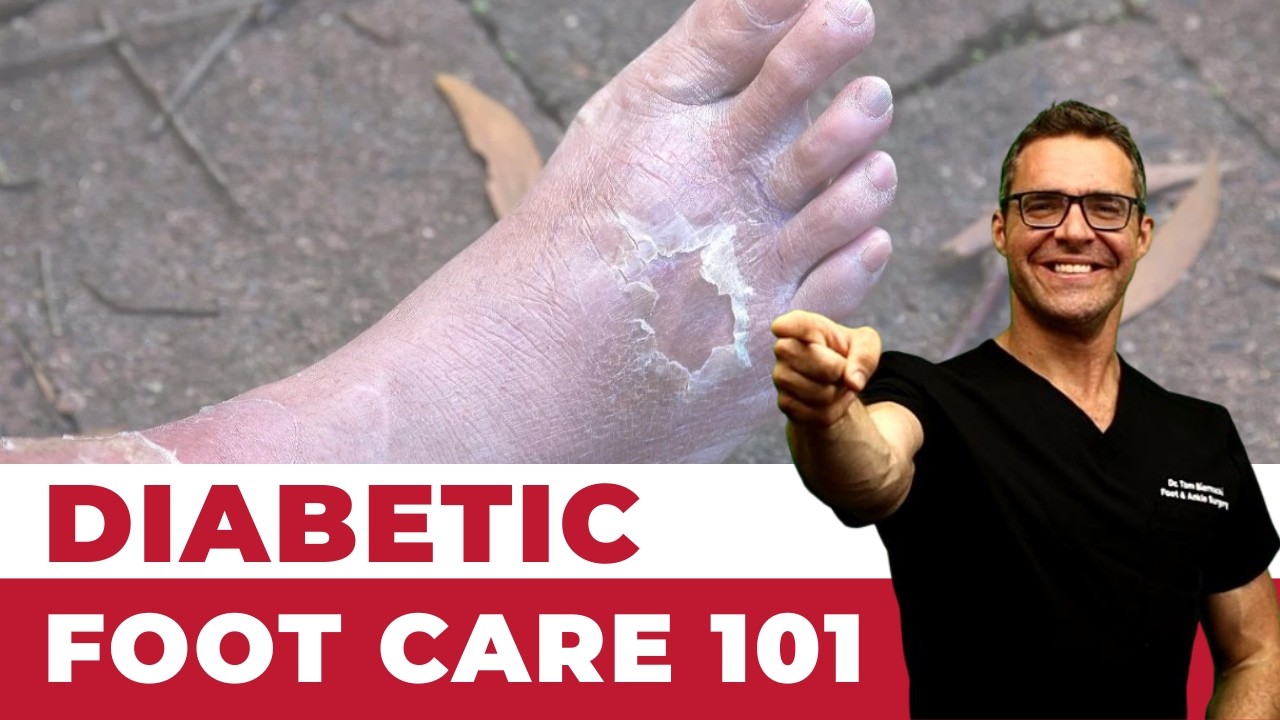
Foot skin care is a medical priority for diabetic patients — not a cosmetic one. Dry, cracked skin on diabetic feet creates entry points for bacteria and fungal infection; untreated fissures at the heels can deepen into wounds that lead to serious complications in neuropathic patients who cannot feel the damage occurring. Dr. Tom Biernacki, DPM at Balance Foot & Ankle (Howell & Bloomfield Township, MI) reviews the best foot creams for diabetic and neuropathic feet in 2026.
Why Diabetic Feet Dry Out Faster
Autonomic neuropathy — the loss of sweating function from damaged autonomic nerves — is an underappreciated driver of diabetic foot dryness. Healthy feet rely on sweat glands to maintain skin hydration; when autonomic neuropathy reduces or eliminates sweating, the skin rapidly loses moisture, develops calluses, and cracks. This is why diabetic patients can develop severe heel fissures even in humid climates — it is a neurological problem, not a climate problem. Regular moisturization compensates for this loss of natural hydration.
Best Overall Diabetic Foot Cream: Eucerin Diabetics’ Dry Skin Relief Foot Creme
💊 More Podiatrist-Recommended Supplements & Topicals
📍 Located in Michigan?
Our board-certified podiatrists treat this condition at two convenient locations. Same-day appointments often available.
The Eucerin Diabetics’ Dry Skin Relief Foot Creme is the most evidence-based choice for daily diabetic foot moisturization. The formula combines urea (5%) for keratolytic action (breaking down dry, hyperkeratotic skin) with lactic acid for skin barrier repair and mineral oil for occlusive moisture retention. Fragrance-free; tested for diabetic skin; the 3.3oz tube format allows precise application. Rated by the American Podiatric Medical Association (APMA). Best for: daily moisturization protocol in all diabetic patients.
Best for Severely Cracked Heels: CeraVe Healing Ointment
The CeraVe Healing Ointment is the closest OTC option to prescription emollients for severe heel fissure management. The petrolatum base (47%) provides maximum occlusion — sealing moisture into deeply cracked tissue — while ceramides (1, 3, 6-II) restore the skin barrier. The key clinical application: apply liberally to severely cracked heels at bedtime, then cover with a thin cotton sock overnight. The occlusive environment increases urea/lactic acid penetration and dramatically accelerates fissure closure. Not appropriate for between-the-toes (maceration risk); plantar and heel surface only.
Best High-Urea Formula: Flexitol Heel Balm (25% Urea)
The Flexitol Heel Balm with 25% Urea provides the highest widely-available OTC urea concentration for callus and hyperkeratosis management. At 25%, urea has a true keratolytic effect — it actively breaks down hyperkeratotic skin rather than just moisturizing over it. This makes Flexitol the appropriate choice for patients with established callus formation and thick, hardened heel skin, rather than the standard 5–10% urea products. Apply twice daily to clean, dry feet; not appropriate for broken skin or open wounds.
Best Antimicrobial Option: Kerasal Fungal Nail Renewal + Foot Care Combo
For diabetic patients with concurrent fungal infection risk, the Kerasal Nail & Skin Complete Care provides both urea-based skin moisturization and antifungal activity (undecylenic acid). The dual action is appropriate for patients with athlete’s foot tendency or early nail fungus who need daily skin care with concurrent antifungal properties. Important distinction: Kerasal nail products do not replace prescription-strength terbinafine for established onychomycosis — they maintain nail appearance and provide adjunctive antifungal activity.
Diabetic Foot Cream Application Protocol
- Apply after bathing: Apply cream to slightly damp (not wet) skin within 2 minutes of patting the foot dry; moisture absorption is significantly better than on completely dry skin
- NEVER apply between the toes: Moisture accumulation between toes in a neuropathic foot creates maceration and fungal entry points; apply only to plantar surface, heel, and dorsum
- Daily protocol: Morning application of urea cream (Eucerin or Flexitol) to plantar surface; bedtime application of heavier emollient (CeraVe Healing Ointment) to heels; cotton socks overnight for heels
- Inspect while applying: Daily cream application is also the opportunity for daily foot inspection — check for cracks, blisters, redness, or any new lesion
- Do not apply to open wounds: Urea preparations are for intact dry skin only; any wound, blister, or fissure that has broken the skin surface requires wound care protocol, not moisturizer
- Replace cream regularly: Diabetic foot cream should be a regular household staple — running out and missing days creates the skin vulnerability that leads to complications
When Foot Cream Is Not Enough
Heel fissures that have broken the skin surface, calluses that are painful rather than just cosmetic, or any new lesion in a diabetic patient require same-day podiatric evaluation — not more cream. Dr. Biernacki provides professional callus debridement, wound care, and diabetic foot management including Medicare therapeutic shoe prescription. Schedule a same-day evaluation or call (810) 206-1402.
📧 Get Dr. Tom’s Free Lab Test Guide
Discover the 5 lab tests every person over 35 should ask their doctor about — explained in plain English by a board-certified physician.
Affiliate disclosure: As an Amazon Associate, Balance Foot & Ankle earns from qualifying purchases. All recommendations are based on clinical utility.
Join 950,000+ Learning About Foot Health
Dr. Tom shares honest medical advice, supplement reviews, and treatment guides you won’t find anywhere else.
Subscribe on YouTube →🔗 Related Care & Resources
Treated by Dr. Tom Biernacki DPM — Board-certified podiatric surgeon at Balance Foot & Ankle in Howell & Bloomfield Township, MI.
Schedule an Appointment → or call (810) 206-1402
Insurance Accepted
BCBS · Medicare · Aetna · Cigna · United Healthcare · HAP · Priority Health · Humana · View All →
Howell Office
4330 E Grand River Ave
Howell, MI 48843
Get Directions →
Bloomfield Township Office
43494 Woodward Ave, #208
Bloomfield Township, MI 48302
Get Directions →
Your Board-Certified Podiatrists



Ready to Get Back on Your Feet?
Same-week appointments available at both locations.
Book Your AppointmentMore Podiatrist-Recommended Diabetic Essentials
Diabetic-Approved Walking Shoe
Orthofeet Sprint — seamless, extra-depth, designed for neuropathic feet.
Seamless Diabetic Sock


![Diabetic Foot Ulcer Treatment & Early Stages [Diabetic Neuropathy]](https://www.michiganfootdoctors.com/wp-content/cache/flying-press/736454be2c58ebb20f519158cfe72457.jpg)
Watch: Diabetic Foot Ulcer Treatment & Early Stages [Diabetic Neuropathy] — MichiganFootDoctors YouTube
OS1st FS4 — non-binding, moisture-wicking, protects fragile diabetic skin.
Recovery Slide for Indoor Wear
HOKA Ora 3 — protects diabetic feet from barefoot injury at home.
As an Amazon Associate, Balance Foot & Ankle earns from qualifying purchases. Product recommendations are based on clinical experience; prices and availability shown above update live from Amazon.

When to See a Podiatrist
One unnoticed blister on a neuropathic foot can become a limb-threatening ulcer in under 14 days. Medicare covers diabetic shoes (A5500) and comprehensive foot exams annually for most diabetic patients with neuropathy or circulation concerns. Balance Foot & Ankle runs a dedicated diabetic limb-preservation program — vascular screening, offloading, ulcer care, and shoe fitting — all in one visit. Schedule your annual diabetic foot exam today.
Call Balance Foot & Ankle: (810) 206-1402 · Book online · Offices in Howell & Bloomfield Township
Podiatrist-Recommended Products for Diabetic Foot Care
- Doctor Hoy’s Natural Pain Relief Gel — gentle topical relief that’s safe for diabetic skin and neuropathic pain
- DASS Medical Compression Socks — graduated compression socks that improve circulation for diabetic feet
- PowerStep Maxx — extra-depth-compatible insole for diabetic footwear and accommodative orthotics
These are the same products Dr. Biernacki recommends in clinic. Available through our partner Foundation Wellness.
In-Office Treatment at Balance Foot & Ankle
If home treatment isn’t providing relief for your neuropathy and nerve pain, our podiatry team at Balance Foot & Ankle can help with same-day evaluations and advanced in-office care.
Same-day appointments available. (810) 206-1402
Frequently Asked Questions
When should I see a podiatrist?
If symptoms persist past 2 weeks, affect your normal activity, or are accompanied by red-flag symptoms (warmth, redness, swelling, inability to bear weight).
What does treatment cost?
Most diagnostic visits and conservative treatments are covered by Medicare and major insurers. Out-of-pocket costs vary by your specific plan.
How quickly can I get an appointment?
Most non-urgent cases see us within 5 business days. Urgent cases (sudden pain, possible fracture) typically same or next business day.
What is Neuropathy?
Neuropathy is a common foot/ankle condition that affects mobility and quality of life. Understanding the underlying cause is the first step in successful treatment. Our podiatrists at Balance Foot & Ankle perform a hands-on biomechanical exam, review your activity history, and use diagnostic imaging when appropriate to identify the root cause—not just treat the symptom. Many patients have been told to “rest and ice” without a deeper diagnostic workup; our approach is different.
Symptoms and warning signs
Common signs of neuropathy include pain that worsens with activity, morning stiffness, swelling, tenderness when palpated, and difficulty bearing weight. If you experience sudden severe pain, inability to walk, visible deformity, numbness or color change, contact our office the same day or visit urgent care—these can signal a more serious injury such as a fracture, tendon rupture, or vascular compromise. Diabetics with any foot wound should seek same-day care.
Conservative treatment options
Most cases of neuropathy respond to non-surgical care: structured rest, supportive footwear changes, custom orthotics, targeted stretching and strengthening protocols, anti-inflammatory medications when medically appropriate, and in-office procedures such as ultrasound-guided injections. We also offer advanced therapies including MLS laser therapy, EPAT/shockwave, regenerative injections, and image-guided procedures. Treatment is sequenced from least invasive to most invasive, and we explain the rationale at every step.
When is surgery considered?
Surgery is reserved for cases that fail 3-6 months of well-structured conservative care, when there is structural pathology (severe deformity, complete tear, advanced arthritis), or when imaging shows damage that will not heal without intervention. Our surgeons have performed 3,000+ foot and ankle procedures and prioritize minimally-invasive techniques whenever appropriate. We discuss recovery timelines, return-to-activity milestones, and realistic outcome expectations before any procedure is scheduled.
Recovery timeline and prevention
Recovery from neuropathy varies based on severity and chosen treatment path. Conservative cases often improve within 4-8 weeks with consistent adherence to the protocol. Post-procedural recovery may range from a few days (in-office procedures) to several months (reconstructive surgery). Long-term prevention involves footwear assessment, activity modification, structured strengthening, and regular check-ins with your podiatrist if you have a history of recurrence. We provide written home-exercise plans and digital follow-up support.
Ready to feel better?
Same-week appointments available in Howell and Bloomfield Township, Michigan.
Book Your VisitReady to fix this for good?
Reading goes only so far. The fastest path to relief is a 30-minute office visit with Dr. Biernacki — same-day Howell or Bloomfield Township. Call (810) 206-1402 or use our online booking.
Get Expert Care at Balance Foot & Ankle
Same-week appointments at our Howell and Bloomfield Township offices. Board-certified podiatric surgeons. Most insurance accepted.
Ready for Expert Care?
Same-day appointments in Howell & Bloomfield Township, MI.
4.9★ | 1,123 Reviews | 3,000+ Surgeries
Or call: (810) 206-1402

Dr. Tom Biernacki, DPM is a board-certified foot & ankle surgeon (ABFAS & ABPM) at Balance Foot & Ankle Specialists in Southeast Michigan. With over a decade of clinical experience, he specializes in heel pain, bunions, diabetic foot care, sports injuries, and minimally invasive surgery. Dr. Biernacki is a member of the APMA and ACFAS, and his patient education content on MichiganFootDoctors.com and YouTube has made him one of the most-followed foot & ankle educators on YouTube.