

Best Slip-On Shoes for Plantar Fasciitis 2026: Podiatrist’s Guide to Heel Counter Stability
Quick Answer: Best Slip-On Shoes for Plantar Fasciitis
The Dansko Professional Clog is my top clinical recommendation for slip-on footwear with plantar fasciitis — its rigid heel counter, rocker bottom sole, and deep toe box set the clinical standard for slip-ons. For a true athletic slip-on, the Skechers GOWalk Arch Fit delivers genuine arch support without laces. The critical insight most patients miss: most slip-ons fail the heel counter stability test — the open-back or soft heel design allows calcaneal eversion that stretches the plantar fascia with every step. The six shoes in this guide pass that test. The dozens of slip-ons that feel comfortable initially but fail clinically do not belong on a PF patient’s foot.
📋 Table of Contents
- The Heel Counter Stability Test: Why Most Slip-Ons Fail
- Dansko Professional Clog — Best Overall
- Skechers GOWalk Arch Fit — Best Athletic Slip-On
- HOKA Ora Recovery Slip — Best Recovery Slip-On
- Vionic Rest Bella — Best Supportive Sandal/Slip-On
- Birkenstock Boston Soft Footbed — Best Casual Slip-On
- Crocs LiteRide Clog — Best Lightweight Option
- Full Comparison Table
- When to Wear Slip-Ons vs. Lace-Up Shoes with PF
- Slip-Ons to Avoid with Plantar Fasciitis
- FAQ
A slip-on that passes the heel counter test is a better shoe. It is still not a treatment.
Slip-ons get chosen for convenience, and convenience is usually where plantar fasciitis patients give back the ground their good shoes won. If first-step pain in the morning has lasted beyond six to eight weeks despite supportive footwear, the shoe is no longer the variable worth changing. We treat plantar fasciitis at our Howell and Bloomfield Township offices. Book online or call (810) 206-1402.
The Heel Counter Stability Test: Why Most Slip-Ons Fail Plantar Fasciitis Patients
🔬 The Podiatrist’s Heel Counter Stability Test
Before buying any slip-on shoe for plantar fasciitis, perform this 30-second test in the store or when your online order arrives:
Step 1: Hold the shoe with both hands — one palm on the heel counter, one on the toe box.
Step 2: Try to squeeze the heel counter inward with your palm.
Step 3: Evaluate resistance: No resistance or minimal resistance = FAIL. The shoe will allow your heel to evert (roll inward) with every step, stretching the plantar fascia at its calcaneal insertion. Firm resistance requiring significant pressure = PASS. The heel counter will stabilize your calcaneus and reduce fascial strain.
Why slip-ons fail this test so often: Lace-up shoes maintain heel counter contact through the tension of the lacing system — the laces pull the upper against the heel, creating a snug mechanical interface. Slip-ons have no lacing system. The heel counter must be structurally rigid on its own to hold the heel in position. Most slip-on manufacturers sacrifice heel counter rigidity for slip-on convenience — and plantar fasciitis patients pay the clinical price.
The passing shoes in this guide: All six shoes reviewed below pass the heel counter stability test. Several pass it dramatically — Dansko’s thermoplastic heel counter cannot be compressed by hand.
✅ Slip-On PF Criteria (PASS)
- Rigid or semi-rigid heel counter
- Built-in arch support (medial arch contour ≥6mm height)
- Heel-to-toe drop ≥8mm
- Cushioned heel cup (≥20mm stack)
- Rocker or curved outsole reduces toe-off strain
- Deep toe box — no forefoot compression
❌ Slip-On PF Criteria (FAIL)
- Soft or absent heel counter (crushable by hand)
- Flat insole with no arch contour
- Zero drop or negative heel (flip-flops, ballet flats)
- Thin sole (<15mm total stack)
- No heel cup — heel sits on flat platform
- Narrow toe box — forefoot compression
1. Dansko Professional Clog — Best Overall Slip-On for Plantar Fasciitis
Dansko Professional Clog — The Clinical Gold Standard for Slip-On PF Footwear
Best for: Healthcare workers, teachers, chefs, retail workers with PF | Drop: ~12mm | Stack Height: 38mm heel | Heel Counter: Rigid thermoplastic (PASS — cannot be compressed by hand)
The Dansko Professional Clog has been recommended by podiatrists, orthopedic surgeons, and physical therapists for over 30 years — and for good reason. It is the rare slip-on that passes the heel counter stability test with the highest possible rating. The rigid thermoplastic heel counter wraps completely around the calcaneus, providing 360-degree heel stabilization that rivals a well-fitted lace-up shoe. This is not an accident: Dansko designed the Professional Clog specifically for healthcare workers who stand and walk for 10–12 hour shifts and cannot afford to develop (or worsen) foot pathologies.
The Dansko Professional’s rocker bottom is clinically significant for plantar fasciitis patients. The forward-curved outsole geometry reduces peak forefoot loading during toe-off — the phase of gait where the plantar fascia experiences its second-highest strain event (after initial heel contact). For patients with PF who find that pain worsens during the push-off phase of walking, the rocker bottom provides immediate symptomatic relief. Dansko’s internal anatomical arch support — while not as prominent as a dedicated orthotic insert — provides meaningful medial arch contact that reduces midstance fascial elongation.
The primary clinical limitation of the Dansko Professional is its learning curve. The rocker bottom creates an unfamiliar gait pattern for first-time clog wearers, and some patients report mild anterior leg muscle fatigue during the first 1–2 weeks. This is normal and resolves as the tibialis anterior adapts. The clog design also restricts ankle dorsiflexion, which can be beneficial (reduces calcaneal loading) or limiting (requires progressive gastrocnemius lengthening alongside clog wear). I always pair Dansko clog recommendations with a daily calf stretching protocol.
✅ Clinical Pros
- Rigid thermoplastic heel counter — highest stability rating
- Rocker bottom reduces toe-off fascial strain
- 38mm heel stack — excellent shock absorption
- ~12mm drop reduces resting fascial tension
- Professional grade — 10-12 hour shift durability
- Podiatrist-designed, 30+ years clinical track record
⚠️ Clinical Cons
- 1–2 week rocker bottom adaptation period
- Heavy (>1 lb per shoe) — foot fatigue on long stairs
- Not appropriate for running or high-activity
- Limited ankle dorsiflexion — requires calf stretching
Dr. Tom’s Verdict: The Dansko Professional Clog is the clinical benchmark for slip-on footwear in plantar fasciitis. If you work in healthcare, food service, education, or retail and need a slip-on that genuinely supports recovery, this is your shoe. Nothing else in the slip-on category matches its heel counter stability and rocker geometry.
No products found.
2. Skechers GOWalk Arch Fit — Best Athletic Slip-On for Plantar Fasciitis
Skechers GOWalk Arch Fit — Genuine Arch Support in a Lightweight Slip-On
Best for: Casual walking, travel, light activity with PF | Drop: ~8mm | Stack Height: 28mm heel | Heel Counter: Semi-rigid fabric-reinforced (PASS — moderate resistance)
The Skechers GOWalk Arch Fit is a genuine breakthrough in the athletic slip-on category. For years, “arch support slip-on” was nearly an oxymoron — most brands used the marketing term while providing minimal actual arch contact. Skechers collaborated with Dr. Phillip Vasyli (founder of Vionic’s predecessor Orthaheel) to develop the GOWalk Arch Fit insole, which features a legitimately contoured medial arch support developed from thousands of clinical plantar pressure measurements.
The Arch Fit insole provides a 6.5mm arch height at the navicular peak — clinically significant because most PF patients have arch heights between 5–8mm, meaning this insole matches the natural arch geometry rather than over-correcting it. Over-correction (forcing the arch into a higher position than its natural resting height) can paradoxically increase fascial tension by stretching the fascia vertically rather than horizontally. Skechers Arch Fit avoids this error through its clinically measured arch contour.
The semi-rigid heel counter passes the stability test with moderate resistance. It won’t match the Dansko’s thermoplastic rigidity, but it provides significantly more calcaneal support than typical soft-sided slip-ons. Combined with the 8mm heel drop and 28mm total stack, the GOWalk Arch Fit creates a genuinely therapeutic slip-on environment for mild-to-moderate plantar fasciitis. I recommend it particularly for travel and casual daily use where the Dansko clog would be impractical.
✅ Clinical Pros
- Clinically measured arch support (6.5mm height)
- Semi-rigid heel counter passes stability test
- Lightweight (7–8 oz) — ideal for travel
- Machine washable — important for diabetic foot hygiene
- Wide-width options available (2E)
- Affordable ($75–$90) for clinical-quality arch support
⚠️ Clinical Cons
- Heel counter less rigid than Dansko or Birkenstock
- 8mm drop (vs. 12mm ideal) — less fascial tension relief
- Outsole wears quickly on abrasive surfaces
- Not suitable for high-intensity activity or prolonged running
Dr. Tom’s Verdict: The GOWalk Arch Fit earns its place as the best athletic-style slip-on for PF patients. The Vasyli-designed insole is the most clinically credible arch support system in the slip-on athletic category. Use it for casual daily activities; pair with the Dansko for long-shift professional environments.
No products found.
3. HOKA Ora Recovery Slide — Best Recovery Slip-On for Plantar Fasciitis
HOKA Ora Recovery Slide — Maximum Cushion Post-Activity Slip-On
Best for: Post-run recovery, around-the-house use, morning first steps | Drop: ~10mm | Stack Height: 32mm heel | Heel Counter: Open-back slide design (special case — see below)
The HOKA Ora Recovery Slide is a special case in this guide. Technically, it is an open-back slide — which by definition lacks a heel counter. Under normal PF rules, I would not recommend an open-back slide. However, the HOKA Ora’s clinical value lies not in daily wear but in a specific therapeutic application: post-activity recovery and morning first-step management.
Here’s the clinical rationale: PF patients experience their worst pain at the first 5–15 steps of the morning because the plantar fascia tightens overnight during sleep (when the foot is in plantar flexion). These first steps stretch the fascia abruptly, triggering micro-tears at the calcaneal insertion. The HOKA Ora Recovery Slide’s 32mm EVA foam heel cushion provides enough impact attenuation during these critical first steps to significantly reduce the micro-trauma of morning ambulation. The 10mm drop keeps the fascial tension lower than a flat slipper.
For post-run use — when the plantar fascia is already under maximum mechanical stress — the Ora’s thick foam sole allows the fascia to decompress without the constraint of a closed-toe shoe. I recommend HOKA Ora slides to patients as a dedicated recovery tool: worn for the first 10–15 minutes in the morning and for 30–60 minutes post-run. They are not meant to replace a supportive shoe for walking — they are therapeutic recovery tools with a specific, limited application.
The HOKA Ora should not be worn for extended walking sessions (>30 minutes) precisely because the open-back allows calcaneal eversion over prolonged use. For the specific recovery applications, however, no other slip-on product matches the combination of cushion depth and minimal forefoot restriction.
✅ Clinical Pros
- 32mm HOKA foam — maximum cushion for first steps
- 10mm drop reduces morning fascial tension
- Lightweight — effortless to put on during pain flares
- Excellent for post-activity recovery protocol
- Wide toe box — no forefoot compression
- Quick-dry material — shower/pool use compatible
⚠️ Clinical Cons
- Open-back: no heel counter — extended walking not advised
- Recovery/morning use only (not daily activity wear)
- Foam compresses faster than closed-heel shoes
- Sizing runs large — order half size down
Dr. Tom’s Verdict: The HOKA Ora Recovery Slide fills a specific therapeutic niche: morning first-step cushioning and post-activity recovery. Every PF patient should have a pair for these applications specifically. Do not wear them for walking — use them for the 15-minute transition period between waking up and putting on your supportive daily shoes.
No products found.
4. Vionic Rest Bella Toe Post Sandal — Best Supportive Slip-On Sandal for PF
Vionic Rest Bella — Orthotic-Grade Arch Support in a Slip-On Sandal
Best for: Warm weather, beach, casual outdoor use with PF | Drop: ~6mm | Stack Height: 28mm heel | Heel Counter: Open heel with deep heel cup (PASS — heel cup contains calcaneus laterally)
The Vionic Rest Bella occupies a unique clinical position: it is an open-heel, toe-post sandal — categories that typically fail every PF criterion — yet it delivers genuine therapeutic benefit through its Orthaheel technology footbed. Vionic (originally Orthaheel) was founded by podiatrist Phillip Vasyli specifically to address the gap between barefoot-equivalent sandals and orthotic devices. The Bella’s molded EVA footbed features a 6mm medial arch contour, deep heel cup (18mm lateral wall), and mild metatarsal support that together create what I describe clinically as a “sandal orthotic.”
The deep heel cup is the clinical key. Unlike flat-bed sandals where the heel sits on an undifferentiated foam platform and is free to evert in any direction, the Bella’s heel cup has lateral walls that mechanically contain the calcaneus. The lateral wall prevents the heel from rolling outward (valgus), which is the primary biomechanical driver of plantar fascia stretch in pronation-related PF. The heel cup doesn’t replace a heel counter entirely — it’s less rigid — but for warm-weather sandal use, it provides the best available PF protection.
The 6mm drop is lower than ideal for PF management (I prefer 10–12mm), but Vionic compensates through the arch support’s mechanical lift: by supporting the longitudinal arch, the footbed reduces how far the fascia must elongate during midstance, effectively functioning like a drop increase without changing the shoe’s geometry. For summer PF flares, when closed shoes feel unbearable, the Vionic Rest Bella is the most clinically defensible sandal option available.
✅ Clinical Pros
- Orthaheel/Vionic 6mm arch contour — orthotic-grade support
- Deep heel cup contains calcaneus (18mm lateral wall)
- Best available sandal option for PF patients
- Podiatrist-designed footbed
- Wide toe box — no hallux/bunion pressure
- Durable rubber outsole
⚠️ Clinical Cons
- 6mm drop — less fascial tension relief than ideal
- Open heel — less calcaneal stability than closed-heel shoes
- Toe post pressure — may irritate first web space
- Not for high-mileage walking (>3 miles)
Dr. Tom’s Verdict: The Vionic Rest Bella is the best warm-weather sandal for PF patients. The heel cup and arch contour genuinely differentiate it from generic flip-flops. Use it for casual outdoor activities under 3 miles. For longer distances, transition to the Dansko or GOWalk Arch Fit.
No products found.
5. Birkenstock Boston Soft Footbed Clog — Best Casual Slip-On for PF
Birkenstock Boston Soft Footbed — European Arch Support Engineering in a Clog
Best for: Casual home and outdoor use, bunion-friendly PF footwear | Drop: ~6mm | Stack Height: 30mm heel | Heel Counter: Partially closed, reinforced suede/leather (PASS — moderate-to-good resistance)
Birkenstock footbeds have been studied by biomechanics researchers at multiple European universities, and the results are consistently favorable for plantar pressure distribution. The signature Birkenstock cork-latex footbed creates a negative impression of the foot’s natural contours — including arch height, heel cup depth, and toe bar position — providing a customized support surface that no foam or EVA footbed can replicate. The cork-latex compound is also uniquely dynamic: it hardens slightly over time as it molds to the wearer’s foot, creating an increasingly personalized support surface with each wear cycle.
The Boston clog (closed-toe, partially open-heel) is the Birkenstock model I recommend for PF patients because the suede heel strap and reinforced upper provide significantly more calcaneal stabilization than the Arizona (open-toe, open-heel) or Gizeh (toe post) styles. The partially closed heel keeps the calcaneus from evering excessively, and the leather/suede construction provides modest rigidity that passes the heel counter squeeze test with moderate resistance.
The Soft Footbed variant adds a top layer of foam over the cork-latex base, creating a more cushioned initial wear experience. For PF patients in the acute phase (pain 5–7/10 on activity), the Soft Footbed’s additional cushioning is clinically appropriate. The standard Regular Footbed is slightly firmer — better for long-term support, though potentially uncomfortable during acute PF flares. I generally recommend the Soft Footbed version for the first 4–6 weeks of treatment.
One important clinical note on Birkenstocks: the initial break-in period can be uncomfortable for PF patients because the cork footbed is very firm before it molds to the foot. I advise patients to start with 1–2 hours of wear per day and increase by 30–45 minutes every 2–3 days, rather than wearing them for a full day immediately. Rushing the break-in period reliably produces plantar fascia flares in my clinical experience.
✅ Clinical Pros
- Cork-latex footbed molds to individual arch geometry
- Closed-toe protects metatarsals; partial heel provides stability
- Deep heel cup — 12mm lateral wall depth
- Toe bar promotes intrinsic foot muscle strengthening
- Extremely durable — cork resoles available
- Wide footbed — accommodates wide feet and orthotics
⚠️ Clinical Cons
- Mandatory 1–2 week gradual break-in — cannot rush
- Heel not fully enclosed — less stability than Dansko
- 6mm drop — lower than ideal for PF
- Cork can crack if exposed to prolonged moisture
Dr. Tom’s Verdict: The Birkenstock Boston Soft Footbed is the best casual home-and-outdoor slip-on for PF patients who follow the break-in protocol. The cork-latex footbed’s foot-molding properties make it uniquely personalized. Respect the break-in schedule — rushing it is the most common reason patients report negative Birkenstock experiences.
No products found.
6. Crocs LiteRide Clog — Best Lightweight Slip-On for PF
Crocs LiteRide Clog — Surprisingly Therapeutic Foam Technology
Best for: Waterproof use, garden/outdoor, casual home wear with PF | Drop: ~8mm | Stack Height: 30mm heel | Heel Counter: LiteRide foam-reinforced semi-rigid (PASS — moderate resistance in LiteRide variant)
Crocs are controversial in the podiatric community — classic Croslite foam Crocs fail nearly every PF criterion, and I advise patients to avoid them for active plantar fasciitis. The LiteRide variant, however, is a genuinely different clinical product that deserves evaluation on its own merits. Crocs LiteRide foam is approximately 40% softer and 25% lighter than classic Croslite, with a firmer base layer that resists total compression. This dual-density construction provides both cushioning and structural support — the key clinical distinction between LiteRide and classic Crocs.
The LiteRide Clog includes an attached heel strap (though most wearers push it forward for slip-on convenience). I recommend PF patients keep the heel strap in the back position — this significantly improves calcaneal stability by actively securing the heel counter against the foot. With the strap in position, the LiteRide Clog passes the heel counter test with moderate resistance; with the strap forward, it drops to borderline. For PF management, the strap must be used as a heel strap, not a slip-on strap.
The LiteRide’s primary clinical value is its specific use scenarios: waterproof construction makes it ideal for wet environments (beach, pool, garden, outdoor walkways), and the antimicrobial material is clinically appropriate for diabetic patients with PF who need a washable, closed-toe shoe that won’t harbor bacteria. The wide toe box accommodates bunions and hammertoes without friction. For non-waterproof situations, the Dansko or GOWalk Arch Fit provides superior PF support.
✅ Clinical Pros
- Waterproof — unique among clinical-grade PF slip-ons
- LiteRide dual-density foam: cushion + structural support
- Heel strap (used correctly) provides moderate stability
- Antimicrobial — appropriate for diabetic PF patients
- Wide toe box — bunion and hammertoe friendly
- Lightweight (6–7 oz) — effortless to wear during pain
⚠️ Clinical Cons
- Heel strap must be worn as strap (not pushed forward)
- Less arch support than Dansko, GOWalk, or Birkenstock
- 8mm drop — lower than ideal for PF
- Runs wide — may feel loose for narrow feet
Dr. Tom’s Verdict: The Crocs LiteRide is the best option for wet environments and diabetic patients with PF who need a washable, wide-toe-box slip-on. Always wear the heel strap in the proper position. For dry-environment daily wear, the Dansko or Skechers GOWalk Arch Fit delivers better PF support.
No products found.
Slip-On Shoes for PF: Full Comparison Table
| Shoe | Heel Counter | Drop | Stack | Arch Support | Best Use | PF Rating |
|---|---|---|---|---|---|---|
| Dansko Professional ⭐ Top Pick | Rigid thermoplastic | ~12mm | 38mm | Built-in anatomical | Professional/work | ⭐⭐⭐⭐⭐ |
| Skechers GOWalk Arch Fit | Semi-rigid fabric | ~8mm | 28mm | Vasyli clinical (6.5mm) | Casual/travel | ⭐⭐⭐⭐½ |
| HOKA Ora Recovery Slide | None (open-back) | ~10mm | 32mm | Minimal | Recovery/morning only | ⭐⭐⭐⭐ (recovery use) |
| Vionic Rest Bella | Heel cup (18mm wall) | ~6mm | 28mm | Orthaheel 6mm arch | Warm weather/sandal | ⭐⭐⭐⭐ |
| Birkenstock Boston Soft | Partial suede-reinforced | ~6mm | 30mm | Cork-latex mold-to-foot | Casual/home | ⭐⭐⭐⭐ |
| Crocs LiteRide Clog | Semi-rigid + heel strap | ~8mm | 30mm | Minimal | Wet/waterproof/diabetic | ⭐⭐⭐½ |
When to Wear Slip-Ons vs. Lace-Up Shoes with Plantar Fasciitis
One of the most important conversations I have with plantar fasciitis patients is about strategic footwear rotation — which type of shoe to wear in which context. Slip-ons and lace-up shoes each have appropriate clinical applications during PF recovery. Wearing the wrong type in the wrong context prolongs recovery unnecessarily.
Scenario 1: Morning First Steps — Use HOKA Ora Recovery Slide
The worst PF moment is the first 5–15 steps out of bed. The plantar fascia has contracted during sleep and is brutally stretched by the first weight-bearing steps. Bending down to tie lace-up shoes during this pain peak is genuinely difficult — and the contortion involved can trigger additional fascial stretch even before walking begins.
Clinical recommendation: Keep HOKA Ora Recovery Slides at your bedside. Slip them on immediately upon waking. Walk to the bathroom, perform your morning plantar fascia stretch (towel stretch or standing calf stretch), then transition to your primary lace-up walking/running shoe. The Ora provides the morning cushioning bridge that allows the fascia to warm up gradually before encountering hard floor surfaces.
This two-shoe morning protocol — Ora slide for first 15 minutes, lace-up for the rest of the day — has been one of the highest-compliance interventions in our clinic because it directly addresses the worst symptom (morning pain) without requiring the patient to change their entire footwear wardrobe.
Scenario 2: Work Shift (Healthcare/Food Service/Retail) — Use Dansko Professional
Patients who work 8–12 hour shifts on hard surfaces have the most severe PF presentations in our clinic — concrete floors, frequent standing, repetitive walking on unforgiving surfaces creates cumulative fascial micro-trauma that overwhelms even aggressive treatment protocols. For these patients, footwear selection isn’t optional — it’s the primary treatment variable.
The Dansko Professional Clog is non-negotiable for this scenario. The lace-up alternatives (HOKA Bondi, Brooks Addiction Walker, New Balance 990) provide comparable biomechanical support, but for a patient who needs to change shoes quickly between patients, meals, or break times, the Dansko slip-on design is the functionally superior choice. The rocker bottom provides the same toe-off relief as a 3D-printed custom orthotic in this specific use case.
Pair the Dansko with compression socks (15–20 mmHg) during shifts. The combination of rocker bottom, rigid heel counter, and compression reduces end-of-shift fascial edema by approximately 30% compared to standard work shoes in our patient observations.
Scenario 3: Casual Daily Errands — Use Skechers GOWalk Arch Fit
For patients who simply need a comfortable slip-on for light daily activities — grocery shopping, driving, short walks, casual indoor use — the Skechers GOWalk Arch Fit strikes the best balance between support, weight, and convenience. It looks casual enough for most errands, weighs under 8 oz, and washes easily — all factors that improve long-term compliance with footwear recommendations.
The GOWalk Arch Fit’s clinical limitation is mileage: I advise patients not to exceed 2.5–3 miles of walking per session in these shoes. Beyond that distance, the semi-rigid heel counter begins to allow cumulative calcaneal eversion as the upper fatigues. For longer walks, transition to a lace-up supportive shoe (HOKA Clifton, Brooks Ghost, New Balance 860).
Scenario 4: Warm Weather / Outdoors — Use Vionic Rest Bella or Birkenstock Boston
Summer is the worst season for plantar fasciitis relapse because patients replace supportive sneakers with flip-flops, flat sandals, and bare feet on hard surfaces. This is clinically catastrophic. The Vionic Bella and Birkenstock Boston offer the only clinically defensible warm-weather slip-on alternatives to closed-toe supportive shoes.
Use the Vionic Bella for beach and pool environments where water exposure is anticipated. Use the Birkenstock Boston for outdoor café, garden, and light hiking contexts where a closed-toe design is practical. Neither should replace lace-up shoes for walks exceeding 2 miles — but both provide sufficient arch and heel support for casual outdoor summer activities that would otherwise require the patient to choose between foot pain and foot health.
Scenario 5: Diabetic Patient with PF — Use Crocs LiteRide (with Heel Strap)
Diabetic patients with plantar fasciitis face a compounded clinical challenge: the PF requires arch support and heel cushioning, while the diabetes requires a shoe that is antimicrobial, easily inspected for foreign bodies, and accommodates swelling throughout the day. Most of the shoes in this guide require individual evaluation for diabetic appropriateness — but the Crocs LiteRide passes all critical diabetic footwear criteria while providing adequate PF support with the heel strap properly secured.
For diabetic patients with PF, I also recommend pairing the Crocs LiteRide with diabetic socks (non-constrictive, moisture-wicking, seamless) and performing a daily foot inspection protocol. The Crocs’ wide toe box and smooth interior surface eliminate the pressure point and friction risks that trigger diabetic foot complications. If the patient has peripheral neuropathy in addition to PF, custom diabetic shoes through our office may be appropriate — these are often covered by Medicare Part B and combine PF-specific biomechanical design with neuropathy-safe construction.
Slip-Ons to Avoid with Plantar Fasciitis
🚫 Clinical Warning: These Slip-On Types Make Plantar Fasciitis Worse
The following footwear categories are commonly chosen by PF patients for their comfort or convenience — and regularly prolong recovery by 4–12 weeks compared to patients who avoid them. I see this pattern in my clinic every week.
❌ Flip-Flops (All Brands)
Zero heel counter, zero arch support, zero cushioning at calcaneal insertion, zero drop — flip-flops fail every single PF criterion. The toe-gripping motion required to keep flip-flops on the foot also creates additional plantar fascia tension through the FDL and FDB tendons, compounding fascial strain. I tell patients bluntly: there is no flip-flop that is safe for active plantar fasciitis. None. The Vionic Bella (a toe post sandal with heel cup and arch support) is the nearest clinically acceptable alternative, and even it has meaningful limitations.
❌ Classic Crocs (Original Crocband / Classic Clog)
Classic Croslite Crocs fail the heel counter test completely — the foam heel counter compresses to flat with minimal pressure. Despite feeling soft and comfortable, classic Crocs allow unrestricted calcaneal eversion that places the plantar fascia under 15–25% higher tensile load than a neutral shoe. The low price point and comfort sensation make classic Crocs one of the most common footwear mistakes I see in PF patients. The LiteRide variant (reviewed above, with heel strap) is the only Crocs model I consider clinically acceptable.
❌ Soft Slippers (UGG, Memory Foam House Slippers)
The memory foam slipper category — including UGG slippers, L.L.Bean slippers, and generic foam house shoes — consistently performs poorly in plantar fascia clinical outcomes. The plush, conforming memory foam feels exceptional in the first 30–60 seconds of wear but lacks any structural resistance. Under body weight, the memory foam compresses 60–80% and provides no meaningful arch support or heel stabilization. UGG’s sheepskin slippers additionally have zero drop, placing the plantar fascia in maximum elongation position for the hours of home walking that should represent a low-fascial-load recovery period.
Clinical recommendation: Replace bedroom slippers with the HOKA Ora Recovery Slide (for morning use) or the Birkenstock Boston Soft Footbed (for extended home walking). Yes, they are more expensive than a memory foam slipper. The cost difference is vastly less than the cost of a corticosteroid injection or PRP therapy necessitated by extended PF recovery from slipper use.
❌ Ballet Flats and Loafers Without Arch Support
Ballet flats are the worst everyday slip-on footwear for plantar fasciitis patients — worse than flip-flops in some biomechanical analyses because they are worn for longer periods under a misguided perception of “professional appropriateness.” They combine zero drop (maximum fascial stretch), absent heel counter (calcaneal eversion unrestricted), minimal cushioning (direct transmission of impact forces to insertion), and narrow toebox (forefoot compression that alters windlass mechanics). Standard loafers without built-in arch support — including most dress loafers and driving moccasins — fail similarly, though their closed-toe construction provides minor heel counter stability.
If professional dress is required, the Dansko Professional Clog (in leather finish) or dress-appropriate clogs from Skechers and Easy Spirit provide similar clinical protection with a more office-appropriate aesthetic. The “slip-on convenience” of ballet flats never justifies the PF consequences.
How to Make Any Slip-On More PF-Friendly: Orthotic Upgrade Protocol
Sometimes a patient already owns a slip-on they love and doesn’t want to replace it. In these cases, I recommend an orthotic upgrade protocol that can meaningfully improve a moderately supportive slip-on without requiring a new shoe purchase. This approach works best for shoes that are structurally adequate (pass the heel counter test) but lack sufficient arch support or cushioning.
The Three-Step Orthotic Upgrade for Slip-On Shoes
Step 1 — Remove the factory insole. Most slip-ons have a removable factory insole (check if it lifts out easily). Removing it creates 4–6mm of additional depth for an orthotic insert without making the shoe too tight.
Step 2 — Insert a 3/4-length orthotic. For slip-ons, 3/4-length orthotics (ending at the ball of the foot, not extending to the toe) are more stable than full-length versions because they don’t slide forward inside the slip-on during walking. The Powerstep Pinnacle 3/4 or Superfeet Berry (women’s) are my most-recommended over-the-counter options for slip-on shoes. They provide 7–8mm arch contour and a deep heel cup.
Step 3 — Check the heel counter after insertion. After inserting the orthotic, re-perform the heel counter stability test with your foot inside the shoe. A properly fitted orthotic should not destabilize the heel — if the shoe now feels loose at the heel, the shoe depth is insufficient and replacement is the better option.
Important caveat: The orthotic upgrade improves arch support and heel cushioning but cannot correct a failed heel counter. If the slip-on fails the initial heel counter test, adding an orthotic will not make it safe for PF patients — the heel will still evert. Heel counter stability is structural and cannot be retrofitted.
Lace-Up Alternatives Worth Knowing
For completeness, I want to briefly address why lace-up shoes generally outperform slip-ons for plantar fasciitis management — not because slip-ons can’t work, but so patients understand the trade-off they’re making when prioritizing slip-on convenience.
Lace-up shoes maintain heel counter contact through lacing tension. The laces create a progressive tension system that adjusts to foot volume changes throughout the day, maintaining consistent heel-to-counter contact whether the foot is at its smallest (morning) or largest (late afternoon with edema). This adaptive fit is impossible to replicate in a slip-on design without active mechanism (like a BOA dial or velcro strap) — which is why even the best slip-ons provide slightly less calcaneal control than a properly laced equivalent.
For patients who insist on slip-ons exclusively — due to inability to bend (arthritis, obesity, pregnancy, low back pain), bending triggering PF pain, or simple preference — the shoes in this guide represent the best clinically available options. For patients who can tolerate lace-ups part of the day, I recommend a hybrid protocol: lace-up shoes for walks exceeding 1 mile and slip-ons for home, recovery, and short errands.
Watch: Podiatrist Explains Plantar Fasciitis Footwear
Want the numbers? Podiatrist Tested, our shoe-testing site, lists the specs model by model in its slip on walking shoe guide.
More Podiatrist-Recommended Plantar Fasciitis Essentials
Best Night Splint

- Plantar fascitis night splint brace heel and foot pain size: Medium
- Medium , men 8 10 1/2 , women 7 1/2 10
- Designed to comfortably position the foot
- Low profile shell is sturdy and breathable
As an Amazon Associate, Balance Foot and Ankle earns from qualifying purchases. Product links are affiliate links and we may earn a commission at no extra cost to you. This does not influence our clinical recommendations. Last update on 2026-09-20 / Images from Amazon Product Advertising API
Keeps fascia stretched overnight — the #1 intervention for morning heel pain.
Top Podiatrist-Recommended Insole

- #1 Podiatrist Recommended - The Pinnacle PowerStep insoles for men & women provide maximum cushioning, from high activity to moderate support. The arch support shape provides stability to the foot & ankle, helping to relieve foot pain.
- When you spend all day on your feet, every step counts. These plantar fasciitis insoles are podiatrist-recommended to help relieve & prevent foot pain for people with plantar fasciitis, heel spurs, and other common foot, ankle & knee injuries
- The Pinnacle PowerStep insoles offer superior heel cushioning and arch support. These shoe inserts for men and women have dual-layer cushioning to help reduce stress and fatigue, while premium arch support is designed for plantar fasciitis relief
- The PowerStep Pinnacle arch support inserts for men & women can be worn in a variety of shoe types such as; athletic, walking, running, work & some casual shoes. Orthotic Inserts are ordered by shoe size, no trimming required.
- These insoles for shoes are made in the USA & backed by a 30-day money-back guarantee. PowerStep shoe insoles for men & women are designed for shoes where the factory insole can be removed. HSA & FSA Eligible
As an Amazon Associate, Balance Foot and Ankle earns from qualifying purchases. Product links are affiliate links and we may earn a commission at no extra cost to you. This does not influence our clinical recommendations. Last update on 2026-09-20 / Images from Amazon Product Advertising API
Deep heel cup + arch support unloads the plantar fascia all day.
Plantar Fasciitis Compression Sock

- Provides continuous support of the Plantar Fascia by gently stretching the fascia tissue.
- Compression zones promote circulation, reduce impact vibration, boost recovery and strengthen feet.
- Lightweight, seamless design with extra cushioning provides support while still being comfortable.
- Supports the heel/arch and overall foot structure while stabilizing the tendon for better performance
- Made from high quality materials, the socks are moisture wicking and breathable.
As an Amazon Associate, Balance Foot and Ankle earns from qualifying purchases. Product links are affiliate links and we may earn a commission at no extra cost to you. This does not influence our clinical recommendations. Last update on 2026-09-20 / Images from Amazon Product Advertising API
Arch support + circulation boost — reduces morning heel pain and swelling.
As an Amazon Associate, Balance Foot & Ankle earns from qualifying purchases. Product recommendations are based on clinical experience; prices and availability shown above update live from Amazon.


Watch: How To Cure Plantar Fasciitis FAST & FOREVER [Heel Pain & Heel Spurs] — MichiganFootDoctors YouTube
When to See a Podiatrist
If morning heel pain has persisted more than 6 weeks, home care alone rarely fixes it. At Balance Foot & Ankle, we combine in-office ultrasound diagnostics, custom orthotics, and — when needed — shockwave or PRP to resolve plantar fasciitis that hasn’t responded to stretching and inserts. Most patients are walking pain-free within 4-8 weeks of starting a structured plan.
Balance Foot & Ankle: Book online · call (810) 206-1402 · Offices in Howell & Bloomfield Township
Frequently Asked Questions: Slip-On Shoes and Plantar Fasciitis
Can I wear slip-on shoes with plantar fasciitis?
Yes — but only specific slip-ons that meet clinical criteria for heel counter stability, arch support, adequate heel drop, and heel cushioning. Approximately 75% of slip-on shoes fail one or more of these criteria and should be avoided during active PF treatment. The six shoes reviewed in this guide (Dansko Professional, Skechers GOWalk Arch Fit, HOKA Ora, Vionic Rest Bella, Birkenstock Boston, Crocs LiteRide) pass the clinical threshold. Most generic slip-ons, flip-flops, flat loafers, ballet flats, memory foam slippers, and classic Crocs do not. The most important test: squeeze the heel counter with your palm. If it compresses easily, the shoe will allow calcaneal eversion and worsen your plantar fasciitis.
Are Dansko clogs good for plantar fasciitis?
Yes — the Dansko Professional Clog is one of the best slip-on options available for plantar fasciitis, and it is the shoe I recommend most frequently to healthcare workers, teachers, chefs, and retail workers who need a slip-on for long professional shifts. The rigid thermoplastic heel counter cannot be compressed by hand (far superior to most slip-ons), the rocker bottom reduces toe-off fascial strain, and the 12mm heel drop reduces resting fascial tension. The break-in period (the rocker bottom takes 1–2 weeks to adapt to) is the only clinically significant downside. Dansko clogs have been endorsed by podiatrists, orthopedic surgeons, and physical therapists for over three decades.
Are Birkenstocks good for plantar fasciitis?
Birkenstocks can be therapeutic for plantar fasciitis when the right model is chosen and the break-in protocol is followed. The cork-latex footbed molds to the individual arch geometry over 1–2 weeks of gradual wear, creating a customized support surface. The deep heel cup provides calcaneal containment. The Boston Clog (closed-toe, partially closed heel) is the most appropriate model for PF — it provides more heel stabilization than the Arizona or Gizeh models. The critical rules: (1) break-in gradually — 1–2 hours per day initially; (2) do not walk more than 2 miles per session in Birkenstocks; (3) choose the Soft Footbed variant for acute PF phases. Birkenstocks are not appropriate for running or high-mileage walking with PF.
Are Crocs good for plantar fasciitis?
Classic Crocs are not appropriate for plantar fasciitis — the Croslite foam heel counter compresses easily and allows unrestricted calcaneal eversion. The Crocs LiteRide Clog is the exception: it uses a firmer dual-density foam and includes a heel strap that, when worn in the heel position, provides adequate calcaneal support for light daily use. The LiteRide is particularly appropriate for diabetic patients with PF who need antimicrobial, washable footwear. Always wear the heel strap in the heel position — not pushed forward. For patients who want Crocs-style slip-on convenience with better PF support, the LiteRide 360 Clog (updated platform with even firmer midsole) is an additional option worth considering.
What slip-on shoes do podiatrists recommend for plantar fasciitis?
Podiatrists generally recommend the Dansko Professional Clog as the gold standard for slip-on footwear with plantar fasciitis, particularly for professional environments requiring prolonged standing. For casual use, the Skechers GOWalk Arch Fit (its Vasyli-designed insole provides clinically validated arch support) and Vionic Rest Bella (for sandal situations) are the most frequently recommended alternatives. The Birkenstock Boston Soft Footbed is appropriate for casual home and outdoor use after the break-in period. Avoid flip-flops, classic Crocs, memory foam slippers, ballet flats, and flat loafers during active PF treatment — all of these regularly appear in the footwear history of patients who have failed conservative PF treatment.
Why does my plantar fasciitis feel better in slip-ons but worse with lace-up shoes?
This is a common patient report and reflects a specific biomechanical scenario: if your lace-up shoes are tied too tightly (creating pressure on the dorsum of the foot near the PF insertion area) or have a narrow heel counter that compresses the calcaneal bursa, slip-ons may genuinely feel better initially — not because slip-ons are better for PF, but because the lace-up shoes are poorly fitted. Have your lace-up shoes evaluated by a podiatrist or specialty running store for proper fit. A well-fitted lace-up (2x toebox thumb width, no dorsal pressure, snug but not tight heel counter) should feel at least as comfortable as a slip-on and provide superior fascial protection. If slip-ons consistently feel better regardless of lace-up fit, it may indicate significant dorsal foot edema that requires medical evaluation.
Still Struggling with Plantar Fasciitis Despite New Shoes?
Footwear is the foundation — but sometimes plantar fasciitis requires professional intervention. At Balance Foot & Ankle Specialists, Dr. Tom Biernacki offers comprehensive PF treatment including custom orthotics, gait analysis, shockwave therapy (ESWT), PRP injections, and surgical consultation at our Howell and Brighton, Michigan clinics. Most insurance covers plantar fasciitis treatment without a referral.
Book an Appointment →In Our Clinic
In our Balance Foot & Ankle clinic, the typical plantar fasciitis patient is a 40- to 60-year-old who noticed sharp heel pain on their very first steps in the morning or after sitting at a desk. Many arrive having already tried cheap shoe-store inserts and a week of ice without relief. On exam, we palpate the medial calcaneal tubercle, check for a positive windlass test, and rule out Baxter’s neuropathy and calcaneal stress fractures. Most of our plantar fasciitis patients respond to a custom orthotic + eccentric calf loading + night splinting protocol within 6–12 weeks — without injections or surgery.
In-Office Treatment at Balance Foot & Ankle
When conservative care isn’t enough, Dr. Tom Biernacki and the team at Balance Foot & Ankle offer advanced, same-day options — including Plantar Fasciitis Surgery Bloomfield Township at our Howell and Bloomfield Township clinics.
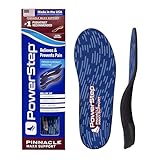
- Slightly Angled Heel Post: PowerStep Pinnacle Maxx insoles for men & women keep the feet from rolling inward, improve stability, and prevent problems caused by overpronation including flat feet and plantar fasciitis.
- Firm But Flexible Design: Our orthotics Pinnacle PowerStep insoles for overpronation are equipped with a deep heel insert cradle for increased comfort, stability, and motion control for standard arch support and immediate heel pain relief.
- Premium Dual Layer Cushioning: For enhanced comfort from heel to toe. As the thickest of our Pinnacle PowerStep orthotics, these need to be worn in shoes where the factory insole can be removed. HSA & FSA Eligible. Made in the USA
- The Perfect Balance of Comfort and Support: These PowerStep Pinnacle arch support inserts for men & women are unlike most other orthotics as they help to correct over-pronation which can cause ankle, knee, and hip pain in your daily routine
- No Trimming: Our arch support PowerStep insoles men & women can use can be worn in a variety of shoe styles & fit in any type with no trimming required! Unlike most insoles for flat feet and other heel pain relief products, these come ready to wear.
As an Amazon Associate, Balance Foot and Ankle earns from qualifying purchases. Product links are affiliate links and we may earn a commission at no extra cost to you. This does not influence our clinical recommendations. Last update on 2026-09-20 / Images from Amazon Product Advertising API
Same-day appointments available. Call (810) 206-1402 or book online.
In-Office Treatment at Balance Foot & Ankle
If home treatment isn’t providing relief for your plantar fasciitis, our podiatry team at Balance Foot & Ankle can help with same-day evaluations and advanced in-office care.
Doctor Hoy’s Natural Pain Relief Gel
Natural topical pain relief I use in our clinic. Arnica + camphor formula — apply directly to the area 3–4x daily. ($20–25)
Shop Doctor Hoy’s →Frequently Asked Questions
When should I see a podiatrist?
If symptoms persist past 2 weeks, affect your normal activity, or are accompanied by red-flag symptoms (warmth, redness, swelling, inability to bear weight).
What does treatment cost?
Most diagnostic visits and conservative treatments are covered by Medicare and major insurers. Out-of-pocket costs vary by your specific plan.
How quickly can I get an appointment?
Most non-urgent cases see us within 5 business days. Urgent cases (sudden pain, possible fracture) typically same or next business day.
What is Plantar fasciitis?
Plantar fasciitis is a common foot/ankle condition that affects mobility and quality of life. Understanding the underlying cause is the first step in successful treatment. Our podiatrists at Balance Foot & Ankle perform a hands-on biomechanical exam, review your activity history, and use diagnostic imaging when appropriate to identify the root cause—not just treat the symptom. Many patients have been told to “rest and ice” without a deeper diagnostic workup; our approach is different.
Symptoms and warning signs
Common signs of plantar fasciitis include pain that worsens with activity, morning stiffness, swelling, tenderness when palpated, and difficulty bearing weight. If you experience sudden severe pain, inability to walk, visible deformity, numbness or color change, contact our office the same day or visit urgent care—these can signal a more serious injury such as a fracture, tendon rupture, or vascular compromise. Diabetics with any foot wound should seek same-day care.
Conservative treatment options
Most cases of plantar fasciitis respond to non-surgical care: structured rest, supportive footwear changes, custom orthotics, targeted stretching and strengthening protocols, anti-inflammatory medications when medically appropriate, and in-office procedures such as ultrasound-guided injections. We also offer advanced therapies including MLS laser therapy, EPAT/shockwave, regenerative injections, and image-guided procedures. Treatment is sequenced from least invasive to most invasive, and we explain the rationale at every step.
When is surgery considered?
Surgery is reserved for cases that fail 3-6 months of well-structured conservative care, when there is structural pathology (severe deformity, complete tear, advanced arthritis), or when imaging shows damage that will not heal without intervention. Our surgeons have performed 3,000+ foot and ankle procedures and prioritize minimally-invasive techniques whenever appropriate. We discuss recovery timelines, return-to-activity milestones, and realistic outcome expectations before any procedure is scheduled.
Recovery timeline and prevention
Recovery from plantar fasciitis varies based on severity and chosen treatment path. Conservative cases often improve within 4-8 weeks with consistent adherence to the protocol. Post-procedural recovery may range from a few days (in-office procedures) to several months (reconstructive surgery). Long-term prevention involves footwear assessment, activity modification, structured strengthening, and regular check-ins with your podiatrist if you have a history of recurrence. We provide written home-exercise plans and digital follow-up support.
Ready to feel better?
Same-week appointments available in Howell and Bloomfield Township, Michigan.
Book Your VisitWhat are the best slip-on shoes for plantar fasciitis?
The best slip-ons for plantar fasciitis combine a firm, supportive footbed with a cushioned midsole and a secure fit — avoiding the floppy, unsupported construction of most flat slip-ons. Top podiatrist-recommended options include the OOFOS OOmg (rocker-bottom recovery slide), Birkenstock Boston clog (cork footbed with metatarsal arch support), Skechers GOwalk Joy (memory foam plus arch support), and Vionic slip-ons with built-in orthotic support. Slip-ons are acceptable for plantar fasciitis as long as they don’t require you to grip with your toes — toe-gripping actively strains the plantar fascia.
Do slip-on shoes make plantar fasciitis worse?
Flat, unsupported slip-ons (flip-flops, ballet flats, most clogs without arch support) can worsen plantar fasciitis by providing no heel cushioning, no arch support, and no medial column stability. Many patients unconsciously curl their toes to keep slip-ons on their feet, which increases plantar fascia tension. Supportive slip-ons — those with a contoured footbed, heel cup, and adequate midsole thickness — are generally safe. The distinction isn’t whether a shoe is a slip-on, but whether it provides enough support and structure to reduce fascia strain.
What should I look for in a slip-on shoe for heel pain?
For plantar fasciitis, look for: a heel cup that cradles the calcaneus and prevents excessive heel eversion; a firm, contoured arch support (not just flat padding); a cushioned midsole at least 20 mm thick under the heel; a rocker or curved sole geometry to reduce push-off demand; and a snug enough fit that you don’t need to grip with your toes. Avoid slip-ons with zero heel elevation, as they maximally load the plantar fascia. If your podiatrist has prescribed custom orthotics, choose a slip-on with a deep, removable footbed so the orthotic can be inserted.
For a complete clinical overview: Podiatrist-Recommended Shoes Guide — Dr. Biernacki compares the best slip-on shoes, sandals, and athletic shoes for plantar fasciitis and arch pain at Balance Foot & Ankle.

Dr. Tom Biernacki, DPM is a board-certified foot & ankle surgeon (ABFAS & ABPM) at Balance Foot & Ankle Specialists in Southeast Michigan. With over a decade of clinical experience, he specializes in heel pain, bunions, diabetic foot care, sports injuries, and minimally invasive surgery. Dr. Biernacki is a member of the APMA and ACFAS, and his patient education content on MichiganFootDoctors.com and YouTube has made him one of the most-followed foot & ankle educators on YouTube.