


Quick answer: Foot Skin Disorders affects roughly 1 in 4 adults in our practice. Effective treatment starts with a targeted diagnosis, conservative-first treatment, and escalation only when needed. We treat this regularly at our Howell and Bloomfield Hills practices. Call (810) 206-1402.
Foot Skin Disorders [Dry Skin, Peeling, Hard Skin, Cracks & Cancer]
Do you have foot skin peeling? Dry skin on the feet, hard skin or dead skin on the foot. We also make sure that you don’t have skin cancer!
Foot Calluses vs. Foot Corns vs. Plantar Wart Video:
https://youtu.be/-uCHjVNCElEFoot Skin Disorders:
- Foot Skin Disorders are prevalent.
- They are mainly due to neglect, wearing ill-fitting shoes, and simple wear and tear.
- These Foot Skin Disorders include blisters, bunions, corns and calluses, claws and mallet toes, hammertoes, and toenail fungus.
- But the most common cause is the athlete’s foot.
- Follow our complete guide for handling any foot skin problem, from dry, to itchy, to hard skin and to any bumps that may appear on your foot.
- Get Started NOW!
Foot Skin Problems:
Athlete’s Foot (Foot Fungus)
- The athlete’s foot is a common fungal infection.
- It is called Athlete’s foot since it is commonly seen in athletes.
- Walking barefoot in public places such as locker rooms can cause this infection. This condition is contagious and is sometimes hard to cure.
- This is especially true if the affected person suffers from conditions that weaken the immune system.
- If you have dry, itchy skin on the bottom of your foot, you might have Athlete’s foot.
- Athlete’s Foot Home Remedies. (This link provides a list of suggested home remedies that might improve or even eradicate athlete’s foot)
Dry Cracked Skin
- Skin usually relies on oil-producing glands (sebaceous glands) as a source of moisture.
- However, the skin of the feet relies on sweat glands (eccrine and apocrine glands) and therefore is more prone to dryness.
- Visit this page to find more information about the most common causes of Dry, Cracked Skin and treat this condition at home.
Itchy and Red Skin
- The skin is the largest organ of the body, and it suffers many afflictions.
- The most common affliction being itchiness and irritation. Many factors can cause itchy and red skin.
- The causes can range from allergic contact dermatitis, dry skin to athlete’s foot.
- Visit this page to view a detailed description of the causes and their symptoms, as well as potential treatments.
Callus Foot Pain
- A Callus or Callosity is an area of the skin that has become tough in response to repeated irritations such as pressure and/or friction.
- As a result, calluses can be a cause of foot pain.
- Visit this page to get a detailed overview of the causes of calluses, their treatments, and what you can do to prevent future calluses.
Foot Psoriasis :
- Foot psoriasis is an autoimmune disease characterized by the rapid multiplication of skin cells on the foot and other areas of the body.
- As a result, skin cells build up on the feet and cause the formation of scales and thick white or silver patches that are dry, itchy, and painful.
- Unlike athlete’s foot, fungi do not cause psoriasis.
- Psoriasis is a genetic condition that is not contagious.
Toenail Psoriasis
- Same as foot psoriasis, toenail psoriasis is a genetically inherited autoimmune disease that causes the overproduction of cells and thickening of tissue.
- Toenail psoriasis is not as common as fingernail psoriasis.
- Fungal infection usually causes thickening of toenails, but psoriasis cannot be completely ruled out as a cause of toenail thickening and pain.
Bumps, Lumps, and Nodules:
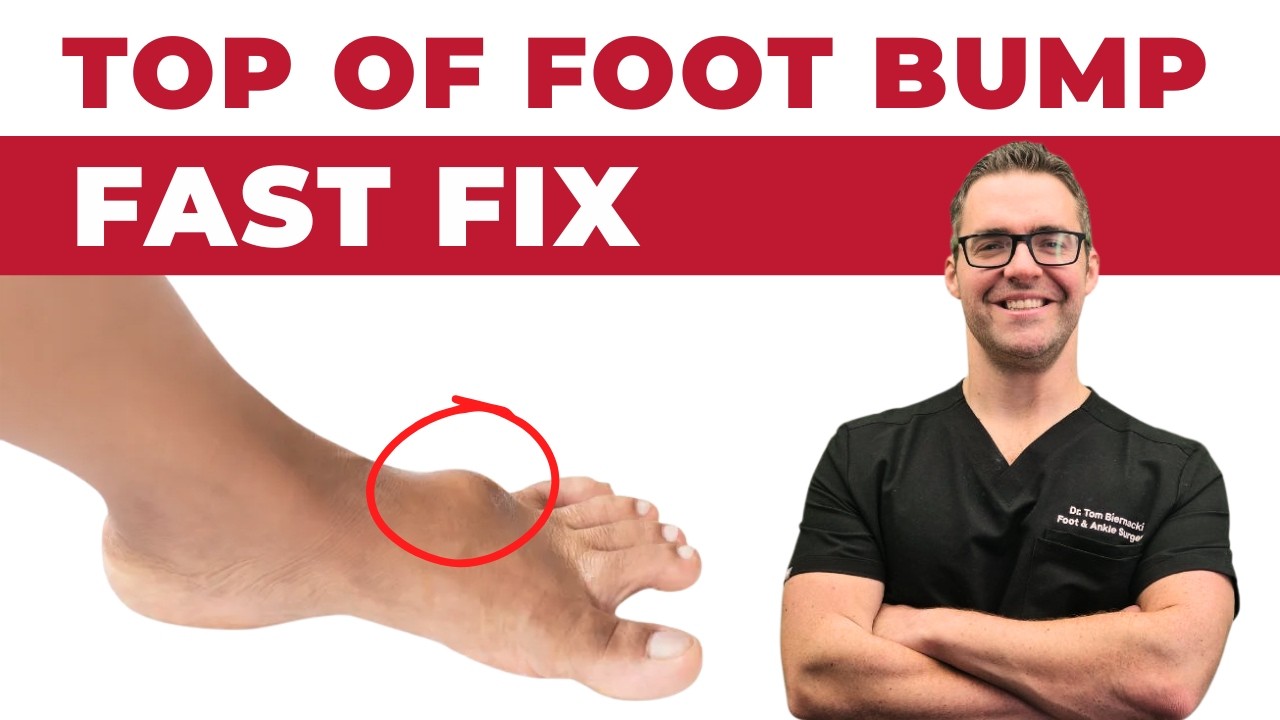
- Foot Corns
- Callus Foot Pain
- Foot Blister
- Foot Warts
- Hard Nodule In Arch
- Psoriasis Around Toenails
- Ganglionic cyst – A Soft Bump
- Lipoma- A Soft Bump
- Toe Osteochondroma
- Throbbing Red Big Toe (Gout).
- Big Toe and Toenail Cancer.
Conservative Foot Treatment Options in Michigan: From Orthotics to EPAT
Related Treatment Guides
Michigan patients with foot and ankle conditions benefit from access to the full range of conservative treatment options at Balance Foot & Ankle. Custom orthotics fabricated from a 3D scan of the patient’s foot provide structural correction for flatfoot, high arch, and biomechanical overload conditions that OTC insoles cannot adequately address. EPAT (extracorporeal pulse activation therapy) provides a non-surgical treatment option for plantar fasciitis, Achilles tendinopathy, and other tendon conditions that resist initial conservative care — clinical evidence shows 70-80% cure rates for chronic plantar fasciitis. Ultrasound-guided injection therapy allows precise corticosteroid, PRP, or local anesthetic delivery to specific anatomical targets including the plantar fascia insertion, retrocalcaneal bursa, Morton’s neuroma interspace, and ankle joint. Physical therapy coordination with specific home exercise prescription addresses strength and flexibility deficits that perpetuate foot and ankle conditions. Michigan patients who want conservative treatment options before considering surgery can call Balance Foot & Ankle at (810) 206-1402 for an evaluation at our Howell or Bloomfield Hills office.
Medical References & Sources
- American Podiatric Medical Association — Patient Education
- American Orthopaedic Foot & Ankle Society — Foot Conditions
📧 Get Dr. Tom’s Free Lab Test Guide
Discover the 5 lab tests every person over 35 should ask their doctor about — explained in plain English by a board-certified physician.
📍 Located in Michigan?
Our board-certified podiatrists treat this condition at two convenient locations. Same-day appointments often available.
Dealing With a Foot Skin Disorder?
From fungal infections to dermatitis to psoriasis, our podiatrists diagnose and treat all skin conditions affecting the feet with proven medical treatments.
📞 Or call us directly: (810) 206-1402
Clinical References
- Ely JW, et al. Diagnosis and management of tinea infections. Am Fam Physician. 2014;90(10):702-710.
- Bristow I. Non-ulcerative skin pathologies of the diabetic foot. Diabetes Metab Res Rev. 2008;24(S1):S84-S89.
- Farley E, et al. Palmoplantar psoriasis: a phenotypical and clinical review. J Am Acad Dermatol. 2009;60(6):1024-1031.
Insurance Accepted
BCBS · Medicare · Aetna · Cigna · United Healthcare · HAP · Priority Health · Humana · View All →

Howell Office
4330 E Grand River Ave
Howell, MI 48843
Get Directions →
Bloomfield Hills Office
43494 Woodward Ave, #208
Bloomfield Hills, MI 48302
Get Directions →
Your Board-Certified Podiatrists



Ready to Get Back on Your Feet?
Same-week appointments available at both locations.
Book Your AppointmentPodiatrist-Recommended Products
🏆 Doctor Hoy’s Natural Pain Relief Gel — Our top recommendation for reducing foot pain and inflammation naturally. Apply daily to affected areas.
PowerStep Pinnacle Orthotic Insoles — Reduces mechanical stress on the foot structures that cause pain. Physician-grade support in an OTC package.
CURREX Support Insoles — Dynamic arch support available in low, medium, and high arch profiles for a personalized fit.
Dr. Tom’s Foot Skin Health Product Protocol
- FLAT SOCKS No-Sock Insoles — Antimicrobial FLAT SOCKS inserts: create a moisture-wicking barrier that reduces the environment for athlete’s foot, pitted keratolysis, and contact dermatitis.
- Doctor Hoy’s Natural Pain Relief Gel — Painful foot skin disorders (fissures, inflamed athlete’s foot): arnica + camphor gel applied around (not over) open lesions for perilesional pain relief.
- Plantar Fasciitis Compression Socks — Foot skin disorders with lower leg swelling: compression reduces the venous insufficiency that causes skin changes like lipodermatosclerosis.
Foot skin disorder not responding to OTC treatment after 2 weeks? Prescription antifungals, antibiotics, and dermatologic referrals available. Same-day evaluation → (810) 206-1402
In-Office Treatment at Balance Foot & Ankle
If home treatment isn’t providing relief for your foot condition, our podiatry team at Balance Foot & Ankle can help with same-day evaluations and advanced in-office care.
Frequently Asked Questions
When should I see a podiatrist?
If symptoms persist past 2 weeks, affect your normal activity, or are accompanied by red-flag symptoms (warmth, redness, swelling, inability to bear weight).
What does treatment cost?
Most diagnostic visits and conservative treatments are covered by Medicare and major insurers. Out-of-pocket costs vary by your specific plan.
How quickly can I get an appointment?
Most non-urgent cases see us within 5 business days. Urgent cases (sudden pain, possible fracture) typically same or next business day.
What is Foot pain?
Foot pain is a common foot/ankle condition that affects mobility and quality of life. Understanding the underlying cause is the first step in successful treatment. Our podiatrists at Balance Foot & Ankle perform a hands-on biomechanical exam, review your activity history, and use diagnostic imaging when appropriate to identify the root cause—not just treat the symptom. Many patients have been told to “rest and ice” without a deeper diagnostic workup; our approach is different.
Symptoms and warning signs
Common signs of foot pain include pain that worsens with activity, morning stiffness, swelling, tenderness when palpated, and difficulty bearing weight. If you experience sudden severe pain, inability to walk, visible deformity, numbness or color change, contact our office the same day or visit urgent care—these can signal a more serious injury such as a fracture, tendon rupture, or vascular compromise. Diabetics with any foot wound should seek same-day care.
Conservative treatment options
Most cases of foot pain respond to non-surgical care: structured rest, supportive footwear changes, custom orthotics, targeted stretching and strengthening protocols, anti-inflammatory medications when medically appropriate, and in-office procedures such as ultrasound-guided injections. We also offer advanced therapies including MLS laser therapy, EPAT/shockwave, regenerative injections, and image-guided procedures. Treatment is sequenced from least invasive to most invasive, and we explain the rationale at every step.
When is surgery considered?
Surgery is reserved for cases that fail 3-6 months of well-structured conservative care, when there is structural pathology (severe deformity, complete tear, advanced arthritis), or when imaging shows damage that will not heal without intervention. Our surgeons have performed 3,000+ foot and ankle procedures and prioritize minimally-invasive techniques whenever appropriate. We discuss recovery timelines, return-to-activity milestones, and realistic outcome expectations before any procedure is scheduled.
Recovery timeline and prevention
Recovery from foot pain varies based on severity and chosen treatment path. Conservative cases often improve within 4-8 weeks with consistent adherence to the protocol. Post-procedural recovery may range from a few days (in-office procedures) to several months (reconstructive surgery). Long-term prevention involves footwear assessment, activity modification, structured strengthening, and regular check-ins with your podiatrist if you have a history of recurrence. We provide written home-exercise plans and digital follow-up support.
Ready to feel better?
Same-week appointments available in Howell and Bloomfield Hills, Michigan.
Book Your VisitGet Expert Care at Balance Foot & Ankle
Same-week appointments at our Howell and Bloomfield Hills offices. Board-certified podiatric surgeons. Most insurance accepted.

Dr. Tom Biernacki, DPM is a board-certified foot & ankle surgeon (ABFAS & ABPM) at Balance Foot & Ankle Specialists in Southeast Michigan. With over a decade of clinical experience, he specializes in heel pain, bunions, diabetic foot care, sports injuries, and minimally invasive surgery. Dr. Biernacki is a member of the APMA and ACFAS, and his patient education content on MichiganFootDoctors.com and YouTube has made him one of the most-followed foot & ankle educators on YouTube.