
The most important clinical decision with Hammertoe Surgery Procedures Recovery isn’t which treatment to start with — it’s identifying the correct subtype. That changes everything. Call (810) 206-1402.
Dr. Tom’s Top Bob and Brad Massage Guns (2026)
Medically reviewed by Dr. Tom Biernacki, DPM
Board-certified podiatric surgeon | Balance Foot & Ankle
Last reviewed: May 2026
Affiliate disclosure: As an Amazon Associate, Balance Foot & Ankle earns from qualifying purchases. Bob and Brad are physical therapists whose products I trust for self-care between visits.
Dr. Tom’s Top Pain Relief Picks — Dr. Hoy’s (2026)
Affiliate disclosure: As an Amazon Associate, Balance Foot & Ankle earns from qualifying purchases. I personally use Dr. Hoy’s in my practice for patients who need topical relief.
| Product | Best For | Dr. Tom’s Take | Get It |
|---|---|---|---|
| Dr. Hoy’s Natural Pain Relief Gel 3.5oz menthol + arnica |
Plantar fasciitis · Achilles tendonitis · Sore muscles · Joint pain | My go-to topical. Cooling-then-warming sensation. No greasy residue. Non-NSAID alternative. | Buy Now |
| Dr. Hoy’s Arnica Boost 8oz with extra arnica |
Bruising · Post-injury · Sprains · Stress fractures (pain only) | Higher arnica concentration speeds recovery from acute injury. Use 4x daily for first 7 days. | Buy Now |
| Dr. Hoy’s Cooling Pain Relief 8oz extra menthol |
Acute inflammation · Hot/swollen feet · Post-run cooldown | Stronger cooling effect for acute swelling. Pair with ice for first 48 hours after injury. | Buy Now |
| Dr. Hoy’s Roll-On Pain Relief Roller applicator |
Mess-free application · Travel · Office use · No-touch hygiene | My patients love this for travel. Glides on without hand contact — cleanest application available. | Buy Now |
| Dr. Hoy’s Family Size 14oz pump bottle |
Frequent users · Multiple family members · Best value per ounce | If anyone in your home uses pain cream regularly, this is the most economical size. Same formula. | Buy Now |
Why I recommend Dr. Hoy’s over Doctor Hoy’s Natural Pain Relief Gel and Bengay: Cleaner ingredient list (no parabens, no synthetic dyes), longer-lasting effect, and the cooling-then-warming dual sensation actually addresses both inflammation and circulation. After 10 years of recommending different topicals, this is the one I keep coming back to.
Related Conditions
Quick Answer
Hammertoe Surgery: Procedures, Recovery, and What to Expect relates to toe deformity — typically caused by imbalanced muscles + footwear. Most patients improve in depends on severity with conservative care. Same-week appointments in Howell + Bloomfield Township: (810) 206-1402.
Quick Answer
Hammertoe is an abnormal bend at the middle joint of the toe that can become fixed over time. Flexible hammertoes respond to toe pads, splints, and roomier shoes. Rigid hammertoes that are causing corns or pain often require surgical straightening.
Watch: Dr. Tom Biernacki, DPM
✅ Medically reviewed by Dr. Tom Biernacki, DPM — Board-Certified Podiatrist · Last updated April 6, 2026
Hammertoe Surgery: Procedures, Recovery, and What to Expect
What Is Hammertoe Surgery?
Hammertoe surgery corrects a toe that has become permanently bent at one or more joints, typically due to muscle imbalance, tight footwear, or underlying biomechanical problems. When conservative measures such as padding, splinting, wider shoes, and physical therapy fail to relieve pain or the deformity becomes rigid and fixed, surgery offers a reliable path to correction.
Flexible vs. Rigid Hammertoes
A flexible hammertoe can still be straightened manually — it is not fixed in position. Conservative treatment is usually tried first because some flexible hammertoes respond to stretching, different footwear, and functional orthotics. A rigid hammertoe is permanently contracted and cannot be straightened without surgical intervention. Surgery is the only correction for rigid deformities.
Surgical Techniques
The most common procedure for a hammertoe is a proximal interphalangeal (PIP) joint arthroplasty, where a small section of bone is removed from the bent joint to allow the toe to lie flat. The joint is held in the corrected position while it heals, typically with a small pin (K-wire) that exits through the tip of the toe and is removed in the office 3 to 5 weeks later.
An alternative is PIP joint fusion (arthrodesis), which permanently fuses the joint in a straight position. Fusion provides more durable correction and is often preferred for recurrent hammertoes or in patients with poor soft tissue. Instead of a pin, a small buried implant may be used, avoiding the discomfort and care requirements of an external pin.
Tendon lengthening and tendon transfer procedures address the underlying muscle imbalance, particularly in flexible hammertoes or when multiple toes are affected. The flexor-to-extensor tendon transfer redirects a pulling tendon to straighten the toe actively.
What to Expect During Recovery
Hammertoe surgery is performed as an outpatient procedure under local anesthesia with or without light sedation. Most patients walk the same day in a post-operative shoe that protects the toe. The operated toe will be swollen, bruised, and stiff initially. Swelling can persist for several months — sausage-like swelling of the toe for 3 to 6 months is normal.
If a K-wire pin was used, pin care — keeping the site clean and dry — is required until removal. Most patients return to comfortable shoes by 6 to 8 weeks, though full recovery including resolution of swelling takes 3 to 6 months.
Risks and Realistic Expectations
Potential complications include infection, floating or floppy toe (a toe that is straight but does not bear weight normally), recurrence of deformity if the underlying biomechanical cause is not addressed, numbness or tingling, and hardware complications. A fully normal-feeling toe post-surgery is not always achievable — the goal is a functional, pain-free toe in a corrected position.
Addressing Multiple Hammertoes
It is common and efficient to correct multiple hammertoes in a single operative session. Your surgeon will discuss the order of correction and whether combining hammertoe repair with other procedures such as bunion correction or metatarsal shortening is appropriate given your specific anatomy.
When to Consider Surgery
Hammertoe surgery makes sense when the deformity causes persistent corns or calluses that develop despite padding, when the toe causes pain with any shoe, when the deformity is progressing, or when the bent toe is creating pressure on adjacent toes. Discussing the specific procedure, hardware approach, and long-term outcomes with a board-certified podiatrist or foot and ankle surgeon helps ensure the right choice for your situation.
Hammertoe Surgery: What to Expect on the Day of Procedure
Hammertoe surgery is performed as an outpatient procedure, typically under local anesthesia with sedation (twilight anesthesia) or regional nerve block — general anesthesia is rarely required. The surgical site is anesthetized with a digital block or ankle block injection, and most patients report feeling pressure but no pain during the procedure. For a straightforward proximal interphalangeal joint arthroplasty, the procedure takes approximately 15–30 minutes per toe. Patients go home within 1–2 hours of arriving.
The operated foot will be bandaged in a specific position immediately after surgery. Most patients are placed in a surgical sandal or post-operative shoe with a flat, stiff sole that allows heel-weight-bearing while the toe heals. Crutches are occasionally needed for the first few days if multiple toes were corrected simultaneously. Swelling and bruising are expected and typically peak at 2–3 days post-operatively. Keeping the foot elevated above heart level for the first 72 hours dramatically reduces post-operative swelling and discomfort.
Long-Term Outcomes and Hammertoe Recurrence
Patient satisfaction after hammertoe surgery is generally high — most patients report significant reduction in pain and improved ability to wear regular shoes within 6–8 weeks. However, the underlying causes of hammertoe formation (tight intrinsic muscles, abnormal metatarsal length, adjacent bunion deformity) are not always fully correctable, and recurrence of flexible deformity is a recognized long-term risk. Addressing contributing factors — bunion correction when present, custom orthotics to normalize forefoot biomechanics, and transition to wider footwear — reduces recurrence risk significantly. At Balance Foot & Ankle in Howell and Bloomfield Township, we evaluate the complete mechanical picture before recommending hammertoe surgery, optimizing both immediate correction and long-term durability.
Related Treatment Guides
- Custom Orthotics & Footwear
- Plantar Fasciitis & Heel Pain Treatment
- Sports Foot & Ankle Injury Treatment
- Bunion Treatment
Michigan patients experiencing foot or ankle problems can schedule an appointment at Balance Foot & Ankle — with locations in Howell (4330 E Grand River) and Bloomfield Township (43494 Woodward Ave #208). Call (810) 206-1402 for same-week availability.
Insurance Accepted
BCBS · Medicare · Aetna · Cigna · United Healthcare · HAP · Priority Health · Humana · View All →
Howell Office
4330 E Grand River Ave
Howell, MI 48843
Get Directions →
Bloomfield Township Office
43494 Woodward Ave, #208
Bloomfield Township, MI 48302
Get Directions →
Your Board-Certified Podiatrists



Ready to Get Back on Your Feet?
Same-week appointments available at both locations.
In-Office Treatment at Balance Foot & Ankle
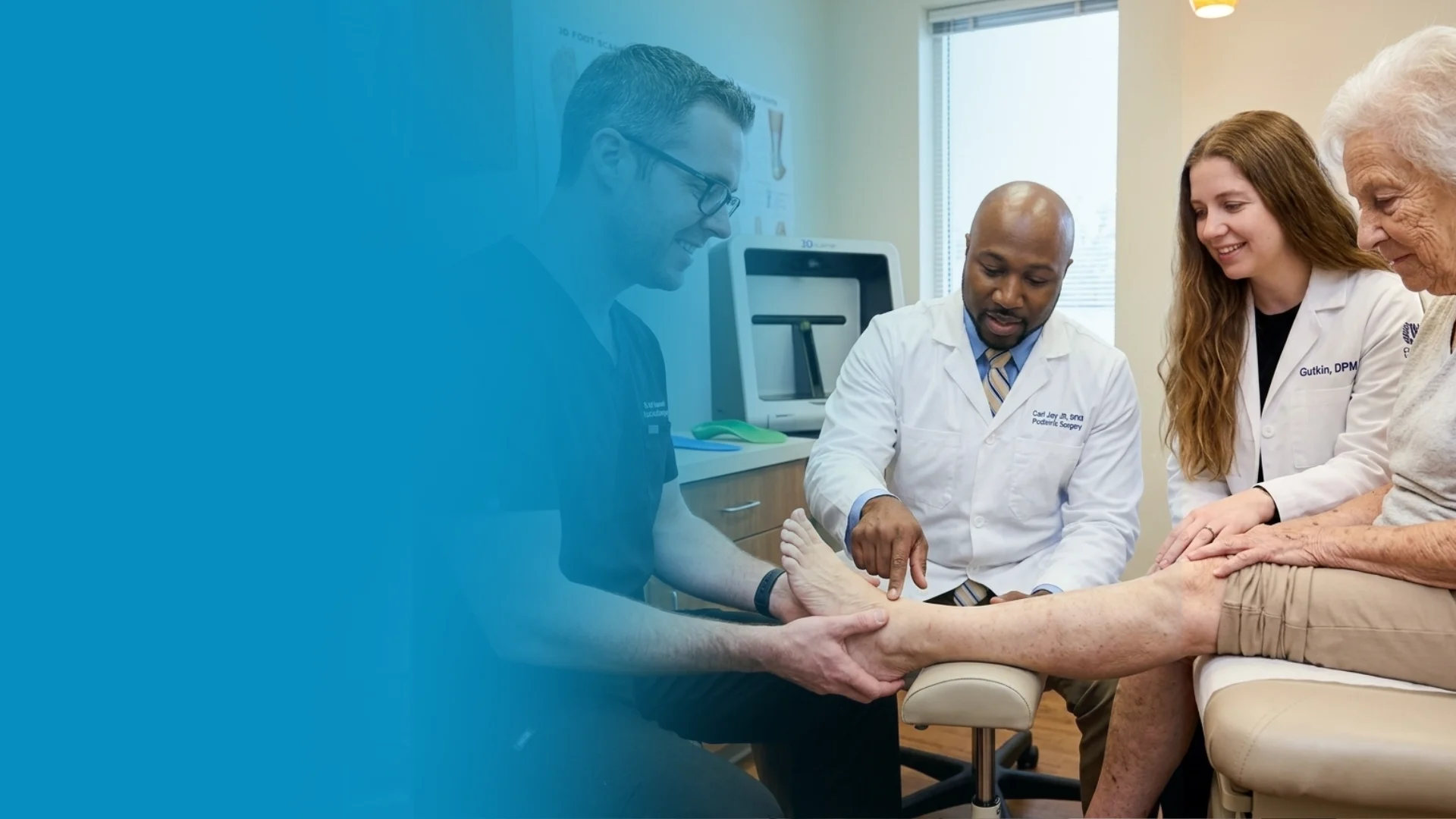
If home care isn’t resolving your hammertoe, a visit with a board-certified podiatrist is the fastest path to accurate diagnosis and a personalized plan. At Balance Foot & Ankle Specialists, Dr. Tom Biernacki, Dr. Carl Jay, and Dr. Daria Gutkin offer same-day and next-day appointments at both our Howell and Bloomfield Township offices. We perform on-site diagnostic ultrasound, digital X-ray, conservative care, advanced regenerative treatments, and minimally invasive surgery when indicated.
Call (810) 206-1402 or request an appointment online. Most insurance plans accepted, including Medicare, Blue Cross Blue Shield, Aetna, Cigna, and United Healthcare.
Differential Diagnosis: What Else Could It Be?
Several conditions share symptoms with Hammertoe and are commonly misdiagnosed in the first office visit. Considering these alternatives is part of every Balance Foot & Ankle exam:
- Mallet toe. Bend at the distal joint only (DIP), not the middle joint.
- Claw toe. Both joints (PIP + DIP) bent — usually multiple toes, often diabetic.
- Crossover toe (2nd MTP). Drift across the big toe — often plantar plate tear underneath.
If your symptoms don’t fit the textbook pattern, ask your podiatrist which differentials they ruled out — that conversation often shortcuts months of trial-and-error treatment.
In Our Clinic
Hammertoes come to our clinic in two flavors: flexible (the toe still passively straightens) and rigid (it doesn’t). For flexible hammertoes we use gel toe crests, roomier toe boxes, custom orthotics to address the underlying instability, and sometimes night splints. Rigid hammertoes with a corn on top of the PIP joint, or a callus under the metatarsal head, usually need a minor outpatient procedure (PIP arthroplasty or fusion) to straighten the toe. The patients who wait too long develop fixed deformities and skin breakdown — we would much rather address a flexible hammertoe early.
Most Common Mistake We See
The most common mistake we see is: Cutting corns at home with scissors or razors. Fix: professional podiatric enucleation with sterile instruments prevents infection and recurrence.
Warning Signs That Need Same-Day Care
Seek immediate evaluation at Balance Foot & Ankle if you experience any of the following:
- Open wound under the bent toe
- Inability to straighten the toe even passively
- Diabetic skin breakdown at the toe joint
- Cold or blue discolouration of the toe
Call (810) 206-1402 — same-day and next-day appointments at our Howell and Bloomfield Township offices.
Pros & Cons of Conservative Care for foot care
Advantages
- ✓ Conservative care first
- ✓ Same-week appointments
- ✓ Multiple insurance accepted
Considerations
- ✗ Self-treatment can mask issues
- ✗ See a podiatrist if pain >2 weeks
In This Article
- Quick Answer
- In-Office Treatment at Balance Foot & Ankle
- Differential Diagnosis: What Else Could It Be?
Several conditions share symptoms with Hammertoe and are commonly misdiagnosed in the first office visit. Considering these alternatives is part of every Balance Foot & Ankle exam:Mallet toe. Bend at the distal joint only (DIP), not the middle joint.
Claw toe. Both joints (PIP + DIP) bent — usually multiple toes, often diabetic.
Crossover toe (2nd MTP). Drift across the big toe — often plantar plate tear underneath.If your symptoms don’t fit the textbook pattern, ask your podiatrist which differentials they ruled out — that conversation often shortcuts months of trial-and-error treatment.
In Our Clinic
Hammertoes come to our clinic in two flavors: flexible (the toe still passively straightens) and rigid (it doesn’t). For flexible hammertoes we use gel toe crests, roomier toe boxes, custom orthotics to address the underlying instability, and sometimes night splints. Rigid hammertoes with a corn on top of the PIP joint, or a callus under the metatarsal head, usually need a minor outpatient procedure (PIP arthroplasty or fusion) to straighten the toe. The patients who wait too long develop fixed deformities and skin breakdown — we would much rather address a flexible hammertoe early.Most Common Mistake We See
- Warning Signs That Need Same-Day Care
Dr. Tom’s Recommended Products for foot care
Affiliate disclosure: As an Amazon Associate, Balance Foot & Ankle earns from qualifying purchases. We only recommend products we use with patients.
Footnanny Heel Cream Dr. Tom’s Pick
Best for: Daily moisturizer for cracked heels
Ready to Get Back on Your Feet?
Same-day appointments in Howell + Bloomfield Township. Most insurance accepted. Dr. Tom Biernacki, DPM & team.
Book Today — Same-Day Appointments Available
Call Now: (810) 206-1402
About Your Care Team at Balance Foot & Ankle
Dr. Tom Biernacki, DPM · Board-Certified Foot & Ankle Surgeon. Specializes in conservative-first care, minimally invasive bunion surgery, and complex reconstruction.
Dr. Carl Jay, DPM · Accepting new patients. Specializes in sports medicine, athletic injuries, and routine podiatric care.
Dr. Daria Gutkin, DPM, AACFAS · Accepting new patients. Specializes in surgical reconstruction and pediatric podiatry.
Locations: 4330 E Grand River Ave, Howell, MI 48843 · 43494 Woodward Ave Suite 208, Bloomfield Township, MI 48302
Hours: Mon–Fri 8:00 AM – 5:00 PM · (810) 206-1402

Dr. Tom Biernacki, DPM is a board-certified foot & ankle surgeon (ABFAS & ABPM) at Balance Foot & Ankle Specialists in Southeast Michigan. With over a decade of clinical experience, he specializes in heel pain, bunions, diabetic foot care, sports injuries, and minimally invasive surgery. Dr. Biernacki is a member of the APMA and ACFAS, and his patient education content on MichiganFootDoctors.com and YouTube has made him one of the most-followed foot & ankle educators on YouTube.
More questions patients ask
What is a hammertoe?
A hammertoe is a deformity where the toe bends abnormally at the middle joint, creating a hammer-like appearance. It typically affects the second through fifth toes and results from muscle imbalance, tight shoes, genetics, or underlying conditions like arthritis. Without treatment, flexible hammertoes become rigid and may require surgical correction. Dr. Biernacki offers both conservative and surgical treatment options.
Can hammertoes be fixed without surgery?
Flexible hammertoes (those that can still be straightened manually) often respond to conservative treatment including toe splints, padding, shoe modifications, custom orthotics, and stretching exercises. Once a hammertoe becomes rigid, surgery may be necessary. Early intervention provides the best outcomes for non-surgical management.
What does hammertoe surgery involve?
Modern hammertoe correction typically involves a minimally invasive approach where Dr. Biernacki releases the contracted tendon and removes a small bone segment through a tiny incision. Recovery involves wearing a surgical shoe for 3-4 weeks with most patients returning to regular shoes within 6 weeks. Success rates exceed 90% with low recurrence rates.
Still have a question about coverage or cost? Book online and we will check your benefits before your visit: Book in Howell · Book in Bloomfield Township. Prefer to talk it through first? Call (810) 206-1402.