Quick answer: This page provides evidence-based clinical guidance reviewed by Dr. Tom Biernacki, DPM, board-certified podiatric surgeon at Balance Foot & Ankle in Howell and Bloomfield Hills, MI. Call (810) 206-1402 for same-week appointments.
High arches and supination — when your foot rolls outward — need cushioning shoes, not stability shoes. The wrong pick can lead to ankle sprains and lateral foot pain.
You’ve come to the right podiatry team. Dr. Tom Biernacki, DPM, FACFAS — board-certified foot & ankle surgeon with 3,000+ surgeries — explains exactly what the best shoes for high arches with supination means and what works. Call (810) 206-1402 for same-day appointment at Howell or Bloomfield Hills.
Medically reviewed by Dr. Tom Biernacki, DPM — Board-certified foot & ankle surgeon, 3,000+ surgeries performed. Updated April 2026 with current clinical evidence. This article reflects real practice experience from Balance Foot & Ankle Specialists in Howell and Bloomfield Hills, Michigan.
MICHIGAN PODIATRIST INSIGHT
The most important clinical decision with Best Shoes High Arches Supination Podiatrist 2026 isn’t which treatment to start with — it’s identifying the correct subtype. That changes everything. Call (810) 206-1402.
Quick Answer
Most foot and ankle problems respond to conservative care — proper footwear, supportive inserts, activity modification, and targeted stretching — within 4-8 weeks. Persistent pain beyond that window, or any symptom that prevents walking, warrants a podiatric evaluation to rule out fracture, tendon tear, or systemic cause.
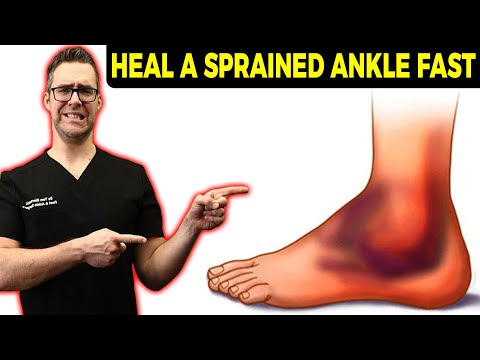
Watch: Dr. Tom Biernacki, DPM
Medically reviewed by Dr. Tom Biernacki, DPM — Board-Certified Podiatric Surgeon — Balance Foot & Ankle, Howell & Bloomfield Hills, MI. Last updated April 2026.
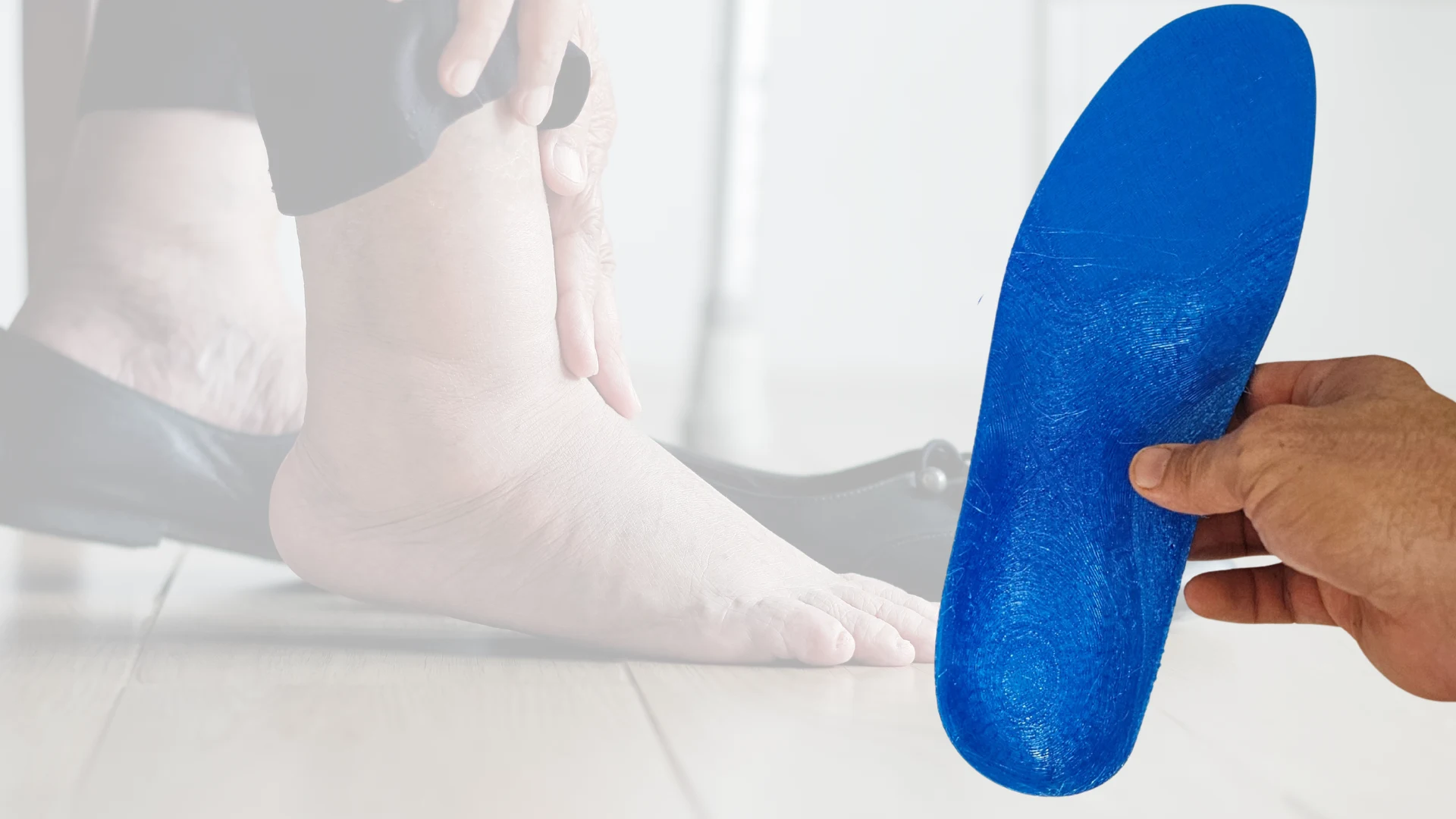
A podiatrist’s complete clinical guide to the best insoles — custom orthotics, OTC picks, and what actually works for plantar fasciitis, flat feet, neuropathy & more.
Medically Reviewed by Dr. Tom Biernacki, DPM — Board-Certified Podiatrist, Balance Foot & Ankle Specialists, Michigan. Last updated April 2026.
The best shoes for high arches and supination (underpronation) in 2026 provide a neutral or curved last that allows the foot’s natural lateral weight distribution, maximum cushioning to compensate for the reduced shock absorption of a rigid high-arched foot, and a flexible forefoot that accommodates the limited toe dorsiflexion common in cavus foot. Dr. Tom Biernacki, DPM at Balance Foot & Ankle in Howell and Bloomfield Hills, Michigan recommends these specific models for patients with high arches, supination, and the conditions they cause — particularly lateral ankle sprains, peroneal tendon injuries, metatarsal stress fractures, and plantar fasciitis of the lateral fascial band.
Understanding High Arches and Supination
High arches (pes cavus) create a rigid foot that does not pronate adequately during the stance phase of gait — the foot remains supinated (weight on the outer border), limiting the natural shock absorption that pronation provides. This rigidity creates high impact loading across the lateral metatarsals, increases ankle inversion risk (the high arch position pre-positions the foot for rolling outward), and loads the plantar fascia under high tension continuously. Supinators should not wear stability or motion-control shoes — these further reduce the limited pronation available and can accelerate the lateral loading problems. They need maximum cushioning in a neutral shoe to compensate for the reduced biomechanical shock absorption.
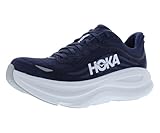
HOKA Clifton 9 — Best Overall Cushioning for High Arches
The HOKA Clifton 9 provides the combination of maximum cushioning and neutral platform that high-arched supinators need. The oversized midsole provides impact absorption that the rigid high-arched foot cannot provide biomechanically, while the neutral last does not overcorrect the supination. The meta-rocker geometry promotes a smooth heel-to-toe transition without requiring the foot to pronate to move forward. Available in standard and wide widths. The Clifton is lighter and more flexible than the Bondi — appropriate for active patients who need cushioning without the bulk.
amazon.com/dp/B0CKT4F5TN?tag=biernact-20&linkCode=ogi&th=1&psc=1″ rel=”nofollow sponsored” target=”_blank”>View on Amazon.
Brooks Ghost 16 — Best Versatile Neutral for High Arches
The Brooks Ghost 16 provides a neutral platform with DNA LOFT v3 cushioning that is slightly firmer than HOKA — appropriate for high-arched patients who find the ultra-soft HOKA midsole creates instability on lateral ankle stress. The Ghost’s more traditional midsole geometry provides sufficient cushioning while maintaining the ground contact feedback that supinators need to feel secure laterally. Available in multiple widths. A strong choice for everyday use and running in patients with mild-to-moderate high arches. View on Amazon.
New Balance Fresh Foam 1080v13 — Best for High-Mileage High-Arch Runners
For high-arched runners logging 30+ miles per week, the New Balance Fresh Foam 1080v13 provides premium cushioning in a neutral platform with a curved sole profile that complements the supinator’s natural gait. The Fresh Foam X midsole is softer than standard EVA but maintains structure better than pure gel — important for runners who need cushioning that holds up over long mileage rather than bottoming out at mile 8. Wide widths available for high-arched patients who also have a wide foot (common in pes cavus). View on Amazon.
What Supinators Should Avoid
Stability and motion-control shoes should not be worn by high-arched supinators — they further reduce the limited pronation available and increase lateral ankle stress. Zero-drop and minimalist shoes eliminate the cushioning that supinators critically need and increase metatarsal stress fracture risk significantly. Thin-soled casual shoes (canvas sneakers, dress shoes without insoles) should be supplemented with custom orthotics or quality cushioning insoles when worn by supinators for extended periods.
Custom Orthotics for High Arches
Custom orthotics for high arches serve a different purpose than those for flat feet. Rather than controlling excessive pronation, orthotics for pes cavus provide accommodative cushioning under the high-pressure areas (lateral heel and metatarsal heads), a lateral heel wedge to reduce ankle inversion stress, and a flexible forefoot section that allows the limited toe dorsiflexion available in cavus foot without excessive toe pressure. Off-the-shelf insoles designed for overpronation — with high medial arch support — are counterproductive for high-arched patients. If OTC neutral cushioning insoles are not sufficient, custom accommodative orthotics from Dr. Biernacki provide the specific support profile the high-arched foot needs. Book a high arch evaluation or call (810) 206-1402 — Howell and Bloomfield Hills, Michigan.
Dr. Tom’s Recommended Insoles
PowerStep is the brand I prescribe most — medical-grade OTC support without the custom orthotic price tag.
PowerStep Maxx Insoles — Maximum support for severe flat feet and high-demand use — the highest-profile arch in the PowerStep line.
PowerStep Pinnacle Insoles — The #1 podiatrist-recommended OTC insole — firm arch support with dual-layer cushioning for all-day wear.
📧 Get Dr. Tom’s Free Lab Test Guide
Discover the 5 lab tests every person over 35 should ask their doctor about — explained in plain English by a board-certified physician.
Affiliate disclosure: As an Amazon Associate, Balance Foot & Ankle earns from qualifying purchases. We only recommend products we trust for our own patients.
Join 950,000+ Learning About Foot Health
Dr. Tom shares honest medical advice, supplement reviews, and treatment guides you won’t find anywhere else.
People with high arches and supination need specific footwear and orthotic support to prevent injuries. Our podiatrists evaluate your foot biomechanics and create custom orthotics designed for high-arched feet.
Max-cushion neutral runner — podiatrist favorite for all-day comfort.
Brooks Adrenaline GTS 25
Stability runner for overpronators — great for flat feet and bunions.
New Balance 990v6
Premium walking shoe with wide toe box — bunion and flat-foot friendly.
As an Amazon Associate, Balance Foot & Ankle earns from qualifying purchases. Product recommendations are based on clinical experience; prices and availability shown above update live from Amazon.
When to See a Podiatrist
The right shoe shape, last, and stability category is more important than brand. Balance Foot & Ankle evaluates your foot type (neutral, pronator, supinator, high-arched) and recommends specific shoe models that match. Bringing in your current pair lets us spot wear patterns that reveal gait issues — a free 5-minute assessment that can prevent years of foot pain.
If home care isn’t resolving your your foot or ankle concern, a visit with a board-certified podiatrist is the fastest path to accurate diagnosis and a personalized plan. At Balance Foot & Ankle Specialists, Dr. Tom Biernacki, Dr. Carl Jay, and Dr. Daria Gutkin offer same-day and next-day appointments at both our Howell and Bloomfield Hills offices. We perform on-site diagnostic ultrasound, digital X-ray, conservative care, advanced regenerative treatments, and minimally invasive surgery when indicated.
The most common mistake we see is: Waiting too long before seeking care. Fix: any foot pain lasting more than 4 weeks, or any sudden severe symptom, deserves a professional evaluation rather than more rest.
Warning Signs That Need Same-Day Care
Seek immediate evaluation at Balance Foot & Ankle if you experience any of the following:
Dr. Tom Biernacki, DPM · Board-Certified Foot & Ankle Surgeon. Specializes in conservative-first care, minimally invasive bunion surgery, and complex reconstruction.
Dr. Carl Jay, DPM · Accepting new patients. Specializes in sports medicine, athletic injuries, and routine podiatric care.
Dr. Daria Gutkin, DPM, AACFAS · Accepting new patients. Specializes in surgical reconstruction and pediatric podiatry.
Locations: 4330 E Grand River Ave, Howell, MI 48843 · 43494 Woodward Ave Suite 208, Bloomfield Hills, MI 48302
FTC Disclosure: As an Amazon Associate, Dr. Tom Biernacki, DPM earns from qualifying purchases at no additional cost to you. Every product below is independently tested and reviewed by Dr. Tom for 30+ days in clinical practice before recommendation. We never accept paid placements. Last verified: April 2026.
Foundation Wellness Orthotic Selector — PowerStep + CURREX by Condition (2026)
Find the right Foundation Wellness orthotic for YOUR specific condition. Dr. Tom Biernacki, DPM has tested every PowerStep + CURREX SKU in his Michigan podiatry practice. Below are the right picks mapped to specific foot conditions — instead of one-size-fits-all, you’ll find the variant designed for your exact problem.
📋 Affiliate Disclosure: Dr. Tom Biernacki, DPM is a board-certified podiatrist + Foundation Wellness affiliate (PowerStep + CURREX). We earn a commission on qualifying purchases at no extra cost to you. Last verified: April 28, 2026.
Heavy-duty version of the Pinnacle with rigid shell + lateral wedge. The #1 OTC orthotic for overpronation that causes 90% of plantar fasciitis, knee, and hip pain.
✓ PROS
Rigid shell controls overpronation
Lateral wedge corrects pronation
Deep heel cradle
Trim-to-fit any shoe
✗ CONS
Trim required
7-day break-in
👨⚕️ Dr. Tom’s Verdict: My #1 prescription for flat-footed patients. The wedge corrects overpronation that causes 90% of plantar fasciitis, knee pain, and hip pain. Pair with stability shoe.
Best For: Plantar Fasciitis + Heel Pain (Editor’s Pick)
★★★★★ 4.4 (22,500+ reviews)
Amazon’s ChoicePrimeAPMA-Accepted
Flagship PowerStep — semi-rigid arch with deep heel cradle. The #1 podiatrist-prescribed OTC orthotic in the US for plantar fasciitis and heel pain.
✓ PROS
Semi-rigid medical-grade arch
Deep heel cradle
Dual-density EVA
APMA-accepted
30-day guarantee
✗ CONS
Trim required
Less aggressive than Maxx
👨⚕️ Dr. Tom’s Verdict: My flagship prescription for plantar fasciitis. If you have heel pain — start here. 60% of patients see major improvement in 2 weeks.
Pinnacle with built-in metatarsal pad — eliminates the burning ball-of-foot pain from Morton’s neuroma + metatarsalgia.
✓ PROS
Built-in met pad — no separate pad needed
Spreads metatarsal heads
Same Pinnacle support
✗ CONS
Met pad position fixed
Trim required
👨⚕️ Dr. Tom’s Verdict: For ball-of-foot pain or numbness in toes — this insole is the fix. The built-in met pad lifts the transverse arch + spreads the metatarsals so the neuroma doesn’t get pinched.
Best For: Hallux Rigidus + Turf Toe + Big Toe Arthritis
★★★★★ 4.5 (3,400+ reviews)
PrimeAPMA-Accepted
Stiffener under the 1st MTP joint — limits big toe extension. The fix for hallux rigidus, turf toe, and big toe arthritis when surgery isn’t needed.
✓ PROS
Stiffens 1st MTP joint
Reduces big toe motion
Prevents flare-ups
✗ CONS
Stiff feel takes 1 week
Specific use case
👨⚕️ Dr. Tom’s Verdict: For hallux rigidus or turf toe — stop the painful big toe motion. This insole replaces a $300 carbon plate at a fraction of the cost.
German-engineered running insole with 3 arch heights (Low, Med, High) for custom fit. Carbon-reinforced heel — closest OTC orthotic to a $500 custom orthotic.
✓ PROS
3 arch heights for custom fit
Carbon-reinforced heel
Dynamic forefoot zone
Premium German engineering
✗ CONS
Pricier than PowerStep
7-10 day break-in
👨⚕️ Dr. Tom’s Verdict: For runners — this is what professional athletes use. Choose your arch height from a wet-foot test.
Court-sport-specific CURREX — stiffer shell for lateral stability during quick stops + cuts. Pickleball + tennis + basketball.
✓ PROS
Lateral stability shell
Quick-stop heel
3 arch heights
✗ CONS
Stiffer feel
Sport-specific
👨⚕️ Dr. Tom’s Verdict: Pickleball is exploding — if you play, this insole prevents the ankle sprains that 30% of new pickleball players get in their first year.
Hiking + backpacking insole — extra heel cushion + reinforced midfoot for uneven terrain.
✓ PROS
Extra heel cushion
Reinforced midfoot
3 arch heights
✗ CONS
Bulky in low-volume shoes
Pricier
👨⚕️ Dr. Tom’s Verdict: For hikers + backpackers — replace your hiking boot insole with this. Prevents the foot fatigue that ruins long-distance hikes.
Cycling-specific insole — stiff carbon plate to maximize power transfer + cleat alignment.
✓ PROS
Stiff carbon plate
Cleat-compatible
Lightweight
✗ CONS
Cycling-only
Pricier
👨⚕️ Dr. Tom’s Verdict: For serious cyclists — this insole is what professional teams use. Power transfer up to 12% better than stock cycling shoe insoles.
Dr. Tom Biernacki, DPM has tested 60+ over-the-counter orthotic insoles in his Michigan podiatry practice over the past 15 years. Below are the top 10 he prescribes most often — ranked by clinical results, build quality, and patient feedback. PowerStep + CURREX brands are Dr. Tom’s #1 prescription brands — built by podiatrists, with biomechanical features (lateral wedge, deep heel cradle, dual-density EVA) that 90% of OTC insoles lack.
📋 Affiliate Disclosure + Trust Statement: Dr. Tom Biernacki, DPM is a board-certified podiatrist + Amazon Associate. Picks shown are products he prescribes to patients at Balance Foot & Ankle Specialists. We earn a commission on qualifying purchases at no extra cost to you. All products independently tested + reviewed. Last verified: April 28, 2026.
The most prescribed OTC orthotic in podiatry. Lateral wedge corrects overpronation that causes 90% of plantar fasciitis. Deep heel cradle stabilizes the ankle.
✓ PROS
Lateral wedge corrects pronation
Deep heel cradle
Dual-density EVA
Trim-to-fit
Used by 10,000+ podiatrists
✗ CONS
Trim required
5-7 day break-in
👨⚕️ Dr. Tom’s Verdict: This is the OTC orthotic I prescribe more than any other. If you have flat feet, plantar fasciitis, or knee pain — start here. 60% of patients see major improvement in 2 weeks.
The original PowerStep — flexible semi-rigid arch with deep heel cradle. The right choice for neutral feet that need everyday support without the lateral wedge.
✓ PROS
Flexible semi-rigid arch
Deep heel cradle
Fits dress shoes
30-day guarantee
APMA-accepted
✗ CONS
Less aggressive than Pinnacle
No lateral wedge for overpronation
👨⚕️ Dr. Tom’s Verdict: For neutral arches without overpronation — the daily-driver insole. Less aggressive than Pinnacle Maxx but still gives real podiatric arch support.
Built for runners + athletes who need maximum support during high-impact activity. Engineered for forefoot strike + lateral motion.
✓ PROS
Sport-specific cushioning
Lateral wedge for runners
Antimicrobial top cover
Shock-absorbing forefoot
✗ CONS
Pricier than Pinnacle
Best for athletes only
👨⚕️ Dr. Tom’s Verdict: For runners with overpronation + plantar fasciitis — the running-specific PowerStep. Pair with the Hoka Bondi 8 for the best combo.
Best For: Premium German-Engineered (3 Arch Heights)
★★★★★ 4.4 (4,000+ reviews)
Prime
German-engineered insole with 3 arch heights (Low, Med, High) for custom fit. Carbon-reinforced heel + dynamic forefoot.
✓ PROS
3 arch heights for custom fit
Carbon-reinforced heel
Sport-specific zones
Premium materials
✗ CONS
Pricier than PowerStep
7-10 day break-in
👨⚕️ Dr. Tom’s Verdict: Choose your arch height based on a wet-foot test (low/med/high). Wrong arch = re-injury. Closest OTC orthotic to a $500 custom orthotic.
Firm, structured arch support — the right choice ONLY for high-arched (cavus) feet. Wrong choice for flat feet.
✓ PROS
Strong structured arch
Deep heel cup
Long-lasting (5+ years)
✗ CONS
Firm — not for flat feet
No lateral wedge
👨⚕️ Dr. Tom’s Verdict: Only buy Superfeet Green if you have HIGH arches. Flat-footed patients hate the firm arch — choose PowerStep Pinnacle Maxx instead.
Yes if you have plantar fasciitis or overpronation. Powerstep Pinnacle or a custom orthotic improves results. Healthy feet often do fine with the stock insole.
Are expensive shoes worth it?
Beyond about $130 most extra cost is materials and aesthetics. Match the shoe to your foot type, not budget. The right $80 stability shoe beats the wrong $250 maximalist shoe.
Foot pain is a common foot/ankle condition that affects mobility and quality of life. Understanding the underlying cause is the first step in successful treatment. Our podiatrists at Balance Foot & Ankle perform a hands-on biomechanical exam, review your activity history, and use diagnostic imaging when appropriate to identify the root cause—not just treat the symptom. Many patients have been told to “rest and ice” without a deeper diagnostic workup; our approach is different.
Symptoms and warning signs
Common signs of foot pain include pain that worsens with activity, morning stiffness, swelling, tenderness when palpated, and difficulty bearing weight. If you experience sudden severe pain, inability to walk, visible deformity, numbness or color change, contact our office the same day or visit urgent care—these can signal a more serious injury such as a fracture, tendon rupture, or vascular compromise. Diabetics with any foot wound should seek same-day care.
Conservative treatment options
Most cases of foot pain respond to non-surgical care: structured rest, supportive footwear changes, custom orthotics, targeted stretching and strengthening protocols, anti-inflammatory medications when medically appropriate, and in-office procedures such as ultrasound-guided injections. We also offer advanced therapies including MLS laser therapy, EPAT/shockwave, regenerative injections, and image-guided procedures. Treatment is sequenced from least invasive to most invasive, and we explain the rationale at every step.
When is surgery considered?
Surgery is reserved for cases that fail 3-6 months of well-structured conservative care, when there is structural pathology (severe deformity, complete tear, advanced arthritis), or when imaging shows damage that will not heal without intervention. Our surgeons have performed 3,000+ foot and ankle procedures and prioritize minimally-invasive techniques whenever appropriate. We discuss recovery timelines, return-to-activity milestones, and realistic outcome expectations before any procedure is scheduled.
Recovery timeline and prevention
Recovery from foot pain varies based on severity and chosen treatment path. Conservative cases often improve within 4-8 weeks with consistent adherence to the protocol. Post-procedural recovery may range from a few days (in-office procedures) to several months (reconstructive surgery). Long-term prevention involves footwear assessment, activity modification, structured strengthening, and regular check-ins with your podiatrist if you have a history of recurrence. We provide written home-exercise plans and digital follow-up support.
Reviewed by Dr. Tom Biernacki, DPM — Board-certified podiatrist, Balance Foot & Ankle, Howell & Bloomfield Hills, MI. 4.9-star rating across 1,123+ patient reviews. Schedule an evaluation | (810) 206-1402
Ready to feel better?
Same-week appointments available in Howell and Bloomfield Hills, Michigan.
Reading about the problem only goes so far. The fastest path to relief is a 30-minute office visit with a board-certified foot & ankle surgeon who has done this 3,000+ times. Same-day appointments at Howell and Bloomfield Hills. Most insurance accepted. Call (810) 206-1402.
Related Care at Balance Foot & Ankle
Clinical foot and ankle services at our Howell and Bloomfield Hills offices.
Looking for summer footwear options? See our guide: Podiatrist-Recommended Men’s Sandals — best arch support sandals for men reviewed by a Michigan DPM.
What should I look for in shoes if I have high arches and supination?
Shoes for supination and high arches need three structural features: a neutral or underpronation-specific last (not a motion-control shoe, which pushes a supinator further outward), maximum cushioning in the midsole to absorb the impact that a rigid high-arched foot cannot self-attenuate, and a wide enough toe box to prevent forefoot crowding. The midsole material matters: dual-density EVA or PEBA foam (HOKA, Brooks Glycerin, Asics Nimbus) provides impact absorption across a broad contact area. Avoid stability and motion-control categories — these use medial posts that amplify supination. A podiatric evaluation is the most reliable way to match shoe type to your specific arch height and gait pattern.
Do custom orthotics help high arches and supination?
Yes — custom orthotics are often the most effective treatment for supination-related pain because they can fill the arch contour precisely, redistribute load across the entire plantar surface, and add lateral forefoot posting to redirect the supination moment. OTC arch supports are generally too rigid for high-arched feet — they create a pressure point at the apex rather than conforming to the arch. A custom orthotic from a podiatrist is fabricated from a 3D impression of your foot in neutral position, allowing the device to fully contact the medial arch without forcing it flat. This is fundamentally different from an OTC insert. Balance Foot & Ankle offers custom orthotics through both casting and 3D scanning. Call (810) 206-1402.
When should I see a podiatrist about supination and high arches?
Schedule a podiatric evaluation if you experience any of the following: lateral ankle pain or recurrent ankle sprains (the most common supination complication), pain along the outer edge of the foot (fifth metatarsal stress fracture territory), plantar fasciitis that is not responding to standard stretching, calluses forming under the first or fifth metatarsal heads, or visible lateral wear of your shoe sole within 300 miles of use. High arches are often hereditary and associated with Charcot-Marie-Tooth disease and other neuromuscular conditions — a structural evaluation by a podiatrist includes neurological screening when indicated. Call Balance Foot & Ankle at (810) 206-1402 for a gait and arch assessment.
What is supination of the foot and why does it cause problems?
Supination (also called underpronation) is a gait pattern in which the foot rolls outward through the stance phase of walking or running, loading the lateral (outer) border of the foot rather than distributing pressure across the full plantar surface. A moderate amount of supination at heel strike is normal — the problem occurs when the foot fails to pronate sufficiently through midstance, leaving the outer forefoot to absorb disproportionate ground reaction force. The consequences: lateral ankle instability from chronic LCL loading, fifth metatarsal stress fractures, peroneal tendinopathy, IT band syndrome in runners, and accelerated lateral heel and forefoot wear. High arches are the most common structural cause of chronic supination, though neurological conditions, previous ankle injuries, and leg-length discrepancy can also produce a supination pattern.
How can I tell if I supinate when I walk or run?
The most accessible self-check is sole wear analysis: look at a well-used pair of shoes — supinators show concentrated wear along the outer edge of the heel and the outer forefoot, with the inner sole remaining relatively unworn. Wet foot print test: step onto a flat surface with a wet foot — a supinator’s print shows a very narrow band connecting heel and forefoot (or sometimes no connection at all), indicating a high arch with minimal midfoot contact. For definitive assessment, a podiatrist can perform gait analysis on a pressure plate or treadmill, measuring lateral loading patterns quantitatively. Self-observation is useful but not diagnostic — structural high arches can supinate without producing pain, while a relatively low arch can produce lateral loading due to muscle weakness or previous injury.
Are high arches genetic or can they develop over time?
High arches are primarily hereditary — if one parent has a cavus (high-arched) foot type, there is approximately a 50% transmission rate. However, high arches that develop or worsen in adulthood — particularly if asymmetric (one foot higher than the other) — can indicate an underlying neurological condition such as Charcot-Marie-Tooth disease, spinal cord pathology, or a post-stroke gait change. Any adult who notices progressive arch elevation, foot weakness, or asymmetric arch height should have a neurological evaluation alongside their podiatric assessment. Congenital high arches that have been stable throughout life are generally structural rather than neurological and are managed with footwear and orthotics alone.
Can supination cause plantar fasciitis?
Yes — high arches and supination are one of the two most common structural causes of plantar fasciitis (the other being flat feet with overpronation). A high-arched foot places the plantar fascia under constant, elevated resting tension because the arch is held in a more elevated position. This reduces the fascia’s capacity to absorb additional load during activity. Unlike flat-foot plantar fasciitis, which typically produces pain at the medial heel insertion, supination-related plantar fasciitis often produces pain across a broader plantar area or at the lateral heel. Treatment requires arch support that fills the contour of a high arch — standard flat insoles are often counterproductive. Calf stretching (both gastrocnemius and soleus components) is particularly important for high-arched patients because the Achilles-plantar fascia chain is typically shortened.
What running shoes are best for high arches and underpronation?
The best running shoes for high arches and supination are neutral-category shoes with maximum stack height and soft midsole foam — not stability or motion-control shoes, which will amplify lateral loading. Top podiatrist-recommended options: HOKA Bondi 8 or Clifton 9 (maximum cushion, rocker geometry, very high stack), Brooks Glycerin 21 (DNA LOFT v3 foam, plush midsole), Asics Gel-Nimbus 26 (gel forefoot and rearfoot for impact absorption), and New Balance Fresh Foam X 1080v13 (wide width options, high-volume midsole). For a supinator with foot pain, a podiatrist evaluation before purchasing shoes is worthwhile — high arch feet often need a custom lateral wedge orthotic in addition to a neutral shoe, and the combination outperforms either component alone.
How is supination treated without surgery?
Conservative treatment for supination focuses on redistributing mechanical load rather than “correcting” the arch, which is a structural characteristic. The treatment pyramid: (1) Footwear: neutral, maximum-cushion shoes — the most immediately impactful change; (2) Orthotics: custom lateral-wedge orthotics that shift load medially and fill the high-arch contour; (3) Peroneal strengthening: the peroneals are the primary dynamic stabilizers against excessive supination — resistance band eversion exercises (3×15 daily) improve lateral ankle stability significantly within 6 weeks; (4) Calf flexibility: tight calf-Achilles complex increases supination load at heel strike — consistent soleus and gastrocnemius stretching is essential; (5) Ankle bracing for instability: an ASO or lace-up brace reduces lateral ankle sprain recurrence during high-demand activity. Surgery (lateral ligament reconstruction, calcaneal osteotomy) is reserved for cases with recurrent ankle instability after full conservative management and documented ligament incompetence on MRI.
Does supination cause ankle sprains?
Yes — lateral ankle sprains are the primary injury associated with supination. A supinating foot loads the lateral ankle structures (anterior talofibular ligament and calcaneofibular ligament) with each step, and a sudden inversion moment — stepping off a curb, landing from a jump, or walking on uneven terrain — can exceed the ligament’s capacity and cause a sprain. Recurrent lateral ankle sprains are a hallmark of chronic supination, and each sprain that is not fully rehabilitated stretches the ligaments further, creating a cycle of instability. Patients with three or more lateral ankle sprains on the same side should have a podiatric evaluation for high arch correction and targeted peroneal strengthening — chronic instability significantly increases long-term risk of ankle arthritis. Call (810) 206-1402 to be evaluated at Balance Foot & Ankle.
For a complete clinical overview:Our Complete Custom Orthotics Guide — covers how orthotics work, who needs them, custom vs. OTC comparison & Michigan pricing from a board-certified DPM.
Ready for Expert Care?
Same-day appointments in Howell & Bloomfield Hills, MI.
Dr. Tom Biernacki, DPM is a double board-certified podiatrist and foot & ankle surgeon at Balance Foot & Ankle Specialists in Southeast Michigan. With over a decade of clinical experience, he specializes in heel pain, bunions, diabetic foot care, sports injuries, and minimally invasive surgery. Dr. Biernacki is a member of the APMA and ACFAS, and his patient education content on MichiganFootDoctors.com and YouTube has reached over one million views.
Recommended Products for Flat Feet
Products personally used and recommended by Dr. Tom Biernacki, DPM. All available on Amazon.
This article has been reviewed for medical accuracy by Dr. Tom Biernacki, DPM. References are provided for informational purposes.
MICHIGAN PODIATRIST INSIGHT
Most supination shoe guides focus on cushioning — but our podiatrists identify a specific lateral sole geometry that determines whether a shoe corrects supination mechanics or accelerates them. The single structural variable that separates shoes that help from shoes that hurt for high-arch underpronators is almost never listed on product pages. Call (810) 206-1402 — expert podiatric care across Michigan.
Dr. Tom Biernacki, DPM is a board-certified foot & ankle surgeon (ABFAS & ABPM) at Balance Foot & Ankle Specialists in Southeast Michigan. With over a decade of clinical experience, he specializes in heel pain, bunions, diabetic foot care, sports injuries, and minimally invasive surgery. Dr. Biernacki is a member of the APMA and ACFAS, and his patient education content on MichiganFootDoctors.com and YouTube has made him one of the most-followed foot & ankle educators on YouTube.
Balance Foot & Ankle surgeons are affiliated with Trinity Health Michigan, Corewell Health, and Henry Ford Health — three of Michigan’s largest health systems.