
Medically reviewed by Dr. Tom Biernacki, DPM
Board-certified podiatric surgeon | Balance Foot & Ankle
Last reviewed: May 2026
See also: big toe arthritis — a complete guide to this condition by severity grade, treatment options, and when surgery is needed.
What Is Hallux Rigidus?
If pushing off while walking sends a sharp pain through your big toe, or you find yourself walking on the outer edge of your foot to avoid bending it, you are describing the signature pattern of hallux rigidus — the most common arthritic condition of the foot. “Hallux” means big toe; “rigidus” means rigid. Together they describe a joint that has lost its normal range of motion because cartilage has worn away and bone spurs have formed along the top of the metatarsophalangeal (MTP) joint.
In our clinic at Balance Foot & Ankle, hallux rigidus accounts for a significant portion of the joint-pain consultations we see each week. Patients often arrive having avoided the diagnosis for years, compensating with altered gait patterns that have created secondary problems in their knees, hips, and lower back. The good news: when caught at Grade 1 or Grade 2, most patients achieve lasting relief without surgery.
The Coughlin Grading System: Grades 1 Through 4
The Coughlin and Shurnas classification — the standard used in podiatric and orthopedic practice — grades hallux rigidus based on two findings: the degree of dorsiflexion loss at the MTP joint and the extent of radiographic joint-space narrowing and spur formation. Understanding your grade directly determines which treatments are appropriate.
- Grade 1 (Hallux Limitus): Dorsiflexion reduced to 40–60° (normal is ~65–75°). X-rays show minimal spurring, joint space preserved. Mild pain only at extremes of motion. Responds very well to conservative care.
- Grade 2: Dorsiflexion 10–40°. Moderate dorsal spurring visible on X-ray, some joint-space narrowing. Pain throughout range of motion, especially push-off. Shoe modifications, orthotics, and injections produce significant relief in most patients.
- Grade 3: Dorsiflexion <10°. Severe spurring, marked joint-space narrowing, often subchondral cysts or loose bodies visible. Constant aching, pain even at rest. Surgery — most commonly cheilectomy — is often required.
- Grade 4: Near-complete or complete ankylosis (stiffening). Cartilage destroyed, joint essentially fused by bone. Severe disability. MTP fusion (arthrodesis) is the gold-standard surgery; total joint replacement is an alternative in carefully selected patients.
Key takeaway: Your grade determines your treatment pathway. Most Grade 1–2 patients never need surgery. Grade 3–4 usually does — but the right operation at the right time produces excellent long-term outcomes.
Causes and Risk Factors
Hallux rigidus develops when repetitive stress overwhelms the MTP joint’s cartilage repair capacity. The most common contributing factors we identify in our clinic include: a long first metatarsal (the bone takes more load with each step), a flat or pronated arch that shifts weight medially onto the big toe joint, prior trauma — even a single hyperextension injury like jamming the toe while barefoot can initiate cartilage damage that progresses for years — and occupational or athletic kneeling (plumbers, tilers, and yoga practitioners are overrepresented in our patient population).
Genetics also plays a role: an elevated first metatarsal, a squared-off (rather than rounded) metatarsal head shape, and family history of foot arthritis all increase risk. Unlike gout or rheumatoid arthritis, hallux rigidus is a mechanical, degenerative process — not an inflammatory systemic disease — which is why systemic anti-inflammatory medications produce only modest benefit.
Symptoms of Hallux Rigidus
The hallmark symptom is pain and stiffness at the base of the big toe that worsens with activity and eases with rest, particularly in early grades. As the condition advances, characteristic patterns emerge that help clinically distinguish it from other big-toe conditions like bunions or gout.
- Pain with push-off — the moment of peak MTP dorsiflexion during the gait cycle. Many patients describe “toe-off” as the most reliable pain trigger.
- Dorsal bump — a visible, sometimes tender bony prominence on the top of the joint from spur formation. Shoe pressure on this bump causes additional irritation.
- Stiffness after rest — the joint “gels” after inactivity; first steps in the morning or after sitting are particularly painful until the joint warms up.
- Antalgic gait — an externally rotated foot position or lateral weight shift that reduces MTP loading but stresses the knee and hip over time.
- Swelling and warmth — intermittent mild synovitis, especially after high-activity days.
- Radiating numbness — in some patients the dorsal digital nerve is compressed against the spur, causing tingling to the dorsal big toe.
How We Diagnose Hallux Rigidus
Diagnosis is primarily clinical and radiographic. In the exam room, we measure passive dorsiflexion range of motion with a goniometer and assess pain during the grind test (axial compression with rotation) — a positive grind test suggests significant cartilage destruction. We also note the location of tenderness: dorsal-only tenderness typically indicates spur impingement, while circumferential joint-line tenderness suggests global cartilage loss.
Weight-bearing foot X-rays in AP and lateral views show joint-space narrowing, dorsal osteophyte (spur) size, subchondral sclerosis, and loose bodies. We almost always obtain standing views — non-weight-bearing films underestimate joint-space loss. MRI is reserved for cases where osteochondral defects, synovial pathology, or sesamoid involvement needs further characterization before surgical planning.
Differential diagnosis includes: gout (acute, intensely inflamed, responds to colchicine), sesamoiditis (pain plantar to the first MTP, not dorsal), turf toe (acute hyperextension injury with plantar MTP pain), and interphalangeal joint arthritis (pain at the IP joint, not the MTP). Getting the right diagnosis matters because the treatments diverge significantly.
Non-Surgical Treatment Options
For Grade 1 and Grade 2 hallux rigidus, a well-executed conservative program relieves symptoms in the majority of patients and can slow progression. The goal is to offload the MTP joint, reduce inflammation, and preserve whatever cartilage remains.
- Stiff-soled shoes with a rocker bottom: The single most effective conservative intervention. A rigid or semi-rigid sole limits MTP dorsiflexion during gait, eliminating the primary pain trigger. We often recommend a Hoka Bondi or similar maximalist shoe as a starting point.
- Morton’s extension orthotic: A custom or semi-custom insole with a carbon fiber extension under the first metatarsal and toe — this creates a lever that transfers push-off load away from the MTP joint.
- Corticosteroid injection: A single intra-articular injection can provide 3–6 months of relief for Grade 2–3 joints with active synovitis. We limit injections to 2–3 lifetime per joint to avoid accelerating cartilage loss.
- Activity modification: Avoiding barefoot walking, squatting, kneeling, and high-heeled shoes removes the most provocative MTP loading patterns.
- Physical therapy: Primarily for Grade 1 — joint mobilization, sesamoid glide techniques, and flexor hallucis longus stretching can measurably improve motion before spurs become the limiting factor. For the home program — range-of-motion, strengthening and joint-mobilization exercises with sets and reps — see our step-by-step guide to hallux rigidus exercises.
- NSAIDs and topical diclofenac: Useful for acute flares; not a long-term solution since the underlying mechanical problem is not addressed.
Surgical Options: Cheilectomy, Fusion, and Total Joint Replacement
When conservative care fails after 3–6 months, or when the grade indicates structural damage beyond what conservative measures can address, surgery offers reliable and lasting relief. The right operation depends entirely on your grade.
Cheilectomy (Grade 2–3): The dorsal one-third of the metatarsal head — including the impinging bone spurs — is resected. This creates space for dorsiflexion without altering the joint’s load-bearing mechanics. Recovery typically involves a stiff-soled surgical shoe for 3–4 weeks followed by progressive shoe return. Return to most activities by 6–8 weeks; full athletic return by 3–4 months. Published outcomes show 80–90% good-to-excellent results at 5 years for appropriate Grade 2–3 candidates. In our practice, we routinely combine cheilectomy with a Moberg osteotomy (a plantar-flexion wedge cut of the proximal phalanx) for Grade 3 cases to gain additional functional range.
MTP Arthrodesis / Fusion (Grade 3–4): The metatarsal head and proximal phalanx cartilage surfaces are prepared and fixed together in optimal functional position — typically 10–15° of dorsiflexion relative to the weight-bearing surface and 10–15° of valgus — using a dorsal locking plate with compression screws. This eliminates the joint entirely, permanently ending the source of pain. Fusion is the most durable and reproducible surgical option for advanced hallux rigidus, with published union rates exceeding 95% and patient satisfaction consistently above 90% at 10-year follow-up. Patients do lose MTP motion permanently, but most adapt quickly because the joint was essentially non-functional pre-operatively. Return to comfortable shoes at 8–12 weeks; full activity at 4–5 months.
Total Joint Replacement (selected Grade 3–4 patients): Silicone or titanium-ceramic implants replace the joint surfaces and preserve motion. Appropriate for older, lower-demand patients who strongly prefer motion preservation. Revision rates are higher than fusion; long-term durability beyond 10–15 years is less established. We discuss this option with select patients but fusion remains our default recommendation for Grade 4 because of its superior long-term track record.
⚠️ When to see a podiatrist promptly:
- Pain that limits normal walking or prevents toe-off
- A visible, enlarging bony bump on top of the big toe joint
- Stiffness that has progressed to where you cannot bend the big toe at all
- Knee, hip, or back pain that began after altering your gait for toe pain
- Any acute injury that caused immediate big-toe-joint pain and swelling
Hallux Limitus, Hallux Rigidus, and the Version That Only Appears When You Stand Up
These are not three different diseases. They are points along one line, and knowing where you sit on it explains a great deal about what will and will not help.
Hallux limitus means the big toe joint bends upward less than it should. Hallux rigidus is the far end of the same road, where the joint has essentially stopped moving. Most people arrive somewhere in the middle, and the earlier the point, the more that conservative treatment has to offer.
Then there is the one that catches people out. In functional hallux limitus, the joint moves perfectly well when someone else bends your toe with your foot off the ground — but it jams as soon as you stand on it and try to roll forward. The joint is mechanically fine; the mechanism that is supposed to drop the first metatarsal down out of the way at push-off is not doing its job, so the toe collides with the metatarsal head instead of gliding over it.
This is worth knowing for one reason above all: the X-ray can look close to normal and the pain is still entirely real. Being told there is nothing wrong with the joint after an X-ray, while every step still hurts at push-off, is a common and frustrating experience, and functional hallux limitus is often the explanation. It is also the stage at which the right insole changes things most, because you are altering mechanics before the cartilage has been worn away.
Is It Hallux Rigidus, a Bunion, Gout or Turf Toe?
Four conditions, one joint, and they get mixed up constantly — including by people who have been given one of the labels already.
- Hallux rigidus: the bump is on top of the joint, the toe still points more or less straight ahead, and the pain is worst at the moment you push off or go up on your toes. Shoes rub on the top of the joint rather than the side.
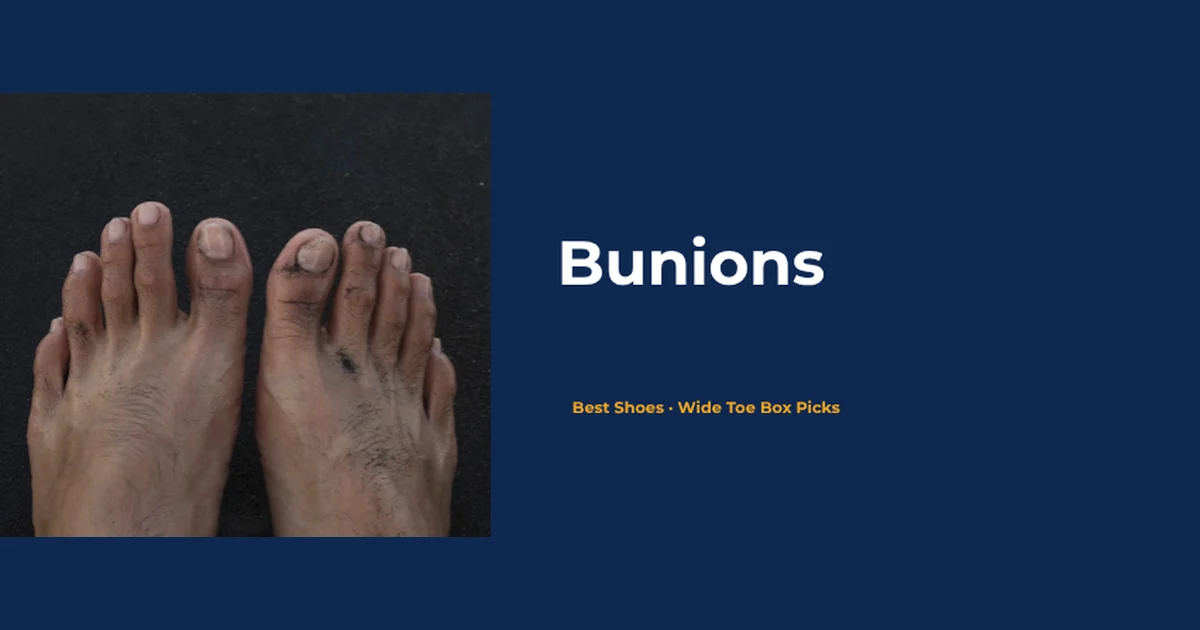
- A bunion: the bump is on the inside edge of the foot and the big toe angles across toward the second toe. The joint usually still bends reasonably well. Shoes rub the side.
- Gout: comes on over hours, typically overnight, with a joint that is red, hot, exquisitely painful to even a bedsheet, and then settles over days to a week. The pattern of attack and resolution is the giveaway; hallux rigidus does not do that.
- Turf toe: an acute injury with a moment attached to it — the toe was forcibly bent upward, usually in sport, usually on a firm surface. Sudden, traumatic, and in a younger person.
They can also coexist. Gout that has repeatedly attacked the same joint accelerates arthritis in it, and a long-standing bunion can end up stiff as well as deviated.
The conservative measure that outperforms everything else
If the joint will not bend, the most effective non-surgical strategy is not to force it to — it is to stop asking it to. In practice that means taking the bend out of the shoe, using a rigid or rocker-soled shoe, a carbon fibre plate inside the shoe, or an orthotic with a rigid extension running under the big toe so that the joint simply cannot dorsiflex at push-off. The foot rolls over the shoe instead of hinging at the sore joint.
Patients are frequently surprised at how much this alone does, and equally surprised that it was never suggested. It is also why flexible, soft, bendy shoes — the ones marketed as comfortable — often make this particular condition markedly worse, and why a stiff shoe that sounds less comfortable in theory is more comfortable in practice.
What Life Is Actually Like After Big Toe Fusion
This is the question people want answered before they will consider the operation, and it deserves a straight answer rather than a reassuring one.
Fusing the joint means the big toe no longer bends at its base. It is set at a fixed, slightly upward angle chosen to suit normal walking. In exchange, the arthritic surfaces stop rubbing, which is why fusion has the most reliable and durable pain relief of the surgical options for advanced disease.
What people keep: normal walking, usually without a limp once healed. Hiking. Standing all day at work. Most patients return to activity levels they had given up, and a surprising number go back to running — the joint behind the toe compensates, and push-off transfers to the rest of the forefoot. Cycling, swimming and gym work are unaffected.
What genuinely changes: heel height is limited, generally to something in the region of an inch or two depending on the angle the toe was fused at, because a higher heel demands exactly the motion that no longer exists. Deep squatting on the toes, kneeling back onto the feet, and yoga positions that bend the toes sharply upward become awkward or impossible. Sprinting and sports requiring hard cutting off the big toe are harder than they were.
None of that is trivial, and the honest framing is a trade: reliable relief from a joint that hurts every step, in exchange for a permanent and specific restriction. For someone whose priority is walking without pain, it is usually an easy trade. For someone who wears heels daily or practises hot yoga, it is a real conversation, and joint-preserving options deserve a proper look first.
How the options compare, honestly
- Cheilectomy — shaving off the bone spur and part of the top of the joint. Keeps the joint and its motion, recovery is comparatively quick, and satisfaction is high when it is used for early and moderate disease. It does not stop the underlying arthritis, so a proportion of patients need something further years later. Choosing it is choosing to preserve motion now and accept that possibility.
- Fusion — the most predictable long-term result for advanced arthritis, at the cost of the motion described above. Bone has to knit, so the recovery is longer.
- Joint replacement and cartilage implants — preserve motion and recover faster than fusion, and the shorter-term results in trials have been broadly comparable for pain. Long-term durability data is thinner than it is for fusion, and revision is a more complicated proposition. Reasonable to discuss; worth being clear-eyed about what is and is not yet known.
- Joint resection — generally reserved for older, lower-demand patients, because shortening the toe can push load onto the neighbouring metatarsals and create a new problem there.
There is no single best operation for this joint. There is a best operation for a particular grade of arthritis in a particular person with particular demands on their feet, which is precisely why the grading and the conversation about what you need your foot to do both matter.
The Most Common Mistake We See
The most common mistake we see is patients treating hallux rigidus with rest and generic over-the-counter arch supports for years, hoping it will improve on its own. Hallux rigidus is a progressive mechanical condition — cartilage does not regenerate, and bone spurs do not shrink. Waiting typically means progressing from Grade 2 to Grade 3 or 4, converting a patient who was a good cheilectomy candidate into one who now needs a more involved fusion. Early diagnosis and appropriate mechanical management (correct footwear and orthotics) is genuinely disease-modifying — it will not reverse damage, but it reliably slows progression.
Frequently Asked Questions
Can hallux rigidus get better on its own?
The underlying cartilage loss and spur formation do not reverse without intervention. However, with proper footwear, orthotics, and activity modification, many patients maintain excellent function and pain control for years without surgery. “Better on its own” is not realistic; “well-managed conservatively” absolutely is for early grades.
How long does recovery from MTP fusion take?
Most patients wear a surgical boot for 6–8 weeks while the fusion heals. Return to regular shoes typically occurs at 8–12 weeks, and full activity — including low-impact exercise — at 4–5 months. High-impact running and jumping may require 6 months.
Will I be able to wear normal shoes after MTP fusion?
Yes. Because the fusion is positioned in a functional walking angle, most patients return to dress shoes, athletic shoes, and even modest heels (women) without difficulty. The lack of MTP motion is rarely noticed in daily activities once adaptation is complete.
Is hallux rigidus the same as a bunion?
No. A bunion (hallux valgus) is a medial deviation of the big toe with a prominent medial bump from an angular deformity. Hallux rigidus is a dorsal arthritic change causing stiffness. They can coexist but are distinct conditions with different treatments.
The Bottom Line
Hallux rigidus is a graded, progressive arthritis of the big toe joint that responds best to treatment matched to its stage. Grades 1–2 belong in stiff-soled shoes, functional orthotics, and possibly a cortisone injection — and most do well long-term with this approach. Grade 3 patients are typically excellent cheilectomy candidates: a straightforward outpatient procedure with 80–90% satisfaction at 5 years. Grade 4 is a fusion conversation, and the outcomes are genuinely excellent when the fusion is well-positioned and heals solidly. If your big toe is stiffening and aching, the worst thing you can do is wait — come in while your options are still broadest.
Sources:
1. Coughlin MJ, Shurnas PS. Hallux rigidus: grading and long-term results of operative treatment. J Bone Joint Surg Am. 2003;85(11):2072-2088.
2. Bhosale AM, Richardson JB. Articular cartilage: structure, injuries and review of management. Br Med Bull. 2008;87:77-95.
3. Gibson JN, Thomson CE. Arthrodesis or total replacement arthroplasty for hallux rigidus: a randomized controlled trial. Foot Ankle Int. 2005;26(9):680-690.
Related reading: broken big toe · turf toe · plantar plate tear
Ready to Get Relief?
Book online 24/7 in Howell & Bloomfield Township, MI
4.9★ | 1,200+ Reviews | 3,000+ Surgeries
Or call: (810) 206-1402
Related reading: broken big toe · turf toe · plantar plate tear
📋 Dr. Tom Biernacki, DPM, FACFAS answers:
Hallux rigidus (stiff big toe joint) can be effectively managed non-surgically in most patients, especially in the early-to-moderate stages. The two most effective conservative interventions are: (1) a rigid-soled shoe or carbon fiber insole that prevents the painful end-range dorsiflexion movement — this often provides immediate, dramatic pain relief; and (2) a rocker-bottom modification to the shoe sole that allows the foot to roll through the gait cycle without requiring MTP joint motion. Corticosteroid injections reduce inflammation for months. Custom orthotics with a Morton’s extension (rigid extension under the big toe) limit joint movement. Physical therapy to maintain whatever motion exists is valuable. Surgery (cheilectomy to remove bone spurs, or fusion in severe cases) is reserved for patients who fail 6+ months of conservative care or who have severe daily pain limiting function.

Dr. Tom Biernacki, DPM is a board-certified foot & ankle surgeon (ABFAS & ABPM) at Balance Foot & Ankle Specialists in Southeast Michigan. With over a decade of clinical experience, he specializes in heel pain, bunions, diabetic foot care, sports injuries, and minimally invasive surgery. Dr. Biernacki is a member of the APMA and ACFAS, and his patient education content on MichiganFootDoctors.com and YouTube has made him one of the most-followed foot & ankle educators on YouTube.
More questions patients ask
Can hallux rigidus be treated without surgery?
Early-stage hallux rigidus responds to stiff-soled shoes, custom orthotics with a Morton's extension, anti-inflammatory medication, and corticosteroid injections. Doctor Hoy's Natural Pain Relief helps manage daily discomfort. Surgery is reserved for advanced cases.
What is the best shoe for hallux rigidus?
Shoes with a stiff, rocker-bottom sole reduce big toe bending and pain. Avoid flexible shoes and high heels. Carbon fiber insoles or custom orthotics with a Morton's extension limit toe motion. PowerStep orthotics provide the firm support needed.
What is the difference between hallux rigidus and a bunion?
A bunion (hallux valgus) is a LATERAL deformity — the big toe drifts toward the 2nd toe, creating a medial bump at the 1st MTP joint. Pain is from friction and skin pressure. Hallux rigidus is an ARTHRITIC condition — the big toe joint loses motion from cartilage damage and bone spur formation. Pain is from joint compression during motion. Both affect the 1st MTP joint but have different causes, presentations, and treatments. Some patients have both conditions simultaneously.
Still have a question about coverage or cost? Book online and we will check your benefits before your visit: Book in Howell · Book in Bloomfield Township. Prefer to talk it through first? Call (810) 206-1402.