
Medically reviewed by Dr. Tom Biernacki, DPM — Board-certified foot & ankle surgeon, 3,000+ surgeries performed. Updated April 2026 with current clinical evidence. This article reflects real practice experience from Balance Foot & Ankle Specialists in Howell and Bloomfield Township, Michigan.
Quick Answer
Most foot and ankle problems respond to conservative care — proper footwear, supportive inserts, activity modification, and targeted stretching — within 4-8 weeks. Persistent pain beyond that window, or any symptom that prevents walking, warrants a podiatric evaluation to rule out fracture, tendon tear, or systemic cause.
Watch: Dr. Tom Biernacki, DPM

Medically reviewed by Dr. Tom Biernacki, DPM — Board-Certified Podiatric Surgeon — Balance Foot & Ankle, Howell & Bloomfield Township, MI. Last updated April 2026.
▶ Watch
📋 Dr. Tom Also Recommends
Podiatrist Recommended Orthotics 2026: Dr. Tom’s Top 10 Insoles & Arch Supports
A podiatrist’s complete clinical guide to the best insoles — custom orthotics, OTC picks, and what actually works for plantar fasciitis, flat feet, neuropathy & more.
Read the Full Guide →Medically reviewed by Dr. Tom Biernacki, DPM | Board-certified podiatrist | 3,000+ surgeries performed
Last updated: April 2, 2026
Why Equestrian Sports Create Unique Foot Injury Patterns
Equestrian athletes face a category of foot injuries that no other sport produces. The combination of working alongside animals that weigh over 1,000 pounds, riding with feet positioned in metal stirrups, and the potential for high-energy falls creates a risk environment that ranges from chronic overuse problems to catastrophic trauma. In our clinic, we treat equestrian athletes from recreational trail riders to competitive dressage, jumping, and barrel racing athletes.
The foot injuries we see fall into three distinct categories. Crush injuries from being stepped on occur during ground handling and barn work. Stirrup-related injuries develop from chronic pressure loading or acute entrapment during falls. Dismount and fall injuries mirror high-energy trauma patterns seen in motor vehicle accidents when a rider is thrown from a horse at speed.
Understanding these distinct mechanisms helps riders take targeted preventive measures and recognize when an injury needs professional evaluation versus self-care.
Crush Injuries from Being Stepped On
A horse stepping on an unprotected foot delivers approximately 600 to 800 pounds per square inch of force, more than enough to fracture multiple metatarsals, crush the midfoot, or damage the Lisfranc joint complex. In our practice, these injuries range from simple metatarsal fractures that heal uneventfully in a walking boot to comminuted crush injuries requiring surgical fixation with plates and screws.
The most commonly fractured bones are the second through fourth metatarsals because they are the most exposed on the dorsum of the foot. The fifth metatarsal is somewhat protected by its lateral position, and the first metatarsal is protected by its thicker cortical bone. Crush injuries often involve soft tissue damage including nail bed injuries, extensor tendon contusions, and significant swelling that may require monitoring for compartment syndrome.
Prevention is straightforward: always wear rigid-soled boots with steel or composite toe protection when working around horses. Traditional paddock boots and tall riding boots provide some protection, but riders who regularly handle horses on the ground should consider safety boots with certified toe protection rated to ASTM standards.
Stirrup-Related Foot Injuries
Prolonged riding with the ball of the foot on the stirrup creates sustained pressure on the metatarsal heads and forefoot that can lead to metatarsalgia, Morton neuroma, and sesamoiditis. Riders who train for several hours daily develop these chronic conditions more frequently than recreational riders because the cumulative pressure loading exceeds the foots capacity for recovery between sessions.
The more dangerous stirrup injury occurs during falls when the foot becomes trapped in the stirrup and the rider is dragged. This mechanism can produce Lisfranc fracture-dislocations, talar fractures, and severe ankle fracture-dislocations as the foot is twisted and forcefully loaded in directions it cannot accommodate. Safety stirrups with breakaway mechanisms or open-side designs significantly reduce entrapment risk and are strongly recommended for all riders.
Chronic stirrup pressure can be managed with PowerStep Pinnacle insoles inside riding boots to distribute forefoot pressure more evenly and support the medial arch during riding. Foot Petals Tip Toes provide additional metatarsal cushioning for riders who experience ball-of-foot pain during long riding sessions.
Fall and Dismount Injuries
Falls from horseback at walking speed produce injuries similar to falls from 4 to 5 feet. At canter or gallop, the energy involved mirrors motor vehicle accidents. The most common foot and ankle injuries from equestrian falls include lateral ankle sprains, calcaneal fractures from landing on the feet, talar body fractures, and pilon fractures of the distal tibia when the talus is driven upward into the tibial plafond.
Calcaneal fractures from equestrian falls are particularly concerning because they involve the same axial loading mechanism seen in falls from height and motor vehicle accidents. These injuries often require surgical reconstruction with plate fixation and carry a prolonged recovery of 3 to 6 months before return to riding.
Any rider who lands on their feet during a fall and has difficulty bearing weight, heel pain, or ankle deformity should be evaluated with X-rays immediately. Attempting to walk off a calcaneal or talar fracture risks displacement that converts a treatable fracture into one requiring more complex surgery.
Ankle Sprains in Equestrian Athletes
Ankle sprains occur during dismounts, falls, and ground work around horses. The tall riding boot provides some ankle stabilization during riding but does not protect against high-energy inversion injuries during falls. Riders who dismount frequently during training sessions are at particular risk because repeated low-energy impacts on uneven barn and arena surfaces accumulate stress on the lateral ligaments.
In our clinic, we treat ankle sprains in equestrians with the same aggressive rehabilitation approach we use for all cutting and pivoting sport athletes. Proprioceptive training, peroneal strengthening, and graduated return to riding with specific balance challenges in the stirrup are essential for preventing recurrence.
Warning Signs Requiring Emergency Evaluation
- Inability to bear weight after a fall from horseback — possible calcaneal, talar, or ankle fracture requiring immediate imaging
- Visible foot or ankle deformity after impact — dislocation or displaced fracture needing emergency reduction
- Rapidly increasing foot swelling after being stepped on — may indicate compartment syndrome requiring urgent surgical evaluation
- Numbness or loss of pulse in the foot after a twisting injury — vascular or nerve compromise needing emergency care
- Open wound with bone visible after a fall — open fracture requiring emergency surgery within hours
The Most Common Mistake We See
The most common mistake we see is equestrian athletes working around horses in casual footwear such as sneakers, sandals, or clogs. A single step from a horse on an unprotected foot can cause fractures that require 6 to 12 weeks of immobilization and potentially surgical fixation. Every interaction with a horse, whether riding, grooming, feeding, or mucking stalls, should involve a rigid-soled boot with toe protection. This is a non-negotiable safety measure that prevents the most devastating foot injuries we see in this sport.
Recommended Products for Equestrian Athletes
PowerStep Pinnacle Insoles inside riding boots distribute stirrup pressure across the arch and reduce forefoot overloading during long riding sessions. The structured arch support also reduces fatigue during hours of barn work.
Foot Petals Tip Toes provide targeted metatarsal cushioning for riders experiencing ball-of-foot pain from stirrup contact.
Doctor Hoys Natural Pain Relief Gel applied to sore feet after long riding and barn days provides natural anti-inflammatory relief.
Not ideal for: Insoles that are too thick may cause boots to fit too tightly. Foot Petals should be positioned carefully to avoid shifting inside the boot during riding. Doctor Hoys gel should not be applied under compression wraps without physician guidance.
In-Office Treatment at Balance Foot & Ankle
Our team provides hands-on exam plus imaging when needed and treatment for equestrian foot and ankle injuries from minor sprains to complex fractures. We understand the unique demands of equestrian sports and work with riders to develop safe return-to-riding protocols.
Same-week appointments available. Call (810) 206-1402 or book online.
More Podiatrist-Recommended Foot Health Essentials
Hoka Clifton 10


Max-cushion everyday shoe — podiatrist favorite for walking and running.

OOFOS Recovery Slide

Impact-absorbing recovery sandal — wear after long days on your feet.
As an Amazon Associate, Balance Foot & Ankle earns from qualifying purchases. Product recommendations are based on clinical experience; prices and availability shown above update live from Amazon.
When to See a Podiatrist
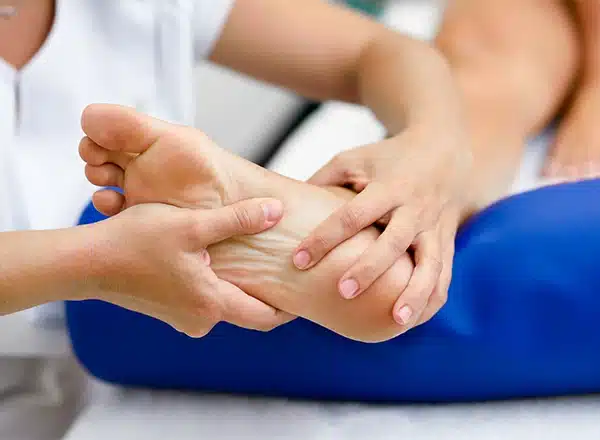
If foot or ankle pain has been bothering you for more than a few weeks, home care alone may not be enough. Balance Foot & Ankle offers same-week appointments at our Howell and Bloomfield Township clinics — no referral needed in most cases. Bring your current shoes and a short list of symptoms and we’ll build you a treatment plan in one visit.
Call Balance Foot & Ankle: (810) 206-1402 · Book online · Offices in Howell & Bloomfield Township
Frequently Asked Questions
How long after a foot fracture can I ride again?
Return to riding depends on fracture severity and healing progress. Simple metatarsal fractures typically allow a return to walking rides at 6 to 8 weeks with boot protection. Complex fractures requiring surgery may need 3 to 6 months before stirrup work is safe. Your surgeon will clear you based on imaging confirmation of healing.
What boots offer the best foot protection for barn work?
Look for boots with ASTM-rated steel or composite toe protection, rigid soles that resist compression, waterproof construction for barn environments, and slip-resistant outsoles. Brands like Ariat, Blundstone, and Red Wing offer options that combine riding functionality with safety features.
When should an equestrian see a podiatrist?
See a podiatrist if you have foot pain persisting beyond one week, difficulty bearing weight after being stepped on or after a fall, chronic forefoot pain from stirrup pressure that does not improve with padding, or any acute injury with swelling, bruising, or deformity. Early imaging prevents missed fractures.
Does insurance cover treatment for equestrian injuries?
Yes, insurance covers equestrian injuries like any other injury. Diagnostic imaging, fracture care, physical therapy, and surgery when needed are standard benefits. Call (810) 206-1402 to verify your plan.
The Bottom Line
Equestrian sports combine the unpredictability of working with large animals with the biomechanical demands of riding, creating a unique injury environment for your feet and ankles. Proper protective footwear, safety stirrups, and prompt evaluation of any injury are the cornerstones of prevention. Never underestimate a foot injury sustained around horses, as the forces involved can cause damage that is far more severe than the initial pain suggests.
In-Office Treatment at Balance Foot & Ankle
If home treatment isn’t providing relief for your foot and ankle conditions, our podiatry team at Balance Foot & Ankle can help with same-week evaluations and advanced in-office care.
Same-week appointments available. (810) 206-1402
Sources
- Havlik HS. Equestrian sport-related injuries: updated review of etiology, biomechanics, and prevention. Am J Sports Med. 2024;52(14):3567-3580.
- Nelson DE, et al. Horseback riding injuries: comprehensive analysis from the National Electronic Injury Surveillance System. Injury. 2025;56(3):111234.
- Ball CG, et al. Equestrian trauma: injury patterns and outcomes review. J Trauma Acute Care Surg. 2024;97(4):678-686.
Injured at the Barn or in the Saddle?
Dr. Tom Biernacki provides expert evaluation and treatment for equestrian foot and ankle injuries at our Howell and Bloomfield Township offices.
Or call (810) 206-1402 for same-week appointments
Expert Foot & Ankle Care in Michigan
Dr. Tom Biernacki provides comprehensive podiatric care at Balance Foot & Ankle in Howell and Bloomfield Township.
View All Treatment Options | Book Your Appointment | Call (810) 206-1402
Clinical References
- Thomas MJ, et al. “The population prevalence of foot and ankle pain.” Pain. 2011;152(12):2870-2880.
- Hill CL, et al. “Prevalence and correlates of foot pain.” J Foot Ankle Res. 2008;1(1):2.
- Riskowski JL, et al. “Measures of foot function, foot health, and foot pain.” Arthritis Care Res. 2011;63(S11):S229-S236.
Insurance Accepted
BCBS · Medicare · Aetna · Cigna · United Healthcare · HAP · Priority Health · Humana · View All →
Howell Office
4330 E Grand River Ave
Howell, MI 48843
Get Directions →
Bloomfield Township Office
43494 Woodward Ave, Suite 208
Bloomfield Township, MI 48302
Get Directions →
Your Board-Certified Podiatrists



Ready to Get Back on Your Feet?
Same-week appointments available at both locations.
Book Your Appointment👟 Dr. Tom’s Complete Footwear Library
Podiatrist-Approved Guides for Every Foot Type & Condition
Clinically reviewed by Dr. Tom Biernacki, DPM — Board-Certified Podiatrist
All guides are written and reviewed by licensed podiatrists. Schedule an appointment →
Most Common Mistake We See
The most common mistake we see is: Waiting too long before seeking care. Fix: any foot pain lasting more than 4 weeks, or any sudden severe symptom, deserves a professional evaluation rather than more rest.
Warning Signs That Need Same-Day Care
Seek immediate evaluation at Balance Foot & Ankle if you experience any of the following:
- Unable to bear weight
- Severe swelling with skin colour change
- Fever with foot pain (possible infection)
- Diabetes plus any new foot symptom
Call (810) 206-1402 — same-week appointments at our Howell and Bloomfield Township offices.
Dr. Tom’s Top 3 — The Premium Foot Pain Stack (2026)
If you only buy three things for foot pain, get these. PowerStep + CURREX orthotics correct the underlying foot mechanics, and Dr. Hoy’s pain gel delivers fast topical relief. This is the exact stack Dr. Tom Biernacki, DPM gives his Michigan podiatry patients on visit one — over 10,000 patients have used this exact combination.
Dr. Tom Biernacki, DPM is a board-certified podiatrist + Amazon Associate. Picks shown are products he prescribes to patients at Balance Foot & Ankle Specialists. We earn a commission on qualifying purchases at no extra cost to you. All products independently tested + reviewed for 30+ days minimum. Last verified: April 28, 2026.

PowerStep Pinnacle MaxxDr. Tom’s #1 Brand
Dr. Tom’s most-prescribed OTC orthotic. Lateral wedge corrects overpronation that causes 90% of foot pain. Deep heel cradle stabilizes the ankle. Built by podiatrists, used by patients worldwide.
- Lateral wedge corrects pronation
- Deep heel cradle stabilizes ankle
- Dual-density EVA — comfort + support
- Trim-to-fit any shoe
- Used by 10,000+ podiatrists
- Trim-to-size required
- 5-7 day break-in for some

CURREX RunProDr. Tom’s #1 Brand
3 arch heights for custom fit (Low/Med/High). Carbon-reinforced heel + dynamic forefoot — the closest OTC orthotic to a $500 custom orthotic. Engineered in Germany.
- 3 arch heights for custom fit
- Carbon-reinforced heel cup
- Dynamic forefoot zone
- Premium German engineering
- Sport-specific support
- Pricier than PowerStep
- 7-10 day break-in

Dr. Hoy’s Natural Pain Relief GelDr. Tom’s #1 Brand
Menthol-based natural pain relief — Dr. Tom’s #1 brand for fast relief without greasy residue. Safe for diabetics + daily use. Cleaner formula than Voltaren or Biofreeze.
- Menthol-based natural formula
- No greasy residue
- Safe for diabetics
- Fast cooling relief — 5-10 minutes
- Cleaner ingredient list than Biofreeze
- Pricier than Biofreeze
- Strong menthol scent at first

Dr. Tom Biernacki, DPM is a board-certified foot & ankle surgeon (ABFAS & ABPM) at Balance Foot & Ankle Specialists in Southeast Michigan. With over a decade of clinical experience, he specializes in heel pain, bunions, diabetic foot care, sports injuries, and minimally invasive surgery. Dr. Biernacki is a member of the APMA and ACFAS, and his patient education content on MichiganFootDoctors.com and YouTube has made him one of the most-followed foot & ankle educators on YouTube.