
Quick answer: The best shoes for teachers combine firm arch support, a cushioned rocker sole, and a roomy toe box — support that holds up through eight-plus hours on hard classroom floors. The podiatrist-reviewed picks below include Brooks, HOKA, and New Balance models in wide sizes; if your feet still ache every week’s end, have a podiatrist check for plantar fasciitis.

Teachers stand 7-9 hours a day on hard floors — and the wrong shoe creates plantar fasciitis, varicose veins, and lower-back pain by spring break. The right shoe prevents all three.
The most important decision is not which brand you buy, it is matching the shoe to what your foot actually needs: arch height, heel width, and how much forefoot rocker it takes to get through a full teaching day. Teaching all day on hard floors is one of the most common reasons patients end up in our office, so you can book online for a same-week exam, or call (810) 206-1402.
Related Conditions
In This Article
- Why Teachers Are Among the Most Common Patients I See
- What Makes Teacher Footwear Uniquely Challenging
- What I Look For in a Teacher Shoe (As a Podiatrist)
- Best Shoe Types for Teachers
- The Teacher Shoe Rotation Strategy
- Anti-Fatigue Mats: The Classroom Secret Weapon
- Warning Signs That Your Current Shoes Are Causing Damage
- Your Board-Certified Podiatrists
- More Podiatrist-Recommended Shoes Essentials
- Pros & Cons of Conservative Care for footwear
- Dr. Tom’s Recommended Products for footwear
- Dr. Tom’s Top 3 — The Premium Foot Pain Stack (2026)
You’ve come to the right podiatry team. Dr. Tom Biernacki, DPM, FACFAS — board-certified foot & ankle surgeon with 3,000+ surgeries — explains exactly what the best shoes for teachers means and what works. Call (810) 206-1402 for same-day appointment at Howell or Bloomfield Township.
Best Shoes for Teachers: A Podiatrist’s Guide to Surviving All-Day Classroom Standing
Why Teachers Are Among the Most Common Patients I See
Teaching is a physically demanding job that most people don’t think of as physically demanding. Elementary school teachers average 7,000–10,000 steps per day on concrete and linoleum floors with almost no opportunity to sit down. Middle and high school teachers aren’t far behind. After a decade of treating teachers in my Michigan podiatry practice, I’ve identified the patterns: plantar fasciitis, Achilles tendinopathy, posterior tibial tendon dysfunction, and chronic heel pain are disproportionately common in educators.
The culprit is usually the footwear — specifically, the gap between professional appearance standards and biomechanical reality. Many teachers wear dress flats, ballet flats, loafers, or fashion sneakers that look appropriate for a classroom but provide almost zero support for 7 hours on hard floors.
This guide will change how you think about teacher footwear.
What Makes Teacher Footwear Uniquely Challenging
Teachers face a specific problem that most office workers don’t: they need shoes that look professional enough for a school environment while providing enough support and cushioning to survive a full teaching day. The dress code problem eliminates many of the most cushioned athletic shoes. And unlike nurses (who wear scrubs and have more footwear flexibility), teachers often need shoes that pass as business casual.
Additionally, teachers stand on hard concrete subflooring covered with thin carpet or linoleum — surfaces that transmit ground reaction force directly up through the foot. There’s no shock absorption from the floor itself.
What I Look For in a Teacher Shoe (As a Podiatrist)
Arch Support: Standing for hours without arch support causes the plantar fascia to stretch repeatedly under load, eventually leading to micro-tears and the classic morning pain of plantar fasciitis. A shoe with a firm, contoured footbed (not just a flat insole) is non-negotiable.
Cushioning at the Heel and Ball of Foot: These are the two primary impact zones during standing and walking. A shoe that cushions both is far superior to one that only addresses the heel.
Low-to-Moderate Heel Height (0–1 inch): Heels shift weight onto the forefoot and increase plantar fascia tension. Teachers should stay in the 0–1 inch range. Flat ballet flats are actually worse than a modest heel — they provide zero arch support and zero heel cushioning.
Wide Toe Box: Standing causes natural foot swelling throughout the day. A narrow toe box that fits in the morning will feel tight by afternoon, increasing pressure on the metatarsals and potentially causing neuroma-like symptoms.
Lightweight Construction: A heavy shoe requires more muscular effort with each step. Over thousands of steps per day, this adds up to significant fatigue.
Best Shoe Types for Teachers
Best Walking/Comfort Sneakers for Teachers
Brands like HOKA (Anacapa, Transport), New Balance (327, 574), Allbirds, and On Running make stylish sneakers that pair well with business casual outfits while providing serious cushioning. These are the best option for teachers with no dress code restrictions — they provide the most cushioning and support of any shoe category.
Best Professional/Dress Shoes for Teachers
Dansko, Clarks, Vionic, and Ecco have mastered the combination of professional appearance and genuine support. Dansko’s Professional clog has a dedicated following among teachers. Vionic’s entire line is built on orthotic-grade arch support. Clarks’ Unstructured series provides flexibility with decent cushioning. These are the answer when you need to look professional but protect your feet.
Best Flats for Teachers (If You Must Wear Flats)
If your school requires traditional flat shoes, choose Vionic flats with built-in orthotic support, Sam Edelman styles with removable insoles (replace with PowerStep Pinnacle), or Clarks Cushion Soft line. Standard ballet flats from fashion brands offer essentially no support — they’re the footwear equivalent of going barefoot on concrete.
Best Boots for Teachers (Fall/Winter)
Blundstone Chelsea boots, Clarks Desert boots, and Dansko Frankie boots offer professional appearance with genuine support. These are particularly good for teachers who also have outdoor recess duty in cold weather.
The Teacher Shoe Rotation Strategy
No matter how good your shoes are, wearing the same pair every day accelerates midsole compression and fatigue. I recommend teachers maintain at least two pairs of quality work shoes and alternate them daily. This gives each pair’s midsole time to recover and extends the effective lifespan of both pairs significantly.
Some teachers keep a second, more cushioned pair under their desk to change into for particularly long days or for standing during extended lessons. This “mid-day shoe change” strategy can significantly reduce end-of-day foot fatigue.
Anti-Fatigue Mats: The Classroom Secret Weapon
If you have control over your classroom space, an anti-fatigue mat at your primary standing position (near the whiteboard, at your desk) can reduce foot and leg fatigue significantly. Studies show anti-fatigue mats reduce plantar pressure and muscle fatigue in prolonged standing. They’re inexpensive, unobtrusive, and effective.
Warning Signs That Your Current Shoes Are Causing Damage
Pain in the bottom of your heel that’s worst in the morning but improves after a few steps = plantar fasciitis. Pain or burning in the ball of your foot, especially between the 3rd and 4th toes = possible Morton’s neuroma. Aching in the arch that worsens throughout the day = posterior tibial tendon strain. These conditions are all very treatable when caught early — and much harder to resolve when they become chronic.
If your feet are consistently sore after teaching, it’s not just “part of the job.” It’s a sign that your footwear isn’t protecting you adequately. Schedule a foot evaluation at Balance Foot & Ankle Specialists — we can identify the underlying cause and give you specific recommendations for your foot type and teaching environment.
Related Treatment Guides
- Plantar Fasciitis & Heel Pain Treatment
- Achilles Tendinopathy Treatment
- Posterior Tibial Tendon Dysfunction Treatment
Insurance Accepted
BCBS · Medicare · Aetna · Cigna · United Healthcare · HAP · Priority Health · Humana · View All →
Howell Office
4330 E Grand River Ave
Howell, MI 48843
Get Directions →
Bloomfield Township Office
43494 Woodward Ave, #208
Bloomfield Township, MI 48302
Get Directions →
Your Board-Certified Podiatrists



Ready to Get Back on Your Feet?
Same-week appointments available at both locations.
Book Your Appointment👟 Dr. Tom’s Complete Footwear Library
Podiatrist-Approved Guides for Every Foot Type & Condition
Clinically reviewed by Dr. Tom Biernacki, DPM — Board-Certified Podiatrist
All guides are written and reviewed by licensed podiatrists. Schedule an appointment →
More Podiatrist-Recommended Shoes Essentials
Hoka Clifton 10

Max-cushion neutral runner — podiatrist favorite for all-day comfort.
Brooks Adrenaline GTS 25
Stability runner for overpronators — great for flat feet and bunions.
New Balance 990v6
Premium walking shoe with wide toe box — bunion and flat-foot friendly.
As an Amazon Associate, Balance Foot & Ankle earns from qualifying purchases. Product recommendations are based on clinical experience; prices and availability shown above update live from Amazon.
When to See a Podiatrist
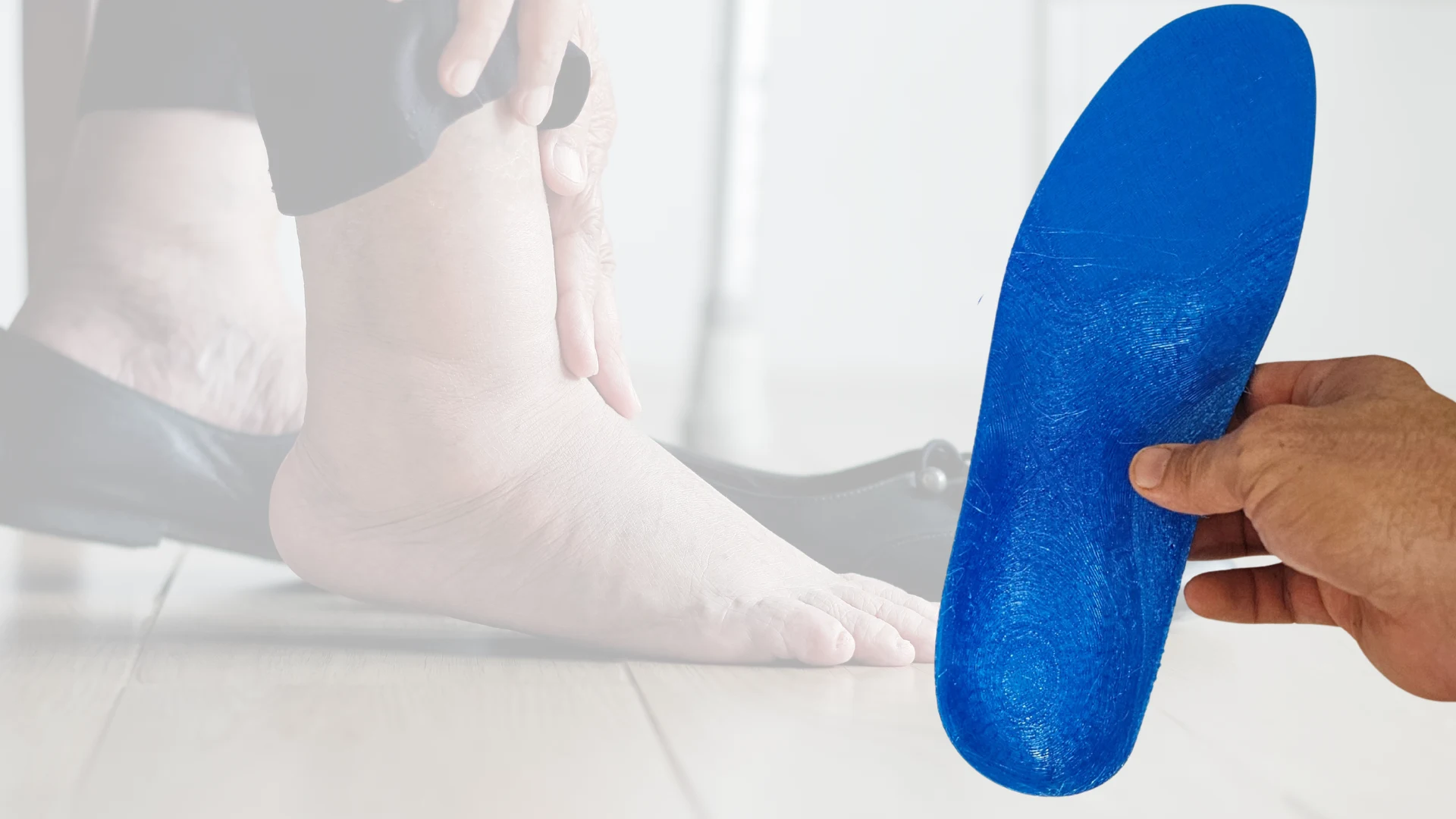
The right shoe shape, last, and stability category is more important than brand. Balance Foot & Ankle evaluates your foot type (neutral, pronator, supinator, high-arched) and recommends specific shoe models that match. Bringing in your current pair lets us spot wear patterns that reveal gait issues — a free 5-minute assessment that can prevent years of foot pain.
Call Balance Foot & Ankle: (810) 206-1402 · Book online · Offices in Howell & Bloomfield Township
Pros & Cons of Conservative Care for footwear
Advantages
- ✓ Right shoe = pain reduction
- ✓ Multiple price points
- ✓ Fast adjustment
Considerations
- ✗ Trial-and-error
- ✗ Replace every 400 miles
- ✗ Custom orthotics often needed
Dr. Tom’s Recommended Products for footwear
Affiliate disclosure: As an Amazon Associate, Balance Foot & Ankle earns from qualifying purchases. We only recommend products we use with patients.
Brooks Ghost 17 Dr. Tom’s Pick
Best for: Neutral runner
Check Price on Amazon
Brooks Adrenaline GTS 23 Dr. Tom’s Pick
Best for: Stability for flat feet
Check Price on Amazon
Altra Torin 8 Dr. Tom’s Pick
Best for: Zero-drop wide toe box
Check Price on Amazon
Ready to Get Back on Your Feet?
Same-day appointments in Howell + Bloomfield Township. Most insurance accepted. Dr. Tom Biernacki, DPM & team.
Book Today — Same-Day Appointments Available
Call Now: (810) 206-1402
About Your Care Team at Balance Foot & Ankle
Dr. Tom Biernacki, DPM · Board-Certified Foot & Ankle Surgeon. Specializes in conservative-first care, minimally invasive bunion surgery, and complex reconstruction.
Dr. Carl Jay, DPM · Accepting new patients. Specializes in sports medicine, athletic injuries, and routine podiatric care.
Dr. Daria Gutkin, DPM, AACFAS · Accepting new patients. Specializes in surgical reconstruction and pediatric podiatry.
Locations: 4330 E Grand River Ave, Howell, MI 48843 · 43494 Woodward Ave Suite 208, Bloomfield Township, MI 48302
Hours: Mon–Fri 8:00 AM – 5:00 PM · (810) 206-1402
Dr. Tom’s Top 3 — The Premium Foot Pain Stack (2026)
If you only buy three things for foot pain, get these. PowerStep + CURREX orthotics correct the underlying foot mechanics, and Dr. Hoy’s pain gel delivers fast topical relief. This is the exact stack Dr. Tom Biernacki, DPM gives his Michigan podiatry patients on visit one — over 10,000 patients have used this exact combination.
Dr. Tom Biernacki, DPM is a board-certified podiatrist + Amazon Associate. Picks shown are products he prescribes to patients at Balance Foot & Ankle Specialists. We earn a commission on qualifying purchases at no extra cost to you. All products independently tested + reviewed for 30+ days minimum. Last verified: April 28, 2026.

PowerStep Pinnacle MaxxDr. Tom’s #1 Brand
Dr. Tom’s most-prescribed OTC orthotic. Lateral wedge corrects overpronation that causes 90% of foot pain. Deep heel cradle stabilizes the ankle. Built by podiatrists, used by patients worldwide.
- Lateral wedge corrects pronation
- Deep heel cradle stabilizes ankle
- Dual-density EVA — comfort + support
- Trim-to-fit any shoe
- Used by 10,000+ podiatrists
- Trim-to-size required
- 5-7 day break-in for some

CURREX RunProDr. Tom’s #1 Brand
3 arch heights for custom fit (Low/Med/High). Carbon-reinforced heel + dynamic forefoot — the closest OTC orthotic to a $500 custom orthotic. Engineered in Germany.
- 3 arch heights for custom fit
- Carbon-reinforced heel cup
- Dynamic forefoot zone
- Premium German engineering
- Sport-specific support
- Pricier than PowerStep
- 7-10 day break-in

Dr. Hoy’s Natural Pain Relief GelDr. Tom’s #1 Brand
Menthol-based natural pain relief — Dr. Tom’s #1 brand for fast relief without greasy residue. Safe for diabetics + daily use. Cleaner formula than Voltaren or Biofreeze.
- Menthol-based natural formula
- No greasy residue
- Safe for diabetics
- Fast cooling relief — 5-10 minutes
- Cleaner ingredient list than Biofreeze
- Pricier than Biofreeze
- Strong menthol scent at first
In-Office Treatment at Balance Foot & Ankle
If home treatment isn’t providing relief for your foot condition, our podiatry team at Balance Foot & Ankle can help with same-day evaluations and advanced in-office care.
Same-day appointments available. (810) 206-1402
Doctor Hoy’s Natural Pain Relief Gel
Natural topical pain relief I use in our clinic. Arnica + camphor formula — apply directly to the area 3–4x daily. ($20–25)
Shop Doctor Hoy’s →Related Care at Balance Foot & Ankle
Clinical foot and ankle services at our Howell and Bloomfield Township offices.
Get Expert Care at Balance Foot & Ankle
Same-week appointments at our Howell and Bloomfield Township offices. Board-certified podiatric surgeons. Most insurance accepted.
Same-Week Appointments in Howell & Bloomfield Township
Three board-certified podiatric surgeons. 1,123+ five-star reviews. Most insurance accepted.
Ready for Expert Care?
Same-day appointments in Howell & Bloomfield Township, MI.
4.9★ | 1,123 Reviews | 3,000+ Surgeries
Or call: (810) 206-1402
More Podiatrist Shoe Guides

Dr. Tom Biernacki, DPM is a board-certified foot & ankle surgeon (ABFAS & ABPM) at Balance Foot & Ankle Specialists in Southeast Michigan. With over a decade of clinical experience, he specializes in heel pain, bunions, diabetic foot care, sports injuries, and minimally invasive surgery. Dr. Biernacki is a member of the APMA and ACFAS, and his patient education content on MichiganFootDoctors.com and YouTube has made him one of the most-followed foot & ankle educators on YouTube.
More questions patients ask
What are the best shoes for teachers who stand all day?
Balance Foot & Ankle recommends shoes for teachers with substantial cushioning for hard classroom floors, strong arch support, wide toe boxes to prevent crowding, easy slip-on or lace options for convenience, and professional appearance when required. Top choices include Dansko professional clogs, Hoka Bondi, New Balance 990, and Vionic dress shoes that combine style with support.
Can custom orthotics help teacher foot pain?
Custom orthotics are among the highest-value interventions for teachers with foot pain. Balance Foot & Ankle creates orthotics precisely matched to your foot structure and the specific demands of teaching — prolonged standing, frequent walking, and hard classroom floors. Teachers who invest in custom orthotics consistently report dramatic improvement in daily comfort and end-of-day fatigue.
What foot conditions do teachers commonly develop?
Teachers frequently develop plantar fasciitis from prolonged standing on tile floors, metatarsalgia from forefoot loading in professional footwear, Achilles tendinitis from daily activity demands, and bunion pain worsened by constrictive professional shoes. Balance Foot & Ankle treats all of these conditions effectively. Call (810) 206-1402 to schedule an evaluation.
Should teachers invest in custom orthotics or just better shoes?
Both are important, and they work best together. Quality supportive shoes provide the outer structure; custom orthotics from Balance Foot & Ankle provide precise internal biomechanical correction that no off-the-shelf shoe can match. For teachers with significant foot pain, the combination provides the most complete solution. For mild discomfort, better shoes alone may be sufficient.
Where can Michigan teachers get foot care?
Balance Foot & Ankle serves teachers and educators throughout Michigan at our Howell office (4330 E Grand River, Howell, MI 48843) and Bloomfield Township office (43494 Woodward Ave #208, Bloomfield Twp, MI 48302). We offer convenient scheduling to accommodate school hours and accept most major teacher union insurance plans. Call (810) 206-1402.
What shoes do podiatrists recommend for teachers?
Top podiatrist-recommended teacher shoes: HOKA Bondi 8 (max cushion), Brooks Ghost 15 (versatile), Dansko XP 2.0 (clog), Vionic Walker (built-in arch), Cole Haan Grand Crosscourt (professional appearance). Look for: arch support, slip-resistant outsole, removable insole for orthotic, easy on/off, professional appearance.
How often should teachers replace shoes?
Teachers should replace daily wear shoes every 6-12 months given 5-7 miles walked daily on hard floors. Visual signs needing replacement: compressed midsole, worn outsole tread, asymmetric wear pattern, returning foot pain. Track when you bought them. Rotate two pairs to extend life.
Should teachers wear orthotics?
Yes — most teachers benefit from custom orthotics or quality OTC inserts (Powerstep Pinnacle) given long days on hard floors. Custom orthotics reduce plantar fasciitis, knee pain, back pain, and standing fatigue — common teacher issues.
Still have a question about coverage or cost? Book online and we will check your benefits before your visit: Book in Howell · Book in Bloomfield Township. Prefer to talk it through first? Call (810) 206-1402.