Best Shoes for Elderly & Seniors 2026: Balance, Stability & Fall Prevention
Quick answer: For elderly seniors balance stability, podiatrists recommend shoes with structured arch support, deep heel cup, and forefoot rocker. Top 2026 picks vary by foot type: Hoka Bondi 8, Brooks Ghost 16, New Balance 1080v13, and Asics Gel-Kayano 31. Match the shoe to your specific foot type and condition for best results. Call (810) 206-1402.
Medically reviewed by Dr. Tom Biernacki, DPM — Board-Certified Podiatric Surgeon — Balance Foot & Ankle, Howell & Bloomfield Township, MI. Last updated April 2026.
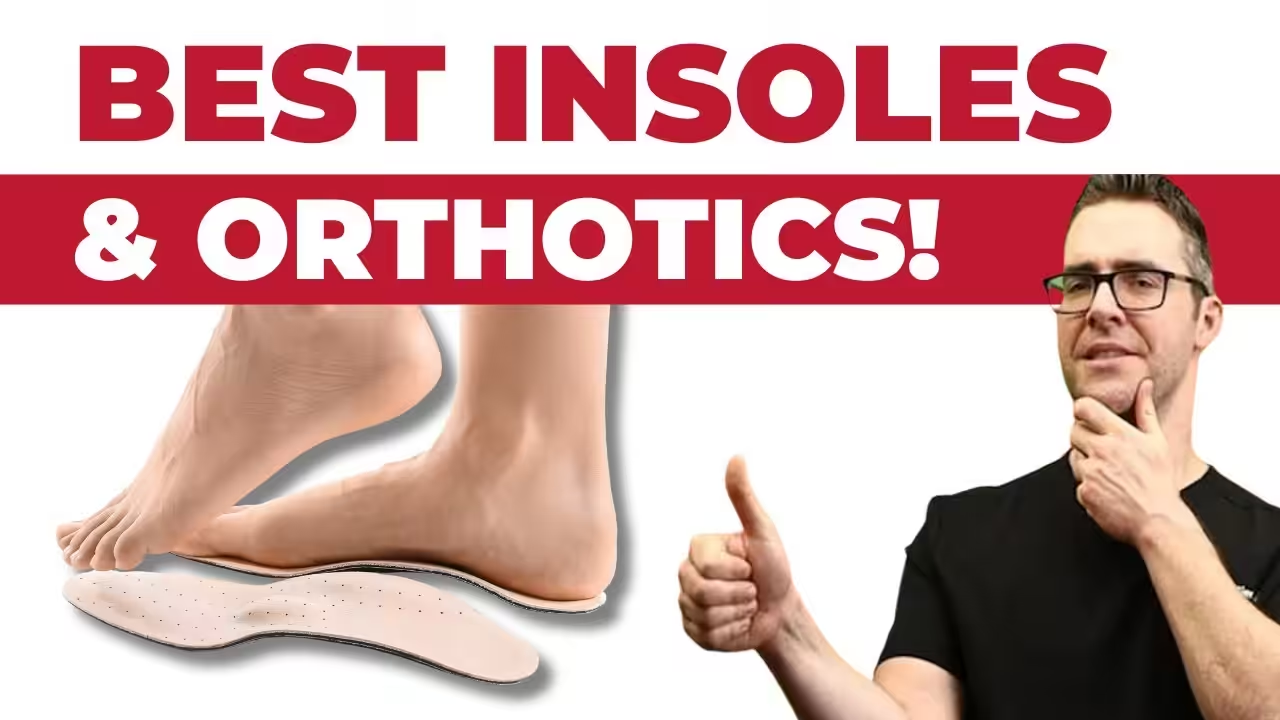
A podiatrist’s complete clinical guide to the best insoles — custom orthotics, OTC picks, and what actually works for plantar fasciitis, flat feet, neuropathy & more.
Medically Reviewed by Dr. Tom Biernacki, DPM — Board-Certified Podiatrist, Balance Foot & Ankle Specialists, Michigan. Last updated April 2026.
The best shoes for elderly and senior patients in 2026 prioritize fall prevention through low heel-to-toe drop, wide sole base for stability, secure closures (velcro or lace-up) that prevent the heel slippage of backless shoes, and adequate toe box to accommodate the toe deformities common in older adults. Dr. Tom Biernacki, DPM at Balance Foot & Ankle in Howell and Bloomfield Township, Michigan prescribes and recommends appropriate footwear for elderly patients as part of a thorough fall prevention and foot health strategy — particularly for patients with peripheral neuropathy, diabetic foot conditions, and balance disorders.
MICHIGAN PODIATRIST INSIGHT
The most important clinical decision with Best Shoes Elderly Seniors Balance Stability 2026 isn’t which treatment to start with — it’s identifying the correct subtype. That changes everything. Call (810) 206-1402.
Why Shoe Choice Is a Fall Prevention Issue in the Elderly
Falls are the leading cause of injury-related death in adults over 65, and inappropriate footwear is a significant modifiable risk factor. Studies consistently identify backless slippers and shoes, high heels, loose fit, and thin soles with poor traction as footwear factors independently associated with fall risk. Additionally, peripheral neuropathy (present in approximately 50% of adults over 70 with diabetes and in 8% of the general elderly population) eliminates the proprioceptive feedback from the sole that contributes to balance maintenance — making a stable, supportive shoe sole even more important when proprioception is reduced. The right shoes for elderly patients are not simply comfortable; they are a medical device for fall prevention.
New Balance 928v3 Wide — Best Overall Stability Shoe for Seniors
The New Balance 928v3 with its ROLLBAR motion control technology provides medial arch stability, a wide sole base for balance, velcro strap closure for patients with hand strength or dexterity limitations, and availability in wide and extra-wide widths for common elderly foot changes including bunions, hammertoes, and edema. The APMA Seal of Acceptance and Medicare Therapeutic Shoe Program certification make this the most comprehensively validated senior shoe in our practice.
amazon.com/dp/B003BNNYX8?tag=biernact-20&linkCode=ogi&th=1&psc=1″ rel=”nofollow sponsored noopener” target=”_blank”>View on Amazon.
Propet LifeWalker Strap — Best for Swelling & Diabetic Seniors
For elderly patients with chronic foot swelling from venous insufficiency, lymphedema, or cardiac edema, the Propet LifeWalker Strap provides adjustable velcro closure that accommodates daily volume fluctuations, available widths up to 7E, and Medicare Therapeutic Shoe Program certification for qualifying diabetic patients. The rocker bottom reduces metatarsal head pressure during toe-off — reducing pain in patients with metatarsalgia or fat pad atrophy. View on Amazon.
Brooks Addiction Walker 2 — Best Lace-Up Option for Active Seniors
For more active seniors who walk regularly for exercise and do not need velcro closure, the Brooks Addiction Walker 2 provides maximum motion control, excellent cushioning, and wide width options (up to 4E). It’s durable enough for daily walking programs and provides the arch support needed for elderly patients with flatfoot or overpronation who are at risk for secondary knee and hip pain from altered gait mechanics. View on Amazon.
Shoes to Avoid in Elderly Patients
Backless slippers are the highest fall-risk footwear in the elderly and should be replaced with fully enclosed shoes even for indoor use in patients with neuropathy, balance disorders, or fall history. High heels (>1 inch) shift weight onto the metatarsal heads and reduce base of support — not appropriate for any patient over 65 with balance concerns. Shoes with very thick, unstable soles (certain maximalist running shoes) can paradoxically increase fall risk in elderly patients by reducing ground contact awareness. Canvas slip-on shoes without heel counters (certain popular casual slip-ons) lack the heel support needed for elderly patients with reduced proprioception.
Most Common Mistake in Senior Footwear
The most common mistake is continuing to wear slippers or slip-on backless shoes “because they’re easy to put on.” Ease of donning is a legitimate concern — but the solution is velcro-closure shoes, not backless slippers. A fully enclosed shoe with velcro closure can be donned as easily as a slipper while providing the heel containment, sole stability, and fall protection that backless footwear cannot. For patients with significant hand arthritis or strength limitations, a long-handled shoe horn and elastic laces also support lace-up shoe use without the effort of bending or tying.
Custom Orthotics for Elderly Patients
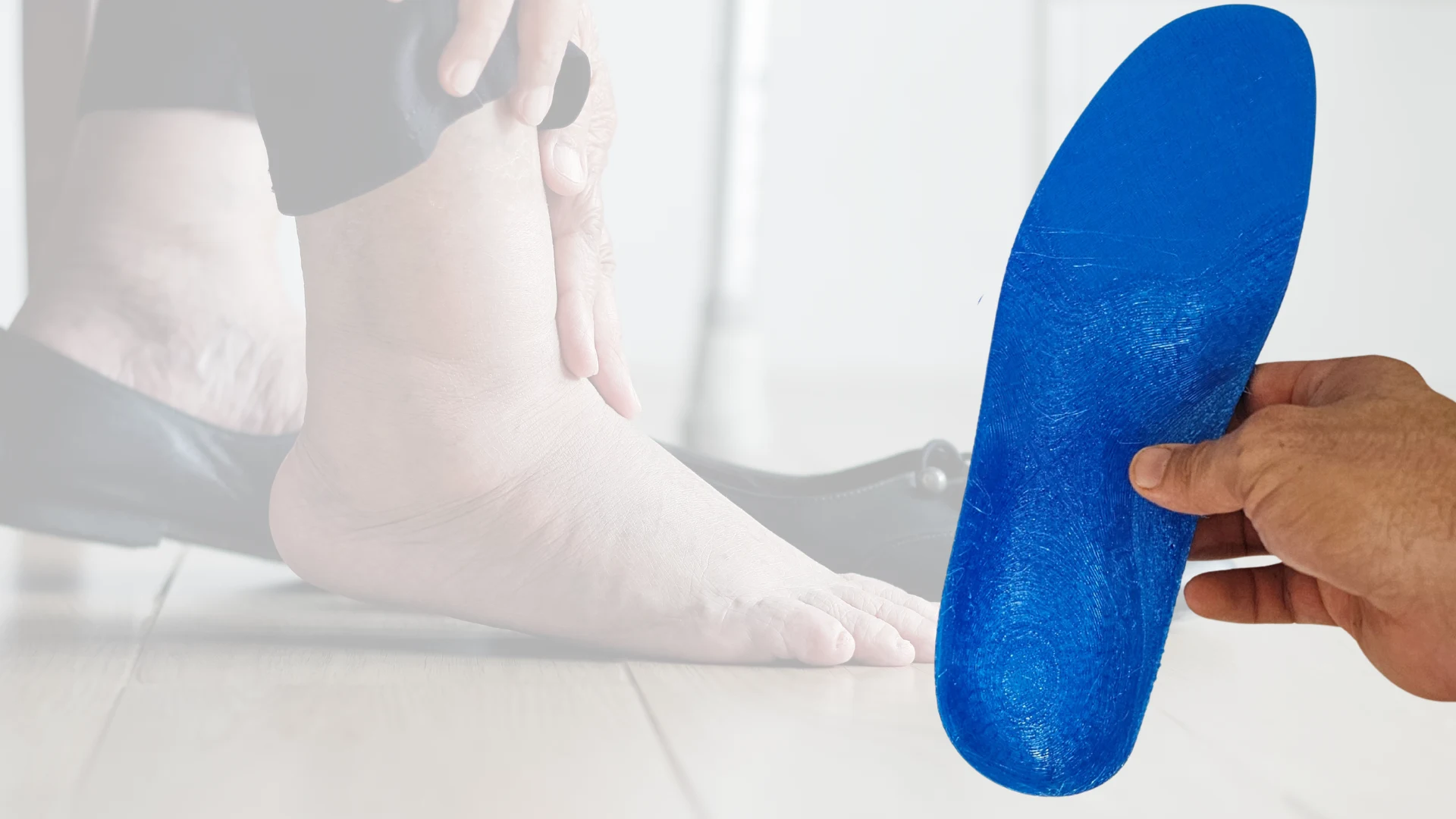
Custom orthotics are particularly valuable for elderly patients with fat pad atrophy (the natural loss of calcaneal and metatarsal fat pad cushioning with age), acquired flatfoot from tibialis posterior tendon insufficiency, and diabetic patients requiring precisely fitted pressure relief over bony prominences. Medicare Part B covers custom orthotics for qualifying diabetic patients with peripheral neuropathy. Dr. Biernacki provides custom orthotic fitting for elderly patients including Medicare Therapeutic Shoe Program coordination. Schedule a senior foot care evaluation or call (810) 206-1402 — Howell and Bloomfield Township, Michigan.
Dr. Tom’s Recommended Insoles
PowerStep is the brand I prescribe most — medical-grade OTC support without the custom orthotic price tag.
PowerStep Pinnacle Insoles — The OTC orthotic I recommend most — medical-grade arch support at a fraction of custom orthotic cost. Works in most shoes.
PowerStep Maxx Insoles — For severe arch pain or flat feet — maximum correction and support when Pinnacle isn’t enough.
Affiliate disclosure: As an Amazon Associate, Balance Foot & Ankle earns from qualifying purchases. We only recommend products we trust for our own patients.
🧦 Dr. Tom’s Pick: DASS Medical Compression Socks
Medical-grade 15-20 mmHg graduated compression. DASS socks are the brand I recommend most to patients with swollen feet, poor circulation, and post-surgery recovery. Graduated compression means tightest at the ankle, gradually releasing up the leg — promoting upward venous blood flow.
View DASS Compression Socks on Amazon →
📧 Get Dr. Tom’s Free Lab Test Guide
Discover the 5 lab tests every person over 35 should ask their doctor about — explained in plain English by a board-certified physician.
Max-cushion neutral runner — podiatrist favorite for all-day comfort.
Brooks Adrenaline GTS 25
Stability runner for overpronators — great for flat feet and bunions.
New Balance 990v6
Premium walking shoe with wide toe box — bunion and flat-foot friendly.
As an Amazon Associate, Balance Foot & Ankle earns from qualifying purchases. Product recommendations are based on clinical experience; prices and availability shown above update live from Amazon.
When to See a Podiatrist
The right shoe shape, last, and stability category is more important than brand. Balance Foot & Ankle evaluates your foot type (neutral, pronator, supinator, high-arched) and recommends specific shoe models that match. Bringing in your current pair lets us spot wear patterns that reveal gait issues — a free 5-minute assessment that can prevent years of foot pain.
Dr. Tom Biernacki, DPM · Board-Certified Foot & Ankle Surgeon. Specializes in conservative-first care, minimally invasive bunion surgery, and complex reconstruction.
Dr. Carl Jay, DPM · Accepting new patients. Specializes in sports medicine, athletic injuries, and routine podiatric care.
Dr. Daria Gutkin, DPM, AACFAS · Accepting new patients. Specializes in surgical reconstruction and pediatric podiatry.
Locations: 4330 E Grand River Ave, Howell, MI 48843 · 43494 Woodward Ave Suite 208, Bloomfield Township, MI 48302
If home treatment isn’t providing relief for your foot pain, our podiatry team at Balance Foot & Ankle can help with same-day evaluations and advanced in-office care.
Dr. Tom Biernacki, DPM is a board-certified foot & ankle surgeon (ABFAS & ABPM) at Balance Foot & Ankle Specialists in Southeast Michigan. With over a decade of clinical experience, he specializes in heel pain, bunions, diabetic foot care, sports injuries, and minimally invasive surgery. Dr. Biernacki is a member of the APMA and ACFAS, and his patient education content on MichiganFootDoctors.com and YouTube has made him one of the most-followed foot & ankle educators on YouTube.
Balance Foot & Ankle surgeons are affiliated with Trinity Health Michigan, Corewell Health, and Henry Ford Health — three of Michigan’s largest health systems.