
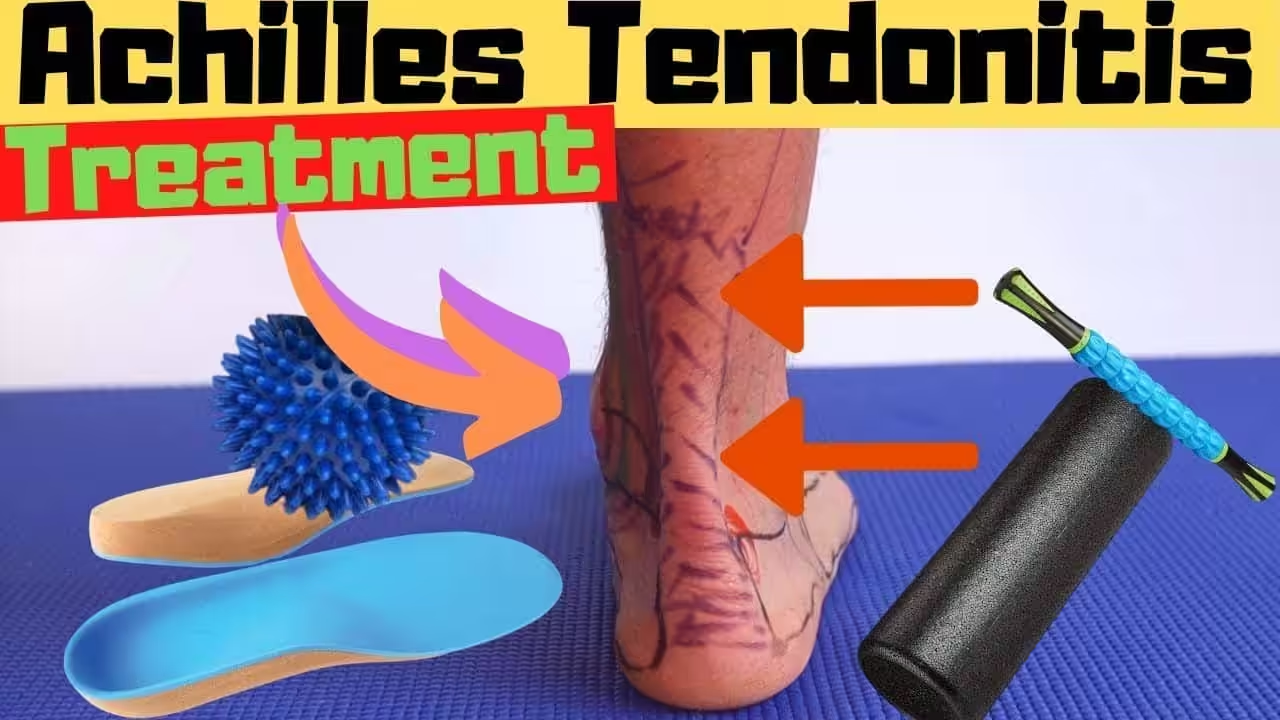
Quick answer: Treatment for eswt achilles tendonitis treatment 2 follows a stepwise approach: 1) conservative care first (rest, ice, supportive footwear, OTC anti-inflammatories), 2) physical therapy and targeted exercises, 3) in-office treatments (injections, custom orthotics) if conservative fails at 4-6 weeks, 4) surgery for refractory cases. Most patients resolve at step 1 or 2. Call (810) 206-1402.
✅ Medically reviewed by Dr. Tom Biernacki, DPM — Board-Certified Podiatrist · Last updated April 6, 2026
ESWT Treatment for Achilles Tendonitis Treatment [Is ESWT Worth It?]
ESWT For Achilles Tendonitis Treatment is proven in the scientific literature. We review ESWT Extracorporeal Shock Wave Therapy!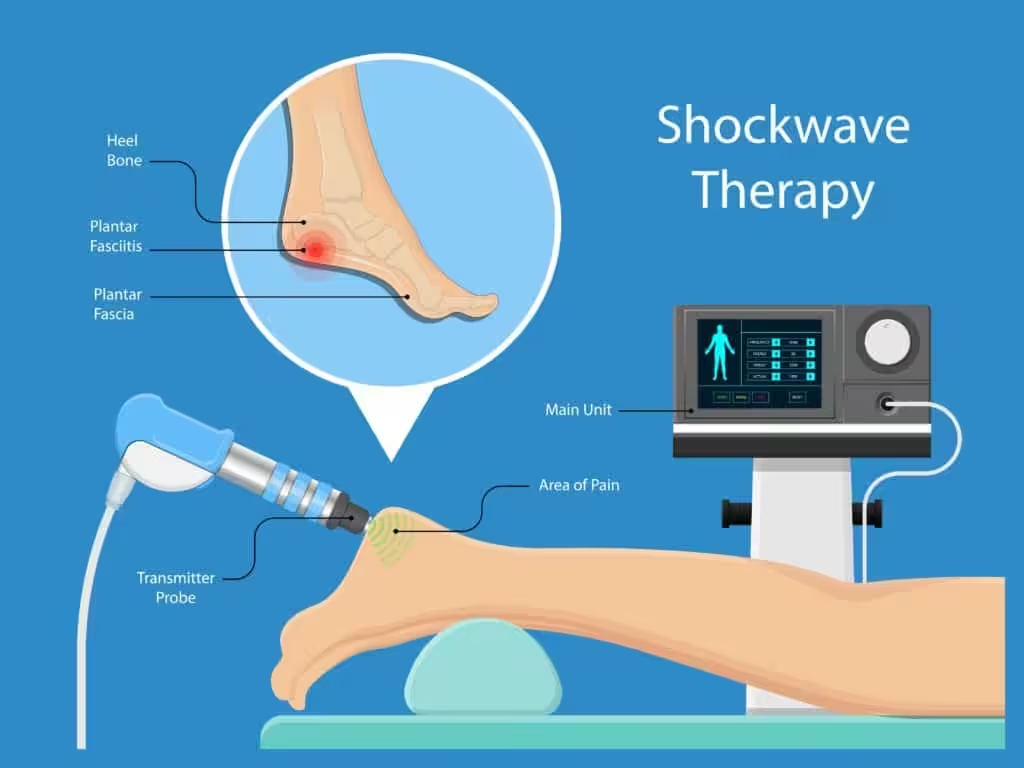
PROs vs. CONs of ESWT shockwave therapy:
There have been numerous research studies validating the effectiveness of ESWT shockwave therapy. These are some of thePros of ESWT therapy:
- 91% Success rate in relieving medical problems (as per clinical studies)
- Non-invasive.
- No anesthesia is required.
- No risk of infection.
- No scarring.
- No downtime.
- Over 80% patient satisfaction.
- Cost-effective.
- Faster, easier healing.
Cons of ESWT therapy:
- Some insurance plans do not cover ESWT.
- No readily available in most regions or cities.
- It can be a very costly machine to acquire for most medical practices.
- It is not 100% successful for every patient.
- Proper patient selection is needed for best results.
![Insertional Achilles Tendonitis HOME Treatment [Stretches & Exercises]](https://www.michiganfootdoctors.com/wp-content/cache/flying-press/d1628cf95e4e98943c1421c8033d2d0a.jpg)
What is ESWT for the Achilles tendon?
- Extracorporeal Shockwave Therapy is a non-invasive method that uses pressure waves to treat various musculoskeletal conditions. High-energy acoustic waves (shock waves) deliver a mechanical force to the body’s tissues.
When should I avoid ESWT for my Achilles tendon?
- Complications are infrequent with shock wave therapy.
- People with poor sensation (neuropathy) or hypersensitivity in the target area should not have this procedure.
- Open sores should also be avoided. Shock wave therapy is not used in patients with heart conditions or seizures.
- It should not be used during pregnancy.
- This should be discussed with your physician before undergoing the procedure.

What is Achilles Tendonitis?
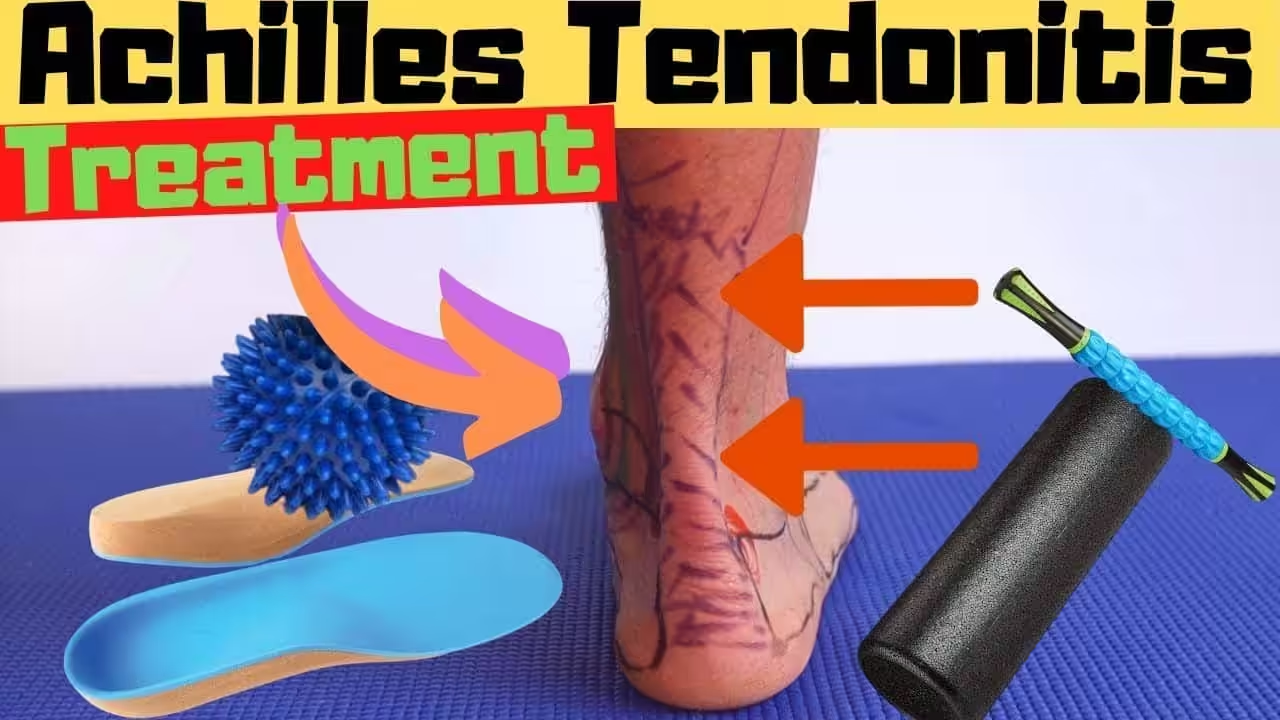
- Achilles tendonitis is a painful and often debilitating inflammation or injury of the Achilles tendon.
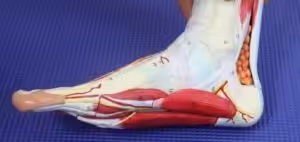
- This large tendon extends the two calf muscles; it runs down the back of the lower leg and attaches to the heel bone (calcaneus).
- The Achilles tendon connects the strong leg muscles to the foot and gives you the ability to rise on your toes, which allows you to walk.
- Unfortunately, Achilles tendonitis can make walking almost impossible.
2 Phases of Achilles Tendonitis:
1)Acute Achilles Tendonitis:- Achilles Tendonitis is inflammation. Inflammation alone can be treated with numerous conservative treatments.
- Anything that addresses rest and inflammation can be helpful.
- The doctor may use a steroid injection, strapping, taping, orthotics, or lasers in this phase.
- If the condition has moved on to phase 2, the tissue is damaged (micro-tearing) and needs to be repaired.

- For Phase 2 or chronic Achilles tendonitis, high-energy ESWT is FDA approved and shown to prevent surgery.
- ESWT shockwave therapy is a device proven to create this repair without surgery.
Benefits of ESWT Achilles Tendonitis Treatment:
- The effects of ESWT are best documented in areas of changes in tissue density, such as those where a tendon attaches to a bone (enteropathies) and where a bone attaches to a ligament (neuropathies).
- For this reason, it is very effective for painful connective tissue in the foot and heels.
- Additionally, ESWT gives hope by relieving pain, eliminating the risk factors associated with surgery, and allowing people to resume their normal lives.

What is extracorporeal shock wave therapy?
- Shock wave therapy is a non-invasive method that uses pressure waves to treat various conditions in the body.
- These include plantar fasciitis, Achilles tendonitis, plantar fibroma pain, Achilles tendon, and muscle pain.
- Acoustic waves (aka shock waves) deliver a mechanical force to the body’s tissues.
- This can cause increased blood flow and blood vessels to develop in chronic and painful tissues.
- What signs indicate this therapy is needed?
- Shock wave therapy may treat conditions such as degenerated tendons, Achilles tendonitis, plantar fasciitis, plantar fibroma formation, back of the heel, and bottom of the heel pain.
When should I avoid this therapy?
- Complications are infrequent with shock wave therapy.
- People with poor sensation (neuropathy) or hypersensitivity in the target area should not have this procedure.
- Open sores should also be avoided.
- Shock wave therapy is not used in patients with heart conditions or seizures. It should not be used during pregnancy.
- This should be discussed with your physician before undergoing the procedure.
General Details of Procedure:
- A noninvasive probe is applied to the skin.
- An electrical charge creates an energy wave that is focused on the area of concern.
- The shock waves create a force on the tissues that may induce healing. This will allow the formation of blood vessels into the area.
- There is still developing evidence on how this procedure works.
- Some studies suggest that it may be that shock waves cause inflammation and improve blood flow to encourage the body to repair and heal itself. Studies do show that increased blood vessel formation does occur in the new tissue leading to tissue healing.
Specific Technique:
- Shock wave therapy is a non-surgical procedure.
- A probe is placed on the skin after a gel is applied to help conduct the shock waves. Low-energy shock wave therapy often is performed without anesthesia.
- Therapy is more successful with active patient participation, where the patient tells the therapist whether or not the probe is in the area of pain. One or more treatment sessions may be needed.
- We like to perform on average 2-3 sessions.
What happens after the procedure?
- Patients typically bear weight after treatment. Protected walking and running are allowed to occur immediately afterward.
- Although the first time, patients are advised to reduce the level of physical activity for one to two weeks after treatment. There may be some initial soreness.
- Shock wave therapy may give good outcomes for some tendon problems or chronic degenerative conditions. Examples include Achilles tendinitis and plantar fasciitis.
Potential Complications:
- The main complications are pain and hypersensitivity at the site of treatment. These problems typically resolve with time. Pain and disability may persist when shock wave therapy is not successful.
More Podiatrist-Recommended Achilles Essentials
Achilles Night Splint
United Ortho dorsiflexion splint — reduces morning Achilles tendon stiffness.
Cushioned Running Shoe


Hoka Clifton 10 — max-heel-cushion offloads the Achilles with every step.
Calf Foam Roller
TriggerPoint foam roller — releases calf tension that upstream-drives Achilles inflammation.
As an Amazon Associate, Balance Foot & Ankle earns from qualifying purchases. Product recommendations are based on clinical experience; prices and availability shown above update live from Amazon.
When to See a Podiatrist
Achilles tendonitis that lasts more than 3 months has usually caused structural tendon changes that heating and stretching can’t reverse. Balance Foot & Ankle offers shockwave therapy and ultrasound-guided PRP for chronic Achilles pain — both treatments rebuild tendon tissue without surgery. If you’ve been icing, stretching, and modifying activity without improvement, it’s time for an in-office evaluation.
Call Balance Foot & Ankle: (810) 206-1402 · Book online · Offices in Howell & Bloomfield Hills
Frequently asked questions:
What are the ESWT treatment side effects?
Does ESWT treatment pose any side effects? The answer is every type of medical therapy is never risk-free. Shockwave therapy is FDA approved for foot and ankle conditions such as plantar fasciitis.Does insurance cover ESWT treatment?
We list studies that show how effective shockwave therapy can be, how cost-effective it can be, and how beneficial the results and evidence for shockwave therapy can be. We believe once weighed against therapy such as surgery and injections, shockwave therapy is by far the safest and low-risk option. There are minimal to no major known side effects for ESWT therapy for the lower extremity.How much does ESWT treatment cost?
The biggest question most patients have is, “how much does shockwave treatment cost?” The answer is shockwave therapy is generally not covered by medical insurance even though it is FDA approved.Is ESWT treatment covered by insurance?
Unfortunately no, most insurance plans do not cover ESWT treatment as it is a fairly new treatment and not readily available in most communities. The cost of shockwave therapy is lower than a standard medical appointment. We offer different packages that are reduced in cost for more chronic injuries that may require more treatment. We believe that it is not much more than a standard co-pay or co-insurance for a standard insurance plan in some cases. We reference studies above that show between 2-6 treatments over a period of approximately 2 weeks has shown the best results at 1 month in 3 months compared to other treatments. The studies we reference above showed that shockwave therapy is more cost-effective when weighed against repeated doctor’s visits, time off work, and potentially laying plantar fasciitis or Achilles tendonitis surgical options. We would recommend scheduling an appointment with us and potentially even performing a non-obligation test session to see how well shockwave therapy will work for you. We stand behind the benefits of radial shockwave therapy and are cold laser therapy. We will do our best to ensure that it is a cost-effective treatment for all of our patients and work with them to make their treatment successful.List of services our podiatrists perform:
- Toenail Fungus Treatment (Oral or Laser ).
- Toenail Trimming.
- Orthotics Fitting.
- Ingrown Toenails.
- Infected Ingrown Toenails.
- Trimming of Corns, Trimming of Calluses, and Treatment of Pressure Blisters.
- Diabetic Foot Care & Diabetic Foot Wounds.
- Athletes Foot, Dry Skin, Eczema.
- Foot & Ankle Ulcer Care.
- Infection and Abscess Care.
- Staph Infections in the Toe or Foot Treatment.
- Treatment of Plantar Warts for Your Toes and Feet.
- Foot & Ankle Injections (Steroid or Natural Solutions.)
- Management of Foot & Ankle Fractures (Walking Boots for broken toes or broken feet).
- Heel Pain (Heel Spur or Plantar Fasciitis).
- Custom Orthotics for children and adults (In the office).
- Over the Counter Orthotics for children and adults.
- Podiatrist medical pedicure.
- Extra-Depth Shoes for Patients with Diabetes.
- Diabetic Shoes.
- Gout Treatment.
- Prescription (Refills).
- Telehealth appointments.
- Shockwave therapy (AKA ESWT or EPAT therapy)
- Cold laser therapy (In the office).
- MLS laser therapy (Multi-Wave Locked System laser therapy).
- Laser for peripheral neuropathy (In-Office).
List of in-office procedures our podiatrists perform:
We can perform toenail, toe, foot, heel & ankle surgery in the office! We can help with:- Minimally invasive foot surgery.
- Minimally invasive bunion surgery.
- Minimally invasive hammertoe surgery.
- Corn and callus removal surgery.
- Plantar wart removal surgery.
- In-office permanent ingrown toenail removal surgery.
- Removal of unwanted spurs, bumps, or lumps on your feet.
- Shockwave therapy (AKA ESWT therapy or EPAT therapy)
- Cold laser therapy.
- MLS laser therapy (Multi-Wave Locked System laser therapy).
- Laser for peripheral neuropathy.
- 3D custom orthotic scan.
Related Treatment Guides
Medical References & Sources
- American Orthopaedic Foot & Ankle Society — Achilles Tendinopathy
- PubMed Research — Achilles Tendinopathy Treatment
📧 Get Dr. Tom’s Free Lab Test Guide
Discover the 5 lab tests every person over 35 should ask their doctor about — explained in plain English by a board-certified physician.
📍 Located in Michigan?
Our board-certified podiatrists treat this condition at two convenient locations. Same-day appointments often available.
Considering Shockwave Therapy for Achilles Tendinitis?
Extracorporeal shockwave therapy (ESWT) is a non-invasive treatment that stimulates healing in chronic Achilles tendinopathy. Our podiatrists use focused shockwave technology to provide relief when other treatments have not worked.
References
- Rompe JD, et al. Eccentric loading versus eccentric loading plus shock-wave treatment for midportion Achilles tendinopathy: a randomized controlled trial. Am J Sports Med. 2009;37(3):463-470.
- Maffulli N, et al. Extracorporeal shock wave therapy for the management of tendinopathies. Bone Joint J. 2020;102-B(2):263.
- Al-Abbad H, Simon JV. The effectiveness of extracorporeal shock wave therapy on chronic Achilles tendinopathy: a systematic review. Foot Ankle Int. 2013;34(1):33-41.
👟 Dr. Tom Also Recommends
Podiatrist Recommended Shoes 2026: Dr. Tom’s Top Picks for Every Condition
The right footwear can make or break your recovery. Dr. Tom’s complete guide to the best shoes for plantar fasciitis, flat feet, neuropathy, bunions & more — with clinical picks for every foot type.
See Dr. Tom’s Top Shoe Picks →Insurance Accepted
BCBS · Medicare · Aetna · Cigna · United Healthcare · HAP · Priority Health · Humana · View All →
Howell Office
4330 E Grand River Ave
Howell, MI 48843
Get Directions →
Bloomfield Hills Office
43494 Woodward Ave, #208
Bloomfield Hills, MI 48302
Get Directions →
Your Board-Certified Podiatrists



Ready to Get Back on Your Feet?
Same-week appointments available at both locations.
Book Your AppointmentIn-Office Treatment at Balance Foot & Ankle
When conservative care isn’t enough, Dr. Tom Biernacki and the team at Balance Foot & Ankle offer advanced, same-day options — including Achilles Tendinopathy Treatment in Michigan at our Howell and Bloomfield Hills clinics.
Same-day appointments available. Call (810) 206-1402 or book online.
In-Office Treatment at Balance Foot & Ankle
If home treatment isn’t providing relief for your Achilles tendon conditions, our podiatry team at Balance Foot & Ankle can help with same-day evaluations and advanced in-office care.
Doctor Hoy’s Natural Pain Relief Gel
Natural topical pain relief I use in our clinic. Arnica + camphor formula — apply directly to the area 3–4x daily. ($20–25)
Shop Doctor Hoy’s →Frequently Asked Questions
How long does treatment take to work?
Most patients see improvement in 4-8 weeks with consistent conservative care. Persistent symptoms after 8 weeks need imaging and escalation.
When is surgery needed?
Surgery is reserved for cases that fail 3-6 months of conservative care, structural deformities, or fractures requiring stabilization.
Is this covered by insurance?
Most diagnostic visits and conservative treatments are covered by Medicare and major insurers. Custom orthotics often require diabetic or post-surgical justification.

Dr. Tom Biernacki, DPM is a board-certified foot & ankle surgeon (ABFAS & ABPM) at Balance Foot & Ankle Specialists in Southeast Michigan. With over a decade of clinical experience, he specializes in heel pain, bunions, diabetic foot care, sports injuries, and minimally invasive surgery. Dr. Biernacki is a member of the APMA and ACFAS, and his patient education content on MichiganFootDoctors.com and YouTube has made him one of the most-followed foot & ankle educators on YouTube.