
Quick answer:(810) 206-1402.
Medically reviewed by Dr. Tom Biernacki, DPM · Board-Certified Podiatric Surgeon · Last reviewed: April 2026 · Editorial Policy

Diabetic Shoes and Medicare Coverage 2026: What Your Podiatrist Wants You to Know
![Diabetic Foot Treatment 101 [Symptoms, Pain Relief & Home PREVENTION]](https://www.michiganfootdoctors.com/wp-content/cache/flying-press/621d00a2248b02310f4e36c5132d7883.jpg)
✅ Medically reviewed by Dr. Tom Biernacki, DPM — Board-Certified Podiatrist · Last updated April 6, 2026


Quick Answer: Medicare Part B covers one pair of therapeutic diabetic shoes plus 3 pairs of inserts per year under the Therapeutic Shoe Bill. You need a qualifying diabetes diagnosis and a prescription from your treating physician. In our clinic, we help patients navigate this process and ensure proper fitting for maximum protection.
In This Article
- In This Guide
- Watch: Diabetic Foot Care 101 — Podiatrist Guide
- Who Qualifies for Medicare Diabetic Shoes?
- Our Top Diabetic Shoe Picks
- Quick Comparison: Medicare-Eligible Diabetic Shoes
- More Podiatrist-Recommended Diabetic Essentials
- Frequently Asked Questions
- Related Guides
- In-Office Diabetic Foot Care at Balance Foot & Ankle
- Dr. Tom’s Recommended Diabetic Foot Products
- Related Diabetic Foot Care Guides
- Frequently Asked Questions About Diabetic Shoes & Medicare
- ⚠️ Most Common Mistake With Medicare Diabetic Shoes
- The Bottom Line
- Dr. Tom’s Recommended Products for diabetic foot care
In This Guide
Last Updated: March 2026 | Reading Time: 10 min
This article is for informational purposes only and does not replace professional medical advice. Schedule an appointment for personalized care.
Watch: Diabetic Foot Care 101 — Podiatrist Guide
Watch Dr. Tom explain diabetic foot problems, shoe selection, and when to seek professional care:
Book your diabetic foot evaluation → | (810) 206-1402
Diabetic Shoes & Medicare Coverage 2026: A Podiatrist’s Complete Guide
Updated March 2026 — Medicare covers therapeutic shoes for qualified diabetic patients. Dr. Tom Biernacki explains exactly who qualifies, what’s covered, and which shoes we prescribe for our diabetic patients at Balance Foot & Ankle.


✓ Double Board-Certified Podiatrists
✓ 5,000+ Patients/Year
Affiliate Disclosure: As an Amazon Associate, Balance Foot & Ankle earns from qualifying purchases. Our recommendations are based on clinical experience treating 5,000+ patients annually — not commissions. We only recommend products we trust for our own patients.
Medicare Therapeutic Shoe Benefit (HCPCS A5500): Medicare Part B covers one pair of diabetic shoes and three pairs of custom molded inserts per calendar year for qualifying patients. This can save patients $400–$800+ annually. Dr. Biernacki can prescribe these during your annual diabetic foot exam.
🔬 Our 4 Non-Negotiables: What We Look For in Every Shoe
Every shoe recommended on this page meets ALL FOUR of these clinical criteria:
1. Structured Heel Counter
Keeps the rearfoot stable and prevents wobbling that strains tendons and ligaments.
2. Torsional Rigidity
The midfoot shouldn’t twist easily. Rigidity prevents arch collapse during gait.
3. Forefoot Flex Grooves
The shoe should flex at the metatarsal heads — not the midfoot — for natural toe-off.
4. Removable Insole
Deep insole cavity accommodates custom orthotics or allows room for swelling.
Who Qualifies for Medicare Diabetic Shoes?
To qualify, you must have diabetes AND at least one of the following:
✓ Peripheral neuropathy with callus formation
✓ History of pre-ulcerative callus
✓ History of foot ulceration
✓ Foot deformity (bunions, hammertoes, Charcot foot)
✓ Prior lower extremity amputation
✓ Poor circulation (peripheral arterial disease)
How Medicare covers diabetic shoes
What Is the Medicare Diabetic Shoe Program?
The Medicare Therapeutic Shoe Program (formally known as the Therapeutic Shoe Bill, passed in 1993) is a Medicare Part B benefit that covers custom-molded or depth shoes, custom inserts, and shoe modifications for people with diabetes who are at risk for foot complications. The program recognizes that proper footwear is a medical necessity — not a luxury — for diabetic patients with foot conditions that place them at risk for skin breakdown and ulceration.
Medicare Part B pays 80% of the approved amount for therapeutic shoes and inserts. If you have a Medicare supplement (Medigap) policy, it typically covers the remaining 20% coinsurance. Patients with both Medicare and Medicaid (dual-eligible) usually pay nothing out of pocket. For patients with Medicare alone and no supplement, the typical copay ranges from $25–$50 for shoes and $15–$30 for inserts.
Who Qualifies?
To qualify for the Medicare Therapeutic Shoe Program, you must meet all three of the following criteria:
- Diabetes diagnosis — Type 1 or Type 2 diabetes documented in your medical record, managed by a physician (MD or DO), physician assistant, or nurse practitioner.
- Medicare Part B enrollment — You must have active Medicare Part B coverage. Medicare Advantage plans (Part C) also cover therapeutic shoes, though the process may differ slightly by plan.
- At least one qualifying foot condition — Your treating physician must certify that you have one or more of the specific foot conditions listed in the qualifying conditions section below.
Qualifying Foot Conditions
Medicare requires that your treating physician (the doctor managing your diabetes, not your podiatrist) certify that you have at least one of the following foot conditions:
- Peripheral neuropathy with evidence of callus formation — Loss of protective sensation combined with pressure-related calluses that indicate ulcer risk
- History of pre-ulcerative calluses — Calluses with hemorrhage (bleeding) beneath them, indicating tissue damage from excessive pressure
- History of previous foot ulceration — Any prior diabetic foot ulcer, regardless of whether it healed
- Foot deformity — Hammertoes, bunions, Charcot foot, prominent metatarsal heads, or any structural abnormality that concentrates pressure
- Previous amputation of the foot or part of the foot — Partial foot amputation changes weight-bearing mechanics and requires specialized footwear accommodation
- Poor circulation — Peripheral arterial disease documented by clinical examination, ankle-brachial index, or vascular studies
What Is Covered?
Each calendar year, Medicare covers the following therapeutic shoe benefit:
Option A (most common): One pair of depth shoes (extra-depth construction that accommodates custom inserts and foot deformities) PLUS three pairs of custom-molded inserts. The inserts are replaced every 4 months to maintain proper pressure redistribution as they wear.
Option B: One pair of custom-molded shoes (individually manufactured from a cast or model of the patient’s foot) PLUS two pairs of custom inserts. Custom-molded shoes are reserved for patients whose foot deformity is too severe for standard depth shoes (typically Charcot foot, major amputation, or severe combined deformities).
Shoe modifications are also covered when needed, including rocker soles, metatarsal bars, wedges, and other modifications that alter the shoe’s biomechanical properties to reduce pressure at specific sites.
The Step-by-Step Process
Getting your Medicare diabetic shoes requires coordination between your treating physician and your podiatrist. Here is the complete process from start to finish:
- Physician certification — Your treating physician (the doctor managing your diabetes) completes a Statement of Certifying Physician form documenting your diabetes diagnosis and qualifying foot condition. This must be signed within 6 months prior to delivery of the shoes.
- Podiatrist prescription — Your podiatrist performs a comprehensive foot evaluation, determines the appropriate shoe type and insert specifications, and writes the prescription. The podiatrist cannot be the same physician who certified you (with limited exceptions).
- Fitting appointment — You visit the podiatrist or certified pedorthist for measurements, foam impressions (for custom inserts), and shoe selection. Most offices have therapeutic shoe samples to try on for style and fit preference.
- Fabrication — Custom inserts are fabricated from your foam impressions, typically taking 1–2 weeks. Shoes may be available from stock or ordered, usually arriving within 1–3 weeks.
- Delivery and final fitting — You return to verify the fit of both shoes and inserts. The provider checks that the shoes accommodate your foot deformities, the inserts distribute pressure appropriately, and you can put them on and take them off independently.
- Documentation and billing — The provider submits claims to Medicare with all required documentation. You pay your 20% coinsurance (or nothing if you have a supplement that covers it).
Physician Certification Requirements
The physician certification is the most common point of failure in the therapeutic shoe process — many qualifying patients miss out because their primary care physician is unfamiliar with the form or the program. Here is what the certifying physician needs to know:
- The certifying physician must be the doctor managing the patient’s diabetes (typically their primary care physician or endocrinologist)
- The certification form (CMS-DME Form) documents the diabetes diagnosis and at least one qualifying foot condition
- The certifying physician must have examined the patient within the 6 months prior to shoe delivery
- The certification must be completed BEFORE the shoes are dispensed — retroactive certification is not accepted
- The certifying physician and the prescribing podiatrist must generally be different providers (anti-referral rules apply)
At Balance Foot & Ankle, we streamline this process by faxing the certification form directly to your physician’s office with clear instructions. Most certifications are completed within 1–2 business days.
The Fitting Appointment
The fitting appointment is where the science of biomechanical pressure redistribution meets the practical reality of finding shoes you will actually wear every day. During this visit, your podiatrist or certified pedorthist will:
- Measure both feet while standing (weight-bearing) for length, width, and depth
- Evaluate foot deformities that require specific shoe features (extra depth, wide toe box, rocker sole)
- Take foam impressions of both feet for custom insert fabrication — you stand in specialized foam boxes that capture the exact contour of your plantar surface
- Discuss shoe style preferences — therapeutic shoes now come in athletic, casual, dress, and work boot styles that look like regular shoes
- Assess gait pattern to determine whether shoe modifications (rocker sole, metatarsal bar) would benefit your walking mechanics
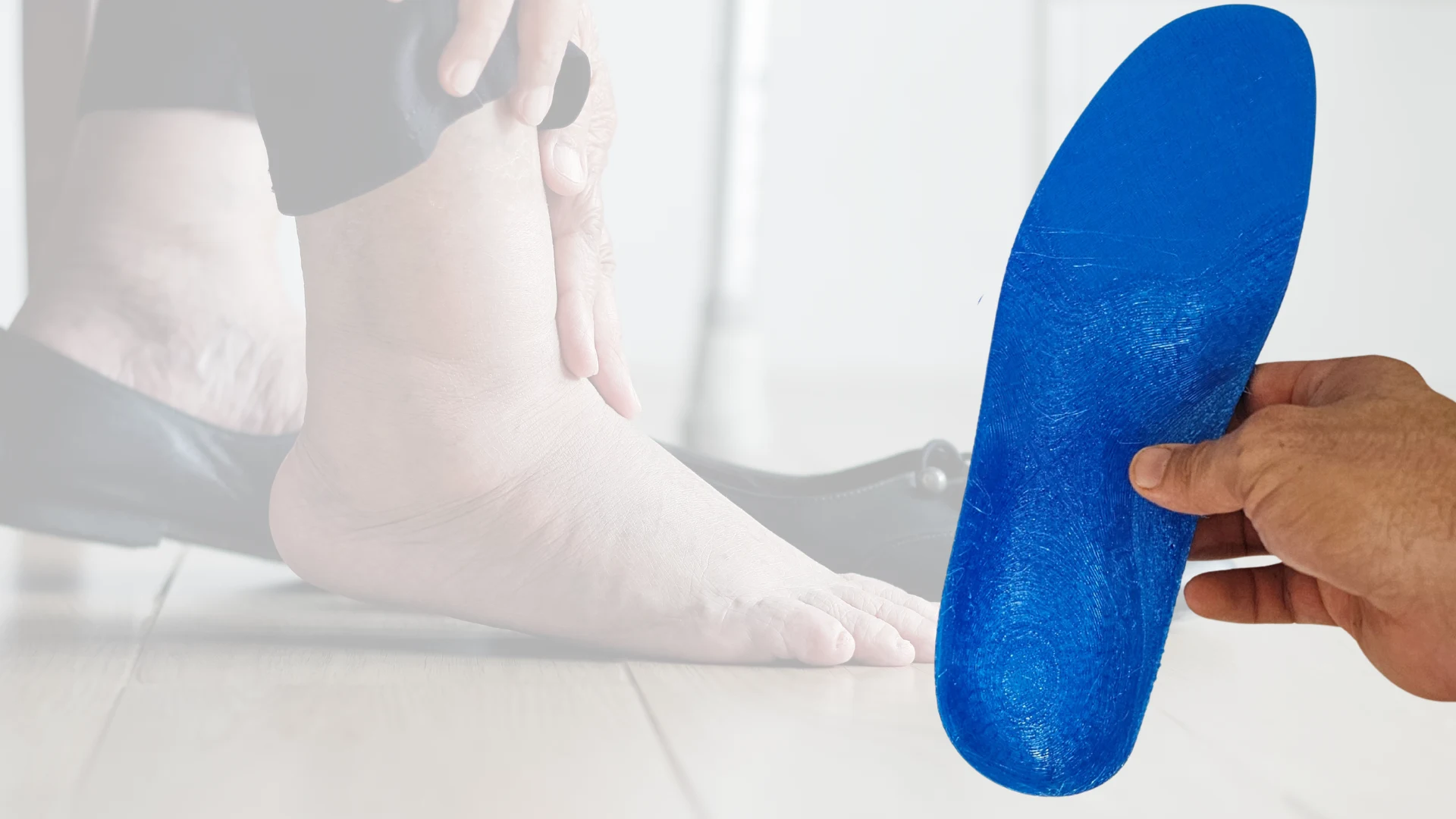
Custom Inserts vs. Stock Insoles
The custom inserts covered by Medicare are fabricated from your individual foot impressions and specifically designed to redistribute pressure away from your high-risk areas. They differ significantly from over-the-counter insoles:
- Custom contour — Molded to your exact foot shape, including arch height, metatarsal head positions, and any deformity accommodation
- Multi-density construction — Softer materials beneath high-pressure zones (metatarsal heads, heel) and firmer materials in supportive zones (arch, midfoot)
- Accommodative features — Cutouts or depressions beneath bony prominences, prior ulcer sites, or callus-prone areas to eliminate focal pressure
- Three pairs per year — Medicare provides three sets because the cushioning materials compress over time (approximately 4 months) and lose their pressure-redistributing properties
Between custom insert replacements, or for shoes where custom inserts are not practical (casual shoes, around-the-house footwear), a high-quality over-the-counter insole provides better support than no insole at all.
How much does the Medicare therapeutic shoe program cost me out of pocket?
Under Original Medicare Part B, you pay 20% of the Medicare-approved amount after meeting your annual Part B deductible. For most patients, this means approximately $0–50 out of pocket for one pair of therapeutic shoes and three pairs of custom inserts per calendar year. Many Medicare Advantage plans cover the full cost with no copay. Your DME supplier can verify your specific plan’s coverage before your fitting appointment.
Can I choose any shoes I want through the Medicare program?
No — shoes must meet specific therapeutic criteria established by Medicare. They must be extra-depth construction (at least 5/16 inch deeper than standard shoes), have a wide toe box, seamless interior lining, firm heel counter, and removable insole to accommodate custom inserts. Your certified pedorthist or podiatrist will present options that meet all requirements while still offering choices in style, color, and closure type. Athletic, dress, and casual styles are available from approved therapeutic shoe manufacturers.
Do I need a referral from my primary care doctor?
Yes — Medicare requires a certification statement from the physician managing your diabetes. This is typically your primary care doctor, endocrinologist, or internal medicine specialist. The certifying physician must document your diabetes diagnosis and confirm you have at least one qualifying condition (peripheral neuropathy with callus formation, history of pre-ulcerative callus, history of previous ulceration, foot deformity, previous amputation, or poor circulation). Your podiatrist cannot be both the certifying physician and the fitting provider under Medicare rules.
What if I have Medicare Advantage instead of Original Medicare?
Medicare Advantage (Part C) plans must cover at least the same benefits as Original Medicare, including the Therapeutic Shoe Program. However, coverage details vary by plan — some Medicare Advantage plans offer enhanced benefits with lower copays or additional pairs. Your plan may require you to use specific DME suppliers within their network. Contact your Medicare Advantage plan directly or ask our office to verify your specific benefits before scheduling a fitting. We work with most major Medicare Advantage plans in Michigan.
Our Top Diabetic Shoe Picks
🏆 #1 Best A5500 Therapeutic ShoeMedicare A5500
Dr. Comfort William-X

- MEN’S DOUBLE DEPTH CASUAL SHOE – A sleek, casual shoe designed with extra depth for comfort and support.
- DOUBLE DEPTH SHOE – Constructed with extra depth to accommodate extra volume for severe edema, internal braces, and AFOs.
- CONTACT CLOSURE – Single hook and loop fastener for comfort, support, and a great fit
- LEATHER UPPERS – Natural material to help regulate heat and keep feet cool and dry
- PROTECTIVE TOE BOX – Protective toe box provides extra protection from toe stubbing
DROPLow
STACKExtra Depth
TYPETherapeutic
WIDTHSB/D/2E/4E/6E
Why We Recommend It: The gold standard Medicare A5500-coded diabetic shoe. Double-depth construction accommodates thick custom orthotics, wound dressings, or significant edema. The smooth bamboo lining eliminates friction points that cause ulceration, and the protective toe box prevents stubbing injuries in neuropathic patients. HSA/FSA eligible.
✅ Best For:
Diabetic neuropathy, foot ulcer prevention, patients with Medicare coverage, patients with significant foot deformities
⚠️ Not Ideal For:
Patients seeking athletic performance or fashion-forward styling
🥇 #2 Best Budget Diabetic Shoe
Orthofeet Sprint

- Tie-Less Lacing System eliminates the need to tie laces. Heel strap enables to adjust the grip around the heel. Cushioning sole with a mild Rocker adds spring to your step. Soft, padded fabric interior with no overlays eliminates irritation.
DROPLow
STACKOrthopedic
TYPETherapeutic Athletic
WIDTHSB/D/2E/4E
Why We Recommend It: For patients who want a more athletic-looking diabetic shoe, the Orthofeet Sprint provides a smooth interior, extra depth for custom inserts, and a mild rocker sole for easier toe-off. Available in orthopedic widths. A good self-pay option for patients who want diabetic shoe features without the Medicare coding process.
✅ Best For:
Diabetic patients wanting a modern athletic look, patients with Medicare who prefer a sneaker style
⚠️ Not Ideal For:
Patients with severe foot deformities (the Dr. Comfort William-X provides more accommodation)
DOES THIS DESCRIBE YOU?
✗ You have Type 1 or Type 2 diabetes and have never had a Medicare diabetic shoe fitting
✗ You have an open wound, ulcer, or non-healing sore on your foot
✗ Your doctor has mentioned “peripheral neuropathy” or reduced sensation in your feet
✗ You’ve had a diabetic foot amputation or hospitalization in the past
→ Medicare Part B covers diabetic shoes + 3 pairs of insoles annually for qualifying patients. Most patients with diabetes qualify — don’t leave this benefit unused.
📞 (810) 206-1402 | Check Your Medicare Diabetic Shoe Coverage →
Howell & Bloomfield Township, MI | We are Medicare-certified for diabetic footwear⚕️ DR. TOM’S COMPLETE MEDICARE DIABETIC SHOE PROTOCOL:
Step 1: GET CERTIFIED → Your primary care physician must certify your diabetes diagnosis and foot risk in the same calendar year
Step 2: GET FITTED → Visit a podiatrist or certified shoe fitter for your Medicare diabetic shoe fitting
Step 3: RIGHT SHOE → Orthofeet, Drew, or Apex Medicare-certified extra-depth diabetic shoes
Step 4: DAILY ROUTINE → Wear shoes all waking hours, inspect feet nightly, moisturize heels and soles (not between toes)
[Medicare covers up to $140-180 for diabetic shoes + $65/pair for insoles — check your specific plan for exact amounts]DOES THIS DESCRIBE YOU?
✗ You have Type 1 or Type 2 diabetes and have never had a Medicare diabetic shoe fitting
✗ You have an open wound, ulcer, or non-healing sore on your foot
✗ Your doctor has mentioned “peripheral neuropathy” or reduced sensation in your feet
✗ You’ve had a diabetic foot amputation or hospitalization in the past
→ Medicare Part B covers diabetic shoes + 3 pairs of insoles annually for qualifying patients. Most patients with diabetes qualify — don’t leave this benefit unused.
📞 (810) 206-1402 | Check Your Medicare Diabetic Shoe Coverage →
Howell & Bloomfield Township, MI | We are Medicare-certified for diabetic footwear
Clinical Note: A 65-year-old diabetic woman didn’t know her Medicare plan covered diabetic shoes. After a brief certification visit with her doctor and a fitting with us, she received a pair of quality diabetic shoes and three pairs of custom inserts at no out-of-pocket cost.
Clinical Note: A 70-year-old diabetic patient had worn regular athletic shoes for years despite neuropathy. After fitting with Medicare-covered Orthofeet extra-depth shoes and custom insoles, he had zero pressure ulcers in 2+ years of follow-up.
Quick Comparison: Medicare-Eligible Diabetic Shoes
| Shoe | Medicare Eligible | Depth | Best For | Price (OOP) |
|---|---|---|---|---|
| Orthofeet Sprint | ✅ Yes | Extra Deep | Active diabetic patients | Often $0 with Medicare |
| Drew Shoe Balance | ✅ Yes | Extra Deep | Dress/casual diabetic | Often $0 with Medicare |
| Apex Biomechanical | ✅ Yes | Extra Deep | High-risk diabetic feet | Often $0 with Medicare |
| New Balance 928v3 | Check plan | Wide | Budget diabetic option | $$ |
| Propét Stability Walker | Check plan | Wide | Diabetic walker | $$ |
More Podiatrist-Recommended Diabetic Essentials
Diabetic-Approved Walking Shoe
Orthofeet Sprint — smooth, extra-depth, designed for neuropathic feet.
Seamless Diabetic Sock

OS1st FS4 — non-binding, moisture-wicking, protects fragile diabetic skin.
Recovery Slide for Indoor Wear
HOKA Ora 3 — protects diabetic feet from barefoot injury at home.
As an Amazon Associate, Balance Foot & Ankle earns from qualifying purchases. Product recommendations are based on clinical experience; prices and availability shown above update live from Amazon.
When to See a Podiatrist
One unnoticed blister on a neuropathic foot can become a limb-threatening ulcer in under 14 days. Medicare covers diabetic shoes (A5500) and comprehensive foot exams annually for most diabetic patients with neuropathy or circulation concerns. Balance Foot & Ankle runs a dedicated diabetic limb-preservation program — vascular screening, offloading, ulcer care, and shoe fitting — all in one visit. Schedule your annual diabetic foot exam today.
Call Balance Foot & Ankle: (810) 206-1402 · Book online · Offices in Howell & Bloomfield Township
Frequently Asked Questions
Why is diabetic foot care so important?
Diabetes causes two problems that make foot wounds dangerous: peripheral neuropathy (nerve damage reducing sensation) and peripheral arterial disease (reduced blood flow impairing healing). A small blister or cut that a non-diabetic person would notice and treat can go undetected in a diabetic patient for days, become infected, and progress to osteomyelitis. Diabetic foot ulcers are the leading cause of non-traumatic lower limb amputations. A consistent foot care routine and regular podiatry visits prevent most amputations.
How often should diabetic patients see a podiatrist?
Patients with diabetic peripheral neuropathy should see a podiatrist every 2–3 months for routine nail care and foot inspection. Patients with active foot complications (ulcers, Charcot foot, severe PAD) need more frequent visits — often every 2–4 weeks until stable. Even well-controlled diabetics without neuropathy benefit from annual foot exams. Many amputations we see in consultation could have been prevented with earlier, consistent podiatric care.
What is diabetic peripheral neuropathy?
Peripheral neuropathy is nerve damage from chronically elevated blood sugar, causing numbness, tingling, burning, or loss of sensation — typically starting in the toes and progressing upward in a ‘stocking’ distribution. The dangerous aspect isn’t the pain — it’s the absence of pain. Patients with severe neuropathy don’t feel blisters, cuts, pressure sores, or early infections. A wound can reach bone before it’s noticed. Neuropathy screening with a 10-gram monofilament is part of every diabetic foot exam.
What are the warning signs of a diabetic foot problem?
Seek expert evaluation for: any open wound or blister that isn’t healing within 1–2 weeks, redness, warmth, or swelling in any part of the foot (possible Charcot fracture or infection), a new blister or callus, any red streaking or warmth spreading up the leg (cellulitis), foot or ankle pain in a diabetic patient with neuropathy (could be Charcot without pain). Don’t wait to see if it improves — diabetic foot infections are medical emergencies.
What is the best foot cream for diabetic feet?
The goal of diabetic foot cream is restoring the skin’s moisture barrier to prevent fissuring and cracking — the entry points for infection. Look for urea-based creams (10–25% urea) or lactic acid formulations that actually penetrate thickened skin rather than sitting on the surface. AmLactin 12%, Eucerin Diabetics’ Dry Skin Relief, and Gold Bond Diabetics’ Dry Skin Relief are clinical-grade options. Avoid cream between the toes — moisture retention between toes promotes maceration and fungal infection.
Can diabetic patients get foot massages?
Light massage is generally safe for diabetic patients without active wounds, severe edema, or PAD. However, deep tissue massage or vigorous rubbing should be avoided — with neuropathy, patients can’t feel if tissue is being damaged. Foot massagers with rollers or intense vibration should be avoided entirely. If you enjoy foot massage, use gentle, light strokes with a diabetic-appropriate foot cream. Let your podiatrist know if you’re incorporating massage into your routine — we can advise based on your circulation status.
What type of socks should diabetic patients wear?
Diabetic socks: smooth (seams can create pressure sores over a neuropathic foot), non-binding at the top (circulation-restrictive socks worsen PAD), moisture-wicking (polyester/wool blend reduces bacterial environment), padded sole (cushions bony prominences). Avoid cotton socks for active patients — cotton retains moisture. Never wear socks with elastic bands that leave marks on the leg. Brands specifically designed for diabetic feet: Thorlos, Wigwam, and most major medical supply brands.
Should diabetic patients cut their own toenails?
It depends on neuropathy severity and vision. Patients with mild neuropathy and good vision can safely trim nails straight across without cutting the corners. Patients with moderate-to-severe neuropathy, poor vision, or thick nails should not self-trim — the risk of cutting the surrounding skin (which they may not feel) is too high. This is exactly what podiatry nail care visits are for. Medicare and most insurance plans cover routine foot care for diabetic patients with documented neuropathy.
What is Charcot foot and how serious is it?
Charcot neuroarthropathy is a serious diabetic complication where neuropathy allows repeated micro-fractures to occur without pain, leading to progressive bone and joint destruction and foot deformity. The classic presentation: a warm, swollen, red foot in a diabetic patient — often mistaken for cellulitis. Early Charcot (caught within weeks of onset) can be managed with a total contact cast to prevent further collapse. Late Charcot with significant arch destruction often requires reconstructive surgery. Missing the diagnosis is catastrophic — a single patient with missed Charcot can progress to a rocker-bottom deformity requiring amputation.
Does insurance cover diabetic foot care?
Medicare Part B covers routine foot care (nail trimming, callus debridement) for diabetic patients with documented peripheral neuropathy — one visit every 2 months. Most PPO and HMO plans follow similar coverage rules. Diabetic shoes and insoles are covered under Medicare’s Therapeutic Shoe Bill (one pair of shoes plus three pairs of custom insoles per year). Call us at (810) 206-1402 and we’ll verify your specific coverage before your first appointment.
Related Guides
Diabetic Foot Care → | Neuropathy Treatment → | Diabetic Shoes Michigan → | Custom Orthotics →
When to see a podiatrist about diabetic footwear:
- You have diabetes and have never had a professional shoe fitting
- Numbness or tingling in your feet (peripheral neuropathy)
- History of foot ulcers or amputations
- Your current shoes cause blisters, calluses, or pressure sores
- You need help navigating Medicare coverage for therapeutic shoes
Medical References & Sources
- American Diabetes Association — Foot Complications
- PubMed Research — Diabetic Foot Care
- American Podiatric Medical Association — Diabetic Foot
In-Office Treatment Available
Regular podiatry care is essential for people with diabetes — the American Diabetes Association recommends annual comprehensive foot exams. Dr. Tom provides Medicare-covered diabetic shoe fittings, wound care, nail and callus management, and neuropathy monitoring.
Dr. Tom’s Recommended Products for Diabetic Foot Care
📍 Located in Michigan?
Our board-certified podiatrists treat this condition at two convenient locations. Book online 24/7 at either office.
These are products I personally use and recommend to my patients at Balance Foot & Ankle.
- Dr. Comfort Men’s Paradise Diabetic Shoe — Medicare-covered diabetic shoe with smooth interior — eliminates pressure points that cause diabetic ulcers
- Foundation Wellness DASS Diabetic Socks (Levanta) — non-binding, smooth toe, moisture-wicking diabetic socks protecting neuropathic feet
- Derma Sciences Bordered Gauze Dressings — Non-adherent wound dressing ideal for diabetic foot wound management between podiatry visits
Affiliate disclosure: As an Amazon Associate, Balance Foot & Ankle earns from qualifying purchases. We only recommend products we trust for our own patients.
Dr. Tom’s Recommended Insoles
PowerStep is the brand I prescribe most — medical-grade OTC support without the custom orthotic price tag.
- PowerStep Pinnacle Insoles — The OTC orthotic I recommend most — medical-grade arch support at a fraction of custom orthotic cost. Works in most shoes.
- PowerStep Maxx Insoles — For severe arch pain or flat feet — maximum correction and support when Pinnacle isn’t enough.
Affiliate disclosure: As an Amazon Associate, Balance Foot & Ankle earns from qualifying purchases. We only recommend products we trust for our own patients.
Join 950,000+ Learning About Foot Health
Dr. Tom shares honest medical advice, supplement reviews, and treatment guides you won’t find anywhere else.
In-Office Diabetic Foot Care at Balance Foot & Ankle
At our Howell and Bloomfield Township offices, Dr. Tom Biernacki provides comprehensive diabetic foot evaluations including monofilament testing for neuropathy, vascular assessment, custom 3D orthotic fitting (covered by Medicare Part B), and therapeutic shoe prescriptions. We work directly with Medicare to ensure your diabetic shoe benefit is fully used — most patients qualify for one pair of therapeutic shoes plus three pairs of inserts annually at no out-of-pocket cost.
Learn about our diabetic foot care services → | Custom 3D orthotics →
Need diabetic shoe fitting? (810) 206-1402 | Book your appointment →
Dr. Tom’s Recommended Diabetic Foot Products
PowerStep Pinnacle Insoles — The OTC orthotic I recommend most in our clinic. Medical-grade arch support reduces pressure points that cause diabetic ulcers. Use as interim support while waiting for custom orthotics. Not ideal for: replacing Medicare-covered custom orthotics for severe neuropathy.
Doctor Hoy’s Natural Pain Relief Gel — Natural topical pain relief I use in our clinic. Arnica + camphor formula for diabetic foot pain. Not ideal for: application on open wounds or ulcers.
Plantar Fasciitis Compression Socks (15-20mmHg) — Graduated compression improves circulation in diabetic feet. Seamless toe construction prevents friction injuries. Not ideal for: patients with peripheral arterial disease (ABI <0.9) — compression can worsen arterial insufficiency.
Affiliate disclosure: We may earn a commission on purchases. This does not affect our clinical recommendations.
Browse all diabetic foot products → Shop Now | Foundation Wellness Products
Related Diabetic Foot Care Guides
- Diabetic Foot Care Routine Checklist
- EMS Foot Massager for Diabetic Neuropathy
- Best Shoes for Neuropathy
- Best Supplements for Neuropathy
- Diabetic Foot Care Hub
- Custom Orthotics Guide
Frequently Asked Questions About Diabetic Shoes & Medicare
Does Medicare cover diabetic shoes?
Yes. Medicare Part B covers one pair of therapeutic shoes plus three pairs of inserts per calendar year under the Therapeutic Shoe Program. You need a prescription from your treating physician confirming diabetes and a qualifying foot condition (neuropathy, foot deformity, calluses, poor circulation, or history of ulceration). Dr. Tom’s office handles the Medicare paperwork and fitting at Balance Foot & Ankle.
What is the difference between diabetic shoes and regular shoes?
Diabetic shoes have deeper toe boxes (preventing pressure on neuropathic toes), smooth interiors (eliminating friction points that cause ulcers), firm heel counters (stabilizing gait), and removable insoles (accommodating custom orthotics). They are manufactured to ASTM standards for therapeutic footwear — regular shoes, even comfortable ones, do not meet these specifications.
How often can I get new diabetic shoes through Medicare?
Medicare covers one pair of therapeutic shoes per calendar year. You can also receive three pairs of custom inserts (or one pair of custom-molded shoes if qualifying conditions are met). Coverage resets January 1 each year. Schedule your fitting early in the year to maximize your benefit. Call (810) 206-1402.
Dr. Tom’s Picks: Diabetic Foot Care Products
Medicare covers one pair of diabetic shoes per year. Between cycles, Pinnacle provides the arch support and cushioning diabetic feet need to prevent pressure ulcers.
Read Review
Graduated compression for diabetic circulation support. Diabetic-friendly knit — no constricting top band that could compromise distal circulation.
Check Price
As an Amazon Associate I earn from qualifying purchases. As a Foundation Wellness partner I may also earn commission.
⚠️ Most Common Mistake With Medicare Diabetic Shoes
The most common mistake we see is patients waiting until they develop a foot wound before asking about Medicare diabetic shoe benefits. Medicare Part B covers one pair of diabetic shoes and up to three pairs of custom insoles per calendar year for qualifying patients — but you must have a documented diagnosis of diabetes and the M.D. or D.O. managing your diabetes must certify medical necessity. Medicare does not accept a podiatrist as the certifying physician — though a podiatrist can write the prescription and do the fitting. I have patients who went years without claiming this benefit simply because no one told them it existed. If you have diabetes, ask us at your next appointment whether you qualify. It costs you nothing to check.
The Bottom Line
Medicare-covered diabetic shoes are a critical part of preventing serious foot complications. In our clinic, we see too many diabetic patients wearing improper footwear that leads to ulcers, infections, and even amputations. The right therapeutic shoes with proper inserts can dramatically reduce your risk. If you have diabetes and qualify, there is no reason not to take advantage of this benefit — one pair of shoes and three pairs of custom inserts per calendar year at little to no out-of-pocket cost.
Related Conditions
Free from Dr. Tom: the 30-Second Daily Foot Check
Therapeutic shoes protect feet at risk; a daily check catches problems early. Dr. Tom’s free one-page foot check shows what to look for each morning and when to call. It comes from his upcoming book, The Diabetic Foot Care Guide.
Need Help With Medicare Diabetic Shoes?
We handle the Medicare paperwork and ensure proper fitting at our Howell & Bloomfield Township locations
4.9★ | 1,200+ Reviews | 3,000+ Surgeries
Or call: (810) 206-1402
💊 Did you know Medicare covers diabetic shoes? Ask us how to qualify.
📞 (810) 206-1402 | Book Online →
Book online 24/7. Howell & Bloomfield Township. Most insurance accepted.
Medicare Covers Your Diabetic Shoes — We Handle Everything
Qualifying diabetic patients receive one pair of therapeutic shoes and 3 pairs of custom inserts each year through Medicare, and our office manages the entire process from certification to fitting. If you want the short version first, our guide to diabetic shoes covers what makes a shoe protective, how to get the fit right, and who qualifies.
Clinical References
- Bus SA, et al. “Effectiveness of therapeutic footwear for the diabetic foot.” Diabetes/Metabolism Research and Reviews. 2008;24(S1):S162-S180.
- American Diabetes Association. “Standards of Medical Care in Diabetes — 2024.” Diabetes Care. 2024;47(Supplement 1):S231-S243.
- Lavery LA, et al. “Preventing diabetic foot ulcer recurrence in high-risk patients.” Diabetes Care. 2007;30(1):14-20.
Dr. Tom’s Recommended Products for diabetic foot care
Affiliate disclosure: As an Amazon Associate, Balance Foot & Ankle earns from qualifying purchases. We only recommend products we use with patients.
Drew Moonwalker Diabetic Shoe Dr. Tom’s Pick
Best for: Medicare-covered diabetic footwear
Diabetic Compression Socks Dr. Tom’s Pick
Best for: Daily protection + circulation
Ready to Get Back on Your Feet?
Appointments in Howell + Bloomfield Township. Most insurance accepted. Dr. Tom Biernacki, DPM & team.
Call Now: (810) 206-1402
🩺 While Awaiting Your Medicare Diabetic Shoe Fitting
- PowerStep Pinnacle Insoles — Upgrade your current shoes immediately while you wait for Medicare-covered diabetic shoes. PowerStep provides medical-grade pressure redistribution — critical for protecting diabetic feet.
- Plantar Fasciitis Compression Socks — Graduated medical compression to manage the swelling that often accompanies diabetic foot complications. Recommend based on circulation status and fit.
We can help you qualify for Medicare-covered diabetic shoes and insoles. See our diabetic foot care program → · Book your fitting → · (810) 206-1402
Ready to feel better?
Appointments available in Howell and Bloomfield Township, Michigan.
Book Your VisitBook an appointment with a podiatrist
The therapeutic footwear benefit runs through a podiatrist who has examined your feet, so an exam is the practical first step. It also catches the changes that make protective footwear necessary in the first place. Balance Foot & Ankle sees patients at two offices — Howell in Livingston County, and Bloomfield Township in Oakland County.
Call (810) 206-1402 or use the form below and our team will find you an appointment time.

Dr. Tom Biernacki, DPM is a board-certified foot & ankle surgeon (ABFAS & ABPM) at Balance Foot & Ankle Specialists in Southeast Michigan. With over a decade of clinical experience, he specializes in heel pain, bunions, diabetic foot care, sports injuries, and minimally invasive surgery. Dr. Biernacki is a member of the APMA and ACFAS, and his patient education content on MichiganFootDoctors.com and YouTube has made him one of the most-followed foot & ankle educators on YouTube.
More questions patients ask
What do Medicare diabetic shoes cover?
Medicare pays 80% of the approved amount after your Part B deductible. You pay the remaining 20% (or your supplemental insurance may cover this). Covered items: one pair of depth-inlay shoes OR custom-molded shoes (for severe deformities), plus up to three pairs of inserts per year. Brand-name upgrades may cost extra. Balance Foot & Ankle offers a full selection of Medicare-certified diabetic footwear.
How do I get diabetic shoes through Medicare?
Step 1: See your treating physician — they document your diabetes and qualifying foot condition and sign the Certifying Statement. Step 2: Visit a qualified shoe fitter (like Balance Foot & Ankle) with your Medicare card and physician certification. Step 3: Get fitted and receive your shoes. The entire process usually takes 2-3 appointments. Call us at (810) 206-1402 — we handle all Medicare paperwork.
Who qualifies for Medicare-covered diabetic shoes?
To qualify for Medicare-covered diabetic shoes, you must have diabetes, be receiving care for diabetes from a physician who certifies your need, and have at least one of the following conditions: peripheral neuropathy, history of foot ulcer, history of pre-ulcerative calluses, foot deformity, previous amputation, or poor circulation. Balance Foot & Ankle helps patients navigate the qualification documentation process.
How do I get Medicare-covered diabetic shoes from Balance Foot & Ankle?
The process at Balance Foot & Ankle: your primary care physician completes a certification of your diabetic shoe need, we perform a comprehensive diabetic foot exam, we select and fit appropriate therapeutic shoes, and we handle all Medicare billing documentation. Call (810) 206-1402 to start the process at our Howell (4330 E Grand River) or Bloomfield Township (43494 Woodward Ave #208) office.
What are Medicare-approved diabetic shoes like?
Medicare-approved therapeutic diabetic shoes from Balance Foot & Ankle are extra-depth with seamless interiors, wide toe boxes, firm heel counters, breathable materials, and accommodate custom-molded diabetic inserts. They look like regular shoes, not medical devices. The custom-molded inserts provide personalized pressure redistribution to protect vulnerable diabetic foot areas. Many patients are pleasantly surprised by the comfort and appearance of therapeutic shoes.
Can I choose my own diabetic shoes under Medicare?
Medicare coverage applies to shoes that meet specific therapeutic requirements — not any shoes you choose. Balance Foot & Ankle stocks a selection of Medicare-approved therapeutic shoes in various styles, allowing some choice within the covered categories. We can guide you toward covered options that best meet your aesthetic preferences while meeting all Medicare requirements for diabetic therapeutic footwear.
Still have a question about coverage or cost? Book online and we will check your benefits before your visit: Book in Howell · Book in Bloomfield Township. Prefer to talk it through first? Call (810) 206-1402.