

Quick answer: Pes Cavus High Arch affects roughly 1 in 4 adults in our practice. Effective treatment starts with a targeted diagnosis, conservative-first treatment, and escalation only when needed. We treat this regularly at our Howell and Bloomfield Hills practices. Call (810) 206-1402.
The most important clinical decision with Pes Cavus High Arch isn’t which treatment to start with — it’s identifying the correct subtype. That changes everything. Call (810) 206-1402.
Quick Compare: Dr. Tom’s Top Running Shoes
| Shoe | Best For | Watch Out For | Buy |
|---|---|---|---|
| Hoka Bondi 9 | Plantar fasciitis, max cushion | Heavy, tall stack | Buy |
| Brooks Ghost 17 | Neutral runners, first running shoe | Not for 200+lb runners | Buy |
| Brooks Adrenaline GTS 23 | Flat feet, overpronation | Snug toe box | Buy |
| Altra Torin 8 | Wide feet, bunions, Morton’s toe | Zero-drop transition | Buy |
| Hoka Clifton 10 | Daily training, lighter Hoka | Less cushion than Bondi | Buy |
| NB 990v6 | Senior fall prevention, 6E width | $175-200, not for running | Buy |
For full detailed reviews with pros/cons/Dr. Tom’s tips, see our complete shoe guide.
Medically reviewed by Dr. Tom Biernacki, DPM · Board-Certified Podiatric Surgeon · Last reviewed: April 2026 · Editorial Policy
Related Conditions
Quick Answer
High Arched Foot (Pes Cavus): Causes, Problems, and Treatmen relates to arch concerns — typically caused by foot structure or fatigue. Most patients improve in 6-12 weeks with intervention with conservative care. Same-week appointments in Howell + Bloomfield Hills: (810) 206-1402.
Medically reviewed by Dr. Tom Biernacki, DPM — Board-Certified Podiatric Surgeon — Balance Foot & Ankle, Howell & Bloomfield Hills, MI. Last updated April 2026.
What Is Pes Cavus (High Arched Foot)?
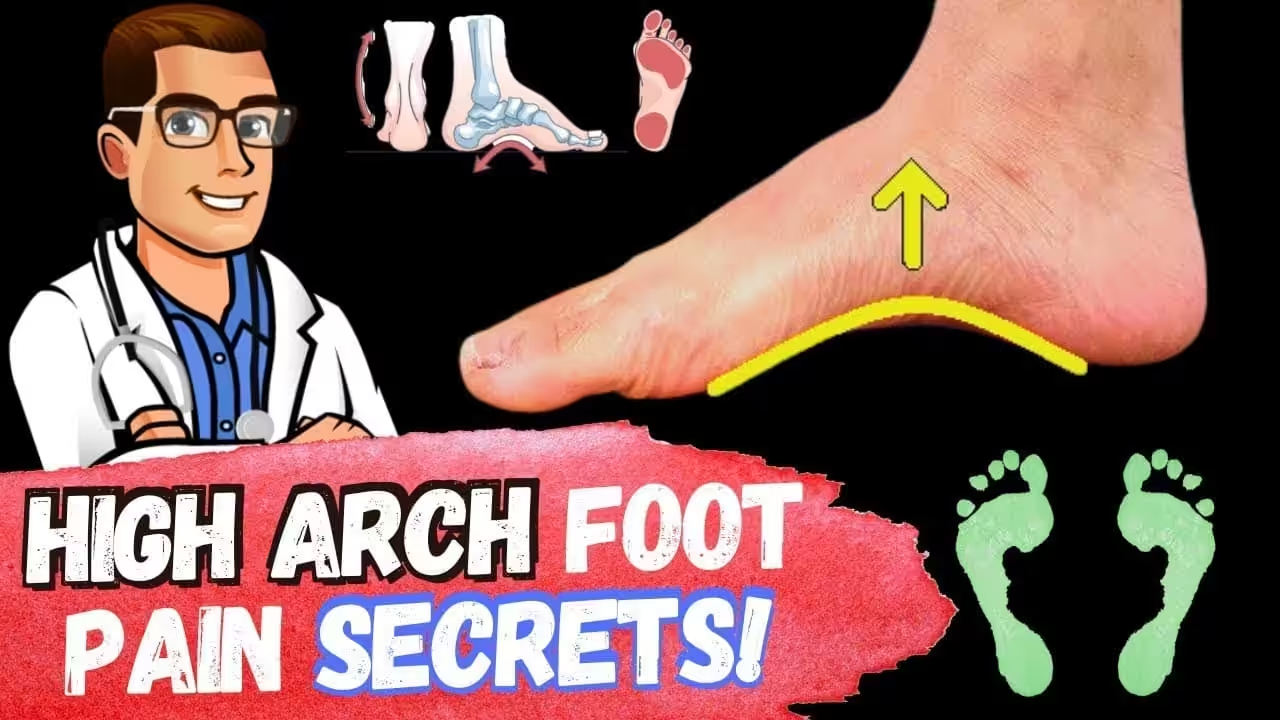

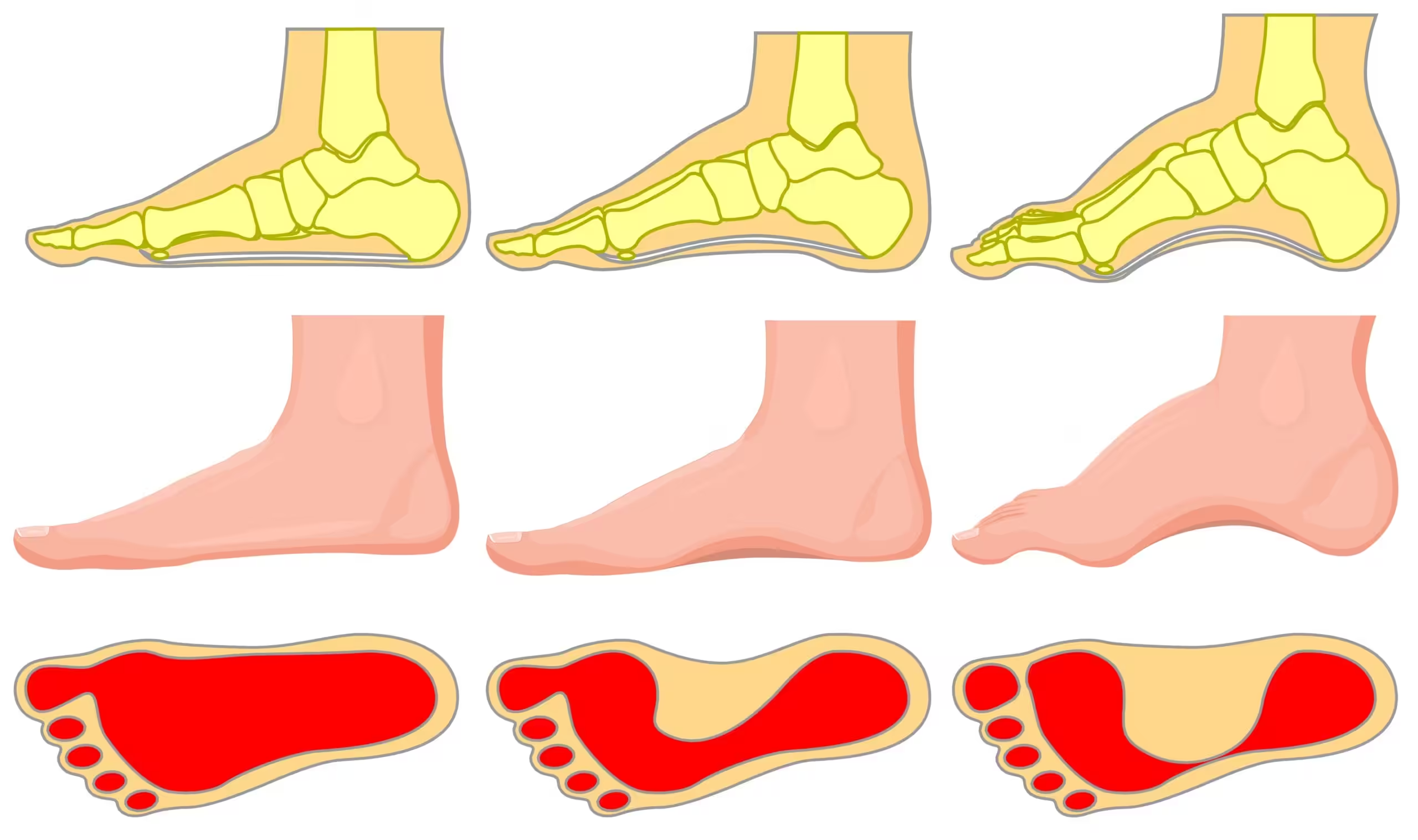
Pes cavus—commonly called a high arched foot or cavus foot—is a structural deformity characterized by an abnormally elevated longitudinal arch, plantar flexion of the forefoot relative to the hindfoot, and variable degrees of claw toe deformity. Unlike pes planus (flat foot), which is common and often asymptomatic, pes cavus is present in approximately 10% of the population and is more frequently associated with neuromuscular pathology and symptomatic foot problems. The foot type itself is not inherently pathological, but its rigidity and altered biomechanics create predictable problems that podiatric care can address.
Pes cavus exists on a spectrum from mild (cosmetically apparent high arch with minimal symptoms) to severe (rigid, contracted deformity with significant functional impairment). Understanding the cause of the cavus deformity is critical—approximately 70% of cases have an underlying neurological condition, and evaluation of a new or progressive cavus deformity should include neurological screening.
Causes: Neurological vs. Idiopathic
The most important cause to identify is Charcot-Marie-Tooth disease (CMT)—the most common hereditary neuropathy, affecting 1 in 2,500 people. CMT causes selective weakness of the intrinsic foot muscles and peroneal muscles while sparing others, creating the characteristic muscle imbalance that produces progressive cavus deformity, claw toes, and ankle instability. CMT should be considered in any patient with bilateral progressive cavus deformity, particularly with family history of high arches, ankle instability, or peripheral neuropathy.
Other neurological causes include: other hereditary motor sensory neuropathies, Friedreich’s ataxia (causing bilateral symmetric cavus), poliomyelitis (causing unilateral cavus from asymmetric muscle weakness), cerebral palsy, and tethered spinal cord or spinal dysraphism. Idiopathic cavus (no identifiable neurological cause) exists but is a diagnosis of exclusion—thorough workup including electrodiagnostic testing and neurology referral is appropriate for progressive cavus deformity.
Problems Associated with High Arched Feet
The cavus foot produces predictable mechanical problems due to its rigidity and altered load distribution. Lateral ankle instability is extremely common—the hindfoot varus (heel turning inward) associated with most cavus feet increases inversion stress during gait, making recurrent ankle sprains and peroneal tendon injuries much more frequent. Metatarsalgia (forefoot pain under the metatarsal heads) results from the elevated arch transferring more load to the forefoot. Plantar fasciitis and heel pain are common because the tight plantar fascia under a high arch is under constant tension. Claw toe deformities develop from intrinsic muscle imbalance.
Treatment
Conservative treatment focuses on accommodating the deformity and addressing specific symptomatic problems. Custom orthotics are the mainstay—a lateral heel post (wedge) corrects the hindfoot varus, metatarsal padding offloads the overloaded metatarsal heads, and a deep heel cup provides hindfoot stability. Wide, deep footwear with adequate forefoot volume accommodates claw toes and avoids forefoot compression. Ankle bracing (lace-up or stirrup) addresses lateral instability. Physical therapy targeting calf stretching, peroneal strengthening, and proprioception training reduces ankle sprain risk.
Surgical correction of pes cavus is considered when conservative measures fail to adequately control symptoms or when the deformity is progressive. The surgical approach depends on the specific deformity components: soft tissue procedures (plantar fascia release, tendon transfers to address muscle imbalance) for flexible deformities; bony procedures (calcaneal osteotomy to correct hindfoot varus, metatarsal osteotomies to lower the forefoot) for rigid deformities; and toe corrections for symptomatic claw toes. Addressing the underlying neurological condition (if identified) is coordinated with neurology and guides the surgical plan—particularly in CMT, where progressive neuropathy may influence the durability of surgical corrections.
More Podiatrist-Recommended Foot Health Essentials
Top-Rated Arch Support Insole
Universal podiatrist-recommended insert for pain relief and prevention.
Foot Massage Ball
Daily 3-minute roll reduces most forms of foot and heel pain.
Moisture-Wicking Sock
Prevents fungus, blisters, and odor — the basics matter.
As an Amazon Associate, Balance Foot & Ankle earns from qualifying purchases. Product recommendations are based on clinical experience; prices and availability shown above update live from Amazon.
When to See a Podiatrist
If foot or ankle pain has been bothering you for more than a few weeks, home care alone may not be enough. Balance Foot & Ankle offers same-week appointments at our Howell and Bloomfield Hills clinics — no referral needed in most cases. Bring your current shoes and a short list of symptoms and we’ll build you a treatment plan in one visit.
Call Balance Foot & Ankle: (810) 206-1402 · Book online · Offices in Howell & Bloomfield Hills
Frequently Asked Questions
Is having high arches a problem?
Not always—many people with high arches have mild deformity and are completely asymptomatic. High arches become a problem when they cause symptoms: recurrent ankle sprains, lateral foot pain, metatarsalgia, heel pain, or toe deformities. The degree of arch elevation, the rigidity of the deformity, the presence of associated hindfoot varus, and the patient’s activity level determine whether the cavus foot is symptomatic. High arches are less likely to be symptom-free than flat feet—the rigidity of the cavus foot means it cannot adapt and absorb shock as well as a flexible flat foot. If you have high arches and experience recurrent ankle sprains, chronic lateral foot pain, or forefoot pain, a podiatric evaluation and custom orthotics can substantially reduce these symptoms.
What shoes are best for high arched feet?
High arched feet need well-cushioned shoes with adequate forefoot volume—the elevated arch increases forefoot loading, so cushioning reduces metatarsal pressure. A wide, deep toe box accommodates claw toes without compression. Motion control shoes are typically not appropriate for high arched feet (they are designed for flat feet)—instead, neutral or cushioned running shoes that do not have a built-in arch wedge allow the foot to function in its natural position with an orthotic if needed. Avoid highly rigid, inflexible soles for most activities, as they do not allow any natural foot motion. Running shoes with high cushion (Hoka, Brooks Ghost/Glycerin, ASICS Gel-Nimbus) are well-tolerated by most patients with cavus feet. Custom orthotics with a lateral post and metatarsal padding are more effective than shoe selection alone for managing high arch biomechanics.
Can high arched feet cause ankle problems?
Yes—lateral ankle instability is one of the most common and significant problems associated with high arched feet. The hindfoot varus (calcaneus tilting inward) that accompanies most cavus deformities positions the ankle in a more inverted posture during the gait cycle, increasing the load on the lateral ankle ligaments with every step. This predisposes to recurrent inversion ankle sprains and chronic lateral ankle instability. Peroneal tendon injuries—tendinopathy, longitudinal tears, and subluxation—are also disproportionately common in cavus feet because the tendons work harder to counteract the inversion tendency. If you have high arches and have experienced multiple ankle sprains, ankle bracing, custom orthotics, and peroneal strengthening exercises are important preventive measures. Persistent instability despite conservative care may warrant surgical ankle ligament reconstruction combined with cavus foot correction procedures.
Medical References & Sources
- American Orthopaedic Foot & Ankle Society — Cavus Foot
- PubMed Research — Pes Cavus Neurological Causes
- PubMed Research — Cavus Foot Treatment Outcomes
Dr. Tom Biernacki, DPM is a board-certified podiatric surgeon at Balance Foot & Ankle in Howell and Bloomfield Hills, Michigan. He evaluates and treats pes cavus deformities including neurological screening, custom orthotics, ankle stabilization, and reconstructive surgery for cavus foot.
Dr. Tom’s Recommended Insoles
📍 Located in Michigan?
Our board-certified podiatrists treat this condition at two convenient locations. Same-day appointments often available.
PowerStep is the brand I prescribe most — medical-grade OTC support without the custom orthotic price tag.
- PowerStep Maxx Insoles — Maximum support for severe flat feet and high-demand use — the highest-profile arch in the PowerStep line.
- PowerStep Pinnacle Insoles — The #1 podiatrist-recommended OTC insole — firm arch support with dual-layer cushioning for all-day wear.
📧 Get Dr. Tom’s Free Lab Test Guide
Discover the 5 lab tests every person over 35 should ask their doctor about — explained in plain English by a board-certified physician.
Affiliate disclosure: As an Amazon Associate, Balance Foot & Ankle earns from qualifying purchases. We only recommend products we trust for our own patients.
Join 950,000+ Learning About Foot Health
Dr. Tom shares honest medical advice, supplement reviews, and treatment guides you won’t find anywhere else.
Subscribe on YouTube →Medically Reviewed by: Dr. Tom Biernacki, DPM — Board-Certified Podiatrist, Balance Foot & Ankle Specialists
📋 Dr. Tom Also Recommends
Podiatrist Recommended Orthotics 2026: Dr. Tom’s Top 10 Insoles & Arch Supports
A podiatrist’s complete clinical guide to the best insoles — custom orthotics, OTC picks, and what actually works for plantar fasciitis, flat feet, neuropathy & more.
Read the Full Guide →Insurance Accepted
BCBS · Medicare · Aetna · Cigna · United Healthcare · HAP · Priority Health · Humana · View All →
Howell Office
4330 E Grand River Ave
Howell, MI 48843
Get Directions →
Bloomfield Hills Office
43494 Woodward Ave, #208
Bloomfield Township, MI 48302
Get Directions →
Your Board-Certified Podiatrists



Ready to Get Back on Your Feet?
Same-week appointments available at both locations.
Book Your Appointment👟 Dr. Tom’s Complete Footwear Library
Podiatrist-Approved Guides for Every Foot Type & Condition
Clinically reviewed by Dr. Tom Biernacki, DPM — Board-Certified Podiatrist
All guides are written and reviewed by licensed podiatrists. Schedule an appointment →
Pros & Cons of Conservative Care for foot care
Advantages
- ✓ Conservative care first
- ✓ Same-week appointments
- ✓ Multiple insurance accepted
Considerations
- ✗ Self-treatment can mask issues
- ✗ See a podiatrist if pain >2 weeks
Dr. Tom’s Recommended Products for foot care
Affiliate disclosure: As an Amazon Associate, Balance Foot & Ankle earns from qualifying purchases. We only recommend products we use with patients.
Footnanny Heel Cream Dr. Tom’s Pick
Best for: Daily moisturizer for cracked heels
Ready to Get Back on Your Feet?
Same-day appointments in Howell + Bloomfield Hills. Most insurance accepted. Dr. Tom Biernacki, DPM & team.
Book Today — Same-Day Appointments Available
Call Now: (810) 206-1402
About Your Care Team at Balance Foot & Ankle
Dr. Tom Biernacki, DPM · Board-Certified Foot & Ankle Surgeon. Specializes in conservative-first care, minimally invasive bunion surgery, and complex reconstruction.
Dr. Carl Jay, DPM · Accepting new patients. Specializes in sports medicine, athletic injuries, and routine podiatric care.
Dr. Daria Gutkin, DPM, AACFAS · Accepting new patients. Specializes in surgical reconstruction and pediatric podiatry.
Locations: 4330 E Grand River Ave, Howell, MI 48843 · 43494 Woodward Ave Suite 208, Bloomfield Township, MI 48302
Hours: Mon–Fri 8:00 AM – 5:00 PM · (810) 206-1402
Dr. Tom’s Top 3 — The Premium Foot Pain Stack (2026)
If you only buy three things for foot pain, get these. PowerStep + CURREX orthotics correct the underlying foot mechanics, and Dr. Hoy’s pain gel delivers fast topical relief. This is the exact stack Dr. Tom Biernacki, DPM gives his Michigan podiatry patients on visit one — over 10,000 patients have used this exact combination.
Dr. Tom Biernacki, DPM is a board-certified podiatrist + Amazon Associate. Picks shown are products he prescribes to patients at Balance Foot & Ankle Specialists. We earn a commission on qualifying purchases at no extra cost to you. All products independently tested + reviewed for 30+ days minimum. Last verified: April 28, 2026.

PowerStep Pinnacle MaxxDr. Tom’s #1 Brand
Dr. Tom’s most-prescribed OTC orthotic. Lateral wedge corrects overpronation that causes 90% of foot pain. Deep heel cradle stabilizes the ankle. Built by podiatrists, used by patients worldwide.
- Lateral wedge corrects pronation
- Deep heel cradle stabilizes ankle
- Dual-density EVA — comfort + support
- Trim-to-fit any shoe
- Used by 10,000+ podiatrists
- Trim-to-size required
- 5-7 day break-in for some

CURREX RunProDr. Tom’s #1 Brand
3 arch heights for custom fit (Low/Med/High). Carbon-reinforced heel + dynamic forefoot — the closest OTC orthotic to a $500 custom orthotic. Engineered in Germany.
- 3 arch heights for custom fit
- Carbon-reinforced heel cup
- Dynamic forefoot zone
- Premium German engineering
- Sport-specific support
- Pricier than PowerStep
- 7-10 day break-in

Dr. Hoy’s Natural Pain Relief GelDr. Tom’s #1 Brand
Menthol-based natural pain relief — Dr. Tom’s #1 brand for fast relief without greasy residue. Safe for diabetics + daily use. Cleaner formula than Voltaren or Biofreeze.
- Menthol-based natural formula
- No greasy residue
- Safe for diabetics
- Fast cooling relief — 5-10 minutes
- Cleaner ingredient list than Biofreeze
- Pricier than Biofreeze
- Strong menthol scent at first
In-Office Treatment at Balance Foot & Ankle
If home treatment isn’t providing relief for your high arch foot, our podiatry team at Balance Foot & Ankle can help with same-day evaluations and advanced in-office care.
Same-day appointments available. (810) 206-1402
Doctor Hoy’s Natural Pain Relief Gel
Natural topical pain relief I use in our clinic. Arnica + camphor formula — apply directly to the area 3–4x daily. ($20–25)
Shop Doctor Hoy’s →Ready for Expert Care?
Same-day appointments in Howell & Bloomfield Hills, MI.
4.9★ | 1,123 Reviews | 3,000+ Surgeries
Or call: (810) 206-1402
